


 CDN NEWS |
  US NEWS







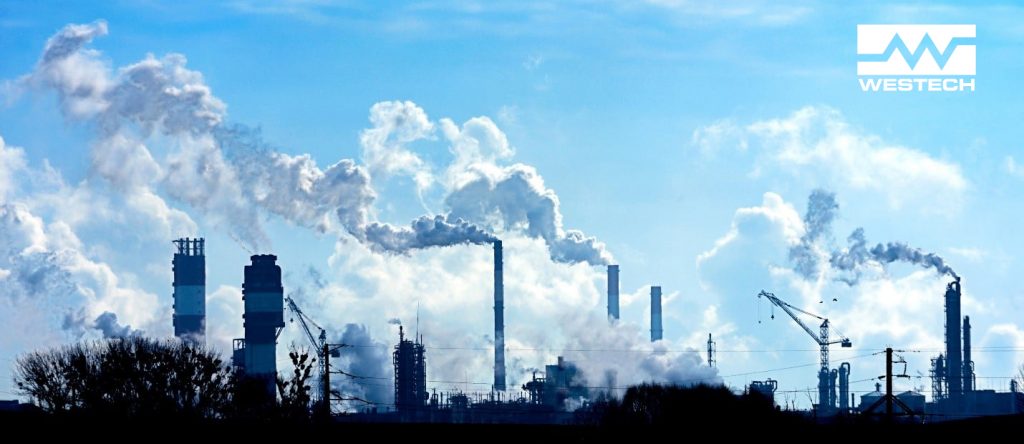
Figure 1. Westech Industrial & SICK Ltd are reimagining the traditional carbon footprint. Source: Vital/Adobe
As detailed by our partners at SICK Ltd, the level of carbon dioxide (CO2) released into the atmosphere has increased significantly since the dawn of the Industrial Age. In order to offset these changes and the potential environmental effects, a wide range of efforts are being implemented, including a transition away from fossil fuels in an effort to produce “net zero” CO2 emissions by 2050, and even a “net negative” emission rate beyond.
Reducing CO2 emissions alone, however, won’t be enough to reach this goal by 2050, and it is estimated that a significant annual growth rate in carbon capture utilization and storage (CCUS) will also be needed. Generally speaking, CCUS technology is used to capture CO2 emissions from industrial or other processes and convert it into a liquified state for short-term storage and transport. This captured carbon can then either be deposited into a reservoir or converted into another useful substance.
Driving this process from an economics standpoint, governments, including the EU, have set up financial incentives for carbon reduction. These are known as emissions trading schemes (ETS) or cap and trade (CAT) arrangements, where a limited number of carbon emission allowances can be bought and sold between entities. Much of the challenge in trading carbon, and ultimately profiting, lies in actually measuring how much CO2 is emitted or collected. With over 70 years of sensing experience, and solutions designed specifically for this type of gas measurement, Westech Industrial’s SICK Ltd products can help track carbon capture for tracking profits and costs, as well as for process improvements and monitoring.
CCUS process and measurement
In practice, modern CCUS is able to capture up to 90% of the CO2 emitted during a process. Accurate sensing is critical to both process improvement and maintenance, as well as financial accounting. If such a process is not measured accurately, it is possible that a CCUS operator will leave CO2 credits on the table, so to speak. Conversely, they may be overcharging for this effort, which could have very negative ramifications in the case of enforcement. From a process standpoint, if a carbon capture operation is running in an inefficient manner due to inaccurate sensing, energy charges would be higher than needed, and the process itself would be less environmentally friendly than it should be.
Analysis may also be implemented to ensure gas quality. If captured CO2 is to be reused in a different process, customers would need to know that what they are getting does indeed contain the amount of CO2 specified per unit volume. Additionally, a higher concentration of certain other gases could potentially be detrimental to the end user’s product. These should be detected and extracted or disclosed.
Global concerns, evolving CCUS landscape
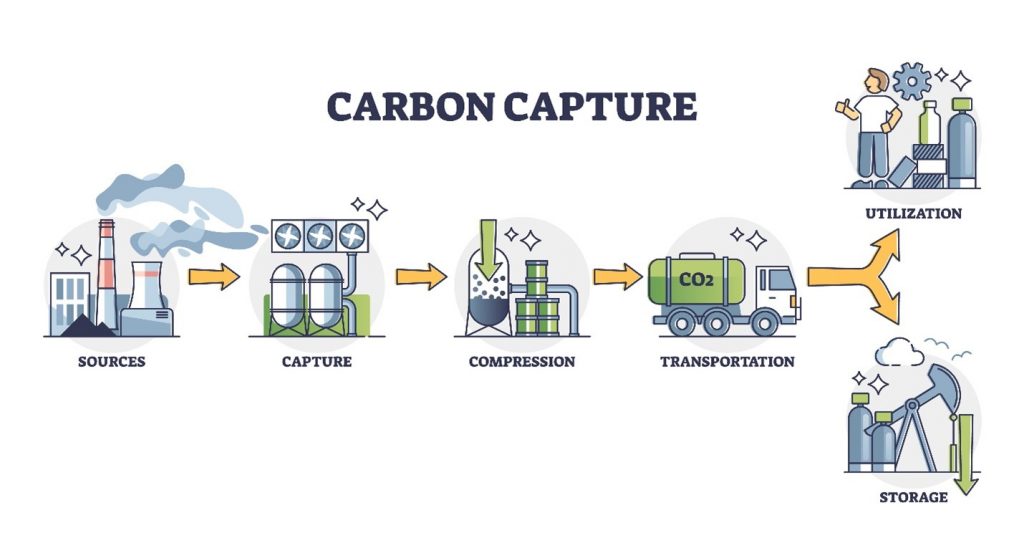
Figure 2. Carbon capturing technique. Source: Vectormine/Adobe
With today’s conflict in Ukraine, priorities for reducing CO2 emissions have understandably taken a back seat to the more immediate concerns of this brutal local conflict. While expansion of this war into other regions is a truly horrifying possibility, one might note that this war has already affected nearly every corner of the globe in the form of higher oil prices.
On a political and economic level, the fact that we, as a society, are still so dependent on oil and natural gas extracted from regions that may or may not be on good terms with one’s particular government, gives an even greater incentive for using renewable power. It also means that converting captured CO2 in a format where it could substitute for traditional extracted hydrocarbon usage could be even more valuable.
Militaries involved in such a conflict — and even standing armies around the world not directly involved in combat — emit a massive amount of CO2, via combustion from trucks, tanks, jets and the like, through exploding ordinance, and other means. Such emissions are often left untracked and unregulated, adding something of an additional question mark to be offset. This makes carbon neutrality an even greater challenge today than it was just a year ago.
Even putting aside the effects of war, the global climate policy is constantly changing. There are 2,744 climate laws and policies on the books now according to climate-laws.org, plus another 2,000+ pieces of litigation on the books according to the same source as of early August 2022. International climate agreements aim to bring the world’s governments together to address these environmental concerns, but decreased immediate stability means less concern for longer-term issues, plus decreased diplomatic will for the world’s nations to work together. However, things evolve, Westech Industrial and SICK Ltd will continue to keep abreast of requirements, offering sensor options to help customers keep compliant with regulations and take advantage of potential carbon capture revenue in the most expedient manner possible.
Our SICK devices facilitate CCUS tracking
When it comes to methods used to track, control and bill for CCUS processes, our range of products from SICK Ltd have a number of excellent options that are ready to implement:
- Gas flow measurement: As CO2 is captured from different emissions sources and transported via pipelines or other means to its final destination, gas flow measurement is critical at each transfer point for billing and process monitoring. Westech Industrial’s Ultrasonic gas flow meters from SICK provides precise data for this purpose, including the FLOWSIC600 and FLOWSIC600-XT meters, which can be used as a standalone solution, or as part of a larger installation. The FLOWSIC600-XT device even provides backup capabilities that allow it to continue to take data measurements in the case of a power failure.
- CO2 concentration measurement: Concentration of captured CO2 in a gas mixture is critical to determining the environmental impact, tax credits and process statistics of an operation. Westech provides a solution for this need with our SICK GM35 in-situ gas analyzer. This device does not require gas sampling, which allows for quick closed-loop process response to issues or changes. This device can also measure H2O concentrations, as well as temperature and pressure to further augment controls and analysis.
- Gas quality measurement: For processes that use extracted CO2 (carbon utilization), other gases mixed in with the CO2 may be considered as impurities. Therefore, analysis of these gases can be essential to later steps in the full CO2 mitigation process. Our SICK extractive analyzers offer several options for continuous monitoring of multiple gas components. In addition to CO2, concentrations of H2O, HCl, SO2, CO, NOx, NH3 and O2 can be analyzed as needed. Westech offers the MCS20HW, MCS300P and GMS800 analysis solutions, with different characteristics to suit process needs.
- Direct CO2 measurement: While not carbon capture per se, for environmental and financial considerations, the other side of the coin is determining how much CO2 is emitted during a process. Westech can help your company analyze gas emissions using the aforementioned SICK Ltd products, ultimately allowing users to assess emissions and accurately target mitigation efforts.
All-in-one solution
Finally, while the individual sensors here can be integrated into a customer measurement setup, Westech Industrial along with our SICK products can offer turnkey solutions that can be “bolted on” to an existing process. SICK’s FLOWSKID600 and FLOWSKID600-compact both allow for measurement of gas composition, volume flow, pressure measurement, temperature measurement, flow calculation and condition monitoring.
These all-in-one devices feature a range of built-in SICK sensors and are configured either with an ample amount of space for easier maintenance in the case of the FLOWSKID600, or in a more compact space saving design in the form of the FLOWSKID600-compact. We can also offer container-based housings for analysis equipment, which can provide shelter for equipment on-site, and even workspace for engineers and machine supervisors when present.
Success story: Heidelberg Cement LEILAC process
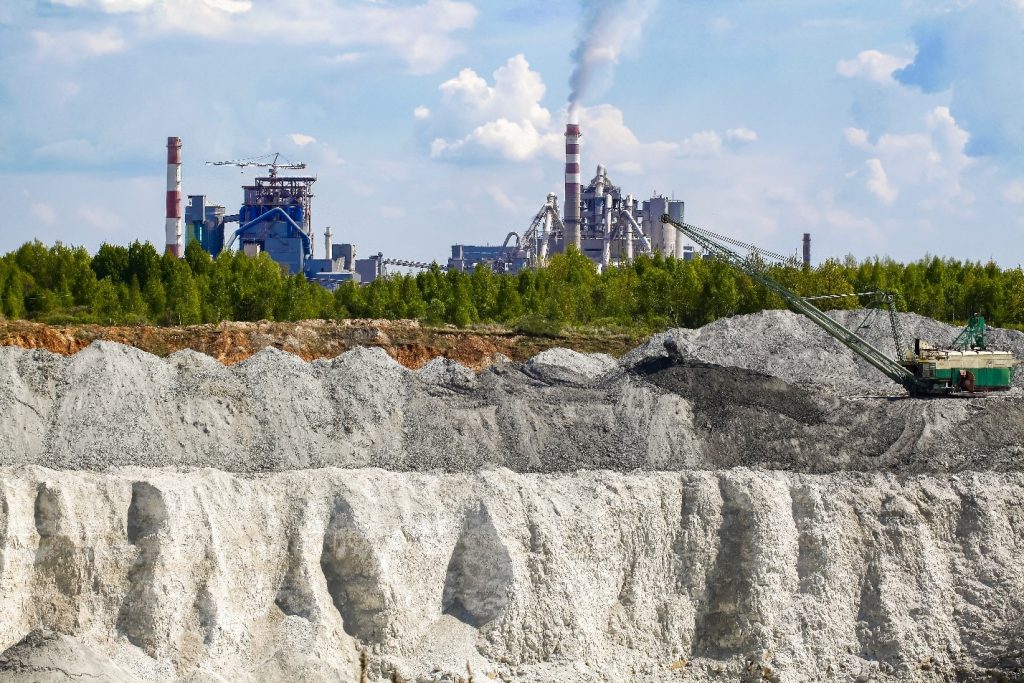
Figure 3. Two-thirds of CO2 emissions from cement production come from the breakdown of limestone itself. Source: Elroi/Adobe
While fossil fuel combustion gets much of today’s attention with regard to CO2 emissions, fully two-thirds of CO2 emissions from cement production comes from the breakdown of limestone itself. During the cement production process, quarried limestone, the basic material needed to make cement, is heated up to 1,450° C, during which CO2 is released. In Heidelberg’s pilot LEILAC operation, the CO2 emitted from limestone does not mix with combustion gases, and is analyzed separately, potentially opening up new capture methods.
The eventual goal is to scale this pilot program up to a new process that produces 20 times the capacity of this operation. Oxygen, CO2, carbon monoxide concentrations and more are measured over time to determine if the process is running well, and to gain insights that can be applied to the eventual full-scale operation.
Westech Industrial Ltd & SICK Ltd: Your gas measurement partners
As carbon capture requirements evolve and mature, Westech and SICK Ltd will continue to track and respond to these changing needs. At the same time Westech’s partner SICK Ltd drives sensor improvement possibilities through research and development, in line with its 75-plus year history.
Westech Industrial offers over 55 years experience working with process control and instrumentation solutions. We stand ready to help customers with their gas sensing needs now and into the future. To find out more about our carbon capture and gas analysis solutions by SICK Ltd available in Eastern Canada please visit our website at https://westech-ind.com or get in touch at [email protected] today.
Source: Engineering 360 written by SICK Ltd
Share This:






















INSIGHT: The Northern Shield Energy Corridor Provides Energy Security for All Canadians – Yogi Schulz