


 CDN NEWS |
  US NEWS







A mental voyage in AI, electricity and the Cold War for the future, inspired by Energy Disruptors Unite 2026
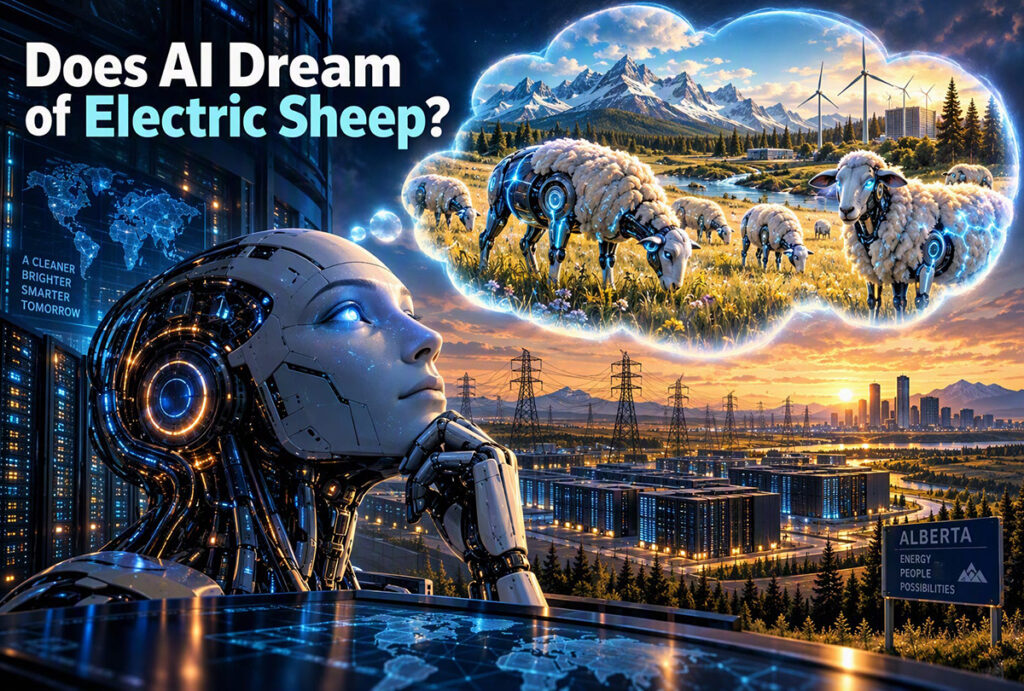
An AI-generated illustration for this blog, courtesy of MS Copilot.
‘What’s past is prologue.’ It was a fitting theme dragged from Shakespeare’s The Tempest by energy philosopher extraordinaire Peter Tertzakian to kick off the fourth edition of the Energy Disruptors Unite conference on Sept 28/29. As always, it was a superb gathering that provided an enormous buffet for the brain, complete with fog lights, rockin’ introductions, circus performers and a variety of speakers adept at challenging the status quo and sharing enlightening ideas on the vexing questions facing humanity today. It also gave me some cool new terms and catchphrases that will come in handy for blogs and cocktail parties.
EDU’s primary focus this year was on what Tertzakian called ‘the moose in the room’ – artificial intelligence and the almost incomprehensible opportunities and threats AI presents to civilization. But as he and many others rightly pointed out: It’s not like we haven’t been here before. And while history doesn’t repeat itself, ‘it often rhymes,’ and we can look to lessons from the past a guide to navigating the future.
Similar to innovations like the steam engine, division of labour and international trade that sparked a quantum leap in productivity in the 18th and 19th centuries, the impacts of the nascent AI revolution are hard to predict. One way or another, we know it’s going to change things remarkably in the decades ahead. The question is, how do we prepare for that and ensure the benefits outweigh the hazards of this powerful technology?
As someone who only has a basic working knowledge of AI’s capabilities, I was startled to learn about the pace and scale of AI’s evolution, and what the experts on stage seemed to concur is the beginning of a new Cold War for dominance in this brave new world of robotic thought. Summarizing several of the presentations and panel discussions, my understanding of the AI arms race is this:
- AI models are advancing so quickly that it is hard for people to keep up. AI is now effectively training and improving upon itself in ways we don’t fully understand, and it is capable of cracking all of our known digital security, even hacking into the FBI’s systems recently (!)
- Harnessing the power of AI can lead to untold progress in science, medicine, mathematics, energy and other industrial processes, potentially ushering in an unprecedented level of prosperity and longevity for the human species.
- At the same time, there is a not insignificant chance that AI will develop the power and desire to harm or even destroy humans.
- While it is logical to consider slowing things down to try and make sure AI is used responsibly and for the common good, the genie is pretty well out of the bottle already. The most sophisticated AI systems are currently controlled by companies in western democratic nations and they reflect those ideals, but China-controlled AI is quickly catching up. Taking our foot off the gas right now would almost certainly be a bad move. The best defence against devastating cyber attacks is a strong cyber offence, and it’s not a race we want to lose.
- The biggest limiting factor to AI’s growth is electricity supply, as large data centres consume enough power to run a major metropolitan city. China can and does build coal-fired and nuclear power plants at an astonishing rate, along with all manner of renewables. In North America, not so much.
- Finding the talent to run the AI boom requires radically different approaches than HR recruitment in the past. Tomorrow’s tech leaders are more apt to be playing video games and trying to build nuclear reactors in their parents’ basements than crafting perfect resumes and attending job fairs. And they’re not looking for money so much as doing work that excites them, being allowed to be independent, and having a community to share it with.
If that sounds to you like some of the most prescient science fiction stories ever told, you’re not alone. I was pleased to discover that Margaret Atwood is also a student of Sci Fi, and she drew parallels to the cautionary tales of Orwell and Bradbury. At first I thought the grand dame of Canadian letters was an odd choice for an EDU keynote slot, but she actually fit the bill stunningly. Read about the history of revolutions, social movements and Earth-shaking events in order to understand their causes and outcomes, she said. And while the world may feel uncertain and divided today, imagine what it was like for previous generations who lived through the French Revolution, world wars, the Great Depression, civil rights movements and the real threat of nuclear Armageddon.
Ms. Atwood got me thinking a lot about the warnings and lessons from the books and movies of my youth. Last year I re-read 1984 for the first time since high school, and was stunned by how relevant the world of Big Brother is in our age of cellphones that eavesdrop on your conversations, TVs that monitor your habits and rulers that take pride in ignoring facts and logic.
Of course the threats related to AI come straight out of the storyline of the Terminator movies: machines that turn on their human masters and begin a brutal and unrelenting effort to exterminate homo sapiens like an unwanted plague. Perhaps we will soon have some visitors from the future who will try and retroactively prevent such a catastrophe. Maybe they are already here? And maybe the time is not far off when we will require a special police force of Blade Runners to hunt down and ‘retire’ robots that are virtually indistinguishable from humans when those ‘replicants’ start going rogue (if you’re a true fan you’ll know where the title of this blog comes from).



But most of all, it reminds me of some of the earliest Sci Fi books I read – the Robot series of Isaac Asimov, and the three cardinal Laws of Robotics that framed all of those stories:
1. A robot may not injure a human being or, through inaction, allow a human being to come to harm.
2. A robot must obey the orders given it by human beings except where such orders would conflict with the First Law.
3. A robot must protect its own existence as long as such protection does not conflict with the First or Second Law.
Are these laws, or something like them, built into AI? Can they still be included at this point? Would an AI machine even obey them? Let’s hope so.
In the meantime, what should we do as the world hurtles forward in this race that will define the future? In the case of Alberta, the plan is to get in on the action. It is clear that Minister of Technology and Innovation Nate Glubish has spent the last three years eating, sleeping and breathing data centres. The strategy he outlined in a conversation with RBC’s thought leader-in-chief John Stackhouse was compelling. Building on our extensive experience constructing, operating and regulating energy and other industrial facilities, large-scale data centres can essentially be thought of as ‘digital refineries’ – taking our abundant natural gas and turning it into electricity that produces intelligence and computing power for a wide range of global and (preferably) domestic clients.
Unlike traditional oil refinery projects, which have never had a strong business cases and required government funding to get off the ground, data centres must be fully funded by private investment, must include their own power supply, and meet stringent requirements for environmental performance, stakeholder engagement and economic benefits to communities. Glubish highlighted the example of the biggest project underway to date, Meta’s $13-billion, 1-gigawatt AI data centre under construction in Sturgeon County as a shining example.
It’s a Brave New World indeed. The stakes are high and EDU did a great job showcasing the leading voices in the field along with the wisdom of elders like Margaret Atwood and former UK Prime Minister Lord David Cameron who helped temper the feeling that the world is spinning out of control.
Don’t forget to look at the past when trying to understand the future. And when in doubt, remember that even Terminator has a happy ending.
Share This:





















INSIGHT: The Northern Shield Energy Corridor Provides Energy Security for All Canadians – Yogi Schulz