


 CDN NEWS |
  US NEWS







By Yogi Schulz
Recently, Ontario Premier Doug Ford described his vision for the proposed Northern Shield Energy Corridor at the Enserva Speakers Series in Calgary, Alberta.
“Our government is ready to step up with the capital necessary to build the Northern Shield pipeline. I’m talking about government providing the patient capital needed to invest in our future. Critical infrastructure gets built. Tens of thousands of jobs are created. We protect our energy and economic sovereignty. Taxpayers receive a return on their investment. It’s a win all around.”
The proposed Northern Shield Energy Corridor provides added energy security for Canadians and improved market access for crude oil producers.
Description
The proposed Northern Shield Energy Corridor is a 3,300-kilometre corridor from Hardisty, Alberta, to Sarnia, Ontario, as illustrated on the map below. It follows the TC Energy TransCanada Mainline natural gas pipeline right-of-way from approximately Regina, Saskatchewan, to north of Toronto, Ontario. It then continues to Sarnia, Ontario, along a new right-of-way.
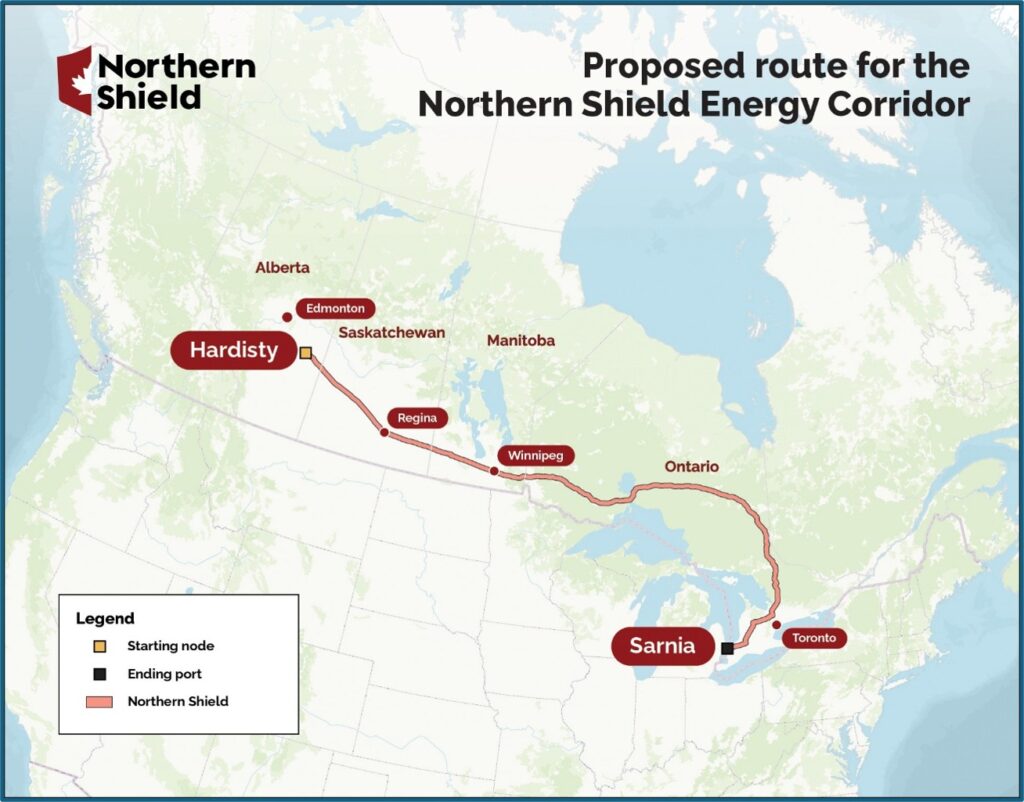
Source: Northern Shield Energy Corridor, Government of Ontario
Initially, the pipeline will transport 500,000 barrels per day of crude oil. It will be designed to expand to 800,000 barrels per day.
Energy security
The main benefit of a Northern Shield pipeline is energy security and sovereignty for Ontario citizens and Canadians further east. Energy security and sovereignty for Eastern Canada have taken on greater urgency because this region depends heavily on Enbridge Line 5 for its crude oil and propane supply.
Line 5 runs through Northern Michigan, as highlighted on the map below, and is the target of a determined effort to stop its operation.
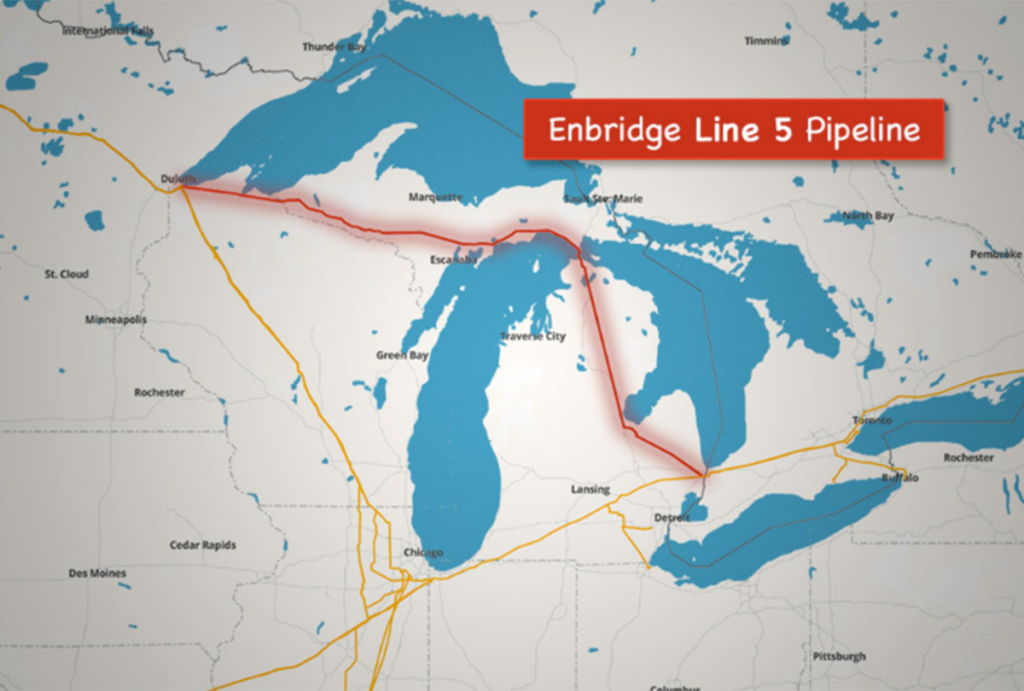
Source: LINE 5 SHUTDOWN – Canada /U.S. Economic Collaborations Becoming Even More Complicated, September 2, 2026, EnergyNow Media
Enbridge Line 5 battle in Michigan
The shutdown of Line 5 has been Michigan Governor Gretchen Whitmer’s focus since 2019, and that fight has held the spotlight for years. Line 5 transports more than 500,000 barrels of light crude oil and NGLs per day from Western Canada to refineries in the U.S. and eastern Canadian provinces. The pipeline supplies about 55% of Michigan’s propane demand and 45% of refinery supply in Michigan, Ohio and Ontario.
You’d think Michiganders would strenuously object to the Governor’s shutdown determination because a shutdown would cause severe regional energy shortages, spike fuel prices, and trigger an economic crisis in Michigan and eastern Canada. Unfortunately, Michiganders are sharply divided between those who support the pipeline and those who view the dual pipelines crossing the Straits of Mackinac as a “ticking time bomb” that poses an unacceptable risk of a catastrophic oil spill in the Great Lakes. The pipeline’s decades of operation without a material spill do not persuade opponents of its safety.
The claim that an unacceptable risk of a catastrophic oil spill exists for the Great Lakes is mostly a smokescreen for the real agenda. The real agenda is to rapidly advance the energy transition without any regard for the economic devastation that it would cause. Those pursuing a rapid energy transition understand that stopping product flows on existing pipelines and blocking the construction of new ones is the easiest way to disrupt crude oil and natural gas flows and force consumers to abandon fossil fuels in favour of alternative energy sources that produce no GHG emissions.



Enbridge Line 5 battle in Wisconsin
On June 16, 2023, a US district judge ordered Enbridge to move a 12-mile segment of Line 5 near Ashland, Wisconsin, that crosses into Bad River Band of the Lake Superior Chippewa lands. The tribe alleges Line 5 is at immediate risk of exposure and rupturing after erosion from heavy spring rains.
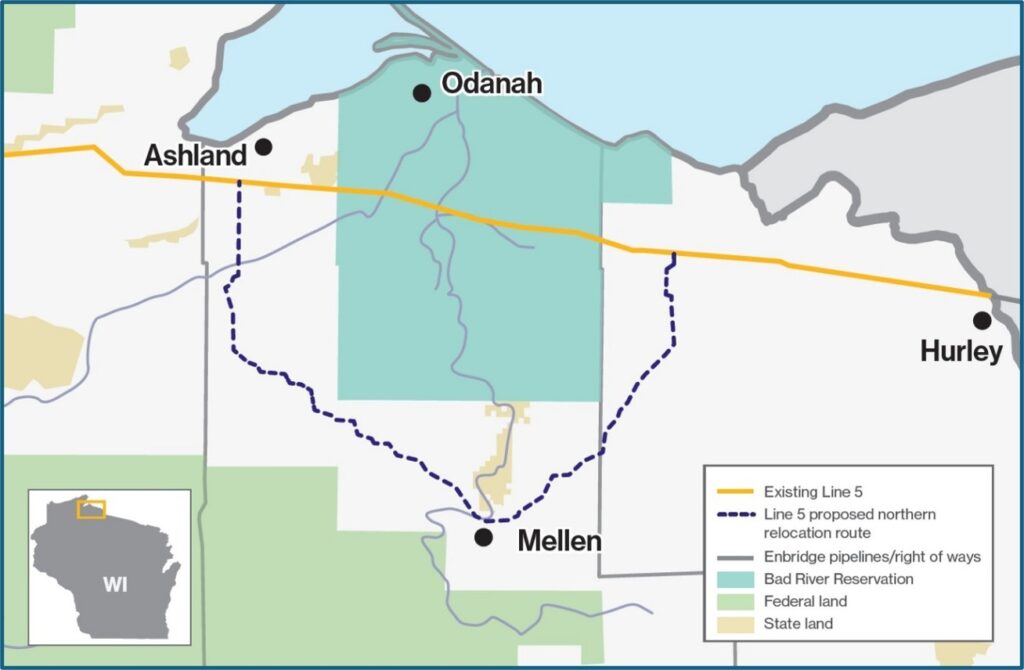
Source: Line 5 through the Bad River Reservation, Enbridge, June 30, 2023
Enbridge has offered:
- $80 million to the Bad River Band to settle past disputes.
- To build the Line 5 Wisconsin segment relocation project once the necessary permits have been received.
- To install rocks, trees, sandbags, or other materials along the Bad River to prevent unwanted erosion.
Enbridge and the Bad River Band remain at a stalemate. This ongoing dispute raises energy security risks for Michiganders and eastern Canadian provinces.
The claim that an unacceptable risk of a catastrophic oil spill exists seems exaggerated. It’s easy to see the risk as mostly a smokescreen for the real agenda: the Bad River Band is negotiating for a higher Enbridge transit fee.
Market access
In addition to Ontario, the Northern Shield pipeline would give western Canadian crude oil producers tanker access to markets in Quebec and New Brunswick. Those volumes would displace some of the 500,000 barrels per day of light crude oil that Canada imports annually.
Alternative shipping approach
Ontario has not proposed running the Northern Shield pipeline to Thunder Bay and then transporting crude oil by tanker. That’s likely because the Soo Locks between Lake Superior and Lake Huron close for winter ice from mid-January to late March.
However, a pipeline that stops in Thunder Bay would:
- Reduce its proposed length by half and cost by almost half.
- Reduce the shipping distance from Thunder Bay to Sarnia, Ontario by about 500 kilometres.
- Add energy security by providing shipping flexibility to multiple Canadian and US eastern refineries in addition to Sarnia.
The size of ships that can traverse the locks on the Great Lakes / St. Lawrence Seaway is defined by the Seawaymax specification. A Seawaymax tanker has a maximum carrying capacity of approximately 200,000 to 250,000 barrels of oil.
The proposed Northern Shield capacity of 500,000 barrels per day would require 2–3 tanker shipments per day.
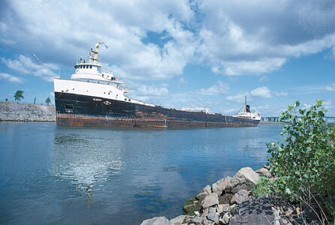
Source: One of the longer oil tankers passing through the Great Lakes locks at Soo, Saint Marie, Florida’s Big Dig
Adding crude oil shipments on the Great Lakes will meet opposition from environmentalists, given their exaggerated sense of risk. That view also ignores the Great Lakes Seaway’s strong safety record, which exceeds even that of pipelines.
Conclusion
The proposed Northern Shield Energy Corridor provides added energy security for all Canadians and improved market access for crude oil producers as Western Canadian production continues to grow and as pipeline constraints loom again.
Share This:






















INSIGHT: The Northern Shield Energy Corridor Provides Energy Security for All Canadians – Yogi Schulz