


 CDN NEWS |
  US NEWS







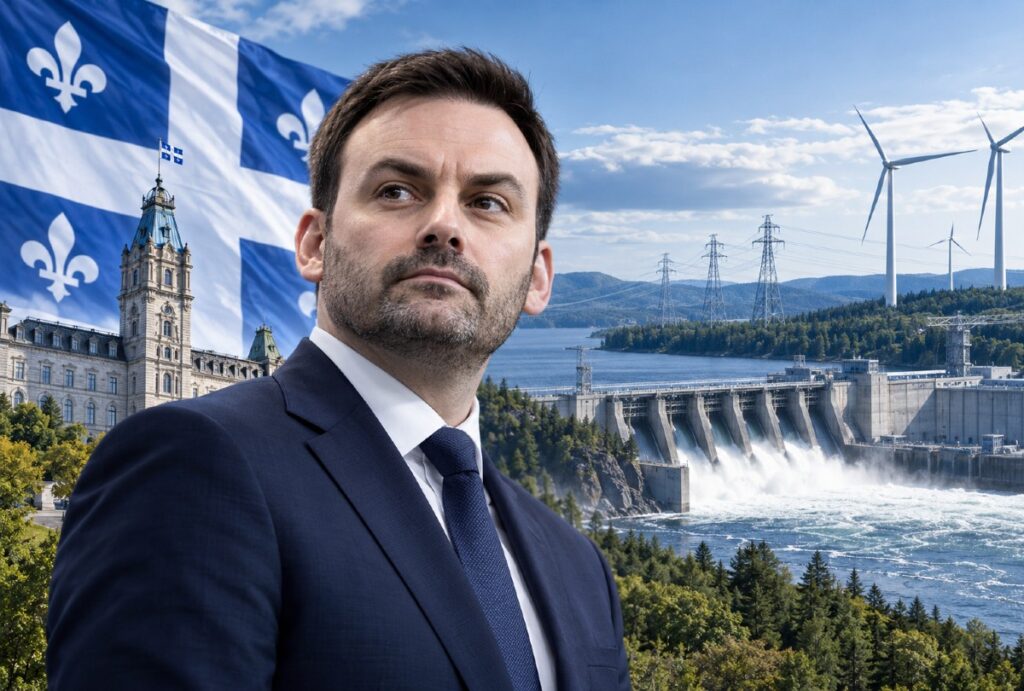
EnergyNow Media
Quebec voters delivered a major political change Monday night, electing the Parti Québécois to form a minority government and returning the sovereigntist party to power after more than a decade in opposition.
Led by Paul St-Pierre Plamondon, the Parti Québécois won 59 seats, falling short of the 64 required for a majority government. The Quebec Liberals emerged as the Official Opposition with 40 seats, while the Conservative Party of Quebec won 19 seats. Québec solidaire captured nine seats, while the governing Coalition Avenir Québec was shut out of the legislature despite receiving roughly 13 per cent of the popular vote.
The result represents a dramatic political comeback for the PQ, which won only three seats in the 2022 provincial election.
The popular vote was also unusually fragmented. The PQ secured approximately 28 per cent of ballots cast, compared with about 24 per cent for the Liberals and 21 per cent for the Conservatives. Québec solidaire received about 12 per cent. No party received even 30 per cent of the vote, highlighting how divided Quebec’s electorate has become.
For St-Pierre Plamondon, however, the election result gives the PQ an opportunity to govern while advancing its broader nationalist agenda.
One of the largest issues hanging over the new government will be Quebec sovereignty.
St-Pierre Plamondon has repeatedly committed to holding another referendum on Quebec independence, although during the campaign he pledged not to hold one while Donald Trump remains president of the United States. Reuters reported that support for Quebec independence remains around 30 per cent, meaning the PQ government will have to govern a province where many voters who supported the party may not necessarily support separation.
Minority government will also complicate that objective.
The PQ will need support from another party to pass legislation and survive confidence votes. Québec solidaire also supports Quebec sovereignty, meaning there could be areas where the two parties cooperate. Together, the PQ and Québec solidaire control a majority of seats in the National Assembly.
Economic issues may ultimately occupy more of the government’s immediate attention.
Quebec is facing pressure from U.S. tariffs, a substantial provincial deficit, affordability concerns and the challenge of attracting investment while simultaneously controlling government spending. During the campaign, the PQ promised to balance Quebec’s budget by 2028-29 and proposed lowering taxes on small and medium-sized Quebec businesses while reducing subsidies to multinational corporations.
What Does the PQ Victory Mean for Energy Development?
Energy could become one of the most important economic files for the new government.



Quebec already has one of North America’s largest hydroelectric systems, but growing electricity demand from industrial development, electrification, data centres, battery manufacturing and transportation is increasing pressure on the province’s generating capacity.
The PQ’s environmental and energy strategy suggests the government will continue emphasizing electricity rather than hydrocarbons.
During the campaign, St-Pierre Plamondon described energy efficiency as Quebec’s “next Baie-James,” arguing that reducing electricity consumption can free up power for industrial development and electrification without requiring every new megawatt to come from additional generating facilities.
The party’s environmental platform nevertheless acknowledges that conservation alone will not be enough. It explicitly calls for increased renewable and hydroelectric generation capacity to meet Quebec’s future electricity requirements.
That could mean continued opportunities for investment in hydroelectric expansion, wind development, transmission infrastructure, energy storage and efficiency technologies.
One major issue will be the future of the Churchill Falls relationship with Newfoundland and Labrador. Quebec and Newfoundland and Labrador have been negotiating a multibillion-dollar agreement involving electricity from Churchill Falls as well as potential new hydroelectric, wind and transmission developments. The agreement had not been finalized when the election campaign began.
For Canada’s conventional oil and natural gas sector, however, a PQ government is unlikely to represent a major shift toward hydrocarbon development.
The Quebec Conservatives campaigned on reopening discussion around shale gas exploration and hydraulic fracturing, arguing domestic production could reduce Quebec’s dependence on imported natural gas. Fracking has effectively been prohibited in Quebec since 2018. The PQ did not campaign on reversing that direction.
The larger opportunity could therefore lie in electricity.
Quebec must simultaneously supply households, electrify transportation and heating, support existing industries and find enough new generating capacity for major industrial projects — including potentially power-intensive AI and data centre developments.
That could force the new government to make difficult choices about which projects receive access to Quebec’s relatively inexpensive electricity.
For Canada’s energy industry, the Quebec election therefore produces something of a mixed picture: little indication of a reopening toward oil and natural gas development, but potentially billions of dollars of new investment in hydroelectricity, wind generation, transmission, storage and energy-efficiency infrastructure.
In Quebec, the next major energy boom may ultimately be less about producing hydrocarbons — and considerably more about producing electricity.
Share This:






















INSIGHT: The Northern Shield Energy Corridor Provides Energy Security for All Canadians – Yogi Schulz