


 CDN NEWS |
  US NEWS







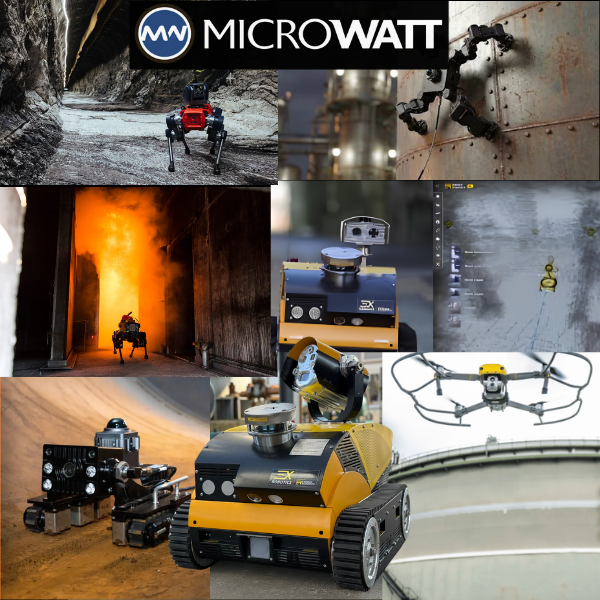
Process safety in Canadian oil and gas has long relied on people walking into the very environments everyone is trying to protect them from. Even with strong procedures, gas detection and permitting, inspection programs still depend on operators and technicians entering hazardous areas, climbing structures and performing confined space entries to get the data they need, often in harsh weather and remote locations.
Heavy industrial robotics and autonomous inspections are changing that equation. Today’s robots, designed to meet North American industrial and hazardous‑location requirements, combine mobility, autonomous navigation and integrated sensing so they can perform repeatable inspection routes, detect anomalies and feed data into existing control and safety systems, all without sending a person into harm’s way. This is particularly relevant for Canadian facilities managing large tank farms, SAGD well pads, gas plants, refineries and terminals spread across challenging terrain.
Across Canada, the drivers are clear: reduce personnel exposure in hazardous zones, increase inspection frequency to support risk‑based inspection (RBI), asset integrity and leak detection and repair (LDAR) programs, and deploy solutions that can operate reliably in harsh weather conditions, including cold, snow and ice, across remote industrial sites. Autonomous industrial robots turn inspections from manual, periodic rounds into continuous, data‑driven workflows. Equipped with gas detectors, thermal imaging, high‑definition video and acoustic or vibration sensing, robots can patrol process areas, tank farms and utility corridors on fixed routes or on demand, giving operations and integrity teams near real‑time visibility into leaks, hotspots, abnormal noise or access issues that may signal emerging problems—without waiting for a turnaround or fly‑in crew.
These systems are no longer isolated “science projects” in a corner of the plant. The latest generation of heavy industrial robotics is designed to integrate with plant DCS, safety instrumented systems, and maintenance platforms, so data from autonomous inspections can trigger alerts alongside fixed gas detection and process alarms, feed directly into RBI models and support LDAR and emissions programs with verifiable, time‑stamped data. When an alarm activates or a leak is suspected at a remote facility, sending a robot first allows teams to confirm conditions and gather gas concentration or thermal data before deciding how and when to send people in—aligning with inherently safer design and layered protection principles.
Heavy industrial robotics is not plug‑and‑play, especially in Canadian conditions. Successful deployments focus on choosing inspection routes and tasks that genuinely reduce risk or add high‑value data, ensuring the robot platform is suitable for classified areas, extreme temperatures, snow, ice and site terrain, and integrating the system into existing procedures, alarms and work processes so that the data is trusted and acted upon. For Canadian operators, the question is no longer if autonomous inspections and industrial robotics belong in their process safety and integrity strategy, but where to start and how to scale responsibly across diverse asset types and regions.
If you are exploring how autonomous inspections could fit into your own process safety and inspection programs, Microwatt, a proudly Canadian company, can help you sort through what is practical now versus what is still emerging. Our team works with Canadian operators to define high‑value use cases, align autonomous industrial robotics with existing gas detection and safety systems, and build a roadmap that reduces risk while improving inspection quality. We will be on site at the Energy Drone & Robotics Summit in Houston, Texas—Booth 816—with a technical conference session, “Redefining Safety: The Future of Certified Robotics in Industrial Environments,” on Tuesday, June 23 at 1:00 pm , and would welcome the opportunity to discuss how these approaches translate directly to Canadian facilities.
Learn more: https://www.microwattcontrols.com/en/exr25
Share This:






















On The Verge: Energy Sector Primed for New Wave of Growth – ATB Economics