CDN NEWS |
  US NEWS







Keeping up with the constantly evolving national, provincial, and local codes and standards that may apply to your installation can be a real challenge. If your next generator installation involves an outdoor diesel generator (or multiple outdoor diesel generators), you may be interested to know about a few requirements of CSA B139 – Installation Code for Oil Burning Equipment.
CSA B139 is one of the many standards that may apply to diesel generators and will apply to all generators installed within Canada. Of course, there may also be more stringent local standards such as the TSSA code for generators installed in Ontario. Your local AHJ is the best resource to confirm what standards and requirements will apply to your installation.
One of the most common accessories that accompanies a diesel generator is a fuel tank. Generally, the most cost effective and space efficient fuel storage solution is a “subbase” fuel tank where the fuel tank is mounted underneath the diesel generator set. The fuel tank, level sensing, leak detection, etc. are all contained in a compact package directly underneath the generator.
In the past, the most common practice was to locate the main fill port on the subbase fuel tank within the footprint of the generator skid. When the generator was supplied in an outdoor enclosure, the fill port was located inside the enclosure. Both the normal and emergency fuel vents were also located within the footprint of the generator (or inside the enclosure). Often, the fill port was located near the generator controller so that when the fuel tank was being filled, the fuel operator could see the visual fuel fill gauge as well as hear any audible alarm(s) annunciated by the generator controller.
If you’ve had any experience with diesel generators in the past, you may be well familiar with interior venting and filling. CSA B139 requires that we do it a little differently now.
In 2009, CSA B139 changed the definition of a subbase fuel tank to explicitly state that a subbase fuel tank was “not an integral supply tank”. The code further states that a fill port and venting must be terminated outside of the enclosure. The most current version of CSA B139 states:
4.3.1 Where a manufactured engine system includes a supply tank or auxiliary supply tank and the system is located in an engine enclosure, building, shed, or other type of permanent housing, the fill and normal vent pipes, combined normal and emergency vent pipes, and emergency vent pipes shall terminate outdoors.
The most common, and cost-effective solution offered by most (if not all) manufacturers of generators is to include an “extended” subbase fuel tank. This “extended” tank is larger than the footprint of the generator to allow for the placement of both the fuel fill port and vents to meet the requirements of CSA B139. The larger footprint will also require a larger cement pad to support the generator(s). This could be a costly change if the pad is not made large enough during the initial pour.
Figure 1 – 24 Hour Standard Subbase Fuel Tank
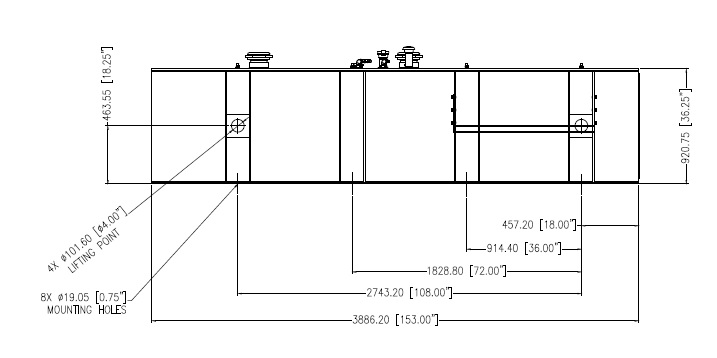
Figure 2- 24 Hour Extended Subbase Fuel Tank

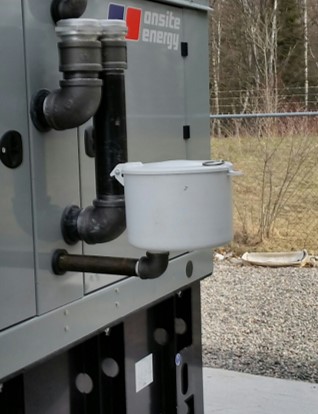
An alternate way to meet the requirement for exterior fill and venting is to add custom piping to route the piping to the exterior of the enclosure. However, this method is not the most cost-effective solution due to the level of customization required. Normal and emergency vents can range in size from 3”- 6” and because of their size, can present a real challenge when designing a piping route from the fuel tank to the exterior of the generator enclosure.
Figure 3- Extended Subbase Fuel Tank

Figure 4- Standard Subbase Tank with Custom Venting
The requirement for exterior filling and venting is only one of the many requirements contained within CSA B139 pertaining to an outdoor diesel generator installation. Other requirements include items such as volume limitations, clearance requirements, overfill protection, fire valves, pad height, etc. among many others.
Your trusted generator manufacturer and local AHJ will be invaluable in assisting to ensure the design of your next project is compliant with current codes & standards.
If you have any further questions, don’t hesitate to contact Collicutt Energy Services at 888.682.6888 or [email protected].
Share This: