


 CDN NEWS |
  US NEWS







In many oil and gas facilities, some of the most dependable equipment is also some of the oldest.
A PLC may have been controlling a process reliably for years—or even decades. The HMI still displays what operators need to see, the instruments continue sending signals, and the process runs every day. From an operational perspective, there may seem to be little reason to make a change.
But control systems have a lifecycle.
Processors and I/O modules become obsolete. Replacement parts become harder to find. Programming software may no longer run easily on current computers. Older HMIs can make troubleshooting unnecessarily difficult, and adding a new instrument, VFD or piece of package equipment may become increasingly complicated.
The question, then, isn’t simply “How old is our PLC?”
A better question is:
“Is our existing control system still giving operations and maintenance the reliability, information and supportability they need?”
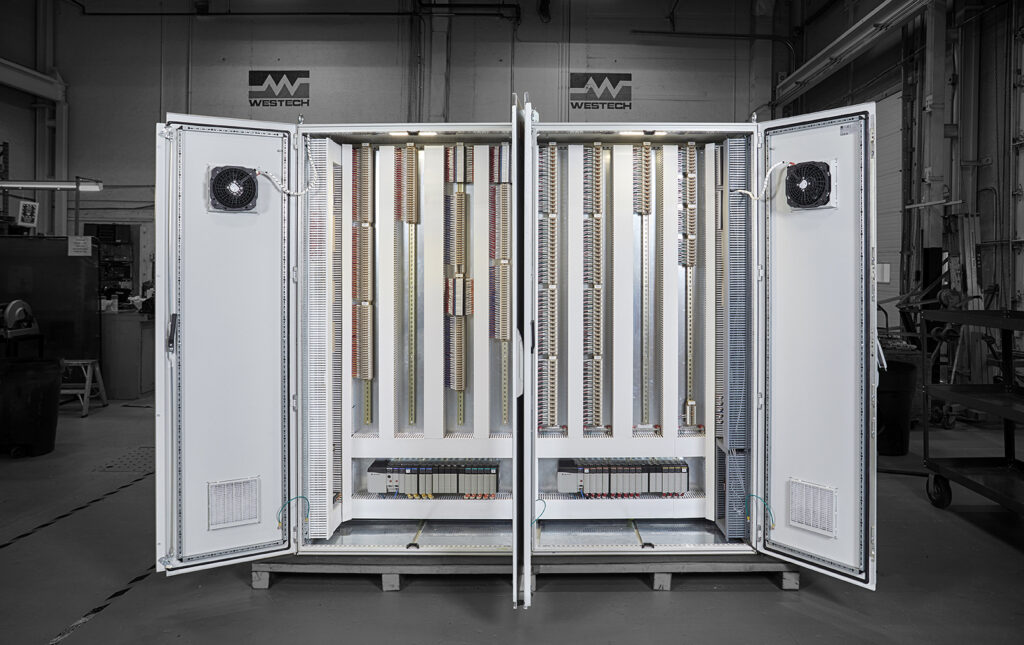
Here are seven signs it may be time to start planning a PLC/HMI modernization.
1. Replacement Parts Are Becoming Difficult to Find
An older PLC doesn’t necessarily need to be replaced just because a newer model is available.
The concern begins when maintaining the existing system becomes increasingly difficult.
Processors, I/O modules, communication cards, HMI terminals and other components eventually move through manufacturer lifecycle stages and may be discontinued. As availability declines, facilities can become increasingly dependent on repaired, refurbished or limited-stock components.
For example, Rockwell Automation notes that its discontinued PLC-5 platform has an extensive installed base but that spare parts, repaired units and experienced personnel are becoming increasingly scarce.
That creates a different kind of operational risk.
The PLC may be functioning perfectly today, but what happens if an I/O card fails tomorrow?
Facilities should understand:
- which critical control-system components are obsolete or approaching end of support;
- whether replacements are readily available;
- how many critical spares are currently held onsite;
- whether those spares have been tested;
- how quickly failed equipment could realistically be replaced; and
- whether technical support is still readily available.
Waiting for an obsolete component to fail can turn a planned modernization project into an unplanned shutdown.
2. Supporting the Software Is Becoming as Difficult as Supporting the Hardware
Sometimes the PLC itself isn’t the biggest problem.
The computer used to program it is.
Legacy PLCs and HMIs can depend on older programming software, operating systems, communication cables, drivers and licensing arrangements.
Over time, facilities may find themselves maintaining an old laptop primarily because it is the only computer that can connect to a particular controller.
That should be considered part of the control system’s lifecycle risk.
Ask whether your facility has current backups of the PLC and HMI programs, whether the programming software remains supported, and whether more than one qualified person can access and maintain the system.
A working PLC program isn’t particularly helpful during an emergency if nobody can connect to the controller or locate the latest version of the program.
3. Your HMI Shows Data—but Doesn’t Help Operators Understand What Is Happening
An HMI should do more than provide a colourful picture of the process.
Used effectively, it gives operators access to process conditions, equipment status, setpoints, alarms, trends, historical information, shutdown conditions and other information needed to understand what the process is doing.
Consider the difference between these two situations:
“PUMP FAULT”
and an interface that helps the operator determine which pump faulted, when the condition occurred, what related process conditions were present and what other alarms occurred around the same time.
Both systems technically provide an alarm.
Only one provides useful diagnostic information.
Older HMIs may have evolved over many years as equipment was added and processes changed. Screens can become cluttered, alarms can multiply, naming conventions can become inconsistent and important information can become difficult to find.
An HMI upgrade can be an opportunity to ask:
- Are operators seeing the information that actually helps them make decisions?
- Are alarms meaningful and appropriately prioritized?
- Can process trends help identify what occurred before an upset?
- Is important equipment status easy to recognize?
- Is navigation consistent?
- Can maintenance personnel obtain useful diagnostic information?
Modernization shouldn’t simply recreate every old screen on newer hardware.
It is an opportunity to improve how operators interact with the process.
4. Troubleshooting Depends on “The Person Who Knows the System”
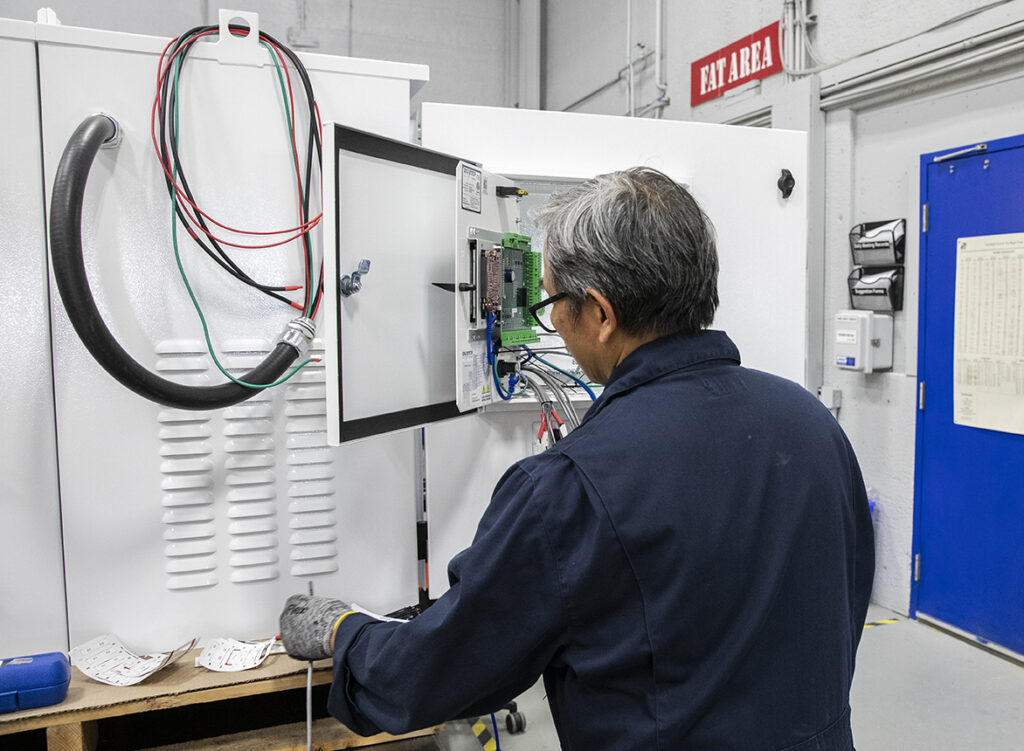
Almost every long-running facility has some version of this problem.
Something stops working and somebody says:
“Call Mike. He knows that PLC.”
Institutional knowledge is incredibly valuable, but a control system shouldn’t be dependent on one individual’s memory.
Over years of modifications, PLC programs can accumulate undocumented changes. Drawings may no longer perfectly represent what is installed. Alarm descriptions may make sense only to the person who created them, and temporary programming changes can quietly become permanent.
Eventually, troubleshooting depends more on experience with the particular system than on the documentation available to the technician.
That creates risk as employees change roles or retire and contractors change.
A PLC/HMI modernization provides an opportunity to improve:
- electrical drawings;
- I/O documentation;
- equipment and device identification;
- PLC program structure and comments;
- HMI tag naming;
- alarm descriptions;
- program and configuration backups; and
- troubleshooting information.
Good documentation isn’t an accessory to the control system.
It is part of its long-term maintainability.
5. Integrating New Equipment Is Becoming Increasingly Difficult
Oil and gas facilities rarely remain exactly as they were originally built.
A new VFD may be added. Instrumentation may be upgraded. A new analyzer, compressor, pump, skid or package system may need to communicate with the facility controls.
PLC/HMI panels can receive and monitor many types of process information, including flow, temperature, pressure, level, density, viscosity, speed, vibration and equipment status. They can also communicate with equipment such as MCCs, VFDs and data-acquisition or supervisory systems.
As the facility changes, however, an older automation platform may make each integration increasingly complicated.
Legacy communication protocols, limited processor memory, insufficient I/O capacity or outdated network infrastructure can result in workarounds simply to connect new equipment.
That doesn’t necessarily mean the entire control system needs to be replaced.
One of the first steps in a modernization project should be understanding the existing architecture and determining what can reasonably remain.
A migration can potentially focus on the controller, HMI, I/O, communications or another specific part of the system rather than replacing everything at once. Automation manufacturers themselves provide migration strategies that allow legacy systems to be modernized in stages.
For brownfield oil and gas facilities, that can be particularly important where shutdown opportunities are limited and substantial portions of the existing system are still performing reliably.
6. You Need Better Trending, Diagnostics or Remote Visibility
The amount of information available from modern process equipment continues to increase.
The challenge isn’t simply collecting more data.
It is making the right information useful.
A properly designed PLC/HMI system can help operators monitor process conditions, review trends, identify alarm patterns, diagnose equipment issues and communicate relevant information to other approved plant systems.
This can be valuable at remote oil and gas facilities where having better visibility into equipment and process conditions can help personnel determine what is happening before travelling to site.
However, remote connectivity has to be approached carefully.
Operational technology should not simply be connected directly to the public internet because remote access would be convenient.
The Canadian Centre for Cyber Security recommends isolating industrial control systems from regular corporate functions, segmenting OT and IT networks, restricting access, monitoring activity and carefully managing remote connections. Recent Canadian guidance has also warned about malicious actors targeting exposed OT systems, including HMIs and industrial control interfaces.
When remote access or connectivity is required, it should therefore be considered as part of the overall control-system and cybersecurity architecture—not added as an afterthought.
The objective is useful visibility without unnecessary exposure.
7. The Existing System Has Little Room for the Next Expansion
Sometimes the sign that a control system needs attention isn’t what it cannot do today.
It’s what you know the facility will need tomorrow.
Perhaps the PLC rack has little remaining I/O capacity.
Maybe the enclosure is already crowded.
The network has become difficult to expand.
Every new project requires another workaround.
Or the facility has upcoming plans for new equipment, additional instrumentation or expanded process monitoring.
Before adding another temporary solution, it may be worth looking at the larger control-system architecture.
A modernization project can consider not only today’s I/O count and processing requirements, but also reasonable spare capacity for future expansion.
That doesn’t mean designing an unnecessarily oversized system. It means thinking beyond the immediate project so that the next facility modification doesn’t require starting over again.
Does a PLC Upgrade Mean Replacing Everything?
Not necessarily.
This is one of the most important considerations in a brownfield modernization project.
The existing system may include:
PLC → I/O → field instrumentation → MCCs and VFDs → package equipment → HMI → communications → historian or supervisory systems
Some portions may be obsolete while others still have many years of useful service remaining.
Before determining the scope of an upgrade, document what is installed and identify where the greatest risks or limitations actually exist.
For example, a project might involve:
- replacing an obsolete HMI while retaining the controller;
- migrating the controller while retaining compatible field instrumentation;
- replacing obsolete I/O;
- upgrading communications;
- building a new PLC/HMI control panel while interfacing with existing equipment; or
- completing a larger phased modernization over multiple shutdowns.
Staged migration strategies are commonly used precisely because replacing an entire functioning control system at once is not always necessary or practical.
The appropriate approach depends on the equipment, process, system architecture, lifecycle status, operational risk and available shutdown window.
The Shutdown Window Matters
A PLC migration that looks straightforward on a drawing can become considerably more complicated when the facility has only a short period available for cutover.
Programming needs to be verified.
Existing field signals have to be understood.
Communication with third-party equipment needs to be tested.
Operators need confidence that the new HMI behaves as expected.
Alarm and shutdown functions have to work correctly.
And there needs to be a plan for what happens if something unexpected occurs during commissioning.
This is where preparation becomes extremely important.
Depending on the project, planning can include system audits, documentation reviews, I/O verification, programming, panel fabrication, Factory Acceptance Testing (FAT), cutover planning, commissioning and operator or maintenance training.
For complex migrations, some systems can even be converted in stages or operated alongside legacy equipment during portions of the transition to reduce cutover risk.
The goal isn’t simply to install a new PLC.
It is to return the process to reliable operation.
Before Planning a PLC/HMI Upgrade, Ask These Questions
If an existing control system is beginning to show its age, start by understanding what you have.
Consider asking:
- Is the PLC or HMI hardware obsolete or approaching end of support?
- Are critical replacement parts still readily available?
- Do we have tested spares?
- Is the current PLC program backed up?
- Is the HMI application backed up?
- Can current computers and programming software still communicate with the equipment?
- Are electrical drawings and I/O lists accurate?
- What equipment currently communicates with the PLC?
- Are there recurring nuisance alarms or poor diagnostics?
- Do operators have the process information and trends they need?
- Is additional remote visibility required?
- How will remote connectivity be secured?
- Is there sufficient I/O, processing and enclosure capacity for future expansion?
- What equipment can remain in place?
- How much shutdown time is available?
- How will the new system be tested before installation?
- Who will provide start-up and commissioning support?
- Who will support the system after the project is complete?
Those answers can help determine whether the facility needs a relatively small upgrade or should begin planning a broader modernization.
Building a PLC/HMI System Around the Process
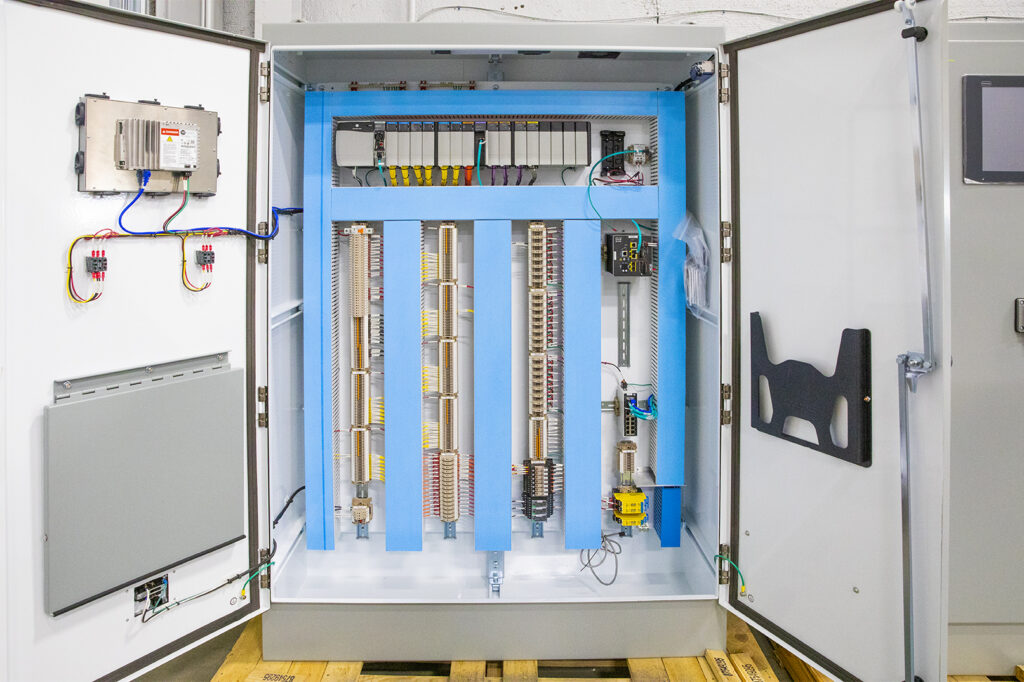
For 60 years, Westech Industrial has worked with Canadian industry in process control, instrumentation and industrial automation.
Our custom fabrication team designs and builds PLC/HMI control panels around the requirements of the application. Systems can receive and monitor process variables such as flow, pressure, temperature, level, density, viscosity, speed and vibration while communicating with equipment including MCCs, VFDs and data-acquisition systems.
Westech’s team can support a variety of equipment manufacturers and programming environments, helping ensure the control system integrates properly with the process and surrounding equipment.
Our panel shop is authorized to apply certification marks to custom industrial control panels built in accordance with applicable UL 508A and CSA C22.2 No. 286 requirements, and our fabrication work is supported by an ISO 9001:2015-certified quality management system.
Just as importantly, support doesn’t have to stop when the panel leaves the shop.
Westech technicians and engineers can provide support through manufacturing, programming, start-up and commissioning as well as troubleshooting and repairs throughout the life of the system.
Because modernization projects often involve existing equipment, legacy controls and limited shutdown windows, having support available beyond panel fabrication can be just as important as the hardware itself.
Along with PLC/HMI control panels, Westech’s custom fabrication capabilities include VFD and soft starter panels, flare control systems, and safety monitoring and alarming systems.
The right time to start thinking about a PLC/HMI upgrade isn’t necessarily when the old controller stops working.
It is when maintaining, supporting or expanding the existing system begins to introduce more risk than planning its modernization.
For more information on Westech Industrial’s custom-fabricated PLC/HMI control panels, please visit our website at https://westech-ind.com/.
You can also email us at [email protected] or call us at 1-800-912-9262.
Share This:






















INSIGHT: B.C.’s Royal Screw-Up on Royalties – Resource Works