


 CDN NEWS |
  US NEWS







Takeaways by Bloomberg AI
- The US blockade and sanctions on Iran are working, but they’re also raising the stakes beyond what the US is willing to pay.
- Iran’s Islamic Revolutionary Guard Corps is capable of escalating the conflict in ways it previously avoided, and has taken risks such as firing ballistic missiles at US military vessels.
- The conflict may expand and outlast Trump’s presidency, with Iran’s allies, such as the Houthis in Yemen, taking control of major flows of oil and other resources, and potentially forcing significant changes to the balance of power in the region.
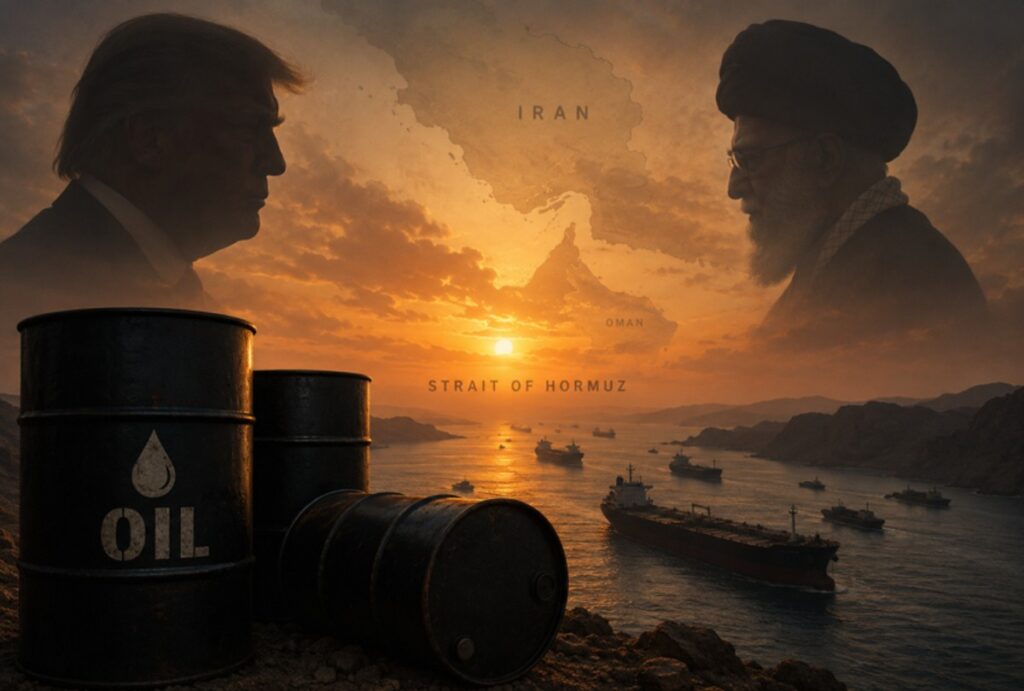
It is an unintended feature of President Donald Trump’s Plan B for defeating Iran — economic strangulation — that the more successful the policy becomes, the more risk the men who run the Islamic Republic are willing to accept to fight it. Judged on that metric, the American blockade and sanctions are working, but they’re also raising the stakes beyond what the US is willing to pay.
This begs the question of how long and disruptive the showdown with Iran is going to be, now that the US president has said he expects it to continue through the November midterms. At that point, Trump believes it will stop quickly, because the Iranians will no longer have the elections as leverage, implying that they’d then be ready to make a deal. That’s optimistic.
According to a Sept. 9 report in the Wall Street Journal, some of Trump’s most senior advisers (the same ones who advised against going to war in February) told him the conflict may outlast his presidency. They’re probably right and I hope they went a step further, warning him that it’s also likely to expand. His “little war” aimed at regime change in Iran is fast becoming a struggle to determine the future of the wider Middle East and the US role in it.
In truth, everybody is guessing at many of the factors that will decide this issue. We don’t know, for example, how many missiles or launchers the Iranians still have, nor what capacity they have to build new ones or how many they might be able to get elsewhere. We can’t be certain what will happen in energy markets, what political pressure will be brought to bear on Trump or what domestic unrest might unfold in Iran.
Nevertheless, it’s clear that Iran’s Islamic Revolutionary Guard Corps is capable of escalating the conflict in ways it previously avoided, knowing the Americans’ capacity to wreak the civilization-destroying devastation Trump has threatened. That’s something even the IRGC would try to avoid provoking for as long as it can — but the moment may have arrived.
One such provocation would be the destruction of a US warship, a humiliation for Trump that could leave hundreds of American service people dead or wounded and guarantee harsh retaliation. Iran has finally taken that risk, firing ballistic missiles at several US military vessels since Sept. 4. Even with none hit, the US responded by striking five Iranian oil tankers.
Another gun that long sat over the conflict’s Chekhovian fireplace was the potential for Tehran to get its Houthi allies in Yemen to block the Bab el-Mandeb Strait. This waterway controls traffic in and out of the Red Sea, which is where Saudi Arabia has been diverting about 5 million barrels of crude a day — oil that would normally exit the Persian Gulf via the Strait of Hormuz. Disrupting this alternate route would amplify the effects of Iran’s blockage in Hormuz and could have a significant impact on the global trade costs and inflation.
The Houthis — reportedly aided by IRGC guidance and Iranian promises of money and arms — have now taken that gun off the wall. Last week, they fired multiple missiles into Saudi Arabia, wounding more than 70 people, while the group’s land forces captured the port city of Mokha and, reportedly, several nearby islands. This could prove a huge win, both for the Houthis and Tehran, providing the potential to place Houthi missile launchers and fast boats less than 50 miles from the narrows that create Bab el-Mandeb.
These territorial gains, if consolidated, could prove enough to give the Houthis the kind of permanent control over the strait that the Iranians are now demanding over Hormuz. Together, they would put two broadly Shia, Islamist and anti-Western forces in control of major flows of oil, liquified natural gas and fertilizers from the gulf.


According to Axios, Saudi Arabia’s de facto leader Mohammed Bin Salman called Trump twice last week, asking him to order US air strikes on Houthi positions. The answer was no — Trump is understandably reluctant to open a second front in the war. But it’s too late for that. Houthi control of Bab el-Mandeb would join the two fronts into one, and the capture of Mokha has put that within reach. At the weekend, drones fired from Iraq — likely by an Iran-backed militia — struck the East-West pipeline that transports Saudi oil to the Red Sea, forcing its closure and prompting a further spike in crude prices.
Trump may not recognize what a turning point this could be. Saudi Arabia will have a choice: Either fight the Houthis — which would require the involvement of the US or some other military power — or cut a deal with them. The latter would likely also require detente with Iran and mean significant changes to the balance of power in the gulf and on the Arabian Peninsula.
Iran’s nuclear program remains an important part of this wider struggle, even if it has been sidelined by the more immediate issues around Hormuz. And here, too, is potential for escalation. A Sept. 9 analysis of satellite imagery from the Center for Security and International Studies, a Washington-based think tank, found there has been “a clear surge” in construction this year around Pickaxe Mountain, the nuclear facility the Iranians have been building near their uranium enrichment plant at Natanz, with more activity around the site than at any time in the past. (On the same day, the UN’s nuclear watchdog voted to refer Iran to the UN Security Council for non-compliance with its treaty obligations, the first time it has done so in 20 years).
None of the above suggests a short war or willingness on Iran’s part to compromise. To the contrary, IRGC spokesman Brigadier General Hossein Mohebbi last week restated Iran’s maximalist demands for peace and said it would expand its zone of attack on “unauthorized” shipping through Hormuz.
These developments were unimaginable before the US and Israel went to war against Iran in search of regime change. But, as Gregory Johnsen, a non-resident fellow at the Arab Gulf States Institute, said in a web briefing last week, Iran’s example in Hormuz has given the Houthis a new direction in their efforts to secure revenue and leverage. The Iranian regime, too, has new direction, sensing an opportunity to advance its preeminent strategic goal, which is to force an end US dominance and military presence in the Middle East.
Trump is right to want to avoid another forever war — this time in Yemen — but having started one in Iran, he may not yet grasp just how significant his refusal to help Saudi Arabia could prove.
This column reflects the personal views of the author and does not necessarily reflect the opinion of the editorial board or Bloomberg LP and its owners.
(Adds closure of Saudi Arabia’s East-West pipeline, in 10th paragraph.)
Share This:






















INSIGHT: B.C.’s Royal Screw-Up on Royalties – Resource Works