


 CDN NEWS |
  US NEWS







Motors are everywhere in energy facilities, driving pumps, fans, compressors, conveyors and other critical equipment. When a motor needs to be started and controlled, one of the common decisions is whether the application calls for a variable frequency drive (VFD) or a soft starter.
Both can reduce the electrical and mechanical stress associated with starting a motor, but they solve different problems.
A soft starter may be all that is required when the goal is simply to bring a motor smoothly up to full speed. A VFD becomes much more valuable when the process also requires speed control, greater operating flexibility or the ability to adjust motor output as conditions change.
Choosing correctly is not about selecting the more sophisticated technology. It is about understanding what the motor — and the process it serves — actually needs.
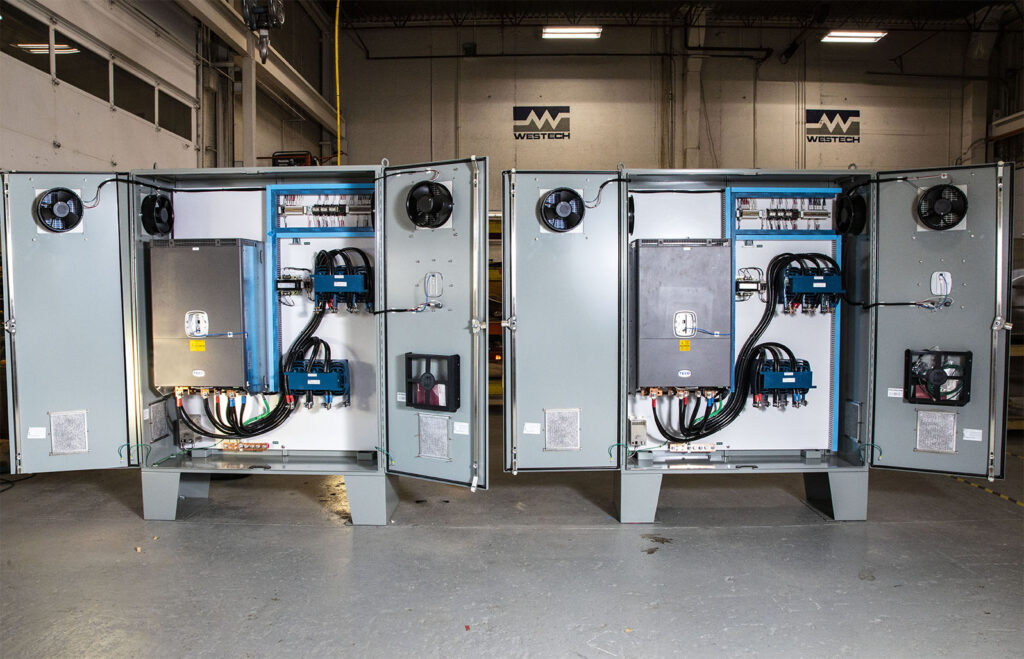
What Is the Difference?
A soft starter is primarily designed to manage what happens when a motor starts and, depending on the configuration, when it stops.
Rather than applying full voltage immediately, a soft starter gradually increases the voltage supplied to the motor. This reduces the high inrush current and sudden torque that can occur during an across-the-line start. Once the motor reaches operating speed, many soft starters use a bypass contactor and the motor continues to run at its normal full speed.
A VFD takes motor control further.
It converts the incoming electrical supply and produces an output with adjustable frequency and voltage. Because motor speed is related to supply frequency, the VFD can control motor speed not only during start-up and shutdown, but throughout normal operation.
That distinction is the starting point for choosing between the two technologies:
Does the application only need a controlled start, or does the process benefit from controlling motor speed after the start is complete?
When a Soft Starter May Be the Better Choice
There is no advantage in adding complexity that an application does not need.
If a motor is intended to operate at full speed whenever it is running, a soft starter may provide exactly the functionality required.
For example, an application may need to reduce electrical inrush during motor start-up, minimize sudden mechanical stress on couplings and driven equipment, or provide smoother acceleration to operating speed.
Certain pumping applications can also benefit from controlled starting and stopping to help reduce abrupt pressure changes in the piping system.
Once the motor is at speed, however, there may be no operational reason to vary it.
In those applications, a soft starter can often provide a simpler and more economical solution. Soft starters also generally require less panel space than an equivalent VFD installation, which can be an important consideration where available enclosure space is limited.
The key question is whether the process needs control after the starting sequence has finished.
If it does not, adding a VFD simply because it offers more functionality may increase initial cost and system complexity without providing a meaningful operational benefit.
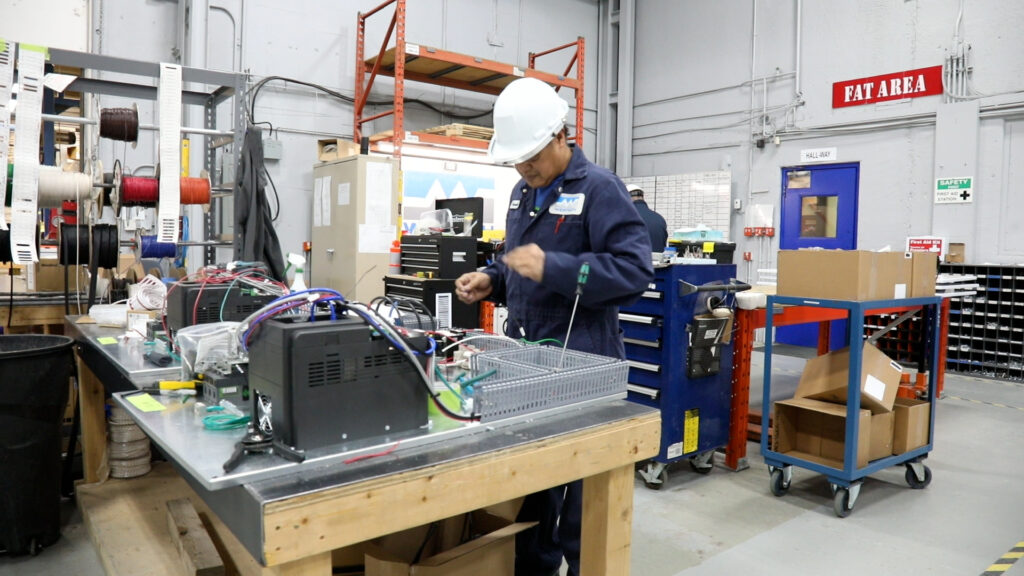
When a VFD Starts to Make More Sense
A VFD becomes much more compelling when changing motor speed changes the way the process operates.
Consider a pump that does not need to provide maximum flow all of the time, or a fan whose required output changes as process conditions change.
Without variable-speed control, the motor may continue running at full speed while another method — such as a valve, damper or other mechanical control — regulates the process.
A VFD allows the motor itself to respond to process demand.
Instead of producing full output and then restricting it elsewhere in the system, motor speed can be increased or decreased as required.
For centrifugal pumps and fans in particular, reducing speed can significantly reduce the power required by the equipment. The relationship between speed, flow, pressure and power is described by the affinity laws, which is why variable-speed operation can produce substantial energy savings in the right application.
The important phrase is “in the right application.”
Installing a VFD does not automatically create energy savings. If the motor must operate at or near full speed continuously, there may be little opportunity to reduce energy consumption through speed control.
That is why process conditions should be understood before the motor-control technology is selected.
Start With the Process, Not the Panel
It can be tempting to begin a control-panel project with questions about horsepower, voltage and which drive or starter should be installed.
Those details matter, but they should not be the first questions.
Start with what the equipment actually needs to do.
Does the pump need to maintain a variable flow or pressure?
Does a fan need to respond to changing process conditions?
Will the motor normally operate at one fixed speed?
How frequently will it start and stop?
Is high starting torque required?
What happens to the process if the motor stops unexpectedly?
Will operators need to adjust speed locally, remotely or automatically?
Does motor speed need to respond to a pressure transmitter, flowmeter, level measurement or another process variable?
Once those operating requirements are understood, the choice between a VFD and soft starter becomes much clearer.
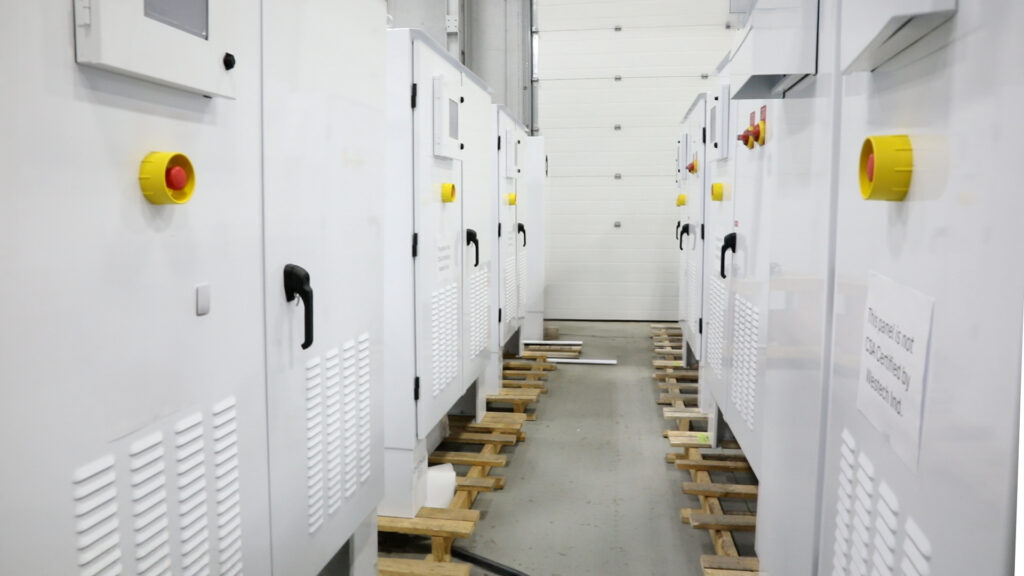
Consider More Than the Motor
A VFD or soft starter rarely operates completely independently from the rest of an energy facility.
Motor control may need to interact with process instrumentation, PLCs, HMIs, safety systems, alarms or a facility’s DCS or SCADA system.
This is particularly important with VFD applications because the drive can become part of the larger process-control strategy.
A pressure measurement, for example, could provide information to the control system, which then adjusts pump speed to maintain a desired operating condition.
Operators may also require information such as motor status, drive faults, operating frequency, current or other diagnostic information through an HMI or remote control system.
Defining these requirements before the panel is built can help avoid unnecessary changes during commissioning.
VFD Applications Require Additional Design Considerations
The additional capability of a VFD also brings additional engineering considerations.
A VFD generates heat, so enclosure design and cooling requirements need to be considered. Electrical harmonics, motor compatibility, cable length, filtering and the operating environment may also influence the final design.
These factors become especially important in Canadian energy applications where a control panel may have to operate across a significant temperature range or in a demanding industrial environment.
The best solution is not simply to select a drive from a catalogue and install it in an enclosure.
The drive, motor, process, electrical system, enclosure, controls and operating environment need to be considered together.
Think About Maintenance and Troubleshooting Too
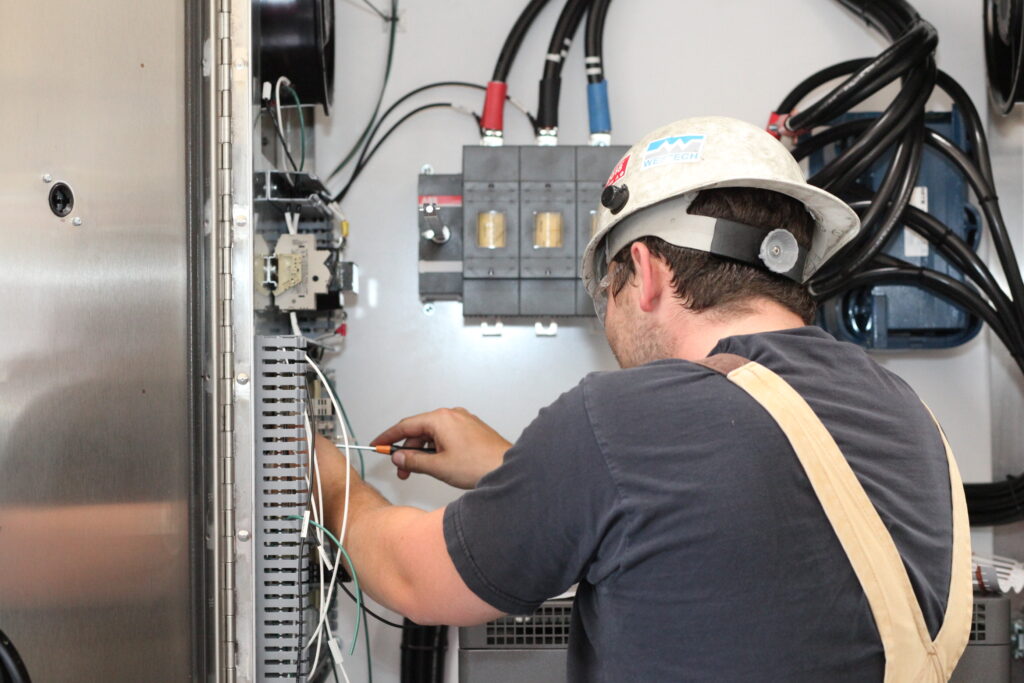
The system will spend considerably more time operating than it will being commissioned.
That makes maintainability worth considering during the original design.
When a motor is not running as expected, operators and technicians need enough information to determine whether the problem is with the process, the motor, the drive or starter, a field device, the control logic or another part of the system.
Clear indication, meaningful alarms, accessible components and accurate documentation can make troubleshooting considerably easier.
VFDs can also provide valuable diagnostic information and communication capabilities that can assist with troubleshooting and integration into a larger control system.
A well-designed control panel should therefore be built around how the equipment will be operated and serviced throughout its life — not simply how it will function on start-up day.
So, VFD or Soft Starter?
The decision can often be simplified to one fundamental question:
Do you need to control the motor only while it starts, or do you need to control what it does while it runs?
If the motor will normally run continuously at full speed and the primary objective is to reduce starting current and mechanical stress, a soft starter may be the more practical solution.
If the process requires variable speed, greater control over operating conditions, more advanced automation or an opportunity to reduce energy consumption by matching motor output to process demand, a VFD may provide significantly more value.
Neither technology is automatically the better choice.
The right solution is the one that fits the application.
Custom Motor Control Built Around the Application
For 60 years, Westech Industrial has supported Canadian industry with process control, instrumentation and industrial solutions.
Our custom fabrication team designs and manufactures both VFD and soft-starter control panels, allowing the motor-control system to be built around the requirements of the process rather than forcing an application into a standard panel configuration.
Westech can incorporate PLC/HMI control, instrumentation interfaces, communications, alarms and other required functionality into the overall panel design.
Systems can also be designed in a range of enclosure configurations, with internal heating and cooling where required for the operating environment.
Our ISO 9001:2015-certified quality management system supports our fabrication process, and our panel shop is authorized to apply certification marks to qualifying custom industrial control panels built in accordance with UL 508A and CSA C22.2 No. 286 requirements.
Just as importantly, support does not end when the panel ships.
Westech’s technicians and engineers can assist with start-up, commissioning, troubleshooting and repairs, helping customers support the system throughout its operating life.
Whether the right solution is a VFD, a soft starter or a more integrated motor-control system, the best place to start is not with the technology.
Start with what the process needs the motor to do.
For more information on Westech Industrial’s custom-fabricated VFD and soft starter panels, please visit our website at https://westech-ind.com/.
You can also email us at [email protected] or call us today at 1-800-912-9262.
Share This:






















On The Verge: Energy Sector Primed for New Wave of Growth – ATB Economics