


 CDN NEWS |
  US NEWS







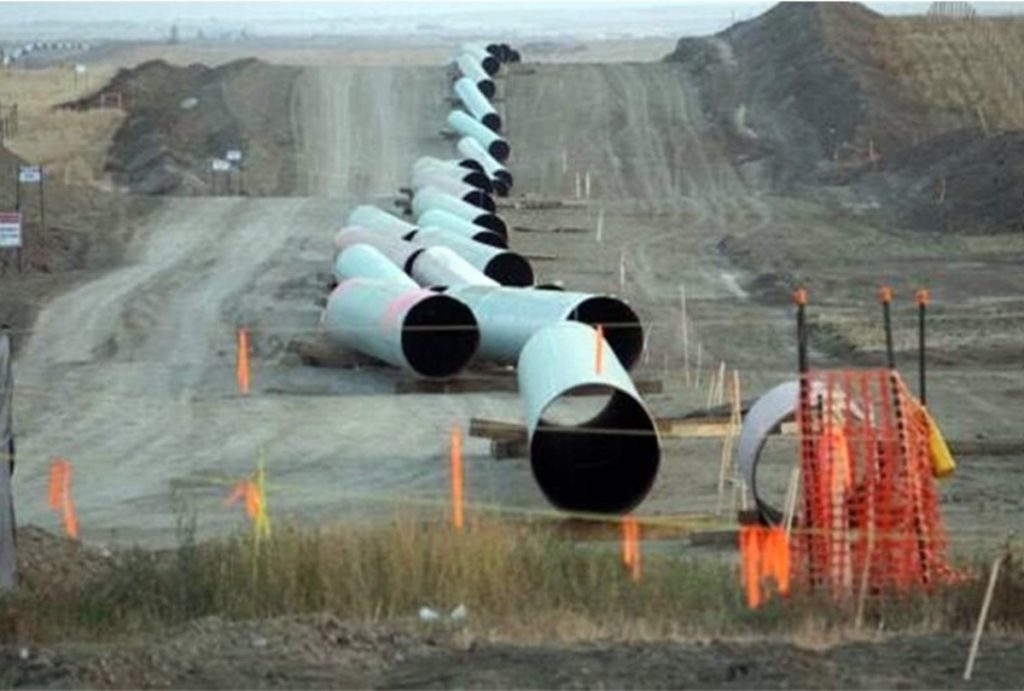
Immediate writeoffs for pipelines, production equipment and other capital assets could improve project economics, attract global capital and help launch a new generation of Canadian energy megaprojects
EnergyNow Media Editorial Staff
Canada’s energy industry is built on large, capital-intensive projects. Oil sands developments, pipelines, carbon capture networks, LNG facilities and power infrastructure can require billions of dollars upfront and many years of construction before generating their first dollar of revenue.
That makes Ottawa’s new Productivity Mega Deduction potentially one of the most consequential changes to Canada’s investment climate in decades.
Announced by Prime Minister Mark Carney at the Canada Investment Summit in Toronto, the measure would allow businesses to immediately deduct the cost of a much wider range of new capital investments once the assets become available for use.
The deduction expands immediate expensing from approximately 15 per cent of capital assets to more than 65 per cent. Newly covered assets include oil and gas pipelines, mining property, software, research and development, aircraft, vehicles, rail tracks, bridges, roads and other infrastructure.
Ottawa estimates the measure will cost the federal treasury an additional $36 billion over five years. The government’s objective, however, is to stimulate considerably more private investment, improve productivity and make Canada a more attractive place to build major projects.
“Canada has what the world wants. We’re an energy superpower with the most educated workforce in the world and rock-solid fiscal strength,” Carney said.
The Prime Minister described the measure as a signal that Canada intends to compete aggressively for global capital.
“We are sending a clear message to the world: Canada is building big. Build with us,” he said.
How the deduction works
Under Canada’s traditional capital cost allowance system, a company deducts the cost of a depreciable asset gradually over several years. The Productivity Mega Deduction would permit immediate expensing of eligible assets in the year they become available for use.
It is important to understand that the measure is not a direct government grant. It generally changes the timing of a company’s tax deductions rather than reimbursing the company for the full cost of an investment.
But timing matters enormously.
A tax deduction received today is more valuable than the same deduction spread over 10, 20 or 30 years. Immediate expensing improves near-term cash flow, reduces the after-tax cost of a project and allows a company to recover part of its investment sooner.
That can make the difference between a project meeting, or failing to meet, the rate of return required for a final investment decision.
Finance Minister François-Philippe Champagne called the policy “one of the most significant changes to Canada’s business tax system in half a century.”
He added that the deduction would help establish “the conditions for an investment supercycle” by allowing companies to build, expand and create high-paying careers in Canada.
The federal government estimates the measure will reduce Canada’s marginal effective tax rate on new business investment from approximately 13 per cent to 6.4 per cent. Ottawa says that would give Canada the lowest rate among major economies and less than half the comparable U.S. rate.
Why energy could be a major beneficiary
Few Canadian industries are as capital intensive as energy.
A conventional oil or natural gas producer may need to invest in drilling equipment, processing facilities, gathering systems and pipelines. Oil sands companies must finance enormous facilities that can operate for several decades. LNG developers require pipelines, liquefaction plants, marine terminals and associated infrastructure.
Carbon capture projects can be even more difficult to finance because they require substantial upfront investment without directly increasing commodity production.
By allowing more costs to be deducted immediately, the Productivity Mega Deduction could:
- Improve project cash flow during the critical early years.
- Increase after-tax rates of return.
- Shorten capital-recovery periods.
- Help Canadian projects compete for corporate capital against opportunities in the United States and other countries.
- Encourage companies to accelerate investments instead of postponing them.
- Improve the economics of pipelines, oil sands expansions, carbon capture facilities and energy-supporting infrastructure.
The measure could be particularly important for established oil sands producers. These companies possess large reserves and long-life assets, but new developments compete internally against dividends, share repurchases, debt reduction and projects in other jurisdictions.
Immediate expensing strengthens the argument for deploying capital in Canada.
Kruger: A very different investment environment
Suncor Energy CEO Rich Kruger told the Toronto investment summit that developing Canada’s oil sands has become more encouraging as governments change policies that previously discouraged investment.
“After 42 years in this industry … I am as encouraged or optimistic today as I’ve ever been for what our future holds,” Kruger said.
He specifically identified accelerated depreciation, capital cost allowances and more efficient regulatory approvals as important components of global competitiveness.



“For a capital allocator and investor, that presents opportunities today that I wouldn’t have considered a few short years ago,” Kruger said.
“We’re dusting off those project inventories. We’re updating those. We’re looking at how we would approach market in those, and it’s a very different environment today.”
That reaction is significant. Major producers generally maintain inventories of potential expansions, debottlenecking projects and new developments that can be advanced when economics and government policies become sufficiently attractive.
The deduction could cause companies to revisit projects that had been shelved or considered uneconomic under the previous investment environment.
Echoes of the 1990s oil sands expansion
Canada has seen this type of policy combination work before.
In the mid-1990s, Alberta implemented a generic oil sands royalty regime while the federal government provided accelerated capital-cost writeoffs. Those measures helped improve project economics and contributed to a historic expansion of oil sands investment.
Between 1992 and 2015, oil sands capital investment totalled approximately $262 billion, while production reached 2.5 million barrels per day—far exceeding early government expectations.
Annual oil sands capital spending eventually climbed to about $34 billion in 2014. A decade later, following lower oil prices and a more uncertain investment environment, it stood at approximately $14 billion.
University of Calgary economist Trevor Tombe said accelerated writeoffs were near the top of his list of policies that could improve Canadian productivity and per-capita economic growth.
“Accelerating the ability of firms to write off their capital investments” is particularly important for capital-intensive industries, Tombe said, and few sectors are more capital intensive than oil sands production.
“If we think back to the 1990s, it was policies like this that really facilitated the remarkable growth of the sector.”
Potential implications for pipelines and Pathways
The timing of the deduction is especially important as Alberta and Ottawa consider a proposed pipeline to the British Columbia coast and negotiate arrangements with the Oil Sands Alliance concerning the Pathways carbon capture and storage project.
Ottawa has confirmed that oil and gas pipelines and capital equipment used in oil production can qualify under the expanded incentive.
A new export pipeline would require tens of billions of dollars in investment. It would also need sufficient additional production to justify its construction, creating pressure for producers to sanction oil sands expansions and other production-growth projects.
The Pathways project presents a different but related challenge. It would require carbon-capture facilities at multiple oil sands operations, a shared CO₂ pipeline and a permanent underground storage hub in northeastern Alberta.
Oil Sands Alliance president Kendall Dilling said the accelerated writeoff addresses one of the key investment conditions the industry has been seeking.
“There’s a few more things that need to happen until there will be FIDs,” Dilling said, “but I have really, really high confidence” governments and industry are becoming aligned around growth.
Immediate expensing could reduce Pathways’ upfront after-tax capital cost, but it will not resolve every issue. Companies still require clarity on operating support, carbon-credit values, regulatory obligations and the durability of federal and provincial policies.
For carbon capture in particular, capital incentives cannot completely offset decades of operating costs associated with capturing, compressing, transporting and permanently storing CO₂.
A game changer – but not a complete solution
The Productivity Mega Deduction improves one of the most important variables in an investment decision: after-tax project economics. But companies will still consider commodity prices, market access, construction costs, regulatory timelines, Indigenous participation, carbon policy and the risk that governments could change the rules before capital is recovered.
Canada will therefore need to combine the deduction with:
- Faster and more predictable project approvals.
- Competitive provincial royalty structures.
- Durable carbon-market and investment-credit policies.
- Expanded pipeline and export capacity.
- Clear consultation and partnership frameworks with Indigenous communities.
- Confidence that major projects can actually be completed in Canada.
If those pieces come together, the deduction could help shift Canada from managing existing energy assets to building new ones.
Heather Exner-Pirot of the Macdonald-Laurier Institute believes the opportunity is substantial.
“All of the stars are aligning,” she said. “The time is right for Canada to push the gas pedal on the oilsands and on its potential.”
The Productivity Mega Deduction does not guarantee an investment boom. But for an industry in which projects require billions of dollars and compete globally for capital, recovering investment sooner could materially change the calculation.
Canada has the resources, technical expertise and long-life energy reserves. Ottawa’s new tax measure gives companies a stronger financial reason to invest in developing them.
Share This:






















BUYER BEWARE! OPINION: Iceland and Norway Keep Saying No to Europe. Canada Should Too