CDN NEWS |
  US NEWS







By EnergyNow Insights Staff
Germany’s landmark agreement to purchase liquefied natural gas (LNG) from British Columbia could reshape Canada’s role in global energy markets, even if many of those molecules never physically reach German shores.
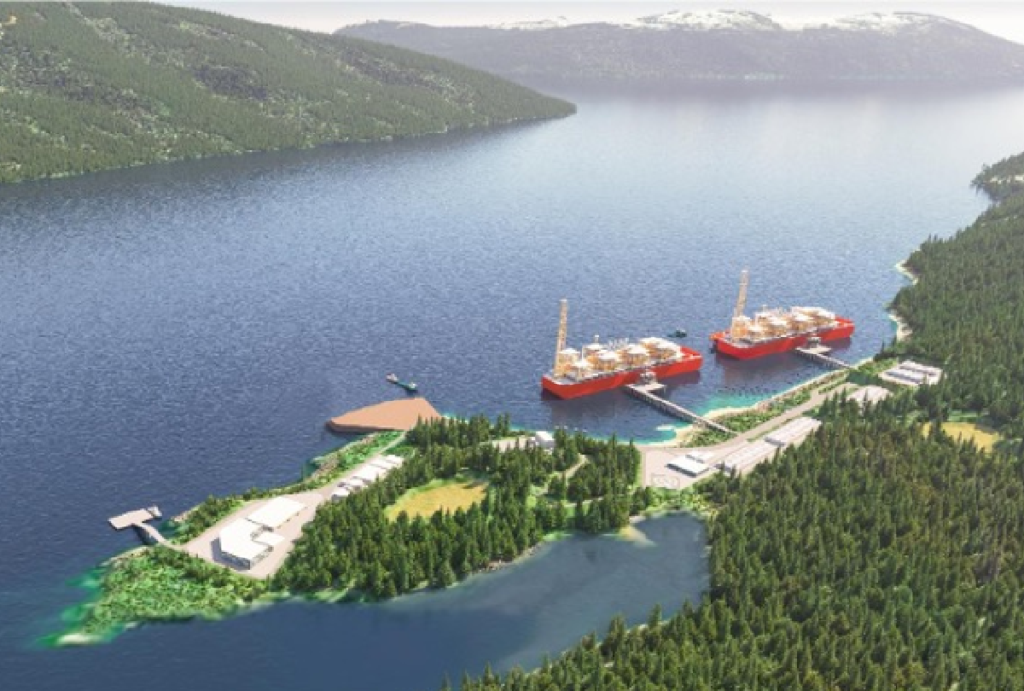
The recently announced agreement between Germany’s state-owned energy company SEFE (Securing Energy for Europe) and the proposed Ksi Lisims LNG project in northern British Columbia marks the first long-term LNG supply arrangement between a Canadian project and a European buyer. Under the framework agreement, SEFE intends to purchase one million tonnes of LNG annually for up to 20 years beginning in the early 2030s.
But the strategic value of the deal extends well beyond simply loading LNG tankers in B.C. and sending them across the Pacific and through the Panama Canal to Europe.
The Molecule Doesn’t Matter as Much as the Contract
A Financial Post article highlighted a concept that is becoming increasingly common in global LNG markets: portfolio optimization and cargo swaps.
In practice, Germany may not need every cargo purchased from Canada to be physically delivered into Europe. Instead, ownership of Canadian LNG can be used as a trading asset.
For example:
- SEFE could purchase LNG from Ksi Lisims and redirect those cargoes to buyers in Japan, South Korea, Taiwan, or other Asian markets.
- In exchange, SEFE could receive LNG from suppliers located much closer to Europe, such as producers in the United States, Qatar, Algeria, Norway, or other Atlantic Basin suppliers.
- The result is lower shipping costs, shorter transit times, reduced congestion risk, and greater flexibility while maintaining the same overall gas supply balance.
This is already how major LNG portfolio players such as Shell, TotalEnergies, BP, and SEFE manage global supply chains. LNG contracts increasingly represent access to molecules rather than a commitment to move specific molecules from one point to another.
Why Canadian LNG Is Attractive Even From the Pacific Coast
At first glance, British Columbia appears to be an awkward source of gas for Germany.
Canadian LNG exported from B.C. is geographically positioned to serve Asia. Even Ksi Lisims describes Asia as its primary target market because shipping distances are significantly shorter.
Yet Germany’s interest reflects several strategic realities:
1. Energy Security Has Become More Important Than Distance
Since Russia’s invasion of Ukraine, Germany has aggressively diversified away from Russian pipeline gas. Berlin now views supply diversity itself as a strategic asset.
A Canadian LNG contract provides:
- supply from a politically stable democracy;
- reduced exposure to geopolitical disruptions;
- diversification away from overreliance on any single supplier;
- long-term contractual security.
2. Germany Wants More Flexibility in Its LNG Portfolio
SEFE already holds LNG contracts in the United States, Argentina, Turkey and elsewhere. Canadian LNG adds another source of supply that can be traded, swapped, or redirected depending on market conditions.
In LNG markets, flexibility often carries as much value as physical delivery.
3. Canada Creates Optionality
If future geopolitical events disrupt supplies from other regions, Canadian LNG becomes an additional source available to European buyers.



That optionality alone can justify long-term agreements.
The Rise of LNG Swaps
Reuters previously reported that German buyers are increasingly interested in acquiring Canadian LNG cargoes specifically because they can be swapped within global markets. Canadian Energy Minister Tim Hodgson noted that European buyers see value in holding Canadian LNG positions even if the fuel is ultimately consumed elsewhere.
A simplified example illustrates the concept:
| Step | Transaction |
|---|---|
| 1 | Ksi Lisims ships LNG to Japan |
| 2 | SEFE owns that cargo |
| 3 | SEFE sells the cargo to a Japanese utility |
| 4 | Another supplier sends LNG from the Atlantic Basin into Europe |
| 5 | Germany receives gas closer to home while preserving supply security |
The economics can often be superior to physically transporting Canadian LNG all the way to Europe.
Why This Matters for Ksi Lisims
For Ksi Lisims, securing European buyers is arguably more important than the actual destination of the gas.
The project needs long-term customers before making a final investment decision on its estimated $10-billion development.
The SEFE agreement is particularly important because:
- it validates European demand for Canadian LNG;
- it broadens the project’s customer base beyond Asia;
- it strengthens financing prospects;
- it improves confidence among investors and lenders.
Industry officials have indicated that Ksi Lisims is seeking several additional European utility customers before reaching a final investment decision.
A Shift in Canada’s European Energy Relationship
The deal also reflects a significant change in Canadian policy.
Only a few years ago, discussions about supplying Canadian LNG directly to Germany were largely dismissed because Canada lacked east coast export facilities and Atlantic-facing infrastructure.
Today, both Ottawa and Berlin appear willing to use global LNG trading structures to overcome those geographic constraints. Instead of building dedicated Canada-to-Europe infrastructure, buyers can rely on global LNG portfolio management and swap mechanisms.
That approach may prove faster, cheaper, and more commercially viable.
The Bigger Picture
The Germany-Ksi Lisims agreement demonstrates how modern LNG markets have evolved.
The future of Canadian LNG exports may not be defined solely by where ships sail, but by where ownership resides.
Germany is effectively purchasing access to Canadian energy rather than insisting on direct physical delivery. By holding Canadian LNG contracts, German buyers gain flexibility to trade, swap, redirect, and optimize supply chains worldwide while strengthening Europe’s energy security.
For Canada, that means a B.C. LNG project originally designed for Asia may still play a meaningful role in Europe’s energy future—even if many of the cargoes never enter a European terminal.
Share This: