


 CDN NEWS |
  US NEWS







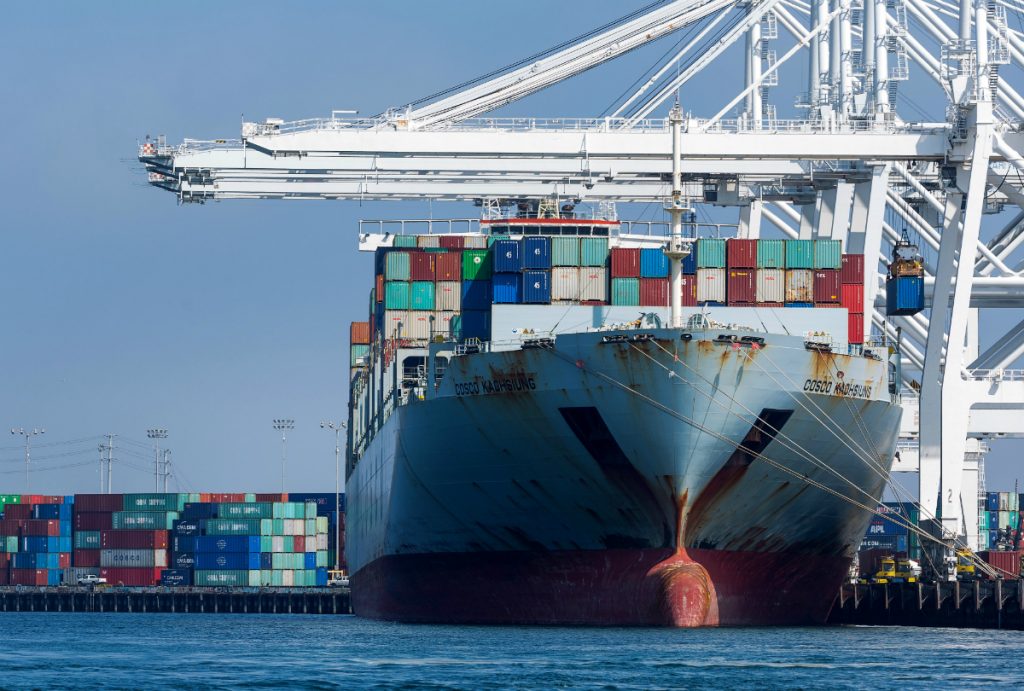
(Reuters) – A cargo ship reported a suspected attack as it attempted to pass through the Strait of Hormuz close to the coast of Oman on Thursday, British navy agency UKMTO said.
The UN’s International Maritime Organization is currently assisting ships escape the Gulf, hundreds of which have been stranded there since the Iran war began at the end of February.
The ship reported being struck on its starboard side by a projectile 7.5 nautical miles southeast of Oman’s port of Dahit, the UKMTO said.
Another maritime security source said the vessel was likely targeted by a drone, although it was not clear yet who carried out the strike.
Iran’s Revolutionary Guards said on Thursday that safe passage through the strait would only be possible through routes designated by Iran, adding that it would take action against vessels that failed to comply.
“If Iran threatens or blocks ships in the strait, “then we’re going to have a problem,” U.S. Secretary of State Marco Rubio, who has been on a tour of the Gulf this week, said prior to the incident.



Oil prices edged up about 1% following the incident, which analysts said rekindled concerns about how long it could take for Gulf oil flows to resume to normal levels.
The vessel hit was the Singapore-flagged container ship Ever Lovely, according to British maritime risk management group Vanguard and three maritime security sources.
The incident was deemed an attack based on initial assessments, British maritime security company Ambrey said.
The strike caused damage to the ship’s bridge but no casualties or environmental impact, the UKMTO said, adding that authorities are investigating the incident and advising vessels to transit with caution.
The ship’s owner, Taiwan-based Evergreen, could not immediately be reached for comment.
Reporting by Enas Alashray, Yomna Ehab, Jonathan Saul, Renee Maltezou and Yannis Souliotis; additional reporting by Scott DiSavino; editing by William Maclean and Jason Neely
Share This:






















INSIGHT: The Northern Shield Energy Corridor Provides Energy Security for All Canadians – Yogi Schulz