


 CDN NEWS |
  US NEWS







A landmark equity option would provide five North Coast First Nations majority ownership of the largest LNG storage tank in Canada, starting from the construction phase.
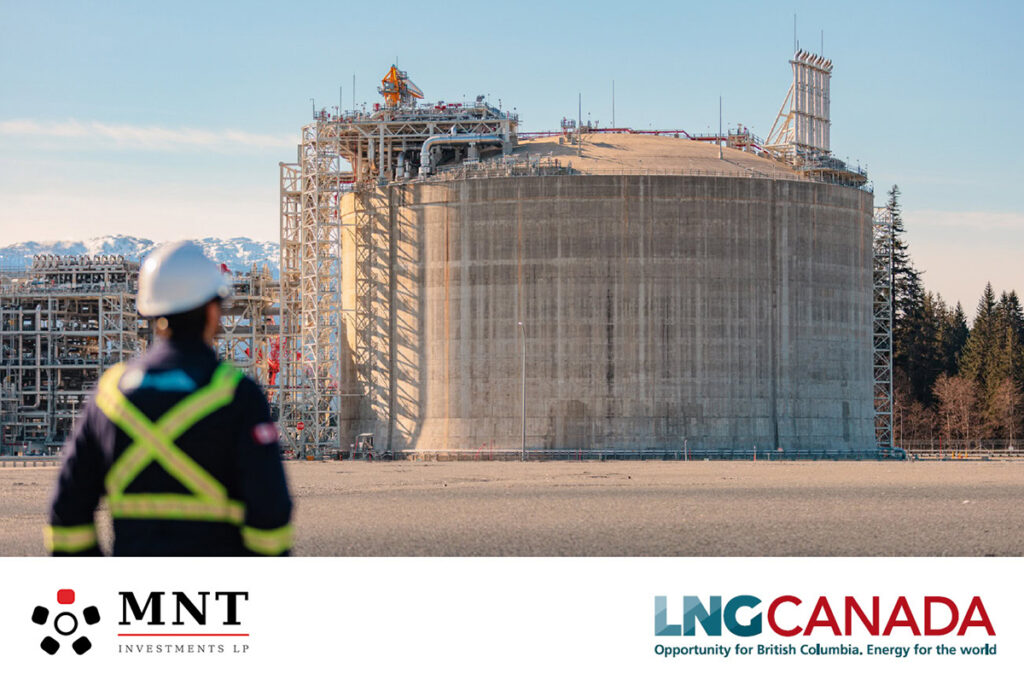
Five First Nations on British Columbia’s North Coast now have the option to buy a majority stake in the largest LNG storage tank in the country. Announced today by LNG Canada and its joint venture participants, the equity option stands as one of the largest Indigenous ownership positions ever put on the table in major Canadian infrastructure.
Maureen Nyce, Elected Chief Councillor of the Haisla Nation, called it a defining point in a collective history, saying the announcement “reflects what is possible when industry and Indigenous communities come together as partners, investors, and decision-makers.”
The agreement gives MNT Investments LP, a limited partnership formed by the economic development organizations of the Gitga’at, Gitxaała, Haisla, Kitselas and Kitsumkalum nations, the right to invest up to $1 billion to acquire a majority interest in the entity that would own the LNG storage tank planned for LNG Canada’s proposed Phase 2 expansion in Kitimat. The tank would be leased back to LNG Canada, which would continue to operate and maintain it for the operational life of the project.
This is ownership written in from the construction phase, not a benefits cheque handed over after the concrete is poured.
From the table to the boardroom
For years the ceiling on Indigenous participation in resource projects was procurement, jobs and impact benefit agreements. Real, but capped. Equity ownership changed the ceiling, and British Columbia has been where that shift keeps happening first.
The Coastal GasLink pipeline that feeds LNG Canada came with a 10 per cent equity option for the First Nations along its route, a deal one participating chief called the first time her people had been included as owners in a major project crossing their territories. The Haisla Nation went further and took majority ownership of Cedar LNG, the world’s first Indigenous-majority-owned LNG export facility, now under construction near Kitimat. Across the country, First Nations have acquired or negotiated well over $10 billion in equity in energy and resource projects in the space of a few years. Equity ownership has become, as Resource Works has argued before, the gold standard of economic reconciliation.
The scale is documented. Since 2017, First Nations have taken billions of dollars in equity positions in oil and gas projects across the country, including pipelines, tank farms, power plants and LNG terminals. Indigenous-affiliated vendors delivered more than $14 billion in goods and services to the sector nationwide between 2021 and 2023, and in British Columbia they accounted for more than 13 per cent of sector spending from 2022 to 2024.
Today’s agreement is the next rung. It puts five nations in position to own a majority of a piece of Canada’s largest LNG export facility, and it does so starting from the build, not the operations.
Why the tank matters
The asset at the centre of this deal is not a symbol. The 225,000 cubic metre storage tank is the largest in Canada and among the largest on earth at 56 metres tall and 92 metres across, with a nine per cent nickel alloy steel inner tank and cryogenic insulation. It is core infrastructure at one of the largest private sector investments in Canadian history.



That is what makes the ownership position serious. When an Indigenous community holds equity in an asset like this, the project’s success becomes its success, and the revenue flows into housing, healthcare and governance rather than into a one-time settlement. The numbers represent stability and generational income for these communities. LNG Canada has already shipped more than 100 cargoes since operations began on June 30, 2025. Phase 2 could add two more LNG trains and lift total plant capacity to as much as 30 million tonnes per year.
The condition worth watching
The agreement carries one condition, and it’s the one to watch. The equity option is contingent on LNG Canada’s joint venture participants approving Phase 2, with a Final Investment Decision targeted for the end of 2026. Shell, PETRONAS, PetroChina, Mitsubishi and Korea Gas Corporation still have to say yes.
The lesson of the last decade should be clear by now. Canada spent years watching the United States build export terminal after export terminal while this country argued with itself. A billion-dollar Indigenous ownership stake, five nations aligned behind a project, a tank already engineered and a customer base in Asia and Europe hungry for lower-carbon supply is exactly the kind of business case that should make a Final Investment Decision easy. Reconciliation, competitiveness and Canadian energy security are all pointing in the same direction here. The task is to say yes and put shovels in the ground.
What the nations are saying
The Indigenous leaders at the MNT table each commented on behalf of their nations on the historic nature of the agreement.
Luugagwelks (Linda Innes), Elected Chief Councillor of the Gitxaała Nation, said the agreement proves a different path is possible, one where “Indigenous Nations are not expected to accept impacts but instead participate as equity owners and true partners.”
Glenn Bennett, Elected Chief Councillor of the Kitselas First Nation, drew the distinction that runs through the whole deal. “True reconciliation is not just about consultation; it is about equity, ownership, and long-term value creation for our people,” he said. “By securing a stake in LNG Canada’s tank infrastructure, we are not just participating in Canada’s energy future; we are ensuring that future directly sustains our community for generations to come.”
Arnold Clifton, Elected Chief Councillor of the Gitga’at First Nation, put the partnership in terms of collective effort. “This partnership with LNG Canada and the five Nations at the MNT table serves as a prime example of the sum being greater than the individual contributions,” he said. “Many hands, each doing a lot of heavy lifting, ensure this partnership will deliver benefits to the region and all involved for many generations.”
Diane Collins, CEO of the Kitsumkalum Economic Development Group noted that roughly 170 years ago the Gradual Civilization Act set out to strip Indigenous peoples of their inherent rights, and that five nations now stand shoulder to shoulder with an energy giant in a commercial achievement that a decade ago would have seemed unthinkable. “This is reconciliation at work,” she said.
That is the growth this equity option represents. Ownership has done what a generation of consultation could not, moving these nations from being asked permission to holding title, and it has made Indigenous economic actors the partners driving the project rather than bystanders to it.
Canada has the resource, the reliability and now the model. The North Coast is showing the rest of the country what economic reconciliation looks like when it is treated as a principle and not a slogan. Approve Phase 2, and let five nations own their share of it.
Angela Wrigley is the Editorial and Digital Director of Resource Works.
Share This:





















COMMENTARY: Varcoe: ‘Do No Harm’: Should Alberta Step in to Fix Gas System Constraints, Given Past Energy Interventions?