


 CDN NEWS |
  US NEWS







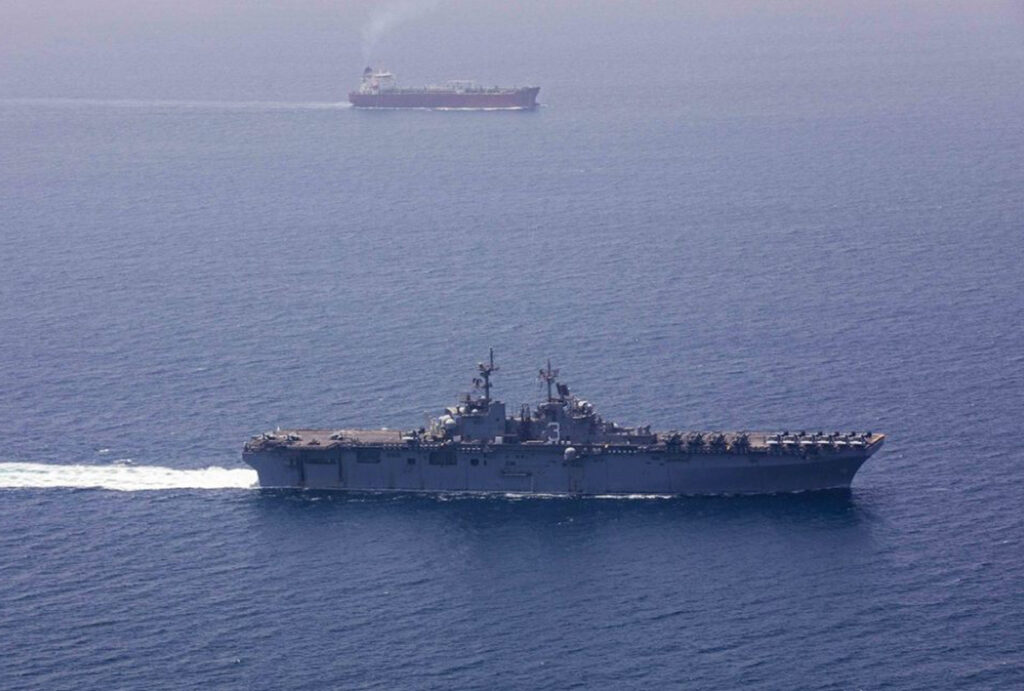
(Reuters) – Shipping companies are avoiding using a U.S. military-guided transit scheme through the Strait of Hormuz after a wave of Iranian attacks on vessels sparked safety concerns, seven maritime security and shipping industry sources said.
For decades ships sailed into and out of the Gulf using a safe set of lanes down the middle of the strait established by the U.N.’s shipping agency in 1968 dubbed the Traffic Separation Scheme.
Since the Iran war began on February 28, Iranian forces have mined this area, forcing vessels to use one of two makeshift routes close to either the Iranian or Omani coast.
HELPING GULF ENERGY EXPORTS KEEP FLOWING
In June, Reuters reported that the U.S. military had helped vessels through as part of an operation involving scores of secretive ship-to-ship oil transfers to keep Gulf energy exports flowing, using aerial and water drones as well as helicopters to guide tankers.
The U.S.-assisted initiative enabled the export of tens of millions of barrels of oil, helping dampen the impact on energy prices of the largest-ever disruption in oil and gas supplies.
Yet shippers are evaluating the route on the Omani side of the strait as increasingly dangerous after a wave of attacks on ships.
Iran’s Revolutionary Guards on Tuesday claimed responsibility for attacks on two Emirati oil supertankers.
Some five ships have been attacked since July 7 – three crude supertankers, one LNG tanker and one container ship – in Omani waters that fell under the U.S. scheme, according to analysis of incidents based on data from the U.N.’s shipping agency.
It was unclear if all the ships were sailing under the U.S. scheme, the sources said.
“The U.S. doesn’t seem to have any control over the situation,” one shipping source said, adding that their company had opted not to sail through the strait due to crew safety concerns and the deteriorating security situation.
“Iran’s continued ability to target ships sailing through the Omani route means the Trump administration’s proposed solution to keep ships moving is unlikely to work,” said Torbjorn Solvedt, principal Middle East analyst with risk intelligence company Verisk Maplecroft.
White House officials did not immediately respond to a request for comment.
ESCALATION AS U.S. REIMPOSES BLOCKADE
A U.S. defense official, speaking on the condition of anonymity, said in the past seven days more than 100 vessels had directly coordinated with the U.S. military to pass through the strait and over 300 had passed through the region more generally, evidence that the U.S.-led efforts were working, even if volumes remain below pre-war levels.



Iran threatened on Wednesday to shut off more regional energy exports, after the U.S. re-imposed a naval blockade of Iranian ports and both sides launched more strikes as they vie for control of the strait.
Tehran is signaling it may use its Houthi allies in Yemen to shut the Bab el-Mandeb, which leads into the Red Sea, opening a new front against Washington and putting two of the world’s most vital shipping arteries at risk.
Around nine Greek-operated LNG tankers, which had sailed into the Gulf via Hormuz in the past week to load cargoes, were stuck inside the strait due to the security concerns, another shipping source said.
Two further tankers have been attacked since July 7 in open waters outside the strait.
STRAIT IS OPEN, TRUMP SAYS
U.S. President Donald Trump said in a Truth Social post on Tuesday that the Strait of Hormuz “is open to ALL Ship traffic except for Iran”.
The U.S. reimposed its blockade on Iran-linked shipping on Tuesday.
Last week the U.S. Navy-led Joint Maritime Information Center raised its grading on the risks to ships in the strait to “severe” from “substantial” and one below its highest level, “critical”.
The raised risk rating followed attacks on three tankers.
In a note issued by the U.S. Navy after the U.S.-coordinated scheme was launched last month, companies were advised that efforts would be made to advise ship crews “but may not be able to communicate threats to vessels in real-time”.
The U.S. military had not provided enough clarity on the risks faced by ships sailing through the Omani route, five of the sources said.
“They have stated that the Strait of Hormuz is ‘not closed’ and remains available to use,” a maritime security source said. “This is making operators nervous and uncertain. Whilst they all have to make their own risk assessments, this is clearly not safe, so why say it is open?”
Greek maritime security company Diaplous said in an advisory on Tuesday that the threat environment remains high and advised shipping companies to pause voyages until Saturday.
MARISKS, another Greek maritime security company, in a separate advisory, also said on Tuesday: “At this stage, there is no assurance that transits through the Strait of Hormuz can be conducted with an acceptable level of safety.”
Reporting by Jonathan Saul, Renee Maltezou and Maha El Dahan, additional reporting by Jarrett Renshaw and Idrees Ali, editing by Simon Webb and Jason Neely
Share This:






















COMMENTARY: Varcoe: ‘Do No Harm’: Should Alberta Step in to Fix Gas System Constraints, Given Past Energy Interventions?