


 CDN NEWS |
  US NEWS







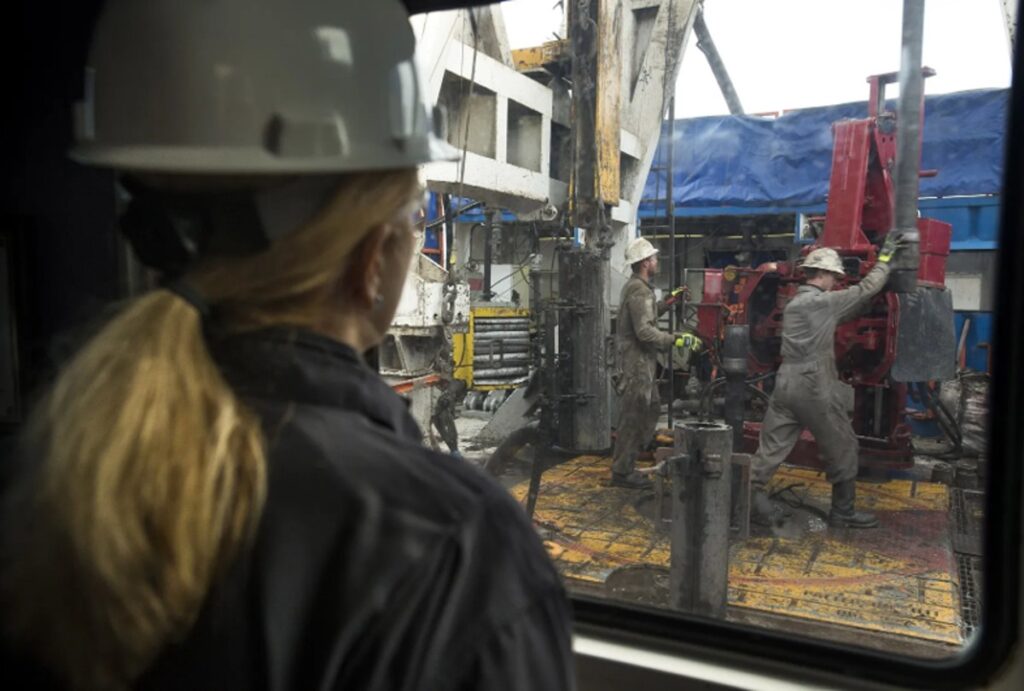
Once again, a hot-button environmental debate has reopened in Nova Scotia. To use hydraulic fracturing (a.k.a. fracking) technology to unlock Nova Scotia’s natural gas resources, or to leave those resources (underground or undersea) unmeasured and untouched.
To frack or not to frack—that’s still the question, raging now and then for some 15 years.
Captaining the “Go Fracking” team is Premier Tim Houston who in 2025 lifted a moratorium on hydraulic fracturing in the province. Last December, Premier Houston pushed things a step further, commissioning a study at Dalhousie University to work with private-sector actors to explore Nova Scotia’s natural gas potential, currently estimated at around 200 billion cubic metres of onshore natural gas.
The “No Frack” team consists of environmental activist groups and some First Nations—a coalition that has now become de rigueur in opposing energy-related projects in Canada—including David Wheeler, former president of Cape Breton University, who previously chaired a government review committee back in 2013, which (no surprise) supported imposing a fracking moratorium.
So let’s review what’s at stake. Preliminary exploration suggests Nova Scotia has significant natural gas resources under land and sea. According to a 2017 report from the Canadian Energy Research Institute, onshore (primarily shale) gas potential at the Horton Bluff in Nova Scotia ranges from 17 trillion cubic feet to 69 trillion cubic feet. At current market prices for natural gas, this reserve would represent a market value of between $47 billion and $190 billion. That’s a fair bit of gas, and a fair bit of lucre both for workers (who would benefit from the high wages paid by the industry), potential producers, and government, which would receive income from royalties and taxes on profits generated from gas production, consumption and sale.



Nova Scotia’s economy could use the boost. Nova Scotia’s gross provincial product is forecast at a flaccid 1.6 per cent for this year, dropping to 1.2 per cent in 2027. Provincial unemployment is predicted at 7 per cent this year, dropping to 6.8 per cent in 2027. Nova Scotia also has some of the lowest levels of business investment in Canada—a key driver of economic and wage growth.
And what are the objections? Pretty much the same as they have been since the beginning of hydraulic fracturing: worries (exaggerated, in retrospect) about subsurface and groundwater pollution, localized air pollution, localized increases in ground tremors, and, of course, greenhouse gas emissions from production and ultimate use of the natural gas produced by fracking.
Wheeler is banking on this last part. “Now I think you can’t really make a case for exploiting new oil and gas resources because of climate change,” he said, in a 2025 Canadian Press interview. “That seems to me to be the absolute block to any idea like this. Unless you believe in fairies and carbon capture there is no justification for doing this on climate grounds.”
It’s both prudent and imprudent for Wheeler to put his eggs in the “climate change” basket because, as we noted in a 2025 study, most of the environmental challenges ascribed to fracking have been overcome, and the technology has proven generally safe, with manageable risks via literally millions of operations across North America. Water protection has been established with better drilling/injection practices; air pollution controlled with better energy utilization; and even that ultimate bogeyman—fracking-induced tremors—has been solved with real-time monitoring and hydraulic-injection control systems.
But despite Wheeler’s focus on greenhouse gases, which remain a global (and non-disprovable) concern, Canada’s entire greenhouse gas emissions are trivial contributors to global warming (and derivative climate change), and the world is backing away from greenhouse gas targets such as Canada’s “net-zero” by 2050, which will make Canada’s contribution more negligible still.
The new debate over hydraulic fracturing is the old debate, and still really no debate. Opponents raise disproven canards and concerns that are ideological rather than empirical, while the economics remain compelling. Team “No Frack” should not be permitted to, once again, shut down reasonable efforts to at least explore and potentially develop Nova Scotia’s natural gas resources for the benefit of its people. Let the exploration commence.
Share This:






















INSIGHT: The Northern Shield Energy Corridor Provides Energy Security for All Canadians – Yogi Schulz