


 CDN NEWS |
  US NEWS







By Annika Segelhorst and Elmira Aliakbari
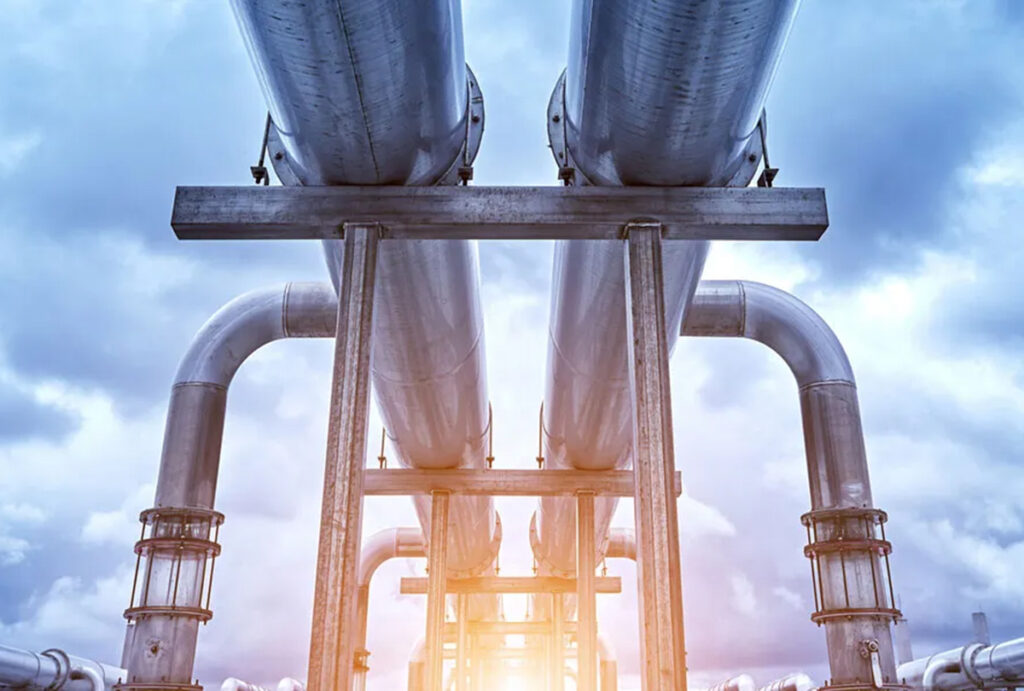
Recently, federal Energy Minister Tim Hodgson said Canada should “double down our efforts” to reach net-zero emissions by 2050, nearly eliminating greenhouse gas (GHG) emissions within the next 24 years. Yet just weeks before, he restated the Carney government’s desire for Canada to become “one of the largest suppliers of LNG in the world.”
The government has a two-pronged dream for Canada’s oil and gas sector—drive GHG emissions towards net-zero and expand production to establish Canada as an “energy superpower.” While each goal may sound appealing by itself, achieving both at the same time may prove difficult.
Reducing GHG emissions from oil and gas to realize this dream would require radical changes in how we produce oil and gas in Canada. For example, we’d need to electrify operations with renewable power (e.g. wind, solar) rather than fossil fuel power generation on site.
We’d also need to deploy technologies such as carbon capture and storage, where carbon dioxide emissions from oil and gas production are captured before reaching the atmosphere and held in long-term underground storage. Both methods remain costly and resource-intensive to implement.
Canada is also a victim of its own success in this regard—we’ve already implemented many of the most cost-effective ways to reduce emissions. For example, companies operating in Canada have significantly reduced emissions of methane (a potent GHG) by improving leak detection and implementing other mitigation measures. Subsequently, according to the World Bank, Canada’s methane released per barrel of oil produced declined by 27 per cent from 2012 to 2024.



To achieve additional GHG reductions, companies will need to adopt increasingly sophisticated and expensive technologies, making further decarbonization more expensive until more innovative and cost-effective solutions are found.
According to a 2023 report from Natural Resources Canada, there’s “no credible path to net-zero emissions without carbon management technologies [such as carbon capture and storage], and their deployment must be rapid and immense, scaling up by nearly 200 times by 2050.” The same report explains that carbon capture costs between US$15 to $120 per tonne of emissions captured. Yet history shows that new energy technologies can require many decades, if not centuries, to take hold at meaningful scale. Our energy systems depend on complex infrastructure built to last decades. Substantially altering these processes will require massive infrastructure overhauls. Expecting the current green energy transition to race ahead and defy historical precedent by 2050 is simply unrealistic.
And again, if companies adopt expensive emission-reduction technologies, Canadian oil and gas production costs will likely rise. As production costs increase, Canadian oil and gas becomes less competitive in global markets. Producers could respond by reducing production in Canada and shifting investment to jurisdictions with less stringent rules, which would affect jobs, the prosperity of communities and the overall economy.
And in a global context, less Canadian oil and gas production wouldn’t guarantee lower worldwide emissions. Regardless of what barriers to production emerge in Canada, global demand for energy will persist. The International Energy Agency forecasts that global oil and gas demand will continue to grow past 2050. As noted in the Carney government’s budget, Canada’s emissions (per barrel of oil produced) are already below the global average. The same holds for Canada’s natural gas production.
If Canada reduces its energy exports to the world, other producers, including in countries that produce oil and gas with higher emissions per barrel, will step up to fill the gap left by Canada’s decline in production.
The Carney government is asking two things at the same time from the oil and gas sector—dramatically reduce emissions and expand energy exports so we become an energy superpower. Both goals may be desirable but are not feasible in the near term. No one knows for certain when low-carbon technologies will become more cost-effective. Until then, strict short-term “net-zero” mandates are more likely to squash Canadian energy exports than support Canada’s quest to become an energy superpower.
Share This:






















On The Verge: Energy Sector Primed for New Wave of Growth – ATB Economics