


 CDN NEWS |
  US NEWS









First Nation propose three dams all within Homalco territory
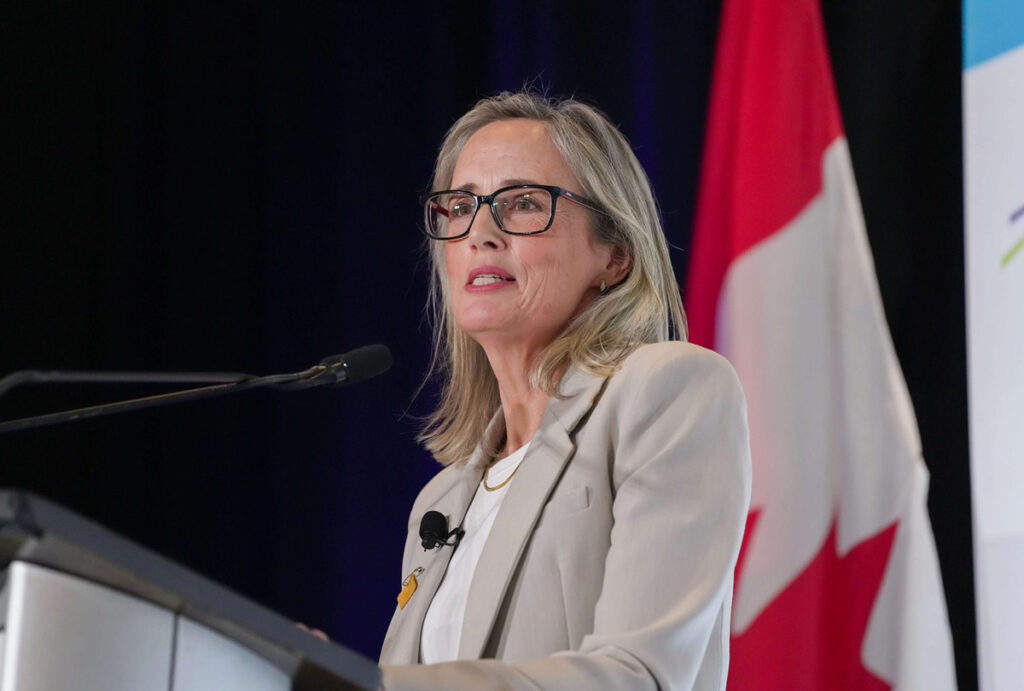
BC Hydro CEO Charlotte Mitha speaking to GVBOT. | Matt Borck The One Group Agency | GVBOT
One day after BC Hydro and Energy Minister Adrian Dix announced the province would dust off decades-old plans for large hydroelectric dam development, the Tŝilhqot’in First Nation moved to put the kibosh on one of them: The Bute Inlet hydro proposal.
“TNG has communicated to BC Hydro, in no uncertain terms, that this project will not proceed without free, prior informed Tŝilhqot’in consent,” the Tŝilhqot’in Nation said in a June 16 press release.
But the Homalco First Nation are pushing a hydroelectric proposal for Bute Inlet—the Homathko Clean Energy Hydroelectric Project—that they say would not encroach on Tŝilhqot’in territory, so their objections may be moot. The dams would all be located within Homalco territory.
A rift over regional jurisdiction
On June 15, the province and BC Hydro announced that they would reconsider two old hydro-electric dam proposals—Site E and Bute Inlet—to address a looming shortage of peak power generation capacity.
BC Hydro now forecasts electricity demand to increase 50% by 2050. The biggest concern is peak power demand, which typically occurs in the coldest months of the winter.
The compounding necessity for dependable power
Meeting that demand requires firm dispatchable power. The kind of power that only hydroelectric dams or natural gas power plants can provide.
“As we bring more wind and solar and intermittence onto our system, that dependable capacity becomes even more important, especially during those peak periods,” BC Hydro CEO Charlotte Mitha told the Greater Vancouver Board of Trade last month.
“So we’re starting early work to understand if there is a next generation of large hydro… and that includes potential projects like Site E and Homathko and that haven’t really been studied by BC Hydro in depth.”
“The value of building a dam that can feed the grid in the middle of February is extraordinary,” said Don McInnes, a B.C. mine and clean energy developer who was brought on by the Homalco as an adviser to develop the Homathko Clean Energy Hydroelectric Project.
Harnessing the power of rivers feeding into Bute Inlet is something BC Hydro began investigating in the 1980s, and which Plutonic Power also explored.
McInnes founded Plutonic Power, which developed the Upper Tolba River run-of-river and Dokie Wind farm projects. Plutonic Power was eventually acquired by Alterra Power, which was then acquired by Innergex Renewable Energy.
Homalco resurrects Bute Inlet proposal
About four years ago, the Homalco began working to advance the Bute Inlet hydroelectric project, which explains why BC Hydro and the province are now revisiting the Bute Inlet plan.
“We are not asking to simply be consulted—we want to be the underlying landlord and key decision-maker,” said Homalco Chief Darren Blaney.
“Homalco is saying yes to responsible development of our lands in exchange for ownership, revenue generation and long-term economic prosperity for our people.”
One of the original proposals for the Bute Inlet hydro complex contemplated three dams on rivers feeding into Bute Inlet, including two in an area to which the Tŝilhqot’in have court-affirmed Aboriginal rights.
So you can see why the Tŝilhqot’in were a bit fussed when Dix and BC Hydro announced that they would be dusting off plans for the Bute Inlet.
The Tŝilhqot’in would definitely have a say in the matter, if the project contemplated dams in Tŝilhqot’in territory.
“TNG calls on BC Hydro to halt any investigation of this project unless and until the jurisdiction and decision-making authority of the Tŝilhqot’in Nation is fully recognized and respected in the process,” the Tŝilhqot’in said their press release.
Blaney has been talking with Tŝilhqot’in leaders for some time now, trying to get them on board for hydropower development.

He would like to think the Tŝilhqot’in’s recent objections are just a bargaining tactic.
“It feels like they are taking a negotiating position, saying they haven’t been consulted, and they would like to be consulted,” Blaney told me.
But given the Tŝilhqot’in’s history of fiercely defending its territory from any encroachment—especially when it comes to protecting rivers, lakes and fish—it’s not hard to imagine them taking a hard stance against new dams being built in their claimed territory.
“I think one of the things we learned from them is that they know how to say no to stuff,” Blaney told me.
An alternative infrastructure path
While he would prefer to have the Tŝilhqot’in on board, Blaney said the Homalco are prepared to go it alone with the Homathko Clean Energy Hydroelectric Project.
“I talked to them (Tŝilhqot’in) about that, and I think we’re going ahead anyway,” he said. “We’re not going to wait around for them, and that’s part of what my issue is. I didn’t want to wait around for them to figure out their political stuff.”
Blaney said his people support a hydroelectric dam proposal because of the jobs and revenue it could generate for his people and the region.
The dam project would require a new transmission line to be built from Bute Inlet to Campbell River, where most Homalco live.
“Part of the reason why we’re talking to other nations is because of the amount of employment available,” Blaney said. “They’re thinking at least 1,500 to 2,500 workers.”
If the Tŝilhqot’in is not interested in a multi-billion-dollar hydroelectric dam project, there’s an alternative plan that would avoid Tŝilhqot’in territory altogether and place all the dams required in Homalco territory.
Two rivers feed into the top of Bute Inlet. On the right is the Southgate River, on the left the Homathko.
An updated proposal includes two dams on the Bishop River and one on the Mosley River, with over 900 megawatts of nameplate generating capacity, all within the Homalco traditional territory.
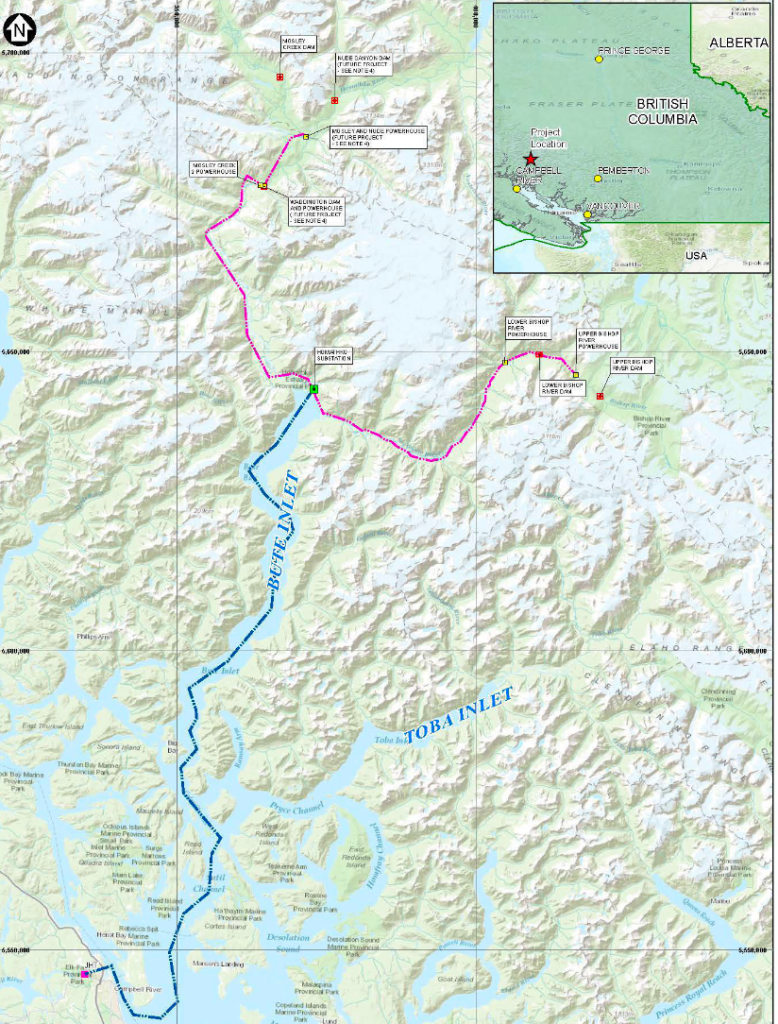
One barrier to dam development in the area is a conservancy—the Homathko River-Tatlayoko Protected Area—established in 1996.
The Homalco are seeking “appropriate boundary modifications” of the protected area, and are willing to go to court to have that done.
“We’re looking at removing the conservancy—going to court and having it removed because we weren’t consulted,” Blaney said.
But legal action may not be necessary, as the B.C. government has acknowledged that certain statutes, like the Clean Energy Act, would need to be amended to remove the various statutory restrictions on new hydroelectric dam development.
“In order to ensure that this investigative work takes place, that we can do this very work on the geotechnical aspects of these projects… we have to change the Clean Energy Act, and we will,” Dix said at the June 15 press conference.
He also emphasized that the reconsideration of both Site E and Bute Inlet projects are merely exploratory at this point.
“Doesn’t mean we’re proceeding with these projects at this stage,” Dix said. “We’re gathering the information we need to make the well-informed decisions on how best to meet the province’s energy needs.”
Nelson Bennett’s column appears weekly at Resource Works News. Contact him at [email protected].
Share This:





















NEW EPISODE #14: WATCH: 3 MINUTE HISTORY CANADA – The National Energy Program – Trudeau’s Energy Bomb on Alberta