


 CDN NEWS |
  US NEWS







The head of Resource Works tells the B.C. Natural Resources Forum that bridging the urban-rural divide and securing regulatory certainty are essential to the province’s future prosperity
By Ian Biana
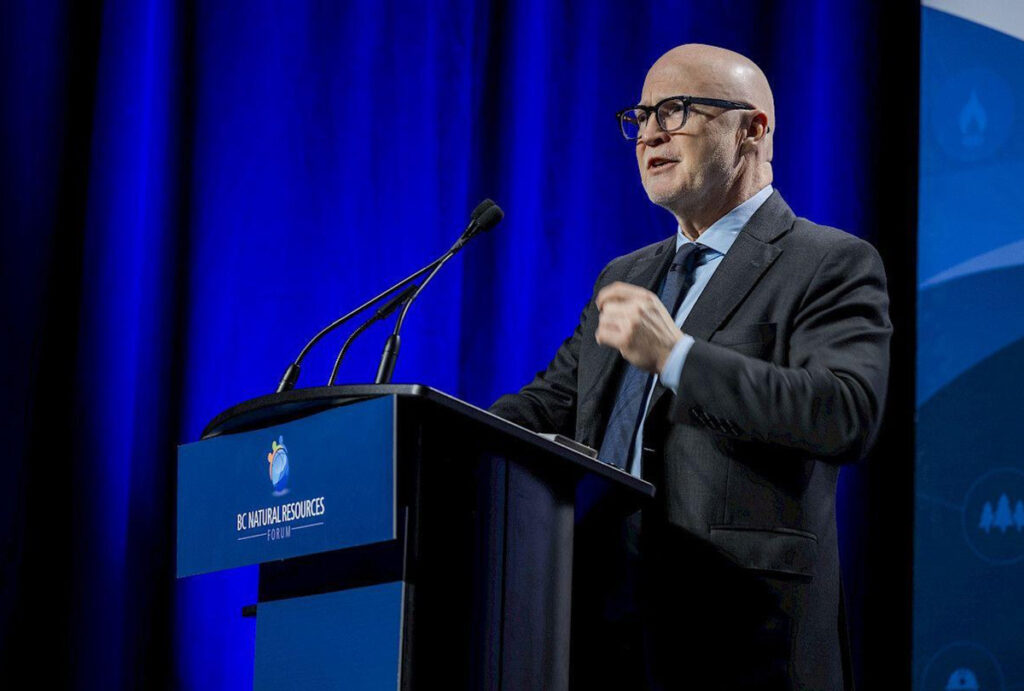
Stewart Muir delivering his Keynote Address at the 23rd BCNRF
By Resource Works
More News and Views From Resource Works Here
Addressing the crowd at the Prince George Conference and Civic Centre on Jan. 21, Stewart Muir delivered a pointed message about British Columbia’s economic future. The president and chief executive of Resource Works argued that the province’s long-term prosperity is inseparable from its natural resource sectors, provided policymakers can bridge the growing disconnect between urban and rural communities.
Speaking during the keynote session of the 23rd Annual B.C. Natural Resources Forum, Muir challenged the perception that resource development primarily benefits northern communities. Citing labour and economic data, he said more than half of the new jobs created by growth in the resource sector appear in Metro Vancouver, particularly in engineering, finance, insurance and logistics.
“These are not competing economies,” Muir told the audience. “They are one system.” Without a healthy north, he said, the south cannot thrive.
An inflection point for the province
Muir framed the moment as a turning point for British Columbia. With major projects such as Site C, the Trans Mountain expansion and LNG Canada either completed or nearing completion, he said the province must now decide what the next 15 years of development will look like.
He warned that recent momentum could stall without a pragmatic reset in regulatory policy and investment conditions. Global demand for reliable, ethically produced resources remains strong, he said, particularly for British Columbia’s lower-emission liquefied natural gas.
Muir described Canadian LNG exports as a significant climate opportunity, arguing that displacing coal and higher-emission gas in Asia with B.C. LNG could reduce global emissions by as much as 70 megatonnes annually. Realizing that benefit, he said, depends on reducing regulatory friction and restoring certainty for investors.
Indigenous ownership as nation-building
Indigenous leadership featured prominently in Muir’s address. He said the era of projects imposed on First Nations is over, replaced by a model built on ownership, partnership and shared governance.



He pointed to the North Coast Transmission Line as a contemporary example of nation-building infrastructure. The project, developed in partnership with local First Nations, is intended to deliver clean electricity to mining projects and northern communities, supporting economic development while advancing reconciliation.
Muir said Indigenous equity participation is no longer peripheral to resource development in British Columbia, but central to its legitimacy and long-term success.
Balancing the energy trilemma
Muir also addressed what he described as the province’s growing energy challenge: balancing reliability, affordability and public acceptance. He noted that British Columbia has been a net importer of electricity for three consecutive years, a trend he said raises concerns about future affordability and energy security.
To avoid energy poverty, Muir called for an honest assessment of provincial capacity and a practical approach to the energy mix. While supporting aggressive electrification, he said natural gas will continue to play a strategic role in maintaining system reliability during the transition.
Accountability and outcomes
The forum concluded with Muir calling for greater accountability from provincial leadership. Resource revenues, he said, underpin public services such as schools, hospitals and infrastructure that benefit all British Columbians, regardless of where they live.
He argued that transparency and measurable outcomes, not rhetoric, should guide future resource policy.
As global energy markets evolve and competition for capital intensifies, Muir said British Columbia’s natural advantage will only matter if it can be mobilized. By reducing regulatory barriers and fostering durable partnerships, he said, the province can ensure its resource engine continues to power the broader economy for generations to come.
Turning vision into action
To move these objectives from the stage to the real world, Resource Works leads several targeted initiatives, including the Indigenous Partnerships Success Showcase. This annual event provides a platform for highlighting proven models of shared prosperity and economic reconciliation. The organization also operates the Energy Futures Institute, which offers British Columbians fact-based research on energy security and the tangible impacts of provincial policy.
Those looking to support this mission or get involved can subscribe to the Resource Works newsletter for regular updates on regulatory shifts, participate in public webinars, or join the ongoing conversation on the Power Struggle podcast.
Watch: Stewart Muir: Seizing B.C.’s Global Resource Advantage
This video contains the full keynote address from the 2026 B.C. Natural Resources Forum.
Share This:




















REALITY: Carney’s EU Deal Threatens Alberta, Energy, & Sovereignty – 170,000 Reasons to Reject Canada’s EU “Associate Membership”