


 CDN NEWS |
  US NEWS







By Jake Fuss and Alex Whalen
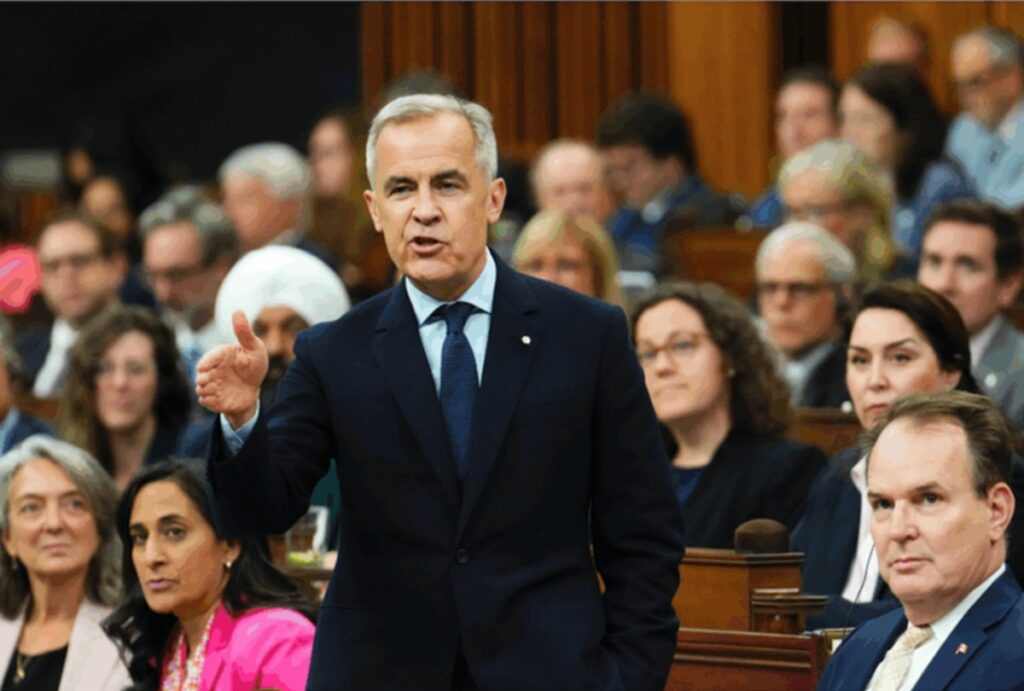
The Carney government will release its long-awaited first budget on Nov. 4, and according to the latest projections, the state of federal finances is deteriorating significantly. Due to a weak economy and excessive federal spending, the Parliamentary Budget Officer has forecasted that Ottawa will run deficits of at least $60 billion for the next four years and total federal debt will increase by nearly $1.0 trillion between 2024 and 2031.
Why should Canadians care?
Rising government debt and the resulting interest costs divert money away from other important priorities such as health care, social services and/or tax reductions. Mounting federal debt levels have led to a situation where a growing share of taxpayer money is simply paying interest costs. Clearly, the Carney government should introduce a credible plan to return to balance in its upcoming budget. How could it get there?
Historical experience in both Canada and peer countries shows what works. In reviewing successful fiscal turnarounds from around the world, late Harvard economist Alberto Alesina (and his co-authors) compared tax hikes versus spending cuts as two different approaches to tackling deficits. Alesina found that government spending reductions are a less-damaging approach to the economy than tax hikes in achieving deficit-elimination.



His work examined 16 OECD countries facing budget deficits in recent decades, including Canada. Throughout the course of his research, Alesina found spending cuts are not only less harmful than tax increases, but also that spending cuts (among other policy reforms) can actually improve economic growth. Carney often speaks of trying to build the strongest economy in the G7, but in order to do this, he’ll need to rein in deficits.
Alesina pointed to Canada in the early 1990s (under Jean Chrétien and several provincial premiers) as an example where cuts in government spending to eliminate deficits actually led to a stronger economy.
Large deficits, rising debt and high interest costs wreaked havoc on government budgets across the country in the 1990s. Government finances were on the brink of crisis and debt interest payments in Ottawa, for example, consumed roughly one third of all federal revenue. In the 1995 budget, the Chrétien government began to reduce spending and ultimately returned to balanced budgets in 1997 after cutting expenses by 9.7 per cent over two years. Provinces such as Alberta, Ontario and Saskatchewan also successfully contained and reduced spending, balanced their respective budgets, and eventually reduced taxes to turn around their economic fortunes during this period.
Following the fiscal reforms, Canadian living standards grew faster than every G7 country (except for the United Kingdom) from 1997 to 2007. The rate of job creation rose nearly twice as fast as the United States, poverty rates declined substantially, and business investment surged faster than any other G7 country.
If the Carney government wants to build a stronger economy, it must begin with a plan to balance the budget and put an end to debt accumulation. It simply cannot continue to run large deficits and burden future generations of Canadians with the resulting bill through higher taxes down the road. The government should stop pretending its finances are under control and instead reduce spending to tackle the deficit. Policymakers don’t need to look far to find a successful approach to emulate.
Share This:






















INSIGHT: Newfoundland Government Should Use Hydroelectric Deal to Help Repair its Finances