


 CDN NEWS |
  US NEWS







By EnergyNow Media
Second Narrows improvements could allow Aframax tankers leaving Trans Mountain’s Westridge terminal to carry more Canadian crude per sailing
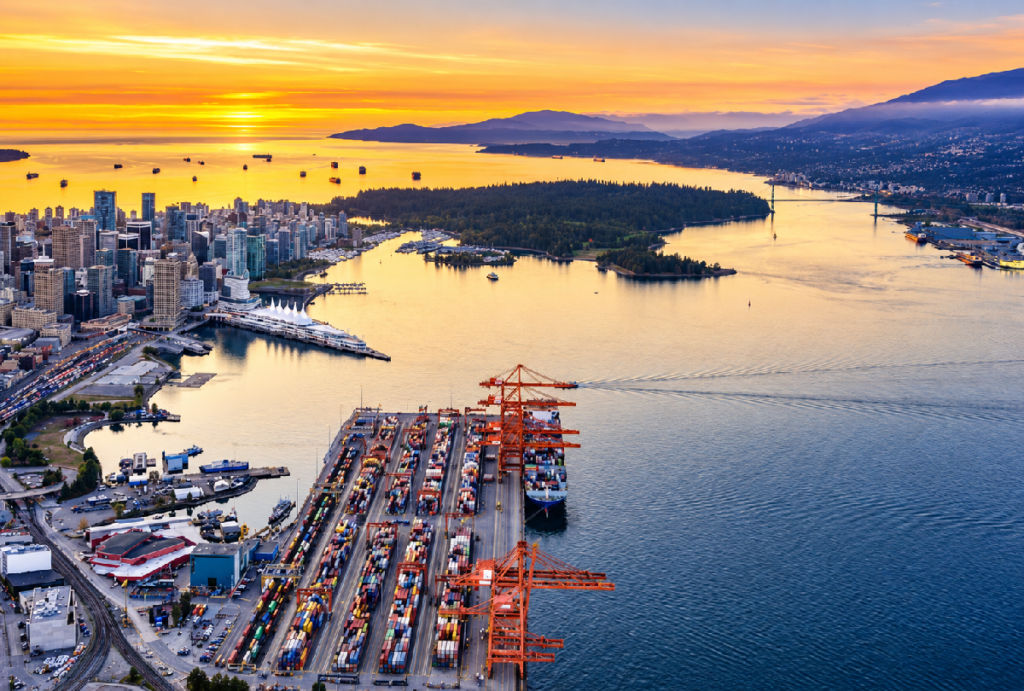
A dredging project underway in Vancouver’s Burrard Inlet could improve one of the key marine transportation constraints affecting crude oil exports through the expanded Trans Mountain pipeline.
The Vancouver Fraser Port Authority has begun dredging portions of the Second Narrows navigation channel east of the Ironworkers Memorial Bridge, with the work designed to improve vessel movements and allow cargo ships using terminals in eastern Burrard Inlet to load more fully.
That could be particularly important for Trans Mountain’s Westridge Marine Terminal in Burnaby.
The federal project description specifically identifies improved shipping efficiency through Second Narrows and the potential for vessels calling at Westridge to carry fuller loads as benefits of the project.
The work covers approximately 17,000 square metres along the northern and southern edges of the deep-sea navigation channel. About 25,000 cubic metres of material will be removed, with dredging reaching a maximum depth of 13.5 metres below chart datum.
Sections of decommissioned Metro Vancouver waterlines overlapping the dredging area will also be removed, while two new range lights will be installed west of the bridge to help pilots navigate large vessels through the confined waterway.
Dredging is expected to continue through February 2027. The channel will remain open to commercial and recreational traffic during construction.
Why It Matters to Trans Mountain
For Trans Mountain, the significance comes down largely to one measurement: Tanker Draft.
Westridge Marine Terminal sits east of Second Narrows. Tankers loaded with western Canadian crude must pass through the narrow channel before entering the wider waters of Burrard Inlet, the Strait of Georgia and eventually the Pacific Ocean.
The terminal handles Aframax tankers, the largest tanker class currently accepted at Westridge. But those ships often cannot depart carrying their full potential cargo because of draft restrictions through Second Narrows.
Trans Mountain said in 2026 that current restrictions generally limit Aframax vessels to about 75% to 80% of their typical 725,000-barrel capacity.
That translates to roughly 544,000 to 580,000 barrels per sailing, depending on vessel dimensions, tides and operating conditions.
The constraint is not necessarily the loading capacity of Westridge itself. Rather, it is how deeply a loaded tanker can safely sit in the water while maintaining sufficient clearance beneath the vessel as it travels through Second Narrows.
Trans Mountain operating information identifies 13.5 metres as the maximum vessel draft within the applicable traffic-control area, subject to marine safety and Second Narrows transit requirements.
By removing material from the edges of the navigation channel and improving the usable navigational envelope, the dredging project could make it possible for some tankers to load more crude before departing Westridge.
More Oil on Each Tanker
The potential benefit is straightforward: more barrels could be moved using the same number of tanker sailings.
If future operating conditions allow Aframax tankers to consistently leave Westridge with larger cargoes, Trans Mountain shippers could improve the efficiency of Canada’s Pacific oil export system without increasing pipeline capacity or constructing another marine terminal.
Even relatively small increases in cargo size could add up.
For example, if improved navigation eventually allowed an average tanker to carry an additional 50,000 barrels, every 100 sailings would move roughly five million additional barrels using the same number of vessel departures.
That figure is illustrative rather than a forecast. Actual loading improvements will depend on individual vessel dimensions, tides, under-keel clearance, Port of Vancouver restrictions and marine pilotage requirements.
The dredging should also not be interpreted as opening Westridge to substantially larger tanker classes. Aframax vessels remain the largest tankers handled at the terminal.



Instead, the opportunity is to make better use of the tankers already calling there.
Better Economics for Canada’s Pacific Oil Gateway
That could have meaningful economic implications.
A larger cargo aboard each ship spreads certain marine transportation costs — including vessel, tug, pilotage and voyage expenses — across more barrels. That can potentially reduce the transportation cost per barrel.
It could also improve utilization of the expanded Trans Mountain system.
The Trans Mountain Expansion entered commercial service in May 2024, sharply increasing pipeline capacity between Alberta and the Pacific Coast. Westridge Marine Terminal became Canada’s principal large-scale crude export gateway to Pacific markets and has three tanker berths.
Trans Mountain says the terminal is capable of exporting up to approximately 630,000 barrels per day of western Canadian crude.
By April 2026, Trans Mountain had reported loading its 500th Aframax tanker since the expanded system entered service.
With hundreds of tanker movements now taking place, incremental improvements in average cargo size could become significant over time.
More Oil Does Not Necessarily Mean More Tankers
Another important implication is that moving more crude through Westridge would not necessarily require proportionally more tanker traffic.
For a fixed volume of exports, larger average cargoes could mean fewer vessels are required.
Alternatively, if tanker movements remain at similar levels, additional barrels could be exported aboard the same number of ships.
That is particularly relevant because tanker traffic in Burrard Inlet has long been one of the most closely watched aspects of the Trans Mountain expansion.
Improving the amount carried by each vessel could therefore provide Trans Mountain with greater flexibility between export growth and vessel movements.
Better Scheduling Through Second Narrows
Water depth is only one factor governing tanker movements.
Large vessels travelling through Second Narrows are subject to detailed Port of Vancouver operating procedures involving tides, vessel dimensions, draft, under-keel clearance, tug escorts and specific transit windows.
Loaded vessels leaving Westridge can sometimes have to wait for favourable tidal conditions before passing through Second Narrows.
The dredging and new navigation aids could therefore offer benefits beyond heavier cargoes. A larger usable navigation channel may improve scheduling flexibility and help reduce some vessel delays.
However, completion of the project will not automatically mean every Aframax tanker can immediately load to maximum capacity.
Port regulations, tides, vessel-specific characteristics, pilotage requirements and safety margins will continue to determine individual cargo loads.
A Small Project With Larger Energy Implications
Compared with the multibillion-dollar Trans Mountain Expansion, dredging 25,000 cubic metres of material from Burrard Inlet is a relatively modest infrastructure project.
Its potential impact could nevertheless be meaningful.
Canada has already invested heavily in expanding pipeline capacity to the Pacific Coast. Improving the marine system at the end of that pipeline represents another opportunity to extract greater value from that infrastructure.
If the Second Narrows project allows Aframax vessels to leave Westridge carrying heavier cargoes more consistently, Canada could move more western Canadian crude to international markets per sailing, potentially improve transportation economics and make better use of Trans Mountain’s expanded capacity.
For Canadian producers looking to strengthen access to Pacific and Asian markets, getting more barrels onto each existing tanker could prove to be a significant incremental improvement.
Share This:






















Cash-Rich Oil Majors Face Post-Iran Strategy Rethink: Bousso