


 CDN NEWS |
  US NEWS







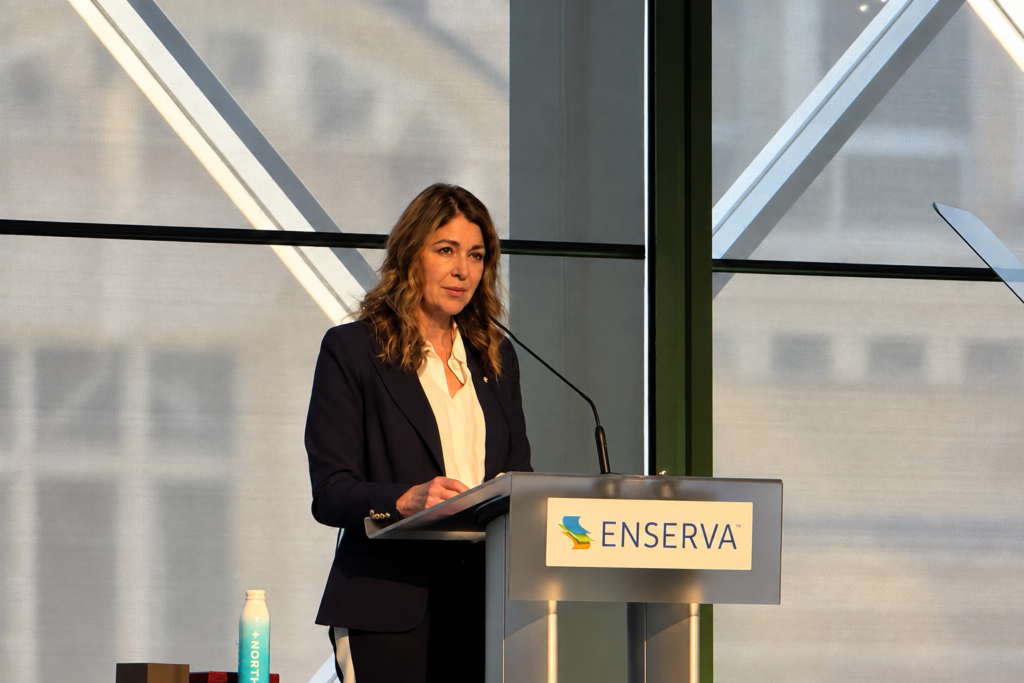
CALGARY — Alberta Premier Danielle Smith says she remains optimistic the proposed West Coast Oil Pipeline will receive a critical federal designation as a project of national interest, arguing the project could become a cornerstone of a much larger expansion of Alberta oil and natural gas production.
Speaking September 28 at the Enserva Speaker Series — Build Canada Stronger: Powering Canada’s Economic Future at the Calgary TELUS Convention Centre, Smith told an energy industry audience that she expects Ottawa to make an important decision on the West Coast Oil Pipeline, or WCOP, within days.
The event brought Smith together with Ontario Premier Doug Ford for discussions about energy, manufacturing, trade and infrastructure. Enserva framed the conference around how Canada can build, move and sell more energy while strengthening its economic competitiveness.
But during her own remarks to the audience, Smith placed the proposed new West Coast pipeline near the centre of Alberta’s economic strategy.
“We are advancing a proposed West Coast oil pipeline,” Smith said.
She then pointed directly to the approaching federal decision.
“I keep saying, do I have to manage expectations around an October 1 conditional approval, and my chief of staff keeps telling me no,” Smith told the audience. “So as you see, it’s coming up pretty closely here. So we’re going to have some kind of decision very soon.”
Smith added that Alberta expects the project to receive a federal “green light,” saying a new pipeline would allow Alberta crude to reach customers beyond North America at much larger scale, while reducing dependence on a single export market.
WCOP Decision Approaching
The federal Major Projects Office currently lists the proposed WCOP as being considered for listing under the Building Canada Act.
The Alberta government submitted the project to the Major Projects Office on July 2. The federal government says consultations with potentially affected Indigenous communities, provinces and federal permitting departments have been underway as part of determining whether the project should be formally listed as being in the national interest.
Ottawa has said it intends to provide notice by October 1 if it plans to list the project. As of Smith’s September 28 speech, that final listing had not yet been announced. Canada
The proposal calls for a pipeline capable of moving approximately one million barrels per day from the Edmonton-area region to a deepwater marine terminal in southern British Columbia. The concept would largely follow the existing Trans Mountain corridor, although the precise route remains subject to further development, consultation and regulatory review.
Smith argued that gaining additional access to international markets could support a major increase in Alberta production.
“Our oil production is closing in on five million barrels per day,” she said, recalling her previous target of eventually reaching eight million barrels per day.
She then jokingly raised the ambition further after discussing expectations from industry.
“So what the heck? Let’s increase it to 10 million,” Smith said.
That aspiration would require substantially more transportation, processing and supporting infrastructure than Alberta has today.
More Oil Means Much More Natural Gas
Smith stressed that increased oil sands production would also have major consequences for Alberta’s natural gas industry.
She cited industry estimates suggesting that adding one million barrels per day of oil production could require roughly 300,000 additional barrels per day of condensate. Producing that condensate, she said, could require approximately six billion cubic feet per day of additional natural gas production.
At substantially higher oil-production levels, those requirements could multiply.
“We’ve got to figure out how to get all of that moved to the right place,” Smith said, adding that Alberta is working with pipeline companies on additional capacity. Pasted markdown



Smith portrayed Alberta’s resource base as a foundation for that expansion. She cited a provincial reserve assessment estimating approximately 177 billion barrels of recoverable oil resources and an updated assessment placing proven and probable natural gas resources at roughly 144 trillion cubic feet.
“We like to say we’re sitting on an ocean of natural gas,” Smith said.
Pipelines West, East, South and North
WCOP was not the only pipeline discussed.
Smith said Alberta wants multiple transportation options.
“We intend to build new pipelines west, east, south and north to provide global markets with safe, reliable and responsibly produced energy,” she told the audience.
She pointed to the proposed Northern Shield Energy Corridor, supported by Alberta and Ontario, as another example.
The concept would include an approximately 3,300-kilometre oil pipeline connecting Hardisty, Alberta, with Sarnia, Ontario, creating a major new east-west energy connection.
Smith said cooperation with Ontario could extend well beyond pipelines.
She highlighted opportunities for Ontario manufacturers to supply the steel, equipment and industrial components required for Alberta energy development, saying discussions earlier in the day had focused on bringing more of those supply chains inside Canada.
“We can’t do it without help from our friends in Ontario and their manufacturing sector,” Smith said.
Smith Points to Broader Investment Push
Smith also used the speech to promote Alberta as an investment destination, highlighting the province’s corporate tax structure, regulatory changes and expedited approval process for major projects.
She described Alberta’s energy sector as moving beyond what she characterized as a decade of “headwinds and missed opportunity” and into a period of renewed investment. Pasted markdown
Smith cited investment and expansion announcements involving companies including Enbridge, Trans Mountain, South Bow, Pembina and ATCO as evidence of growing confidence.
She also highlighted Alberta’s ambitions in carbon capture, hydrogen, geothermal energy, petrochemicals, nuclear power, artificial intelligence, aviation and critical minerals.
The federal government says the WCOP proposal is linked to advancement of the Pathways carbon capture project, while the broader federal-Alberta strategy involving production growth, WCOP and Pathways could potentially catalyze more than $200 billion in investment, according to estimates cited by the Major Projects Office. Canada
Looking Beyond the U.S.
Underlying Smith’s speech was a broader argument about market diversification.
Trans Mountain has already demonstrated the potential for Canadian crude to reach Asian markets directly from the West Coast. The federal government said earlier this month that China has become the largest buyer of seaborne crude shipped through the expanded Trans Mountain system, accounting for roughly 60 per cent of those exports. Canada
A second major West Coast pipeline would dramatically increase that export capability.
For Smith, the immediate milestone is the federal decision expected around October 1.
“We expect the project to receive the green light,” she told the crowd.
Whether Ottawa formally lists WCOP as a project of national interest will therefore represent an important test of the new federal-provincial approach to major energy infrastructure and of Alberta’s much larger ambition to significantly increase oil and natural gas production while building new routes to global markets.
Share This:






















Cash-Rich Oil Majors Face Post-Iran Strategy Rethink: Bousso