CDN NEWS |
  US NEWS







“The bottom line is governments routinely get out-negotiated, and the public, the taxpayer, gets stuck with the bill.”
By Chris Varcoe
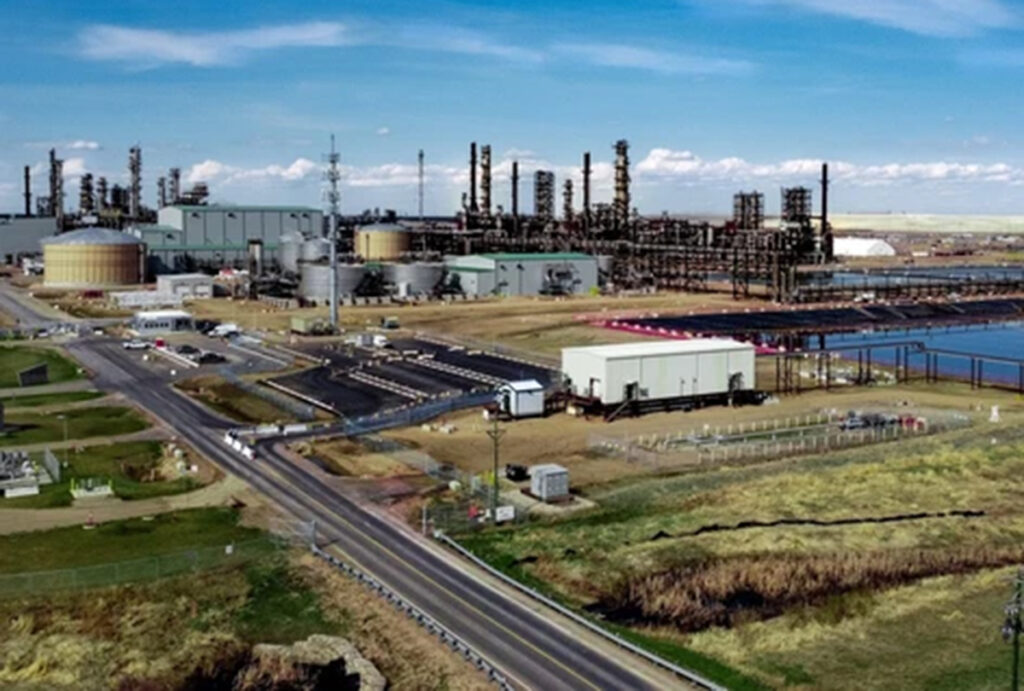
The Sturgeon Refinery saw a $588-million loss (a 62 per cent reduction from the previous year) recorded in the latest annual report of the Alberta Petroleum Market Commission (APMC), which was released last month. Photo courtesy North West Redwater Partnership
As Canadians watch a new debate unfold over what it will take to get a new oil pipeline built to the Pacific Coast, former Alberta energy minister Ted Morton has sage advice for provincial or federal politicians.
Don’t forget about history.
Past Alberta governments have a painful record of losing money when they get directly involved in major projects, seeking to de-risk developments and encourage the private sector to build.
“The track record is, I think, pretty one sided . . . not in the favour of governments and taxpayers,” he said this week.
One of those projects — the Sturgeon Refinery northeast of Edmonton — saw a $588-million net loss (a 62 per cent reduction from the previous year) recorded in the latest annual report of the Alberta Petroleum Market Commission (APMC), which was released last month.
“Totally predictable,” said Morton, a minister in the former government of Ed Stelmach when the province first backed the project.
“The bottom line is governments routinely get out-negotiated, and the public, the taxpayer, gets stuck with the bill.”
Today, the country is contemplating building new energy infrastructure after the Carney government passed Bill C-5, which will fast-track nation-building projects. The prime minister has also said he wants Canada to become an energy superpower.
In Alberta, part of the discussion has focused on how to best attract the private sector to develop a greenfield pipeline project to move more oil to the B.C. coast for export.
Will it require direct government involvement to make it happen, given the past failures of Energy East and Northern Gateway to proceed, and the high cost needed to get the Trans Mountain expansion built?
Will it be enough if Ottawa scraps legislation such as the tanker ban off the northern B.C. coast, the Impact Assessment Act and the oilpatch emissions cap?
“There are only two ways for governments to de-risk (a pipeline). The easy way — and the wrong way — is to pony up, cover costs or reimbursement. (In) both Keystone and Trans Mountain, that’s what happened,” said Morton.
“The right way to do it is to take control of the permitting process and expedite it.”
That could happen with Bill C-5 being passed, although the concept still needs to be proven.
The provincial government has a lot at stake when it comes to maximizing the value of its energy resources, which are owned by Albertans.
In the past decade, the province and industry suffered when inadequate pipeline access hit while oil production continued to rise.
The pipeline bottleneck led to a higher discount on western Canadian oil, which squeezed industry revenues, investment, government royalties and taxes.
A report by S&P Global Commodity Insights found that between 2015 and 2019 — a period when the price difference between benchmark West Texas Intermediate crude and Western Canadian Select heavy oil often widened sharply — the effect was profound.
Without pipeline capacity constraints, western Canadian heavy oil would have obtained at least $3 more per barrel, on average, compared to WTI. The report estimated the total lost value at more than US$14 billion during the period.
“This (pipeline issue) is about ensuring stable prices and narrower differentials, which increases the value of all the exports out of the Western Canadian Sedimentary Basin,” said Kevin Birn, S&P Global’s Canadian oil markets chief analyst.
“And that obviously means more royalties, more taxes, for both the provincial and federal government.”
It’s also why the Alberta government has tried to take steps to ensure there’s adequate transportation capacity out of Western Canada.
It includes the Kenney government providing a loan guarantee and investing in Keystone XL and the Notley government committing in 2018 to ship 50,000 barrels of oil per day (bpd) on the same line, and later adopting a crude-by-rail program.
In 2013, the Redford government committed to moving 100,000 bpd on the proposed Energy East pipeline, although the project was later cancelled.
“We need to put it in the context of the risk and reward, and the Alberta government,” said former APMC chief executive Richard Masson, now an executive fellow at the University of Calgary’s School of Public Policy.
“The people of Alberta have the most to gain or lose of any party from market access being good — or being not good enough.”


Masson doesn’t think it’s a great idea for the Alberta government to collect its royalties in the form of bitumen barrels and then commit those to try to lead a new pipeline proposal that the private sector isn’t interested in.
“They could get private sector companies involved and essentially underwrite all the risk . . . but that’s a pretty complicated deal, and it still doesn’t guarantee anything about a pipeline getting built,” he said.
The annual report of the APMC underscores the risks facing governments if they get involved in energy developments and things don’t go as planned.
For example, APMC is still dealing with the effect of the province’s estimated $1.3-billion loss in the Keystone XL project.
APMC recorded a $56.5-million net loss in the last fiscal year from the cross-border pipeline expansion project. The UCP government announced in 2020 that it would make a $1.5-billion equity investment in the project, and provide loan guarantees.
At the time, the province estimated the development would eventually generate an estimated $30 billion in taxes and royalties for government.
However, after the U.S. Biden administration took power, it immediately cancelled necessary permits for the project.
The loss tied to the pipeline last year for APMC “reflects financing costs associated with the segment’s outstanding debt,” according to the Crown corporation’s annual report.
The Sturgeon Refinery project, which dates to last decade, was another well-meaning attempt to add value to the province’s energy resources.
Sanctioned in 2012, the PC government agreed to a 30-year deal to supply 75 per cent of the bitumen feedstock to the refinery and pay a processing toll.
The facility, designed to process about 79,000 barrels per day of diluted bitumen into ultra-low sulphur diesel and other products, started processing oil for the province in 2020.
However, the expected capital costs rose from $5.7 billion to $10 billion. In 2021, the UCP government announced it would buy a 50-per-cent stake in the refinery.
Then-energy minister Sonya Savage, who made the move to improve upon the previous arrangements made by the Stelmach and Redford governments, noted provincial governments of different stripes have strived to maximize the value of Alberta’s resources.
Decisions such as APMC’s involvement with Sturgeon, Keystone XL and the crude-by-rail contracts weren’t done without a policy directive from the government, and the Crown corporation conducting risk assessments.
“Every government going way, way back, has taken on risk for a political objective . . . and it’s projects that the private sector isn’t prepared to take on the full risk,” she said.
Looking ahead, it will likely be necessary for governments to provide certainty for any companies aiming to back a major new pipeline after the past decade of challenging federal policies, she added.
“You’re not going to build a pipeline without some skin in the game by the Alberta government, and hopefully by the federal government as well,” she said.
Premier Danielle Smith has said she wants to see a new oil pipeline built from Alberta to the Port of Prince Rupert that is capable of moving one million barrels a day, and hopes to see it included on the federal government’s major projects list.
Earlier this month, Prime Minister Mark Carney told the Herald it’s “highly, highly likely” an oil pipeline to the B.C. coast would be placed on the list, although it would be up to the private sector to drive any proposal.
“I think it can be done with us pledging barrels,” Smith told reporters last month, noting the government’s oil could be committed to a new pipeline proposal to see it proceed.
“The good news about doing that is we don’t pay unless the pipeline gets built.”
In a statement, Energy Minister Brian Jean pointed out the economic benefit for the province in seeing a new export line completed.
“Another million barrels a day of oil production and export to the Asian market represents more than a 20 per cent increase in annual royalties over the long term,” Jean said.
If the governments put the right conditions in place — such as removing regulations such as the Impact Assessment Act, or using Bill C-5 to expedite its approval — the private sector will be interested in a new pipeline, said former TransCanada Corp. CEO Hal Kvisle.
The other role for Alberta is to build a constructive relationship with the government of B.C. so that a West Coast pipeline benefits both provinces, he added.
“To be the founding shipper on this kind of a project, or to undertake the construction using government money, I don’t think that’s a good idea,” said Kvisle.
“If the governments can sort out the regulatory, build better relationships with B.C., resolve the Indigenous (ownership) arrangements and help with 11th-hour shipping commitments to just get a project over the starting line . . . that’d be what I’d love to see.”
Chris Varcoe is a Calgary Herald columnist.
[email protected]
Share This: