


 CDN NEWS |
  US NEWS







By EnergyNow Editorial Staff
The Permian Basin has repeatedly proven forecasts of its decline premature.
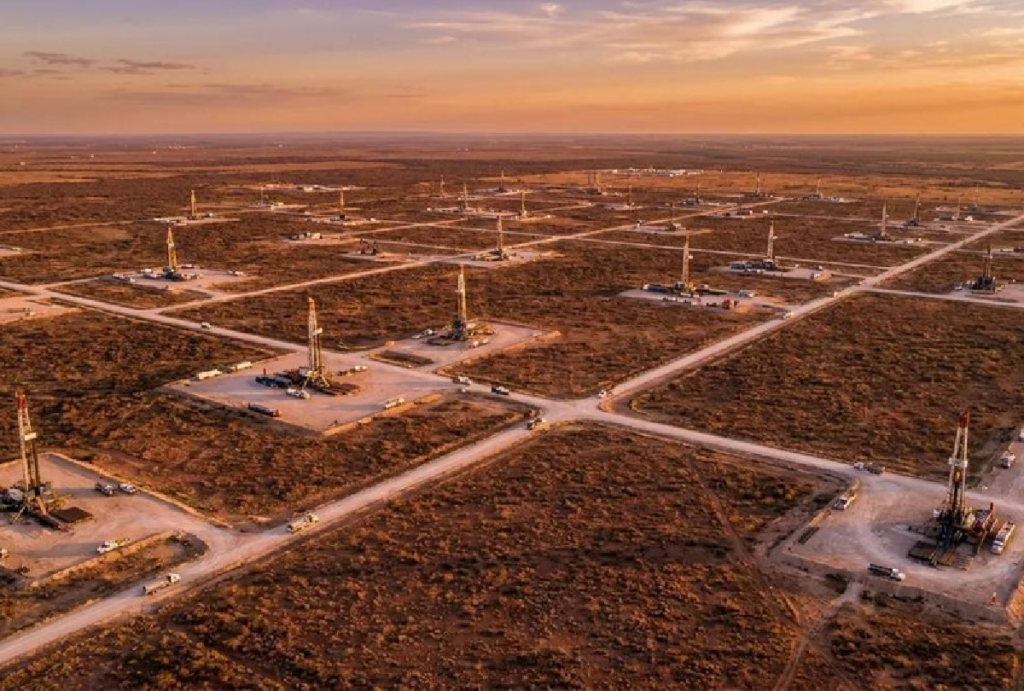
Stretching across West Texas and southeastern New Mexico, the Permian has become the centre of gravity of U.S. oil production and one of the most important petroleum regions in the world. But as the industry looks toward 2030, the question is changing.
It is no longer simply how fast can the Permian grow?
It is how much high-quality inventory remains, how efficiently can producers develop it, and will shareholders even want companies to chase maximum production?
Already Producing at Extraordinary Levels
The Permian averaged approximately 6.6 million barrels of crude oil per day in 2025, representing roughly 48% of total U.S. crude production. December 2025 production reached about 6.7 million barrels per day. EIA’s early-2026 outlook anticipated production remaining close to that level through 2026 as falling rig activity largely offset continuing productivity improvements.
Natural gas is becoming increasingly important as well. EIA expects Permian marketed gas production to average approximately 29.2 billion cubic feet per day in 2026, 6% higher than 2025, much of it associated gas produced alongside oil.
That creates an unusual situation: even if oil growth slows, the Permian’s infrastructure requirements may continue expanding.
How Much Oil Is Still Left to Drill?
Concerns about Permian inventory are legitimate. Operators have spent more than a decade systematically drilling many of the basin’s highest-return locations.
But “running out of inventory” is more complicated than counting undrilled locations.
Enverus estimated in April 2026 that the Permian still contained approximately 55,000 drilling locations economic below $50 per barrel, about 10% more than its previous estimate. Around 6,000 Permian wells have been brought online annually in recent years, suggesting substantial runway remains. More importantly, the economic inventory has been expanding as costs decline and additional formations become commercially viable.
Technology can therefore effectively create inventory.
A location considered marginal at $60 oil several years ago may become attractive if drilling costs decline 20%, recovery improves or a company can drill a three- or four-mile lateral across consolidated acreage.
Technology May Determine the Permian’s Real Size
This could become the biggest story between now and 2030.
Longer laterals, simultaneous hydraulic fracturing, improved geosteering, artificial intelligence, automated drilling, advanced reservoir modelling and new proppant technologies are allowing producers to recover more oil with fewer rigs.
ExxonMobil, following its acquisition of Pioneer Natural Resources, has been drilling four-mile laterals and developing technologies designed to substantially increase recovery from Permian reservoirs. The company now expects to approximately double its Permian production by 2030 compared with 2024 levels, targeting around 2.5 million barrels of oil equivalent per day.
EIA data demonstrates the broader productivity trend. Permian rig counts fell substantially after 2022 while production continued increasing. During the first half of 2026, the number of wells drilled per rig continued improving.
The biggest future Permian discoveries may therefore not involve finding completely new fields. They may come from extracting substantially more oil from rock companies already own.
Consolidation Is Creating a Different Permian
The basin is also increasingly becoming a playground for very large operators.



ExxonMobil’s acquisition of Pioneer, Diamondback Energy’s takeover of Endeavor Energy Resources and subsequent acquisition of Double Eagle IV, and Occidental Petroleum’s purchase of CrownRock have transferred enormous amounts of prime Permian acreage into fewer hands.
The megadeal phase may be slowing, but consolidation has not ended. Smaller bolt-on acquisitions, private-company sales and acreage swaps continue, and as recently as August 2026 Diversified Energy confirmed discussions concerning a potential acquisition of Permian producer Birch Resources.
Consolidation matters because contiguous acreage allows longer laterals, larger development blocks and shared pipelines, water systems and electrical infrastructure, potentially lowering the cost of every barrel.
Infrastructure Could Become the Limiting Factor
Moving the oil itself is only part of the challenge.
The Permian increasingly needs natural-gas pipelines, electricity transmission and enormous water-management systems.
Gas takeaway has expanded significantly, including the 2.5-Bcf/d Matterhorn Express system, while additional capacity is being developed to connect Permian gas with Gulf Coast LNG, industrial and power markets. Crude takeaway is also expanding, including additional capacity on Enbridge’s Gray Oak system.
Electricity could become an even bigger constraint. Electrification of oilfield equipment, population growth and enormous proposed data-centre loads are placing unprecedented demands on West Texas power infrastructure. Texas regulators have already adopted a major Permian Basin reliability plan to expand transmission.
Then there is water. The Permian currently produces roughly 21 million barrels of produced water every day, with that figure projected to climb substantially over the next decade. Disposal restrictions, seismicity concerns, recycling and desalination could become as important to future oil growth as drilling rigs themselves.
The New Constraint: Investors
Perhaps the biggest difference between today’s Permian and the shale boom of the 2010s is financial discipline.
For years, shale producers reinvested enormous amounts of cash into drilling, frequently delivering production growth without comparable shareholder returns.
Investors eventually demanded something different: free cash flow, dividends, share buybacks and stronger balance sheets.
That philosophy remains powerful. Diamondback, for example, doubled its share-repurchase authorization to $16 billion in August while simultaneously increasing its 2026 production outlook.
This means $90 or $100 oil does not automatically produce another drilling boom. Companies increasingly compare the return from drilling another well with the return from buying back their own shares or increasing dividends.
So How Big Could the Permian Be in 2030?
The Permian is unlikely to repeat the explosive percentage growth of the previous decade.
But that does not necessarily mean decline.
Wood Mackenzie has projected that crude and condensate production could eventually reach about 7.7 million barrels per day around 2035, assuming roughly $70 real WTI. Meanwhile, EIA’s nearer-term projections show production flattening around today’s extraordinarily high levels.
Taken together, those forecasts suggest that something in the range of roughly 6.5 million to 7.5 million barrels per day around 2030 is plausible, depending heavily on oil prices, technology, infrastructure and capital discipline.
But production alone may no longer be the best measure of Permian success.
By 2030, America’s greatest oilfield may be judged by something different: how much more oil it can recover from each acre, each well and each dollar invested, while continuing to send substantial cash back to the investors who own it.
Share This:






















On The Verge: Energy Sector Primed for New Wave of Growth – ATB Economics