


 CDN NEWS |
  US NEWS







From the Geoscience BC Energy Webinar, June 22, 2026
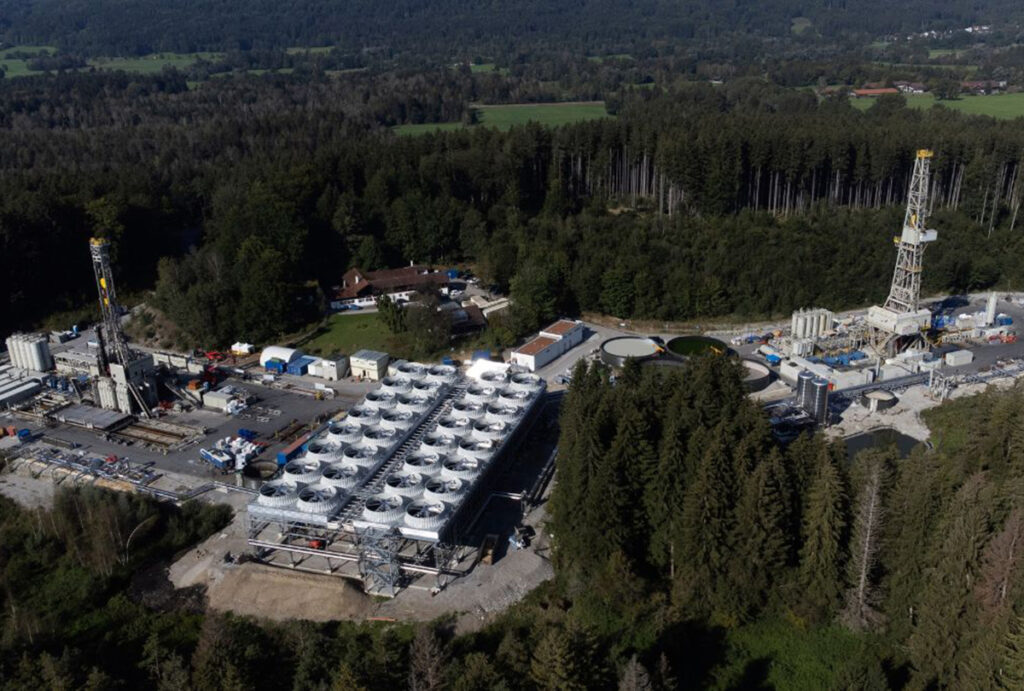
A geothermal site is under construction in Geretsried, Germany, Thursday, Sept. 19, 2024. (AP Photo/Matthias Schrader)
By Resource Works
More News and Views From Resource Works Here
What geothermal is and why it matters for B.C.
Geothermal energy draws heat from the Earth’s interior to generate electricity and provide thermal energy. Unlike wind and solar, it is firm, baseload and dispatchable: a geothermal plant produces power continuously, on demand, regardless of weather or time of day.
Globally, installed geothermal capacity stands at 17,173 MWe, concentrated in a small number of jurisdictions — Iceland, New Zealand, the Philippines, Indonesia, Kenya, the western United States and parts of Central America. Three factors determine whether a geothermal resource is viable: heat, permeability and fluid composition. Where all three align, the result is a conventional hydrothermal system (classified as Class 2), which is the workhorse of the global geothermal industry.
What distinguishes geothermal from other clean energy sources is its capacity factor. A geothermal plant operates at approximately 95 per cent capacity factor — meaning it produces power 95 per cent of the time it is theoretically able to. By comparison, wind facilities in B.C. operate at 34 to 43 per cent. The practical consequence is that a geothermal plant with a smaller nameplate capacity will produce equivalent or greater annual energy output than a much larger wind installation.
Geothermal plants have operational lifespans of 40 years or more, with low ongoing fuel costs and a physical footprint that is a fraction of comparable wind or solar installations. They also produce usable thermal energy as a co-product — an asset for industrial heat, food production, district heating and timber drying.
Tu Deh-Kah: Indigenous-owned firm power
The Tu Deh-Kah Geothermal project, located near Fort Nelson in northeastern B.C., is 100 per cent owned by the Fort Nelson First Nation. The name means “hot water in the form of steam” in Dene, and the project represents one of the most advanced geothermal developments in Canada.
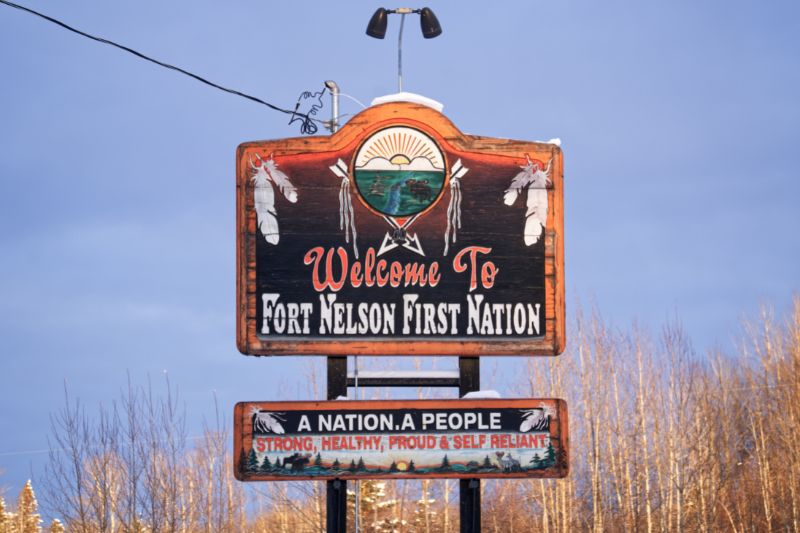
The project targets a hot carbonate aquifer at approximately 120°C, with a planned capacity of 7 to 15 MW of electricity generation. Beyond electricity, Tu Deh-Kah has potential for co-production of dissolved gas and direct-use heat for food production and timber drying — applications that would create year-round economic activity in a region whose local grid is currently 100 per cent reliant on fossil fuel generation.
Fort Nelson First Nation has identified geothermal as a strategic opportunity to leverage the community’s existing oil and gas knowledge and workforce. The skills required for geothermal drilling and reservoir management overlap significantly with those already present in the region’s energy workforce. This is not a community starting from scratch; it is a community applying existing expertise to a new and cleaner energy source.
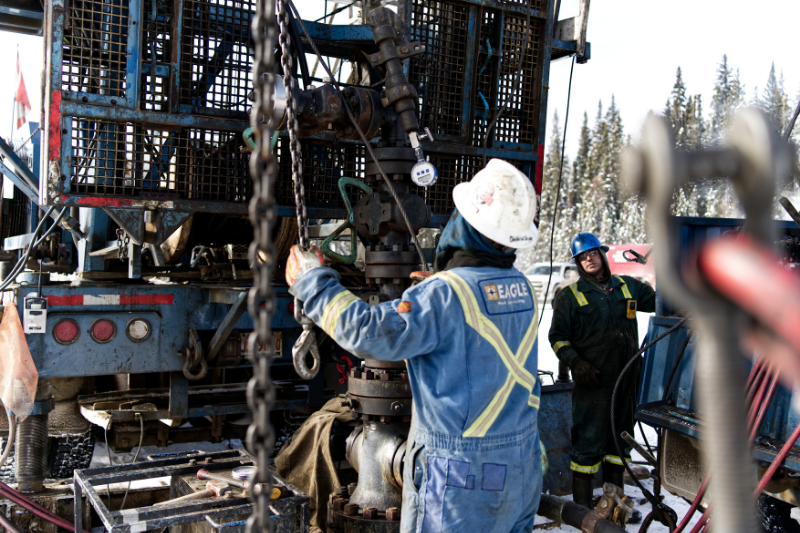
Tu Deh-Kah is a demonstration that Indigenous economic self-determination and clean energy can be the same project. It deserves attention not only as an energy development but as a model for how resource communities can lead energy transitions on their own terms.
Meager Creek: High potential to meet new demand
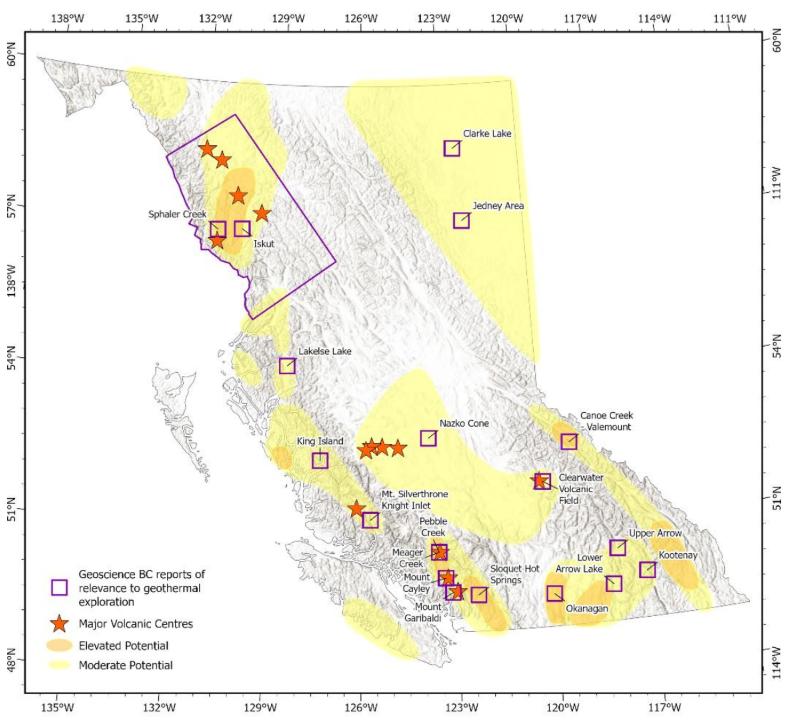
Mount Meager, located approximately 150 kilometres northwest of Whistler, is the site of the most extensively studied geothermal resource in Canada. Exploration began in the 1970s, led initially by the Geological Survey of Canada and BC Hydro. A pilot project in the 1980s produced some electricity before being mothballed.
The resource at Meager Creek is top tier by global standards. Current development is pursuing temperatures exceeding 250°C at depths of less than three kilometres, with potential generation capacity of more than 100 MW. At that scale, Meager Creek alone could provide firm, baseload electricity equivalent to a significant fraction of B.C.’s projected new demand.
Geoscience BC has funded a series of studies that support renewed interest in the Meager Creek resource. The site benefits from decades of prior geoscientific investigation, meaning the resource risk — the largest barrier to geothermal investment — is lower here than at any other site in the province.
The challenge at Meager Creek is not scientific uncertainty. It is the gap between confirmed resource potential and the investment required to bring the project to commercial operation. That gap exists in large part because early-stage geothermal exploration is expensive, high-risk and difficult to finance through private capital alone.
Why geothermal beats wind on the metrics that matter
The capacity factor comparison is the single most important number in this discussion. Dr. Hickson presented the following data:

A 95 per cent capacity factor means that a 100 MW geothermal plant produces approximately 832,200 MWh per year. To match that output with wind at a 34 per cent capacity factor would require roughly 280 MW of installed wind capacity — nearly three times the nameplate — plus battery storage to firm the supply. The land, materials, transmission and maintenance costs associated with that additional capacity are substantial.
Dr. Hickson noted that the levelised cost of electricity (LCOE) for geothermal is lower than for wind plus battery storage when compared on a firm-power basis. This is a critical distinction. The relevant comparison for grid planning is not the cost of generating a megawatt-hour from wind versus geothermal; it is the cost of delivering a firm, dispatchable megawatt-hour. When storage costs are included, geothermal’s economics are competitive or superior.
The environmental footprint comparison favours geothermal as well. A geothermal plant occupies a fraction of the land area required by equivalent wind or solar capacity. It produces no combustion emissions during operation, requires no fuel imports and its visual and ecological impact is minimal relative to the energy it produces.



The grid gap: Where geothermal fits
B.C.’s electricity system is approaching a critical juncture. BC Hydro projects a 15 per cent increase in demand by 2030. The province has been a net importer of electricity for 2023, 2024 and 2025 — a sustained reversal of its historical position as a net exporter.
A significant driver of projected demand growth is mining activity in the Golden Triangle and broader Tahltan territory in northwestern B.C. These are large, energy-intensive operations that require firm, reliable power. Northwestern B.C. has limited local generation capacity and constrained transmission infrastructure. Serving these loads with intermittent generation would require either massive battery installations or new long-distance transmission — both expensive and time-consuming to build.
Geothermal generation sited near load centres in resource-rich regions could address this gap directly. A geothermal plant provides firm baseload power where and when it is needed, without requiring the transmission buildout that distant wind or solar projects demand. In regions where grid access is constrained, geothermal’s ability to produce continuous power at the point of demand is an asset that no intermittent source can match.
Dr. Hickson emphasized that load and transmission are critical factors in geothermal siting. The most promising deployment scenario for B.C. is not a single large facility, but a network of appropriately scaled geothermal plants located close to the communities and industries they serve.
What Resource Works concludes
Geothermal is the firm power option that B.C.’s electricity conversation keeps overlooking. It is not speculative. Two projects are in development. Science supports it. The economics work. And the Tu Deh-Kah project demonstrates that Indigenous economic self-determination and clean energy can be the same project.
The evidence presented by Dr. Hickson at the Geoscience BC Energy Webinar is clear: B.C. has conventional geothermal resources capable of providing firm, baseload, dispatchable electricity with a 95 per cent capacity factor, a 40-year-plus operational life and an environmental footprint far smaller than equivalent wind or solar installations.
What is missing is the early-stage public geoscience investment that moves these resources from potential to production. Geothermal exploration is inherently high-risk in its early phases. Drilling is expensive. Resource confirmation requires sustained scientific effort. Private capital is reluctant to bear this risk without public geoscience having first reduced the uncertainty.
This is not a new insight. Geoscience BC’s own research programs have demonstrated the value of publicly funded geoscience in advancing B.C.’s geothermal knowledge. What is needed now is a commitment to sustained, adequately funded geoscience programs that can bring B.C.’s geothermal resources from the exploration stage to resource definition — the point at which private investment becomes viable.
Communities across B.C. — Indigenous and non-Indigenous — need help navigating this complex energy source. The technical knowledge exists. The resource base exists. The demand is real and growing. The question is whether the province will make the public investment necessary to unlock a firm, clean, baseload energy source that is already generating power in comparable geological settings around the world.
B.C. does not lack for energy options. What it lacks is firm power. Geothermal provides exactly that. It is time the province’s energy planning reflected the evidence.
This report is based on Dr. Catherine Hickson’s presentation to the Geoscience BC Energy Webinar, June 22, 2026. Dr. Hickson’s views are her own; analysis and conclusions are those of Resource Works Society.
Resource Works News
References
Geoscience BC, Energy Webinar, June 22, 2026. Presentation by Dr. Catherine Hickson.
Tu Deh-Kah Geothermal project. Fort Nelson First Nation. See tudehkah.com.
Geoscience BC Report 2015-11: Geothermal Favourability Map of British Columbia. See geosciencebc.com.
Lazard’s Levelized Cost of Energy Analysis, Version 17.0 (2025). See lazard.com/research-insights.
BC Hydro, Integrated Resource Plan (2024). Demand projections.
Canada Energy Regulator, electricity import/export data, 2023–2025.
Geoscience BC Report 2015-11: Geothermal Favourability Map of British Columbia. See geosciencebc.com.
Geoscience BC Report 2016-08: Economic Viability Assessment of Select Geothermal Resources in British Columbia.
Share This:






















On The Verge: Energy Sector Primed for New Wave of Growth – ATB Economics