


 CDN NEWS |
  US NEWS








What is Biogas/Biofuels
Biogas is the gas created when organic matter breaks down in an oxygen-free environment. The biological process to produce Biogas is called Anaerobic Digestion and is considered a renewable source of methane gas, the main component of Biogas. Biogas can be used to power engines for the generation of electricity as well as Biogas can be further refined into Renewable Natural Gas (RNG). This RNG can be used in the traditional Natural Gas pipeline and is considered carbon neutral.
Biofuels are fuels derived from renewable biological sources such as crops, oils, and organic waste.
Biogas/Biofuel Industries
- Agriculture – livestock, manure, and organics such as crops
- Landfills – organic waste from
- residential and commercial food products
- Biosolids – wastewater treatment
- Recycled oils (such as vegetable oils, liquid animal fats, etc)
- Algae
Biogas Use & Benefits
Biogas can be used as renewable heat, electricity, and pipeline quality gas as RNG. The benefits include:
- Reduction of methane greenhouse gas emissions by capturing the biogas.
- Displacing use of conventional fossil fuels
- Digestate from Anaerobic process can be used for fertilizer.
- Less material to landfill sites
Biofuel Use & Benefits
Biofuels can be used to displace the use of traditional fossil fuels in the gasoline and diesel pools:
- Considered carbon neutral
- Less greenhouse gas emissions
- Canadian market requires 5% gasoline from renewable sources.
- Canadian market requires 2% diesel from renewable sources.
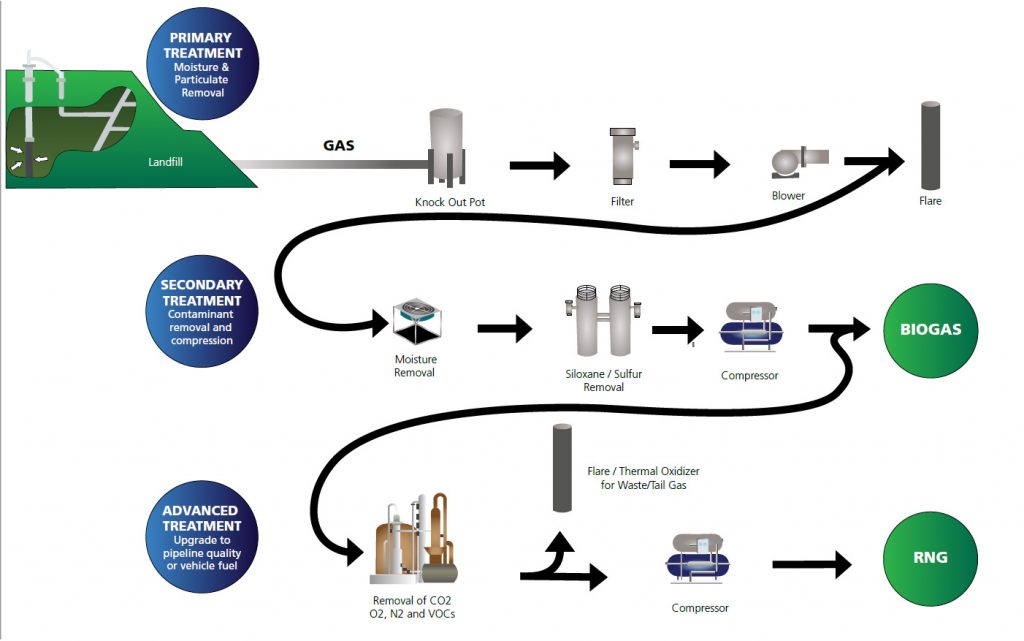
Landfill Treatment Stages
Key Biogas Measurements
Measurements in Biogas are important process information to maintain digester efficiency, ensure scrubber functionality, and provide gas composition for sales gas and use in Co-Gen power:
- CH4 – Methane is the key useful component of biogas, typically consisting of 50-75% of the composition depending on feedstock.
- CO2 – Carbon Dioxide is a by-product of Biogas production, typically compromises up to 25-50% of the gas composition before treatment.
- H2S – Hydrogen Sulfide present in biogas due to the feedstock and inorganic sulphate content and can cause corrosion and health hazards.
Key Biofuel Measurements
Measuring the distillation curve in biofuel is important to ensure the quality of the fuel specifications are met and conformation to pipeline requirements are maintained.
Distillation – Distillation for quality control in gasoline and diesel blending applications.
Other Physical properties – Flash point (high temperature/ high sulphur), cloud point, viscosity, vapour pressure
Typical measurement areas include:
- Bio-based Feedstock in Refineries
- Bio-diesel in Final Product Blending
Continue Reading
To continue reading Westech Industrial’s application note please visit our website.
Share This:






















On The Verge: Energy Sector Primed for New Wave of Growth – ATB Economics