


 CDN NEWS |
  US NEWS







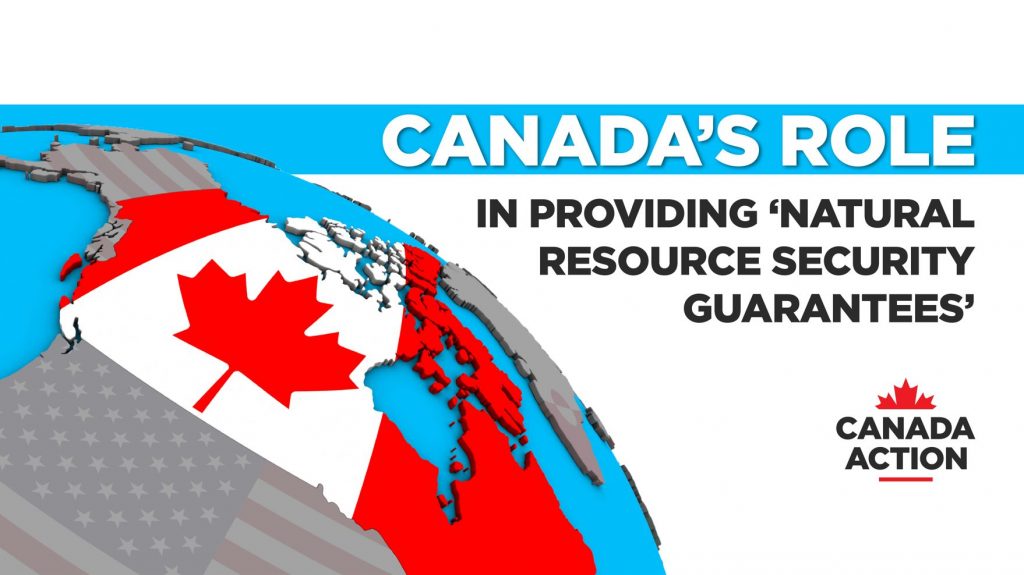
Canada should be a go-to global supplier of choice for natural resources ranging from oil and gas, agricultural and forestry products, and everything in between.
We’ve been saying this for years. Now, recent global events highlight the need for exactly that – more Canadian resources on global markets to aid in providing ‘natural resource security guarantees’ for nations experiencing supply shortages.
Canada is the second-largest nation in the world and is home to an incredible endowment of natural resources. We extract and produce these valuable materials in the most sustainable ways possible and consistently rank high among resource-rich nations on Environmental, Social and Governance (ESG) indices.
We also are heavily reliant on exports for our wealth and prosperity.
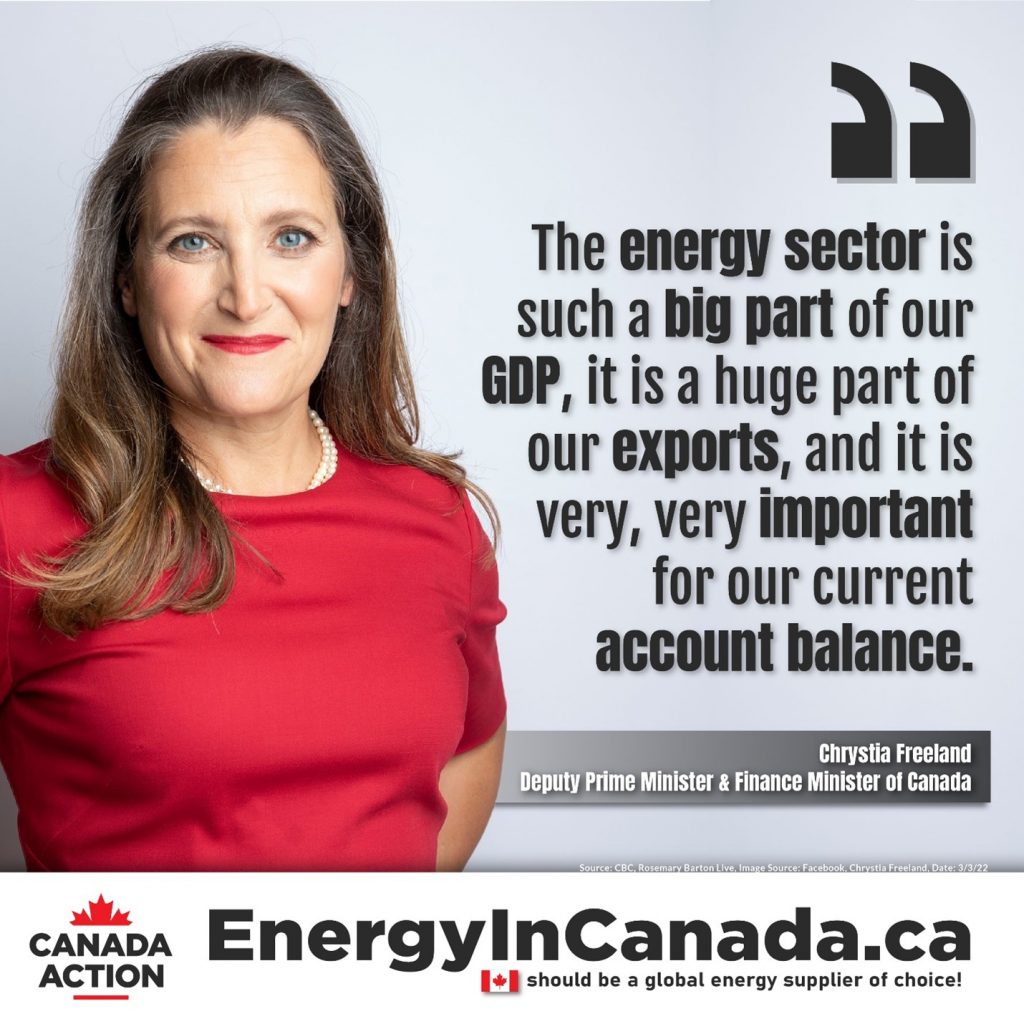
In 2021, for example, natural resource-derived products including mineral fuels, wood, gems, minerals, metals and plastics accounted for more than 40 per cent of the total value of our exports.
Additionally, 1.9 million people were either directly or indirectly employed by the energy, mining and forest sectors in 2020. Add on millions more if we include agriculture and agri-foods, which itself accounts for 2.3 million jobs – or 1 in 8 jobs nationwide.
Canadians benefit immensely from natural resources, and so do our governments. From 2000 to 2019, for example, the energy sector alone generated $701 billion in revenues for Canadian governments, with revenues from the oil and gas sector ($505 billion) being equivalent to 50 years of federal family allowance and children’s benefit payments.
It’s abundantly clear that more natural resource exports would be good for Canadian families and governments across the country. Moreover, given our nation’s record on initiatives such as emissions reductions, cleantech and innovations and renewable energy, more Canadian resources on world markets would also be good for the global environment.
Recent events in Ukraine have further highlighted Canada’s potential role as a reliable source of supply for critical products such as crude oil, natural gas, potash and wheat.

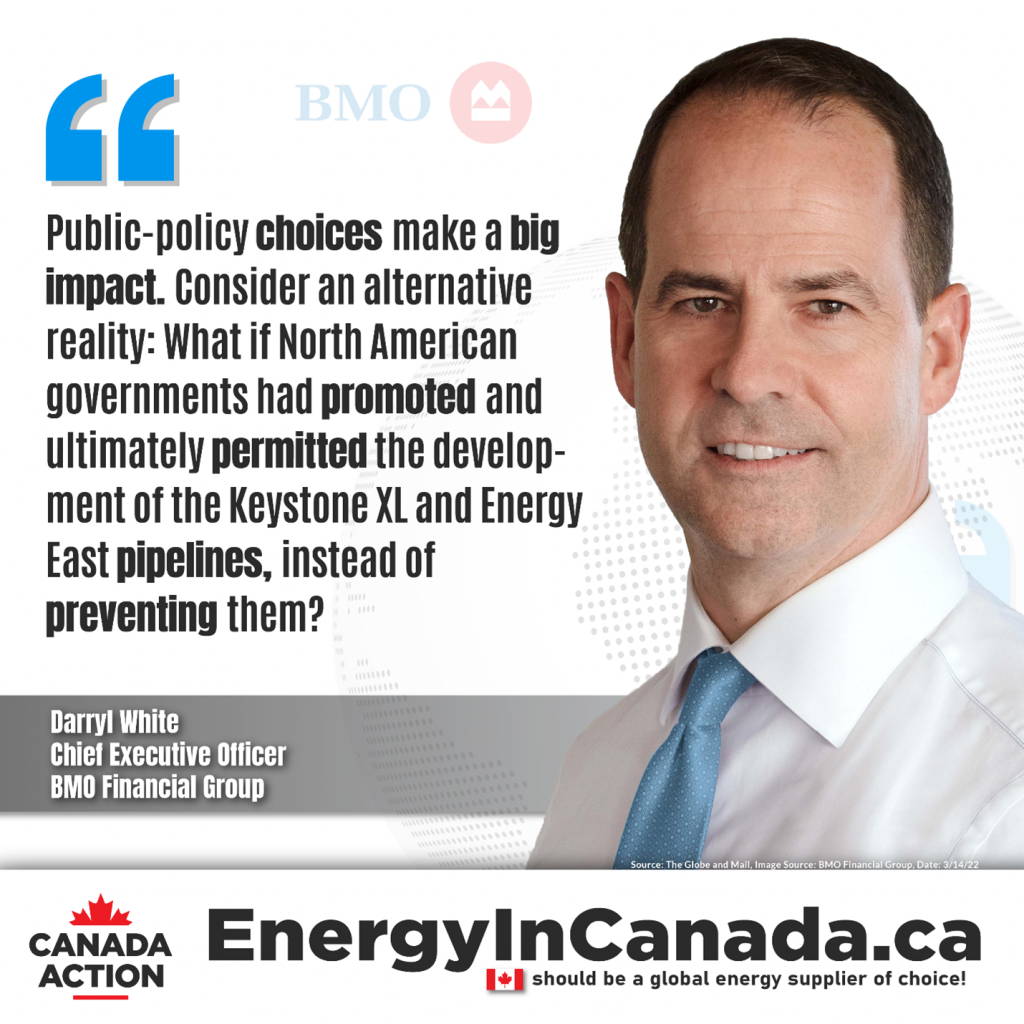
Admittedly, increasing our natural resource exports to displace those from other less stable supplier countries is sometimes easier said than done in Canada. We’ve been dragging our feet on developing critical infrastructure over the past several years due to stiff environmental opposition and lengthy regulatory processes that have scared investors away in droves.



For example, Canada’s current oil and natural gas export pipeline capacity to tidewater is basically non-existent. In reality, the 300,000 barrels of oil per day we’re planning on sending to the EU as it looks for alternative sources of supply is a drop in the bucket to what Europeans actually need to wean themselves off of Russian energy.
At least we’re helping our friends across the Atlantic as much as we can, but it’s such a shame we can’t do more.
With the right policies in place, Canada can fast track the development of pipelines, LNG export facilities and other critical infrastructure projects that will help solidify our place as a global go-to supplier of choice for a full spectrum of resources.
Canada’s energy, mining, forestry and agricultural sectors are some of the most environmentally friendly in the world. For example, potash production in Saskatchewan emits approximately 50 per cent fewer greenhouse gas (GHG) emissions when compared to any other global jurisdiction. Canada’s forestry sector has reduced its GHG emissions by close to 70 per cent since the early 1990s. The oil sands sector has cut GHG emission intensities by 20 per cent since 2009, and producers accounting for 95 per cent of production announced an unprecedented commitment to reach net-zero by 2050.
These examples are just the tip of the iceberg regarding the world-class ESG practices Canadian resource producers are committed to following.
Canada is also a country home to one of the most transparent and stringent regulatory regimes globally, where natural resource producers are held accountable for their actions and are required by law to fully reclaim any disturbed land. Our nation also has been a consistently strong voice for the protection of human rights and the advancement of democratic values globally.
Geopolitically speaking, we may very well be found in one of the most stable parts of the world. Disruptions to domestic natural resource supply chains don’t come often – and if they do, they are typically settled in a democratic and timely fashion.
It’s time to start recognizing Canada for what it is: a natural resource-rich nation that can provide increasing amounts of ‘natural resource security guarantees’ to our allies and trading partners.
We owe it to not only our families and the environment to do so, but also to contribute in upholding democratic values and geopolitical stability around the world.
Let’s make sure we take the appropriate actions to provide the world with more access to Canadian producers. After all, more Canadian natural resources on global markets is good for our families, global resource security and the environment.
Join Us Today!

Share a homemade sign, or check out our online store! Join us on Twitter, LinkedIn and YouTube to discuss Canada’s world-class natural resource sectors and partake in a balanced, fact-based and non-partisan discussion with Canadians from coast-to-coast!
Share This:





















INSIGHT: Canada’s Economy Falling Behind Despite Misleading Headlines – Fraser Insitute