


 CDN NEWS |
  US NEWS







By Julio Mejía and Tegan Hill
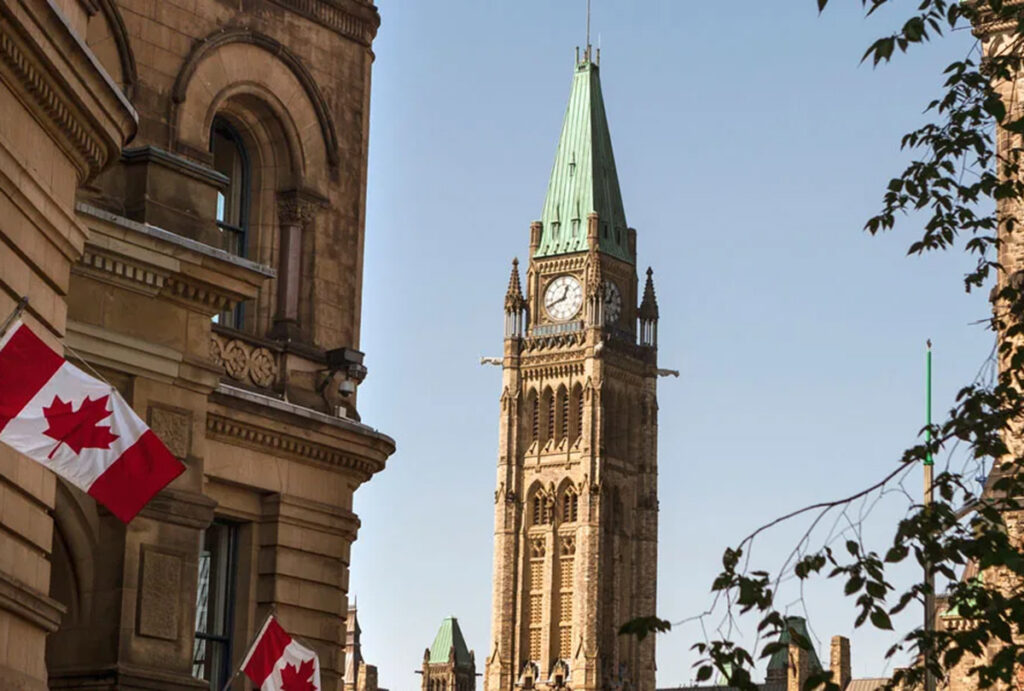
Ottawa kicked off October by designating Alberta’s proposed West Coast Oil Pipeline a project of national interest, fast-tracking the review that will set its construction conditions by September 2027. While this breakthrough could help Canada reach markets abroad, a political process for faster approvals is no substitute for fixing the Trudeau-era policies keeping investors on the sidelines of major energy projects.
Last November, Ottawa and Alberta agreed on a framework to prioritize a West Coast pipeline, explicitly to expand exports to Asia. Improving market access is critical as the United States currently absorbs 90.1 per cent of Canada’s crude exports. A new route to the region set to lead global oil-demand growth for decades would reduce that dependence and, in theory, offer investors an appealing opportunity.
Yet private investors have largely kept their distance from the project. Currently, the federally owned Trans Mountain Corporation and the Alberta Petroleum Marketing Commission would own 90 per cent of the pipeline, leaving taxpayers with most of its risk and its estimated $35.2 billion to $43.7 billion cost. Pembina Pipeline, the only private investor so far, would hold the remaining 10 per cent during construction.
Limited private-sector interest comes despite the regulatory head start the pipeline has received. Indeed, the majority of infrastructure and energy projects still face the burdensome regulatory process implemented under the Trudeau government, including the federal impact assessment created by Bill C-69 passed in 2019. Dubbed the “No More Pipelines Bill,” it made approvals more complex and less predictable by requiring proponents to address subjective criteria such as a project’s effect on the “intersection of sex and gender with other identity factors.”



The West Coast Oil Pipeline would bypass the C-69 path through Bill C-5, passed in 2025. This Act granted the federal cabinet (and, in practice, the prime minister) a temporary five-year power to designate “national interest” projects and fast-track them outside the ordinary regulatory framework—a power Ottawa now wants to make permanent through Bill C-39.
But Ottawa’s discretionary fast lane still hasn’t been enough to win over private investors.
That’s partly because the fast-track itself leaves investors facing an unclear, highly discretionary and politicized process that remains largely untested. In the more than 15 months since Bill C-5 became law, no project other than the pipeline has been designated a project of national interest. Some project proponents have also warned that bypassing the standard review could invite legal challenges over Indigenous consultation, increasing the risk of delays.
Moreover, many of the Trudeau-era policies are still in place. Bill C-48, for example, bans large oil tankers from loading or unloading at ports between northern Vancouver Island and the Alaska border. That rules out assets such as Prince Rupert, North America’s closest port to Asia and Canada’s deepest natural harbour, ideal for the large tankers used on long-haul Asian routes, and with transit times up to three days shorter than other West Coast ports. In other words, Bill C-48 unnecessarily adds to the cost of transporting Canadian oil. Worse still, because the ban does not (and cannot) stop international tankers travelling to and from Alaska through the same waters, it only prevents large-scale Canadian exports from northwest B.C.
Then there are the Trudeau-era policies the Carney government has doubled down on, which raise the cost of producing, processing and transporting oil. Last December, it finalized stricter methane regulations estimated to cost the oil and gas sector $14.6 billion. And in May, Ottawa and Alberta agreed to raise the industrial carbon tax to $140 per tonne by 2040, a burden none of Canada’s major competitors for oil and gas investment, including the United States, impose. Finally, the West Coast pipeline is conditional on a costly $20 billion (minimum) carbon capture facility—a concerning precedent for future energy development.
To attract investors, Canada needs clear, transparent and competitive rules for every project, not a two-tier system in which a small group of politicians decides who gets a fast lane, leaving the rest to face the old regulatory regime. It also needs to scrap the Trudeau-era policies that make even politically favoured energy projects a hard sell.
Share This:






















REALITY: Tariffs, Trade, Integration and Productivity—the Canadian Conundrum