


 CDN NEWS |
  US NEWS







Newfoundland Premier Tony Wakeham says progress has been made, but no new agreement is in place yet
By Gary Kean
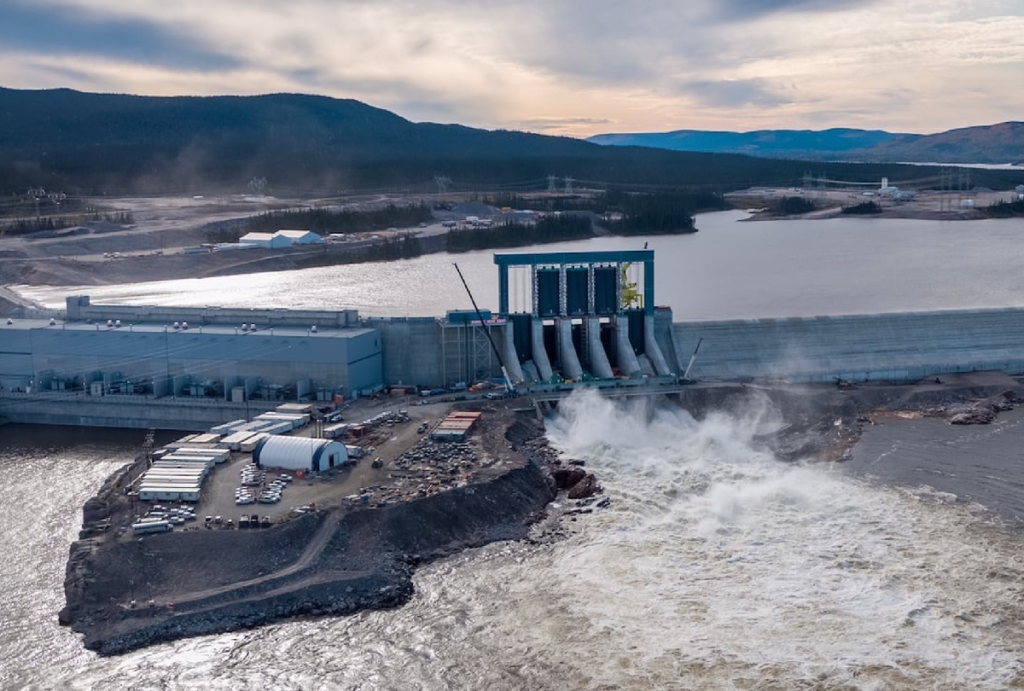
Despite media reports coming out of Quebec that a new Churchill Falls memorandum of understanding has been reached with that province, the government of Newfoundland and Labrador insists no agreement is in place yet.
According to an article published by La Presse on Wednesday, Aug. 12, 2026, a deal is in place to develop the hydroelectric project in Labrador that has been the source of much political tension in both provinces since a tentative MOU was signed by the provinces in December 2024.
Since that original MOU was announced, Newfoundland and Labrador’s government has switched from the Liberal administration that negotiated it to a Progressive Conservative regime led by Premier Tony Wakeham that has renounced the plan and has promised to hold a referendum on a new deal it planned to work out with Quebec.
Quebec is still governed by the Coalition Avenir Québec, but has had a new premier, Christine Fréchette, since April 2026. She and her party face a general election in October 2026 and are trailing in the polls behind the Parti Québécois, which has vowed to axe the MOU if it wins.
According to the La Presse article, the newest deal will include developing more power on the Churchill River than the original MOU had promised and will also incorporate wind power projects, thereby increasing the capacity available to both provinces.
The report also said that Wakeham has conceded holding a referendum on the project as a condition of the new agreement.
Later on Wednesday evening, an article published by allNewfoundlandandlabrador.com reported that the new deal would see the benefits coming to Newfoundland and Labrador growing from the $36 billion – in today’s dollar value – under the 2024 MOU’s 50-year term of 2025-2085 to $49 billion under the new one.
That article also reported there would be a 760-megawatt increase in the domestic-power allotment, attributable to an increase in the scope of the project and a reallocation of the power generated for Quebec. It also said the deal would “include a cumulative 985 MW of guaranteed transmission access through Quebec.”
Postmedia asked Wakeham’s office for an interview and to confirm the veracity of reports of a new deal being formally announced on Monday, but no interview was granted.
In an emailed reply provided to all media, Wakeham’s office said there is no deal yet.
“We can confirm that in recent days we have made significant progress in our negotiations with both Quebec and the Government of Canada as it relates to replacing the 2024 MOU with a new deal for Churchill Falls and Gull Island,” said the prepared statement.
“As of right now, no final deal has been signed. We will inform you should this situation change.”
The mention of the federal government‘s involvement refers to the role Ottawa has played in trying to help both sides to agree on a new power deal.
La Presse reported that the latest development on that front is the possibility of extending the Clean Electricity Investment Tax Credit — a 15 per cent refundable credit to finance major energy infrastructure projects.
The allNewfoundlandandlabrador.com article, meanwhile, said the federal government was also bringing loan guarantees and “other measures” to the table.
The MOU, which involves upgrading the existing hydroelectric power plant at Churchill Falls and developing a new generating station at Gull Island on the Lower Churchill River, would replace the infamous 1969 Churchill Falls contract between Quebec and Newfoundland and Labrador.
Not set to expire until 2041, the ‘69 deal has been lopsidedly in favour of Quebec as it purchases cheap power from Newfoundland and Labrador that it sells to North American customers for enormous profit.
Political reaction
In a social media post after the La Presse story was published Wednesday evening, the Liberal Party of Newfoundland and Labrador leader John Hogan voiced his concerns about the news report.
“Once again, Newfoundlanders and Labradorians are learning about the latest MOU developments through Quebec media rather than from our own government,” posted Hogan.
“This time, they’re reporting that a new deal has been reached, but that the core of the agreement remains similar to the previous MOU.
“Premier Wakeham needs to be transparent with Newfoundlanders and Labradorians.”
In a news release Thursday morning, the leader of Newfoundland and Labrador New Democratic Party also responded to the leaked news of a new deal being finalized, echoing Hogan’s concerns that the news came from the media in Quebec and not from the Wakeham administration directly.



“There is not a lot of details available, but the point made in La Presse that the Premier is making a U-turn on his promised referendum in order to get the deal signed before the Quebec election is a very important note,” Jim Dinn said in the NDP release.
“There are many questions: What makes this deal in “the best long-term interest of the people of the province” as per the benchmark set by the government’s own Independent Review Committee in April?”
Dinn also asked if Wakeham will be opening the House of Assembly if he foregoes the referendum and asked if the provincial government has consulted with the Innu Nation on the new iteration of the deal.
“The seemingly new addition of wind projects for more power and the federal government’s 15 per cent (refundable) credit may be just fig leaves to make the project look a bit different,” said Dinn.
“There are many unanswered questions, and the premier must be transparent. This deal will affect people for many years to come.”
Critic still wants public review
The 2024 MOU has been the target of much criticism, including by a group of notable, independent experts in business, finance, law and energy that includes David Vardy, Gabe Gregory, Bill Wells, Des Sullivan and Cathy Beehan.
That group was one of many who made submissions to the Independent Review Committee on the Churchill Falls MOU, urging the Wakeham government to overhaul what they felt was a poor deal for Newfoundland and Labrador.
When the Independent Review Committee concluded in May 2026 that the MOU was not in the province’s best interests, Wakeham immediately appointed a new negotiating team tasked with hammering out a better agreement.
When asked Thursday about reports that such a deal may be coming in a matter of days, Vardy said it’s difficult to do anything other than speculate about it until the details of a new deal are officially made public.
What he would say is that, regardless of what the new MOU contains, those contents should be subjected to a rigourous and openly public review.
If he had his druthers, such a review would be presided over by either a sitting or retired Supreme Court justice to ensure every side got a fair chance to be heard and questioned in a public fashion.
“The judge could decide what information is commercially sensitive, deferring as much as possible to the public’s right to know about the disposition of its public resources,” Vardy told Postmedia. “What we have been witnessing, instead, is a default position which places commercial sensitivity far above transparency, the right of the public to participate in the management of its public resources.”
Vardy said the next version of the MOU must also set a benchmark that determines whether the agreement is the principal beneficiary of its own resource.
“The December 2024 MOU generates revenues, net of revenues under previous agreement and net of costs, which are a small percentage of market value,” said Vardy.
Referendum ‘a major issue’
He also believes Wakeham should honour his promise of a referendum.
While critics of a referendum have said the Churchill Falls MOU is too complex a business deal to be left to the whims of the general public to decide on, Vardy believes a robust public review would give those interested in the historic deal the best opportunity to become informed about it before casting a vote.
“If the premier denies the public the opportunity for a referendum, I think that is going to be a major issue in itself,” said Vardy. “The idea of telling the public that they’re not sufficiently educated or informed or enlightened to be able to vote, to make an informed decision, is paternalistic and unacceptable.
“The public has to be treated like grown-up people. We’re dealing with public resources here and the people of the province deserve an opportunity to learn and to participate in this decision because this will be the most important decision they have with regard to their children.”
‘Public needs to be given every opportunity’
Vardy supports Dinn’s request for Wakeham to reconvene the House of Assembly, so any new deal can be discussed in the provincial legislature, as long as there is ample time for government and opposition alike to ask everything they feel they need to and to call in any experts they feel can shed light on issues within the deal that arise.
The legislative debate held in January 2025 on the 2024 MOU lasted four days and drew criticism for only inviting witnesses who supported the deal to answer questions from the elected members.
Before a vote was held, which ultimately gave Newfoundland and Labrador Hydro the green light to continue negotiating a final deal, Wakeham and his then-Opposition Tory caucus walked out and never voted at all.
The PCs at the time wanted the vote to not take place until the province’s Public Utilities Board was allowed to do an independent expert analysis of the MOU and report on its findings to the legislature.
“The public needs to be given every opportunity, but I would I would say my priority would be to have the premier deliver the referendum that he promised and also to have an open public hearing where people can learn and people can make their views known and everything is in the public domain,” said Vardy.
Share This:






















On The Verge: Energy Sector Primed for New Wave of Growth – ATB Economics