


 CDN NEWS |
  US NEWS







By Tegan Hill
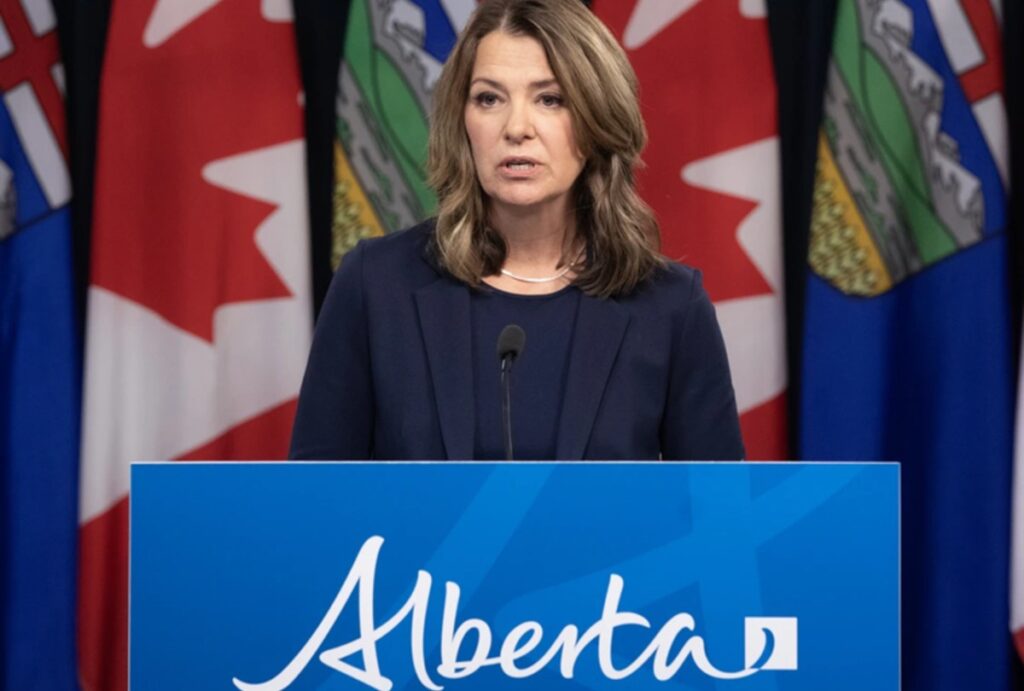
Premier Danielle Smith is pushing for equalization reform—the federal program that (in theory) redistributes money from “have” provinces such as Alberta to deemed “have not” provinces including Quebec and provinces in Atlantic Canada to help them provide government services.
Smith argues that Albertans shouldn’t overcompensate other provinces but rather should only “equalize to the point of need.” Seems reasonable—right?
Let’s dig into what exactly Premier Smith is talking about.
Essentially, the formula Ottawa uses to determine equalization payments is broken. In 2009, in an effort to control costs, the Harper government introduced the “fixed growth rate rule” so the overall size of the equalization envelope would grow roughly in line with the Canadian economy. However, the rule has had unintended consequences.
Since 2018/19, the rule has worked as an escalator rather than a safeguard. That’s because the gap between richer “have” provinces and poorer “have not” provinces has actually shrunk since then. But because of the fixed growth rate rule, the equalization envelope has continued to increase.



As a result, a rule intended to constrain the cost of the equalization program instead forced Ottawa to spend an extra $10.5 billion since 2018/19—money that did not need to be spent. You can see why that might seem unfair to Albertans who haven’t received equalization since the 1960s yet pay billions of dollars into the program every year through their federal taxes.
And that’s just one quirk of equalization. Indeed, the program has become incredibly complex and as a result often has very peculiar results.
Specifically, our recent study found that in 15 of the last 25 years (60 per cent of the time) at least one province with higher living standards (as measured by per-person GDP) received equalization while a province with lower living standards did not.
For example, from 2009 to 2018, Ontario received equalization payments every year—totalling $19 billion over the period—while British Columbia received zero payments, even though B.C. had a lower per-person GDP than Ontario in each of those years.
In fact, almost every year since 1981, there’s been some discrepancy between who receives equalization (and how much) versus who is actually in need. Put simply, there are clear structural problems with the program that should be fixed.
Premier Smith is right to push for changes to equalization. But the fixed growth rate rule is just one of the program’s quirks. It’s time for large-scale reform.
Share This:






















On The Verge: Energy Sector Primed for New Wave of Growth – ATB Economics