


 CDN NEWS |
  US NEWS







CCS widely recognized as an essential tool for achieving global climate goals
By Grady Semmens
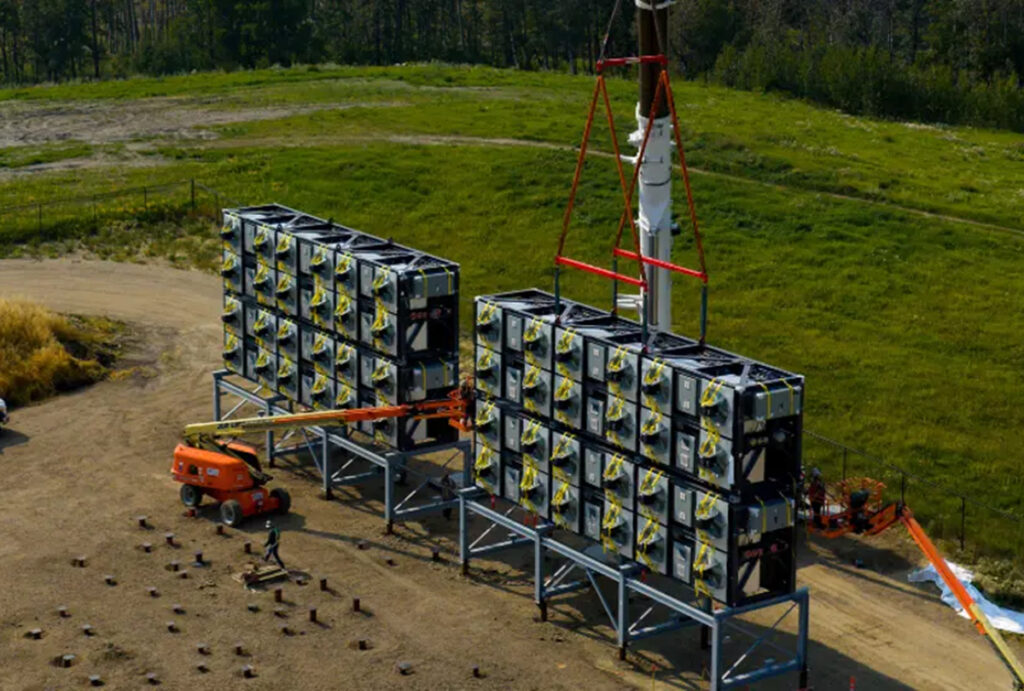
Using direct air capture (DAC), the Tamarack project near Innisfail, Alta. will have capacity to remove up to 2,000 tonnes of CO₂ from the atmosphere per year at full operation. Photo courtesy CarbonCapture Inc.
A wall of industrial-size fans sits on the outskirts of Innisfail, Alta. It may seem out of place in the rolling foothills southwest of Red Deer until you realize this bank of steel turbines serves a vital environmental purpose — pulling carbon dioxide from the atmosphere.
When the Tamarack direct air capture (DAC) facility began operating last fall, it became Canada’s largest DAC deployment, capable of capturing 2,000 tonnes of CO₂ per year — the equivalent of taking more than 400 cars off the road.
U.S.-based CarbonCapture Inc. chose rural Alberta because it offered everything needed for the project to succeed.
“Moving our DAC modules to Alberta was enabled by the supportive policy and business environment up north, and we’re happy to be here,” said CEO Adrian Corless.
“Tamarack marks a step-change for Alberta and carbon management in Canada.”
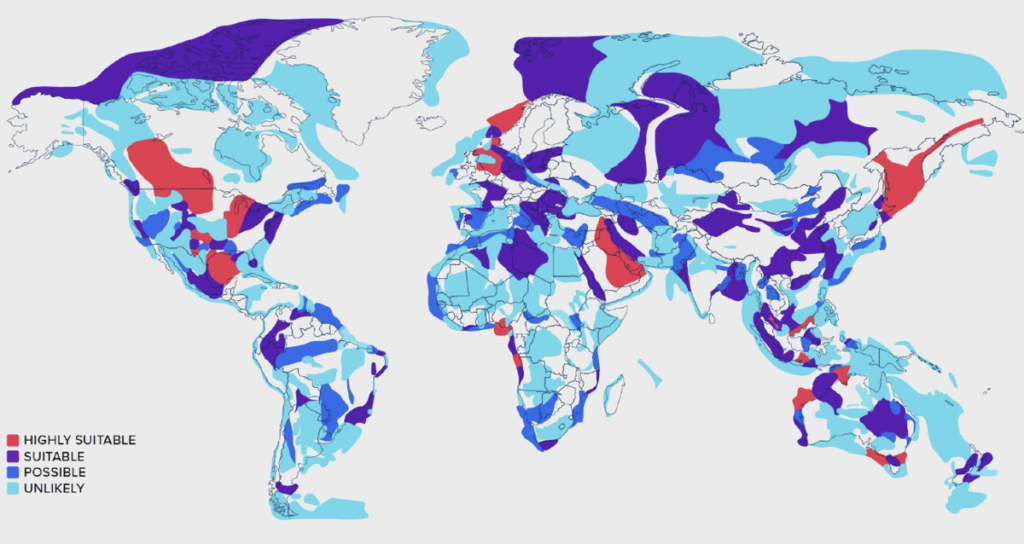
Alberta’s deep geological formations, extensive energy infrastructure, engineering expertise and clear regulatory framework have made it one of the most attractive jurisdictions in North America for carbon capture investment.
Canada’s early leadership builds a foundation for growth
CCS is now widely recognized as an essential tool for achieving global climate goals.
Heavy industries such as oil and gas, steel, cement, and fertilizer production all require technologies to prevent or remove gigatonnes of CO₂ emissions in the years ahead.
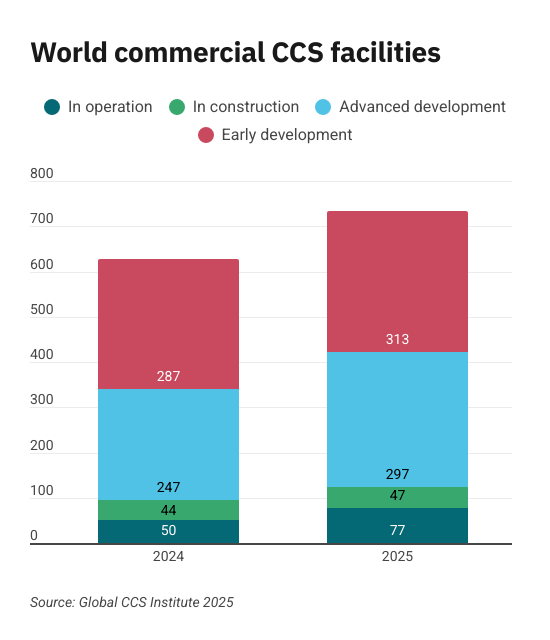
In 2025, 27 new CCS facilities came online worldwide, bringing the total to 77, according to the Global CCS Institute’s latest status report.
Total capture capacity, including projects under development, has grown at more than 30 per cent per year since 2017.
“Overall, the direction of travel is clear: CCS is scaling up, supported by increasingly durable policy frameworks, rising private-sector engagement, and expanding global infrastructure,” said the institute’s CEO Jarad Daniels.
Canada helped lay the groundwork for that growth through several early CCS milestones.
In Saskatchewan, the Boundary Dam facility — the first large-scale CCS system on a coal-fired power plant — recently surpassed seven million tonnes of CO₂ captured since 2014.
Alberta has built on that foundation. Since 2015, the province’s CCS projects, including Quest and the Alberta Carbon Trunk Line (ACTL), have safely stored more than 18 million tonnes of CO₂ — equivalent to taking 4.2 million cars off the road.
Quest and ACTL helped establish Alberta’s regulatory framework, technical expertise and infrastructure while demonstrating that large-scale carbon storage can be done safely and reliably.
They also positioned the province to attract the next wave of investment.
The newest addition to Alberta’s CCS landscape is Entropy’s Glacier Phase 2 project near Grande Prairie. Building on commercial operations that began in 2022, the project uses post-combustion carbon capture on a gas turbine that generates power for Advantage Energy’s Glacier gas plant.
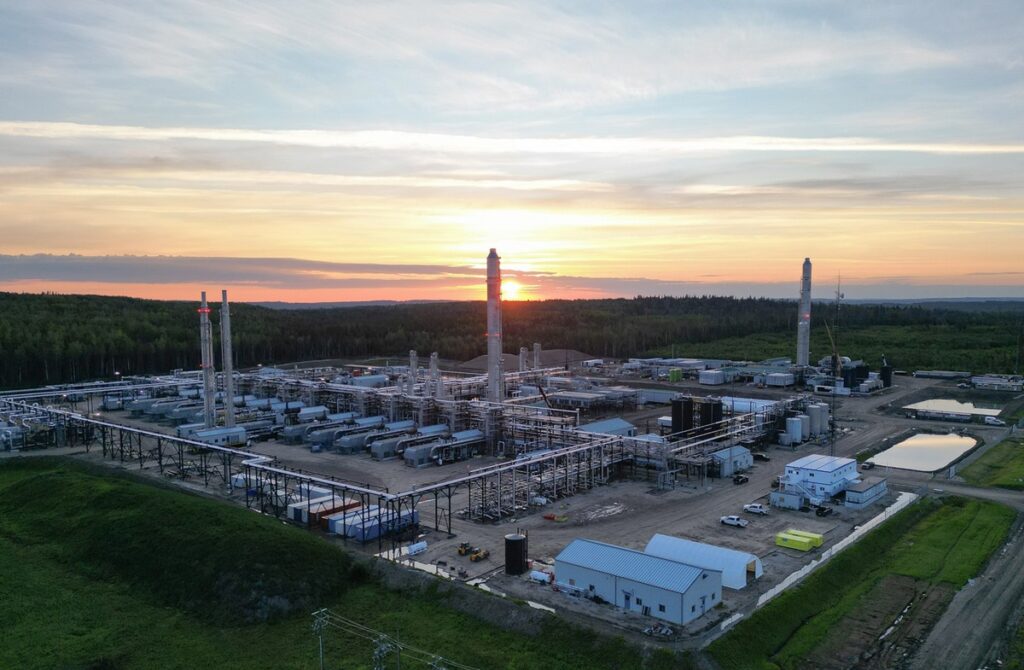



Commissioned in July, it it designed to provide reliable, baseload low-carbon power to the facility and sell merchant power to the Alberta grid.
Including earlier phases, total CO₂ capture and sequestration capacity is targeted to reach 192,000 tonnes per year.
Another new operation is the Meadowbrook Carbon Storage Hub, owned by Bison Low Carbon Ventures and completed in late 2025.
Located about 50 kilometres north of Edmonton, the project’s first phase is licensed to permanently store up to 500,000 tonnes of CO₂ annually. The hub is designed to receive CO₂ from multiple industrial customers, with the initial phase using truck transportation.
New frontiers and homegrown innovation
The industry is now moving from first movers to new frontiers.
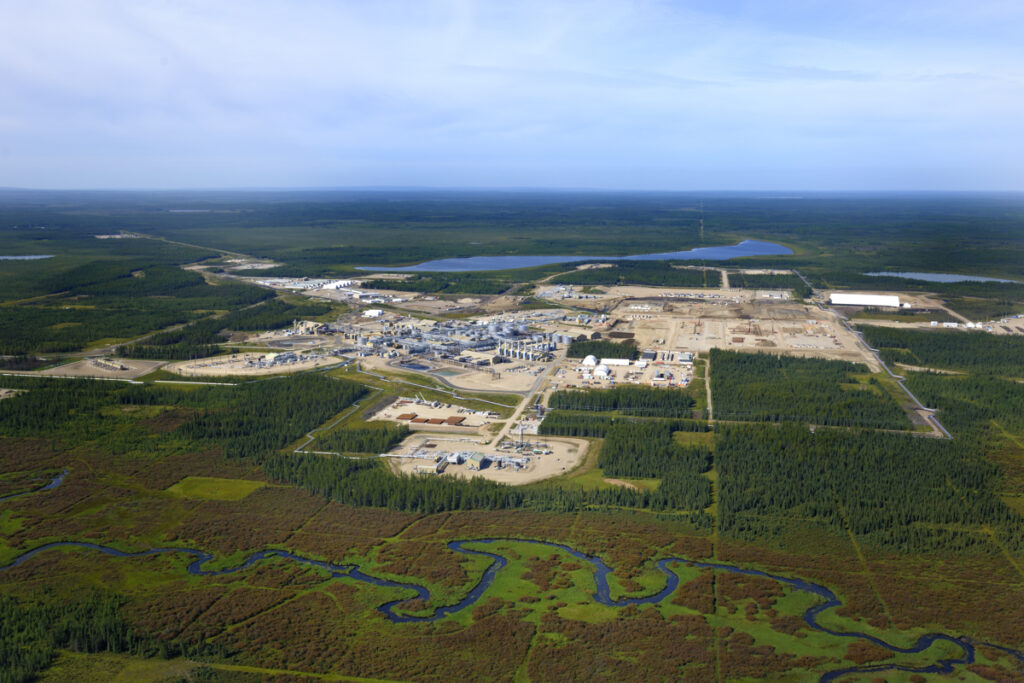
The Oil Sands Alliance — a partnership of Canada’s five largest oil sands producers — is advancing one of the world’s largest CCS developments: a regional network in northeastern Alberta that aims to capture and store millions of tonnes of CO₂ per year by the 2030s.
The Pathways project took a major step forward in July when the Alliance, Alberta’s government and the Government of Canada signed an agreement outlining how it would be supported through policies and funding.
Pathways is now targeted for operations in 2035, storing about six million tonnes of CO2 per year.
Engineering, regulatory and community-engagement work is underway.
“The oil sands industry is a key economic driver for Alberta and Canada, contributing billions to the economy annually while helping to provide a secure source of energy here and to the world,” said Alliance president Kendall Dilling.
“To ensure our industry can continue providing these benefits for decades to come, we’re also focused on advancing environmental innovation and projects, including carbon capture and storage.”
In the Edmonton region, construction is underway on Shell’s Polaris project, which will capture 650,000 tonnes annually when complete in 2028, and Dow Chemical is building a $10-billion net-zero ethylene plant using CCS.
Alongside Tamarack, several other DAC initiatives are emerging.
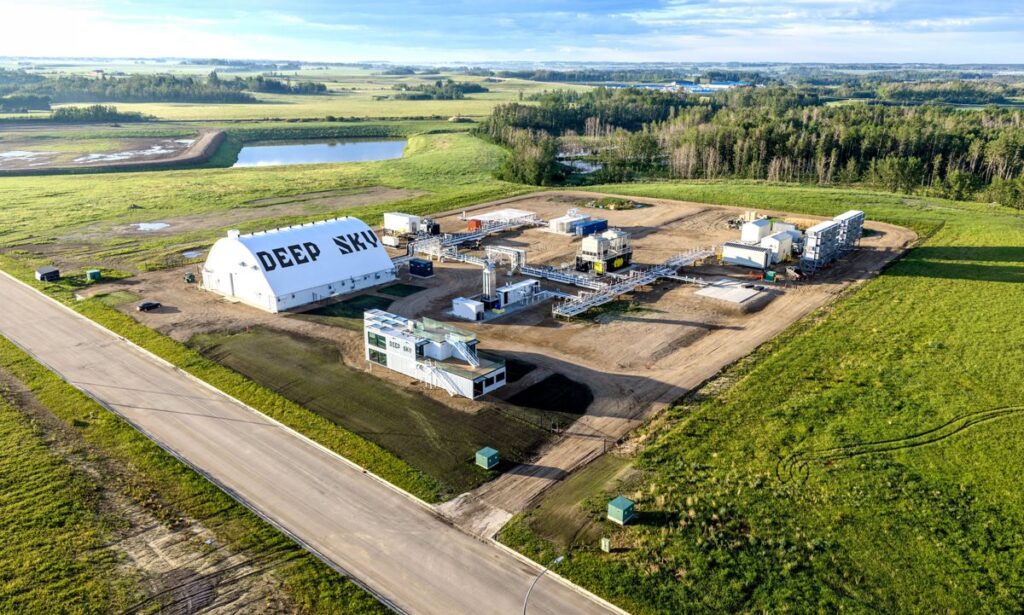
Tamarack is co-located with Quebec-based Deep Sky’s Alpha project, the world’s first facility designed to test multiple DAC technologies simultaneously, which started operating in 2025.
Deep Sky has plans for a Manitoba facility to remove up to 500,000 tonnes of CO₂ per year, making it one of the world’s largest carbon-removal projects.
On the West Coast, Carbon Engineering pioneered DAC technology in Squamish, B.C., and continues to operate a 150-person innovation centre there after being acquired by Occidental in 2023.
Last year in Burnaby, Svante Technologies opened the world’s first commercial-scale “gigafactory” capable of producing enough carbon-capture filters to remove up to 10 million tonnes of CO₂ annually.
A strong foundation for the future
What began with a handful of pioneering CCS projects has evolved into an integrated carbon management industry spanning carbon capture, transportation, permanent storage and technology manufacturing.
Share This:






















On The Verge: Energy Sector Primed for New Wave of Growth – ATB Economics