


 CDN NEWS |
  US NEWS







How economic reconciliation, global demand and infrastructure pragmatism can rebuild Canada energy sovereignty
By Jim Rushton
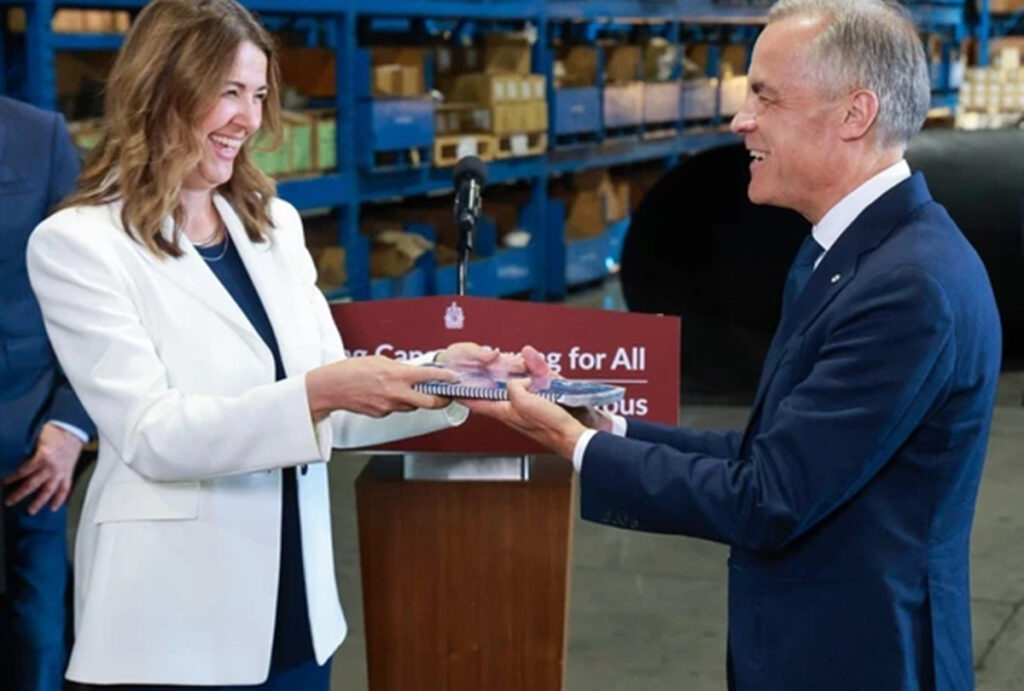
A West Coast Oil Pipeline (WCOP) proposal was announced on July 2. It would run from Bruderheim, Alberta—northeast of Edmonton—to Delta, B.C., largely twinning the existing Trans Mountain route. Trans Mountain Corporation and Pembina Pipeline have come forward as proponents.
The Pathways Project has reached an agreement of intent between Alberta, Canada, and the Oil Sands Alliance. The two projects are being packaged together with a one-million-barrel-a-day increase in oil sands production.
This is not an argument that the southern pipeline route and terminal site are the best choices for a new pipeline; it is a recognition that sometimes you have to work with what you’re given.
The path to social licence
WCOP’s social licence faces a distinct challenge in B.C., where trust has been eroded by the impacts of the DRIPA legislation. There are recent positive signs, but can economic reconciliation carry on through the regulatory and consultation work ahead?
In Northwestern B.C., LNG Canada and MNT Limited Partnership—representing five neighbouring First Nations (Gitga’at, Gitxaała, Haisla, Kitselas, and Kitsumkalum)—announced MNT’s option to invest up to C$1 billion in LNG Canada’s Phase 2 storage tank, with a First Nation majority stake if the full amount is taken up.
The Western Transmission Catalysts (WTC) initiative, led by the Indigenous Power Coalition, aims to strengthen electrical interties across B.C., Alberta, Saskatchewan, and Manitoba. Rural and remote First Nations communities need and deserve reliable electricity and a stake in its delivery. So does everyone in the Western Provinces.
As Torys LLP, a major player in Indigenous equity deal-making, expects investment opportunities “will continue to grow as large-scale energy, resource, and infrastructure projects continue to be a national priority.”
WCOP’s announcement caught title holders off guard. Still, most affected First Nations have signalled they’ll engage in good faith—as the Tsawwassen First Nation put it: “TFN will continue to review available information and engage with governments, neighbouring First Nations, and other partners as details emerge.”
The Tsleil-Waututh Nation is challenging the dredging permit granted by the Vancouver Fraser Port Authority to expand capacity at Westridge Marine Terminal—without opposing the project outright.
Still, concerns about “fast-tracking” major projects run deep across the country. British Columbia’s DRIPA and the federal Build Fast Bill C-5 have put more weight on governments to get the process right.
The environmental movement in British Columbia clearly has two streams. One fights to expand environmental law. Whatever your opinion of that, the laws were democratically created—it’s up to the courts to rule on how they’re used, and the authorities to see those rulings honoured.
The other group ignores the law, even going as far as perpetrating violence against resource workers and the destruction of machinery after the permits have been granted.
One infamous example is the Coastal GasLink attack of 2022 reported on by Resource Works, where Wet’suwet’en hereditary leader Chief Wihaliy’te (Theresa Tait-Day) had this to say:
“The protest organizers are conveniently hiding beneath our blanket as Indigenous people, while forcing their policy goals at our expense. This compromises our Nation’s social well-being and our people’s economic futures.”
The Coastal GasLink and LNG Canada projects raised the bar in B.C. for Economic Reconciliation, and it has risen even higher since.
Governments changed the rules; it is they who must manage them.
Criticism and rebuttals
Any government incentive for large corporations, especially the oil and gas sector, is condemned as corporate welfare—ironically, on the right for distorting the market, and by the left, for whom oil and gas is the poster child of corrupt capitalism.
A more cynical view of government involvement in the oil and gas industry involves two polar opposite understandings of First Nations independently choosing to be involved in the industry at any level. More hardcore environmental activists will say participating Nations are coerced, take bribes, and are left no choice but to participate.
Those with a dogmatic view of free markets will accuse First Nations of blackmail and extortion. Truth is, First Nations are using their own and Western democratic processes to make such decisions. Guess what—Nation Members don’t all agree.
The private sector doesn’t see a business case, and therefore there are no investors. But this claim is based on a false reading of the past and ignorance of the present.
The reputational harm was caused by the once-permitted Northern Gateway Project not being supported by the Trudeau government and the abandonment of Energy East.
The harm was piled on when British Columbia, led by the NDP, challenged the Trans Mountain Expansion all the way to the Supreme Court of Canada. The owner was literally harassed out of the country, selling the existing pipeline and project to the only buyer, the Federal Government.



Today it is clear that there are interested customers: Fatih Birol, head of the International Energy Agency, told CTV Canada has “a once in a lifetime opportunity” to become “a real energy export superpower.”
Kanji Yamanouchi, Japan’s Ambassador to Canada, is only one of many clear examples of Asia’s appetite for Canadian oil. On July 9, 2026, he told CTV’s Vassy Kapelos directly:
“It’s better for us to diversify the source of crude oil, not necessarily just from one part of the region, but from the world, and Canada has enormous potential.”
Despite the naysayers, the $34 billion cost of TMX is making a return on investment. The company paid $1.7 billion to the federal treasury in 2025 alone, not yet at full capacity, according to the Trans Mountain Q4/FY2025 results.
Community benefits
Natural Resources Canada provides a powerful explanation of the central role of natural resources in the economy, led by oil and gas.
Resources account for 16 per cent of nominal GDP, nearly half a trillion dollars annually. Nominal GDP in the case of resources is important; when commodity prices and sales increase, so do government revenues. In 2024, the resource sector delivered 53 per cent of all exports, amounting to $383 billion.
The numbers posted by Canada Action, from the Canadian Association of Petroleum Producers (CAPP), calculate that “Canada’s oil and gas exports of crude oil, crude bitumen, natural gas, NGLs, and refined products totalled $180 billion in 2024.”
The oil and gas industry across the country, including in Eastern Canada, makes a huge economic contribution to our cash-starved country and provides some 900,000 (direct, indirect and induced) jobs for Canadian workers.
In addition, the roughly $45 billion in taxes, royalties and fees raised across the country funds schools, hospitals and community centres and more.
The oil and gas industry also offers Indigenous communities in Western Canada some of the most significant economic development opportunities of any sector.
Building WCOP and expanding the production and Pathways project will all add to those numbers.
Pathways
There’s more nuance to the Pathways project than critics allow. It’s a prescribed piece of infrastructure—not operationally necessary for mining, processing, or transportation of oil sands. It is a political and societal choice whether we all agree with it or not; democracy is messy.
It doesn’t have to be a Hodgson’s choice: do all three or none. Taking a pragmatic approach would be in the national interest.
It may feel unnecessary in our “build-fast” environment, as Canada is already a world leader in CCS, accounting for 15 per cent of the world’s current CCS capacity, while contributing less than 2 per cent of global CO2 emissions, according to the International CCS Knowledge Centre (2024).
However, much of that capacity is underutilized here and around the world due to underperforming global carbon markets. Even the EU and Norway, the world’s toughest carbon regimes, are easing the burden on emitters in various ways in response.
Building more CCS is a long-term bet that actually has an upside. As developing economies become richer, oil production efficiency rises throughout the supply chain, and energy alliances solidify, the economics could improve over time.
There is a growing consensus that CCS is more necessary than ever. Build now or risk even higher costs doing retrofits later. A mistake Canada often makes.
The International Energy Agency ranks Canada’s upstream oil and gas as the cleanest in North America, well ahead of the United States and Mexico and among the best producers globally, and S&P Global Energy analysis shows the oil sands emissions intensity down 31 per cent since 2009—the 13th straight year of improvement.
Not a bad record, and we are committed to further emission reductions.
Going forward from here
Generally speaking, Canadians are in favour of a West Coast oil pipeline being built, and that does include many Indigenous people and Nations.
A new pipeline to the West Coast is truly in the national interest. There will be no single project for the next 20 years that offers more repair of the promise of Canada.
This oil and gas is better for the planet, for global stability, and for peace than the product it would replace.
At the end of the day, Canada needs to come out of this united—and ready to keep moving up and beyond.
Jim Rushton is a 46-year veteran of BC’s resource and transportation sectors, with experience in union representation, economic development, and terminal management. Reach him at [email protected].
Share This:






















On The Verge: Energy Sector Primed for New Wave of Growth – ATB Economics