CDN NEWS |
  US NEWS







We have ignored the warning signs for long enough.
By Jim Rushton
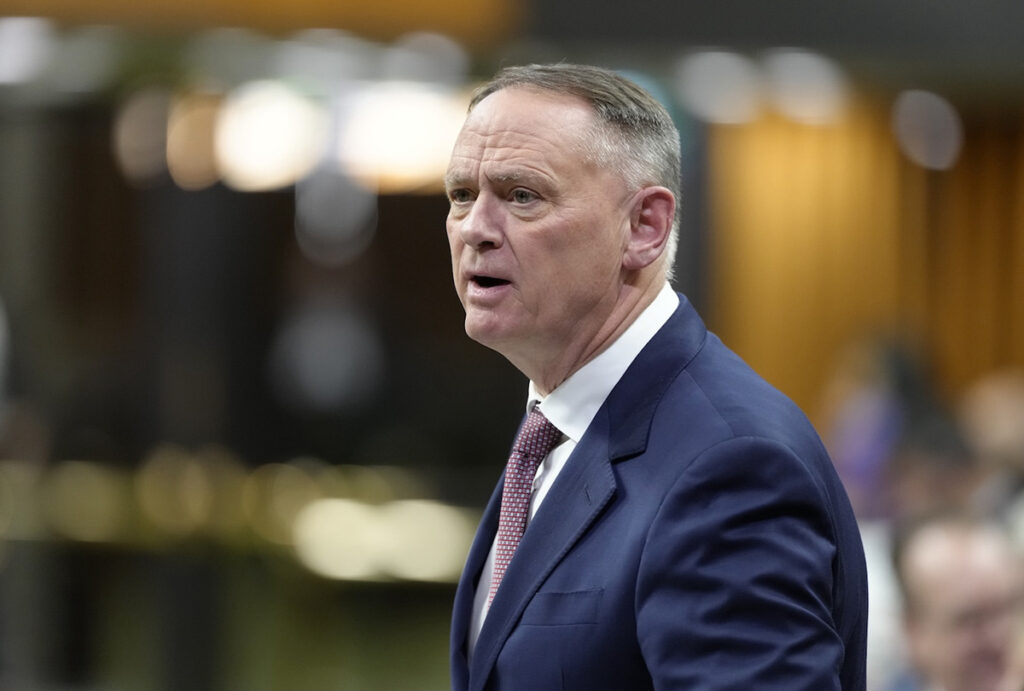
Minister of National Defence David McGuinty rises during Question Period on Parliament Hill in Ottawa, Wednesday, Feb. 4, 2026. THE CANADIAN PRESS/Adrian Wyld
By Resource Works
More News and Views From Resource Works Here
Thirty years of obsession with climate change and globalized manufacturing have resulted in rising political pushback from working people across the Western world, including here in Canada.
It is not because working people are unconcerned about climate change, or because they fail to recognize that some have benefited from global trade. It is the shortcomings, and in some cases outright failures, on both fronts that have cost institutions their trust.
What is hard to understand is how leaders failed to see it coming. Warning signs were in plain sight. The downsides of global trade wore on working people for three decades. The impact of climate policy was felt abruptly over the past five years, when energy shortages became acute and the cost of living soared.
Trade unions were clear about the challenges of poorly managed global trade and the sharp move away from goods production to a service-driven economy. Every country in the West saw middle-class manufacturing and resource jobs shrink, while low-paying service jobs grew.
There are years of data proving the loss of manufacturing jobs, the growth of service employment, and the depth of the cost-of-living crisis, consistent with these statements.
A 2026 World Population Review report on deindustrialization shows a stark reality. Of the thirteen countries listed, eleven are Western democracies. Here are Canada’s numbers:
“Manufacturing production peaked in Canada from 2004 to 2007. After that, the Canadian economy shifted from manufacturing jobs to services. Currently, only 13 per cent of the Canadian population has industrial production jobs, and 69 per cent of the Canadian gross national product comes from the services sector.”
For nearly a decade, media reports have repeatedly warned of the rising cost of living.
As recently as January 2026, Global News reported that six in ten Canadians expect the economy to worsen this year.
Job and income insecurity reduced working people’s patience with calls to sacrifice. Even with rebates, mandates for EVs and heat pumps remained out of reach for well over half the population.
To paraphrase James Carville, “It’s the jobs, stupid.”
Canada talks pivot, but it does not feel real
In Canada, there is a growing consensus that extraction and diversified markets for our natural resources are pathways to prosperity. There is also broad agreement on expanding the production of military equipment, increasing domestic procurement, and boosting exports.



That shift is already visible. On Feb. 15, 2026, Minister David McGuinty announced Canada’s participation in the European Union’s SAFE defence program, advancing cooperation with European allies and partners.
Where we remain divided and confused is climate policy, particularly in how the economy and climate are positioned and weighted in the policies of the different parties.
Half the population is not convinced that progressives are prepared to fully pivot away from climate-centric policy. The other half does not trust that Conservatives will give climate sufficient weight.
But the data suggest the electorate has decided that the economy comes first, and that every pragmatic climate option should be pursued. That positioning aligns with most of our allies and trading partners.
Western countries are pivoting, but the messaging Is flawed
The explanation being offered for this pivot is incomplete. Russia’s war against Ukraine, shifts in United States policy, and rising anxiety over China are all real and contributing factors. But if we are honest, we should acknowledge that even without those pressures, declining productivity, slow growth, and rising inequality would eventually have necessitated a pivot.
Putting the economy first strengthens climate policy
We should not guilt ourselves into economic self-harm when no other country is doing so. Our allies and trading partners are adjusting climate mandates and related policies to protect their economies and preserve political balance. Canada should be no exception.
The state of play in Europe is reflected in the Carnegie Centre’s collection of voices ahead of COP30.
As Caspar Hobhouse of the European Union Institute for Security Studies observed, “There has undoubtedly been a change in the politics of climate action in the EU and its member states. The consensus on coordinated action is fraying, with anti-climate policies proving a vote winner in Europe and beyond.”
The social licence is in place
Canada should feel confident in charting its own path to effective and independent climate policy, as others are doing the same. The focus is shifting from country-by-country targets to a global approach. Here in Canada, we have already reached a consensus that our oil and gas, with lower methane leakage, are better for the world than less-clean alternatives.
Not surprisingly, the pool of voters who favour a strong economy and pragmatic climate policies is large and growing.
Western News reported that in 2020, Canadians were split roughly 50–50 on whether to prioritize jobs or climate. By 2025, that balance had shifted to 60 per cent prioritizing jobs and 40 per cent climate.
Similarly, a 2025 MEI–Ipsos poll found support for new pipelines had risen to 75 per cent, a 14-point increase since 2020.
Why not turn an electoral consensus into a political one?
These numbers signal that political space exists to better align economic strength with pragmatic emissions policy. It is time for leaders to act.
Canada’s political parties should agree on an economy-and-climate mission statement that puts the economy first and commits to practical, pragmatic, and affordable climate policy. Guardrails of this nature would leave room for debate and reflect the realities facing working people.
Perhaps then more Canadians would answer “yes” when asked whether the country is heading in the right direction.
Jim Rushton is a 46-year veteran of BC’s resource and transportation sectors, with experience in union representation, economic development, and terminal management. Reach Jim at [email protected]
Share This: