


 CDN NEWS |
  US NEWS







Why reliability, vibration immunity, and straightforward commissioning matter in Canadian energy operations—and what modern float switch design is doing differently.
Across Canadian oil & gas operations, boilers and related steam/hot water systems play a critical role—supporting processes, heating, and utilities that keep facilities running. In these environments, level protection isn’t simply a compliance requirement; it’s a practical safeguard that helps prevent equipment damage, unplanned downtime, and safety incidents.
Low-water cut-outs and level alarm switches are often treated as “set it and forget it” devices—until a nuisance alarm, a questionable trip, or a maintenance window reminds everyone how important reliability really is. When a level event occurs, the response is rarely minor. Investigations, downtime risk, and operational disruption all add up. That’s why many teams evaluate level switches not just on basic function, but on how they hold up to real field conditions over time.
This article outlines what makes low-water cut-out and level switching dependable in demanding service—and highlights a newer mechanical float switch design, the Reliance Levalarm 1000 (REA100F-1000), as a current example of how manufacturers are addressing common pain points such as vibration, installation realities, and maintenance burden.

Why “simple” level switches can become complicated in the field
In theory, level switching is straightforward: detect a level change and trigger a relay contact for alarm or cut-out. In practice, reliability can be influenced by several site realities:
- Vibration and mechanical stress from rotating equipment, piping, and general plant operation
- Temperature swings and harsh ambient conditions
- Alignment challenges during installation, especially where space and access are limited
- Power-loss scenarios, where a fail-safe design philosophy matters
- Maintenance time (and access) for testing, verification, and troubleshooting
In Canadian energy applications, these factors can be amplified by remote sites, seasonal weather extremes, and the practical constraints of maintaining equipment in operating facilities.
The role of mechanical float switches: why they’re still a workhorse
Mechanical float switches remain widely used because they’re direct, easy to understand, and well suited to many boiler and tank applications. They are typically installed close to the process equipment they protect, and placement is often driven by site layout, piping, and access for maintenance.
For many operations, the key question isn’t “float or probe?”—it’s whether the device design is robust enough to remain stable through vibration, heat, and long service intervals, while still being straightforward to test.
What modern float switch design is doing differently
When manufacturers improve a mechanical float switch, the goal is usually the same: increase stability and reduce nuisance events without adding complexity to commissioning or maintenance. Three design themes tend to stand out:
1) Positive, repeatable switching action
A dependable switch action should be consistent and resistant to “in-between” states that can lead to unreliable signals.
2) Vibration immunity and installation tolerance
A design that continues to operate reliably under vibration—and can tolerate minor installation misalignment—reduces the risk of nuisance alarms or uncertain performance.
3) Drop-in commissioning
Switches that require minimal adjustment during installation help reduce start-up time and limit human error.
Introducing the Reliance Levalarm 1000: a modern approach to a familiar job
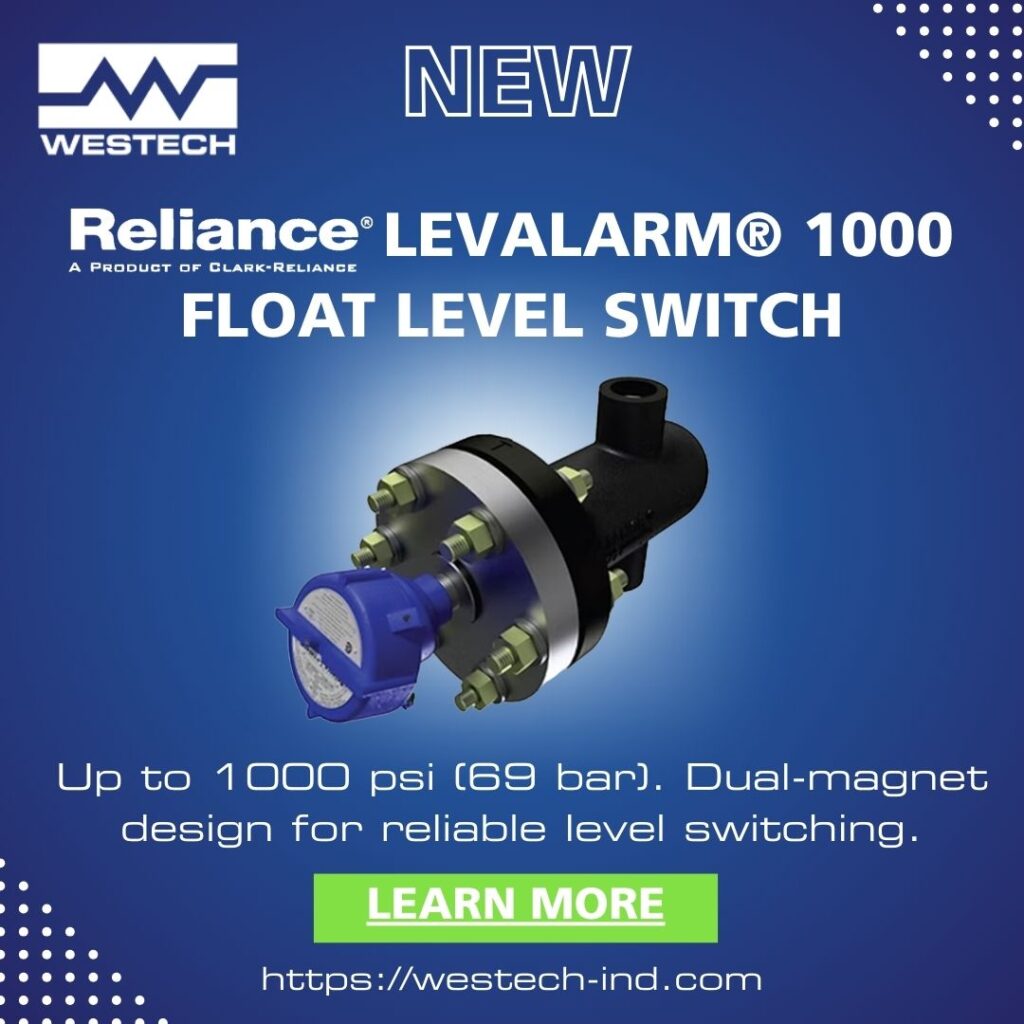
Reliance has introduced the Levalarm 1000 Float Level Switch (REA100F-1000) for applications up to 1000 psi (69 bar). It’s positioned as a “drop-in” mechanical float switch design intended to operate reliably in conditions that can challenge older switching mechanisms.
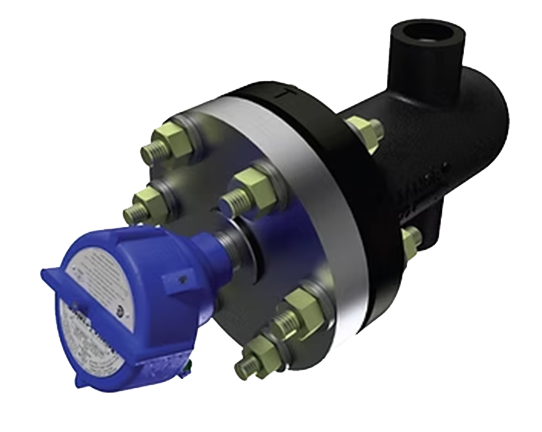
Key design and operational points include:
- Service rating up to 1000 psi (69 bar)
- Designed to be unaffected by heat, vibration, or loss of electrical power
- A dual-magnet, positive interlock approach to switching
- Drop-in design that requires no adjustments to commission
How the Levalarm 1000 works (high level)
At a high level, the Levalarm 1000 uses a stainless-steel float and an internal magnet arrangement to create a stable switching action. The float magnet’s movement drives a secondary magnet within the switch housing, resulting in a physical activation of the switch. This approach is intended to provide a repeatable, “locked-in” switching action that supports vibration resistance and helps compensate for installation realities.
Maintenance and testing: reduce time, improve confidence
Level protection devices don’t just need to work—they need to be easy to verify. In the real world, maintenance teams often value:
- Clear indication of device status
- Straightforward functional testing procedures
- Reduced “tinkering” or adjustment during commissioning
- Confidence that the device will behave consistently across operating cycles
For mechanical float switches specifically, the ability to support a stable switching action over time is important—not only for safety protection but also for reducing nuisance alarms that pull teams into unnecessary troubleshooting.
Where this matters most in Canadian energy operations
In oil & gas facilities, level protection devices can be found anywhere steam/hot water systems, utilities, or process vessels require dependable switching for alarm or shutoff actions. Typical areas include:
- Boiler and utility systems
- Process support systems where level is critical for safe operation
- Tank and vessel applications where reliable level alarming is required
- Sites where vibration, environmental conditions, or access limitations make reliability and ease-of-maintenance especially important
Closing thought: reliability is an operational advantage
Low-water cut-outs and level switches are often treated as small components in a big facility—but they carry outsized influence over safety, uptime, and maintenance workload. Choosing designs that are vibration-resistant, tolerant of real installation conditions, and simple to commission can reduce nuisance events and build confidence in the layer of protection that’s supposed to be dependable when it matters most.
For teams reviewing new installs or replacement options, the Reliance Levalarm 1000 is one example of how modern mechanical float switch design is evolving—aiming to combine familiar operation with improved robustness for demanding service.
About Westech Industrial (Western Canada)
Westech Industrial Ltd. is a distributor of Clark-Reliance Reliance boiler trim solutions in Western Canada. If you’re planning a replacement, upgrade, or reviewing your level protection strategy, our team can help you select the right Levalarm configuration for your application.
Share This:






















INSIGHT: Canada’s Natural Resource Sector is at the Heart of the Government’s ‘Export & Diversification’ Plan