


 CDN NEWS |
  US NEWS







Project being assessed by federal Major Projects Office for potential fast-tracking
By Will Gibson
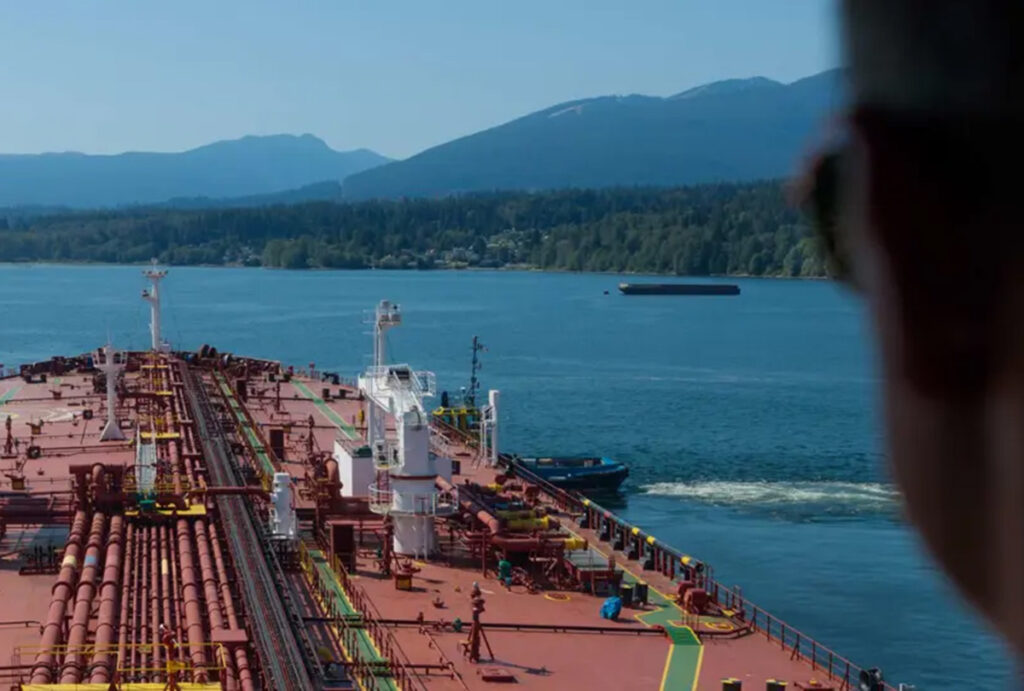
View from the bridge of an oil tanker transiting B.C. waters. Photo courtesy BC Coast Pilots/Trans Mountain Corporation
Having lived near the sea for almost all of her life, Bonnie Gee has a clear view of both the opportunities and risks of navigating the waters off British Columbia’s rugged coastline.
The longtime marine industry advocate, now president of B.C.’s Chamber of Shipping, believes oil tankers can safely navigate the waters around Roberts Bank, the proposed terminus of the new West Coast oil pipeline in the Alberta-Canada energy agreement.
“The proposed pipeline expansion to British Columbia’s south coast represents a logical and responsible step forward, particularly in light of the significant investments in spill preparedness and response already made through the Trans Mountain expansion,” Gee said.
“With enhanced spill response capacity now in place, Canada has strengthened its ability to prevent and respond to potential incidents, ensuring a higher level of environmental protection.”
A major Canadian trade gateway
The pipeline and terminal are both being assessed by the federal Major Projects Office for potential fast-tracking as projects of national interest.
Located about 35 kilometres south of Vancouver on the Strait of Georgia, the Roberts Bank project is being considered as part of the Port of Vancouver’s Gateway Strategy.
The strategy, identified by the federal government as an urgent priority to expand access to fast-growing Indo-Pacific markets, includes container handling, grain, potash and petroleum products.
Roberts Bank was originally developed for coal exports in the late 1960s and is today a major Canadian trade gateway.
The site is home to one of North America’s busiest coal export facilities and Canada’s largest container terminal.
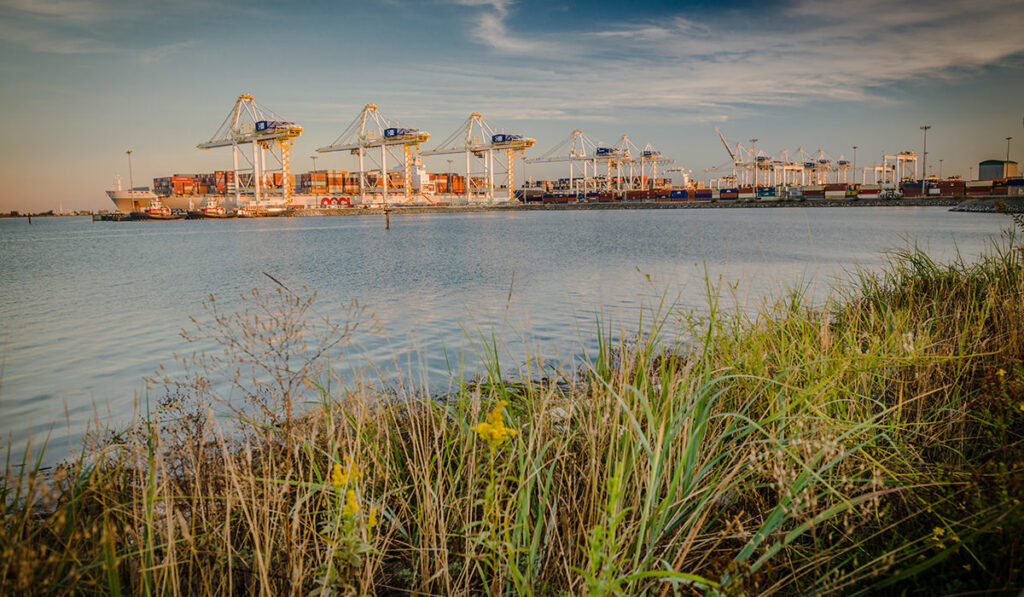
GCT Deltaport container terminal at Roberts Bank in Delta, B.C. Photo courtesy Global Container Terminals



Proposed oil terminal at Roberts Bank
The proposed Roberts Bank oil terminal would occupy roughly 260 hectares and house about 6.5 million barrels of oil storage capacity.
Connected to shore by a jetty, it would have two deepwater berths able to load very large crude carriers, known as VLCCs.
Onshore, it would include space for Western Canada Marine Response Corporation (WCMRC), the Transport Canada-certified marine spill response organization for all 27,000 kilometres of Canada’s West Coast.
According to the West Coast oil pipeline project description, the new terminal would build on the existing spill response system already in place, with additional response resources added as needed.
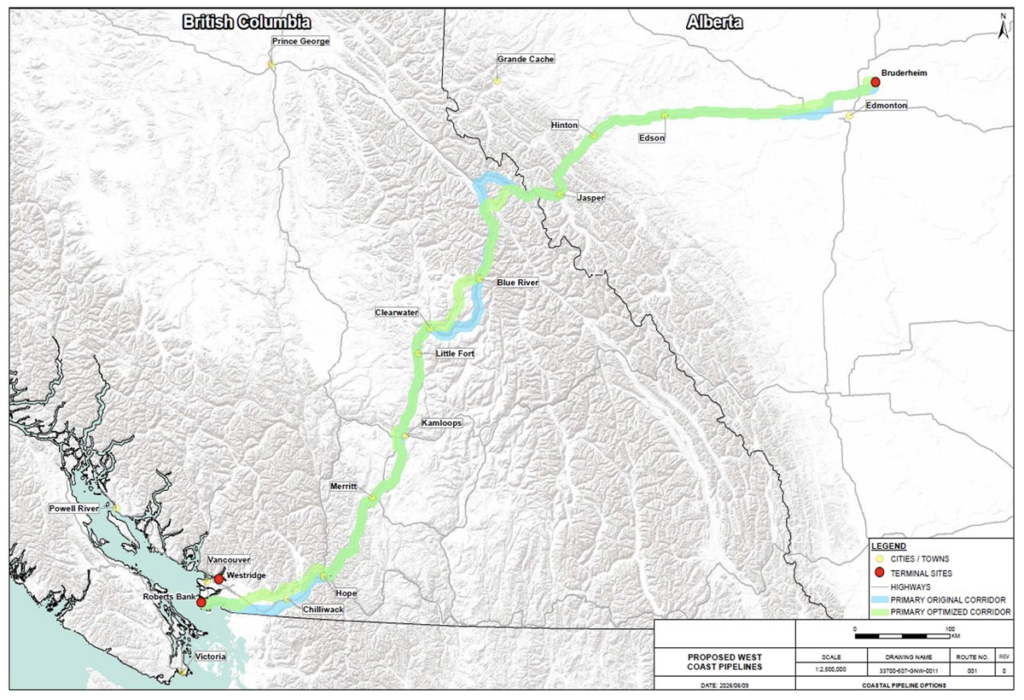
Proposed corridor for the West Coast Oil Pipeline from Alberta to Roberts Bank, B.C. Map courtesy Government of Alberta
Canada’s oil tanker safety system
There hasn’t been an oil tanker spill on Canada’s West Coast in more than 50 years.
“This is widely recognized as a world-class tanker safety system – one that combines rigorous regulations, advanced navigation protocols, and coordinated response measures,” Gee said.
“Together, these elements provide confidence that increased marine traffic can be managed safely while supporting Canada’s economic and energy objectives.”
Safety measures include mandatory double hulls, two licensed local marine pilots on board at all times and dedicated tug escorts to guide tankers in and out of port.
Expanded spill response capacity
WCMRC’s response capabilities were doubled in anticipation of increased tanker traffic from the Trans Mountain expansion.
This included six new bases, doubled the fleet from 44 to 88 vessels, and grew the workforce to more than 200 employees.
Share This:






















On The Verge: Energy Sector Primed for New Wave of Growth – ATB Economics