CDN NEWS |
  US NEWS







How an independent layer of protection can support uptime, safety, and cyber-resilience—without relying on networks or software
Canada’s energy sector is operating in a reality where reliability and cybersecurity are no longer separate conversations. From upstream production and SAGD facilities to gas plants, pipelines, terminals, and refineries, industrial control systems (ICS) and OT networks keep getting more connected—supporting better diagnostics, remote access, analytics, and operational efficiency.
The upside is clear. But increased connectivity also expands the attack surface.
That creates a practical question for operators, maintenance teams, and reliability engineers: If a control system is compromised—or simply behaving unexpectedly—what protection still works when networks, communications, and software can’t be trusted?
One proven answer is to add a safety layer that functions independently of the control system: electro-mechanical pressure and temperature switches.
Why this matters for Canadian energy operations
Energy assets across Canada often run in conditions where failure modes escalate quickly:
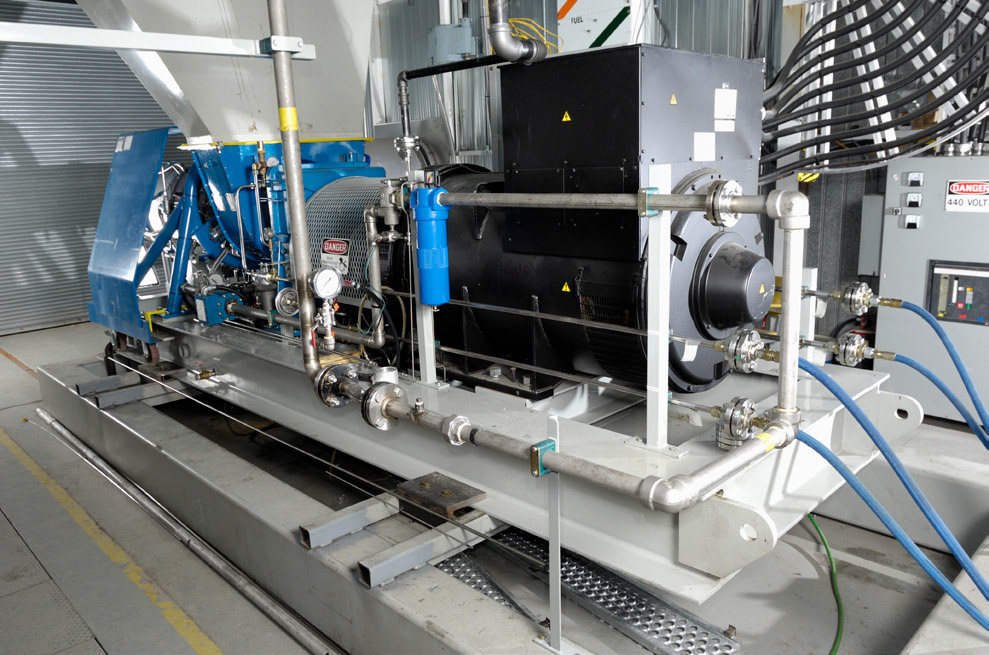
- A compressor station sees abnormal vibration or lube oil pressure issues
- A heater or combustion system drifts out of safe operating range
- A pipeline station experiences process upsets that spike pressure or temperature
- A terminal or refinery unit faces cooling issues and rising temperatures
- A heat tracing circuit fails during extreme cold, risking freezing and blockages
In many facilities, the control system is designed to detect and respond to these scenarios. But the more those systems become digitized and connected, the more important it becomes to ensure that protective actions can still occur even if the control environment is disrupted—whether by cyber events, configuration errors, or unexpected failures.
Cybersecurity controls are essential—but not always sufficient
Most operators already rely on a combination of common cybersecurity measures such as segmentation, firewalls, patching, monitoring, and access control. These remain foundational.
However, industrial sites often face real-world constraints:
- legacy assets that can’t be patched quickly (or at all)
- mixed-vendor architectures and evolving networks
- expanding remote connectivity requirements
- increasing integration between OT and IT environments
Even strong programs can be challenged by complexity and change.
That’s why many teams are adopting a layered approach that includes not only cyber controls, but also independent protective functions that can still act reliably if the control layer becomes unreliable.
A practical independent layer: electro-mechanical process switches
Electro-mechanical pressure and temperature switches provide a straightforward advantage for cyber-resilience:
- They do not run on software or operating systems
- They do not require network communications to function
- They can initiate protective action locally and directly
- They are designed to trip when a real process condition reaches a set point
In other words: if the process condition becomes unsafe, the switch reacts—regardless of the cause.
This is especially valuable for final element actuation in safety-related applications where you want a dependable signal to trigger alarms, trips, or shutdown sequences without depending on a networked control system.
Use case example: Sandia National Laboratory refinery attack simulation
To illustrate the value of independence, a widely referenced example comes from a Sandia National Laboratory oil refinery attack simulation.
In the scenario, one of the first actions was to place the system into manual, effectively overriding automated safeguards. In situations like this, if protective actions rely entirely on control logic, operator screens, or networked instructions, the system can be placed in a vulnerable state.
The key takeaway from the example is simple: an appropriately placed and configured electro-mechanical switch would still trip once temperature exceeded the set point—independent of the control system—leaving the attacker with no software-based pathway to prevent that protective action.
This is also why electro-mechanical protection is useful beyond cyber scenarios. The switch responds to the process condition itself—whether the cause is malicious tampering, misconfiguration, or an equipment failure (such as loss of cooling flow).
Where this approach fits in energy facilities
Electro-mechanical switches are commonly applied where an abnormal process condition indicates escalation risk, such as:
- Rotating equipment protection (pumps, compressors, turbines)
- Combustion and fired equipment safety interlocks
- Oil & gas processing pressure/temperature limits
- Terminals and refineries: unit protection against overheating and overpressure
- Heat tracing / freeze protection models to protect piping and vessels in cold climates
For Canadian operations, the freeze-protection angle is especially relevant. Lost heat trace or insufficient temperature control can lead to freezing, blockages, and downtime—often when weather impacts make response time difficult.
Recommended solution: UE 120 Series Pressure & Temperature Switch (available from Westech Industrial)
For facilities looking to strengthen cyber-resilience and improve the dependability of local protective functions, Westech Industrial offers the United Electric Controls (UE) 120 Series Pressure and Temperature Switch.
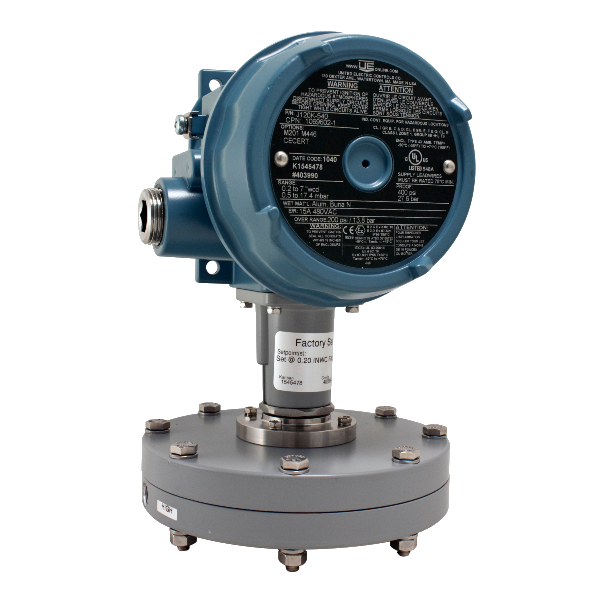
Built for heavy industrial service, the 120 Series is designed to support critical alarm, safety, and emergency shutdown functions—particularly in hazardous locations—while operating independently from the control system.
Key benefits of the UE 120 Series
- SIL 2 certified (SIL 3 capable) for SIS applications
- Simplified installation with ample access to wiring compartment, terminal block, and set point adjustment
- Heat trace / freeze protection temperature models to protect piping and vessels
- Application versatility with a variety of ranges, microswitches, sensors, and process connections
- Explosion-proof SPDT/DPDT and multi-switch output for control and safety applications
Typical energy-sector applications
- compressors, pumps, and turbines
- combustion systems and heaters
- oil, gas, and chemical processing assets
- cold-weather protection and heat tracing monitoring
As an electro-mechanical switch, the 120 Series can help reduce dependency on communications-based protective actions—supporting safety functions that remain reliable even when cyber concerns, network issues, or control system disruptions are present.
A smarter layered strategy for safety and uptime
Electro-mechanical switches won’t replace cybersecurity. But they can strengthen your overall resilience by adding a layer that is:
- independent
- fast acting
- purpose-built for industrial protection
- free from many software/network failure modes
For Canadian energy facilities that balance production targets with safety expectations and modern OT realities, this is a practical way to build more robust protective functions.
Learn more about the UE 120 Series Pressure & Temperature Switch from Westech Industrial by visiting our website at https://westech-ind.com or calling us at 1-800-912-9262.
Share This: