CDN NEWS |
  US NEWS








Oil & Gas site being monitored
By Jason Chiu
As Canada moves towards its national climate commitments of reducing greenhouse gas emissions to 40-45% below 2005 levels by 2030 and achieving net-zero by 2050, the need for credible, verifiable progress has never been greater. Few sectors face this pressure more directly than Canada’s gas industry, whose operations, infrastructure, and emissions profile place it at the center of the country’s decarbonization effort.
In translating broad national net-zero targets into specific and operational-company level requirements, Environmental, Social, and Governance (ESG) standards have moved to the forefront. For the gas sector, these standards define how emissions should be managed, how people and communities must be protected, and how decisions should be governed.
To demonstrate accountability, as well as build trust and credibility, companies must practice ESG transparency and prove adherence. Surveillance technologies make that possible. By linking field actions to secure, reviewable evidence, surveillance supports ESG disclosures with verifiable proof rather than mere narrative, thereby closing the gap between net-zero intent and demonstrated performance.
ESG Transparency: Turning Commitments into Proof
In the context of Canada’s gas sector, ESG transparency means showing – not just stating – how ESG commitments are met in real operations. It goes beyond publishing sustainability targets; it’s about providing verifiable evidence that those targets are being acted on in the field and governed ethically.
For producers, that means creating records that link what’s reported on paper to what actually happens at well sites, compressor stations, and processing facilities. Regulators, investors, and communities increasingly expect clear, auditable proof – how emissions are detected and repaired, how safety zones are enforced, how incidents are prevented or resolved.
This is where surveillance becomes the backbone of ESG transparency. Networked video, thermal imaging, and analytics convert field activity into measurable, time-stamped evidence. Footage of maintenance crews performing leak detection, or data showing flares operating within efficiency thresholds, transforms ESG reporting from narrative into verifiable performance. In this way, surveillance doesn’t just enhance compliance – it makes transparency tangible.
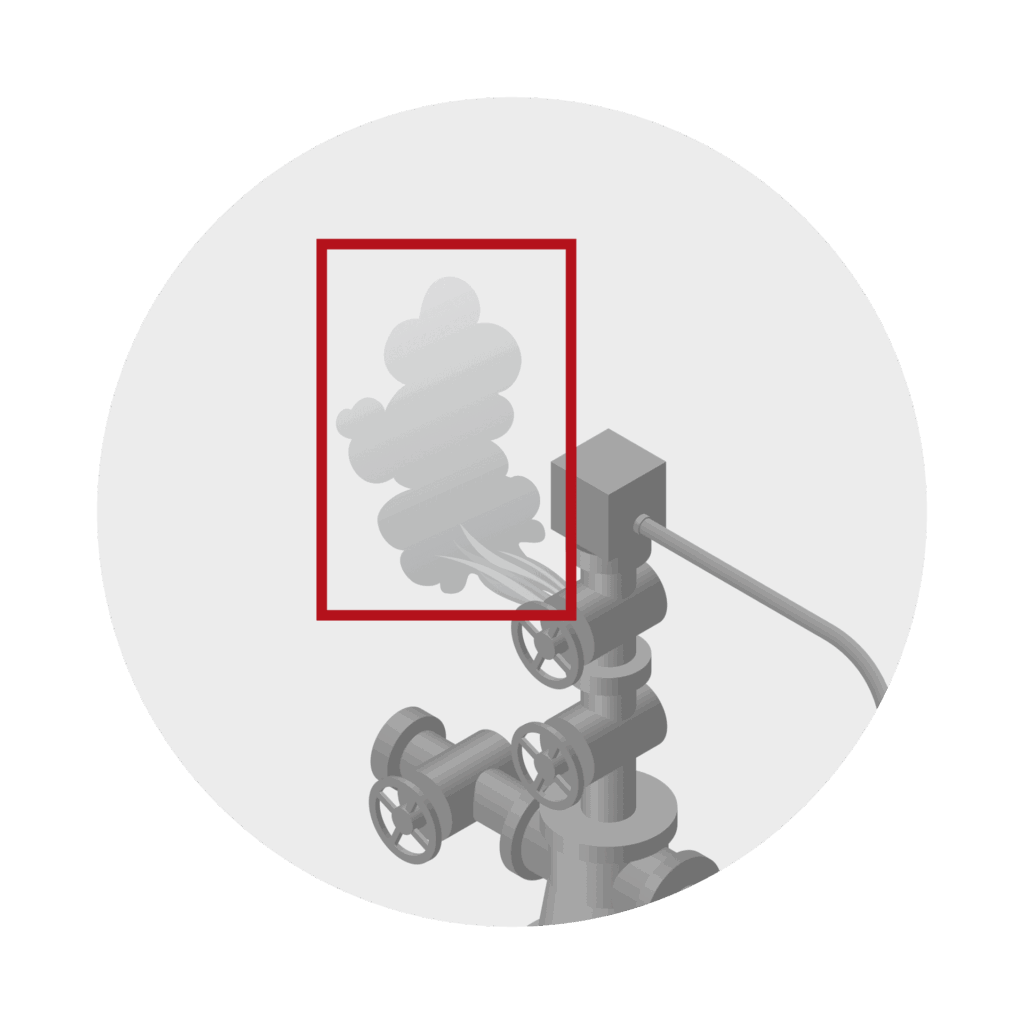
Smoke detection through analytics
Environmental: Proof of Sustainable Operations
In Canada’s gas industry, environmental performance is measured by how effectively producers control emissions, ensure containment, and operate efficiently. Among the key indicators are methane reduction, flaring performance, and the verification of reported data – all of which rely increasingly on visibility and evidence.
Methane Detection and Control. Methane reduction is central to Canada’s 2030 and 2050 climate goals, supported by federal regulations and provincial directives. Thermal cameras and sensor-integrated cameras can continuously monitor wellheads, valves, and compressor stations for leaks, confirming repairs and inspection intervals with time-stamped proof. These visual records strengthen both environmental compliance and ESG reporting credibility.
Flaring Performance. Provincial energy regulators set strict limits and combustion-efficiency standards for flaring and venting. Networked thermal imaging combines heat-sensing technology with IP connectivity, allowing operators to remotely detect, record, and verify temperature-based anomalies across gas facilities in real time. Paired with analytics that can sense if a flare has been extinguished, for example, can alert operators in real time and mitigate incidents quickly.
Verification and Reporting. ESG transparency depends on proof that what is reported reflects what happens in the field. Surveillance provides that link: authenticated footage of inspections, flare checks, and leak repairs are verified through cryptographic integrity checks, secure-time-stamps, and a documented chain of custody.
Together, these measures illustrate how surveillance transforms environmental responsibility from a reporting exercise into a verifiable process – showing exactly how emissions are managed, equipment integrity is maintained, and progress toward net-zero is demonstrated in real time.
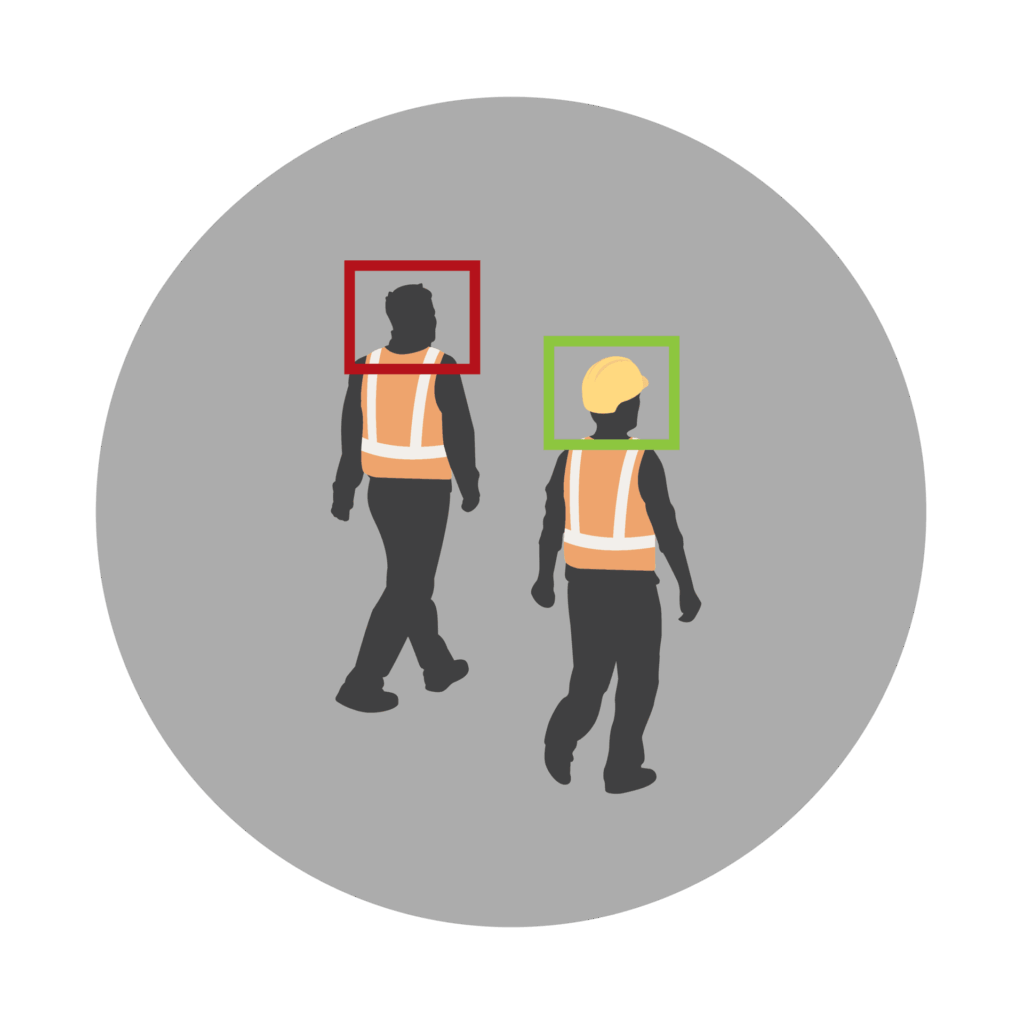
Analytics developed for health and safety
Social: Protecting People and Communities
The social dimension of ESG reflects how gas producers protect their workforce, contractors, and nearby communities. While the specific metrics vary by jurisdiction and operator, worker safety, emergency readiness, and community assurance are consistently among the most critical areas of accountability.
Worker Safety. In a sector defined by high pressures, hazardous materials, and remote sites, safety compliance must be visible as well as documented. Smart analytics can detect unsafe entry into exclusion zones or missing protective gear, allowing supervisors to intervene immediately and verify that safety procedures are upheld. Wearables can also be deployed for training and compliance purposes, while also keeping workers safe via live streaming or person-down alarms, increasing safety especially in lone worker scenarios.
Emergency Response. In emergencies such as gas leaks, equipment failure, or extreme weather, real-time visibility can be lifesaving. Integrated camera systems and thermal sensors provide early warning of abnormal conditions, while two-way audio enables rapid coordination with field teams or local responders. The result is both faster action and a verifiable record of how incidents were managed.
Community Assurance. For communities near pipelines or compressor stations, visible monitoring demonstrates that safety and environmental controls are active and enforced. When privacy concerns arise, video masking and restricted retention policies balance transparency with ethical responsibility.
Through these applications, surveillance reinforces the social pillar of ESG – demonstrating that worker protection and community trust are more than policy statements; they are observable, measurable, and continuously verified.
Governance: Data Integrity and Ethical Oversight
Strong governance ensures that all ESG data – from emissions logs to safety records – is collected, managed, and reported with integrity. Within that framework, secure data management, ethical use, and cybersecurity have becoming defining tests of transparency and accountability.
Secure Data Management. Modern surveillance platforms support governance by protecting information from tampering or misuse. Encryption, authentication, and audit trails preserve a traceable chain of custody, ensuring that ESG evidence remains reliable and admissible for compliance or investor review.
Ethical Use and Privacy. Responsible data handling is central to both regulatory compliance and social trust. Role-based access, anonymization, and defined retention schedules ensure that monitoring serves safety and sustainability purposes without infringing on individual rights.
Cybersecurity and System Integrity. As surveillance systems become more interconnected, cybersecurity safeguards are essential to protect ESG data itself. Routine firmware updates, vulnerability testing, and network monitoring help ensure that information used for transparency remains secure.
In practice, governance defines whether ESG transparency can be trusted. By embedding ethical data stewardship into surveillance infrastructure, producers can demonstrate not only operational accountability but also the integrity of the evidence that supports it.
Best Practices for Implementing Surveillance to Support ESG
Translating surveillance into measurable ESG value requires more than installing cameras – it demands integration, governance, and intent. The following practices help ensure that monitoring directly supports the credibility of ESG reporting:
- Target verification gaps by focusing monitoring where proof matters most: verifying methane-leak repairs, confirming flare performance, and documenting emergency-response activity.
- Integrate with operational systems so surveillance feeds, emissions sensors, safety systems, and Supervisory Control and Data Acquisition (SCADA) deliver a unified, real-time picture of site performance.
- Use analytics proactively to trigger alerts on temperature anomalies, unauthorized access, or unsafe behavior, turning monitoring into early-warning intelligence.
- Protect privacy and data integrity with encryption, access controls, anonymization, and clear retention policies to ensure transparency without compromising rights or security.
- Train and reframe so teams use surveillance as compliance and sustainability tool – not just security – driving consistent adoption and better ESG outcomes.
- Audit and disclose by attaching authenticated footage or analytics to ESG reports and reviews, adding verifiable evidence to environmental, safety, and governance claims.
Conclusion: From Visibility to Credibility
For Canada’s gas sector, the path to net-zero depends not only on innovation and policy, but on proof. Every commitment to cut emissions, protect workers, or safeguard data must be supported by verifiable evidence that those promises are being met in the field. Surveillance delivers that proof. By connecting day-to-day operations with measurable outcomes, it transforms ESG transparency from a reporting obligation into a continuous record of performance. In a sector that sits at the heart of Canada’s energy transition, this level of accountability is what turns visibility into lasting credibility.
BIO
Jason Chiu is the Professional Services Group Manager with Axis Canada. He has a background in IT and networking and has spent over 18 years in the security industry, from being an integrator, consultant and manufacturer. Jason is an ASIS board certified Physical Security Professional (PSP), is trained in Critical Infrastructure Protection (CIP), Crime Prevention Through Environmental Design (CPTED Levels 1 & 2), and (ISC)2 Certified in Cybersecurity.
Share This: