CDN NEWS |
  US NEWS







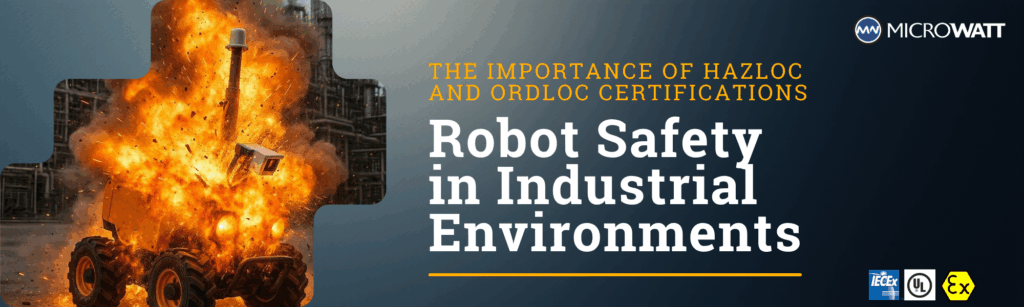
Across Canada — from Alberta’s oil sands to Ontario’s chemical plants and Saskatchewan’s mining operations — robotics are redefining how industries operate. As automation integrates more deeply into hazardous workplaces, one question stands out: are your robots certified for safe operation in Canadian environments?
The Critical Role of Certification
Unlike older, fixed robotic systems, today’s robots move freely, collaborate with humans, and adapt to changing environments. In hazardous locations (HAZLOC) such as refineries, gas-processing facilities, or grain terminals, even a small spark or electrical discharge could ignite a disaster.
Certification ensures that robotic systems are engineered, tested, and approved to prevent such incidents — protecting workers and assets while maintaining uptime.
Certified robots feature explosion-proof enclosures, intrinsically safe circuits, and purging or pressurization systems.
For Canadian industries, certification isn’t just compliance, it’s a commitment to safety culture, environmental responsibility, and operational integrity.
Emerging Standards: UL 6260 and Canadian Adaptations
The new UL 6260 standard represents the evolution of robotic safety frameworks, addressing drones, mobile robots, and remotely operated vehicles (ROVs) used in inspection and maintenance.
By establishing criteria for autonomy, mobility, and environmental endurance, UL 6260 supports consistent and compliant robot deployment — a vital step for Canada’s industrial sectors advancing toward digitalization .
Certified Robots vs. Hot Work Permits
In Canadian heavy industry, “hot work” permits have long been a procedural safeguard. But certified robots can reduce or eliminate the need for these temporary permits by embedding engineered safety directly into their design. This shift means continuous productivity without compromising compliance — reducing downtime and exposure risks in hazardous zones.
A Safer, Smarter Path Forward
Certified robotics are enabling Canada’s energy and manufacturing sectors to achieve safer, more efficient operations. They safeguard personnel, extend asset life, and ensure compliance across provincial and national standards.
At Microwatt Controls Ltd., we help Canadian organisations deploy organizations deploy certified robotic systems that certified robotic systems designed to perform reliably under Canada’s toughest industrial conditions — from Arctic cold to high-temperature refinery zones.
Learn more, access full whitepaper: “Robot Safety in Industrial Environments: The Importance of HAZLOC & ORDLOC Certifications — or contact us to learn how certification can protect your people and your productivity.
Share This: