


 CDN NEWS |
  US NEWS









By Jason Clemens, Grady Munro and Milagros Palacios
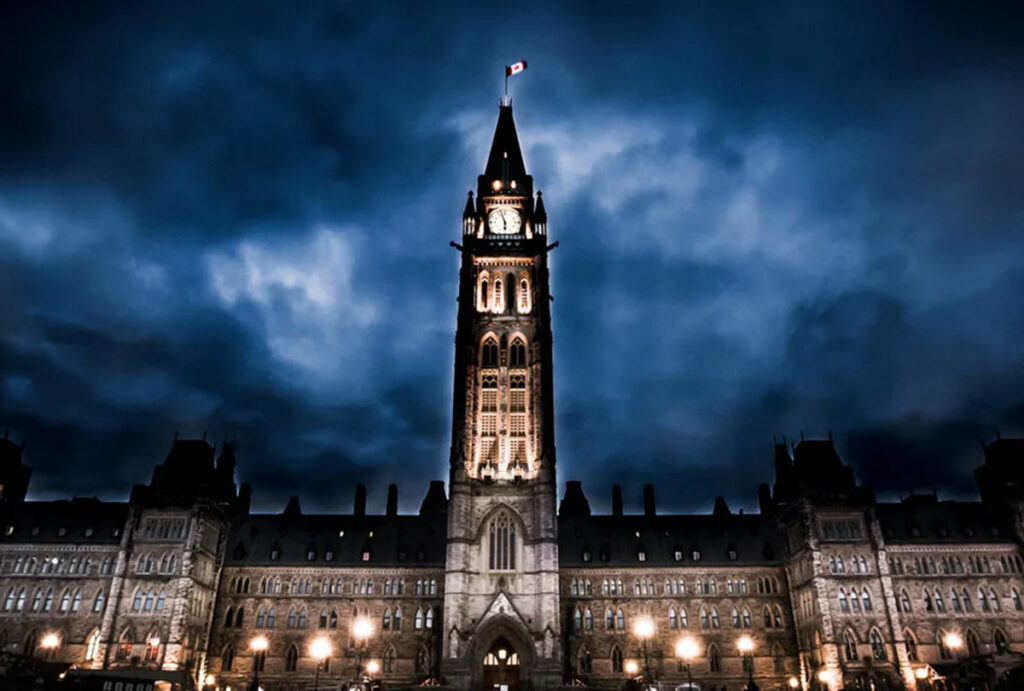
Sufficient time has passed—from Justin Trudeau stepping down as prime minister and the Carney government introducing changes—to look back and document the Trudeau government’s policies and their effects. Such reflection offers lessons for the new government as it considers its own policy options.
The Trudeau era is best characterized as a marked expansion of the role and scope of the federal government in the economy and broader society.
One measure of the size of the federal government is government spending as a share of the economy (i.e. GDP), which increased from 12.9 per cent in 2014/15, the year before Trudeau was elected, to an estimated 16.0 per cent in 2024/25. Though this might seem like a small change, remember it’s measured relative to the entire Canadian economy (which was over $3 trillion in 2024). So small percentage-point changes represent tens of billions of dollars reallocated away from Canadian families, entrepreneurs and businesses to finance spending by Ottawa.
In dollars, federal spending (excluding interest costs on debt) is expected to nearly double from $256.2 billion in 2014/15 to an estimated $489.7 billion in 2024/25 (nominal).
The Trudeau government recorded the six-highest levels of per-person federal spending in Canadian history (adjusted for inflation)—higher than during both world wars, the deep recession of the early 1980s and the financial crisis of 2008/09.
Federal government employment skyrocketed from 257,138 in 2014 to 357,965 in 2025, an increase of 39.2 per cent. For context, the Canadian population increased by 16.6 per cent during this period.
And despite federal revenues increasing from $279.9 billion in 2014/15 to an estimated $495.2 billion in 2024-25 (nominal), the federal government borrowed extensively to finance its expansion. Specifically, total federal debt increased from $1.06 trillion in 2014/15 to a projected $2.15 trillion.
The Trudeau government introduced new programs and expanded existing ones.
For instance, financial assistance to families with children under 18 (now called the Canada Child Benefit) was massively expanded, growing from $14.3 billion in 2014/15 to an estimated $28.2 billion in 2024-25 (nominal).
Direct spending on Indigenous peoples almost tripled to $32.0 billion, which doesn’t include the massive increase in the number and value of lawsuits government has settled with First Nations.

And transfers to the provinces for health care, social services and equalization increased from $61.4 billion in 2014/15 to a projected $94.3 billion in 2024-25 (nominal).
Again, the Trudeau government also introduced a host of new programs including national dental care, pharmacare and daycare. The expected spending on these new programs is not incidental—estimates from the Parliamentary Budgetary Officer suggest combined annual costs could reach $12.3 billion this year (2025/26). And critically, all three programs are in areas of provincial responsibility, which has increased federal-provincial tensions.
The Trudeau era also included a marked expansion in regulations, particularly related to the government’s pursuit of “net-zero” by 2050, which includes restricting growth in the oil and gas sector and broad regulation of the economy including, for instance, new regulations on homebuilding.
The guiding principle of the Trudeau government—which was a marked break from the previous Harper, Martin and Chrétien governments—was that more spending, taxing and regulating by Ottawa leads to greater economic growth and prosperity for Canadians. That promise of government-led growth and prosperity can now be tested, and hopefully inform the new Liberal government about the foibles of trying to achieve prosperity through more government.
Canada’s economy grew at an average annual rate of 1.9 per cent between 2016 and 2024 (inflation-adjusted). While 1.9 per cent annual growth is positive (albeit lackluster), this ignores population changes. When we adjust for population to examine changes in per-person GDP (a common indicator of living standards), average annual growth drops to a meagre 0.3 per cent over the period (inflation-adjusted). To put this into perspective, according to an analysis by the former chief analyst at Statistics Canada, that recent growth in per-person GDP in Canada was the worst on record since the Great Depression.
Specifically, per-person GDP (inflation-adjusted) stood at $57,491 at the end of 2015 when Trudeau was first elected. In the first quarter of 2025, when Trudeau resigned, it reached $59,146 (again inflation-adjusted)—an increase of just 2.9 per cent over the entire 10-year period. In other words, the broadest measure of living standards showed almost no improvement over the Trudeau government’s 10-year reign. Contrast that with the 26.2 per cent increase in per-person GDP (inflation-adjusted) during the 10-year era of the Chrétien government (from the end of 1993 to the end of 2003) and one gets a sense of the enormity of the foregone prosperity during the Trudeau era.
At the heart of Canada’s dismal economic performance during the Trudeau era is a collapse in business investment and confidence more broadly. On average, during the Trudeau years, business investment in factories, warehouses, machinery and equipment declined by 0.5 per cent each year (inflation-adjusted) compared to the positive average annual growth of 5.5 per cent under the Chrétien government.
Even if private business investment is more broadly measured to include housing, which was the one bright spot in the investment data during the Trudeau era, the average annual increase in business investment (inflation-adjusted) is a meagre 0.1 per cent compared to 5.2 per cent under Chrétien.
Simply put, businesses and private investors lost confidence in Canada. Indeed, the media, including international media, was littered with stories about Canada being a place where business could not get done.
Another way to illustrate just how much the private sector struggled during the Trudeau era is to compare private versus government-sector employment. From 2015 to 2024, private-sector employment (including self-employment) increased by 13.4 per cent compared to 27.0 per cent for government-sector employment (federal, provincial and local). During the Chrétien era, it was the opposite—government-sector employment grew by 4.7 per cent compared to 27.4 per cent for the private sector.
Getting an historical perspective of the policies, their effects and the performance of the federal government during the Trudeau era is important for the current government to learn from past mistakes and avoid making them again. The clear lesson is that bigger government does not lead to economic growth or prosperity but rather to stagnation and serious debt accumulation. With this information, the Carney government should be armed with evidence that a new direction is needed to achieve better results that improve the living standards of Canadians.
Share This:























THE GEOTHERMAL OPTION: B.C.’s Overlooked Firm Power Option: What the Geothermal Evidence Shows – Resource Works