


 CDN NEWS |
  US NEWS







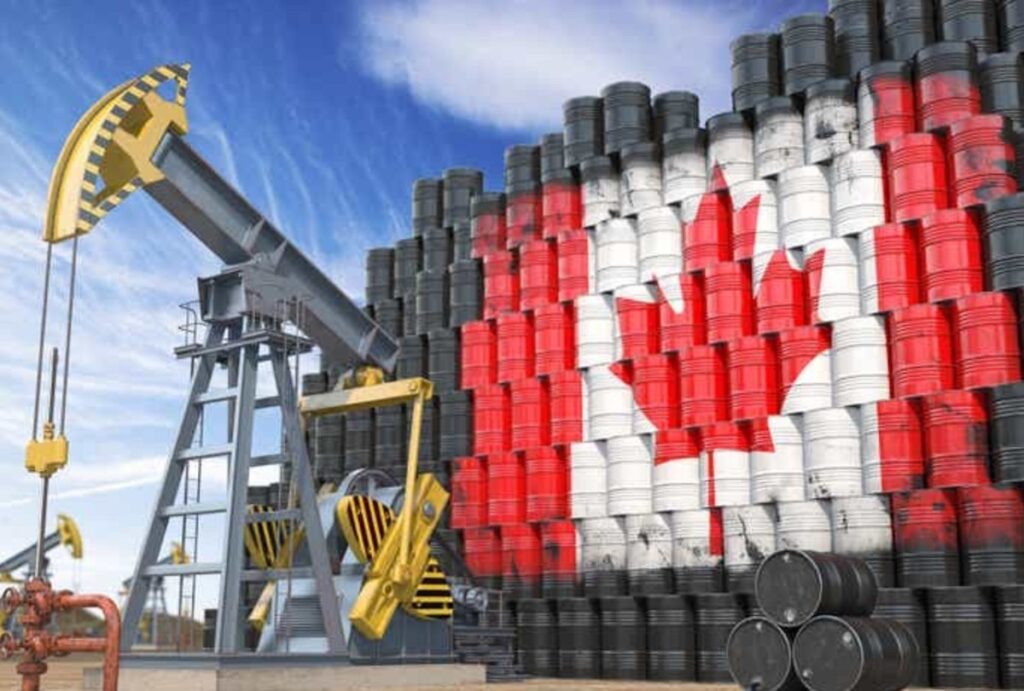
The U.S. strike on three nuclear sites in Iran is expected to rattle oil prices as prices change to include a higher geopolitical risk premium.
Anticipated price rises range from a likely rise of $3-5 per barrel forecast by Reuters to predictions of a “knee-jerk” reaction price spike with Brent crude, currently at $72.40, possibly rising to $120+ in a worst-case scenario, according to JPMorgan.
Whatever the choice of action Iran will take in response- it is creating fears of reprisals striking U.S. oil infrastructure. Impacts on the Strait of Hormuz are feared as a senior Iranian lawmaker was quoted on June 19th as saying that the country could shut the Strait of Hormuz as a way of hitting back against its enemies.
In a recent interview, ExxonMobil CEO Darren Woods said there is sufficient supply in the global oil market to withstand any supply disruption to Iranian exports.
“There’s enough spare capacity in the system today to accommodate any Iranian oil that comes off the market,” Woods told Fox News “The bigger issue will be if infrastructure for exports or the shipping past the Strait of Hormuz is impacted.”
The Strait of Hormuz is considered the world’s most important oil chokepoint, according to the Energy Information Administration (EIA). Iran voted late Sunday to shut down the Strait through which about 20% of the world’s daily oil supply flows. The resulting oil supply risk leaves countries contemplating their options as they look for more long-term capacity.
We could be facing a return to the identification of “Conflict Oil”, a term Ezra Levant first coined in his book “Ethical Oil: The Case for Canada’s Oil Sands” to describe oil-producing countries with dismal human rights records, such as Iran. Conflict oil would now signify oil sourced from areas of the world subject to political conflict, instability and supply disruption. Levant used the term originally to argue that Canadian Oil Sands production should be considered a more ethical alternative to oil from countries with oppressive regimes. However, the argument could now be made that oil supply and pricing from conflict-free countries like Canada would be more reliable. Canadian oil could come into focus as conflict oil once again becomes a concern.




Katarzyna (Kasha)Piquette, CEO, of Canadian Energy Ventures (CEV), an organization formed to connect Canada’s energy with Europe’s growing needs in the face of the Russian-Ukrainian conflict, foresees dramatic changes in global energy trade.
“The consequences of the US strike on Iran are a potential game-changer, not just in terms of pricing, but in how countries think about long-term energy security,” Piquette said. “In the short term, Canada can help stabilize supply to the U.S. and Europe as geopolitical risk premiums surge. But the long-term impact may be even more profound: countries in Asia are likely to deepen ties with stable, non-Middle East suppliers like Canada. This is an opportunity to position Canadian energy as a cornerstone of energy security in a more divided world, and we must act strategically to expand our infrastructure and secure that future.”
Piquette says CEV is hearing directly from buyers in Europe and Asia, at least half a dozen countries, who are urgently looking to secure long-term contracts with reliable, conflict-free suppliers.
“Canadian oil is back in focus, and not just for ethical reasons. With the Trans Mountain expansion now operational, we can access Asian markets directly through the BC coast, while the U.S. The Gulf Coast remains a viable path to Europe. Yes, transportation adds cost—but buyers today are willing to pay a premium for stability. This is Canada’s moment, but it requires Ottawa to deliver on its promises: we need regulatory certainty, investment in infrastructure, and export capacity that matches global demand.”
Maureen McCall is an energy professional who writes on issues affecting the energy industry.
Share This:






















INSIGHT: The Northern Shield Energy Corridor Provides Energy Security for All Canadians – Yogi Schulz