


 CDN NEWS |
  US NEWS







September 27th – 29th, 2022
Hyatt Regency – Telus Convention Centre, Calgary, AB, Canada
Come Join us for the Following Lecture and Presentations:
Tutorial: Introduction to Buried Pipeline Stress Analysis
Lecturer: Robert Thom – President, Stress Engineering Services Canada

Wednesday, September 28, 1:30pm – 5:30pm
This session will focus on the theoretical and practical aspects of piping stress analysis. Topics to be covered include pipeline monitoring and analysis related to surface loading and geotechnical concerns.
Robert’s short biography:
Robert has a background in general mechanical engineering and mechanical design consulting services. Development of new systems and mechanical equipment for both one-off and product line applications. Deepwater pipeline connectors and repair equipment. With a MSc, Mechanical Engineering, University of Calgary, and Graduate Level Courses including Theory of Plates and Shells, Behavior of Engineering Materials, Experimental Stress Analysis, Instrumentation, Corrosion Science, Experimental Methods in Material Science, Finite Element Methods, Fracture Mechanics and Reservoir Engineering.
Technical Paper Presentation: Fatigue Analysis of Pipe Hammering During Construction
Presenter: Roger Chen, PEng, PhD – Staff Engineer
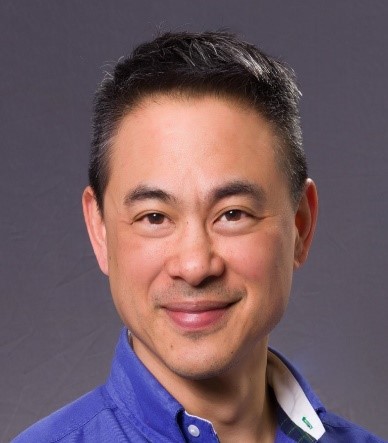
Wednesday September 28th, 10:30 am – 11:00 am
Pneumatic hammering may be used to assist with pipe installation and/or removal of stuck pipe during horizontal directional drilling and straight bore crossing operations. Pipe stresses induced during hammering are often poorly understood or undocumented. To gain a better understanding of the induced stresses, elastic wave analyses were performed to simulate stress waves which travel from the struck end of the pipe and back via reflection from the other end, and damage accumulation at girth weld defects was estimated by performing flaw growth analyses via fracture mechanics formulations. Allowable hammering hours for a particular set of parameters, recommendations concerning monitoring of hammering operations, constructability considerations, and future work to refine the methodology will be presented.
Roger’s short biography:
Roger’s expertise is in finite element analysis of structures exhibiting material and/or geometric nonlinearity. Fitness-for-service assessment of pipelines and pressure vessels. Non-linear stress and buckling analysis of pipelines as well as the assessment of blasting operations on nearby oil and gas pipelines and wells. During his doctoral studies, Dr. Chen devised an efficient numerical method for calculating opening-mode and sliding-mode stress intensity factors (KI and KII) for multiple interacting cracks. The primary goal of the research work was to model growth of pipeline stress corrosion cracks for remaining life assessment.
Technical Paper Presentation: Analytical and Experimental Assessment of Short Bolted Flange Nuts Subjected to Tensile Loads for Development of Mitigation Strategy
Presenter: Jonathan Brewer, PE – Principal
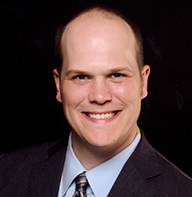
Thursday September 29th, 2:00 pm – 2:40 pm
Analytical and experimental methods were used to develop a strategy for assessing short bolted threaded connections (studs and nuts) under tensile loading. Short bolting occurs when a threaded connection has some number of threads that remain unengaged. This unthreaded length is called shortfall. Analytical efforts primarily focused on predicting the failure loads and failure modes associated with various levels of shortfall. An analytical methodology for assessing short bolting is important as it allows an end user to develop a threat prioritization or integrity management program based on a desired level of risk tolerance. A risk averse, conservative approach could require that all nuts have sufficient engagement length to produce a tensile overload failure of the stud. A risk tolerant approach might utilize predicted failure load as an integrity criterion instead of predicted failure mode.
Jonathan’s short biography:
Jonathan Brewer is a licensed professional engineer in Alaska, Illinois, Louisiana, Mississippi, Texas, and Wyoming. He has extensive experience in finite element analysis supporting midstream, upstream, and downstream applications. Since 2006, his focus has been on integrity management and fitness-for-service assessments of pipelines and floating production facilities using linear and non-linear finite element analysis. Jonathan received his B.S. in Mechanical Engineering from Texas A&M University and his M.S. in Mechanical Engineering from The University of Texas at Austin.
At Stress Engineering Services, we’ve been taking on technical challenges and delivering solutions for our clients since 1972. To learn more, contact Tom Raptis at [email protected] or (587) 323 – 9041.
Share This:






















INSIGHT: The Northern Shield Energy Corridor Provides Energy Security for All Canadians – Yogi Schulz