


 CDN NEWS |
  US NEWS







In gas-lift applications, standard manual valves typically used result in inefficiencies, while complicated automated systems can be difficult to install and expensive to maintain. With the goal of maximizing the amount of oil that can be retrieved by using the minimum amount of gas, an integrated automated control system is the best solution.
Unique to the market, Flowserve’s StarPac 3 intelligent control systems fit into existing piping through the replacement of the manual choke valve with a single piece of equipment. Its system monitors the performance with all data collected from its sensor to maintain the optimal flow rate; its automation stabilizes the natural gas flow, leading to less slugging of the process and a more consistent flow of oil to the surface.
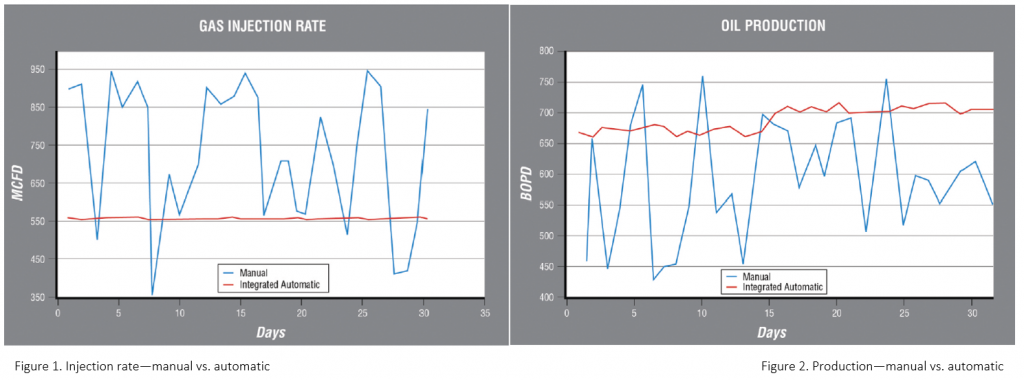
The effectiveness of such a system can be seen in an oil and gas facility in Angola. There, an integrated system was installed at a rate of eight hours per unit and cost about $47,000, which included lost production. However, because the gas injection rate and tubing pressure in the pipe casing were stabilized, the facility raised overall production by 465 barrels of oil per day while reducing gas usage by 200 million cubic feet per day. Once the entire field was automated, oil production was further enhanced as the field was tuned for optimal performance. This chain of events generated a revenue increase of $23,250 per day, enabling the facility to realize an initial return in two days. Over the year, the incremental increases in revenue topped $8 million.
FLOWSERVE STARPAC 3 OVERVIEW
Flowserve’s StarPac 3 intelligent control systems contain all elements needed for flow control in one package; a control valve, pressure and temperature sensors and an onboard PLC. A properly tuned system correctly measures flow with elbows installed just upstream or downstream. Using calibrated pressure measurements and valve position information, the flow rate is calculated, then the system can control the valve position to maintain optimal flow rate.
Integrated solutions Pros:
- Eliminating surging and intermittent flow helps maintain the optimal flow rate for each well in the system.
- The automation stabilizes the natural gas flow, which supports a more consistent flow of oil to the surface.
- All pressures, temperatures, flow rates and other data will be recorded to optimize the field productivity.
- Each setpoint can be controlled independently, helps on productivity’s efficiency, and lower cost.
- Easy replacement as it fits into existing piping through replacement of the manual choke valve
- Pre-tuned and ready to receive a setpoint signal reduced downtime and minimize the loss of productivity
- Included advanced diagnostics to troubleshoot any system issue.
- No complex systems for data acquisition and transmission are required, speeding up control to eliminate the surging
CONVENTIONAL GAS-LIFT APPLICATION
Gas lift is a method of artificial lift that uses an external source of high-pressure gas for supplementing formation gas to lift the well fluids. The process usually pressurizes natural gas; it is pumped down through the annulus at pressures typically near 2,000 pounds per square inch with higher pressure sometimes used as needed for the specific application. This injected gas aerates the oil-water fluid and reduces specific gravity. The formation pressure is then able to lift the oil-water column and force the fluid out of the wellbore.
The amount of gas injected to maximize oil production varies from well to well based on the well’s geometries. The amount also varies over time because of changing well conditions. Too much or too little gas leads to inefficient production. The wrong amount also can cause upsets, such as surging and slugging, which in turn cause inefficiencies. The result is less-than-optimal oil recovery and injection of excessive amounts of gas.
As the gas injection rate increases, so does the liquid recovery rate. However, there is a point of diminishing return. While the recovery rate climbs beyond this point with additional gas injection, the amount of gas (and therefore energy) required rises rapidly, while the recovery rate increases only minimally. This situation also results because the ratio of the gas being recovered becomes excessive and displaces the oil, causing fundamental changes in the flow inside the tubing.
In a manual gas-lift system, the manual choke valve is semi-fixed, meaning that an operator sets it periodically, usually with a handwheel. As the inlet gas pressure or the backpressure to the manual choke valve changes, the valve’s flow rate is altered—even though the valve position is fixed. Field data has shown that these fluctuations in flow rate in a manual choke valve can vary by as much as 40% of desired flow rate. As with any process dependent on flow rates, the potential impact of this wide variation and subsequent upset is significant. These swings in pressure can be due to compressors going up or down, wells being shut in or started up, and other anomalies that periodic manual manipulation cannot account for.
If the pressure shifts far enough, the gas-lift poppet valve may close until the pressure builds and relieves. When this happens in spurts, it causes surging and intermittent flow. Following a gas burp, the well then begins to flow with a slug of liquid—a process that is repeated constantly until the pressures change or the manual choke valve position is reset. The result is a migration from optimal liquid flow rates as well as inefficient use of natural gas. Excessive slugging also can cause pressure spikes in the well strata, culminating in damage to the well. Over the long term, manual control results in a wide variance of natural gas injected into the well.
The barrels of oil produced will vary significantly over time and surging (intermittent flow) from shifting gas injection rates can also occur. These conditions lead to excessive use of natural gas, which increases costs and reduces oil production, thereby decreasing revenue.
In gas-lift applications, standard manual valves typically used result in inefficiencies, while conventional automated systems can be difficult to install and expensive to maintain due to the following:
- Conventional automatic control systems require complex, multiple equipment installations that are expensive to put in place, program, maintain, tune, and communicate with.
- Conventional automation systems also add significant weight and require more space.
- The communications between the instruments must be established, and this takes time and requires training, experience, and significant resources
Each gas-lift system now requires different pressure or flow rates to maximize oil production. In order to achieve smooth, efficient operation, the change in down-hole gas injection must be seamless; This is why balancing a field at optimal performance with manual valves is impossible—each change that occurs results in changes to every other well in the system.
Stewart, B. T. (2010). Bsche In Oil And Gas Industry. How To Increase Revenue In Gas-Lift Applications
Who We are.
N2X Process Solutions is a Canadian engineered supplier of market-leading Valve and Actuation Solutions to a wide range of process industries, such as energy, mining, power, and municipal.
We also design and manufacture specialty Surge Relief equipment, used on incompressible fluid pipelines, primarily in the midstream Oil and Gas Industry.
At N2X Process Solutions, we provide ourselves on being a responsible company for our community and for our clients. We are committed to providing exceptional customer service and ensuring the safety and reliability of our clients’ operations.
Click Here to find out more and Contact Us for further inquiries.
Share This:






















INSIGHT: Canada’s Economy Falling Behind Despite Misleading Headlines – Fraser Insitute