


 CDN NEWS |
  US NEWS







It also won’t be cheap. The total spending — from both governments and businesses — needed over the next three decades to get Canada to net zero is C$2 trillion ($1.6 trillion), according to a Royal Bank of Canada report last fall, which it said translates to at least C$60 billion a year in spending given current technologies.
Guilbeault declined to say how much spending he has requested of Finance Minister Chrystia Freeland in her upcoming budget. But he conceded more is needed.
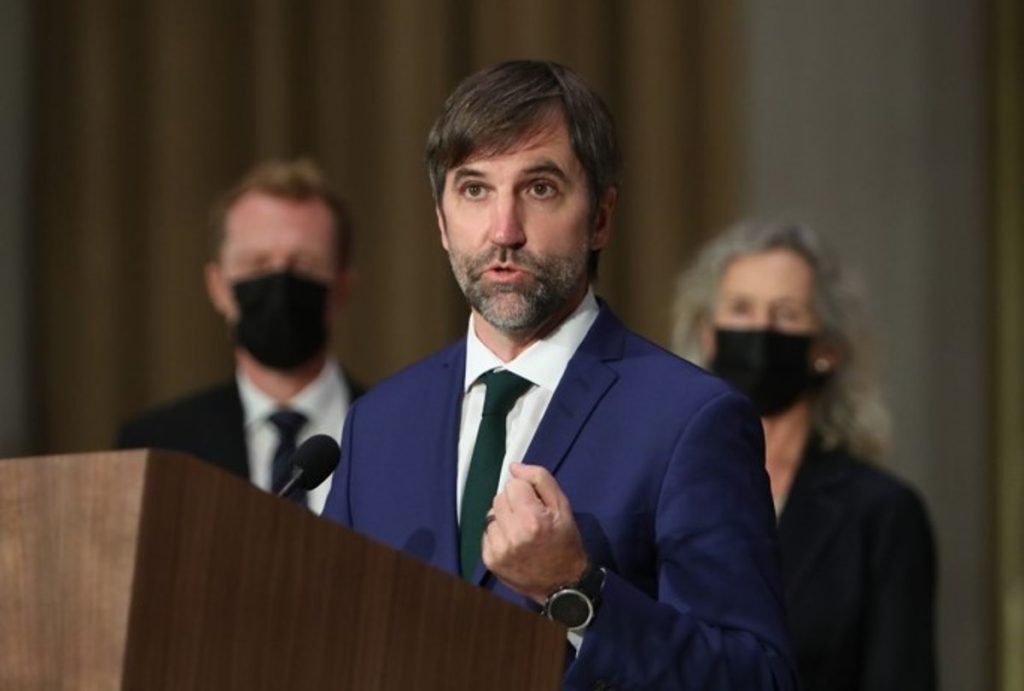
“There’s no way we get there without investing year after year,” he said in an interview Thursday, adding the burden can’t only be put on the public purse. “There’s no government that can fund the transition on its own.”
Activist Roots
He pointed to the government’s upcoming issuance of C$5 billion in green bonds, a first for the world’s fourth-largest oil producer, as one example of bringing the private sector on board.
Guilbeault, 51, a former Greenpeace activist who was once arrested for scaling the CN Tower in Toronto, said Canada can’t reach its targets without tackling emissions in its oil and gas sector. Energy production accounts for 10% of the nation’s total economic output.
One major element of the government’s plan will be reducing methane spewed by the industry. “Going after methane is a very good way to reduce emissions quickly, and there’s a lot of technology available,” Guilbeault said.
His emissions reduction plan comes as oil prices surge on war in Europe. The minister said impact of $100 oil is complex. “Higher oil prices would in theory stimulate production, although that’s not what we’re seeing,” he said. “The flip point of that is it hurts people at the at the pump.”



Carbon capture technology is another potentially crucial measure, but also a controversial one. It will cost tens of billions of dollars to implement and the industry wants government to fund the lion’s share of it. Details on a tax credit are expected in this year’s budget.
Some environmental groups have slammed the idea. A Jan. 19 open letter to Freeland from scientists, academics and energy system modelers urged the government to reject a tax credit as it would “constitute a substantial new fossil fuel subsidy” that would help companies further boost oil production.
But Guilbeault pointed to the Intergovernmental Panel on Climate Change, which recommends carbon capture as a necessary element in getting to net zero. “You can’t have it both ways,” Guilbeault said, noting that you either trust the United Nations body as an authority on climate change, or you don’t.
He said he believes the industry needs to help pay for it, but implementing carbon capture “makes a lot of sense” — not just for oil and gas, but also other heavy industries.
“We’re doing it with steel, we’re doing it with aluminum, we’re doing it with cement, we’re doing it with transportation,” Guilbeault said. “We’re putting in place regulations, but we’re also putting in place investment incentives. So either you believe in a just transition, or you don’t. But I don’t agree with those who say, well, it’s okay to help all the other sectors except the oil and gas sector.”
Another tricky task is moving Canadians onto electric vehicles. Late last year, the government launched public consultations on its goal of having all new cars sold be zero emission by 2035, a mandate Guilbeault called “super important” for getting the transportation sector on track to meet emissions targets.
The minister acknowledged the many challenges of boosting take-up of electric vehicles, including bringing down their cost and reassuring drivers that they won’t get stranded roadside in the middle of winter. But he rejected the idea that Canada faces an unusually difficult situation compared to other countries.
“Norway’s done it,” he said, adding he’s been there and seen fast charging stations every 50 kilometers (31 miles) along the highway. “They’re doing it, and it’s cold country. So there’s there’s no reason we can’t do it.”
Share This:




















GRETCHEN WHITMER IS AT IT AGAIN: The Michigan Governor has Threatened to Shut Down Line 5 “Within Months” – Jim Warren