Sign Up for FREE Daily Energy News
canada flag CDN NEWS  |  us flag US NEWS  | TIMELY. FOCUSED. RELEVANT. FREE
  • Stay Connected
  • linkedin
  • twitter
  • facebook
  • instagram
  • youtube2
BREAKING NEWS:
Hazloc Heaters
Copper Tip Energy Services
Hazloc Heaters
Copper Tip Energy


Sunshine Oilsands Ltd.: Date of Board Meeting

FOR: SUNSHINE OILSANDS LTD.HKSE SYMBOL: 2012Date issue: August 01, 2017Time in: 5:21 AM eAttention:
CALGARY, ALBERTA and HONG KONG, CHINA–(Marketwired – Aug. 1, 2017) – The board
of directors (the “Board”) of Sunshine Oilsands Ltd. (the “Corporation”…

GET ENERGYNOW’S DAILY EMAIL FOR FREE


Enviro think-tank head says climate talk must go beyond being anti-pipeline

OTTAWA — Ontario’s outgoing environment minister says Canada must transform its energy sources if it’s going to meet promises to cut greenhouse gas emissions.

But Glen Murray won’t speak out against specific projects to build new oil or gas pipelines and plants.

Murray is stepping down from Premier Kathleen Wynne’s cabinet and will take over as executive director of the environmental think-tank Pembina Institute in September.

He says he intends to spend the remainder of his career fighting climate change with smart, evidence-based policies.

Murray refuses to say whether he agrees with Prime Minister Justin Trudeau that pipelines can be built and expanded while meeting Canada’s international commitments on climate change.

He says Pembina’s role — before and after he takes over — is about big-picture planning rather than campaigns for or against particular projects.

“Pipelines and energy infrastructure in Canada, there is an architecture in there that has to be transformed,” he said Monday in an interview. “To pull out pipelines as a separate discussion from nuclear plants or from other types of infrastructure that are carbon intensive gets you into a conversation that I think is often a no-win conversation.”

As Ontario’s environment minister for the last three years Murray was responsible for implementing the province’s cap-and-trade system, and was part of the negotiations for the Pan-Canadian Framework on Clean Growth and Climate Change.

He also was part of discussions regarding at least one major new pipeline, the Energy East project to double the capacity to carry crude oil across the country from Alberta to the East Coast.

The Ontario government initially insisted projects like Energy East had to be environmentally sustainable and viewed in terms of their greenhouse gas emissions. Murray later clarified Ontario’s focus would be on the emissions the pipeline would create within Ontario, leaving it to other provinces to figure out the impact in their jurisdictions.

Murray has cleared his new position with the Ontario integrity commissioner in “multiple conversations” according to a Pembina Institute spokesman.

As well any lobbying activities in Ontario will be handled by the Toronto team.

Murray said he sees the Pembina Institute as a chance to do the kind of work the former National Roundtable on the Environment and the Economy used to do, taking a “deep dive” into research to produce evidence-based advice for governments of all levels.

Murray was chair of the roundtable for three years between 2005 and 2008.

“It’s really an opportunity for me to double down on a single commitment for the rest of my life which is working towards a clean, sustainable energy system in Canada and to fighting climate change, and that’s what Pembina does.”

Murray will maintain his home in Toronto but will divide his time between Pembina’s offices in Toronto, Edmonton, Calgary and Vancouver.

— Follow @mrabson on Twitter

Mia Rabson, The Canadian Press

GET ENERGYNOW’S DAILY EMAIL FOR FREE


Quebec assessment agency releases Lac-Megantic public consultations report

MONTREAL — The population of Lac-Megantic and its neighbouring towns are heavily divided on what to do with the railway that runs through the heart of the town, Quebec’s environmental review agency said Monday.

The agency, known as the BAPE, favoured one of three possible rail bypass options on the table in a 77-page report.

But the BAPE also said leaving the current rail track untouched merits a fuller treatment — a position Lac-Megantic has excluded.

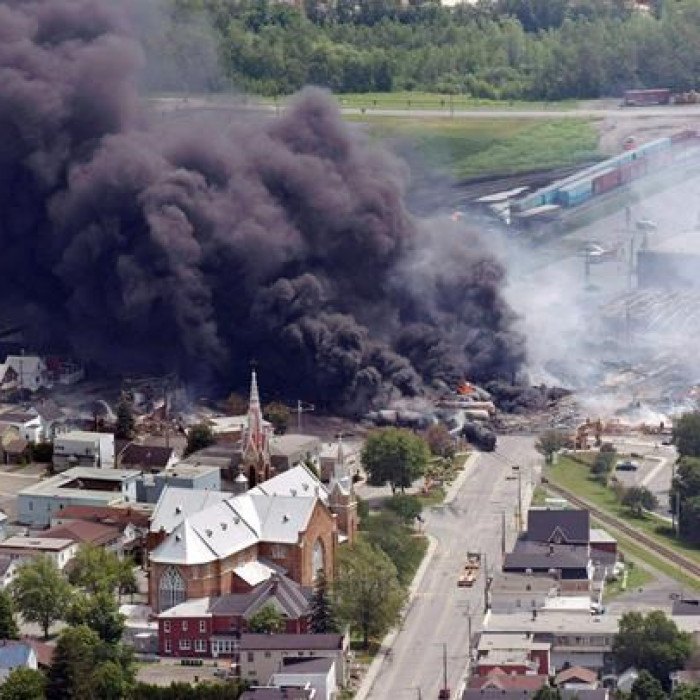
The debate over a rail bypass has raged since a train carrying crude oil derailed and exploded in July 2013, killing 47 people and wiping out much of Lac-Megantic’s downtown core.

Pierre Mercier, Lac-Megantic’s deputy mayor, said in an interview the status quo is being excluded by the town because “it is so obvious” it isn’t an option.

“We need a bypass, it is the only option,” Mercier said. “Maybe we’re being rapped on the knuckles a bit (by the BAPE), but for us it is obvious that we need a bypass.”

The city said it was pleased the agency came out in favour of one of the bypass options.

The agency called the 11.7-kilometre option, which would cost an estimated $115 million and include the dismantling of the current track, the best option from an environmental, social and economic standpoint and should be considered.

It made its recommendations after hearing from some residents and participants in public consultation hearings between May and July.

Some citizens believe the bypass will do nothing except move the problem elsewhere while others are firm the bypass solution is essential.

Of those who participated, the agency noted that 59 Lac-Megantic residents were in favour of the status quo, while 43 favoured a bypass. In nearby Frontenac, 30 opted for the status quo and four preferred a bypass. 

The BAPE concluded a lot of work still needs to be done before finding an adequate solution for the municipality.

The agency says residents need to be better informed about the possible consequences of keeping the current railway track as is.

“None of the rail bypass proposals seem to adequately and satisfactorily to their expectations,” the agency noted.

Vicky Fragasso-Marquis, The Canadian Press

GET ENERGYNOW’S DAILY EMAIL FOR FREE


Bri-Chem Announces 2017 Second Quarter Results Conference Call

FOR: BRI-CHEM CORP.TSX SYMBOL: BRYDate issue: July 31, 2017Time in: 5:51 PM eAttention:
EDMONTON, ALBERTA–(Marketwired – July 31, 2017) – Bri-Chem Corp. (“Bri-Chem”
or “Company”) (TSX:BRY), a leading North American wholesale distributor and
manufactu…

GET ENERGYNOW’S DAILY EMAIL FOR FREE


Modest Increase to PSAC’s 2017 Drilling Activity Forecast – Strong Second Quarter Leads to More Robust 2017 Predictions

oil-sill-feature-image

FOR IMMEDIATE RELEASE: July 31, 2017 Calgary, Alberta – Today, the Petroleum Services Association of Canada (PSAC), in its third update to its 2017 Canadian Drilling Activity Forecast, announced that it was increasing its forecasted number of 6,680 wells to be drilled (rig released) across Canada for 2017 to 7,200 wells drilled. PSAC based its … Read more

GET ENERGYNOW’S DAILY EMAIL FOR FREE


Weekly Canadian Oil & Gas Industry Highlights – July 31, 2017

POIM Feature Image

July 31, 2017 Presented by POIM Consulting Group Major /Interesting Projects Bonavista Petroleum Ltd New Compressor 01-01-042-28W4 Westbrick Energy Ltd large facility upgrade that include Pumps & Compressors 04-06-047-12W5 Husky Energy 4 new facility license SK & AB BlackPearl Resources Inc. 6 new well license 13-04-056-27W3 Black Swan Energy Ltd 8 new well license BC … Read more

GET ENERGYNOW’S DAILY EMAIL FOR FREE


100% Commission Reps Who Aren’t Selling Do Cost You: Hamish Knox – Sandler Training

Sandler Training Featured Image

      Written by Hamish Knox; President of Sandler in Calgary, Canada Creating accountable, sales focused organizations in Calgary   Conversation overheard at many gatherings of business owners. “My salespeople aren’t selling.” “What’re you paying them?” “Nothing, they’re on 100% commission.” Sounds like a great situation, if money is rolling in another way (like the … Read more

GET ENERGYNOW’S DAILY EMAIL FOR FREE


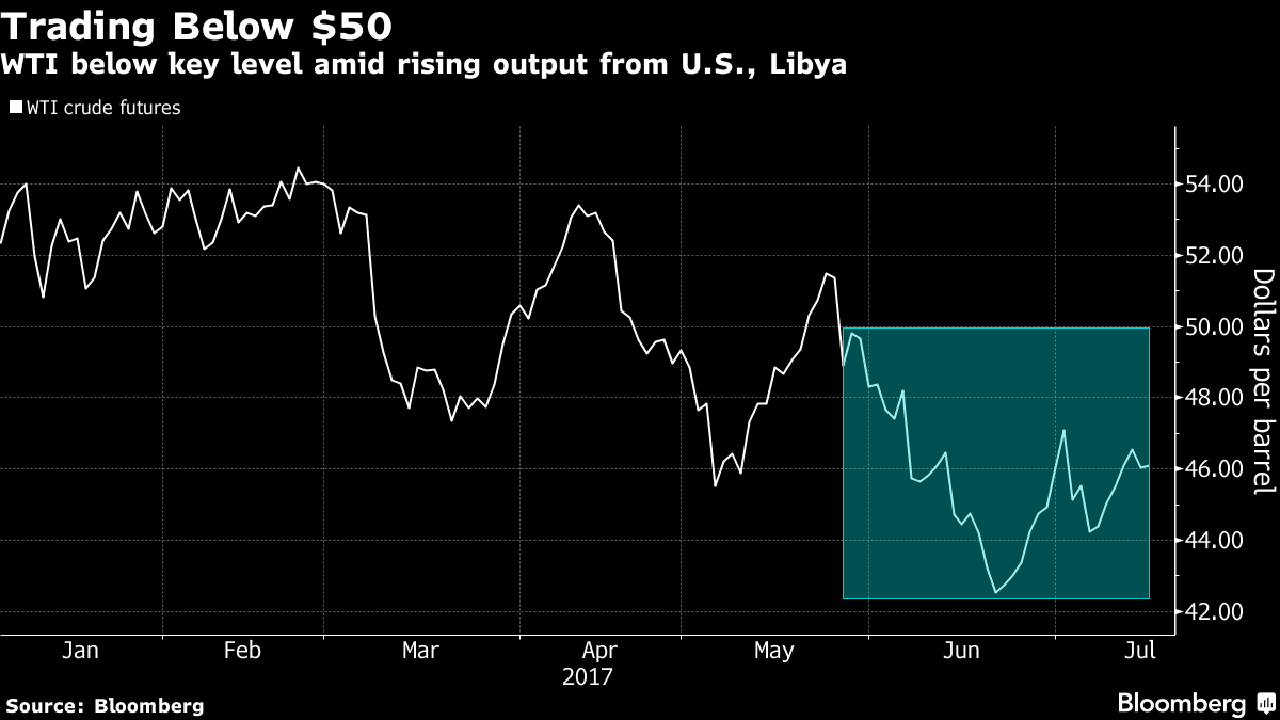
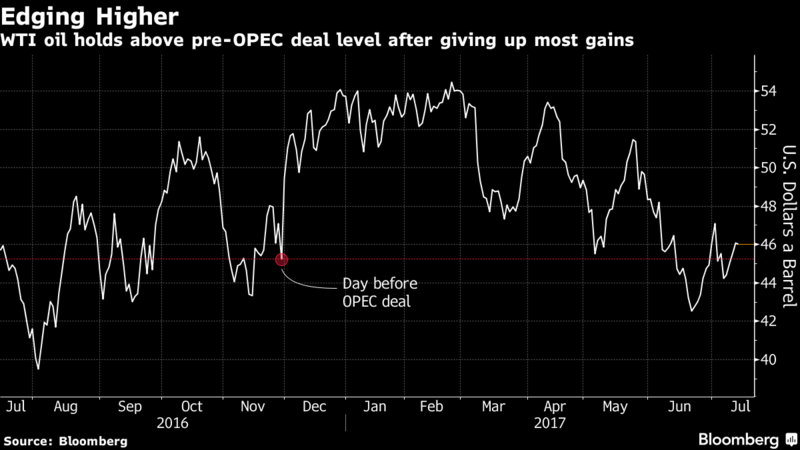
Oil Near $50 as Traders Await U.S. Reaction to Venezuelan Vote

Oil Near $50 as Traders Await U.S

July 31, 2016 (Bloomberg)  Oil traded near $50 a barrel in New York as efforts by Venezuela’s president to seize more power raised speculation the U.S. could step up sanctions. Futures were little changed after surging 8.6 percent last week. The U.S. is said to be considering increasing sanctions against Venezuela’s oil industry, the Wall Street Journal … Read more

GET ENERGYNOW’S DAILY EMAIL FOR FREE


Five Things World Business Will be Talking About Today

July 31, 2017 (Bloomberg) Saber-rattling in North Korea, oil briefly tops $50, and euro-area inflation holds steady at 1.3 percent. Here are some of the things people in markets are talking about today. North Korea Kim Jong Un claimed that the entire continental United States is in range of his country’s intercontinental ballistic missiles after North Korea … Read more

GET ENERGYNOW’S DAILY EMAIL FOR FREE


DIVERGENT Energy Services Corp. Announces Results of Linear Pump Inspection

FOR: DIVERGENT ENERGY SERVICES CORP.TSX VENTURE SYMBOL: DVGDate issue: July 31, 2017Time in: 9:00 AM eAttention:
CALGARY, ALBERTA–(Marketwired – July 31, 2017) –
NOT FOR DISSEMINATION IN THE UNITED STATES OF AMERICA
DIVERGENT Energy Services Corp. (“…

GET ENERGYNOW’S DAILY EMAIL FOR FREE


General Fusion Hosts Top Experts in Fusion Energy Research

FOR: GENERAL FUSION
Date issue: July 31, 2017Time in: 9:00 AM eAttention:
More than 50 of the world’s foremost scientists meet in Canada for the
first time
VANCOUVER, BC –(Marketwired – July 31, 2017) – An annual gathering focusing
on cutting-edge f…

GET ENERGYNOW’S DAILY EMAIL FOR FREE


Plan B: After investors pull out of B.C., interest in planned N.S. LNG facility up

Pacific Northwest LNG mega-project not going ahead

HALIFAX — A Nova Scotia company looking to build a liquefied natural gas terminal on Canada’s East Coast says it’s seeing an uptick in interest since an LNG megaproject slated for the West Coast was scrapped last week.

Paul MacLean with Bear Head LNG Corp., a subsidiary of Australia-based Liquefied Natural Gas Ltd., says after more than a year of wooing western Canadian shale gas producers, the Nova Scotia project is getting attention.

“We’ve been working with western basin producers over the last year-and-a-half presenting Bear Head as a complimentary option to what was proposed for the B.C. LNG project,” MacLean, strategic and regulatory affairs adviser, said in an interview. “It was sort of a plan B.”

But with Petronas and its partners pulling out of the $36-billion Pacific NorthWest LNG project planned for British Columbia, Bear Head is hoping to become the top choice for producers looking to get landlocked natural gas to markets.

“We’re not really relishing the fact that Petronas has decided to withdraw their project by any means, but we are experiencing an increase in interest as a consequence of that decision for sure,” MacLean said.

In a fiercely competitive energy market grappling with a global oversupply of natural gas and a prolonged period of depressed prices, the cancellation of the West Coast megaproject appears to give the East Coast terminal an edge.

The proposed $5-billion LNG export facility in Cape Breton already has construction and environmental permits as well as federal approval for a licence to export LNG and import natural gas from the United States.

“We’re the only fully permitted LNG project in Atlantic Canada,” MacLean said, noting that the construction phase would require 1,500 workers while the terminal would create 150 permanent jobs. “We’re shovel-ready.”

Bear Head’s sister company, Bear Paw Pipeline Corp., also has approval to building a 62.5-kilometre pipeline that would run between Goldboro, N.S., to the export facility planned for Point Tupper. The $235-million pipeline would connect to the Maritimes and Northeast Pipeline, which runs from Goldboro to Massachusetts.

The company’s ambitious proposal would see producers in Alberta ship natural gas through TransCanada Corp. pipeline to North Bay, Ont., which MacLean said is currently underutilized and has sufficient capacity. From there, Bear Head would build a new pipeline to Goldboro, a distance of more than 1,700 kilometres.

Building the so-called greenfield pipeline from Ontario to Nova Scotia would require deals from producers up front, something MacLean said he’s optimistic Bear Head can obtain within the next year or so.

The company plans to get pipe laid and the terminal up and running by 2022 or 2023.

While western Canadian producers would be able to deliver natural gas to domestic markets from Alberta to Nova Scotia along the way, the final destination would be overseas.

“Nova Scotia geographically is positioned extremely well for accessing global markets,” MacLean said.

The natural gas, shipped through pipeline in a gaseous state, would be liquefied at the Point Tupper terminal, loaded onto tankers and exported to northwestern Europe or other international markets, he said.

Yet Toronto-based independent energy consultant Tom Adams, a self-professed watcher of Atlantic Canada’s “energy adventures,” called the proposed Nova Scotia facility “silly talk.”

“I’m a long-time skeptic of all the Atlantic Canada LNG proposals,” he said. “But this is the longest of the long shots.”

While Adams called the planned Bear Head project a “theoretical possibility,” he said it’s not practical.

He said western Canadian producers would be better off shipping natural gas south of the border, to the Sabine Pass LNG Terminal on the border between Texas and Louisiana, for example.

Adams said if the market is not attractive enough to get British Columbia — positioned close to energy-hungry Asian markets — into the LNG business, then “Nova Scotia is just not even worth talking about.”

Liquefied Natural Gas Ltd. bought the site in Point Tupper from Anadarko Petroleum Corp. in an $11 million deal that closed in August 2014.

Brett Bundale, The Canadian Press

GET ENERGYNOW’S DAILY EMAIL FOR FREE


Environmentalists prepared to fight new oil and gas regulations in Quebec

MONTREAL — Opponents of oil and gas development in Quebec say they’re prepared to ramp up their fight amid expectations that the provincial government could release new regulations on resource extraction in the coming weeks.

At the end of last year, the government passed legislation to enable production of oil and natural gas. In May, Natural Resources Minister Pierre Arcand said rules governing that activity would be released a month later and since then, both industry and opponents have been eagerly waiting for them.

Carole Dupuis of the Regroupement vigilance hydrocarbures Quebec, which opposes oil and gas development, said her group will take their battle to communities in an effort to prevent an energy industry from taking off in the province.

“If our politicians aren’t there to defend us, the public will defend itself,” said Dupuis.

Patrick Bonin, a climate and energy campaigner for Greenpeace, said the push towards fossil fuel development runs counter to the province’s global commitment to combat greenhouse gas emissions.

“If the government was serious about its intention to respect the Paris Accord, then obviously there wouldn’t be any project to get the green light,” he said.

While the province may be better known for its wealth of hydroelectricity, it has plenty of natural gas. According to both the Quebec Oil and Gas Association and Canadian Association of Petroleum Producers, it’s believed to have enough natural gas to meet its needs for at least a century.

About 15 per cent of the estimated 176.7 trillion cubic feet of gas mainly in the Utica Shale formation along the St. Lawrence River is believed to be recoverable, the Canadian Energy Research Institute says. A similar proportion of the 43.6 billion barrels of oil is recoverable primarily beneath Anticosti Island, though on Friday the government announced an end to drilling there.

The regulations will permit fracking — which has riled some — but questions remain over where drilling will be allowed.

A de facto moratorium on fracking has been in place since 2012, but the law passed in December will allow for it as long as companies secure authorization under the Environment Quality Act and social licence (though it’s still unclear what constitutes social licence).

Arcand was unavailable for comment, but a spokesman said the government’s goal is to have the strictest legal framework on energy development in North America.

Pierre-Olivier Pineau, a professor specializing in energy at the University of Montreal HEC business school, said the government can’t politically afford to have regulations that aren’t stringent, even if the chances of widespread production are slim.

Junex (TSX-V:JNX) and Petrolia (TSX-V:PEA) are seeking to extract oil and gas in remote regions of Gaspe, and Pineau said he believes they won’t face much opposition, partly because they’re in economically stressed areas.

Neither energy producer responded to requests for comment.

Michael Binnion, CEO of Calgary-based Questerre Energy Corp. (TSX:QEC) and president of the Quebec Oil and Gas Association, said he hopes the regulations will be strong enough to gain public confidence that their water, air and land will be protected.

It will then be up to energy companies to secure social acceptance from communities, something Binnion concedes is largely lacking. Questerre Energy has drilled test wells on about 405,000 hectares it holds in the Utica Shale formation.

“We don’t think the regulations by themselves are going to open a floodgate at all,” he said. “We think the regulations could open the door to a discussion about the benefits and impacts.”


Follow @RossMarowits on Twitter.

Ross Marowits, The Canadian Press

GET ENERGYNOW’S DAILY EMAIL FOR FREE


Oil Rises Over $50 as OPEC Set to Meet With Allies on Compliance

July 30, 2017 (Bloomberg)  Oil in New York briefly rose above $50 for the first time since May after OPEC said the group and its partners will meet next week to discuss why some nations are falling behind on their pledge to cut production. Futures gained as much as 0.7 percent after surging 8.6 percent … Read more

GET ENERGYNOW’S DAILY EMAIL FOR FREE


OPEC to Meet With Non-OPEC to Discuss Weaker Cuts Compliance

OPEC

July 29, 2017 (Bloomberg)  Representatives of some OPEC and non-OPEC nations will meet in Abu Dhabi on Aug. 7-8 to discuss why some of them are falling behind in their pledges to cut production, according to an OPEC statement. The meeting, co-chaired by Kuwait and Russia, will examine reasons why some countries aren’t fully implementing their … Read more

GET ENERGYNOW’S DAILY EMAIL FOR FREE


TransCanada Still Sees Producer Support for Keystone XL Line

July 28, 2017 (Bloomberg)  TransCanada Corp. said it still expects commercial support for its controversial Keystone XL oil pipeline, tamping down speculation that it was having trouble finding customers for the long-delayed line. Keystone XL, which was rejected by the Obama administration before being revived by President Donald Trump this year, would boost TransCanada’s dividend growth, the … Read more

GET ENERGYNOW’S DAILY EMAIL FOR FREE


Canadian Growth Triples Forecast, Signaling Room to Raise Rates

Canadian Growth Triples Forecast, Signaling Room to Raise Rates

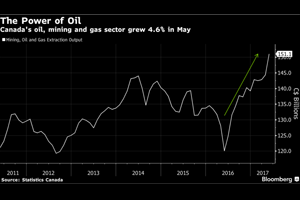
July 28, 2017 (Bloomberg) Growth in Canadian output beat all forecasts in May as oil production rebounded, another sign policy makers can probably continue unwinding monetary stimulus as the economy moves toward full output. Gross domestic product rose 0.6 percent from the previous month, Statistics Canada reported Friday from Ottawa. Growth in the oil, gas and … Read more

GET ENERGYNOW’S DAILY EMAIL FOR FREE


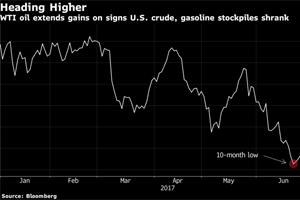
Oil Caps Best Week This Year on Signs of More Balanced Market

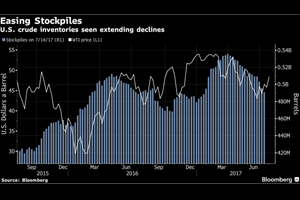
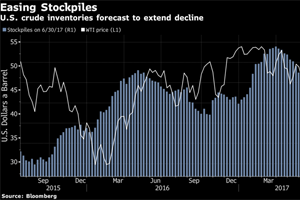
(Bloomberg) Oil had its best week this year as signs point to a market that’s achieving a balance between supply and demand. Futures surged 8.6 percent in New York for the biggest weekly gain since December. U.S. crude stockpiles fell to the lowest since January, while gasoline inventories shrank to the smallest this year. The nation’s … Read more

GET ENERGYNOW’S DAILY EMAIL FOR FREE


Oil and gas, border taxes and a vanishing deadline: federal politics this week

OTTAWA — Even as Ottawa was overrun with tourists hoping to catch a glimpse of two giant robots shaped like a dragon and a spider strolling through the capital this week,  there were enough politicos left around Parliament Hill to natter for days about Rolling Stone.

Prime Minister Justin Trudeau graced the magazine’s latest issue on Monday, and was gifted a gushing profile that compared him ever-so-positively to U.S. President Donald Trump.

The heap of flattering international coverage of Trudeau has long prompted eye-rolling among opposition members, and the Rolling Stone version ramped that reaction up a notch.

On a more material level, however, Trump’s administration and the Trudeau government actually saw eye to eye on a key development this week: the U.S. proposal for a border adjustment tax.

The week was also notable for major news on how Canada is managing its natural resources, and how it may be mismanaging its military purchasing.

Here are three ways politics touched Canadians this week:

The dreaded BAT:

Of all the alarming pronouncements made by the Trump administration since taking office, probably none has shaken Canadians’ confidence more than the threat of a border adjustment tax.

The proposal would have taxed imports into the United States more heavily than domestic goods, with the dual purpose of encouraging production within America’s borders and building up some revenue to bring down U.S. domestic taxes in other areas.

Now, the idea has been nixed —much to the relief of the federal government and business leaders. Even though most U.S.-watchers believed the tax didn’t stand much of a chance of ever becoming reality, the risk was high enough to prompt some jitters among people thinking of investing or expanding in Canada.

The federal Liberals were quick to take some credit, pointing to all the lobbying they had done to make the point in Washington that the tax would hurt American consumers and was not worth pursuing. But there were many Americans, including Republicans, making the same argument.

Oil, gas and the future:

There were two major turns this week in Canada’s longstanding push to sell the world more of its oil and gas.

First, Malaysia’s Petronas announced it was pulling out of a $36-billion liquified natural gas development in British Columbia. Both the Stephen Harper government and the Trudeau government had backed the massive Pacific NorthWest LNG project, with Trudeau arguing it was a prime example of socially responsible energy interests working to Canada’s benefit.

The company blamed poor market conditions, while opposition critics in B.C. blamed government red tape.

Then, the Supreme Court shut down seismic testing near the Clyde River community in Nunavut, but at the same time gave a green light to the expansion of the Line 9 pipeline in southwestern Ontario. The court used the two rulings to contrast how the National Energy Board could do things wrong (Clyde River) and do things right (Line 9) when it comes to thoroughly consulting with Indigenous Peoples.

Taken together, the week’s developments show the world of investors that it might be possible — but certainly never easy — to develop and export oil and gas here.

The case of the vanishing deadline:

The federal government is in the midst of figuring out how to spend about $60 billion on new warships, what will likely be the largest planned military purchase in Canadian history and a project taxpayers will be financing for years and years.

But deadlines for companies to have their proposals in for consideration have come and gone, and have not really been replaced. Experts worry it’s a sign of dysfunction behind the scenes, given Canada’s troubling and litigious history of procurement gone awry.

The government says not to worry, there are plenty of signs that companies are ready and willing to participate in the competition and everything will unfold as planned. 

Construction on the new fleet is meant to begin between 2019 and 2021. The $60 billion is intended to pay for the building of 15 new ships to replace the navy’s frigates and destroyers.

Heather Scoffield, Ottawa Bureau Chief, The Canadian Press

GET ENERGYNOW’S DAILY EMAIL FOR FREE


US rig count increases by 8 last week to 958: Last year 463 were active

HOUSTON — The number of rigs exploring for oil and natural gas in the U.S. increased by eight this week to 958.

A year ago, just 463 rigs were active.

Houston oilfield services company Baker Hughes said Friday that 766 rigs sought oil and 192 explored for natural gas this week.

Among major oil- and gas-producing states, New Mexico gained four rigs, Oklahoma increased by three and Louisiana, Ohio, West Virginia and Wyoming each gained one.

Texas declined by one rig.

Alaska, Arkansas, California, Colorado, North Dakota, Pennsylvania and Utah were all unchanged.

The U.S. rig count peaked at 4,530 in 1981. It bottomed out in May of 2016 at 404.

The Associated Press

GET ENERGYNOW’S DAILY EMAIL FOR FREE


PRD Energy Announces it Has Ceased to be a Reporting Issuer

FOR: PRD ENERGY INC.
Date issue: July 28, 2017Time in: 5:37 PM eAttention:
CALGARY, ALBERTA–(Marketwired – July 28, 2017) – PRD Energy Inc. (“PRD” or the
“Company”) announced that effective as of July 28, 2017, it has ceased to be a
reporting issuer …

GET ENERGYNOW’S DAILY EMAIL FOR FREE


Petrolia reacts to the announcement regarding Anticosti

FOR: PETROLIA INC.
TSX VENTURE SYMBOL: PEA

Date issue: July 28, 2017
Time in: 3:38 PM e

Attention:

QUEBEC CITY, QUEBEC–(Marketwired – July 28, 2017) – Petrolia Inc. (TSX
VENTURE:PEA) wishes to comment on the adoption of a ministerial decree by the
Quebec government that now prohibits the exploration and exploitation of oil
and gas on Anticosti Island. Petrolia also wishes to make some observations
concerning the declaration by the same government that it had reached
agreements with the other companies involved in Hydrocarbures Anticosti S.E.C.
(hereafter “HASEC”) or holding exploratory rights on Anticosti Island.

The ministerial decree

Petrolia reminds that it was at the request of the Gouvernement of Quebec that
it partnered with HASEC in 2014 and that it transferred its licenses in order
to explore for oil resources on the Island, in the collective interest of
Quebeckers. The decision by the same government today to prohibit the oil
exploration on the Island must be approached and considered bearing this
historical fact in mind.

Moreover, despite the ministerial decree and the announcement of agreements
with other companies, this does not put an end to the contractual agreements
that led to the creation of HASEC. To terminate the agreements entered into in
good faith in 2014 and formalized by decree, the unanimous agreement of the
partners is required, as stipulated in the aforementioned agreements.

It is in this context that Petrolia began and is currently continuing its
negotiations with the Quebec government. In this respect, it is important to
remember that Petrolia holds 21.7 % of HASEC and that to date, all of the
studies conducted have been very positive regarding the oil and gas potential
on Anticosti Island.

“Although we are deeply disappointed with this turn of events, we are still
convinced, even more so than in 2014, of the potential and the importance of
the Anticosti project for Quebec and for the Company. However, at the request
of the Government of Quebec, we are pursuing negotiations in good faith. For
us, Anticosti is and will always be a project with great economic potential
likely to generate significant benefits for Quebec,” said Martin Belanger,
interim President and Chief Executive Officer of Petrolia.

Announcement of agreements with some companies

The fact that the Government of Quebec has announced that it has reached
agreements with some companies, including the French company Maurel & Prom,
does not in any way change the status or rights of Petrolia.

As the only Quebec company involved in HASEC and in this oil exploration
project initiated by the Government of Quebec, Petrolia is in a unique position
compared to the other companies involved. Notably, it was assigned, by
contract, the responsibility of acting as the project operator, which is to say
that it was entrusted with carrying out and completing the exploration phase.

It is notably on the basis of this agreement and the substantial benefits
resulting from it, as well as on the value that was attributed to its licenses
in the context of the creation of HASEC that Petrolia accepted to partner with
the Quebec government in this large exploration project.

In these circumstances, it is clear that the Government of Quebec cannot treat
Petrolia in the same way as the foreign companies with which it partnered in
2014. The differences of status, interest, involvement and responsibility are
obvious, manifest and known by all.

About Petrolia

Petrolia is a junior oil and gas exploration company which owns interests in
oil and gas licences covering 16,000 km2 (4 million acres), which represents
almost 23% of the Quebec Territory under lease. The closing of a partnership on
Anticosti Island has led to the creation of Anticosti Hydrocarbons L.P., a
limited partnership in which Petrolia holds a 21.7% interest. In order to carry
out the project’s operations, Petrolia Anticosti Inc., a subsidiary of
Petrolia, was designated project operator. Petrolia is a Quebec company whose
objective is to develop oil from here, by the people here, for here. Petrolia
has 97,049,881 shares issued and outstanding.

Disclaimer

Certain statements made herein may constitute forward-looking statements. These
statements relate to future events or the future economic performance of
Petrolia and carry known and unknown risks, uncertainties and other factors
that may appreciably affect their results, economic performance or
accomplishments when considered in light of the content or implications or
statements made by Petrolia. Actual events or results could be significantly
different. Accordingly, investors should not place undue reliance on
forward-looking statements. Petrolia disclaims any intention or obligation to
update these forward-looking statements.

Neither the TSX Venture Exchange nor its regulation services provider (as that
term is defined in the policies of the TSX Venture Exchange) accepts
responsibility for the adequacy or accuracy of this release.

– END RELEASE – 28/07/2017

For further information:
Martin Belanger, Ing. P.
President & Chief Executive Officer
418 657-1966
www.petrolia-inc.com

COMPANY:
FOR: PETROLIA INC.
TSX VENTURE SYMBOL: PEA

INDUSTRY: Energy and Utilities – Oil and Gas
RELEASE ID: 20170728CC0044

Press Release from Marketwired 1-866-736-3779

All press releases are written by the client and have NO affiliation with the news copy written by The Canadian Press. Any questions that arise due to the content or information provided in the press release should be directed to the company/organization
issuing the release, not to The Canadian Press.

GET ENERGYNOW’S DAILY EMAIL FOR FREE


Quebec government puts end to oil and gas exploration on Anticosti Island

QUEBEC — The Quebec government announced Friday there won’t be any further oil and gas exploration on Anticosti Island, putting the controversial drilling project to rest.

Natural Resources Minister Pierre Arcand said a decision was taken to protect the island’s natural character and support its bid to become a UNESCO World Heritage Site, which the province has formally backed.

“It was clear to us that it was very difficult both to exploit the hydrocarbons and at the same time to apply to UNESCO for Anticosti,” Arcand said in Montreal.

The project, conceived under the previous Parti Quebecois government, had become a political hot potato after Premier Philippe Couillard’s Liberals came to power in 2014.

In 2014, the PQ announced a $115 million investment, a first step towards gas exploration on Anticosti Island, estimating a potential of 46 billion barrels.

The exploration work was aimed at determining the hydrocarbon potential, in terms of quality and volume, on the eastern Quebec island.

However, Couillard increasingly distanced himself from the project after attending the international climate conference in Paris in 2015.

The premier expressed concerns about environmental risks and had questioned the project’s economic viability, repeatedly noting it was reached under the previous PQ government.

The provincial government said Friday that negotiations are underway to compensate a number of companies for cancelling their contracts.

Deals have been reached with Junex, Corridor and Maurel & Prom for a total compensation of $41.4 million.

Discussions are ongoing with Quebec City-based Petrolia Inc. (TSX-V:PEA) and Trans American.

Petrolia said in a statement that it held a different role than the foreign firms the province has settled with, in terms of status, interests and responsibilities.

“Under these circumstances, it is clear that the government of Quebec can not treat Petrolia on the same footing as the foreign companies,” the company said.

Petrolia added it will pursue negotiations in good faith, but was disappointed with the government’s decision.

“Although we are deeply disappointed by the turn of events, we are still convinced, even more than in 2014, of the potential and relevance of the Anticosti project for Quebec and for society,” said Martin Belanger, Petrolia’s acting president and chief executive officer.

“For us, Anticosti remains and will always remain a major economic project, capable of generating significant spin-offs for Quebec.”

The island located in the Gulf of St. Lawrence is home to deep canyons, impressive waterfalls and numerous caves.

The head of a local environmental group said the risks of drilling there would have far outweighed any potential economic benefit.

“Anticosti is a jewel, a place worthy of being part of UNESCO’s world heritage,” said Steven Guilbeault of Equiterre.

“Allowing oil companies to draw millions of litres of water, to dig thousands of oil wells, to inject chemicals in the soil would have been a grave error.”

Many local residents were opposed to oil and gas activity on the island and fear the environmental impact and dangers for fish and wildlife.

John Pineault, the mayor of the Quebec municipality and a fervent opponent of the drilling, says the firms must now restore the sites to what they were.

“Let them clean up their sites to put this behind us,” he said in an interview.

Pineault also thanked groups that had supported his efforts to have drilling stopped: First Nations, environmentalists and labour unions. 

The Canadian Press

GET ENERGYNOW’S DAILY EMAIL FOR FREE


U.S. Oil Companies Slim Drilling Budgets as Caution Takes Hold

July 27, 2017 (Bloomberg) Caution lights are flashing for the oil industry. Facing lower-than-expected commodity prices, drillers from ConocoPhillips to Hess Corp. to Statoil ASA have slashed their capital spending plans in recent days, as companies lay out their plans to cope with oil prices stuck below $50 a barrel. The budget cuts won’t necessarily … Read more

GET ENERGYNOW’S DAILY EMAIL FOR FREE


Oil Sands Learning to Be ‘Brutal’ Attacking Costs Amid Crude Slump

July 27, 2017 (Bloomberg)  Canada’s oil-sands operators are making progress in shedding their image as high-cost producers destined to fail in a low-price world. Suncor Energy Inc., Cenovus Energy Inc. and MEG Energy Corp. all rose on Thursday after showing advances in cutting costs in their operations in northern Alberta. Those reductions helped their second-quarter results … Read more

GET ENERGYNOW’S DAILY EMAIL FOR FREE


Alberta is Coming Back as it Tops B.C. to Reclaim Lead in Canadian Growth Survey

Alberta is Coming Back as it Tops B.C. to Reclaim Lead in Canadian Growth Survey

July 28, 2017 (Bloomberg)  Alberta’s economy is more than just back on its feet, it’s about to run faster than any other region in Canada. Gross domestic product in the western province will rise by 2.9 percent this year, according to a Bloomberg survey of economists, up from an April estimate of 2.5 percent. That … Read more

GET ENERGYNOW’S DAILY EMAIL FOR FREE


Imperial Oil reports $77-million second-quarter loss, revenue up from year ago

CALGARY — Imperial Oil Ltd. (TSX:IMO) reported a smaller second-quarter loss compared with a year ago due to higher oil prices and reduced refinery turnaround activity.

The company says it lost $77 million or nine cents per diluted share in the quarter compared with a loss of $181 million or 21 cents per diluted share a year ago.

Revenue totalled $7.03 billion for the quarter, up from $6.25 billion.

Imperial said production averaged 331,000 gross oil-equivalent barrels per day, up from 329,000 barrels per day in the same period last year.

Production at the Kearl and Syncrude oilsands projects was higher compared with a year ago due to the Alberta wildfires last year.

However, that was offset by the absence of production at its Norman Wells operation in the Northwest Territories due to the continued shutdown of Enbridge’s Line 21 export pipeline.

The Canadian Press

GET ENERGYNOW’S DAILY EMAIL FOR FREE


Oil Prices May Stay Lower ‘Forever’ say Shell Executive and the World’s New Richest Man

July 28, 2017 (Bloomberg)  1) Even Oil Executives See an Electric Future Imagine a Detroit auto executive driving a Japanese car. That’s kind of what it felt like when the chief executive officer of one of the world’s biggest oil companies said in a Bloomberg TV interview that his next car would be electric. Ben … Read more

GET ENERGYNOW’S DAILY EMAIL FOR FREE


TransCanada looks to expand Canadian Mainline natural gas pipeline

CALGARY — TransCanada Corp. (TSX:TRP) announced plans to expand its Canadian Mainline pipeline in southern Ontario as it reported an improved second-quarter profit compared with a year ago.

The company says it plans to spend $160 million in increase capacity of the natural gas pipeline. The project will add compression and associated facilities to transport an additional 80 million cubic feet of natural gas per day.

Meanwhile, TransCanada said it earned $881 million attributable to common shareholders or $1.01 per diluted share for the quarter ended June 30.

That compared with a profit of $365 million or 52 cents per diluted share in the same quarter last year.

Revenue for the quarter totalled nearly $3.22 billion, up from $2.75 billion a year ago.

CEO Russ Girling said the improvement was due to the acquisition of the Columbia Pipeline Group last year, strong performance in its pipelines businesses and higher earnings from Bruce Power.

The Canadian Press

GET ENERGYNOW’S DAILY EMAIL FOR FREE


Junex Signs an Agreement with the Government of Quebec Regarding the Anticosti Permits

FOR: JUNEX INC.
TSX VENTURE SYMBOL: JNX

Date issue: July 28, 2017
Time in: 8:41 AM e

Attention:

QUEBEC CITY, QUEBEC–(Marketwired – July 28, 2017) – Junex Inc. (the “Company”
or “Junex”) (TSX VENTURE:JNX) announces that it has signed a settlement
agreement with the Government of Quebec (the “Settlement”) regarding the return
of its exploration permits on Anticosti Island in light of its repurposing.

In connection with the Settlement, Junex will receive an amount of $5,533,606,
which corresponds to the amounts invested by the Company in connection with its
permits on Anticosti Island. In consideration of those permits, Junex is
assigning the Permits to the Government of Quebec, which is supporting the
Municipality of Anticosti Island in its application to have Anticosti Island
included on Canada’s Tentative List for World Heritage Sites under UNESCO’s
Convention Concerning the Protection of the World Cultural and Natural
Heritage. That process has been judged incompatible with oil and gas
exploration activities.

“We have always believed in the strong hydrocarbon potential of our permits on
Anticosti. Given the lack of infrastructure, our strategy was to attract a
major industry player as a partner to develop that resource. The current
position of the Government of Quebec does not allow us to achieve that
objective. With almost $15M in working capital, we will continue to focus our
efforts on the development of our main asset, the Galt Project, where our goal
is commercial production. Our team of professionals is seeking to develop
energy solutions that respond to the needs of Quebeckers,” said Junex’s
President and Chief Executive Officer, Mr. Jean-Yves Lavoie.

About Junex

Junex is a junior oil and gas exploration company that holds exploration
permits on more than 2.1 million acres of land in the Appalachian basin in the
Province of Quebec, including the Galt Oil Property on the Gaspe Peninsula in
eastern Quebec, landholdings on Anticosti Island in the Gulf of St. Lawrence
and landholdings in the St. Lawrence Lowlands between Montreal and Quebec City.
In parallel to its exploration efforts in Quebec, the company operates a
drilling services division.

Forward-Looking Statements and Disclaimer

Certain statements in this press release may be forward-looking.
Forward-looking statements are based on the best estimates available to Junex
at the time and involve known and unknown risks, uncertainties and other
factors that may cause Junex’s actual results, performance or achievements to
be materially different from any future results, performance or achievements
expressed or implied by such forward-looking statements. A description of the
risks affecting Junex’s business and activities appears under the heading
“Risks and Uncertainties” on pages 18 to 22 of Junex’s 2016 annual management’s
discussion and analysis, which is available on SEDAR at www.sedar.com. No
assurance can be given that any events anticipated by the forward-looking
information in this press release will transpire or occur, or if any of them do
so, what benefits that Junex will derive therefrom. In particular, no assurance
can be given as to the future financial performance of Junex. Junex disclaims
any intention or obligation to update or revise any forward-looking statements
in order to account for any new information or any other event. The reader is
warned against undue reliance on these forward-looking statements.

Neither the TSX Venture Exchange nor its Regulation Services Provider (as that
term is defined in the policies of the TSX Venture Exchange) accepts
responsibility for the adequacy or accuracy of this release.

– END RELEASE – 28/07/2017

For further information:
Junex Inc.
Mr. Jean-Yves Lavoie
President & Chief Executive Officer
418-654-9661
OR
Junex Inc.
Mr. Dave Pepin
Vice President – Corporate Affairs
418-654-9661

COMPANY:
FOR: JUNEX INC.
TSX VENTURE SYMBOL: JNX

INDUSTRY: Energy and Utilities – Oil and Gas
RELEASE ID: 20170728CC0025

Press Release from Marketwired 1-866-736-3779

All press releases are written by the client and have NO affiliation with the news copy written by The Canadian Press. Any questions that arise due to the content or information provided in the press release should be directed to the company/organization
issuing the release, not to The Canadian Press.

GET ENERGYNOW’S DAILY EMAIL FOR FREE


Oilsands developers abandon nearly one million hectares of exploration leases

CALGARY — In another sign the bloom is off the boom for the oilsands, the industry has returned almost one million hectares of northern Alberta exploration leases to the province over the past two years — abandoning an area far bigger than P.E.I.

The total area covered by oilsands leases remained constant at about nine million hectares between 2011 and 2014. But it fell to 8.5 million hectares in 2015 and 8.1 million in 2016, following the crash in world oil prices from over US$100 to under $60 per barrel in 2014.

Most of the returned acreage either represents expired or surrendered leases, according to Alberta Energy, which provided the statistics at the request of The Canadian Press.

Observers were surprised by the size of the lease returns which they attributed to industry cost-cutting and disinterest in spending to develop new prospects when there’s no money to build projects already on the books.

“It costs money to maintain these lands,” said Brad Hayes, president of Petrel Robertson Consulting in Calgary.

“You can’t convince shareholders to continue to put that money out if there’s no prospect for success.”

Alberta’s oilsands have been getting little respect lately, thanks to the exit of large foreign companies, the province’s hard cap on oilsands emissions, increasing carbon taxes and the stumbling price of crude oil.

Its troubles have been welcomed by environmentalists who point out the industry’s outsized impact on air, land and water pollution.

“This is good news. It’s a sign that investment dollars are shifting out of carbon-intensive energy,” said Keith Stewart, senior energy strategist with Greenpeace Canada.

Energy companies are often very secretive when buying Crown leases, usually acting anonymously through a land broker, and they are almost as secretive when giving up a lease position.

Canadian Natural Resources (TSX:CNQ) reported in disclosure documents that its holdings of oilsands leases fell by 46,000 hectares between 2014 and 2016. But when asked why, spokeswoman Julie Wood said in an email, “We can’t comment on specific dispositions to the Crown or third parties.”

Financial considerations, however, were cited in 2015 when junior oilsands company SilverWillow Energy Corp. announced it had returned three leases to the government to avoid $50,000 per year in fees — leases that cost about $2 million to buy at Crown auction in 2011 and were estimated to contain more than 80 million barrels of recoverable bitumen.

A few months later, the cash-strapped company, whose stock was worth $90 million in 2012, agreed to sell itself for $1.7 million to another Calgary firm.

Alberta Energy spokesman Ryan Cromb said oilsands leases are awarded with an initial 15-year term which can be extended if the company invests, usually by drilling wells or by beginning production. The primary leaseholder is charged rent of $3.50 per hectare, but there’s a rent increase if the lease is extended.

The province’s biggest auctions of oilsands leases took place in 2006, when investors paid almost $2 billion to buy 1.5 million hectares at an average price of $1,273 per hectare.

In 2016, only 44,000 hectares were sold at just $266 per hectare.

Co-owner Darren Rath of Basin Environmental said his consulting company once found plenty of work designing reclamation plans for oilsands exploration programs, but that work has dried up. There were 1,686 oilsands evaluation wells drilled in 2014, but only 387 in 2016, according to Alberta Energy.

“Honestly, I don’t expect a ramp up any time soon unless oil prices recover,” Rath said.

Rob Bedin, a director with RS Energy Group in Calgary, said many oilsands leases were bought 10 to 15 years ago by speculators who hoped to make a profit by reselling them at a later date.

The Alberta oilsands contain an estimated 1.8 trillion barrels of oil, about 168 billion barrels of which are considered recoverable using today’s technology.

There are about two dozen operating oilsands projects in Alberta. More than 70 others have regulatory approval, but have not been green-lighted by their proponents.


Follow @HealingSlowly on Twitter.

Dan Healing, The Canadian Press

GET ENERGYNOW’S DAILY EMAIL FOR FREE


TransCanada to expand Canadian Mainline capacity through new investment

FOR: TRANSCANADA
TSX SYMBOL: TRP
NYSE SYMBOL: TRP

Date issue: July 28, 2017
Time in: 7:20 AM e

Attention:

TORONTO, ONTARIO–(Marketwired – July 28, 2017) – News Release – TransCanada
Corporation (TSX:TRP)(NYSE:TRP) (TransCanada) today announced that it will
apply to the National Energy Board (NEB) to expand the capacity of the Canadian
Mainline System through its Maple Compressor Station near Vaughan, Ontario. The
approximately $160 million project is underpinned by 15-year contracts and will
increase capacity to the southern Ontario market plus delivery to Atlantic
Canada via the Trans Quebec & Maritimes Pipeline (TQM) and Portland Natural Gas
Transmission (PNGTS) Systems.

“This expansion will help ensure Ontario customers receive the natural gas they
need over the long-term and meet growing market demand in Atlantic Canada,”
said Karl Johannson, TransCanada’s executive vice president and president,
Canada and Mexico natural gas pipelines and energy. “This investment further
affirms our commitment to build key natural gas infrastructure in Canada and
shows the importance of the Canadian Mainline to efficiently and competitively
meet the transportation needs of our customers.”

The proposed project will add incremental compression and associated facilities
on the Canadian Mainline to move an additional approximately 80 million cubic
feet of clean-burning natural gas per day – enough to supply more than 300,000
homes on an annual basis.

Once TransCanada has completed its tariff process for capacity additions, an
application to approve the associated facilities is expected to be filed with
the NEB in early 2018, to meet a November 1, 2019 in-service. This new
investment is part of an approximately $500 million program that TransCanada is
undertaking to support additional transportation of Canadian and U.S. gas along
the company’s Canadian Mainline System.

With more than 65 years’ experience, TransCanada is a leader in the responsible
development and reliable operation of North American energy infrastructure
including natural gas and liquids pipelines, power generation and gas storage
facilities. TransCanada operates a network of natural gas pipelines that
extends more than 91,500 kilometres (56,900 miles), tapping into virtually all
major gas supply basins in North America. TransCanada is the continent’s
leading provider of gas storage and related services with 653 billion cubic
feet of storage capacity. A large independent power producer, TransCanada
currently owns or has interests in approximately 6,200 megawatts of power
generation in Canada and the United States. TransCanada is also the developer
and operator of one of North America’s leading liquids pipeline systems that
extends over 4,300 kilometres (2,700 miles), connecting growing continental oil
supplies to key markets and refineries. TransCanada’s common shares trade on
the Toronto and New York stock exchanges under the symbol TRP. Visit
TransCanada.com to learn more, or connect with us on social media and 3BL Media.

– END RELEASE – 28/07/2017

For further information:
Media Enquiries:
Shawn Howard / Mark Cooper
403.920.7859 or 800.608.7859
OR
TransCanada Investor & Analyst Enquiries:
David Moneta / Stuart Kampel
403.920.7911 or 800.361.6522

COMPANY:
FOR: TRANSCANADA
TSX SYMBOL: TRP
NYSE SYMBOL: TRP

INDUSTRY: Energy and Utilities – Oil and Gas
RELEASE ID: 20170728CC0009

Press Release from Marketwired 1-866-736-3779

All press releases are written by the client and have NO affiliation with the news copy written by The Canadian Press. Any questions that arise due to the content or information provided in the press release should be directed to the company/organization
issuing the release, not to The Canadian Press.

GET ENERGYNOW’S DAILY EMAIL FOR FREE


Sunshine Oilsands Ltd.: Long-Term Forbearance With Noteholders

FOR: SUNSHINE OILSANDS LTD.HKSE SYMBOL: 2012Date issue: July 28, 2017Time in: 6:59 AM eAttention:
CALGARY, ALBERTA and HONG KONG, CHINA–(Marketwired – July 28, 2017) – The
Board of Directors of Sunshine Oilsands Ltd. (the “Corporation” or “Sunshine”)…

GET ENERGYNOW’S DAILY EMAIL FOR FREE


Gran Tierra Announces Release Date for its 2017 Second Quarter Results, Conference Call and Webcast Details

FOR: GRAN TIERRA ENERGY INC.
TSX SYMBOL: GTE
NYSE MKT SYMBOL: GTE

Date issue: July 28, 2017
Time in: 6:00 AM e

Attention:

CALGARY, ALBERTA–(Marketwired – July 28, 2017) – Gran Tierra Energy Inc.
(“Gran Tierra”) (NYSE MKT:GTE)(TSX:GTE), announces that the Company will
release its 2017 second quarter financial and operating results on Thursday,
August 3, 2017, after market close. A conference call to discuss the 2017
second quarter results will be held at 11:00 a.m. Eastern Time (9:00 a.m.
Mountain Time) the following day, Friday, August 4, 2017. Details of the
conference call are as follows:

/T/

—————————————————————————-
Date: Friday, August 4, 2017
—————————————————————————-
Time: 11:00 a.m. Eastern Time (9:00 a.m.
Mountain Time)
—————————————————————————-
North American participants call: 1-844-348-3792 (Toll-Free)
—————————————————————————-
Outside of Canada & USA call: 1-614-999-9309
—————————————————————————-

/T/

Interested parties may also access the live webcast on the investor relations
page of Gran Tierra’s website at www.grantierra.com. An archive of the webcast
will be available on Gran Tierra’s website until August 11, 2017. In addition,
an audio replay of the conference call will be available following the call
until August 8, 2017. To access the replay, dial toll-free 1-855-859-2056
(North America), or 1-404-537-3406 (outside of Canada and USA), Conference ID:
57318699.

About Gran Tierra Energy Inc.

Gran Tierra Energy Inc. together with its subsidiaries is an independent
international energy company focused on oil and natural gas exploration and
production in Colombia. The Company also has business activities in Peru.

Gran Tierra’s Securities and Exchange Commission filings are available on a web
site maintained by the Securities and Exchange Commission at http://www.sec.gov
and on SEDAR at http://www.sedar.com.

– END RELEASE – 28/07/2017

For further information:
Gran Tierra Energy Inc.
Gary Guidry
Chief Executive Officer
403-767-6500
OR
Gran Tierra Energy Inc.
Ryan Ellson
Chief Financial Officer
403-767-6501
OR
Gran Tierra Energy Inc.
Rodger Trimble
Vice President, Investor Relations
403-698-7941
[email protected]
www.grantierra.com

COMPANY:
FOR: GRAN TIERRA ENERGY INC.
TSX SYMBOL: GTE
NYSE MKT SYMBOL: GTE

INDUSTRY: Energy and Utilities – Oil and Gas
RELEASE ID: 20170728CC0007

Press Release from Marketwired 1-866-736-3779

All press releases are written by the client and have NO affiliation with the news copy written by The Canadian Press. Any questions that arise due to the content or information provided in the press release should be directed to the company/organization
issuing the release, not to The Canadian Press.

GET ENERGYNOW’S DAILY EMAIL FOR FREE


Aerostar Drone Solutions Announces New Air Quality Monitoring and Measurement Services

Aerostar Drone Solutions is proud to announce a new service to our customers offering Air Quality Monitoring and Measurement.It is with the usage of UAV’s that we are able to offer more accurate testing and measurement of the air quality around Oil & Gas Facilities, Flare Stack Plume Modelling, and other sites where gas detection … Read more

GET ENERGYNOW’S DAILY EMAIL FOR FREE


Bonavista Energy Corporation Announces 2017 Second Quarter Results

FOR: BONAVISTA ENERGY CORPORATION
TSX SYMBOL: BNP

Date issue: July 27, 2017
Time in: 6:07 PM e

Attention:

CALGARY, ALBERTA–(Marketwired – July 27, 2017) – Bonavista Energy Corporation
(TSX:BNP) (“Bonavista”) is pleased to report to shareholders its financial and
operating results for the six months ended June 30, 2017. Results for the
second quarter of 2017 are highlighted by a 29% increase in funds from
operations and a 6% decrease in cash costs when compared to the second quarter
of 2016. The unaudited financial statements and notes, as well as management’s
discussion and analysis, are available on the System for Electronic Document
Analysis and Retrieval (“SEDAR”) at http://www.sedar.com and on Bonavista’s
website at www.bonavistaenergy.com.

/T/

—————————————————————————-
—————————————————————————-
Highlights
—————————————————————————-
—————————————————————————-

Three months ended June
30, Six months ended June 30,
% %
2017 2016 Change 2017 2016 Change
—————————————————————————-
—————————————————————————-
Financial
($ thousands, except
per share)
Production revenues 140,731 90,908 55% 283,913 195,386 45%
Funds from
operations(1) 76,570 59,507 29% 147,421 118,837 24%
Per share(1) (2) 0.30 0.27 11% 0.58 0.54 7%
Dividends declared 2,503 2,486 1% 5,006 8,907 (44)%
Per share 0.01 0.01 -% 0.02 0.04 (50)%
Net income (loss) 44,490 (101,012) 144% 132,918 (54,591) 343%
Per share(3) 0.17 (0.45) 138% 0.52 (0.25) 308%
Adjusted net income
(loss)(4) 17,933 (42,798) 142% 29,364 (19,369) 252%
Per share(3) 0.07 (0.19) 137% 0.12 (0.09) 233%
Total assets 3,210,082 3,386,563 (5)%
Long-term debt, net
of working capital 844,808 1,031,381 (18)%
Long-term debt, net of
adjusted working capital(5) 861,784 1,044,721 (18)%
Shareholders’ equity 1,699,898 1,601,173 6%
Capital expenditures:
Exploration and
development 59,820 22,603 165% 152,094 63,225 141%
Dispositions, net
of acquisitions (290) 65 546% (7,830) 5,103 253%
Weighted average outstanding equivalent
shares: (thousands)(3)
Basic 254,965 224,473 14% 254,784 221,576 15%
Diluted 262,958 229,095 15% 262,715 226,125 16%
—————————————————————————-
—————————————————————————-
Operating
(boe conversion – 6:1
basis)
Production:
Natural gas
(mmcf/day) 310 279 11% 302 290 4%
Natural gas liquids
(bbls/day) 18,364 17,027 8% 18,625 17,732 5%
Oil (bbls/day)(6) 2,288 3,962 (42)% 2,423 4,264 (43)%
Total oil
equivalent
(boe/day) 72,313 67,561 7% 71,303 70,370 1%
Product prices:(7)
Natural gas ($/mcf) 3.10 2.95 5% 3.11 2.97 5%
Natural gas liquids
($/bbl) 27.91 18.41 52% 27.21 17.19 58%
Oil ($/bbl)(6) 58.91 59.60 (1)% 58.70 56.44 4%
Total oil
equivalent
($/boe) 22.24 20.34 9% 22.26 19.99 11%
Operating expenses
($/boe) 5.61 5.58 1% 5.54 5.67 (2)%
General and
administrative
expenses ($/boe) 0.91 1.09 (17)% 0.95 1.06 (10)%
Cash costs ($/boe)(8) 8.96 9.51 (6)% 8.97 9.48 (5)%
Operating netback
($/boe)(9) 14.14 12.67 12% 13.95 12.18 15%
—————————————————————————-
—————————————————————————-

/T/

NOTES:

/T/

1. Management uses funds from operations to analyze operating performance,

dividend coverage and leverage. Funds from operations as presented do
not have any standardized meaning prescribed by IFRS and therefore it
may not be comparable with the calculations of similar measures for
other entities. Funds from operations as presented is not intended to
represent operating cash flow or operating profits for the period nor
should it be viewed as an alternative to cash flow from operating
activities, net income or other measures of financial performance
calculated in accordance with IFRS. All references to funds from
operations throughout this report are based on cash flow from operating
activities before changes in non-cash working capital, decommissioning
expenditures and interest expense. Funds from operations per share is
calculated based on the weighted average number of shares outstanding
consistent with the calculation of net income per share.
2. Basic funds from operations per share calculations include exchangeable
shares which are convertible into common shares on certain terms and
conditions.
3. Per share calculations include exchangeable shares which are convertible
into common shares on certain terms and conditions.
4. Amounts have been adjusted to exclude unrealized gains and losses on
financial instrument commodity contracts, net of tax.
5. Amounts have been adjusted to exclude associated current assets or
liabilities from financial instrument commodity contracts and
decommissioning liabilities. Also referenced as total net debt.
6. Oil includes light, medium and heavy oil.
7. Product prices include realized gains and losses on financial instrument
commodity contracts.
8. Cash costs equal the total of operating, transportation, general and
administrative, and financing expenses.
9. Operating netback as presented does not have any standardized meaning
prescribed by IFRS and therefore it may not be comparable with the
calculations of similar measures for other entities. Operating netback
is calculated using production revenues including realized gains and
losses on financial instrument commodity contracts less royalties,
operating and transportation expenses calculated on a per boe basis.

—————————————————————————-
Share Trading Statistics Three months ended

June 30, March 31, December September
2017 2017 31, 2016 30, 2016
—————————————————————————-
($ per share, except volume)
High 3.56 5.22 5.58 4.60
Low 2.22 3.05 3.95 3.15
Close 2.71 3.46 4.81 4.22
Average Daily Volume –
Shares 822,516 819,104 877,141 1,135,181
—————————————————————————-
—————————————————————————-

/T/

MESSAGE TO SHAREHOLDERS

Delivering sustainable growth in a narrow margin environment has been our focus
through the first half of 2017. Production volumes averaged 71,303 boe per day
in the first six months of 2017 generating $147.4 million in funds from
operations representing a 24% increase relative to the prior year period.

Growth within funds from operations is largely attributed to our focus on
efficiency and peak performance within our most profitable development plays.
In the first six months of 2017, our exploration and development (“E&D”)
program added approximately 20,000 boe per day of production with $152.1
million of capital spending. Relative to 2016, we have experienced an
approximate 50% increase in well productivity in the first 90 days of
production. Notwithstanding the service cost pressures experienced in the past
six months, this performance improvement has resulted in a 26% reduction in our
average cost to add production year-to-date.

Complementing our pursuit of efficiency, cash costs have been reduced by five
percent to $8.97 per boe and our operating costs by two percent to $5.54 per
boe in the first half of 2017 relative to the prior year period. These efforts
have derived a two percent improvement in operating margins to 63% creating the
opportunity to grow profitably within funds from operations in this commodity
price environment.

Improved natural gas liquids (“NGL”) prices have supported our development
economics year-to-date. Realized NGL prices improved by 58% to $27.21 per boe
in the first six months of the year relative to the prior year period. NGL
production revenues accounted for 34% of our total production revenue in the
first half and have led to a 15% improvement in operating netback to $13.95 per
boe. With NGL production consisting of approximately one quarter of our total
production, our development economics will continue to benefit from
improvements in NGL pricing.

We remain firmly positioned to protect our funds from operations and maximize
production revenues with secured and diversified sales and transportation
solutions for our products. We have 76% of our natural gas hedged in 2017 and
152 mmcf per day hedged for 2018. Additionally, we have contracted firm
transportation on the Nova Gas Transmission Ltd. (“NGTL”) system in excess of
forecasted production to ensure adequate egress to a trading hub for our
natural gas. Lastly, approximately 80 mmcf per day of our 2018 natural gas
production is diversified to markets beyond AECO including the U.S. mid-west
and Eastern Canada.

Operational and financial accomplishments for the second quarter of 2017
include:

/T/

— Capital spending of $59.5 million net of acquisitions and divestitures

(“A&D”) was approximately $13 million under budget. We drilled 11 (10.7
net) wells in addition to land and facility expenditures representing
23% of total capital spend. The budget underspend was mainly
attributable to delayed drilling and infrastructure projects associated
with wet weather conditions;
— Production averaged 72,313 boe per day representing a seven percent
increase over the same period last year notwithstanding approximately
2,150 boe per day of turnaround activity at third party facilities and
500 boe per day of ethane rejection. Current production is approximately
73,000 boe per day;
— Reduced long-term debt, net of adjusted working capital by 18% to 861.8
million as compared to the second quarter of 2016;
— Generated funds from operations of $76.6 million ($0.30 per share)
representing a 29% increase in funds from operations and an 11% increase
on a per share basis when compared to the prior year period;
— Operating costs of $5.61 per boe and a nine percent reduction in
transportation costs per boe led to cash costs of $8.96 per boe, a six
percent improvement over the same period in 2016. Operating netbacks
increased 12% to $14.14 per boe as compared to the prior year period;
and
— Protected funds from operations with a commodity hedge portfolio
consisting of:
— 76% of our forecasted 2017 natural gas production hedged at an AECO
price of $3.31 per mcf and 152 mmcf per day hedged at an AECO price
of $3.15 per mcf for 2018;
— 73% of our forecasted 2017 oil and condensate volumes hedged at
CDN$67.33 per bbl WTI and 4,000 bbls per day hedged at CDN$68.62 per
bbl for 2018; and
— 57% of our forecasted 2017 propane volumes hedged at CDN$28.03 per
bbl and 3,000 bbls per day hedged at CDN$28.93 per barrel for 2018.

/T/

2017 YEAR-TO-DATE CORE AREA HIGHLIGHTS

DEEP BASIN CORE AREA

Our Deep Basin is characterized by stacked, resource-rich natural gas
reservoirs with low cost and high margin operations. Our production base and
development plans are supported by having ownership in approximately 266 mmcf
per day of operating process capacity, and adequate egress on NGTL to
accommodate all of our budgeted natural gas production for the remainder of
2017 and 2018.

We have successfully integrated the Deep Basin assets acquired through the
strategic asset exchange completed during the fourth quarter of 2016. We have
increased production by 60% to 7,240 boe per day currently, exceeding our
original expectations by 1,700 boe per day. In addition, we have recently
re-directed approximately 50% of the production acquired in this area to our
operated facilities, which will result in a 40% to 50% reduction in operating
expenses.

Similar to prior years, spring break-up has curtailed our activity in this core
area in the second quarter and one well remains uncompleted. During the first
half of 2017, we spent $72.5 million on E&D activities drilling 12 (10.5 net)
horizontal wells, completing 15 wells and spending $10 million on facilities.
This has resulted in record average quarterly production of 28,349 boe per day.
For the remainder of the year, we forecast E&D spending up to $46.5 million to
drill up to 15 wells.

Spirit River (Wilrich, Falher, Notikewin) Natural Gas

Our first half extended reach horizontal (“ERH”) wells at Ansell are performing
at robust rates of approximately 850 boe per day per well on average for the
first three months of production, representing a 20% increase over the initial
90-day production period relative to the same period of our first half 2016
program. Capital efficiencies have improved 21% to $8,400 per boe per day
despite a nine percent increase in drilling and completion costs.

This performance is primarily attributed to increased wellbore length, a better
understanding of the reservoir, changes in well orientation and completion
design. Specifically to orientation, the wells were positioned approximately
NW-SE to parallel minimum horizontal principle stresses that exist in the
reservoir, allowing for more efficient fracture propagation. We continue to
gain a better understanding of the reservoir by way of continued permeability
mapping using build-up analysis and available drill cuttings. Finally, our
completion techniques have also evolved, as we are now utilizing diverter on
all of our Ansell Wilrich wells while we refine our proppant placement design.

Specifically, we have drilled two one-mile Wilrich wells in the same spacing
unit with a completion design of 40 stages and 20 stages, respectively. Each
well was stimulated with 1,000 tonnes of sand. Average initial 60-day flow
rates demonstrate an 80% improvement in the 40 stage well with a modest four
percent increase in well cost.

The strong performance of our first quarter wells created flow restrictions
with our infrastructure across our entire Ansell field. As a result, production
volumes through our Ansell facility have been maintained at approximately 80
mmcf per day throughout the entire second quarter. With increased utilization
at our facility, coupled with future optimization projects, we anticipate
further improvements in operating expenses in the second half of the year.

We have further expanded our Ansell land position acquiring 1,920 contiguous
acres to complement our ERH development area.

For the second half of the year, we forecast E&D spending up to $21.2 million
to drill up to seven Ansell Wilrich wells.

WEST CENTRAL CORE AREA

Our West Central core area has a predictable production base that is forecast
to generate net operating income of $200 million in 2017. With approximately
735,000 net acres and a drilling inventory of over 740 key play horizontal
locations, this area draws its strength from a modest decline rate of 22%, low
cost structure, extensive infrastructure and consistent well results.

During the second quarter, we spent $50.0 million on E&D activities,
representing 85% of our corporate second quarter spending. This included
drilling 11 (10.7 net) wells and has resulted in second quarter production of
41,050 boe per day. Ethane recoveries were curtailed unexpectedly by
approximately 500 boe per day in May and June due to third party restrictions.
We anticipate continued ethane rejections during the second half of the year.

In the first nine months of operations since completing the strategic asset
exchange last fall, total acquired production has increased 23% to 2,440 boe
per day, and operating expenses have been reduced by 18%.

For the second half of the year, we plan to drill up to 12 wells, with E&D
spending of up to $48.9 million inclusive of incremental infrastructure
spending. Our development plan is focused in Morningside, Willesden Green and
Strachan, where we have enhanced economic performance by drilling ERH wells. We
will maintain production at approximately 41,000 boe per day while spending
only 63% of net operating income.

Glauconite Natural Gas

We drilled nine (8.7 net) Glauconite horizontal wells, including five (5.0 net)
ERH wells (one of which was at Strachan) in the second quarter of 2017.

Optimized capital costs and an efficient development structure remain key
characteristics of our Glauconite play. The average cost per lateral length has
improved to approximately $800 per meter, 17% less than 2016 as we drill longer
wells.

One of the two first half Strachan wells represented the deepest horizontal
well we have drilled at 3,285 meters of true vertical depth with 2,440 meters
of horizontal length. We continue to see greater development opportunity at
Strachan and have added over 40 sections of land in the past 12 months
including 10 newly acquired sections through crown land sales during the second
quarter.

We have approximately 380 locations identified to drill in this predictable and
reliable resource. This robust inventory will continue to serve as a dependable
source to our net operating income for many years to come. We plan to drill up
to three horizontal wells at Hoadley and one horizontal well at Strachan during
the second half of the year.

Spirit River Falher Natural Gas

We drilled one (1.0 net) ERH Falher well at Morningside in the second quarter.
This well was our second two-mile ERH well in this play and resulted in
continued improvements in capital efficiency to $4,500 per boe per day. We are
currently producing 5,300 boe per day and remain on track to drill up to eight
wells in the second half of 2017. We are investing $9 million into our
infrastructure at Morningside to accommodate forecasted production growth in
excess of 100% in the fourth quarter relative to the prior year period.

Prolific production rates, well costs of $3.3 million and NGL yields of 100
bbls per mmcf result in strong Morningside ERH economics. Currently, two-mile
ERH wells represent approximately 37% of our total drilling inventory at
Morningside. The Morningside Falher play is a top tier development play in
western Canada and is a key growth component of our portfolio.

STRENGTHS OF BONAVISTA ENERGY CORPORATION

Throughout our twenty year history, from an initial restructuring in 1997 to
create a high growth junior exploration company, through the energy trust phase
between July 2003 and December 2010, to a dividend paying corporation,
Bonavista has remained committed to the same operating philosophies despite the
endless commodity price volatility and uncertainty inherent in the energy
sector. We have consistently maintained a high level of profitable investment
activity on our asset base. This activity stems from the expertise of our
people and their entrepreneurial approach to design profitable development
projects with resilience to an unpredictable commodity price environment. Our
experienced technical teams have a thorough understanding of our assets and the
reservoirs within the Western Canadian Sedimentary Basin as they exercise the
discipline and commitment required to deliver long-term value to our
shareholders. The core operating and financial principles that guide our people
have been with our organization from the beginning and remain solidly intact
today.

Our production and development activity is largely concentrated in two core
areas in Alberta which together represent approximately 98% of 2017 net
operating income. We create opportunities through undeveloped land purchases,
asset swaps, asset acquisitions and farm-in opportunities in these areas.
Specifically over the past five years, advanced technology coupled with North
American natural gas supply/demand fundamentals has led to numerous
opportunities to reposition the asset portfolio and drastically improve the
quality and economics of our development projects. These activities have led to
low cost reserve additions and a reliable production base. Today, the
predictable production performance and optimized cost structure of our asset
base ensures operating netbacks that compete favorably in most operating
environments. Furthermore, our assets are predominantly operated, providing
control over the pace of operations and a direct influence over our operating
and capital cost efficiencies.

Our team brings a successful track record of executing reliable development
programs with consistency and precision. We continually strive for balance
sheet flexibility and remain focused on prudent financial management. Our Board
of Directors and management team possess extensive experience in the oil and
natural gas business. They have successfully guided our organization through
many different economic cycles utilizing a proven strategy underpinned with a
set of consistent and reliable operating and financial principles. Directors,
management and employees also own approximately nine percent of the equity of
Bonavista, aligning our interests with those of external shareholders.

OUTLOOK

Natural gas prices were relatively unchanged over the quarter with NYMEX Henry
Hub averaging $3.14 per mmbtu, an increase of two percent from the first
quarter of 2017 and up 40% year-over-year. North American weather patterns will
continue to influence natural gas pricing in the short-term. Unfortunately, the
absence of normal heating demand this past winter and scarce cooling demand
summer-to-date has placed recent pressure on AECO futures pricing. In a short
three months, second half 2017 and 2018 futures pricing has moderated by 19%
and 11% respectively. Similarly, with the short-term global supply-demand
balance in question for oil and oil products, futures prices for our composite
NGL production have decreased by six percent in the second half of this year
and seven percent in 2018.

In light of the recent pressure on futures pricing, our approach to capital
allocation in the second half of 2017 will remain disciplined and aligned with
our commitment to profitable reinvestment. As such, we remain committed to our
sustainable growth aspirations while spending within funds from operations.
Consequently, we will target capital spending of $280 million and six percent
annual production growth of 73,000 boe per day (inclusive of the 500 boe per
day ethane rejection forecasted in our West Central core area), representing
the lower end of our original guidance range. We forecast exit production of
approximately 76,000 boe per day, a 10% increase from the prior year.

We will endure to maximize value for our shareholders by remaining flexible
with our capital program while aligning our approach with the ever changing
commodity price environment. As such, should commodity price futures strengthen
to levels experienced three months ago, we are amply prepared for a $300
million capital spending program and exit production of 80,000 boe per day.
Conversely, should natural gas prices erode further, we are prepared to reduce
spending in the second half of 2017 to approximately $100 million while
maintaining production for the balance of the year and allowing for an
incremental $30 million of debt repayment.

We are thankful for the commitment and dedication of our employees and the
continued confidence and support of our shareholders. We are well positioned to
prevail through this recovery period in our industry and remain committed to
providing long-term value to our shareholders.

FORWARD LOOKING INFORMATION

This document should be read in conjunction with the Management’s discussion
and analysis (“MD&A”) and the unaudited condensed consolidated interim
financial statements (the “financial statements”) for the three and six months
ended June 30, 2017, together with notes related thereto, as well as in
conjunction with the audited consolidated financial statements for the year
ended December 31, 2016, together with the notes thereto, for a full
understanding of the financial position and results of operations of Bonavista
Energy Corporation (“Bonavista” or the “Corporation”). Additional information
relating to Bonavista, including the audited consolidated financial statements
for the year ended December 31, 2016, are available through SEDAR at
www.sedar.com or can be obtained from Bonavista’s website at
www.bonavistaenergy.com.

Non-GAAP Measures – Throughout this document, the Corporation uses terms that
are commonly used in the oil and natural gas industry, but do not have any
standardized meaning as prescribed by IFRS and therefore may not be comparable
with the calculations of similar measures for other entities. Management
believes that the presentation of these Non-GAAP measures provide useful
information to investors and shareholders as the measures provide increased
transparency and the ability to better analyze performance against prior
periods on a comparable basis.

Management uses the following terms to analyze operating performance on a
comparable basis with prior periods. “Operating netbacks” is equal to
production revenues and realized gains and losses on financial instrument
commodity contracts, less royalties, operating and transportation expenses
calculated on a per boe basis. “Operating margin” is equal to production
revenues and realized gains and losses on financial instrument commodity
contracts less royalties, operating costs and transportation costs; divided by
production revenues and realized gains and losses on financial instrument
commodity contracts. Realized gains and losses on financial instrument
commodity contracts represent the portion of Bonavista’s financial instrument
commodity contracts that have settled in cash during the period and disclosing
this impact provides transparency on how Bonavista’s risk management program
impacts the netback and operating margin metrics. “Cash costs” is equal to the
total of operating, transportation, general and administrative, and financing
expenses calculated on a per boe basis. “Total boe equivalent” is calculated by
multiplying the daily production by the number of days in the period. “Basic
funds from operations per share” is equal to funds from operations (as
described below ), based on the weighted average number of common shares
outstanding and includes the weighted average number of exchangeable shares
which are convertible into common shares on certain terms and conditions.

Management uses the following terms to analyze operating performance on a
comparable basis with prior periods and to analyze the liquidity of the
Corporation. “Funds from operations” is not intended to represent operating
cash flow or operating profits for the period nor should it be viewed as an
alternative to cash flow from operating activities, net income or other
measures of financial performance calculated in accordance with IFRS. All
references to funds from operations are based on cash flow from operating
activities before changes in non-cash working capital, decommissioning
expenditures and interest expense. “Total net debt” is equal to the long-term
portion of Bonavista’s bank debt and senior unsecured notes, net of adjusted
working capital. “Adjusted working capital” excludes the current assets and
liabilities from financial instrument commodity contracts and decommissioning
liabilities. “Debt and dividend adjusted per share basis” is equal to total net
debt less interest expense and dividends payable divided by the period end
average share price. These converted shares are then added to the weighted
average outstanding equivalent shares outstanding.

Oil and Gas Advisories – To provide a single unit of production for analytical
purposes, natural gas production and reserves volumes are converted
mathematically to equivalent barrels of oil (boe). We use the industry-accepted
standard conversion of six thousand cubic feet of natural gas to one barrel of
oil (6 Mcf = 1 bbl). The 6:1 boe ratio is based on an energy equivalency
conversion method primarily applicable at the burner tip. It does not represent
a value equivalency at the wellhead and is not based on either energy content
or current prices. While the boe ratio is useful for comparative measures and
observing trends, it does not accurately reflect individual product values and
might be misleading, particularly if used in isolation. As well, given that the
value ratio, based on the current price of crude oil to natural gas, is
significantly different from the 6:1 energy equivalency ratio, using a 6:1
conversion ratio may be misleading as an indication of value.

Forward-Looking Statements – This document contains certain forward-looking
information and statements within the meaning of applicable securities laws.
The use of any of the words “anticipate”, “except”, “project”, “plan”,
“estimate”, “budget”, “will”, “strategy”, “ongoing”, “potential”, “believe”,
“continue” and similar expressions are intended to identify forward-looking
information. Any “financial outlook” or “future orientated financial
information” in the interim report, as defined by applicable securities laws,
has been approved by the management of Bonavista. Such financial outlook or
future orientated financial information is provided for the purpose of
providing information about management’s current expectations and plans
relating to the future. Readers are cautioned that reliance on such information
may not be appropriate for other purposes.

In particular, but without limiting the foregoing, this document contains
forward-looking information pertaining to the following:

/T/

— Forecasted capital expenditures for 2017 including drilling, exploration

and development plans, acquisition and disposition activities and
expected future drilling locations;
— Expected development economics for certain properties in 2017;
— Expected 2017 total and current average production volumes and
anticipated product mix;
— Expected 2017 oil, natural gas and natural gas liquids production
volumes;
— Expected realized oil, natural gas and natural gas liquids prices and
the differentials resulting from our financial risk management program
in 2017;
— The benefits of Bonavista’s hedging portfolio;
— Expected 2017 funds from operations;
— Anticipated rate of return and future payout; and
— The objective to manage net debt to funds from operations to be well
positioned to create shareholder value and organic growth.

/T/

References to 2017 drilling locations and future drilling locations do not
provide certainty that Bonavista will drill all unbooked drilling locations and
if drilled there is no certainty that such locations will result in additional
oil and gas reserves or production. The drilling locations on which Bonavista
drills wells will ultimately depend upon the availability of capital,
regulatory approvals, seasonal restrictions, oil and natural gas prices, costs,
actual drilling results, additional reservoir information that is obtained and
other factors. While a certain number of the unbooked drilling locations have
been derisked by drilling existing wells in relative close proximity to such
unbooked drilling locations, some of our other unbooked drilling locations are
farther away from existing wells where management has less information about
the characteristics of the reservoir and therefore there is more uncertainty
whether wells will be drilled in such locations and if drilled there is more
uncertainty that such wells will result in additional oil and natural gas
reserves or production. In addition, references made to initial production
rates, and other short-term production rates are useful in confirming the
presence of hydrocarbons, however such rates are not determinative of the rates
at which such wells will commence production and decline thereafter and are not
indicative of long term performance or of ultimate recovery. Additionally, such
rates may also include recovered “load oil” fluids used in well completion
stimulation. While encouraging, readers are cautioned not to place reliance on
such rates in calculating the aggregate production for Bonavista. A pressure
transient analysis or well-test interpretation has not been carried out in
respect of all wells. Accordingly, Bonavista cautions that the test results
should be considered to be preliminary.

By their nature, forward-looking statements are subject to numerous risks and
uncertainties; some of which are beyond Bonavista’s control, including the
impact of general economic assumptions and conditions, industry assumptions and
conditions, volatility of commodity prices, currency fluctuations, imprecision
of reserve estimates, environmental risks, changes in environmental tax and
royalty legislation, competition from other industry participants, the lack of
availability of qualified personnel or management, stock market volatility and
ability to access sufficient capital from internal and external sources.
Readers are cautioned that the assumptions used in the preparation of such
information, although considered reasonable at the time of preparation, may
prove to be imprecise and, as such, undue reliance should not be placed on
forward-looking statements. Bonavista’s actual results, performance or
achievement could differ materially from those expressed in, or implied by,
these forward-looking statements or if any of them do so, what benefits that
Bonavista will derive there from. Bonavista disclaims any intention or
obligation to update or revise any forward-looking statements, whether as a
result of new information, future events or otherwise, except as required by
law.

Bonavista is focused on creating premium shareholder value through the
efficient development of high quality oil and natural gas assets.

– END RELEASE – 27/07/2017

For further information:
Bonavista Energy Corporation
Keith A. MacPhail
Executive Chairman
Phone: (403) 213-4300
OR
Bonavista Energy Corporation
Jason E. Skehar
President & CEO
Phone: (403) 213-4300
OR
Bonavista Energy Corporation
Dean M. Kobelka
Vice President, Finance & CFO
Phone: (403) 213-4300
Website: www.bonavistaenergy.com

COMPANY:
FOR: BONAVISTA ENERGY CORPORATION
TSX SYMBOL: BNP

INDUSTRY: Energy and Utilities – Oil and Gas
RELEASE ID: 20170727CC0091

Press Release from Marketwired 1-866-736-3779

All press releases are written by the client and have NO affiliation with the news copy written by The Canadian Press. Any questions that arise due to the content or information provided in the press release should be directed to the company/organization
issuing the release, not to The Canadian Press.

GET ENERGYNOW’S DAILY EMAIL FOR FREE


TransCanada seeking more Keystone XL shippers as oilsands growth slows

CALGARY — TransCanada Corp. said Thursday that it’s looking for more oil shipment commitments for its Keystone system, as expected oilsands growth slows and major international players continue to retreat from the region.

Company spokeswoman Jacquelynn Benson said the company is looking for 225,000 barrels a day of commitments on the controversial Keystone XL project, which would have capacity to ship about 830,000 barrels a day from Hardisty, Alta., to markets in Cushing, Okla., and the U.S. Gulf Coast.

She says TransCanada launched the open season on Keystone XL, which continues to work through the regulatory process in Nebraska, because it believes it has core support for the project.  

The chief executives of both Suncor Energy and Cenovus Energy said Thursday that they remain supporters of the proposed pipeline, though Cenovus CEO Brian Ferguson said the company has alternatives for exporting oil if Keystone XL doesn’t go ahead.

TransCanada has been working to reconfirm shipper interest since U.S. President Donald Trump approved the pipeline in March, reviving a project thought dead after former president Barack Obama rejected it in 2015.

The Canadian Association of Petroleum Producers’ production forecast for Western Canada has, however, changed significantly in recent years after companies cancelled or scaled back on major growth projects, with the association now expecting about 1.5 million fewer barrels a day being produced by 2030 than it had in its 2014 forecast.


The Canadian Press

GET ENERGYNOW’S DAILY EMAIL FOR FREE


Strad Energy Services Ltd. 2017 Second Quarter – Conference Call

FOR: STRAD ENERGY SERVICES LTD.
TSX SYMBOL: SDY

Date issue: July 27, 2017
Time in: 5:30 PM e

Attention:

CALGARY, ALBERTA–(Marketwired – July 27, 2017) –

NOT FOR DISTRIBUTION TO U.S. NEWS WIRE SERVICES OR FOR DISSEMINATION IN THE U.S.

Strad Energy Services Ltd. (“Strad” or the “Company”) (TSX:SDY) will release
its 2017 second quarter financial results on Wednesday, August 9, 2017, after
market close. A conference call and webcast is scheduled on Friday August 10,
2017 at 8:00 a.m. MT to review these results. The call will be hosted by Andy
Pernal, President and Chief Executive Officer.

/T/

Date: Thursday, August 10, 2017
Time: 8:00 a.m. MT (10:00 a.m. ET)
Dial-in: 1-844-388-0561
Conf. ID: 60318967
Webcast: http://www.stradenergy.com/

/T/

Shortly after the conclusion of the call, a replay will be available by dialing
1-855-859-2056 and enter Conf. ID 60318967. The replay will expire on August
17, 2017, at 1:00 p.m. ET.

About Strad Energy Services Ltd.

Strad is a North American energy services company that provides rental
equipment and matting solutions to the oil and gas and energy infrastructure
sectors. Strad focuses on providing complete customer solutions in Canada and
the United States.

Strad is headquartered in Calgary, Alberta, Canada. Strad is listed on the
Toronto Stock Exchange under the trading symbol “SDY”.

The TSX has not reviewed and does not accept responsibility for the adequacy or
accuracy of this news release.

– END RELEASE – 27/07/2017

For further information:
Strad Energy Services Ltd.
Andy Pernal
President & Chief Executive Officer
(403) 775-9202
(403) 232-6901 (FAX)
[email protected]
OR
Strad Energy Services Ltd.
Michael Donovan
Chief Financial Officer
(403) 775-9221
(403) 232-6901 (FAX)
[email protected]
www.stradenergy.com

COMPANY:
FOR: STRAD ENERGY SERVICES LTD.
TSX SYMBOL: SDY

INDUSTRY: Energy and Utilities – Oil and Gas
RELEASE ID: 20170727CC0086

Press Release from Marketwired 1-866-736-3779

All press releases are written by the client and have NO affiliation with the news copy written by The Canadian Press. Any questions that arise due to the content or information provided in the press release should be directed to the company/organization
issuing the release, not to The Canadian Press.

GET ENERGYNOW’S DAILY EMAIL FOR FREE


Prevention, disaster management key lessons from Fort McMurray wildfire: report

FORT MCMURRAY, Alta. — A report on lessons learned from the Fort McMurray wildfire recommends improved prevention measures along with better disaster management and evacuation planning.

The Regional Municipality of Wood Buffalo commissioned the KPMG review following the fire in May 2016 that forced about 88,000 people to flee the area in northeastern Alberta.

Mayor Melissa Blake said other communities in Canada facing the threat of wildfires can learn from Fort McMurray’s experience by stepping up prevention work such as clearing trees and brush from around homes.

Blake said there was pushback from residents about tree-clearing before the disaster that torched more than 2,500 homes and caused $3.6 billion in insured property damage. But since the fire, people have become more open to the idea. 

“Unfortunately what we have experienced in the community is that when you take trees off of the greenbelt people get quite concerned and agitated by it,” Blake said Thursday. “Fire-smarting is absolutely a critical component to helping to mitigate.”

The report said in the years leading up to the fire very little was spent on wildfire prevention programs in the region. Since the disaster, Alberta and the Red Cross have pledged $14 million for FireSmart mitigation efforts.

The report said the municipality did a good job protecting people’s safety and noted that nobody died as a direct result of the wildfire. Two people were killed in a traffic accident during the evacuation.

It recommends that key emergency leaders take more training, pass on their knowledge to staff and use a command system to better co-ordinate how a disaster is managed.

Fire Chief Jody Butz said it is possible that residents could have been given clearer information earlier about the need to evacuate on May 3 if there had been better command and control.

Butz said the municipality has bolstered training and strengthened its emergency management plans since the fire.

“This report has given us the perspective that we needed to be able to take a hard look at the areas we need to improve upon,” he said. 

“We are not going to shy away from addressing these issues as we have a duty to the residents to ensure that we are doing our part to make our region both safe and resilient.”

The report recommends that other communities in the region, including First Nations, should be included in evacuation planning.

KPMG also says the municipality should include a pet rescue program in its emergency management plan. During the wildfire, volunteers and others saved or looked after more than 1,600 dogs, cats and reptiles.

The municipality said it accepts all the report’s recommendations and is already working to put them into effect.

The Fort McMurray report comes as more than 150 wildfires burn in British Columbia that have forced thousands of people from their homes.

— By John Cotter in Edmonton


The Canadian Press

GET ENERGYNOW’S DAILY EMAIL FOR FREE


Total, Suncor Energy in funding dispute over Fort Hills oilsands project

CALGARY — French oil giant Total and Suncor Energy are in a dispute over funding the Fort Hills oilsands project, the $17-billion development set to begin production later this year.

The standoff is not expected to affect the overall cost or schedule of Fort Hills. Still, Steve Williams, CEO of Fort Hills operator Suncor Energy (TSX:SU), told financial analysts on a conference call Thursday that he’s “disappointed.”

 “Our partner, Total, has chosen not to approve or provide additional project sanctioned funding for the Fort Hills project and as a result we are now in the early stages of a commercial dispute with Total,” he said.

“Given the fact the construction is now 92 per cent as of the end of July, we’re not anticipating that this issue will impact the plan to achieve first oil by the end of the year.”

In an email, Total said it won’t accept “substantial cost increases” in Fort Hills.

In February, Calgary-based Suncor said delays caused by last year’s wildfires, along with construction changes to boost capacity, had added $1.4 billion to $1.9 billion to the estimated cost of Fort Hills, taking the total to as much as $17 billion.

The project is owned 50.8 per cent by Suncor, 29.2 per cent by Total and 20 per cent by Vancouver mining firm Teck Resources (TSX:TECK.B). Teck also acknowledged the funding dispute in its earnings report issued Thursday.

On Wednesday, Suncor reported it would increase its capital spending this year from about $5 billion to $5.5 billion in part so that work at Fort Hills budgeted for 2018 can be completed this year.

The increase also includes about $100 million in repair costs following a fire at the Syncrude oilsands mine upgrader in March, some of which is expected to be recovered through insurance. Suncor owns 54 per cent of Syncrude.

Total has been reducing oilsands commitments for years and sold a 10 per cent stake in Fort Hills to Suncor in 2015.

A year earlier, it agreed with partners to shelve the proposed $11-billion Joslyn oilsands mine and sold its 49 per cent stake in the stalled Voyageur oilsands upgrader to Suncor.


Follow @HealingSlowly on Twitter.

Dan Healing, The Canadian Press

GET ENERGYNOW’S DAILY EMAIL FOR FREE


Cenovus Q2 profit boosted by ConocoPhillips deal, revenue up from year ago

CALGARY — Cenovus Energy Inc. (TSX:CVE) reported a profit in its second quarter, boosted by its purchase of most of the Canadian assets of ConocoPhillips.

The company reported a quarterly profit of $2.64 billion or $2.37 per share, including a $1.8-billion non-cash revaluation gain on its interest in an oilsands joint venture with ConocoPhillips that it acquired full ownership in.

The profit compared with a loss of $267 million or 32 cents per share in the same quarter last year.

On an operating basis, Cenovus reported a profit of $398 million or 36 cents per share in its latest quarter compared with a loss of $39 million or five cents per share a year ago.

Gross sales totalled $4.08 billion, up from nearly $2.75 billion.

In May, Cenovus closed the acquisition of most of ConocoPhillips’s Canadian assets including the oilsands joint venture and most of its Deep Basin conventional assets in Alberta and British Columbia.

The Canadian Press

GET ENERGYNOW’S DAILY EMAIL FOR FREE


Five Things World Business Will be Talking About Today

July 27, 2017 (Bloomberg)  Libor to be put out of its misery, it’s a huge days for earnings, and the Fed sad-trombones the dollar. Here are some of the things people in markets are talking about today. Offered no more Libor, the benchmark underpinning more than $350 trillion of financial products across the world, will be phased out … Read more

GET ENERGYNOW’S DAILY EMAIL FOR FREE


Oil Climbs as U.S. Supplies Shrink to Lowest Since Start of Year

July 26, 2017 (Bloomberg)  Oil surged to an eight-week high after the government said U.S. stockpiles shrank to levels last seen at the start of the year. Futures rose 1.8 percent in New York. Crude inventories declined by 7.21 million barrels last week to the lowest since Jan. 6, according to data from the Energy … Read more

GET ENERGYNOW’S DAILY EMAIL FOR FREE


Trudeau Officials Are Said to Fear Impact of Speedy Poloz Hikes

July 27, 2017 (Bloomberg) —Officials within Prime Minister Justin Trudeau’s government are concerned the Bank of Canada is moving too quickly to raise interest rates, fearing higher borrowing costs could inadvertently trigger a downturn. Governor Stephen Poloz raised the central bank’s key overnight rate this month for the first time since 2010, and another increase … Read more

GET ENERGYNOW’S DAILY EMAIL FOR FREE


North American Oilfield Rush to High-Tech Helps Smaller Companies like Canada’s Ambyint and Others Thrive

 July 27, 2017 (Bloomberg)  A wave of next-generation upstarts is hitting America’s oil patch, offering high-tech solutions aimed at an industry in flux following the worst crude-market crash in a generation. At a time when the five biggest oilfield servicers — still smarting from the price rout — have cut almost $1 billion from their … Read more

GET ENERGYNOW’S DAILY EMAIL FOR FREE


TransCanada Launches Binding Open Season for Keystone Pipeline System

FOR: TRANSCANADA
TSX SYMBOL: TRP
NYSE SYMBOL: TRP

Date issue: July 27, 2017
Time in: 9:30 AM e

Attention:

CALGARY, ALBERTA–(Marketwired – July 27, 2017) – Media Advisory – TransCanada
Corporation (TSX:TRP) (NYSE:TRP) (TransCanada) today launched an Open Season to
solicit additional binding commitments from interested parties for
transportation of crude oil on the Keystone Pipeline and for the Keystone XL
Pipeline project from Hardisty, Alberta to markets in Cushing, Oklahoma and the
U.S. Gulf Coast.

Interested parties may submit binding bids for transportation capacity during
the Open Season that will close at 12 p.m. MT on September 28, 2017. Shipper
information regarding the Open Season is available by contacting:

/T/

Byron Levie
403.920.2947
[email protected]

Lindsay Mackay
403.920.6321
[email protected]

/T/

With more than 65 years’ experience, TransCanada is a leader in the responsible
development and reliable operation of North American energy infrastructure
including natural gas and liquids pipelines, power generation and gas storage
facilities. TransCanada operates a network of natural gas pipelines that
extends more than 91,500 kilometres (56,900 miles), tapping into virtually all
major gas supply basins in North America. TransCanada is the continent’s
leading provider of gas storage and related services with 653 billion cubic
feet of storage capacity. A large independent power producer, TransCanada
currently owns or has interests in approximately 6,200 megawatts of power
generation in Canada and the United States. TransCanada is also the developer
and operator of one of North America’s leading liquids pipeline systems that
extends over 4,300 kilometres (2,700 miles), connecting growing continental oil
supplies to key markets and refineries. TransCanada’s common shares trade on
the Toronto and New York stock exchanges under the symbol TRP. Visit
TransCanada.com to learn more, or connect with us on social media and 3BL Media.

– END RELEASE – 27/07/2017

For further information:
TransCanada Media Enquiries:
Terry Cunha/Jacquellyn Benson
403.920.7859 or 800.608.7859
OR
TransCanada Investor & Analyst Enquiries:
David Moneta/Stuart Kampel
403.920.7911 or 800.361.6522

COMPANY:
FOR: TRANSCANADA
TSX SYMBOL: TRP
NYSE SYMBOL: TRP

INDUSTRY: Energy and Utilities – Oil and Gas
RELEASE ID: 20170727CC0045

Press Release from Marketwired 1-866-736-3779

All press releases are written by the client and have NO affiliation with the news copy written by The Canadian Press. Any questions that arise due to the content or information provided in the press release should be directed to the company/organization
issuing the release, not to The Canadian Press.

GET ENERGYNOW’S DAILY EMAIL FOR FREE


Tricentis Acquires Flood IO, Scaling Open Source On-Demand Load Testing for DevOps

FOR: TRICENTIS

Date issue: July 27, 2017
Time in: 9:00 AM e

Attention:

Tricentis extends leadership in software test automation by adding load testing
to its Continuous Testing platform

MOUNTAIN VIEW, CA–(Marketwired – July 27, 2017) – Tricentis, leader in
Continuous Testing and software test automation, announced today that they have
acquired Flood IO: the industry’s most flexible and scalable on-demand load
testing solution. Flood’s breakthrough technology frees load testing from
resource-intensive performance labs and “shifts it left” with a simplified and
highly-scalable approach. Together, Tricentis and Flood are transforming load
testing for today’s lean, fast-paced delivery pipelines.

Transforming Load Testing for DevOps and Agile
Flood lets DevOps teams test how their applications scale with massive load
generated from around the world. Test plans can be defined in open source tools
such as JMeter, Gatling, and Selenium, or specified directly in the Flood
interface. Over 5,000 companies globally already use Flood, including DirecTV,
Bloomberg, Heroku, Red Hat, NEC, ABC, Paperless Post, AT&T, Riot Games, and
Telus.

Tricentis is recognized for transforming traditional testing to meet the needs
of Agile and DevOps processes. This acquisition broadens that mission to
embrace load and performance testing — enabling teams to “shift left” load
testing and integrate Continuous Load Testing into their delivery pipelines.

“Times have changed. Old performance testing approaches are too late, too
heavy, and too slow for today’s lean, fast-paced delivery pipelines,” explained
Sandeep Johri, CEO of Tricentis. “Yet, releasing updates without insight into
their performance impact is incredibly dangerous in today’s world — with
competitors just a click away. Flood’s technology offers DevOps teams
unparalleled flexibility for load testing early and continuously. This
acquisition enables us to take our mission of ‘transforming testing for DevOps’
to the next level.”

Andrew Midgley, Software Testing Lead at REA, described how Flood helped REA
break free from legacy performance testing approaches: “We previously had very
specialized tools for load and performance testing that were quite expensive.
They were very richly featured — but completely disconnected from our everyday
development tools. We ended up with a couple of engineers who were quite good
at load and performance testing with our enterprise tools, but the majority of
engineers found the barriers too great. With Flood, we have moved to an
approach which is far more inclusive and utilizes many of the tools our
engineers are working with on a daily basis.”

The Flood team has joined Tricentis and will continue driving the Flood
technology forward. “At Flood, we set out to build insanely easy-to-use
performance testing tools that help teams scale their apps to millions of
users,” remarked Tim Koopmans, Flood co-founder. “Joining forces with Tricentis
will help us advance our vision for achieving Continuous Load Testing in a
DevOps environment. We’re excited about the opportunity to accelerate the path
to Continuous Testing — making it faster and easier to ensure that
applications meet users’ rising expectations.”

To bring load testing into the fold of Tricentis’ Continuous Testing platform,
a fully-integrated offering uses Tricentis’ scriptless test cases for “shift
left” load testing. This enables teams to:

– Start load testing with any Tricentis Tosca cross-browser test case
– Create smoke tests on the fly with the Tricentis Tosca recorder
– Integrate load testing into CI for immediate feedback
– Identify performance problems early — when they’re easiest to fix

Details on the Tricentis-Flood integration, as well as upcoming enterprise load
testing offerings, will be unveiled at the Accelerate 2017 conference in Vienna.

The Need for Early and Continuous Load Testing

“Agile delivery cycles rely on continuous quality, including user experience
and performance testing across dynamic release cycles (and we are also seeing
increased use of open source),” explained Melinda Ballou, Research Director for
IDC’s Agile Application Life-Cycle Management (ALM), Quality and Portfolio
Strategies program. “Organizations are re-architecting the quality process for
accelerated delivery to help enable business adaptability and brand innovation
that ultimately impact competitive responsiveness and the bottom line. As part
of that process, I am seeing adoption of lightweight, continuous load testing
emerging across development teams, from early-stage startups to large
enterprises.”

Additionally, The Forrester Wave(TM): Modern Application Functional Test
Automation Tools, Q4 2016- confirms the importance of early load testing as
well as the convergence of functional testing and load testing: “Driven by
mobile, the internet of things, and the need for speed, dev teams want to use
their functional test cases not only for user acceptance testing (UAT) and
automated regression testing, but also for testing load performance — and they
want do more of it. Performance testing is shifting left, meaning that teams
test load performance early and locally so they can fix their designs sooner
rather than later.”

Additional Details

For additional details on the acquisition and upcoming offerings, see the
Tricentis Continuous Load Testing page, Tricentis Acquires Flood IO, Scaling
Load Testing for DevOps blog, and Flood Has Joined Forces with Tricentis blog.

About Flood
Flood is a load testing platform that lets you run globally-distributed
performance tests with your favorite open source tools, including JMeter,
Gatling and Selenium. Scale out your flood load tests for maximum concurrency
and throughput at any given time. We’ll take care of the infrastructure and
provide aggregated, real-time reporting. Our distributed grid infrastructure
was built with a “shared nothing” architecture that lets us scale horizontally
beyond the capabilities of any other load testing service on the market today.
Whether you need to load test a single URL, simulate realistic browser behavior
with Selenium, or execute large concurrency and volume with JMeter or Gatling,
Flood provides a simple and affordable platform for scaling load tests on
demand. Start a free trial at https://flood.io.

About Tricentis

Tricentis provides a Continuous Testing platform that accelerates testing to
keep pace with Agile and DevOps. With the industry’s most innovative functional
testing technologies, Tricentis breaks through the barriers experienced with
conventional software testing tools — achieving test automation rates of over
90%. Our integrated software testing solution, Tricentis Tosca, consists of a
unique Model-based Test Automation and Test Case Design approach, encompassing
risk-based testing, test data management and provisioning, service
virtualization, and more. Prominent analysts have recognized us as a Leader in
both Software Test Automation and in Functional Automation Tools. We are
established as a reliable enterprise partner, helping to deliver significant
performance improvements to testing projects.

Tricentis’ 400+ customers include global names from the Top 500 brands such as
HBO, Toyota, Allianz, BMW, Starbucks, Deutsche Bank, Lexmark, Orange, A&E,
Vantiv, Vodafone, Telstra and UBS. For regular news and information about
Tricentis and the automated testing market, like and follow the company on:
www.tricentis.com.

– Free Trial
– Twitter @tricentis
– Facebook
– LinkedIn

©Tricentis and Tosca are registered trademarks of Tricentis. Other trade
names used in this document are properties of their respective owners.

– The Forrester Wave(TM): Modern Application Functional Test Automation Tools,
Q4 2016. December 5, 2016.
https://www.forrester.com/report/The+Forrester+Wave+Modern+Application+Functiona
l+Test+Automation+Tools+Q4+2016/-/E-RES123866

– END RELEASE – 27/07/2017

For further information:
CONTACT INFORMATION
OR
Anne Stanley
10Fold
(415) 800-5383
[email protected]
OR
Wayne Ariola
Tricentis
(650) 393-3054
[email protected]

COMPANY:
FOR: TRICENTIS

INDUSTRY: Computers and Software – Internet, Computers and Software
– Networking, Computers and Software – Software, Computers and
Software – Big Data
RELEASE ID: 20170727CC0039

Press Release from Marketwired 1-866-736-3779

All press releases are written by the client and have NO affiliation with the news copy written by The Canadian Press. Any questions that arise due to the content or information provided in the press release should be directed to the company/organization
issuing the release, not to The Canadian Press.

GET ENERGYNOW’S DAILY EMAIL FOR FREE


AltaGas Ltd. Reports Strong Second Quarter 2017 Results

FOR: ALTAGAS LTD.
TSX SYMBOL: ALA

Date issue: July 27, 2017
Time in: 7:45 AM e

Attention:

CALGARY, ALBERTA–(Marketwired – July 27, 2017) –

Highlights

(all financial figures are unaudited and in Canadian dollars unless otherwise
noted)

/T/

— Achieved record second quarter normalized EBITDA(1) of $166 million, an

increase of approximately 8 percent over the second quarter of 2016;
— Increased normalized funds from operations(1) by approximately 8 percent
to $123 million in the second quarter;
— Significantly advanced over $700 million in gas construction projects
including the Ridley Island Propane Export Terminal (RIPET), Townsend
2A, and North Pine;
— Announced a joint venture partnership pursuant to which Royal Vopak
obtained a 30 percent interest in RIPET;
— Modified take-or-pay agreement with Birchcliff Energy Ltd. (Birchcliff)
to incent volumes solely above the existing take-or-pay commitment at
Gordondale;
— Filed regulatory applications with the public utility commissions in
Maryland, Virginia and Washington D.C. in connection with AltaGas’
pending acquisition of WGL Holdings, Inc. (WGL Acquisition);
— Received Federal Energy Regulatory Commission (FERC) approval for the
WGL Acquisition, and the waiting period expired pursuant to the Hart-
Scott-Rodino Antitrust Improvements Act of 1976 (HSR Act); and
— As part of the financing plan for the pending WGL Acquisition, AltaGas
is launching the first phase of its asset sale process, which includes
large-scale, gas-fired power generation assets in California, together
with smaller non-core assets.

/T/

AltaGas Ltd. (AltaGas) (TSX:ALA) today reported that normalized EBITDA in the
second quarter of 2017 increased $13 million to $166 million, compared to the
same quarter in 2016. Normalized funds from operations were $123 million ($0.72
per share) for the second quarter of 2017, compared to $114 million ($0.75 per
share) in the same period of 2016. On a U.S. GAAP basis, net loss applicable to
common shares for the second quarter of 2017 was $8 million ($0.05 per share)
compared to net income applicable to common shares of $16 million ($0.10 per
share) in the second quarter of 2016. Normalized net income(1) was $28 million
($0.17 per share) for the second quarter of 2017, compared to $29 million
($0.19 per share) in the same period of 2016.

(1) Non-GAAP measure; see discussion in the advisories of this news release

“The performance of AltaGas’ diversified asset base and the consistent
operational excellence demonstrated across our three business segments has
driven another solid quarter for the company. Given these strong results, we
now expect to deliver low double digit percentage growth in normalized EBITDA
and high single digit percentage growth in normalized funds from operations
over 2016,” said David Harris, President and Chief Executive Officer of
AltaGas. “We remain steadfast in our commitment to our vision of being a
leading diversified North American energy infrastructure company with a
long-term strategy of maintaining a balanced portfolio between gas, power and
utilities. Due to the strong performance of our projects under construction and
several new opportunities we see this year, we are excited about the remainder
of 2017. As we continue to build on this momentum, the Board will make a
decision on the increase to the dividend in the fourth quarter. We are
committed to driving value for our shareholders.”

Year-to-date all three of AltaGas’ business segments have generated increased
results over the same period in 2016. AltaGas is actively working on
construction and/or growth opportunities in each segment.

Gas

AltaGas has significantly advanced its major construction projects for its
northeast B.C. and energy export strategies. The 99 Mmcf/d Townsend 2A
shallow-cut natural gas processing facility is currently tracking on-time and
on budget and is expected to begin commercial operations in October 2017. The
10,000 Bbls/d North Pine NGL Separation Facility continues to track ahead of
its original schedule and is expected online early in the first quarter of
2018. At RIPET, crews are currently working to pour the foundation for the
propane tank and have assembled the two tower cranes that will be used in the
civil construction works. Over the next few months, the propane tank will start
to take shape. This involves eight concrete pours with the final pour scheduled
near the end of 2017. RIPET is expected to be in service by the first quarter
of 2019.

On May 5, 2017, AltaGas announced a joint venture with Royal Vopak, a leading
independent tank storage company with a global network of terminals located at
strategic locations along major trade routes, pursuant to which Royal Vopak
obtained a 30 percent interest in RIPET. As part of the formation of the joint
venture, AltaGas will provide construction and operating services to the joint
venture. AltaGas has entered into negotiations with a number of producers and
suppliers and expects to underpin at least 40 percent of RIPET’s annual
expected capacity under tolling arrangements with producers and other suppliers.

“We are excited to see all of the development and logistics surrounding our
northeast B.C. strategy start to take shape. We are building strong
relationships with producers and suppliers that will provide sustainable growth
opportunities and benefits for all parties,” said Mr. Harris. “We are also
excited about our joint venture with Vopak as they are a very strategic global
tank storage company and bring significant experience in terminals worldwide.
We look forward to working with them on RIPET as well as considering future
opportunities to build out our joint venture.”

On June 29, 2017, AltaGas modified its existing take-or-pay agreement with
Birchcliff to incent increased utilization of AltaGas’ 135 Mmcf/d Gordondale
deep-cut natural gas processing facility until late 2020. The modifications
made apply solely to volumes above the existing take-or-pay volume commitments.
AltaGas continues to have positive discussions with a number of producers in
the area to expand the Gordondale gas gathering system to fill capacity and
potentially expand the facility.

Power

AltaGas continues to pursue opportunities to enhance the value of its
California power position. As it relates to both Blythe, following its PPA
expiration in July 2020, and the current development project Sonoran, AltaGas
continues to have bilateral discussions with public owned utilities, investor
owned utilities, community choice aggregators, municipalities, and corporations
for multi-year agreements, while also considering resource adequacy market
pricing, potential energy and ancillary service offerings, and alternative
configurations (gas, combined with solar and energy storage) using the multiple
transmission options and capacity available to best serve AltaGas’ potential
customers in the Desert Southwest region.

AltaGas also continues to pursue energy storage opportunities driven by the
needs of load serving entities. AltaGas is well suited to develop additional
brownfield and greenfield sites in load-constrained areas.

Utilities

AltaGas continues to invest in its five wholly-owned utilities, primarily
through system betterment opportunities as well as the addition of new
customers.

On December 15, 2016, SEMCO Gas filed an application with the Michigan Public
Service Commission (MPSC) seeking approval to construct, own, and operate the
Marquette Connector Pipeline (MCP). The MCP is a proposed new pipeline that
will connect the Great Lakes Gas Transmission pipeline to the Northern Natural
Gas pipeline in Marquette, Michigan, which will provide system redundancy and
increase deliverability, reliability and diversity of supply to SEMCO Gas’
approximately 35,000 customers in Michigan’s Western Upper Peninsula. A MPSC
decision is expected in 2017. The MCP is estimated to cost between US$135 to
$140 million with an anticipated in-service date in 2020.

“We have a lot to look forward to as we start to bring some of our construction
projects online later this year and continue to execute on new growth
opportunities,” said Mr. Harris. “The strategic positioning and advantages we
have in each of our business segments allows us to continue to grow and provide
long-term sustainable value.”

Strategic Pending Acquisition of WGL Holdings Inc. (WGL Acquisition)

On January 25, 2017, AltaGas announced it had entered into a definitive
agreement to indirectly acquire WGL Holdings, Inc. (WGL), a diversified energy
infrastructure company. The combination will bring together high quality,
low-risk, long-lived infrastructure assets in North America with approximately
$5 billion in secured growth projects and approximately $2 billion of growth
opportunities through 2021 which are in advanced stages of development.

“WGL is strongly aligned with our vision and strategy and will significantly
increase the scale of all three of our business segments,” said Mr. Harris.
“Combined, we will have gas operations in the two most prolific natural gas
plays in North America, the Montney and the Marcellus/Utica, power generation
in over 20 states and provinces, and utility operations in growing
jurisdictions.” Mr. Harris continued, “Each of our business segments will now
have a premier footprint in both Canada and the U.S., providing us with even
greater growth opportunities in each segment while further improving our
diversification. With our enhanced footprint we expect there will be further
growth opportunities over time even beyond what we have identified to date. We
will look to execute on those opportunities while staying true to our strategy
of a balanced portfolio of gas, power and utility assets and a low-risk value
proposition for our shareholders.”

The WGL Acquisition is expected to provide material accretion to earnings per
share (8 – 10 percent) and to normalized funds from operations per share(1) (15
– 20 percent) on average through 2021. Starting with the first full year
(2019), the WGL Acquisition is also expected to support visible dividend growth
of 8 – 10 percent per annum through 2021, while allowing AltaGas to maintain a
conservative payout of 50 – 60 percent of normalized funds from operations.

(1 ) Non-GAAP measure; see discussion in the advisories of this news release

On April 24, 2017, AltaGas filed regulatory applications with the public
utility commissions in Maryland, Virginia and Washington D.C. On the same date,
AltaGas and WGL also filed their voluntary Joint Notice to the Committee on
Foreign Investment in the United States (CFIUS), and an application with the
United States FERC. In addition, on June 15, 2017, a pre-merger Notification
and Report Form on the WGL Acquisition was filed in accordance with the
requirements of the HSR Act. To the extent required, hearings related to the
state regulatory applications are anticipated to begin in the fourth quarter of
2017 with final decisions anticipated to follow through the first half of 2018.
AltaGas anticipates that the CFIUS review will be completed by the end of
September 2017. On July 6, 2017, the FERC found that the transaction is
consistent with the public interest and is now approved. Also, as of July 17,
2017, when the waiting period required by Section 7A(b)(1) of the HSR Act
expired, the merger was deemed approved by the Federal Trade Commission and the
Department of Justice, such approval being valid for one year. WGL shareholders
voted in favor of the Merger Agreement governing the proposed acquisition on
May 10, 2017.

Financial Update

Normalized EBITDA in the second quarter increased 8 percent to $166 million as
compared to $153 million for the same quarter of 2016. The Gas segment
benefitted from the commencement of commercial operations at the Townsend
Facility in the third quarter of 2016 and higher frac exposed volumes. Results
for the Utilities were positively impacted by colder weather experienced in
Alaska and Alberta, rate and customer growth, insurance proceeds received by
SEMCO’s non-regulated operations, and an early termination payment from one of
SEMCO’s non-regulated customers moving from a fixed fee to a volumetric-based
contract. The Power segment benefitted from a full quarter of contributions
from the Pomona Energy Storage Facility which commenced commercial operations
on December 31, 2016, and the timing of the Blythe Energy Center outage. Both
the Power and Utilities segments benefitted from the stronger U.S. dollar on
reported results of the U.S. assets. The overall increases in normalized EBITDA
were partially offset by the impact of planned turnarounds at EEEP and Turin,
the impact of the sale of the EDS and JFP transmission assets in the first
quarter of 2017, lower equity earnings from Petrogas, lower ethane revenues due
to lower volumes, warmer weather at the Michigan and Nova Scotia Utilities and
lower interruptible storage service revenue at CINGSA.

Normalized funds from operations were $123 million ($0.72 per share) in the
second quarter of 2017, up from $114 million ($0.75 per share) in the second
quarter of 2016. The increase was driven by the increase in normalized EBITDA,
partially offset by lower distributions from Petrogas.

For the second quarter of 2017, AltaGas recorded income tax expense of $8
million compared to $4 million in the same quarter of 2016. The increase was
primarily due to unrealized losses on certain risk management contracts not
being tax deductible.

On a U.S. GAAP basis, net loss applicable to common shares for the second
quarter of 2017 was $8 million ($0.05 per share) compared to net income
applicable to common shares of $16 million ($0.10 per share) for the same
quarter in 2016. The decrease was mainly due to the transaction costs incurred
on the pending WGL Acquisition, higher unrealized losses recognized on risk
management contracts, higher income tax, interest, depreciation and
amortization expense, higher preferred share dividends, and the unrealized loss
recognized upon ceasing to account for the Tidewater investment using the
equity method, partially offset by the same previously referenced factors
resulting in the increase in normalized EBITDA.

Normalized net income was $28 million ($0.17 per share) for the second quarter
of 2017, compared to $29 million ($0.19 per share) reported for the same
quarter in 2016. The decrease was mainly due to higher depreciation and
amortization expense, and higher preferred share dividends, partially offset by
the same previously referenced factors resulting in the increase in normalized
EBITDA. Normalizing items in the second quarter of 2017 included after-tax
amounts related to transaction costs on acquisitions, unrealized losses on risk
management contracts and long-term investments, gain on sale of assets,
provision on assets, and financing costs associated with the bridge facility
for the pending WGL Acquisition. In the second quarter of 2016, normalizing
items included after-tax amounts related to unrealized losses on risk
management contracts and restructuring costs.

For the six months ended June 30, 2017, AltaGas reported normalized EBITDA of
$394 million compared to $332 million for the same period in 2016. The increase
was mainly due to the commencement of commercial operations at the Townsend
Facility in the third quarter of 2016, higher earnings from Petrogas including
the dividend income from the Petrogas Preferred Shares, colder weather
experienced at certain of the Utilities, higher realized frac spread and frac
exposed volumes, higher revenue from NGL marketing, higher natural gas storage
margins, the absence of equity losses from the Sundance B PPAs, the interim and
refundable rate increases at ENSTAR, contributions from the Pomona Energy
Storage Facility which commenced commercial operations on December 31, 2016, an
early termination payment from one of SEMCO’s non-regulated customers moving
from a fixed fee to a volumetric-based contract, and insurance proceeds
received by SEMCO’s non-regulated operations. These increases were partially
offset by the impact of planned turnarounds at EEEP and Turin in the second
quarter of 2017 and the impact of the sale of the EDS and JFP transmission
assets.

Normalized funds from operations for the first half of 2017 were $294 million
($1.74 per share), compared to $248 million ($1.66 per share) for the same
period in 2016, reflecting the same drivers as normalized EBITDA, partially
offset by lower cash distributions from Petrogas and higher interest expense.
In the first half of 2017, AltaGas received $6 million of dividend income from
the Petrogas Preferred Shares (2016 – $nil) and $2 million of common share
dividends from Petrogas (2016 – $12 million). Petrogas retained cash to fund
its growth capital program and for general corporate purposes.

AltaGas recorded income tax expense of $29 million for the first half of 2017
compared to $10 million in the same period of 2016. The increase was primarily
due to the absence of the $10 million tax recovery related to the Tidewater Gas
Asset Disposition recorded in the first quarter of 2016. In addition, a portion
of transaction costs incurred on the pending WGL Acquisition and unrealized
losses on certain risk management contracts were not tax deductible.

In March 2017, AltaGas completed the sale of the EDS and the JFP transmission
assets to Nova Chemicals for net proceeds of approximately $67 million,
resulting in a pre-tax loss on disposition of $3 million.

Net income applicable to common shares for the first half of 2017 was $24
million ($0.14 per share) compared to $71 million ($0.48 per share) for the
same period in 2016. The decrease was mainly due to the transaction costs
incurred on the pending WGL Acquisition, higher unrealized losses on risk
management contracts, the unrealized loss recognized upon ceasing to account
for the Tidewater investment using the equity method, higher income tax,
interest, depreciation and amortization expense, higher preferred share
dividends, and higher losses on sale of assets, partially offset by the same
previously referenced factors resulting in the increase in normalized EBITDA.
In addition, net income per common share decreased for the first half of 2017
compared to the same period in 2016 as a result of the same factors impacting
net income, as well as the increase in common shares outstanding in 2017.

Normalized net income was $93 million ($0.55 per share) for the first half of
2017, compared to $68 million ($0.46 per share) reported for the same period in
2016. The increase was driven by the same factors impacting normalized EBITDA,
partially offset by higher income tax, interest, depreciation and amortization
expense, and higher preferred share dividends. Normalizing items in the first
half of 2017 included after-tax amounts related to transaction costs on
acquisitions, unrealized losses on risk management contracts and long-term
investments, losses on sale of assets, provision on assets, and financing costs
associated with the bridge facility for the pending WGL Acquisition. In the
first half of 2016, normalizing items included after-tax amounts related to
transaction costs incurred on acquisitions, unrealized losses on risk
management contracts, gains on sale of assets, dilution loss recognized on
investment accounted for by the equity method, provision on investment
accounted for by the equity method, and restructuring costs.

2017 OUTLOOK

Based on strong performance year-to-date and an assessment for the remainder of
the year, AltaGas now expects to deliver low double digit percentage normalized
EBITDA growth in 2017 compared to 2016. All three business segments are
expected to drive the annual growth in 2017 compared to 2016, with the Gas
segment expecting to generate the highest normalized EBITDA percentage growth,
followed by the Power segment and the Utilities segment. The Power and
Utilities segments are expected to generate approximately 75 percent of 2017
normalized EBITDA. The Gas segment is expected to increase from 23 percent of
total 2016 normalized EBITDA to approximately 25 percent of total 2017
normalized EBITDA. The following are the key drivers contributing to the
expected normalized EBITDA growth in 2017:

/T/

— First full year of commercial operations at the Townsend Facility;
— Higher earnings from frac exposed volumes as a result of higher

commodity prices;
— Higher expected earnings from the Northwest Hydro Facilities due to
contractual price increases and continued improvements in operational
efficiency resulting in higher volumes and lower operating costs;
— Actual weather in the first half of 2017 was colder at certain of the
Utilities compared to the warmer weather experienced in 2016, with
normal weather expected for the remainder of 2017;
— Contributions from the Pomona Energy Storage Facility, which entered
commercial operation on December 31, 2016;
— Higher earnings from renewables primarily due to stronger wind
generation at the Bear Mountain Wind Facility and fewer planned outages
at the Craven Biomass Facility;
— Higher earnings from energy services primarily due to higher revenue
from NGL marketing and higher natural gas storage margins;
— Higher expected volumes at the Gordondale Facility following the
modifications made to the take-or-pay agreement for volumes solely above
the existing take-or-pay commitment to incent Birchcliff to deliver
additional volumes. AltaGas continues to have positive discussions with
a number of producers in the area to expand the Gordondale gas gathering
system to fill capacity and potentially expand the facility;
— Decrease in administrative expenses as a result of various cost savings
initiatives, including the savings from the Workforce Restructuring that
occurred in 2016; and
— Partial contributions from Townsend 2A entering commercial operations in
the fourth quarter of 2017.

/T/

The overall forecasted EBITDA growth in 2017 includes the negative impact from
the sale of the EDS and JFP transmission assets to Nova Chemicals, which was
completed in March 2017, and scheduled turnarounds at EEEP and the Turin
facility, which occurred in the second quarter of 2017. A turnaround at the
Gordondale facility is scheduled in the third quarter of 2017 but is not
expected to have a material impact on normalized EBITDA due to the majority of
costs being capitalized and revenues being billed under a take-or-pay
arrangement.

Normalized funds from operations are expected to grow by a high single digit
percentage, driven by the same factors noted above for normalized EBITDA
growth, but partially offset by higher current tax expenses and lower common
share dividends from Petrogas, as Petrogas is expected to retain a portion of
its cash to fund its capital program and for general corporate purposes.

AltaGas continues to focus on enhancing productivity and streamlining
businesses. As part of the financing strategy for the WGL Acquisition, AltaGas
is launching the first phase of its asset sale process, which includes
large-scale, gas-fired power generation assets in California, together with
smaller non-core assets. Depending on the closing date of the asset sales, the
2017 outlook for normalized EBITDA and normalized funds from operations may be
adversely impacted.

In the Gas segment, additional earnings in 2017 are expected to be driven by a
full year of contributions from the Townsend Facility, higher frac exposed
volumes and commodity prices, a full year of income from the Petrogas Preferred
Share dividends, higher NGL marketing revenue and natural gas storage margins,
higher volumes expected at the Gordondale facility due to the modifications
made to the take-or-pay agreement with Birchcliff, and a partial year
contribution from Townsend 2A entering commercial operations in the fourth
quarter of 2017. The additional earnings are partially offset by the closing of
the sale of the EDS and JFP transmission pipelines in the first quarter of
2017, lower ethane revenue at EEEP and the Pembina Empress Extraction Plant
(PEEP), and scheduled turnarounds at EEEP and the Turin facility in the second
quarter of 2017. Based on current commodity prices, AltaGas estimates an
average of approximately 9,500 Bbls/d will be exposed to frac spreads prior to
hedging activities. For the remainder of 2017, AltaGas has frac hedges in place
for approximately 5,500 Bbls/d at an average price of approximately $23/Bbl
excluding basis differentials.

In the Power segment, increased earnings are expected to be driven by higher
expected earnings from the Northwest Hydro Facilities due to contractual price
increases and continued improvements in productivity resulting in higher
volumes generated and lower operating costs, contributions from a full year of
operations at the Pomona Energy Storage Facility, fewer planned outages
expected at Blythe and at the Craven Biomass Facility, and higher earnings from
the Bear Mountain Wind Facility due to stronger wind generation. The earnings
and cash flows from the Northwest Hydro Facilities are expected to be
seasonally stronger through the end of the third quarter and are expected to
decline in the fourth quarter based on seasonal water flow patterns. Actual
seasonal water flow will vary with regional temperatures and precipitation
levels.

The Utilities segment is expected to report increased earnings in 2017 mainly
driven by the colder weather in the first half of 2017 at certain of the
Utilities and normal weather assumed for the second half of 2017, compared to
the warmer weather experienced at all of the Utilities in 2016. In addition,
higher customer usage at certain of the Utilities and lower expenses are
expected to benefit earnings. These increases are expected to be partially
offset by lower interruptible storage service revenue at CINGSA. Earnings at
all of the Utilities (except PNG) are affected by weather in their franchise
areas, with colder weather generally benefiting earnings. If the weather varies
from normal weather, earnings at the Utilities would be affected. In addition,
earnings from the Utilities segment are impacted by regulatory decisions and
the timing of these decisions. In 2017, ENSTAR expects EBITDA to increase by
approximately $3 million as a result of the interim refundable rate increase
approved in 2016 by the Regulatory Commission of Alaska, with final rates
expected to be set in the third quarter of 2017.

Earnings generated from AltaGas’ U.S. assets are exposed to fluctuations in the
U.S./Canadian dollar exchange rate. In general, the strengthening of the U.S.
dollar compared to the Canadian dollar will have a positive impact on earnings.
The weakening of the U.S. dollar will have the opposite effect. To the extent
AltaGas has outstanding U.S. dollar denominated debt and/or preferred shares,
fluctuations in the U.S./Canadian dollar exchange rate will have the opposite
effect as compared to the impact on earnings generated from AltaGas’ U.S.
assets.

Monthly Common Share Dividend and Quarterly Preferred Share Dividends

/T/

— The Board of Directors approved a dividend of $0.175 per common share.

The dividend will be paid on September 15, 2017, to common shareholders
of record on August 25, 2017. The ex-dividend date is August 23, 2017.
This dividend is an eligible dividend for Canadian income tax purposes;
— The Board of Directors approved a dividend of $0.21125 per share for the
period commencing June 30, 2017 and ending September 29, 2017, on
AltaGas’ outstanding Series A Preferred Shares. The dividend will be
paid on September 29, 2017 to shareholders of record on September 15,
2017. The ex-dividend date is September 13, 2017;
— The Board of Directors approved a dividend of $0.20101 per share for the
period commencing June 30, 2017 and ending September 29, 2017, on
AltaGas’ outstanding Series B Preferred Shares. The dividend will be
paid on September 29, 2017 to shareholders of record on September 15,
2017. The ex-dividend date is September 13, 2017;
— The Board of Directors approved a dividend of US$0.275 per share for the
period commencing June 30, 2017 and ending September 29, 2017, on
AltaGas’ outstanding Series C Preferred Shares. The dividend will be
paid on September 29, 2017 to shareholders of record on September 15,
2017. The ex-dividend date is September 13, 2017;
— The Board of Directors approved a dividend of $0.3125 per share for the
period commencing June 30, 2017, and ending September 29, 2017, on
AltaGas’ outstanding Series E Preferred Shares. The dividend will be
paid on September 29, 2017 to shareholders of record on September 15,
2017. The ex-dividend date is September 13, 2017;
— The Board of Directors approved a dividend of $0.296875 per share for
the period commencing June 30, 2017, and ending September 29, 2017, on
AltaGas’ outstanding Series G Preferred Shares. The dividend will be
paid on September 29, 2017 to shareholders of record on September 15,
2017. The ex-dividend date is September 13, 2017;
— The Board of Directors approved a dividend of $0.328125 per share for
the period commencing June 30, 2017, and ending September 29, 2017, on
AltaGas’ outstanding Series I Preferred Shares. The dividend will be
paid on September 29, 2017 to shareholders of record on September 15,
2017. The ex-dividend date is September 13, 2017; and
— The Board of Directors approved a dividend of $0.3125 per share for the
period commencing June 30, 2017, and ending September 29, 2017, on
AltaGas’ outstanding Series K Preferred Shares. The dividend will be
paid on September 29, 2017 to shareholders of record on September 15,
2017. The ex-dividend date is September 13, 2017.

/T/

Consolidated Financial Review

/T/

Three Months Six Months
Ended Ended
June 30 June 30
($ millions) 2017 2016 2017 2016
—————————————————————————-
Revenue 539 426 1,310 1,036
Normalized EBITDA(1) 166 153 394 332
Net income (loss) applicable to common
shares (8) 16 24 71
Normalized net income(1) 28 29 93 68
Total assets 10,099 9,858 10,099 9,858
Total long-term liabilities 4,670 4,561 4,670 4,561
Net additions to property, plant and
equipment 125 126 127 206
Dividends declared(2) 89 76 178 148
Normalized funds from operations(1) 123 114 294 248
—————————————————————————-
—————————————————————————-
Three Months Six Months
Ended Ended
June 30 June 30
($ per share, except shares outstanding) 2017 2016 2017 2016
—————————————————————————-
Net income (loss) per common share – basic (0.05) 0.10 0.14 0.48
Net income (loss) per common share –
diluted (0.05) 0.10 0.14 0.48
Normalized net income – basic(1) 0.17 0.19 0.55 0.46
Dividends declared(2) 0.53 0.50 1.05 0.99
Normalized funds from operations(1) 0.72 0.75 1.74 1.66
Shares outstanding – basic (millions)
During the period(3) 170 152 169 149
End of period 171 163 171 163
—————————————————————————-
—————————————————————————-
(1) Non-GAAP financial measure; see discussion in Non-GAAP Financial
Measures section of this MD&A.
(2) Dividends declared per common share per month: $0.165 beginning on
October 26, 2015 and $0.175 beginning on August 25, 2016.
(3) Weighted average.

/T/

CONFERENCE CALL AND WEBCAST DETAILS:

AltaGas will hold a conference call today at 9:00 a.m. MT (11:00 a.m. ET) to
discuss 2017 second quarter results, progress on construction projects, the
pending WGL Acquisition and other corporate developments.

Members of the investment community and other interested parties may dial
1-703-318-2220 or call toll free at 1-844-543-5238. The passcode is 35926799.
Please note that the conference call will also be webcast. To listen, please go
to http://www.altagas.ca/invest/events-and-presentations. The webcast will be
archived for one year.

Shortly after the conclusion of the call, a replay will be available by dialing
1-404-537-3406 or 1-855-859-2056. The passcode is 35926799. The replay will
expire at 2:00 p.m. (Eastern) on July 29, 2017.

Additional information relating to AltaGas’ results can be found in the
Management’s Discussion and Analysis and unaudited condensed interim
consolidated financial statements for the three months and six months ended
June 30, 2017 available through AltaGas’ website at www.altagas.ca or through
SEDAR at www.sedar.com.

AltaGas is an energy infrastructure company with a focus on natural gas, power
and regulated utilities. AltaGas creates value by acquiring, growing and
optimizing its energy infrastructure, including a focus on clean energy
sources. For more information visit: www.altagas.ca

FORWARD LOOKING INFORMATION

This news release contains forward-looking statements. When used in this news
release the words “may”, “would”, “could”, “should”, “will”, “intend”, “plan”,
“anticipate”, “further”, “continue”, “look forward”, “future”, “pursue”, “grow”
“believe”, “achieve”, “aim”, “advance”, “seek”, “propose”, “position”,
“estimate”, “forecast”, “expect”, “project”, “launch”. “target”, “on track”,
“potential” and similar expressions suggesting future events or future
performance, as they relate to the Corporation or any affiliate of the
Corporation, are intended to identify forward-looking statements.

In particular, this news release contains forward-looking statements with
respect to, among other things, business objectives; AltaGas’ vision and
strategy; expected growth and drivers of growth; capital expenditures
(including in respect of the 2017 capital program; expected allocation per
business segment and project and anticipated sources of financing thereof);
results of operations; operational and financial performance; business
projects; opportunities; strategic position of assets, ability to provide
long-term sustainable value; financial results, expectations regarding 2017
normalized EBITDA (including expected contributions per business segment and
sources of generation); projected growth in normalized EBITDA and normalized
funds from operations (including per business segment); AltaGas’ continuation
of advancement of its strategic initiatives; AltaGas’ ability to acquire, grow
and optimize energy infrastructure, expectations with respect to the WGL
Acquisition including the expected closing date, ability to obtain, and
timeline for obtaining, regulatory and other approvals, AltaGas’ ability to
sell assets (including AltaGas’ ability to launch and complete asset sales in
phases), anticipated benefits of the WGL Acquisition including the alignment
with AltaGas’ vision and strategy, footprint, portfolio and scale of assets of
the combined entity, nature, number, value and quality of the assets, the
nature, number, value, quality, timing and stage of development of growth
projects and opportunities and AltaGas’ ability to execute on projects and
opportunities, the strategic focus of the business, EPS accretion and
normalized FFOPS accretion, both in the first full year following the WGL
Acquisition and over the period to 2021, growth on an absolute dollar and per
share basis, strength of earnings (including, without limitation, EPS, FFOPS
and EBITDA growth rate through 2021), annual dividend growth rate, dividend
payout ratios, compatibility, strength and focus of the combined entity,
complimentary nature of businesses, ability to increase scale and provide
diversity;
AltaGas’ ability to maintain a balanced portfolio among business segments;
expectations regarding current projects under construction and new
opportunities for 2017 driving shareholder value; expectations with respect to
the Townsend Facility including, expected earnings and impact on earnings;
expectations with respect to Townsend 2A including expected timeline for
completion of construction and commercial operations and contribution to
earnings; expectations with respect to RIPET including timing of construction
completion and commercial operations, AltaGas’ ability to construct and
operate, sources of propane supply, ability to underpin capacity, tolling
arrangements, strength of relationships with producers and suppliers and
potential benefits to be derived from such relationships, strategic nature of
the joint venture, future opportunities for the joint venture and Vopak’s
terminal experience; expectations regarding take or pay arrangements with Birch
Cliff; expectations relating to the North Pine Facility including timeline for
construction and commercial operation; expectations relating to the Marquette
Connector Pipeline including timeline for MPSC approval, construction and
in-service date; cost, location, connection capability to existing pipelines
and gas supply opportunities; expectations relating to AltaGas’ ability to fund
its projects and business; expectations to enhance the value of AltaGas’
California power position; expectations regarding opportunities for Blythe and
Sonoran including re-contracting, re-configuring, offering resource adequacy,
energy and ancillary services, using multiple transmission options, serving
several western U.S. states, entering into multi-year agreements and pursuing
opportunities through bilateral discussions or otherwise; expectations relating
to potential future energy storage opportunities and AltaGas’ suitability to
develop; expectations relating to the Northwest Hydro Facilities including
expected generation, operational efficiency, operating costs, contributions to
earnings and seasonality impacts (including water flow patterns);
expected impact on earnings of the Tidewater Gas Asset Disposition;
expectations regarding gas processing volumes and disposition of smaller
non-core assets; expectations regarding Petrogas including dividends from
Petrogas, and Petrogas’ retention of cash and contributions; expectations
regarding the U.S. dollar exchange rate, foreign exchange forward contracts,
commodity hedge gains, frac spread exposure, frac exposed volumes, NGL
marketing revenue, storage margins, recovery in commodity prices, weather, wind
generation and operating and administrative costs; expectations regarding the
impact on earnings of the sale of EDS and JFP pipelines; impact of facility
turnarounds and outages on earnings and timing of turnarounds and outages;
expectations regarding volumes at the Gordondale facility and expansion of the
gas gathering system and facility; expectations regarding the utilities segment
including opportunities for system betterment and customer growth, earnings
from the utilities segment including from rate base and customer growth and
higher customer usage and impact on earnings from lower interruptible storage
service revenue from CINGSA and regulatory decisions and timing of regulatory
decisions (including in respect of ENSTAR’s 2016 rate case and expected
decision date and expected revenue increase); AltaGas’ ability to focus on
enhancing productivity and streamlining businesses; expectations regarding
dividends (including dividend increases and the payment of dividends) and
expectations regarding timing of the conference call.

These statements involve known and unknown risks, uncertainties and other
factors that may cause actual results or events to differ materially from those
anticipated in such forward looking statements. Such statements reflect
AltaGas’ current views with respect to future events based on certain material
factors and assumptions and are subject to certain risks and uncertainties
including, without limitation, changes in market competition, governmental,
aboriginal or regulatory developments, changes in tax legislation, fluctuations
in commodity prices, interest or foreign exchange rates, access to capital
markets, general economic conditions, changes in the political environment,
changes to environmental and other laws and regulations, cost for labour,
equipment and materials and other factors set out in AltaGas’ continuous
disclosure documents, including the Annual Information Form and the MD&A as at
and for the year ended December 31, 2016.

Many factors could cause AltaGas’ actual results, performance or achievements
to vary from those described in this news release, including, without
limitation, those listed above. These factors should not be construed as
exhaustive. Should one or more of these risks or uncertainties materialize, or
should assumptions underlying forward-looking statements prove incorrect,
actual results may vary materially from those described in this news release as
intended, planned, anticipated, believed, sought, proposed, estimated or
expected, and such forward-looking statements included in, or incorporated by
reference in this news release, should not be unduly relied upon. Such
statements speak only as of the date of this news release. AltaGas does not
intend, and does not assume any obligation, to update these forward-looking
statements. The forward-looking statements contained in this news release are
expressly qualified by this cautionary statement.

Financial outlook information contained in this news release about prospective
financial performance, financial position or cash flows is based on assumptions
about future events, including economic conditions and proposed courses of
action, based on management’s assessment of the relevant information currently
available. Readers are cautioned that such financial outlook information
contained in this news release should not be used for purposes other than for
which it is disclosed herein.

This news release contains references to certain financial measures that do not
have a standardized meaning prescribed by GAAP and may not be comparable to
similar measures presented by other entities. The non-GAAP measures and their
reconciliation to GAAP financial measures are shown in AltaGas’ Management’s
Discussion and Analysis (MD&A) as at and for the period ended June 30, 2017.
These non-GAAP measures provide additional information that management believes
is meaningful regarding AltaGas’ operational performance, liquidity and
capacity to fund dividends, capital expenditures, and other investing
activities. The specific rationale for and incremental information associated
with each non-GAAP measure is discussed in AltaGas’ MD&A as at and for the
period ended June 30, 2017. Readers are cautioned that these non-GAAP measures
should not be construed as alternatives to other measures of financial
performance calculated in accordance with GAAP.

– END RELEASE – 27/07/2017

For further information:
Investment Community
1-877-691-7199
[email protected]
OR
Media
(403) 691-7197
[email protected]

COMPANY:
FOR: ALTAGAS LTD.
TSX SYMBOL: ALA

INDUSTRY: Energy and Utilities – Oil and Gas , Energy and Utilities
– Utilities
RELEASE ID: 20170727CC0022

Press Release from Marketwired 1-866-736-3779

All press releases are written by the client and have NO affiliation with the news copy written by The Canadian Press. Any questions that arise due to the content or information provided in the press release should be directed to the company/organization
issuing the release, not to The Canadian Press.

GET ENERGYNOW’S DAILY EMAIL FOR FREE


Crescent Point Announces Strong Q2 2017 Results and Upwardly Revised 2017 Guidance

FOR: CRESCENT POINT ENERGY CORP.
TSX SYMBOL: CPG
NYSE SYMBOL: CPG

Date issue: July 27, 2017
Time in: 6:30 AM e

Attention:

CALGARY, ALBERTA–(Marketwired – July 27, 2017) –

All financial figures are approximate and in Canadian dollars unless otherwise
noted. This press release contains forward-looking information and references
to non-GAAP financial measures. Significant related assumptions and risk
factors, and reconciliations are described under the Non-GAAP Financial
Measures and the Forward-Looking Statements and Reserves Data sections of this
press release, respectively.

Crescent Point Energy Corp. (“Crescent Point” or the “Company”)
(TSX:CPG)(NYSE:CPG) is pleased to announce its operating and financial results
for the quarter ended June 30, 2017.

KEY HIGHLIGHTS

/T/

— Exceeded second quarter 2017 average production target by over 8,000

boe/d or five percent.
— Increased 2017 average production guidance to 174,500 boe/d from 172,000
boe/d based on positive operating results.
— Delivered strong initial 30-day production rates of approximately 1,000
boe/d in the Castle Peak zone.
— Completed a successful Wasatch well currently flowing at approximately
2,000 boe/d.

/T/

“Our strong operational results have driven one of our best quarters leading to
an increased 2017 guidance,” said Scott Saxberg, president and CEO of Crescent
Point. “The Company’s production outperformance includes the progression of the
Uinta Basin’s horizontal drilling program. Recent well results demonstrate new
zone potential and initial production rates above our current type curve.”

OPERATIONAL HIGHLIGHTS

/T/

— Crescent Point achieved average production of 175,615 boe/d, an increase

of approximately five percent from second quarter 2016. This represents
annualized growth of over 12 percent compared to third quarter 2016 when
the Company first accelerated its capital program due to its new play
development success.
— In the Uinta Basin, Crescent Point advanced its Castle Peak play with
extended reach horizontals and increased tonnage per stage of
completion. Initial production from each of the two programs is
encouraging with 30-day rates upward of 1,000 boe/d. The Company’s
current one-mile Castle Peak horizontal type curve generates 30-day
rates of 620 boe/d. Crescent Point also completed a one-mile horizontal
well in the Wasatch zone late second quarter. This well is currently
flowing at approximately 2,000 boe/d, with an initial 30-day rate of
approximately 1,700 boe/d.
— In the Williston Basin and southwest Saskatchewan resource plays, the
Company focused on low-risk, high-return infill development and down-
spacing programs. Crescent Point’s 2017 waterflood strategy remains
centered on implementing its Injection Control Device (“ICD”) waterflood
systems. The Company currently has 40 ICD waterflood systems in place
with approximately 10 additional installations planned for the remainder
of 2017.

/T/

FINANCIAL HIGHLIGHTS

/T/

— Funds flow from operations totaled $418.0 million or $0.77 per share

diluted. Crescent Point achieved a payout ratio of 12 percent based on
cash dividends paid of $0.09 per share.
— The Company spent $230.2 million on drilling and development activities
during second quarter, drilling 85.0 (66.8 net) wells. Crescent Point’s
total capital expenditures, including land, seismic and facilities, were
$294.6 million and resulted in a total payout ratio, including cash
dividends, of 82 percent.
— As part of its risk management program, the Company hedged 736,000
barrels of oil during second quarter 2017. As at July 24, 2017, 39
percent of Crescent Point’s second half 2017 oil production, net of
royalty interest, and 13 percent of its first half 2018 oil production,
are both hedged at a weighted average market value price of
approximately CDN$70.00/bbl. The Company also has a significant amount
of natural gas production hedged through 2019 at a weighted average
price of CDN$2.85/GJ.
— Crescent Point is currently marketing or in negotiations to dispose of
certain non-core assets with an aggregate value of approximately $180
million and expects to transact on the majority of these sales during
the second half of 2017. The Company plans to market an additional asset
package of similar value later this year. During second quarter,
Crescent Point completed its previously announced disposition for $93.2
million.
— During second quarter, the Company acquired approximately 80,000 net
acres of undeveloped land in the western portion of the Uinta Basin.
These lands provide Crescent Point the opportunity to transfer its
horizontal development expertise to a new operating area with multi-zone
potential.
— In June 2017, the Company successfully renewed its covenant-based,
unsecured credit facilities totaling $3.6 billion, with a maturity date
extension to June 10, 2020. Crescent Point retains a significant amount
of liquidity with no material near-term debt maturities. As at June 30,
2017, the Company’s unutilized credit capacity was approximately $1.5
billion, not reflecting asset dispositions expected to be completed
subsequent to second quarter.

/T/

OUTLOOK AND INCREASED 2017 GUIDANCE

Crescent Point is increasing its 2017 average production guidance to 174,500
boe/d, up from 172,000 boe/d, based on strong operating results and
better-than-expected spring break-up conditions. The Company’s exit guidance
remains at 183,000 boe/d as it is in the process of disposing additional
non-core assets.

“We are executing our organic growth strategy and expect to meet or exceed our
2017 exit production guidance,” said Saxberg. “Our team has been successful
with cost control initiatives and we remain on track with our budget. Given our
strong operating results to date, we do not anticipate the need to change our
capital program and expect to achieve per share growth of 10 percent.”

Total capital expenditures budgeted for 2017, excluding property and land
acquisitions, is unchanged at $1.45 billion. Although pressure pumping and
steel costs increased during second quarter, the overall impact to Crescent
Point’s budget remains in line with expectations. The Company is monitoring its
cost assumptions, efficiency improvements and potential cost reductions for the
second half of 2017 in light of the current volatile oil price environment.

“Our five-year plan in the Uinta Basin targets annualized growth upward of 25
percent without factoring in our recent success with extended reach
horizontals, increased tonnage per stage of completion and new zone
scalability,” said Saxberg. “We intend on advancing the play’s growth potential
with our approximately 287,000 net acres, of which we have delineated only 11
percent to date.”

The Company is committed to maintaining a strong financial position by
balancing its cash outflows with inflows, including acquisitions and
dispositions. Crescent Point remains focused on the organic development of its
land base of approximately four million net acres and further improving its
capital efficiencies through cost reduction initiatives.

OPERATIONS REVIEW

Drilling Results

The following table summarizes Crescent Point’s drilling results for the three
months ended June 30, 2017:

/T/

—————————————————————————-
Three months ended June 30, 2017 Gas Oil D&A Service Standing
—————————————————————————-
Williston Basin (1) – 47 – 1 –
Southwest Saskatchewan – 18 – – –
Uinta Basin (1) – 14 – – –
Other – 5 – – –
—————————————————————————-
Total – 84 – 1 –
—————————————————————————-

——————————————————————-
Three months ended June 30, 2017 Total Net % Success
——————————————————————-
Williston Basin (1) 48 38.9 100
Southwest Saskatchewan 18 17.2 100
Uinta Basin (1) 14 5.4 100
Other 5 5.3 100
——————————————————————-
Total 85 66.8 100
——————————————————————-
(1) The net well count is subject to final working interest determination

/T/

Second Quarter Operations Highlights and Summary

In the Williston Basin and southwest Saskatchewan resource plays, the Company’s
development strategy continues to include a combination of low-risk,
high-return infill development, step-out drilling to expand economic boundaries
and down-spacing to identify new drilling locations.

Crescent Point’s 2017 waterflood strategy remains focused on implementing its
ICD waterflood systems, which increased water injectivity in an initial pilot.
The Company currently has 40 ICD waterflood systems in place with encouraging
initial results. Approximately 10 additional ICD waterflood systems are
expected to be implemented in 2017.

During second quarter, Crescent Point’s Innes Unit became effective within the
Viewfield Bakken resource play. This is the Company’s second unit to become
effective within the play and the sixth unit that Crescent Point has
implemented overall. Full unitization allows for accelerated waterflood
development and is expected to help manage reservoir pressure in a larger
portion of the pool.

In the Uinta Basin, the Company advanced its Castle Peak one-mile horizontal
program with increased tonnage per stage of completion and two-mile extended
laterals. Initial production results from both programs are strong with 30-day
rates upward of 1,000 boe/d. Crescent Point’s current one-mile type curve
generates initial 30-day rates of 620 boe/d.

The Company’s 2017 Uinta Basin program also incorporates the delineation of new
zones, including the Wasatch and Uteland Butte. Crescent Point’s recent
one-mile horizontal well in the Wasatch zone is currently flowing at
approximately 2,000 boe/d with an initial 30-day rate of approximately 1,700
boe/d. This horizontal well is among the best the Company has drilled within
the basin.

Crescent Point continues to monitor these results as it optimizes its
completions process in the Uinta Basin and expects to update its horizontal
inventory toward the end of the year. The Company is also pleased to report
that as part of its environmental initiatives, it has nearly eliminated the use
of fresh water in its current completions process in the basin. Economics in
the Uinta Basin remain strong with realized pricing, including transportation
costs, above 90 percent of WTI based on spot differentials.

DISPOSITIONS UPDATE

Crescent Point is currently marketing or in negotiations to dispose of certain
non-core assets with an aggregate value of approximately $180 million and
expects to transact on the majority of these sales during the second half of
2017. The Company also plans to market an additional asset package of similar
value later this year, with proceeds to be redeployed toward debt reduction or
additional growth opportunities. During second quarter, Crescent Point
completed its previously announced disposition of non-operated conventional
assets in Manitoba for $93.2 million.

During second quarter, the Company completed two Uinta Basin acquisitions to
top up and consolidate approximately 80,000 net acres of undeveloped land.
Total cash consideration was US$72.5 million and includes 1,700 boe/d of
production.

“We remain focused on internally funding acquisitions through non-core asset
sales,” said Saxberg. “Proceeds from these dispositions increase our financial
flexibility as we execute our organic growth strategy.”

Crescent Point believes the acquired Uinta Basin lands to be highly prospective
based on extensive geological mapping. These lands provide the Company the
opportunity to identify additional horizontal locations and come with operating
control of lands in a new area on the western portion of the basin. Crescent
Point’s current land position in Uinta is approximately 287,000 net acres, an
increase of approximately 66 percent since its initial entry in late 2012.

CONFERENCE CALL DETAILS

Crescent Point management will host a conference call on Thursday, July 27,
2017 at 10:00 a.m. MST (12:00 p.m. EST) to discuss the results and outlook for
the Company.

Participants can access the conference call by dialing 844-231-0101 or
216-562-0389 and entering the passcode 57116209. Alternatively, to listen to
this event online, please enter http://edge.media-server.com/m/p/fqgj32jf into
any web browser.

For those unable to participate in the conference call at the scheduled time,
it will be archived for replay. The replay can be accessed by dialing
404-537-3406 or 855-859-2056 and entering the passcode 57116209. The replay
will be available approximately one hour following completion of the call. The
webcast will be archived on Crescent Point’s website at
www.crescentpointenergy.com.

Shareholders and investors can also find Crescent Point’s most recent investor
presentation on the Company’s website.

2017 GUIDANCE

The Company’s guidance for 2017 is as follows:

/T/

—————————————————————————-
Production Prior Revised
Oil and NGLs (bbls/d) 154,000 157,500
Natural gas (mcf/d) 108,000 102,000
—————————————————————————-
Total average annual production (boe/d) 172,000 174,500
—————————————————————————-
Exit production (boe/d) 183,000 183,000
—————————————————————————-
Capital expenditures (1)
Drilling and development ($millions) $1,290 $160
Facilities and seismic ($millions) $1,290 $160
—————————————————————————-
Total ($millions) $1,450 $1,450
—————————————————————————-
(1) The projection of capital expenditures excludes property and land
acquisitions, which are separately considered and evaluated.

/T/

ON BEHALF OF THE BOARD OF DIRECTORS

/T/

Scott Saxberg
President and Chief Executive Officer
July 27, 2017

/T/

The Company’s unaudited financial statements and management’s discussion and
analysis for the quarter ended June 30, 2017, are available on the System for
Electronic Document Analysis and Retrieval (“SEDAR”) at www.sedar.com, on EDGAR
at www.sec.gov/edgar.shtml and on Crescent Point’s website at
www.crescentpointenergy.com.

FINANCIAL AND OPERATING HIGHLIGHTS

/T/

—————————————————————————-

Three months Six months
ended June 30 ended June 30
——————————————–
(Cdn$ millions except per share
and per boe amounts) 2017 2016 2017 2016
—————————————————————————-
Financial
Cash flow from operating
activities 415.9 427.5 832.1 755.6
Funds flow from operations (1) 418.0 404.4 845.1 782.4
Per share (2) 0.77 0.79 1.55 1.54
Net income (loss) 83.6 (226.1) 203.0 (313.6)
Per share (2) 0.15 (0.45) 0.37 (0.62)
Adjusted net earnings from
operations (1) 39.5 15.1 101.4 9.9
Per share (1) (2) 0.07 0.03 0.19 0.02
Dividends declared 49.4 46.0 98.8 163.9
Per share (2) 0.09 0.09 0.18 0.32
Payout ratio (%) (1) 12 11 12 21
Net debt (1) 3,963.4 4,038.7 3,963.4 4,038.7
Net debt to funds flow from
operations (1) (3) 2.4 2.3 2.4 2.3
Climate change initiatives and
asset retirement (4) 8.2 3.2 17.5 14.0
Weighted average shares
outstanding
Basic 544.9 506.3 544.7 506.0
Diluted 546.1 509.1 546.5 508.6
—————————————————————————-
Operating
Average daily production
Crude oil (bbls/d) 140,878 132,730 140,095 138,351
NGLs (bbls/d) 17,658 16,870 17,361 16,822
Natural gas (mcf/d) 102,471 105,709 102,133 105,340
—————————————————————————-
Total (boe/d) 175,615 167,218 174,478 172,730
—————————————————————————-
Average selling prices (5)
Crude oil ($/bbl) 58.09 50.31 58.55 43.00
NGLs ($/bbl) 25.28 14.18 25.24 11.34
Natural gas ($/mcf) 3.03 1.72 3.04 1.88
—————————————————————————-
Total ($/boe) 50.92 42.45 51.30 36.69
—————————————————————————-
Netback ($/boe)
Oil and gas sales 50.92 42.45 51.30 36.69
Royalties (7.59) (5.79) (7.44) (5.10)
Operating expenses (12.85) (10.88) (12.38) (10.53)
Transportation expenses (2.19) (2.18) (2.15) (2.20)
—————————————————————————-
Netback before hedging 28.29 23.60 29.33 18.86
Realized gain on derivatives 1.45 7.62 1.08 10.44
—————————————————————————-
Netback (1) 29.74 31.22 30.41 29.30
—————————————————————————-
Capital Expenditures
Capital acquisitions (net) (6) 33.0 (0.3) 170.5 8.3
Development capital expenditures
(4)
Drilling and development 230.2 51.4 695.7 320.6
Facilities and seismic 34.1 24.7 87.9 67.8
Land 30.3 4.1 43.1 13.6
—————————————————————————-
Total 294.6 80.2 826.7 402.0
—————————————————————————-
(1) Funds flow from operations, adjusted net earnings from operations,
payout ratio, net debt, net debt to funds flow from operations and
netback as presented do not have any standardized meaning prescribed by
IFRS and, therefore, may not be comparable with the calculation of
similar measures presented by other entities.
(2) The per share amounts (with the exception of dividends per share) are
the per share – diluted amounts.
(3) Net debt to funds flow from operations is calculated as the period end
net debt divided by the sum of funds flow from operations for the
trailing four quarters.
(4) Climate change initiatives and asset retirement includes environmental
emission reduction expenditures, which are also included in development
capital expenditures in the table above.
(5) The average selling prices reported are before realized derivatives.
(6) Capital acquisitions represent total consideration for the transactions,
including long-term debt and working capital assumed, and exclude
transaction costs.

/T/

Non-GAAP Financial Measures

Throughout this press release, the Company uses the terms “funds flow from
operations”, “funds flow from operations per share – diluted”, “adjusted net
earnings from operations”, “adjusted net earnings from operations per share –
diluted”, “net debt”, “net debt to funds flow from operations”, “netback”,
“payout ratio” and “total payout ratio”. These terms do not have any
standardized meaning as prescribed by IFRS and, therefore, may not be
comparable with the calculation of similar measures presented by other issuers.

Funds flow from operations is calculated based on cash flow from operating
activities before changes in non-cash working capital, transaction costs and
decommissioning expenditures. Funds flow from operations per share – diluted is
calculated as funds flow from operations divided by the number of weighted
average diluted shares outstanding. Transaction costs are excluded as they vary
based on the Company’s acquisition activity, and to ensure that this metric is
more comparable between periods. Decommissioning expenditures are excluded as
the Company has a voluntary reclamation fund to fund decommissioning costs.
Management utilizes funds flow from operations as a key measure to assess the
ability of the Company to finance dividends, operating activities, capital
expenditures and debt repayments. Funds flow from operations as presented is
not intended to represent cash flow from operating activities, net earnings or
other measures of financial performance calculated in accordance with IFRS.

The following table reconciles cash flow from operating activities to funds
flow from operations:

/T/

—————————————————————————-

Three months Six months
ended June 30 ended June 30
($ millions) 2017 2016 2017 2016
—————————————————————————-
Cash flow from operating
activities 415.9 427.5 832.1 755.6
Changes in non-cash working
capital (3.3) (25.8) (1.7) 19.5
Transaction costs 2.2 0.3 2.7 0.6
Decommissioning expenditures 3.2 2.4 12.0 6.7
—————————————————————————-
Funds flow from operations 418.0 404.4 845.1 782.4
—————————————————————————-

/T/

Adjusted net earnings from operations is calculated based on net income before
amortization of exploration and evaluation (“E&E”) undeveloped land, impairment
or impairment recoveries on property, plant and equipment (“PP&E”), unrealized
derivative gains or losses, unrealized foreign exchange gain or loss on
translation of hedged US dollar long-term debt, unrealized gains or losses on
long-term investments and gains or losses on capital acquisitions and
dispositions. Adjusted net earnings from operations per share – diluted is
calculated as adjusted net earnings from operations divided by the number of
weighted average diluted shares outstanding. Management utilizes adjusted net
earnings from operations to present a measure of financial performance that is
more comparable between periods. Adjusted net earnings from operations as
presented is not intended to represent net earnings or other measures of
financial performance calculated in accordance with IFRS.

The following table reconciles net income to adjusted net earnings from
operations:

/T/

—————————————————————————-

Three months Six months
ended June 30 ended June 30
($ millions) 2017 2016 2017 2016
—————————————————————————-
Net income (loss) 83.6 (226.1) 203.0 (313.6)
Amortization of E&E undeveloped
land 34.8 48.9 65.8 99.2
Unrealized derivative (gains)
losses 14.7 237.8 (74.4) 536.4
Unrealized foreign exchange
(gain) loss on translation of
hedged US dollar long-term
debt (111.2) 50.3 (134.1) (180.2)
Unrealized (gain) loss on long-
term investments 3.4 (2.8) 6.6 (4.9)
Deferred tax relating to
adjustments 14.2 (93.0) 34.5 (127.0)
—————————————————————————-
Adjusted net earnings from
operations 39.5 15.1 101.4 9.9
—————————————————————————-

/T/

Net debt is calculated as long-term debt plus accounts payable and accrued
liabilities and dividends payable, less cash, accounts receivable, prepaids and
deposits and long-term investments, excluding the unrealized foreign exchange
on translation of US dollar long-term debt. Management utilizes net debt as a
key measure to assess the liquidity of the Company.

The following table reconciles long-term debt to net debt:

/T/

—————————————————————————-

June 30, June 30,
($ millions) 2017 2016
—————————————————————————-
Long-term debt (1) 4,081.6 4,233.9
Accounts payable and accrued liabilities 539.2 446.3
Dividends payable 16.6 15.2
Cash (55.6) (4.2)
Accounts receivable (294.5) (259.1)
Prepaids and deposits (8.2) (7.2)
Long-term investments (29.2) (35.2)
Excludes:
Unrealized foreign exchange on translation of US
dollar long-term debt (286.5) (351.0)
—————————————————————————-
Net debt 3,963.4 4,038.7
—————————————————————————-
(1) Includes current portion of long-term debt.

/T/

Net debt to funds flow from operations is calculated as the period end net debt
divided by the sum of funds flow from operations for the trailing four
quarters. The ratio of net debt to funds flow from operations is used by
management to measure the Company’s overall debt position and to measure the
strength of the Company’s balance sheet. Crescent Point monitors this ratio and
uses this as a key measure in making decisions regarding financing, capital
spending and dividend levels.

Netback is calculated on a per boe basis as oil and gas sales, less royalties,
operating and transportation expenses and realized derivative gains and losses.
Netback is a common metric used in the oil and gas industry and is used by
management to measure operating results on a per boe basis to better analyze
performance against prior periods on a comparable basis. The calculation of
netback is shown in the Financial and Operating Highlights section in this
press release.

Payout ratio is calculated on a percentage basis as dividends declared divided
by funds flow from operations. Payout ratio is used by management to monitor
the dividend policy and the amount of funds flow from operations retained by
the Company for capital reinvestment.

Total payout ratio is calculated on a percentage basis as development capital
expenditures and dividends declared divided by funds flow from operations.
Total payout ratio is used by management to monitor the Company’s capital
reinvestment and dividend policy, as a percentage of the amount of funds flow
from operations.

Management believes the presentation of the Non-GAAP measures above provide
useful information to investors and shareholders as the measures provide
increased transparency and the ability to better analyze performance against
prior periods on a comparable basis.

Forward-Looking Statements and Other Matters

Any “financial outlook” or “future oriented financial information” in this
press release, as defined by applicable securities legislation has been
approved by management of Crescent Point. Such financial outlook or future
oriented financial information is provided for the purpose of providing
information about management’s current expectations and plans relating to the
future. Readers are cautioned that reliance on such information may not be
appropriate for other purposes.

Certain statements contained in this press release constitute “forward-looking
statements” within the meaning of section 27A of the Securities Act of 1933 and
section 21E of the Securities Exchange Act of 1934 and “forward-looking
information” for the purposes of Canadian securities regulation (collectively,
“forward-looking statements”). The Company has tried to identify such
forward-looking statements by use of such words as “could”, “should”, “can”,
“anticipate”, “expect”, “believe”, “will”, “may”, “intend”, “projected”,
“sustain”, “continues”, “strategy”, “potential”, “projects”, “grow”, “take
advantage”, “estimate”, “well-positioned” and other similar expressions, but
these words are not the exclusive means of identifying such statements.

In particular, this press release contains forward-looking statements
pertaining, among other things, to the following: growth plan targets for the
Uinta Basin under the Company’s five year plan; Crescent Point’s 2017
waterflood strategy, including ICD installation plans for the remainder of the
year; the Company’s third quarter and remaining year disposition strategy,
expectations and planned use of proceeds therefrom; the Company’s 2017 average
and exit production guidance, including associated capital allocations;
expected future production growth in the U.S.; 2017 capital expenditure
expectations (excluding property and land acquisitions); the Company’s
expectation that it will meet or exceed its 2017 targeted exit production
guidance and the flexibility of the Company’s capital program; the Company’s
annualized growth targets for the Uinta Basin under its five-year plan and how
such growth is expected to be driven; Crescent Point’s commitment to maintain a
strong financial position; the Company’s continued focus on the organic
development of its land base and further improving its capital efficiencies;
the Company’s development strategy for the Williston Basin and southwest
Saskatchewan; Crescent Point’s 2017 waterflood strategy and expectations; the
expectation that unitization of the Innes Unit will allow for accelerated
waterflood development and is expected to help manage reservoir pressure;
Crescent Point’s expectation that it will update its current horizontal
inventory in the Uinta Basin towards the end of 2017; the Company’s 2017
development plans for the Uinta Basin; the Company’s asset disposition plans
and its focus on internally funding acquisitions through non-core dispositions
and the benefit expected from the proceeds of dispositions; and the Company’s
belief that recently acquired Uinta Basin lands are prospective, allowing the
potential to identify new horizontal locations within multiple zones.

All forward-looking statements are based on Crescent Point’s beliefs and
assumptions based on information available at the time the assumption was made.
Crescent Point believes that the expectations reflected in these
forward-looking statements are reasonable but no assurance can be given that
these expectations will prove to be correct and such forward-looking statements
included in this report should not be unduly relied upon. By their nature, such
forward-looking statements are subject to a number of risks, uncertainties and
assumptions, which could cause actual results or other expectations to differ
materially from those anticipated, expressed or implied by such statements,
including those material risks discussed in the Company’s Annual Information
Form for the year ended December 31, 2016 under “Risk Factors,” in our
Management’s Discussion and Analysis for the year ended December 31, 2016,
under the headings “Risk Factors” and “Forward-Looking Information” and for the
quarter ended June 30, 2017 under “Derivatives”, “Liquidity and Capital
Resources”, “Changes in Accounting Policy” and “Outlook”. The material
assumptions are disclosed in the Management’s Discussion and Analysis for the
year ended December 31, 2016, under the headings “Capital Expenditures”,
“Liquidity and Capital Resources”, “Critical Accounting Estimates”, “Risk
Factors”, “Changes in Accounting Policies” and “Outlook” and are disclosed in
the Management’s Discussion and Analysis for the quarter ended June 30, 2017
under the headings “Derivatives”, “Liquidity and Capital Resources”, “Changes
in Accounting Policy” and “Outlook”.

In addition, risk factors include: financial risk of marketing reserves at an
acceptable price given market conditions; volatility in market prices for oil
and natural gas; delays in business operations, pipeline restrictions,
blowouts; the risk of carrying out operations with minimal environmental
impact; industry conditions including changes in laws and regulations and the
adoption of new environmental laws and regulations and changes in how they are
interpreted and enforced; risks and uncertainties related to all oil and gas
interests and operations on tribal lands; uncertainties associated with
estimating oil and natural gas reserves; economic risk of finding and producing
reserves at a reasonable cost; uncertainties associated with partner plans and
approvals; operational matters related to non-operated properties; competition
for, among other things, capital, acquisitions of reserves and undeveloped
lands; competition for and availability of qualified personnel or management;
incorrect assessments of the value of acquisitions and exploration and
development programs; unexpected geological, technical, drilling, construction
and processing problems; availability of insurance; fluctuations in foreign
exchange and interest rates; stock market volatility; failure to realize the
anticipated benefits of acquisitions; general economic, market and business
conditions; uncertainties associated with regulatory approvals; uncertainty of
government policy changes; uncertainties associated with credit facilities and
counterparty credit risk; and changes in income tax laws, tax laws, crown
royalty rates and incentive programs relating to the oil and gas industry; and
other factors, many of which are outside the control of Crescent Point. The
impact of any one risk, uncertainty or factor on a particular forward-looking
statement is not determinable with certainty as these are interdependent and
Crescent Point’s future course of action depends on management’s assessment of
all information available at the relevant time.

Additional information on these and other factors that could affect Crescent
Point’s operations or financial results are included in Crescent Point’s
reports on file with Canadian and U.S. securities regulatory authorities.
Readers are cautioned not to place undue reliance on this forward-looking
information, which is given as of the date it is expressed herein or otherwise.
Crescent Point undertakes no obligation to update publicly or revise any
forward-looking statements, whether as a result of new information, future
events or otherwise, unless required to do so pursuant to applicable law. All
subsequent forward-looking statements, whether written or oral, attributable to
Crescent Point or persons acting on the Company’s behalf are expressly
qualified in their entirety by these cautionary statements.

Crescent Point shares are traded on the Toronto Stock Exchange and New York
Stock Exchange under the symbol CPG.

/T/

Crescent Point Energy Corp.
Suite 2000, 585 – 8th Avenue S.W.
Calgary, Alberta T2P 1G1

/T/

– END RELEASE – 27/07/2017

For further information:
Crescent Point Energy Corp.
Ken Lamont
Chief Financial Officer
(403) 693-0020 or Toll-free (US & Canada): 888-693-0020
(403) 693-0070 (FAX)
OR
Crescent Point Energy Corp.
Brad Borggard
Vice President, Corporate Planning and Investor Relations
(403) 693-0020 or Toll-free (US & Canada): 888-693-0020
(403) 693-0070 (FAX)
www.crescentpointenergy.com

COMPANY:
FOR: CRESCENT POINT ENERGY CORP.
TSX SYMBOL: CPG
NYSE SYMBOL: CPG

INDUSTRY: Energy and Utilities – Oil and Gas
RELEASE ID: 20170727CC0011

Press Release from Marketwired 1-866-736-3779

All press releases are written by the client and have NO affiliation with the news copy written by The Canadian Press. Any questions that arise due to the content or information provided in the press release should be directed to the company/organization
issuing the release, not to The Canadian Press.

GET ENERGYNOW’S DAILY EMAIL FOR FREE


Fraser Institute News Release: Pipelines 2.5 times safer than rail for oil transportation; tankers have safest record of all

Pipeline-construction-canada

FOR: THE FRASER INSTITUTE
Date issue: July 27, 2017Time in: 5:00 AM eAttention:
CALGARY, AB –(Marketwired – July 27, 2017) – Transporting oil by pipelines
is more than twice as safe as using rail, and marine tankers are safer still
with a markedly i…

GET ENERGYNOW’S DAILY EMAIL FOR FREE


Eco (Atlantic) Oil and Gas Ltd: Final Results for the year ended 31 March 2017

FOR: ECO (ATLANTIC) OIL AND GAS LTD
TSX VENTURE SYMBOL: EOG
AIM SYMBOL: ECO

Date issue: July 27, 2017
Time in: 2:00 AM e

Attention:

TORONTO, ON–(Marketwired – July 26, 2017) – Eco (Atlantic) Oil and Gas Ltd
(TSX VENTURE: EOG) (AIM: ECO)

TSXV: EOG; AIM: ECO

27 July 2017

ECO (ATLANTIC) OIL & GAS LTD.
(“Eco Atlantic”, the “Company” or, together with its subsidiaries, the “Group”)

Final Results for the year ended 31 March 2017

Eco (Atlantic) Oil & Gas Ltd. (AIM: ECO, TSX-V:EOG), the oil and gas
exploration company with licences in highly prospective regions in South
America and Africa, is pleased to announce its preliminary results for the year
ended 31 March 2017.

Operational Highlights:

– Together with its Operating Partner, Tullow Oil plc (“Tullow”), the Company
is commencing a circa 2,550 km2 3D seismic survey on the 1,800 km2 Orinduik
Block, offshore Guyana, almost two years ahead of schedule, thereby seeking to
de-risk the existing defined targets located up dip and in close proximity to
Exxon Mobil Corporation’s (“Exxon”) recent Liza, Snoek, and Payara discoveries
on the Stabroek block estimated to contain oil recoverable resources of between
2.25 and 2.75 billion oil-equivalent barrels

– Extension of the Cooper, Sharon and Guy Licenses into the first renewal
period, until March 2018 – the second renewal phase under the petroleum
agreement for each license is until March 2020

– Advancement of the 3D interpretation on Cooper and Guy blocks offshore
Namibia and application for drilling permits and pre and post drilling EIA
surveys underway

– Sale of the Company’s Ghana subsidiary in order to significantly reduce
potential financial liabilities

– Strengthened the Board following the appointment of Mr. Derek Linfield as
Non-Executive Director and Mr. Gadi Levin as Chief Financial Officer

Financial Highlights:

– Successful admission to AIM in February 2017, following an oversubscribed
placing and financing of £ 5.09 million (c.C$8.4m)

– Healthy balance sheet end of the period with over C$6m in cash

– Continued reduction in general and administration costs, compensation costs,
and professional fees
– General and administrative expenses down 22% to C$385,568 (2016: C$497,009)
– Compensation down 25% to C$483,458 (2016: C$642,035)
– Professional fees down 12% to C$286,717 (2016: C$325,338)
– Travel expenses down 26% to C$132,348 (2016: 178,802)
– Occupancy and office expenses down 72% to C$82,332 (2016: 295,438)
– Operating costs up 5% to C$2,169,940 (2016: C$2,508,497)

Click on, or paste the following link into your web browser, to view the
associated PDF document.

http://www.rns-pdf.londonstockexchange.com/rns/2279M_1-2017-7-27.pdf

– END RELEASE – 27/07/2017

For further information:
Contact:
RNS
Customer Services
0044-207797-4400
[email protected]
http://www.rns.com

COMPANY:
FOR: ECO (ATLANTIC) OIL AND GAS LTD
TSX VENTURE SYMBOL: EOG
AIM SYMBOL: ECO

INDUSTRY: Energy and Utilities – Oil and Gas
RELEASE ID: 20170727CC0002

Press Release from Marketwired 1-866-736-3779

All press releases are written by the client and have NO affiliation with the news copy written by The Canadian Press. Any questions that arise due to the content or information provided in the press release should be directed to the company/organization
issuing the release, not to The Canadian Press.

GET ENERGYNOW’S DAILY EMAIL FOR FREE


Suncor posts higher net earnings despite oilsands production shortfall

CALGARY — Suncor (TSX:SU) is reporting higher net earnings in the second quarter despite lower than expected oilsands production due to maintenance down time at its northern Alberta projects.

The company says it had net earnings of $435 million or 26 cents per share in the three months ended June 30, compared with a net loss of $735 million or 46 cents per share in the same period last year, during which a wildfire near Fort McMurray, Alta., disrupted production.

Second-quarter earnings were boosted by higher crude oil prices as well as a non-cash gain of $278 million on the revaluation of U.S. dollar denominated debt.

Suncor says its total production was 539,100 barrels of oil equivalent per day in the second quarter, with oilsands operations contributing 352,600 barrels per day.

CEO Steve Williams said in a news release that the oilsands’ performance failed to match expectations in the second quarter, but stronger results are in store now that maintenance for the year has been substantially completed.

Suncor says it is cutting its average 2017 production expectation for its 54 per cent stake in Syncrude by 5,000 bpd to account for a fire and outage there in March, but says improved performance in its non-oilsands operations will allow it to maintain its overall targets.


The Canadian Press

GET ENERGYNOW’S DAILY EMAIL FOR FREE


Athabasca Oil Corporation Announces 2017 Second Quarter Results

FOR: ATHABASCA OIL CORPORATION
TSX SYMBOL: ATH

Date issue: July 26, 2017
Time in: 9:33 PM e

Attention:

CALGARY, ALBERTA–(Marketwired – July 26, 2017) – Athabasca Oil Corporation
(TSX:ATH) (“Athabasca” or the “Company”) is pleased to provide its 2017 second
quarter results and an operations update. The quarter marks continued
operational momentum, positive cash flow driven by strong liquids-rich Montney
growth at Placid and the full integration of Athabasca’s new thermal oil asset
at Leismer.

Second Quarter and Recent Highlights

/T/

— Q2 2017 Operating and Financial Results

— Production of 36,574 boe/d (91% liquids), representing 27% per share
growth over Q1 2017 and 162% year over year
— Funds flow of $27.6 million ($0.05 per share) and capital
expenditures of $31.7 million
— Continued cost discipline with a 61% year over year reduction in G&A
to $2.15/boe
— Net debt of $351 million with approximately $180 million of cash and
equivalents

— Light Oil – High Margin Liquids-Rich Growth

— Production of 7,246 boe/d (56% liquids), representing 97% per share
growth over Q1 2017
— Positioned to exit 2017 at approximately 10,000 boe/d and hold
production flat in the near-term with a one rig Montney program at
Placid

/T/

Placid Montney (70% working interest)

/T/

— 30 day restricted rates from the eight most recent wells averaged
950 boe/d, approximately 20% ahead of type curve expectations
— Increased type curve due to strong performance, with the plug and
perf completion design supporting higher extended production rates
(restricted IP90s averaged 725 boe/d, 62% liquids)
— Strategic land acquisitions have increased Athabasca’s gross
operated acres by 22,000 acres to approximately 80,000 acres (55,000
net)

/T/

Kaybob Duvernay (30% working interest)

/T/

— A new well at Kaybob West North had an IP30 and IP60 of 1,790 boe/d
(75% liquids) and 1,450 boe/d (74% liquids), respectively. This well
is one of the top industry producers in the volatile oil window
— The 2017 program is approximately $200 million gross ($15 million
net) and includes a total of 16 spuds and 13 completions

— Thermal Oil – Underpins Low Corporate Decline and Free Cash Flow

Generation

— Production of 29,328 bbl/d, representing 17% per share growth over
Q1 2017
— $13.3 million of Thermal Oil of free cash flow in Q2 2017
— With a focus on maximizing profitability and long-term recoveries,
the Company has reduced Thermal Oil capital by a total of $45
million, from the original $105 million annual budget

/T/

Athabasca’s Strategy

Athabasca is an intermediate oil weighted producer with exposure to several of
the largest resource plays in Western Canada, including the Montney, Duvernay
and oil sands. The Company has a funded and flexible development outlook
capable of delivering strong economic growth.

The Company is focused on maintaining scale of operations within Light Oil and
continued optimization of Thermal Oil to maximize profitability and long-term
recoveries. Athabasca retains optionality to accelerate operations across both
divisions with pricing support. The Company is guided by a strategy that
includes:

/T/

— Light Oil: Defined and Material Margin Growth

— A scalable operated Montney position at Placid
— Funded Duvernay development through the joint venture with Murphy
Oil
— Production growth to approximately 10,000 boe/d by year-end 2017 and
potential to over 20,000 boe/d by 2020 with a 1-rig program in the
Montney and current Duvernay development plans

— Thermal Oil: Free Cash Flow with Leverage to Oil Prices

— A large low decline asset base accelerates free cash flow
— Free cash flow of approximately $350 million over a five year period
at US$55/bbl WTI
— Future low risk expansion options

— Financial Sustainability

— Maturing cash flow profile with strong sustainability metrics and a
low overall corporate production decline of approximately 10%
annually
— Diverse asset base provides flexibility in future capital allocation
decisions
— Strong liquidity supported by $180 million of cash and equivalents,
$189 million Duvernay carry balance, $15 million market to market
hedge gains and a $120 million credit facility at the end of Q2 2017

/T/

/T/

Financial and
Operating
Highlights
——————-

3 months ended June 30 6 months ended June 30
($ Thousands,
except per share
and boe amounts) 2017 2016 2016
CONSOLIDATED
PRODUCTION
Petroleum and
natural gas
volumes (boe/d) 36,574 11,101 31,683 12,224
—————————————————————————-

LIGHT OIL DIVISION
Petroleum and

natural gas sales
volumes (boe/d) 7,246 5,743 5,344 6,031
Light Oil $
operating
income(1) 16,391 $ 7,215 $ 23,253 $ 12,123
Light Oil $
operating
netback(1)
($/boe) 24.85 $ 13.80 $ 24.04 $ 11.03
Capital $
expenditures 31,061 $ 5,518 $ 108,707 $ 36,176
Recovery of $
capital-carry
through capital
expenditures (13,493)$ (1,474)$ (24,173)$ (1,474)
—————————————————————————-

THERMAL OIL
DIVISION
Bitumen production

(bbl/d) 29,328 5,358 26,339 6,193
Thermal Oil $
operating income
(loss)(1) 27,396 $ (11,915)$ 39,735 $ (34,990)
Thermal Oil $
operating
netback(1)
($/bbl) 10.39 $ (29.33)$ 8.40 $ (33.03)
Capital $
expenditures(2) 14,127 $ 2,187 $ 24,994 $ 3,094
—————————————————————————-

CASH FLOWS AND
FUNDS FLOW
Cash flow from $
operating
activities 28,049 $ 5,759 $ (24,851)$ (32,268)
Cash flow from $
operating
activities per
share (basic &
diluted) 0.06 $ 0.01 $ (0.05)$ (0.08)
Funds flow from $
operations(1) 27,567 $ (27,304)$ 25,915 $ (67,420)
Funds flow from $
operations per
share (basic &
diluted) 0.05 $ (0.07)$ 0.05 $ (0.17)
—————————————————————————-

NET LOSS AND
COMPREHENSIVE LOSS
Net loss and $
comprehensive
loss 24,233 $ (59,169)$ (4,932)$ (124,298)
Net loss and $
comprehensive
loss per share
(basic & diluted) 0.05 $ (0.15)$ (0.01)$ (0.31)
—————————————————————————-

SHARES OUTSTANDING
Weighted average

shares
outstanding
(basic) 508,655,464 405,222,515 490,492,488 404,964,704
—————————————————————————-

ACQUISITIONS AND
FINANCINGS
Leismer Corner $
Acquisition( 3 ) (3,687)$ – $ (625,764)$ –
Net proceeds from $
sale of assets 35 $ 392,175 $ 90,205 $ 392,338
Net proceeds from $
issuance of 2022
Notes (437)$ – $ 542,117 $ –
Repayment of 2017 $
Notes – $ (284,722)$ (550,000)$ (285,441)
—————————————————————————-

June 30, December
As at ($ Thousands) 2017 31, 2016

LIQUIDITY AND

BALANCE SHEET
Cash and cash
equivalents $ 179,611 $ 650,301
Restricted cash $ 113,853 $ 107,012
Capital-carry
receivable
(current & LT
portion –
discounted) $ 189,296 $ 213,469
Face value of
long-term debt $ 584,212 $ 550,000
—————————————————————————-

Total assets $ 2,488,995 $ 2,257,887
Total Liabilities $ 765,260 $ 700,790
Shareholders’
equity $ 1,723,735 $ 1,557,097
—————————————————————————-
(1) Refer to “Advisories and Other Guidance” in the MD&A for additional
information on Non-GAAP Financial Measures.
(2) Thermal Oil capital expenditures excludes the cost of the Leismer
Corner Acquisition.
(3) Consists of cash of $435.0 million, common shares of $166.0 million
and contingent payment obligations of $24.7 million.

/T/

Operations Update

Light Oil

Production averaged 7,246 boe/d (56% liquids) in Q2 2017, representing 97% per
share growth over Q1 2017. The step change in production was driven by the
tie-in of Montney wells from the winter program. Volumes were impacted by a 16
day unplanned outage at Keyera’s Simonette Gas Plant in April which the Company
was able to partially mitigate by redirecting a portion of production to the
SemCAMS KA plant.

Light Oil operating income was $16.4 million ($24.85/boe netback). Capital
expenditures totaled $17.6 million net with activity focused on completing the
Montney and Duvernay winter programs. Light Oil lease operating expenses
decreased to $9.96/boe in Q2 2017, down 35% from Q1 2017, and are expected to
drop an additional 20% to approximately $8/boe by year-end 2017, supported by
additional production growth and field optimization.

Greater Placid Montney (Athabasca operated, 70% working interest)

At Placid, Athabasca completed an active winter program that included rig
releasing 20 Montney wells, commissioning a new battery and the tie-in of three
multi-well pads. Placid is positioned for flexible and scalable economic growth
over the next five years.

A total of three pads, 11 wells, were completed and placed on production this
winter. The Company modified its completion design to a plug and perf system
(from previous ball drop design) with the goal to improve fracture intensity
and ultimately long-term rates and recoveries.

Following initial clean-up, the wells are exhibiting strong extended production
at higher flowing pressures with results coming in ahead of the type curve
expectations. Peak 30 day rates from the 11 wells averaged 900 boe/d (56%
liquids) and IP90s averaged 725 boe/d (62% liquids). The Company is increasing
its Placid Montney type curve to reflect the strong results with IP30s and EURs
moving up approximately 20% to 1,000 boe/d (57% liquids) and 675mboe (45%
liquids), respectively. Placid boasts strong economics with single well type
curve metrics of 21 month payback, 46% IRR and $13,000/boe/d 1 year capital
efficiencies (US$50/bbl WTI flat pricing).

/T/

Placid 2016/17
Winter
Program(1) Peak 30 Day(2) IP60 IP90
Pad 1 – 07-30- On-stream
60-23W5(3) December 813 boe/d (70%) 742 boe/d (66%) 690 boe/d (67%)
Pad 2 – 12-19-
60-23W5 (Pod On-stream
2) April 821 boe/d (51%) 632 boe/d (65%) 670 boe/d (61%)
Pad 3 – 16-30- On-stream
60-23W5 April 1,053 boe/d (50%) 673 boe/d (64%) 798 boe/d (58%)
Pad 4 – 03-04- Completions
61-23W5 underway – – –
Pad 5 – 07-33- Completions
60-20W5 Aug/Sept – – –

(1) Liquids% includes free condensate and estimated plant based NGL

recovery.
(2) Peak 30 day rates reported as the initial rates in April were
temporarily restricted by spring road bans and the 16-day Keyera
unplanned outage.
(3) 7-30 wells were restricted through Q1 2017 due to elevated regional
line pressure prior to the commissioning of the Placid infrastructure
in April.

/T/

Completions operations are underway on Pad 4 and will follow on Pad 5 in Q3
2017. Drill and completion costs are estimated at approximately $7.9 million
per well, with drilling totaling $2.8 million per well and completions
estimated at $5.1 million per well (2,900 meter average laterals and 1,300
lb/ft proppant intensity). Both pads are expected to be placed on-stream in H2
2017 and will support further production growth.

The Company will spud a six well pad in late Q3 2017 (surface location
7-30-60-23W5 – Pod 2) with completions anticipated in early 2018. The 7-30 Pod
2 pad is low risk capital efficient development that will maintain base
production levels. Decisions regarding 2018 activity levels will be finalized
later this year and the Company retains flexibility to adapt activity levels to
results and external market conditions.

Over the past year the Company has completed a number of strategic land
acquisitions through industry swaps and crown land sales. The Company’s
operated Montney position now stands at approximately 80,000 gross acres (up
from 58,000 acres), of which 48,000 gross acres (36,000 net) are high-graded
Placid development. An inventory of over 200 locations positions the Company
for multi-year growth.

Greater Kaybob Duvernay (Murphy operated, 30% working interest)

Joint venture operations commenced in the fall of 2016 with the objective of
driving near-term production and cash flow growth, delineation across all phase
windows, optimizing well design and maximizing land retention.

Murphy operated two drilling rigs through the winter season and rig released
eight wells from four pads. Initial activity has been focused in the condensate
rich gas window at Kaybob West and in the volatile oil window at Kaybob West
North. Activity through the second half will step out through the volatile oil
window at Kaybob East, Two Creeks and Simonette. Murphy is experimenting with a
number of completion techniques in the initial wells, leveraging off their
experience in the Eagle Ford oil window.

A two well pad at surface location 4-32-64-20W5 was completed in Q2 and placed
on-stream in early June. The 16-36-64-21W5 well is a 2,300 meter lateral and
was completed with 3,000 lb/ft proppant intensity (38 stages, 4.5 T/M). The
well had an IP30 of 1,790 boe/d (75% liquids) and an IP60 of 1,450 boe/d (74%
liquids). The 3-28-64-20W5 well is a 2,450 meter lateral and was completed with
2,000 lb/ft proppant intensity (41 stages, 3.0 T/M). The well had a restricted
rate IP30 of 830 boe/d (74% liquids). The early stage production and pressure
data from these wells remain very encouraging and compares favorably to prior
regional wells and type curve expectations.

A three well pad at surface location 11-18-64-20W5 was rig released in April
and subsequently completed. Initial flow back is underway on the pad. A single
well at surface location 16-18-65-20W5 was rig released in late March with a
2,900 meter lateral.

The 2017 budget includes spudding 16 gross wells which are a mix of pad
development locations and delineation wells throughout the volatile oil window.
Total lateral drilling for the program is approximately 45,000 meters and this
compares to Athabasca’s initial 20 well appraisal campaign of approximately
27,000 meters since 2012. Results from the Duvernay program are expected
through H2 2017 with 10 spuds planned for the balance of the year.

Athabasca is encouraged by continued positive industry well results, robust
activity levels by offsetting majors (Shell, Encana and Chevron) and initial
results from the Murphy operated wells. The Duvernay is competitive with other
top North American shale plays and boasts high free liquids (200 – 1,000
bbl/mmcf), premium value condensate production and a low 5% royalty over the
first three years (compared to average Permian rates of approx. 25%). Resulting
operating netbacks for an 80% liquids well at US$50/bbl WTI are approximately
C$44/boe. The joint venture positions Athabasca shareholders with a funded
Duvernay development profile over the next four years and long-term upside with
a 30% working interest in over 200,000 prospective Duvernay acres and a 1,500+
well inventory.

Thermal Oil

Production averaged 29,328 bbl/d in Q2 2017, representing 17% per share growth
over Q1 2017. Volumes were supported by the full integration of Leismer for the
quarter and the continued ramp-up at Hangingstone. Thermal Oil operating income
was $27.4 million ($10.39/boe netbacks) with $14.1 million of capital
expenditures during the quarter. Resulting free cash flow was $13.3 million.

Leismer

Leismer production averaged 20,463 bbl/d in Q2 2017. The Company is taking
deliberate steps to prudently manage reservoir performance and maximize
profitability. The 2017 capital budget at Leismer has been reduced to $40
million, representing a 54% or $45 million reduction from the original $85
million budget. The Company expects to manage production between 20,000 –
22,000 bbl/d. Near-term operations will focus on production and steam
optimization across the field and the start-up of predrilled infills on Pad L5
into 2018.

The Company estimates a low average 32% recovery factor on existing wells to
date with recoveries expected to reach approximately 65% long-term, in line
with comparable industry projects. The asset’s reserve life index is 35 years
proven and 75 years proved plus probable. Management remains pleased with the
quality of the asset and inherent flexibility to reduce capital while
maintaining production in this environment.

Hangingstone

Hangingstone averaged 8,865 bbl/d in Q2 2017, up from 8,552 bbl/d in Q1 2017.
June production averaged over 9,200 bbl/d with positive operating netback.
Facility performance has been stable and production is expected to continue to
increase with steam chamber growth. Hangingstone will require minimal capital
over the next several years to maintain production levels.

Balance Sheet and Sustainability

Financial sustainability remains a core part of Athabasca’s strategy and
throughout 2017 the Company has focused on activities that will drive increased
margins and improve financial resiliency. 2017 capital has been primarily
directed to the high margin Montney and Duvernay with Light Oil volumes
expected to grow to approximately 10,000 boe/d (and contribute approximately
50% of operating income) by year-end. Material production growth in Light Oil
along with the strategic Leismer acquisition and an ongoing focus on cost
optimization has resulted in lower year over year operating and G&A expenses
per boe of 35% and 61%, respectively. The Company has also taken steps to
manage its exposure to commodity prices with 20,000 bbl/d hedged for the
balance of 2017 at an average WCS price of approximately C$50.75/bbl. Going
forward, a multi-year hedging program will form a key part of the Company’s
risk management strategy.

The Company maintains a solid balance sheet position with net debt at the end
of Q2 2017 of $351 million and a strong liquidity position. Liquidity is
supported by $180 million of cash and equivalents, a $189 million Duvernay
carry balance, $15 million market to market hedge gains and a $120 million
credit facility, which was reaffirmed by the Company’s lenders on May 31, 2017.
The Company also has significant asset value in its established and operated
Thermal and Light Oil infrastructure.

2017 Guidance and 2018 Capital Outlook

Corporate Guidance

Athabasca’s 2017 capital budget is unchanged at $210 million and includes
running a single rig in the Placid Montney area during H2 2017. Annual
corporate production is expected to average between 33,500 – 36,500 boe/d.

Light Oil Guidance

Athabasca’s 2017 Light Oil capital budget has been increased by $15 million to
$150 million ($135 million for Placid Montney and $15 million net for
Duvernay). The increased activity reflects spudding a 6-well Montney pad in Q3
2017 with completions and tie-in anticipated in early 2018. The increase in
capital has been funded through an optimized Thermal Oil budget which is
outlined below. Light Oil annual production guidance is unchanged at 6,500 –
7,500 boe/d and production is expected to reach 10,000 boe/d before year-end.
Guidance incorporates a 19 day planned turnaround at Keyera’s Simonette plant
through August.

Thermal Oil Guidance

Athabasca’s 2017 Thermal Oil capital budget has been reduced by an additional
$15 million to $60 million. Inclusive of the prior reduction at Q1, the Company
has reduced its Thermal Oil budget by a total of $45 million from the original
$105 million budget. Annual production guidance is between 27,000 – 29,000
bbl/d. The capital program consists of $40 million at Leismer, $15 million at
Hangingstone and $5 million for maintaining Athabasca’s long dated thermal
leases.

2017 Budget & Guidance Details

/T/

Full Year
CORPORATE (net)
Production (boe/d) 33,500 – 36,500
Liquids Weighting (%) approx. 91%
Funds Flow from Operations ($MM) approx. $55

LIGHT OIL

Production (boe/d) 6,500 – 7,500
Operating Income ($MM) approx. $61
Capital Expenditures ($MM) $150

THERMAL OIL

Bitumen Production (bbl/d) 27,000 – 29,000
Operating Income ($MM) approx. $83
Capital Expenditures ($MM) $60

COMMODITY ASSUMPTIONS

WTI (US$/bbl) $48.00
Western Canadian Select (C$/bbl) $47.25
AECO Gas (C$/mcf) $2.50
FX (US$/C$) 0.76

/T/

2018 Capital Outlook

Management’s expectations are to align 2018 capital spending with corporate
cash flow. The Company’s assets afford it significant capital flexibility in
both the Light and Thermal Oil divisions. Placid Montney activity has no
near-term land expiries, with a single rig capable of holding production flat.
In the Duvernay, the Company is protected by a capital carry on the first $1
billion of investment (7.5% capital exposure for a 30% WI). In the event the
partners agree to reduce the pace or change scope from the original joint
development agreement, Athabasca is entitled to a cash payment for carry
capital not spent in that year (2018 JDA $356 million gross, $27 million net,
$80 million capital carry). In Thermal Oil, capital and operations will
continue to be optimized to maximize profitability and long-term recoveries.
Athabasca retains readiness to accelerate activity in both divisions with
commodity support.

Conference Call

A conference call to discuss the results and provide a mid-year update will be
held for the investment community on July 27, 2017 at 7:00 a.m. MT (9:00 a.m.
ET). To participate, please dial (877) 291-4570 (toll-free in North America) or
(647) 788-4919 approximately 15 minutes prior to the conference call and enter
passcode 61002546. Alternatively, to listen to this event online, please enter
http://www.gowebcasting.com/8579 in your web browser. For those unable to
participate in the conference call at the scheduled time, it will be archived
for replay on the Company’s website at www.atha.com.

About Athabasca Oil Corporation

Athabasca Oil Corporation is a Canadian energy company with a focused strategy
on the development of thermal and light oil assets. Situated in Alberta’s
Western Canadian Sedimentary Basin, the Company has amassed a significant land
base of extensive, high quality resources. Athabasca’s common shares trade on
the TSX under the symbol “ATH”. For more information, visit www.atha.com.

Reader Advisory:

This News Release contains forward-looking information that involves various
risks, uncertainties and other factors. All information other than statements
of historical fact is forward-looking information. The use of any of the words
“anticipate”, “plan”, “continue”, “estimate”, “expect”, “may”, “will”,
“project”, “believe”, “contemplate”, “target”, “potential” and similar
expressions are intended to identify forward-looking information. The
forward-looking information is not historical fact, but rather is based on the
Company’s current plans, objectives, goals, strategies, estimates, assumptions
and projections about the Company’s industry, business and future operating and
financial results. This information involves known and unknown risks,
uncertainties and other factors that may cause actual results or events to
differ materially from those anticipated in such forward-looking information.
No assurance can be given that these expectations will prove to be correct and
such forward-looking information included in this News Release should not be
unduly relied upon. This information speaks only as of the date of this News
Release. In particular, this News Release contains forward-looking information
pertaining to, but not limited to, the following: the Company’s 2017 guidance
and five year outlook; type well economic metrics; estimated recovery factors
and reserve life index in respect of the Leismer assets; and other matters.

Information relating to “reserves” is also deemed to be forward-looking
information, as it involves the implied assessment, based on certain estimates
and assumptions, that the reserves described exist in the quantities predicted
or estimated and that the reserves can be profitably produced in the future.
With respect to forward-looking information contained in this News Release,
assumptions have been made regarding, among other things: commodity outlook;
the regulatory framework in the jurisdictions in which the Company conducts
business; the Company’s financial and operational flexibility; the Company’s,
capital expenditure outlook, financial sustainability and ability to access
sources of funding; geological and engineering estimates in respect of
Athabasca’s reserves and resources; and other matters.

Actual results could differ materially from those anticipated in this
forward-looking information as a result of the risk factors set forth in the
Company’s Annual Information Form (“AIF”) dated March 9, 2017 that available on
SEDAR at www.sedar.com, including, but not limited to: fluctuations in
commodity prices, foreign exchange and interest rates; political and general
economic, market and business conditions in Alberta, Canada, the United States
and globally; changes to royalty regimes, environmental risks and hazards; the
potential for management estimates and assumptions to be inaccurate; the
dependence on Murphy as the operator of the Company’s Duvernay assets; the
capital requirements of Athabasca’s projects and the ability to obtain
financing; operational and business interruption risks; failure by
counterparties to make payments or perform their operational or other
obligations to Athabasca in compliance with the terms of contractual
arrangements; aboriginal claims; failure to obtain regulatory approvals or
maintain compliance with regulatory requirements; uncertainties inherent in
estimating quantities of reserves and resources; litigation risk; environmental
risks and hazards; reliance on third party infrastructure; hedging risks;
insurance risks; claims made in respect of Athabasca’s operations, properties
or assets; risks related to Athabasca’s amended credit facilities and senior
secured notes; and risks related to Athabasca’s common shares.

Also included in this press release are estimates of Athabasca’s 2017 capital
expenditures, funds flow from operations, operating netbacks and operating
income levels, which are based on the various assumptions as to production
levels, commodity prices and currency exchange rates and other assumptions
disclosed in this news release. To the extent any such estimate constitutes a
financial outlook, it was approved by management and the Board of Directors of
Athabasca on July 26, 2017, and is included to provide readers with an
understanding of the Company’s outlook. Management does not have firm
commitments for all of the costs, expenditures, prices or other financial
assumptions used to prepare the financial outlook or assurance that such
operating results will be achieved and, accordingly, the complete financial
effects of all of those costs, expenditures, prices and operating results are
not objectively determinable. The actual results of operations of the Company
and the resulting financial results may vary from the amounts set forth herein,
and such variations may be material. The financial outlook contained in this
New Release was made as of the date of this press release and the Company
disclaims any intention or obligations to update or revise such financial
outlook, whether as a result of new information, future events or otherwise,
unless required pursuant to applicable law.

Oil and Gas Information

“BOEs” may be misleading, particularly if used in isolation. A BOE conversion
ratio of six thousand cubic feet of natural gas to one barrel of oil equivalent
(6 Mcf: 1 bbl) is based on an energy equivalency conversion method primarily
applicable at the burner tip and does not represent a value equivalency at the
wellhead. As the value ratio between natural gas and crude oil based on the
current prices of natural gas and crude oil is significantly different from the
energy equivalency of 6:1, utilizing a conversion on a 6:1 basis may be
misleading as an indication of value.

Initial Production Rates

The initial production rates provided in this News Release should be considered
to be preliminary. Initial production rates disclosed herein may not
necessarily be indicative of long term performance or of ultimate recovery.

Drilling Locations

The 200 (gross) Montney inventory referenced in this presentation includes 8
probable undeveloped locations, with the balance being unbooked locations.
Proved undeveloped locations and probable undeveloped locations are booked and
derived from the Company’s most recent independent reserves evaluation as
prepared by GLJ Petroleum Consultants Ltd. as of December 31, 2016 and account
for drilling locations that have associated proved and/or probable reserves, as
applicable. Unbooked locations are internal management estimates. Unbooked
locations do not have attributed reserves or resources (including contingent or
prospective). Unbooked locations have been identified by management as an
estimation of Athabasca’s multi-year drilling activities expected to occur over
the next two decades based on evaluation of applicable geologic, seismic,
engineering, production and reserves information. There is no certainty that
the Company will drill all unbooked drilling locations and if drilled there is
no certainty that such locations will result in additional oil and gas
reserves, resources or production. The drilling locations on which the Company
will actually drill wells, including the number and timing thereof is
ultimately dependent upon the availability of funding, oil and natural gas
prices, provincial fiscal and royalty policies, costs, actual drilling results
and additional reservoir information that is obtained and other factors. While
certain of the unbooked drilling locations have been derisked by drilling
existing wells in relative close proximity to such unbooked drilling locations,
the majority of other unbooked drilling locations are farther away from
existing wells where management has less information about the characteristics
of the reservoir and therefore there is more uncertainty whether wells will be
drilled in such locations and if drilled there is more uncertainty that such
wells will result in additional oil and gas reserves, resources or production.

Non-GAAP Financial Measures

The “Funds Flow from Operations”, “Light Oil Operating Income”, “Light Oil
Operating Netback”, “Thermal Oil Operating Income” and “Thermal Oil Operating
Netback”, and “Net Debt” financial measures contained in this News Release do
not have standardized meanings which are prescribed by IFRS and they are
considered to be non-GAAP measures. These measures may not be comparable to
similar measures presented by other issuers and should not be considered in
isolation with measures that are prepared in accordance with IFRS.

Funds Flow from Operations is not intended to represent cash flow from
operating activities, net earnings or other measures of financial performance
calculated in accordance with IFRS. The Funds Flow from Operations measure
allows management and others to evaluate the Company’s ability to fund its
capital programs and meet its ongoing financial obligations using cash flow
internally generated from ongoing operating related activities. Funds Flow from
Operations per share (basic and diluted) is calculated as Funds Flow from
Operations divided by the number of weighted average basic and diluted shares
outstanding.

The Light Oil Operating Income and Light Oil Operating Netback measures in this
News Release are calculated by subtracting royalties and operating and
transportation expenses from petroleum and natural gas sales and midstream
revenues received. The Light Oil Operating Netback measure is presented on a
per boe basis. The Light Oil Operating Income and the Light Oil Operating
Netback measures allow management and others to evaluate the production results
from the Company’s Light Oil assets.

The Operating Income and Operating Netback measures in this News Release with
respect to the Leismer Project and Hangingstone Project are calculated by
subtracting the cost of diluent blending, royalties, operating expenses and
transportation expenses from blended bitumen sales. The consolidated Thermal
Oil Operating Income and Operating Netback measures also include realized gains
on commodity risk management contracts. The Thermal Oil Operating Netback
measure is presented on a per bbl basis. The Thermal Oil Operating Income and
the Thermal Oil Operating Netback measures allow management and others to
evaluate the production results from the Company’s Thermal Oil assets.

The Net Debt measure is calculated by summing the face value of outstanding
term debt with current liabilities and subtracting current assets adjusted for
the capital carry receivable and risk management contracts. The Net Debt
measure is not intended to represent other measures of financial position on
the Company’s balance sheet that are calculated in accordance with IFRS. The
Net Debt financial measure allows management and others to evaluate the
Company’s funding position and utilization of debt within its capital
structure.

– END RELEASE – 26/07/2017

For further information:
Athabasca Oil Corporation
Media and Financial Community
Matthew Taylor
Vice President, Capital Markets and Communications
1-403-817-9104
[email protected]

COMPANY:
FOR: ATHABASCA OIL CORPORATION
TSX SYMBOL: ATH

INDUSTRY: Energy and Utilities – Oil and Gas
RELEASE ID: 20170726CC0080

Press Release from Marketwired 1-866-736-3779

All press releases are written by the client and have NO affiliation with the news copy written by The Canadian Press. Any questions that arise due to the content or information provided in the press release should be directed to the company/organization
issuing the release, not to The Canadian Press.

GET ENERGYNOW’S DAILY EMAIL FOR FREE


What was said about top court rulings on digenous consultations

OTTAWA — The Supreme Court of Canada ruled Wednesday that the National Energy Board can fulfil the Crown’s duty to consult Indigenous communities about development projects but it must be done properly. In decisions on two separate cases, the high court decided the NEB had properly consulted when reviewing a plan to expand an Enbridge pipeline between Ontario and Quebec, but that it had failed to do so when it approved seismic testing in Baffin Bay and Davis Straight.

Here’s some of the reaction to the rulings:

“I’m thinking about the people in Clyde River today. They can finally breathe a sigh of relief and perhaps even dance a celebratory jig and communities across Baffin island can rest assured that those seismic companies will not blast through their waters, they will not threaten their food sovereignty and steamroll unapologetically over their rights.” — Farrah Khan, arctic campaigner, Greenpeace Canada, which aided Clyde River in its legal battle against the seismic testing.

___

“It represents a victory not only for this community and its future but a significant and notable step forward in bringing Canadian law into line with important international human rights standards. For far too long now governments in Canada across the country and their regulatory bodies have treated consultation with Indigenous peoples as a mere formality.” — Alex Neve, secretary general of Amnesty International Canada.

___

“The government cannot continue to pay lip service to reconciliation and Indigenous rights while continuing to ignore the duty to consult and accommodate. It is insulting to see this government refuse, time after time, to walk the walk. They must immediately fix this broken process.” — NDP Indigenous and Northern Affairs Critic Romeo Saganash.

___

“That will certainly make it much more difficult in the future for the NEB to green light projects like this one, projects that have the potential to prove catastrophic for the Inuit people. Yeah, they can come back again and try again. We’ll be ready and we’ll be waiting.” — Clyde River lawyer Nader Hasan.

___

“The Chiefs of Ontario will continue to support the Chippewas of the Thames, and all other communities who are facing unwanted potential development on their lands. The fossil fuel industry will disappear over the next several decades, to be replaced by green energy. The real issue here is that we must preserve our lands and waters for future generations. This is the way forward in order to reverse climate change and the continued contamination of our lands, air and water. Our Peoples will continue the fight to save our planet for all our children.” Chiefs of Ontario Regional Chief Isadore Day.


The Canadian Press

GET ENERGYNOW’S DAILY EMAIL FOR FREE


Tribes fight trade groups’ intervention in pipeline dispute

BISMARCK, N.D. — American Indian tribes trying to shut down the Dakota Access oil pipeline are objecting to the possible intervention of national energy and manufacturing trade groups in the legal dispute.

Attorneys for the Standing Rock and Cheyenne River Sioux tribes say in court documents filed Tuesday that the arguments of the trade groups are too lengthy and duplicate those already made by Texas-based pipeline developer Energy Transfer Partners and the Army Corps of Engineers, the federal agency that permitted the $3.8 billion pipeline which began moving North Dakota oil to Illinois about two months ago.

U.S. District Judge James Boasberg, in Washington, D.C., in June ordered the Corps to further review the pipeline’s impact on the Standing Rock Sioux tribe, which has sued along with three other tribes over fears of environmental harm — a claim ETP rejects. Boasberg is deciding whether to shut down the pipeline while the work is completed.

The national trade groups seeking a say are the American Petroleum Institute, American Fuel and Petrochemical Manufacturers, Association of Oil Pipe Lines, national Chamber of Commerce and National Association of Manufacturers. They maintain in court documents that ceasing pipeline operations “would have serious adverse economic impacts throughout the oil industry and local and regional economies.”

Tribal attorneys Jan Hasselman and Nicole Ducheneaux say the groups’ 18-page argument is too long and “reiterates many of the arguments and legal principles raised by the Corps and Dakota Access (ETP).”

The trade groups on Wednesday submitted a revised argument that is only 10 pages contended again that their input can help Boasberg with his decision.

Boasberg last week ruled that the North Dakota Petroleum Council, which represents more than 500 companies, including ETP, will be allowed a say in the shutdown debate. The state group maintains it could be devastating to North Dakota’s oil industry to shut down a pipeline shipping half of the daily production of the nation’s No. 2-producing oil state.

The tribes aren’t objecting to the intervention of the state group, saying its argument “consists primarily of factual information specific to the North Dakota oil industry.”

___

Follow Blake Nicholson on Twitter at: https://twitter.com/NicholsonBlake

Blake Nicholson, The Associated Press

GET ENERGYNOW’S DAILY EMAIL FOR FREE


B.C.’s future LNG outlook dims after $36B Pacific NorthWest LNG project killed

B.C.’s future LNG outlook dims after $36B Pacific NorthWest LNG project killed

VANCOUVER — The dream of a booming liquefied natural gas industry in British Columbia appears to be fading, at least for the foreseeable future, after Petronas and its partners scrapped a $36-billion megaproject in the province, experts say.

A consortium led by Malaysia-owned Petronas announced Tuesday it would not proceed with the Pacific NorthWest LNG project near Port Edward, B.C., due to an “extremely challenging environment” brought on by prolonged low prices.

The project would have included a natural gas export terminal on Lelu Island on the province’s northern coast and a 900-kilometre pipeline to bring the natural gas in from northeastern B.C.

The proponents of two other major projects, Shell-backed LNG Canada and Chevron’s Kitimat LNG, say they are proceeding toward final investment decisions, but analysts predict the facilities are unlikely to be built in the next three to five years — if at all.

“I’d say it’s a pretty low possibility. It’s not quite zero, but the Shell LNG project is also a very big, expensive greenfield project,” said Martin King, vice-president of institutional research at GMP First Energy.

Shell, along with PetroChina, KOGAS and Mitsibushi, have formed a joint venture company called LNG Canada that has proposed an export terminal in Kitimat on B.C.’s north coast. It indefinitely delayed making a final investment decision in July 2016.

LNG Canada said in a statement that it “continues to progress key activities” toward a future final investment decision, including ongoing negotiations with a construction contractor, completing permits and consulting with First Nations and community members.

B.C.’s other major proposal, Kitimat LNG, is backed by Chevron and Woodside Energy International. The companies are committed to delivering a globally competitive project that is ready at the right time, said spokesman Ray Lord.

“Current oil and gas market conditions remain challenged as an excess in LNG market supply is expected to continue,” he said in an email. “However, a significant opportunity exists for competitive projects to supply LNG to Asia sometime in the middle of the next decade.”

But in response to prevailing market conditions, Chevron and Woodside have reduced capital spending on planning, engineering and early site preparation work, he said.

Former B.C. Liberal premier Christy Clark made LNG a cornerstone of her successful election campaign in 2013 with promises of 100,000 jobs and $100-billion in revenue over decades. Her aim was to have three LNG facilities operating by 2020.

Woodfibre LNG, a $1.6-billion plant near Squamish, is the only project in B.C. to reach a positive final investment decision. Site preparation is underway and construction is expected to begin next year, said spokeswoman Jennifer Siddon.

She noted the project is smaller than other proposals and it is on a brownfield site with a deep water port, hydroelectric access and a gas pipeline that needs to be expanded.

“Is it challenging? Yes, it’s definitely challenging, but we are moving forward with our project,” she said.

An NDP government was sworn in last week. Clark’s Liberals have blamed the cancellation of Pacific NorthWest LNG on the New Democrats, given the NDP’s past reluctance to support the project.

Petronas denied the change in government played a role, and Michelle Mungall, the new energy minister, said it was very clear from her meeting with the company that the decision was about global market pricing.

Mungall said she has spoken with the proponents of LNG Canada and Kitimat LNG, as well as First Nations, and assured them the new government is going to work with them “on a road map to success.”

She also spoke with Natural Resources Minister Jim Carr on Wednesday about ways to make Canada and B.C. more competitive, although she would not say what measures were on the table.

“I think B.C. is in a very strong place to see this industry succeed,” she said.

James Tansey, a professor at the University of British Columbia’s Sauder School of Business, said he doesn’t think the Petronas decision is a death knell for the industry but it’s unlikely any major facilities will be built in the next three to five years.

“I think it’ll send ripples through the sector and it’ll send a strong signal to the B.C. government.”

— With files from Dirk Meissner in Victoria and Ian Bickis in Calgary

Laura Kane, The Canadian Press

GET ENERGYNOW’S DAILY EMAIL FOR FREE


Suncor Energy reports second quarter 2017 results

FOR: SUNCOR ENERGY INC.
TSX SYMBOL: SU
NYSE SYMBOL: SU

Date issue: July 26, 2017
Time in: 8:00 PM e

Attention:

CALGARY, ALBERTA–(Marketwired – July 26, 2017) –

Unless otherwise noted, all financial figures are unaudited, presented in
Canadian dollars (Cdn$), and have been prepared in accordance with
International Financial Reporting Standards (IFRS), specifically International
Accounting Standard (IAS) 34 Interim Financial Reporting as issued by the
International Accounting Standards Board. Production volumes are presented on a
working interest basis, before royalties, except for Libya, which is on an
entitlement basis. Certain financial measures referred to in this news release
(funds from operations, operating earnings (loss), Oil Sands operations cash
operating costs and Syncrude cash operating costs) are not prescribed by
Canadian generally accepted accounting principles (GAAP). See the Non-GAAP
Financial Measures section of this news release. References to Oil Sands
operations exclude Suncor’s interest in Syncrude’s operations.

“Our integrated model and a continued focus on cost reduction supported our
performance in the second quarter,” said Steve Williams, president and chief
executive officer. “Strong performance from our offshore and downstream
businesses helped to offset the facility incident at Syncrude and major
maintenance at the majority of our Oil Sands assets, generating cash flow in
excess of our sustaining capital and dividend commitments.”

– Funds from operations of $1.627 billion ($0.98 per common share). Cash flow
provided by operating activities, which includes changes in non-cash working
capital, was $1.671 billion ($1.00 per common share).

– Operating earnings of $199 million ($0.12 per common share) and net earnings
of $435 million ($0.26 per common share).

– Total Oil Sands production was 413,600 barrels per day (bbls/d) compared to
213,100 bbls/d in the prior year period, with the prior year quarter being
significantly impacted by the forest fires in the Fort McMurray area.

– Oil Sands operations cash operating costs per barrel (bbl) were $27.80 for
the second quarter of 2017, reflecting reduced production due to planned
maintenance and the positive impact of the company’s cost reduction
initiatives.

– Exploration and Production (E&P) production increased to 125,500 barrels of
oil equivalent per day (boe/d) from 117,600 boe/d in the prior year quarter.

– Refining and Marketing (R&M) crude throughput improved to 435,500 bbls/d from
400,200 bbls/d in the prior year quarter.

– The Fort Hills project is 90% complete, with turnover of the ore processing
and main primary extraction assets to operations in the period. The project
cost estimate is on track with first oil expected at the end of 2017. In
addition, the East Tank Farm Development was commissioned subsequent to the end
of the quarter and will support Fort Hills operations following first oil at
the end of 2017.

– The Hebron platform was successfully towed out to its final offshore location
and safely positioned on the sea floor in the second quarter of 2017. Drilling
activities are on schedule and first oil remains on track for the end of 2017.

– The West White Rose Project was sanctioned during the second quarter of 2017.
Suncor is a non-operating partner with a blended working interest of
approximately 26%. First oil is targeted for 2022, with the company’s share of
peak oil production estimated to be 20,000 boe/d.

Financial Results

Suncor recorded second quarter 2017 operating earnings of $199 million ($0.12
per common share) compared to a $565 million operating loss ($0.36 per common
share) in the prior year quarter. Highlights of the quarter included improved
crude oil pricing, increased production from E&P and R&M, and continued focus
on costs in all areas. Results in the current period were impacted by a
facility incident at Syncrude occurring late in the first quarter of 2017 and
planned maintenance at the majority of the company’s Oil Sands assets. Results
in the prior year period were impacted by production being shut in as a result
of forest fires in the Fort McMurray area, partially offset by an R&M first-in,
first-out gain.

Funds from operations were $1.627 billion ($0.98 per common share) compared to
$916 million ($0.58 per common share) in the second quarter of 2016 and were
impacted by the same factors noted in operating earnings above.

Net earnings were $435 million ($0.26 per common share) in the second quarter
of 2017, compared with a net loss of $735 million ($0.46 per common share) in
the prior year quarter. Net earnings for the second quarter of 2017 included an
unrealized after-tax foreign exchange gain of $278 million on the revaluation
of U.S. dollar denominated debt, an after-tax charge of $10 million for early
payment of debt, net of associated realized foreign currency hedge gains, and a
non-cash after-tax loss of $32 million on forward interest rate swaps and
foreign currency derivatives. The net loss in the prior year quarter included
an unrealized after-tax foreign exchange loss of $27 million on the revaluation
of U.S. dollar denominated debt, an after-tax charge of $73 million for early
payment of debt and a non-cash after-tax loss of $70 million on forward
interest rate swaps.

Operating Results

Operating, selling and general expense in the second quarter of 2017 included
costs associated with the additional 5% Syncrude working interest acquired
partway through the second quarter of 2016, and, in 2016, costs were avoided
while operations were shut in as a result of forest fires in the Fort McMurray
area. Excluding these two factors, total operating, selling and general expense
was lower in the current quarter as controllable cost savings more than offset
an increase in energy input costs that resulted from higher natural gas prices.

Suncor’s total upstream production was 539,100 boe/d in the second quarter of
2017, compared with 330,700 boe/d in the prior year quarter.

Oil Sands operations production was 352,600 bbls/d in the second quarter of
2017, compared to 177,500 bbls/d in the prior year quarter, with the increase
primarily due to production being shut in during the second quarter of 2016 as
a result of the forest fires in the Fort McMurray area, as well as a turnaround
of Upgrader 2 in the same period. Production in the second quarter of 2017 was
impacted by the first five-year turnaround of the expanded Firebag central
facilities, as well as planned upgrader maintenance, which was completed in the
period. Although the ramp-up following the turnaround at Firebag was longer
than anticipated, the extension of this turnaround cycle to five years has
provided an overall net benefit to the company through the experience gained,
which will be leveraged during future turnaround cycles. Production at Oil
Sands operations returned to normal operating rates by the end of the quarter.

Oil Sands operations cash operating costs per barrel were $27.80 in the second
quarter of 2017, reflecting major maintenance in the period and the positive
impact of the company’s cost reduction initiatives, compared to $46.80 in the
prior year quarter. The quarter-over-quarter improvement was primarily due to
the increased production and lower controllable costs.

Suncor’s share of Syncrude production was 61,000 bbls/d in the second quarter
of 2017, compared to 35,600 bbls/d in the prior year quarter. The increase is
attributed to the negative impact of the forest fires during the second quarter
of 2016 combined with an additional working interest acquired partway through
the second quarter of 2016. Production in the second quarter of 2017 was
significantly impacted by a facility incident that occurred late in the first
quarter of 2017, a planned upgrader turnaround and the advancement of coker
maintenance originally planned for the fourth quarter of 2017, which was
accelerated to coincide with the unplanned outage in an effort to maximize
annual production. Syncrude cash operating costs per barrel in the second
quarter of 2017 were $97.80, a decrease from $113.55 in the prior year quarter,
with both periods being impacted by the previously noted production outages.
Syncrude has completed the required facility repairs and the planned upgrader
turnaround and expects to return to normal operating rates by early August,
following the completion of coker maintenance.

“Although the performance of some of our Oil Sands assets did not meet our
expectations in the second quarter, we have full confidence in these assets,”
said Williams. “We have substantially completed extensive oil sands maintenance
and anticipate strong performance going forward.”

Production volumes in E&P increased to 125,500 boe/d in the second quarter of
2017, compared to 117,600 boe/d in the prior year quarter, primarily due to
lower planned maintenance at Terra Nova, production from new wells at Hibernia
and production from Libya, partially offset by natural declines at Buzzard.

Overall production guidance for 2017 remains unchanged as increased production
from E&P is expected to offset the impact of the facility incident at Syncrude.

Strong operational performance contributed to increased refinery crude
throughput of 435,500 bbls/d, compared to 400,200 bbls/d in the prior year
quarter, and also reflected lower planned maintenance and improved crude
availability. Average refinery utilization in the second quarter of 2017 was
94%, compared with 87% in the prior year quarter. Results in R&M also benefited
from strong retail sales volumes in the second quarter of 2017, contributing to
a year-to-date record for the first half of 2017.

Strategy Update

The disciplined execution of Suncor’s 2017 capital program is focused on
bringing Suncor’s major growth projects, Fort Hills and Hebron, to first oil by
the end of the year, while continuing to invest in the safety, reliability and
efficiency of the company’s operating assets.

Fort Hills project construction was 90% complete at the end of the second
quarter of 2017, with turnover of the ore processing and main primary
extraction assets to operations occurring in the period. Activity in the
quarter also included the utilities plant entering into the completion and
turnover to operations phase. Construction at the secondary extraction
facility, which is the final area to be completed to bring the project to first
oil, continued in the quarter, and the project remains on target to start
production at the end of 2017. Expenditures in the second quarter of 2017 were
also focused on early-works sustaining activities that will support the
execution of the Fort Hills mine and tailings plan following the commencement
of production. Subsequent to the end of the quarter, the company commissioned
the East Tank Farm Development and will begin readying the terminal for the
receipt of Fort Hills bitumen at the end of 2017.

The company continued to progress the sale of a combined 49% interest in the
East Tank Farm Development with the Fort McKay and Mikisew Cree First Nations
for estimated proceeds of approximately $500 million and expects to close the
arrangement in the second half of 2017.

The Hebron project achieved a major milestone in the second quarter of 2017,
with the platform towed out to its final offshore location and successfully
positioned on the sea floor. Drilling activities at Hebron are on schedule, and
first oil remains on track for late 2017. Activity in the second quarter in E&P
also included continued development drilling at Hibernia and White Rose and
development work on the Norwegian Oda project.

“Fort Hills and Hebron are on track for first oil at the end of 2017, with both
projects achieving major milestones,” said Williams. “Front end commissioning
of several key assets at Fort Hills has begun and the completed Hebron platform
has been successfully positioned at its final location, where drilling
activities are on schedule.”

The West White Rose Project was sanctioned during the second quarter of 2017.
Suncor is a non-operating partner with a blended working interest of
approximately 26%. First oil is targeted for 2022, with the company’s share of
peak oil production estimated to be 20,000 boe/d.

Syncrude sustaining capital in the second quarter of 2017 was primarily focused
on the planned upgrader turnaround, advanced coker maintenance previously
scheduled for the fourth quarter of 2017 and repairs associated with the
facility incident from the first quarter of 2017. The company expects to
receive insurance proceeds to offset a significant portion of the expenditures
associated with the facility incident.

During the second quarter of 2017, the company continued efforts with Syncrude
to drive operating efficiencies, improve performance and develop regional
synergies through integration. In the second quarter of 2017, Suncor’s
logistics network continued to handle volumes of intermediate sour Syncrude
production to assist in inventory management and allow certain Syncrude assets
to run at partial rates to avoid a full shutdown and restart as a result of the
facility incident.

Under the new Normal Course Issuer Bid, which commenced in the second quarter
of 2017, the company bought back $296 million of its own shares for
cancellation.

During the second quarter of 2017, Suncor repaid US$1.250 billion of 6.10%
notes originally scheduled to mature on June 1, 2018, to reduce financing costs
and provide ongoing balance sheet flexibility.

Operating Earnings (Loss) Reconciliation(1)

/T/

Three months ended Six months ended
June 30 June 30
($ millions) 2017 2016 2017 2016
============================================================================
Net earnings (loss) 435 (735) 1 787 (478)
—————————————————————————-
Unrealized foreign exchange (gain)
loss on U.S. dollar denominated
debt (278) 27 (381) (858)
—————————————————————————-
Non-cash mark to market loss on
interest rate swaps and foreign
currency derivatives(2) 32 70 32 160
—————————————————————————-
Loss on early payment of long-term
debt(3) 10 73 10 73
—————————————————————————-
Gain on significant disposals(4) – – (437) –
—————————————————————————-
COS acquisition and integration
costs(5) – – – 38
============================================================================
Operating earnings (loss)(1) 199 (565) 1 011 (1 065)
============================================================================
(1) Operating earnings (loss) is a non-GAAP financial measure. All
reconciling items are presented on an after-tax basis. See the Non-GAAP
Financial Measures section of this news release.

(2) Non-cash mark to market loss on forward interest rate swaps and foreign

currency derivatives resulting from changes in long-term interest rates
and foreign exchange rates in the Corporate segment.

(3) Charges associated with the early repayment of debt, net of associated

realized foreign currency hedge gains, in the Corporate segment.

(4) Gain of $354 million related to the sale of the company’s lubricants

business in the R&M segment, combined with a gain of $83 million related
to the sale of the company’s interest in the Cedar Point wind facility
in the Corporate segment.

(5) Transaction and related charges associated with the acquisition of

Canadian Oil Sands Limited (COS) in the Corporate segment.

/T/

Corporate Guidance

Suncor has updated its production, capital and other information in its 2017
corporate guidance, previously issued on April 26, 2017. The full year outlook
for Syncrude production has been updated from 135,000 – 150,000 bbls/d to
130,000 – 145,000 bbls/d, and the full year outlook range for Syncrude cash
operating costs has been updated from $36.00 – $39.00/bbl to $42.00 –
$45.00/bbl, to reflect the extended return to operations following the facility
incident that occurred late in the first quarter of 2017. In addition, the full
year outlook range for E&P production has been updated from 110,000 – 120,000
boe/d to 115,000 – 125,000 boe/d due to improved asset performance, resulting
in no change to the full year outlook range for total Suncor production.

The full year outlook range for Oil Sands operations cash operating costs has
been updated from $24.00 – $27.00/bbl to $23.00 – $26.00/bbl to reflect lower
natural gas and maintenance costs.

The updated full year outlook range for capital expenditures of $5.4 – $5.6
billion has increased from $4.8 – $5.2 billion to reflect an opportunity to
accelerate the pace of work at Fort Hills, as well as increased costs at
Syncrude related to the facility incident late in the first quarter of 2017 and
its 2017 turnaround. The project cost estimate is on track with first oil
expected at the end of 2017.

The following full year outlook assumptions have also been adjusted: Current
income taxes to $600 – $900 million from $500 – $800 million, Brent Sollum Voe
to US$49.00/bbl from US$53.00/bbl, WTI at Cushing to US$47.00/bbl from
US$52.00/bbl, WCS at Hardisty to US$35.00/bbl from US$38.00/bbl, New York
Harbor 3-2-1 crack to US$14.50/bbl from US$13.50/bbl and AECO – C Spot to
$2.50/GJ from $3.00/GJ. For further details and advisories regarding Suncor’s
2017 revised corporate guidance, see suncor.com/guidance.

Non-GAAP Financial Measures

Operating earnings (loss) is defined in the Non-GAAP Financial Measures
Advisory section of Suncor’s Management’s Discussion and Analysis dated July
26, 2017 (the MD&A) and reconciled to GAAP measures in the Consolidated
Financial Information and Segment Results and Analysis sections of the MD&A.
Oil Sands operations cash operating costs and Syncrude cash operating costs are
defined in the Non-GAAP Financial Measures Advisory section of the MD&A and
reconciled to GAAP measures in the Segment Results and Analysis section of the
MD&A. Funds from operations is defined and reconciled to GAAP measures in the
Non-GAAP Financial Measures Advisory section of the MD&A. These non-GAAP
financial measures are included because management uses this information to
analyze business performance, leverage and liquidity. These non-GAAP measures
do not have any standardized meaning and therefore are unlikely to be
comparable to similar measures presented by other companies and should not be
considered in isolation or as a substitute for measures of performance prepared
in accordance with GAAP.

Legal Advisory – Forward-Looking Information

This news release contains certain forward-looking information and
forward-looking statements (collectively referred to herein as “forward-looking
statements”) within the meaning of applicable Canadian and U.S. securities
laws. Forward-looking statements in this news release include references to:
Suncor’s growth projects, including: (i) statements around the Fort Hills
project, including that early-works sustaining activities will support the
execution of the mine and tailings plan following the commencement of
production, that the project cost estimate is on track with first oil expected
at the end of 2017, and expectations for the East Tank Farm Development; (ii)
statements around the Hebron project, including that first oil is expected by
the end of 2017; and (iii) statements about the West White Rose Project,
including the expectation that the company’s share of peak oil production is
estimated to be 20,000 boe/d and that first oil from the project is targeted
for 2022; the expectation that the overall net benefit from the extension of
the Firebag turnaround cycle to five years through the experience gained will
be leveraged during future turnaround cycles; anticipated strong performance in
Oil Sands going forward; the expectation that Syncrude will return to normal
operating rates by early August, following the completion of coker maintenance;
the expectation that increased production from E&P will offset the impact of
the facility incident at Syncrude; the expectation that the disciplined
execution of Suncor’s 2017 capital program will focus on bringing Suncor’s
major growth projects, Fort Hills and Hebron, to first oil by the end of the
year, while continuing to invest in the safety, reliability and efficiency of
the company’s operating assets; estimated proceeds of approximately $500
million from the sale of a combined 49% interest in the East Tank Farm
Development to the Fort McKay and Mikisew Cree First Nations and the
expectation that the arrangement will close in the second half of 2017; the
expectation that Suncor will receive insurance proceeds to offset a significant
portion of the expenditures associated with the Syncrude facility incident;
efforts with Syncrude to drive operating efficiencies, improve performance and
develop regional synergies through integration; the expectation that the
reduction in outstanding debt will reduce financing costs and provide ongoing
balance sheet flexibility; Suncor’s outlook for full year Syncrude production,
Syncrude cash operating costs, E&P production, Oil Sands operations cash
operating costs, capital expenditures and current income taxes and outlook
assumptions. In addition, all other statements and information about Suncor’s
strategy for growth, expected and future expenditures or investment decisions,
commodity prices, costs, schedules, production volumes, operating and financial
results and the expected impact of future commitments are forward-looking
statements. Some of the forward-looking statements and information may be
identified by words like “expects”, “anticipates”, “will”, “estimates”,
“plans”, “scheduled”, “intends”, “believes”, “projects”, “indicates”, “could”,
“focus”, “vision”, “goal”, “outlook”, “proposed”, “target”, “objective”,
“continue”, “should”, “may” and similar expressions.

Forward-looking statements are based on Suncor’s current expectations,
estimates, projections and assumptions that were made by the company in light
of its information available at the time the statement was made and consider
Suncor’s experience and its perception of historical trends, including
expectations and assumptions concerning: the accuracy of reserves and resources
estimates; commodity prices and interest and foreign exchange rates; the
performance of assets and equipment; capital efficiencies and cost savings;
applicable laws and government policies, including royalty rates and tax laws;
future production rates; the sufficiency of budgeted capital expenditures in
carrying out planned activities; the availability and cost of labour and
services; the satisfaction by third parties of their obligations to Suncor; and
the receipt, in a timely manner, of regulatory and third-party approvals.

Forward-looking statements are not guarantees of future performance and involve
a number of risks and uncertainties, some that are similar to other oil and gas
companies and some that are unique to Suncor. Suncor’s actual results may
differ materially from those expressed or implied by its forward-looking
statements, so readers are cautioned not to place undue reliance on them.

The MD&A and Suncor’s Annual Information Form, Form 40-F and Annual Report to
Shareholders, each dated March 1, 2017, and other documents it files from time
to time with securities regulatory authorities describe the risks,
uncertainties, material assumptions and other factors that could influence
actual results and such factors are incorporated herein by reference. Copies of
these documents are available without charge from Suncor at 150 6th Avenue
S.W., Calgary, Alberta T2P 3E3, by calling 1-800-558-9071, or by email request
to [email protected] or by referring to the company’s profile on SEDAR at
sedar.com or EDGAR at sec.gov. Except as required by applicable securities
laws, Suncor disclaims any intention or obligation to publicly update or revise
any forward-looking statements, whether as a result of new information, future
events or otherwise.

Legal Advisory – BOEs

Certain natural gas volumes have been converted to barrels of oil equivalent
(boe) on the basis of one barrel to six thousand cubic feet. Any figure
presented in boe may be misleading, particularly if used in isolation. A
conversion ratio of one bbl of crude oil or natural gas liquids to six thousand
cubic feet of natural gas is based on an energy equivalency conversion method
primarily applicable at the burner tip and does not represent a value
equivalency at the wellhead. Given that the value ratio based on the current
price of crude oil as compared to natural gas is significantly different from
the energy equivalency of 6:1, utilizing a conversion on a 6:1 basis may be
misleading as an indication of value.

Suncor Energy is Canada’s leading integrated energy company. Suncor’s
operations include oil sands development and upgrading, offshore oil and gas
production, petroleum refining, and product marketing under the Petro-Canada
brand. A member of Dow Jones Sustainability indexes, FTSE4Good and CDP, Suncor
is working to responsibly develop petroleum resources while also growing a
renewable energy portfolio. Suncor is listed on the UN Global Compact 100 stock
index and the Corporate Knights’ Global 100. Suncor’s common shares (symbol:
SU) are listed on the Toronto and New York stock exchanges.

For more information about Suncor visit our website at suncor.com, follow us on
Twitter @SuncorEnergy or
or together.suncor.com

A full copy of Suncor’s second quarter 2017 Report to Shareholders and the
financial statements and notes (unaudited) can be downloaded at
suncor.com/financialreporting.

Suncor’s updated Investor Relations presentation is available online, visit
suncor.com/investor-centre.

To listen to the webcast discussing Suncor’s second quarter results, visit
suncor.com/webcasts.

– END RELEASE – 26/07/2017

For further information:
Media inquiries:
403-296-4000
[email protected]
OR
Investor inquiries:
800-558-9071
[email protected]

COMPANY:
FOR: SUNCOR ENERGY INC.
TSX SYMBOL: SU
NYSE SYMBOL: SU

INDUSTRY: Energy and Utilities – Oil and Gas
RELEASE ID: 20170726CC0077

Press Release from Marketwired 1-866-736-3779

All press releases are written by the client and have NO affiliation with the news copy written by The Canadian Press. Any questions that arise due to the content or information provided in the press release should be directed to the company/organization
issuing the release, not to The Canadian Press.

GET ENERGYNOW’S DAILY EMAIL FOR FREE


Britain to ban sale of new diesel and gasoline cars by 2040

LONDON — Britain will ban the sale of new cars and vans using diesel and gasoline starting in 2040 as part of a sweeping plan to tackle air pollution that experts say is feasible, if ambitious.

The government announcement Wednesday follows similar moves in France and Norway and comes amid a global debate on how quickly electric and hybrid cars can replace internal combustion engines. Traditional engines running on diesel and gasoline are still popular with consumers as they’re relatively cheap and do not face some limits of electric cars, such as a limited range.

But with the technology for electric and hybrid cars improving, governments are trying to set long-term goals to help guide the investments of automakers and, ultimately, consumers’ choices.

Britain’s government said it would put up 255 million pounds ($326 million) to help local communities address diesel pollution. The measures are part of a clean air strategy that authorities published only days before a deadline mandated by the High Court. The money is part of a 3 billion pound effort to clean up the air.

The government plan includes the consideration of a targeted scrappage scheme for drivers who need support and to provide an incentive to switch vehicles. It also aims for “almost every car and van on the road to be a zero emission vehicle by 2050,” the government said in its overview of the program.

Frederik Dahlmann, an assistant professor of global energy at Warwick Business School, described the plans as “ambitious but realistic.”

“I am confident enough that the industry will be able to respond within that timeline,” he said.

It would, however, require significant investment in in the infrastructure, such as a network of charging stations, that is required to make electric and hybrid vehicles more widely popular. Another point of focus is improving batteries so that they last longer.

While carmaker Volvo has committed to switching to only selling electric and hybrid cars within two years, most major manufacturers say that traditional engines will remain an important part of their sales for years.

On Wednesday, Daimler CEO Dieter Zetsche said that diesel engines can help lower overall carbon dioxide emissions because they emit less than gasoline cars. Environmental activists note, however, that diesels emit more nitrogen oxide, which is harmful for people’s health.

So far, growth in electric and hybrid vehicle sales has been strong, but from a low base.

Analytics company IHS Markit estimate that sales of internal combustion engines are expected to fall from 17 million vehicles in 2015 across the EU to about 12 million in 2025, which would still make up a significant portion of cars on the road.

Meanwhile, sales of electric and hybrid cars are expected to increase from about 350,000 in 2015 to 1.85 million by 2025.

___

Associated Press Writer Dee Ann Durbin contributed to this story.

Leonore Schick, The Associated Press


GET ENERGYNOW’S DAILY EMAIL FOR FREE


Five Effective & Affordable Tips for Marketing Your Oilfield Service Company

For oilfield service companies that have survived the past three years, the industry continues to be very  competitive as a result of decreased oil prices and as many companies scramble to obtain a piece of a smaller “revenue” pie.  For many companies, merely breaking even has been the main objective as market conditions forced producers … Read more

GET ENERGYNOW’S DAILY EMAIL FOR FREE


Big Oil Beating Slump as CEOs Learn to Live With $50 Crude

July 25, 2017 (Bloomberg)  Big Oil is starting to beat the crude-market slump as the industry rediscovers how to make money at lower prices. Exxon Mobil Corp. and Royal Dutch Shell Plc are forecast to more than double second-quarter profit from a year earlier, far outstripping the 8 percent gain in benchmark Brent crude, according to … Read more

GET ENERGYNOW’S DAILY EMAIL FOR FREE


Oil Climbs From Seven-Week High on Signs U.S. Stockpiles Plunged

Oil Climbs From Seven-Week High on Signs U.S

July 26, 2017 (Bloomberg)  Oil extended gains from the highest close in seven weeks as industry data showed U.S. crude stockpiles plunged, easing a glut. Futures climbed as much as 1.5 percent in New York after rising 4.6 percent in the previous two sessions. Inventories tumbled by 10.2 million barrels last week, the American Petroleum … Read more

GET ENERGYNOW’S DAILY EMAIL FOR FREE


Five Things World Business Will be Talking About Today

July 26, 2017 (Bloomberg)  It’s decision day at the Fed, the U.K. sees a “notable slowdown,” and oil holds over $48. Here are some of the things people in markets are talking about today. Fed meeting At 2 p.m. Eastern Time today, the Federal Open Markets Committee will announce its latest monetary policy decision. With no change … Read more

GET ENERGYNOW’S DAILY EMAIL FOR FREE


Perspective: A Worldwide Gas Glut Claims $27 Billion Victim in Canada

July 26, 2017 (Bloomberg)  A $27 billion energy project in Canada just became the latest casualty of a worldwide glut of natural gas. Malaysia’s Petroliam Nasional Bhd abandoned on Tuesday its plans for the Pacific Northwest LNG terminal, a plant that would have liquefied Canada’s gas and sent the fuel by tanker from the western … Read more

GET ENERGYNOW’S DAILY EMAIL FOR FREE


Why Electric Vehicles Are No Threat To Oil Prices Anytime Soon – David Yager – Yager Management

David-Yager-Feature Image

        David Yager – Yager Management Ltd. Oilfield Services Executive Advisory – Energy Policy Analyst July 26, 2017 Hardly a day goes by without another media report about the impending demise of the Internal Combustion Engine (ICE) as petroleum powered cars and trucks are replaced by uber-clean Electric Vehicles (EV). It is … Read more

GET ENERGYNOW’S DAILY EMAIL FOR FREE


High court gives red light for Clyde River but green light for Line 9 pipeline

OTTAWA — The Inuit Hamlet of Clyde River won a nearly six-year-long battle Wednesday to stop seismic testing in the Arctic that could kill or maim the marine mammals upon which they rely for food and jobs.

The Supreme Court unanimously ruled the National Energy Board failed miserably at properly consulting Inuit and didn’t adequately assess the impact on treaty and Indigenous rights of the proposed oil and gas exploration project before approving it in 2014.

The court quashed the NEB’s approval, meaning the testing cannot proceed.

In a separate but related decision, the court upheld the approval granted to Enbridge to reverse the flow and increase capacity of its Line 9 pipeline between Ontario and Quebec.

In that case, also a unanimous decision, the court found the NEB properly consulted the Chippewas of the Thames First Nation in southwestern Ontario.

In both cases, the court upheld that the NEB is capable and allowed to fulfil the Crown’s duty to consult Indigenous groups about development projects in their traditional territories, as long as that consultation is robust.

“What an exciting day for us,” said Jerry Natanine, the former mayor of Clyde River. “We’ve been saying justice is on our side because we’re fighting for our life, we’re fighting for our way of life.”

Natanine clutched an eagle feather as he spoke in soft tones of the years-long battle that pitted his tiny, remote hamlet of about 1,100 people against three Norwegian companies seeking to fire air guns into the waters of Baffin Bay and Davis Straight looking for oil.

“We are not totally against development, but it has to be done right,” Natanine said. “You know whales don’t have to die, seals don’t have to die off, or plankton. There’s a better way to do these things.”

Prime Minister Justin Trudeau said the government respects the Supreme Court and takes the judgements very seriously.

“For these two specific decisions, obviously we will study them, but what they underline is that Aboriginal communities need to be adequately consulted, have to be partners and be implicated in decisions,” he said at an event in Quebec. “And that’s what I’ve been saying for two years and that’s what we are working on.”

A spokeswoman for the NEB said the agency is reviewing the court decision.

Vancouver lawyer and Indigenous legal expert Tom Isaac said the decisions are a good day for Canada because the courts have outlined in some very specific ways what did and didn’t qualify as acceptable consultation.

“There isn’t a grey cloud of legal uncertainty over Canada on the duty to consult,” said Isaac. “They have filled in the blanks on what good consultation looks like and what bad consultation looks like.”

He said the decisions in a way form a blueprint for future development reviews and decisions, said Isaac.

The difference between the two decisions largely stemmed from the fact that in the Clyde River case the NEB looked at the environmental impacts of the testing, but didn’t specifically look at or address the impact on treaty rights.

The court said the Inuit had well-established treaty rights in the region, including the right to harvest marine mammals. It was also undisputed that the seismic testing could harm mammals like whales and seals, damaging their hearing, affecting their migration routes and even killing them.

That assessment meant the Crown’s duty to consult was “at the highest end of the spectrum,” but the consultations “fell short in several respects,” the court found.

The NEB didn’t hold oral hearings, didn’t provide funding to help the Inuit communities participate in the review process and relied on scientific information from the companies that was delivered in a format the Inuit couldn’t access.

“To put it mildly, furnishing answers to questions that went to the heart of the treaty rights at stake in the form of a practically inaccessible document dump months after the questions were initially asked in person is not true consultation,” the court wrote.

In the Chippewas case, the court found the NEB consultation process was proper, included adequate opportunity and funding for the Chippewas to participate and specifically addressed the impact on treaty rights.

The NEB found the project posed some risk to the Chippewas territory, but those risks could be mitigated. As well, Enbridge didn’t need any new land rights, most work would take place in existing facilities and use its existing right of way.

A Chippewas spokesperson hasn’t yet been available to comment.

Natanine said he was sad the Chippewas of the Thames were not successful in stopping the Enbridge pipeline expansion in their territory, even going so far as to wear a T-shirt with the words “Chippewas Solidarity” printed on the front.

The court issued a stern warning that the consultation process on Indigenous rights has to occur before projects are approved rather than after courts force it to happen.

“True reconciliation is rarely, if ever, achieved in courtrooms,” the judgement said.

— Follow @mrabson on Twitter.

Mia Rabson, The Canadian Press


GET ENERGYNOW’S DAILY EMAIL FOR FREE


B.C.’s new attorney general says province won’t delay Trans Mountain permits

David Eby BC Attorney General

VANCOUVER — British Columbia’s attorney general says the NDP government will not artificially delay permits for the Trans Mountain pipeline, despite the premier’s vow to use every available tool to stop the project.

David Eby said he’s been tasked by Premier John Horgan to identify options to halt Kinder Morgan Canada’s $7.4-billion expansion of its Alberta-to-B.C. pipeline, which has already been approved by Ottawa and the previous B.C. government.

Eby said the province cannot deliberately stall on permits without risking a very costly lawsuit, but it can ensure that permits require that construction be done in a way that minimizes spills, protects the environment and ensures appropriate cleanup.

“I’ve been tasked by the premier to identify our options. There is an important piece to that, which is that we must do so within the laws of British Columbia and Canada, because if we don’t, we’ll be sued,” Eby told Kamloops radio station CHNL.

“We’ll end up paying hundreds of millions of dollars that should be going to schools and hospitals to an oil company and that is not a goal that anybody’s looking for.”

Trans Mountain, a subsidiary of Kinder Morgan Canada, declined comment on Eby’s remarks but said it’s in an ongoing process of seeking and receiving permits from the necessary agencies, as construction of the project is phased.

Eby did not immediately respond to requests for comment from The Canadian Press.

Horgan’s NDP won 41 seats in the province’s May 9 election, shy of the 44 needed to mount a majority. But the Greens, who hold three seats, signed an agreement to support the New Democrats in a minority government.

The agreement states the government will “immediately employ every tool available to stop” the pipeline expansion.

A mandate letter issued by Horgan to Environment Minister George Heyman on Monday softens the language slightly, saying instead that he must employ every tool available to “defend B.C.’s interests in the face of” the expansion.

James Coleman, an energy law professor at Southern Methodist University who previously worked at the University of Calgary, said Eby’s remarks reflect the government’s need to be cautious about what it says and does.

“That’s certainly what you’d want to say. If you want to avoid compensation (to Trans Mountain), you wouldn’t want to give the suggestion that you were deliberately delaying or acting in bad faith,” he said.

“That’s one of those challenges the government faces. Because it has been so explicit that it’s going to use every tool to try and block this pipeline, that they may worry that the courts will see the government’s actions as being in bad faith.”

First Nations and environmental groups have filed lawsuits against the federal government’s approval of the project. Some groups have also launched legal challenges of B.C.’s environmental certificate.

The NDP government has not said what it plans to do about the lawsuits, but Coleman said if it is looking to avoid compensation, then the normal move would be to defend the certificate.

“The question is: Is that a half-hearted defence?” he asked. “I think that remains to be seen.”

Horgan said at a joint news conference with Prime Minister Justin Trudeau in Ottawa on Tuesday that he hasn’t yet been briefed by his attorney general but he has spoken with First Nations who have filed lawsuits against the federal government.

“I’ve met with the leadership of the Tsleil-Waututh, Musqueam and Squamish First Nations and have heard very clearly their views on the matter, and we’ll deal with those in the days and weeks ahead,” he said.

Charlene Aleck, an elected councillor of the Tsleil-Waututh, said she had met with Horgan and felt confident he supports their efforts to halt the pipeline expansion. However, Horgan has not signalled that he intends to join their legal fight, she said.

Green party Leader Andrew Weaver said in a statement that he understands Eby’s points and expects they are not indicative of a broader change in the NDP’s stance on the pipeline.

“As an opposition party, we will remain steadfast in calling on the NDP government to use every legally available tool to stop the pipeline from going ahead,” Weaver said.

— Follow @ellekane on Twitter.

Laura Kane, The Canadian Press

GET ENERGYNOW’S DAILY EMAIL FOR FREE


QuickQuotes: Supporters, detractors weigh in on Pacific Northwest LNG decision

VANCOUVER — Malaysian national energy company Petronas announced Tuesday it was walking away from the Pacific NorthWest LNG project, a massive liquefied natural gas development that was to be built in British Columbia. While the project received federal government approval, it also faced opposition from some First Nations and an environmental group that sought to squash the go-ahead in the courts.

Here is what some people had to say about it:

———

“NDP comes to office in B.C., Petronas immediately cancels its $30B LNG investment, 1 of the largest planned foreign investments in CDN history… NDP politicians want huge, endless increases in government spending, but oppose & drive away the industries that can help pay for it.” — Jason Kenney, who is running to be the leader of the newly formed United Conservative Party in Alberta, in a series of tweets.

———

“Since the beginning it has been clear that the global marketplace does not support the LNG industry that the BC Liberals promised in their 2013 election campaign. Rather than doing the hard work required to strengthen and secure the economic opportunities already available in other sectors, the BC Liberals recklessly went all in on a single industry. They let opportunities for innovation and economic development in clean technology, the resource sector and other major B.C. industries fall by the wayside.” — Andrew Weaver, leader of the B.C. Green caucus, in a statement.

———

“This is good news all around, because this project would have lost money while fuelling dangerous levels of climate change. The sooner we move on from fossil fuel mega-projects to building the renewable energy economy, the better positioned we’ll be to thrive in the emerging low-carbon world.” —  Keith Stewart, a senior energy strategist for Greenpeace Canada, in an email.

———

“Today’s decision by Petronas to cancel the Pacific Northwest LNG project sends a clear signal about the impact of the closed for businesses agenda put forward by the NDP government…. John Horgan’s activist NDP agenda is making it harder to do business in British Columbia. Massive carbon tax hikes will not be revenue-neutral and higher costs on flaring in the gas sector will make it more expensive to create jobs and do business in British Columbia.” — the B.C. Liberal Caucus in a statement.

———

“I think we need to be clear that British Columbia remains a player in the LNG sector and that I’ll be on the phone later today … with all of our LNG stakeholders to reassure them that this new NDP government is going to be working with them.” — Michelle Mungall, B.C.’s energy, mines and petroleum resources minister, at a press conference.

———

“Today’s announcement concerning the Pacific Northwest LNG project was a business decision made by the proponent…. We will continue to deliver for the energy sector, laying the foundation for its long-term, sustainable development and growth, which will maintain and create jobs while ensuring a cleaner Canada for future generations.” — Alexandre Deslongchamps, a Natural Resources Canada spokesperson, in an email.

———

“We are deeply disappointed that PNW will not go forward, as it means thousands of construction jobs will not materialize…. This is a significant lost opportunity that would have brought many benefits. Canada has to act faster to seize the opportunities that our responsible resource development industries can deliver.” — Chris Gardner, president of the Independent Contractor and Business Association of B.C., in a statement.

———

The Canadian Press

GET ENERGYNOW’S DAILY EMAIL FOR FREE


Pacific Northwest LNG mega-project not going ahead

Pacific Northwest LNG mega-project not going ahead

Pacific NorthWest LNG says it will not be proceeding with the $36-billion liquefied natural gas (LNG) mega-project it had planned to build in British Columbia. The consortium says the announcement by Petronas and its partners comes after a careful review of changes in market conditions. “We are disappointed that the extremely challenging environment brought about by the prolonged depressed … Read more

GET ENERGYNOW’S DAILY EMAIL FOR FREE


The evaporation of an LNG project: A chronology of Pacific NorthWest LNG

VANCOUVER — Here is a look at how the Pacific NorthWest LNG project evolved over the last several years before the announcement of its demise Tuesday:

Feb. 19, 2013: Pacific NorthWest LNG submits its project description to the Canadian Environmental Assessment Agency.

April 29, 2013: Japan Petroleum Exploration Co. Ltd. buys a 10 per cent stake in Pacific NorthWest LNG and agrees to buy 10 per cent of the liquefied natural gas produced over at least 20 years, becoming the first secure buyer.

Dec. 16, 2013: The National Energy Board grants Pacific NorthWest LNG a licence to export up to 22.2 million tonnes of LNG annually for 25 years. It had applied in July for a licence to export up to 19.68 million tonnes, beginning in 2019.

Feb. 28, 2014: Pacific NorthWest LNG submits its environmental impact statement to the Canadian Environmental Assessment Agency.

March 26, 2014: The federal government approves Pacific NorthWest LNG’s export licence.

June 11, 2015: In what it calls its final investment decision, Pacific NorthWest LNG announces it will proceed with the project as long as it satisfies two conditions: approval of a project development agreement by the B.C. legislature and clearing the federal environmental assessment review process.

July 21, 2015: The B.C. government passes legislation to ratify a project development agreement with Pacific NorthWest LNG.

March 21, 2016: The federal government grants the Canadian Environmental Assessment Agency more time to review the project.

Sept, 27, 2016: The federal government approves the project with 190 conditions, including for the first time a maximum cap on greenhouse gas emissions.

Oct. 27, 2016: Two First Nations and an environmental group file separate applications for judicial review in Federal Court to quash approval of the project. A fourth challenge is launched in January 2017.

July 25, 2017: Pacific Northwest LNG says it will not proceed with the project, citing poor market conditions including a prolonged period of low LNG prices.

The Canadian Press

GET ENERGYNOW’S DAILY EMAIL FOR FREE


Canadian airlines aiming to become a biofuel superpower, reduce carbon footprint

MONTREAL — The country’s top airlines say resource-rich Canada has the potential to become a biofuel superpower by transforming forest residue and agricultural crops into energy that can help the industry reduce greenhouse gas emissions.

“Canada actually has an opportunity like no other country where it can displace large amounts of fuel and reduce large amounts of carbon,” Mena Salib, Air Canada’s manager of aircraft noise and emissions, said Tuesday after speaking to a global biotech conference.

Salib said the industry wants to procure biofuels from local sources instead of transporting it far to meet demand.

“The prize would be technology from Canada, the feedstock is from Canada and it is used by Canadians.”

The country’s largest airline has been part of several flight tests to study biofuels and is ready to add the lower carbon energy blends when they are readily available.

The aviation industry is looking for ways to cut its environmental footprint and achieve the global goal of becoming carbon neutral after 2020 and to halve net emissions by 2050 compared to 2005.

While Air Canada (TSX:AC) and WestJet (TSX:WJA) don’t have a preference for using farm crops, forest residue or consumer waste, the airlines say the inputs must be sustainable and not displace food or land.

Costs would also have to come down by using government incentives to encourage companies to boost supply.

Geoffrey Tauvette, WestJet’s director of fuel and environment, says while the airline has invested heavily to improve the efficiency of its aircraft, biofuels are the only way to reduce emissions enough to meet global targets.

“We think that Canada has the right ingredients to be that superpower. We just need to get the right sort of instruments in place to be able to make that happen,” he said from Calgary.

While the airline hasn’t tested the use of biofuels, it has supported efforts, for example, to study turning forestry residue to energy.

“If we can get the biofuels, it does help WestJet meet our goal of connecting Canadians to the rest of the world and we can do that without impacting the environment.”

Fernando Preto, a research scientist with the Natural Resources Canada’s Canmet Energy group, said there are huge opportunities for Canada to supply biofuels from different sources.

Studies conducted at the University of British Columbia and in La Tuque, Que., are looking at using forest residue to produce green fuel.

Preto said millions of tonnes of branches, bark and scraps left behind during the cutting process could be a valuable resource.

“I think that it could easily meet the jet fuel requirements in Canada for the Canadian industry,” he said.

Biotechnology is a US$200 billion a year global industry, with about 20 per cent directed to fuels and much of the rest to consumer products, says Paul Winters, spokesman for the Biotechnology Innovation Organization which hosted the annual conference.

Agrisoma Biosciences Inc., a Gatineau-based company, announced on Monday a long-term agreement with biorefiner UPM of Finland to expand the use of the carinata oilseed crop to produce renewable fuels in South America.

The oilseed variety developed in Canada will be grown as a second crop in winter by farmers in Uruguay, followed by Brazil and Argentina. It can be used to produce non-edible oil suitable for low-carbon biofuels and a protein for animal feed.

“We’re on a growth trajectory where we can see really being a major feedstock for things like the aviation industry,” said Agrisoma CEO Steve Fabijanski.

Less than five per cent of flights are flown using biofuel blended with traditional jet fuel. Fabijanski said the use of biofuels will increase as costs decrease and new fuel distribution hubs beyond Los Angeles and Oslo are developed.


Follow @RossMarowits on Twitter.

Ross Marowits, The Canadian Press

GET ENERGYNOW’S DAILY EMAIL FOR FREE


Petronas-backed Pacific NorthWest LNG megaproject in B.C. scrapped

Malaysian national energy giant Petronas and its partners scrapped the Pacific NorthWest LNG megaproject Tuesday, ending months of anticipation on the fate of what would have been one of Canada’s largest private infrastructure investments.

The decision to cancel the development boiled down to simple economics — a world market awash in liquefied natural gas, which has driven down prices, making Pacific NorthWest LNG no longer financially viable, said Anuar Taib, CEO of Petronas’s oil and gas production division.

“Unfortunately for us, we don’t believe we have that mix of where the sweet spot can be hit,” Taib said.

While Pacific NorthWest LNG worked its way through regulatory channels over the last several years, numerous LNG projects have come online around the world.

The overall project would have cost $36 billion in total, including a 900-kilometre pipeline proposed by TransCanada (TSX:TRP) to a natural gas export terminal on the province’s Lelu Island, as well as the production of gas to supply it.

TransCanada later said it was reviewing its options on the $5-billion Prince Rupert Gas Transmission project, which was dealt its own setback last week after the Federal Court of Appeal ruled that the National Energy Board will need to reconsider whether it requires federal approval.

The export facility, with an estimated cost of $11.4 billion, would have compressed the natural gas into liquid form before it would be shipped to markets in Asia.

The announcement Tuesday came a couple of hours after Prime Minister Justin Trudeau met with British Columbia Premier John Horgan in Ottawa. The federal government gave its conditional approval to the project last September. Horgan voiced opposition to it, though late last month he said his position may be swayed if the concerns of First Nations were taken into consideration.

Both the federal and provincial governments emphasized that the decision was a private sector one.

“The company was very clear: this was a decision they are making because of the economic challenges in the global energy market place,” B.C. Energy Minister Michelle Mungall said.

“The Pacific NorthWest LNG project as proposed in its current state was uneconomical to move forward.”

Mungall said the government would work to make B.C. competitive in the global LNG industry as other proposed West Coast LNG projects sit in various stages of development.

The B.C. Liberal caucus was quick to lay blame on what it called a “closed for business” agenda of the newly sworn-in B.C. NDP government.

But when asked whether the election of the NDP played any role in the decision, Taib gave an unequivocal no. He said Petronas is still committed to working on developing the natural gas assets in northeastern B.C. it bought in part to supply the LNG terminal.

“We actually look forward to working with John Horgan and his government as we develop our vast assets in the Montney joint venture area,” he said.

B.C. Green Leader Andrew Weaver, who is helping prop up the NDP government in a coalition, said the singular pursuit of the LNG industry by the former B.C. Liberal government was a mistake.

“B.C.’s future does not lie in chasing yesterday’s fossil fuel economy,” Weaver said in a statement. “It lies in taking advantage of opportunities in the emerging economy in order to create economic prosperity in B.C.”

Environmentalists and some First Nations welcomed news of Pacific NorthWest LNG’s demise, saying it would have resulted in a spike in greenhouse gas emissions and threatened salmon habitat.

“We’re absolutely thrilled that the Malaysian backers of this liquefied natural gas terminal have backed down from their reckless plan to jeopardize B.C.’s second largest salmon run and blow our provincial climate targets,” Peter McCartney, climate campaigner for the Wilderness Committee, said in a statement.

Ian Bickis and Aleksandra Sagan, The Canadian Press


GET ENERGYNOW’S DAILY EMAIL FOR FREE


WesternZagros and Crest Energy International LLC Complete Going Private Transaction

FOR: WESTERNZAGROS RESOURCES LTD.TSX VENTURE SYMBOL: WZRDate issue: July 25, 2017Time in: 5:05 PM eAttention:
CALGARY, ALBERTA–(Marketwired – July 25, 2017) –
NOT FOR DISTRIBUTION TO U.S. NEWSWIRE SERVICES OR DISSEMINATION IN THE UNITED
STATES
Wester…

GET ENERGYNOW’S DAILY EMAIL FOR FREE


TransCanada Responds to PNW LNG Decision; Company to be reimbursed for full costs to advance PRGT Project

FOR: TRANSCANADA
TSX SYMBOL: TRP
NYSE SYMBOL: TRP

Date issue: July 25, 2017
Time in: 4:15 PM e

Attention:

CALGARY, ALBERTA–(Marketwired – July 25, 2017) – Media Advisory – TransCanada
Corporation (TSX:TRP)(NYSE:TRP) (TransCanada) today was notified that PETRONAS
affiliate Pacific NorthWest LNG (PNW LNG) would not be proceeding with their
proposed LNG project near Port Edward, British Columbia.

Following is a statement from Karl Johannson, TransCanada’s executive
vice-president and president, Canada and Mexico natural gas pipelines and
energy:

With this news, we are reviewing our options related to our proposed Prince
Rupert Gas Transmission (PRGT) project as we continue to focus on our
significant investments in new and existing natural gas infrastructure to meet
our customers’ needs.

As part of our agreement with PETRONAS affiliate, Progress Energy, following
receipt of a termination notice, TransCanada would be reimbursed for the full
costs and carrying charges incurred to advance the PRGT project. We expect to
receive this payment later in 2017.

We are proud of the work we have done along the PRGT route, which has allowed
us to sign 14 Project Agreements with First Nations and secure the key
regulatory approvals and permits. We have built strong new relationships, and
we look forward to continuing our strong partnerships with First Nations and
communities in B.C. as we develop other natural gas assets, including our North
Montney Mainline project. This important project is backed by independent
20-year commercial service agreements with 11 shippers (including Progress
Energy), and pending regulatory approvals, we remain ready to move forward.

There is still a strong need for Canadian natural gas supplies to get to
market, and the infrastructure we are building in Alberta and British Columbia
– including recently announced multi-billion dollar investments in our NGTL
system and North Montney Mainline – are designed to help move natural gas
supplies to markets where they are needed.

With more than 65 years’ experience, TransCanada is a leader in the responsible
development and reliable operation of North American energy infrastructure
including natural gas and liquids pipelines, power generation and gas storage
facilities. TransCanada operates a network of natural gas pipelines that
extends more than 91,500 kilometres (56,900 miles), tapping into virtually all
major gas supply basins in North America. TransCanada is the continent’s
leading provider of gas storage and related services with 653 billion cubic
feet of storage capacity. A large independent power producer, TransCanada
currently owns or has interests in approximately 6,200 megawatts of power
generation in Canada and the United States. TransCanada is also the developer
and operator of one of North America’s leading liquids pipeline systems that
extends over 4,300 kilometres (2,700 miles), connecting growing continental oil
supplies to key markets and refineries. TransCanada’s common shares trade on
the Toronto and New York stock exchanges under the symbol TRP. Visit
TransCanada.com to learn more, or connect with us on social media and 3BL Media.

– END RELEASE – 25/07/2017

For further information:
Media Enquiries:
Mark Cooper / Shawn Howard
403.920.7859 or 800.608.7859
OR
TransCanada Investor & Analyst Enquiries:
David Moneta / Stuart Kampel
403.920.7911 or 800.361.6522

COMPANY:
FOR: TRANSCANADA
TSX SYMBOL: TRP
NYSE SYMBOL: TRP

INDUSTRY: Energy and Utilities – Oil and Gas
RELEASE ID: 20170725CC0045

Press Release from Marketwired 1-866-736-3779

All press releases are written by the client and have NO affiliation with the news copy written by The Canadian Press. Any questions that arise due to the content or information provided in the press release should be directed to the company/organization
issuing the release, not to The Canadian Press.

GET ENERGYNOW’S DAILY EMAIL FOR FREE


Essential Energy Services 2017 Second Quarter Financial Results Conference Call and Webcast Details

FOR: ESSENTIAL ENERGY SERVICES LTD.TSX SYMBOL: ESNDate issue: July 25, 2017Time in: 3:04 PM eAttention:
CALGARY, ALBERTA–(Marketwired – July 25, 2017) – Essential Energy Services
Ltd. (TSX:ESN) (“Essential”) intends to release its 2017 second quarter…

GET ENERGYNOW’S DAILY EMAIL FOR FREE


Join us on July 28th at Side Street for a fun pub night to support the Enbridge Ride to Conquer Cancer!

RSVP at [email protected]

GET ENERGYNOW’S DAILY EMAIL FOR FREE


Oil Rises as Saudis Pledge Deep Export Cuts, Shale Boom Slows

Oil Rises as Saudis Pledge Deep Export Cuts, Shale Boom Slows

July 25, 2017 (Bloomberg)  Oil rose as Saudi Arabia promised deep cuts to crude exports next month while the U.S. shale boom showed signs of slowing. Futures in New York added 1.8 percent, the biggest gain in almost a week. Saudi Arabia will cap shipments at 6.6 million barrels a day in August, 1 million … Read more

GET ENERGYNOW’S DAILY EMAIL FOR FREE


Five Things World Business Will be Talking About Today

July 25, 2017 (Bloomberg)  Senate takes another shot at health-care legislation, oil gets a lift from Saudi Arabia, and Goldman downplays risks from a strong euro. Here are some of the things people in markets are talking about today. Healthcare Washington will see U.S. Senator John McCain return to Capitol Hill today as Republicans and President Donald Trump … Read more

GET ENERGYNOW’S DAILY EMAIL FOR FREE


While Oil Patch Bleeds, Gas Drillers Race to Unleash Wells

July 25, 2017 (Bloomberg)  Oil prices have been lousy for so long that U.S. producers are hoarding unfinished wells rather than pumping crude out of them. In the natural gas patch, just the opposite is happening. While the energy slump has idled lots of wells for both commodities, their economics have diverged. Oil remains at half … Read more

GET ENERGYNOW’S DAILY EMAIL FOR FREE


Pipeline project, wildfires top agenda for first meeting between Trudeau, Horgan

Pipeline project, wildfires top agenda for first meeting between Trudeau, Horgan

OTTAWA — The debate around the future of the planned TransMountain pipeline expansion in British Columbia could intensify today when Prime Minister Justin Trudeau meets new B.C. Premier John Horgan for the first time.

Horgan was sworn into office last week after an unprecedented photo-finish election that saw former premier Christy Clark’s short-lived minority Liberal government defeated and Horgan’s NDP take over with the backing of the Green party.

Trudeau’s government approved the $7.4-billion pipeline expansion project last fall but Horgan campaigned against it and has pledged to fight the project with every tool at his disposal.

The two leaders have sidestepped the issue in official communications thus far, including a news release from Horgan on Monday where he said he intends to discuss the opioid crisis, B.C.’s wildfire emergency and the softwood lumber dispute with the U.S.

But there is little time for Horgan to waste if he wants to stop the project as pipeline-builder Kinder Morgan said just last week construction is on schedule to begin in September.

Following Horgan’s Ottawa trip, he will fly on to Washington, D.C., for meetings with U.S. lawmakers and officials about the softwood lumber dispute.

The Canadian Press

Note to readers: This is a corrected story. A previous version said Horgan was sworn in last month instead of last week.

GET ENERGYNOW’S DAILY EMAIL FOR FREE


Blackbird Energy Inc. Provides Drilling, Recompletion and Infrastructure Development Update

FOR: BLACKBIRD ENERGY INC.TSX VENTURE SYMBOL: BBIDate issue: July 25, 2017Time in: 3:00 AM eAttention:
CALGARY, ALBERTA–(Marketwired – July 25, 2017) – Blackbird Energy Inc.
(“Blackbird” or the “Company”) (TSX VENTURE:BBI) is pleased to provide an
op…

GET ENERGYNOW’S DAILY EMAIL FOR FREE


U.A.E. Sees OPEC Considering Oil-Cuts Extension in November

July 24, 2017 (Bloomberg)  OPEC may need to consider extending its oil-cuts agreement when the group meets in November, as crude markets are taking too long to recover, United Arab Emirates Energy Minister  Suhail Al Mazrouei said. The Organization of Petroleum Exporting Countries, which already prolonged its cuts accord with other major producers through the … Read more

GET ENERGYNOW’S DAILY EMAIL FOR FREE


Anadarko Cuts Drilling Plan as Oil Explorers Bow to Slump

July 24, 2017 (Bloomberg)  Anadarko Petroleum Corp. is cutting spending on drilling in another sign that low crude prices may finally be forcing a pullback in the U.S. shale boom. The company, one of the largest oil and natural gas explorers in the U.S., is paring $300 million from its 2017 capital budget, lowering it … Read more

GET ENERGYNOW’S DAILY EMAIL FOR FREE


Halliburton Sees Drillers `Tap the Brakes’ on Shale Boom

halliburton-logo

July 24, 2017 (Bloomberg) Halliburton Co., promising to be disciplined in adding more fracking gear to the oilfields, says U.S. explorers are “tapping the brakes” on drilling as the price of oil struggles to breach $50 a barrel. The comments come days after Baker Hughes data found that explorers reduced the number of U.S. rigs … Read more

GET ENERGYNOW’S DAILY EMAIL FOR FREE


Total Energy Services Inc. Announces 2017 Second Quarter Conference Call and Webcast

FOR: TOTAL ENERGY SERVICES INC.TSX SYMBOL: TOTDate issue: July 24, 2017Time in: 5:00 PM eAttention:
CALGARY, ALBERTA–(Marketwired – July 24, 2017) – Total Energy Services Inc.
(“Total”) (TSX:TOT) will conduct a conference call and webcast following t…

GET ENERGYNOW’S DAILY EMAIL FOR FREE


PrairieSky Announces Second Quarter 2017 Results

FOR: PRAIRIESKY ROYALTY LTD.
TSX SYMBOL: PSK

Date issue: July 24, 2017
Time in: 4:01 PM e

Attention:

CALGARY, ALBERTA–(Marketwired – July 24, 2017) – PrairieSky Royalty Ltd.
(“PrairieSky” or the “Company”) (TSX:PSK) is pleased to announce its second
quarter operating and financial results for the period ended June 30, 2017.

/T/

—————————————————————————-

2017 Second Quarter Highlights:

– Funds from operations of $75.0 million or $0.32 per share, basic and
diluted and net income of $40.5 million or $0.17 per share, basic and
diluted

– Revenues of $102.2 million including $69.0 million of royalty revenue
and $29.5 million of lease bonus consideration generated by leasing land
for new and existing plays

– Average royalty production of 25,706 BOE per day, 48% liquids

– Completed acquisitions of additional producing and non-producing
royalties for cash consideration of $9.7 million

– Maintained a strong balance sheet with $108.0 million of positive
working capital, including $96.9 million of cash on hand and nil debt as
of June 30, 2017

—————————————————————————-

/T/

PRESIDENT’S MESSAGE

It was an active quarter for leasing across our fee land base. PrairieSky
entered into 37 leasing arrangements with 34 different producers on our fee
lands generating record quarterly lease bonus consideration of $29.5 million,
of which $14.3 million was cash. Leasing was particularly active on our over
890 sections of Duvernay rights. Non-cash lease bonus consideration related to
an amended leasing arrangement and provided PrairieSky with new and existing
gross overriding royalties on developed and undeveloped lands as well as
ownership in complementary seismic. Leasing of our undeveloped acreage is a
precursor to drilling activity and future royalty production revenues at no
cost to PrairieSky.

Producers spud 104 wells on PrairieSky’s land base despite a challenging
commodity price environment and spring break-up. Drilling activity focused on
the Viking oil play in both Western Saskatchewan and Central Alberta, the
multi-zone Deep Basin fairway of Alberta and British Columbia and light and
heavy oil plays across Central Alberta. During the quarter, PrairieSky acquired
gross overriding royalties on producing and undeveloped lands for cash proceeds
of $9.7 million which provide exposure to existing and future development for
all commodities, including multi-zonal resource play opportunities in the Deep
Basin. PrairieSky continues to be selective and disciplined in our evaluation
of new royalty opportunities.

PrairieSky’s large undeveloped land position, low cost structure and high
margin royalty production continues to deliver strong funds flow and growth
opportunities with no capital requirements. During the quarter, PrairieSky
declared dividends of $44.5 million and acquired and cancelled 397,200 common
shares for $11.6 million under its normal course issuer bid (“NCIB”). In
addition to dividends declared and the NCIB, PrairieSky generated excess free
cash flow of $18.9 million in the quarter. At June 30, 2017, PrairieSky had
$108.0 million of positive working capital, including $96.9 million of cash on
hand and no debt.

PrairieSky marked its third anniversary during the quarter and we would like to
thank our dedicated group of employees for their efforts as well as our
shareholders for their continued support. Please contact Pam Kazeil, our Chief
Financial Officer, at 587-293-4089 or myself at 587-293-4005 with any questions.

Andrew Phillips, President & CEO

FINANCIAL AND OPERATIONAL INFORMATION

The following table summarizes select operational and financial information of
the Company for the periods noted. All dollar amounts are stated in Canadian
dollars unless otherwise noted.

FINANCIAL RESULTS

/T/

($ Millions,
except per share Three months Three months
or as otherwise ended ended
noted) June 30, 2017 June 30, 2016 YTD 2017 YTD 2016
—————— —————- —————- ———– ———–
FINANCIAL
Revenues $ 102.2 $ 48.1 $ 182.5 $ 97.0
Funds from
Operations 75.0 42.8 142.3 84.2
Per Share –
basic and
diluted(1)(4) 0.32 0.19 0.60 0.37
Net Earnings
(Loss) and
Comprehensive
Income (Loss) 40.5 (5.7) 61.3 (4.0)
Per Share –
basic and
diluted(1) 0.17 (0.02) 0.26 (0.02)
Dividends
declared(2) 44.5 41.2 87.7 104.5
Per Share 0.1875 0.1800 0.3700 0.4567
Acquisitions
including non-
cash
consideration 24.9 24.9 279.4 27.6
Working Capital at
end of period 108.0 171.1 108.0 171.1
Shares Outstanding 236.6 228.8 236.6 228.8
Weighted average
– basic 236.8 228.9 236.7 228.8
Weighted average
– diluted 237.1 229.1 237.0 229.0
OPERATIONAL
Production Volumes
Natural Gas
(MMcf/d) 80.6 75.3 81.1 73.0
Crude Oil
(bbls/d) 9,609 8,213 9,910 8,480
NGL (bbls/d) 2,664 2,395 2,830 2,473
—————— —————- —————- ———– ———–
Total (BOE/d)(3) 25,706 23,158 26,257 23,120
—————— —————- —————- ———– ———–
Realized Pricing
Natural Gas
($/Mcf) $ 2.15 $ 0.67 $ 2.20 $ 1.22
Crude Oil
($/bbl) 52.98 45.01 52.89 39.41
NGL ($/bbl) 28.60 22.79 29.83 20.88
—————— —————- —————- ———– ———–
Total ($/BOE)(3) $ 29.51 $ 20.50 $ 29.99 $ 20.53
—————— —————- —————- ———– ———–

Operating Netback
per BOE(4) $ 25.28 $ 17.18 $ 26.22 $ 16.41
Funds from
Operations per
BOE $ 32.06 $ 20.31 $ 29.94 $ 20.01
Natural Gas Price
Benchmarks
AECO ($/Mcf) 2.77 1.25 2.86 1.67
Oil Price
Benchmarks
West Texas
Intermediate
(WTI) (US$/bbl) 50.27 45.64 51.03 38.99
Edmonton Light
Sweet ($/bbl) 64.81 55.00 64.55 48.59
—————————————————————————-
—————————————————————————-
(1) Net Earnings (Loss) and Comprehensive Income (Loss) and Funds from
Operations per common share are calculated using the weighted average
number of common shares outstanding.
(2) A dividend of $0.0625 per common share was declared on June 15, 2017
and paid on July 17, 2017 to shareholders of record as at June 30,
2017.
(3) See “Conversions of Natural Gas to BOE”.
(4) A Non-GAAP measure which is defined under the Non-GAAP Measures
section in PrairieSky’s MD&A.

/T/

A full version of PrairieSky’s Management’s Discussion and Analysis (“MD&A”)
and unaudited interim condensed financial statements and notes thereto for the
fiscal period ended June 30, 2017 is available on SEDAR at www.sedar.com and
PrairieSky’s website at www.prairiesky.com.

CONFERENCE CALL DETAILS

A conference call to discuss the results will be held for the investment
community on Tuesday, July 25, 2017 beginning at 6:30 a.m. MDT (8:30 a.m. EDT).
To participate in the conference call, approximately 10 minutes prior to the
conference call, please dial:

/T/

(866) 413-7174 (toll free in North America)
(647) 427-2293 (International)

/T/

FORWARD-LOOKING STATEMENTS

This press release includes certain statements regarding PrairieSky’s future
plans and operations and contains forward-looking statements that we believe
allow readers to better understand our business and prospects. The use of any
of the words “expect”, “anticipate”, “continue”, “estimate”, “objective”,
“ongoing”, “may”, “will”, “project”, “should”, “believe”, “plans”, “intends”,
“strategy” and similar expressions are intended to identify forward-looking
information or statements. Forward-looking statements contained in this press
release include our expectations with respect to PrairieSky’s business and
growth strategy, additional land leasing activities, future royalty production
and development and the linkage between new land leasing activity as a
precursor to drilling or production from the lands.

With respect to forward-looking statements contained in this press release, we
have made several assumptions including those described in detail in our MD&A
and the Annual Information Form for the year ended December 31, 2016. Readers
and investors are cautioned that the assumptions used in the preparation of
such forward-looking information and statements, although considered reasonable
at the time of preparation, may prove to be imprecise and, as such, undue
reliance should not be placed on forward-looking statements. Our actual
results, performance, or achievements could differ materially from those
expressed in, or implied by, these forward-looking statements. We can give no
assurance that any of the events anticipated will transpire or occur, or if any
of them do, what benefits we will derive from them.

By their nature, forward-looking statements are subject to numerous risks and
uncertainties, some of which are beyond our control, including the impact of
general economic conditions, industry conditions, volatility of commodity
prices, lack of pipeline capacity, currency fluctuations, imprecision of
reserve estimates, royalties, environmental risks, taxation, regulation,
changes in tax or other legislation, competition from other industry
participants, the lack of availability of qualified personnel or management,
stock market volatility, political and geopolitical instability and our ability
to access sufficient capital from internal and external sources. In addition,
PrairieSky is subject to numerous risks and uncertainties in relation to
acquisitions. These risks and uncertainties include risks relating to the
potential for disputes to arise with counterparties, and limited ability to
recover indemnification under certain agreements. The foregoing and other risks
are described in more detail in PrairieSky’s MD&A, and the Annual Information
Form for the year ended December 31, 2016 under the headings “Risk Management”
and “Risk Factors”, respectively, each of which is available at www.sedar.com.

Further, any forward-looking statement is made only as of the date of this
press release, and PrairieSky undertakes no obligation to update or revise any
forward-looking statement or statements to reflect events or circumstances
after the date on which such statement is made or to reflect the occurrence of
unanticipated events, except as required by applicable securities laws. New
factors emerge from time to time, and it is not possible for PrairieSky to
predict all of these factors or to assess in advance the impact of each such
factor on PrairieSky’s business or the extent to which any factor, or
combination of factors, may cause actual results to differ materially from
those contained in any forward-looking statements.

The forward-looking information contained in this document is expressly
qualified by this cautionary statement.

CONVERSIONS OF NATURAL GAS TO BOE

To provide a single unit of production for analytical purposes, natural gas
production and reserves volumes are converted mathematically to equivalent
barrels of oil (BOE). PrairieSky uses the industry-accepted standard conversion
of six thousand cubic feet of natural gas to one barrel of oil (6 Mcf = 1 bbl).
The 6:1 BOE ratio is based on an energy equivalency conversion method primarily
applicable at the burner tip. It does not represent a value equivalency at the
wellhead and is not based on either energy content or current prices. While the
BOE ratio is useful for comparative measures and observing trends, it does not
accurately reflect individual product values and might be misleading,
particularly if used in isolation. As well, given that the value ratio, based
on the current price of crude oil to natural gas, is significantly different
from the 6:1 energy equivalency ratio, using a 6:1 conversion ratio may be
misleading as an indication of value.

NON-GAAP MEASURES

Certain measures in this document and PrairieSky’s MD&A do not have any
standardized meaning as prescribed by International Financial Reporting
Standards (“IFRS”) and, therefore, are considered non-GAAP measures. Non-GAAP
measures are commonly used in the oil and gas industry and by PrairieSky to
provide potential investors with additional information regarding the Company’s
liquidity and its ability to generate funds to conduct its business. Further
information can be found in the Non-GAAP Measures section of PrairieSky’s MD&A.

ABOUT PRAIRIESKY ROYALTY LTD.

PrairieSky is a royalty-focused company, generating royalty revenues as
petroleum and natural gas are produced from its properties. PrairieSky has a
diverse portfolio of properties that have a long history of generating free
cash flow and that represent the largest and most concentrated
independently-owned fee simple mineral title position in Canada. PrairieSky’s
common shares trade on the Toronto Stock Exchange under the symbol PSK.

– END RELEASE – 24/07/2017

For further information:
PrairieSky Royalty Ltd.
Andrew Phillips
President & Chief Executive Officer
587-293-4005
OR
PrairieSky Royalty Ltd.
Pamela Kazeil
Vice President, Finance & Chief Financial Officer
587-293-4089
OR
PrairieSky Royalty Ltd.
Investor Relations
(587) 293-4000
www.prairiesky.com

COMPANY:
FOR: PRAIRIESKY ROYALTY LTD.
TSX SYMBOL: PSK

INDUSTRY: Energy and Utilities – Oil and Gas
RELEASE ID: 20170724CC0043

Press Release from Marketwired 1-866-736-3779

All press releases are written by the client and have NO affiliation with the news copy written by The Canadian Press. Any questions that arise due to the content or information provided in the press release should be directed to the company/organization
issuing the release, not to The Canadian Press.

GET ENERGYNOW’S DAILY EMAIL FOR FREE


Supporters, foes clash over underwater oil pipeline’s future

TRAVERSE CITY, Mich. — An engineering company’s report on the future of twin oil pipelines beneath the Straits of Mackinac is flawed and biased in favour of continuing the existing system, critics said Monday. A business coalition said keeping oil flowing through the 64-year-old pipes is essential to Michigan’s economy.

Supporters and opponents of Enbridge Inc.’s Line 5 made their cases as officials convened a series of public feedback sessions on a draft analysis performed for the state of Michigan. The report submitted in June by Dynamic Risk Assessment Systems Inc. outlined six alternatives for the line, which transports about 23 million gallons daily between Superior, Wisconsin, and Sarnia, Ontario. A nearly 5-mile-long (8-kilometre) segment divides into two pipes at the bottom of the waterway connecting Lakes Huron and Michigan.

“The report is unreliable and should not be used,” said Liz Kirkwood, executive director of For Love of Water, an environmental advocacy group that wants the underwater portion of Line 5 decommissioned. “Instead, the state should protect the Great Lakes from the potential of a catastrophic oil spill and exercise its legal authority to revoke Enbridge’s permission to use the waters and lakebed that belong to the people of Michigan.”

Dynamic Risk Assessment Systems is based in the Canadian city of Calgary, Alberta — as is Enbridge, which paid for the study although the state requested it. State officials and representatives of the engineering company were hosting public discussions of the draft Monday in Holt and Traverse City and Tuesday in St. Ignace. A final version is due this fall.

Protesters demanding the shutdown of Line 5 waved placards at passing cars before the Traverse City session, which drew more than 300 people to Northwestern Michigan College on the shore of Lake Michigan’s Grand Traverse Bay.

“The thought of oil bubbling up in this beautiful lake is more than I can bear,” local resident Barbara Schneider said. “We can’t eat oil, we can’t drink oil and water is life.”

Rob Kitchen, an Enbridge area supervisor from Okemos, said the Canadian company employs Michigan residents who also love the Great Lakes.

“We’re Michigan people working every day like everybody else to make sure Line 5 is safe,” he said.

Kirkwood said the draft’s six options did not include diverting Line 5’s oil to other pipelines in service. It downplayed the likelihood of an eventual pipeline failure and used a best-case scenario to estimate potential damage to shorelines and the economy, she said. And it assumed no reduction could be made in the volume of oil and liquid natural gas the line carries.

Ed Timm, a retired Dow Chemical Co. engineer and Line 5 opponent, said the report also glosses over bends in the lines that could signal damage caused by strong currents and erosion of sediment beneath the pipes.

Enbridge spokesman Ryan Duffy said the bends reflect natural drop-offs in the lake floor’s elevation that the pipeline was designed to accommodate. The company is seeking state permission to install 22 additional supports for the line, including five in a 200-foot sloping area.

“We have tested the pipe and have not found any integrity issue anywhere,” Duffy said.

Several business organizations, including the Michigan Chamber of Commerce and representatives of manufacturers and energy suppliers, said the Dynamic Risk Assessment Systems study provided more evidence that Line 5 should stay in operation.

“The fact is that pipelines are proven to be the safest, smartest way to transport energy,” said Erin McDonough, president of the Michigan Oil and Gas Association. “They reduce risk by moving product off roads and rails that run through the hearts of Michigan communities. We need Line 5 to remain in service, and we need it independently inspected, diligently maintained and operated safely.”

___

Follow John Flesher on Twitter at http://twitter.com/JohnFlesher

John Flesher, The Associated Press

GET ENERGYNOW’S DAILY EMAIL FOR FREE


Weekly Canadian Oil & Gas Industry Highlights – July 24, 2017

POIM Feature Image

July 24, 2017 Presented by POIM Consulting Group Major /Interesting Projects CNRL Six New Bitumen battery BONNYVILLE, LINDBERGH area Canadian International Oil Operating Corporation New Compressor existing facility GRANDE PRAIRIE – KARR Westbrick Energy Ltd Compressor install New Battery WILLESDEN GREEN CNRL 25 New Well License most located BONNYVILLE-LINDBERGH Devon Canada New Well PAD WAINWRIGHT … Read more

GET ENERGYNOW’S DAILY EMAIL FOR FREE


New Methane Gas Emission Rules Raise Questions​ – MNP LLP

​​ New regulations to cut methane gas emissions might address some of Ottawa’s concerns about climate change but leave some in the oil and gas industry with questions and concerns about the process. At issue is the analysis in the government’s Regulatory Impact Analysis Statement released on May 25.  Questions include the source of the … Read more

GET ENERGYNOW’S DAILY EMAIL FOR FREE


Saudis Plan to Tackle Lagging Compliance With Oil Cuts `Head On’

July 24, 2017 (Bloomberg)  Saudi Arabia, OPEC’s biggest oil producer, plans to step up pressure on nations that aren’t complying with their commitment to cut output, including a proposal to start monitoring exports. “Some countries continue to lag” in their compliance, Saudi Oil Minister Khalid Al-Falih said Monday in St. Petersburg, Russia, where he’s attending … Read more

GET ENERGYNOW’S DAILY EMAIL FOR FREE


This Obscure NAFTA Chapter Could Be Canada’s Deal-Breaker Again

July 24, 2017 (Bloomberg)  On Oct. 1, 1987, days before the U.S. and Canada signed their biggest-ever trade deal, then-Prime Minister Brian Mulroney shocked the Americans by walking away from the negotiating table. It was a high-stakes gamble designed to ensure the Free Trade Agreement contained a dispute-settlement mechanism — what Mulroney called his essential condition … Read more

GET ENERGYNOW’S DAILY EMAIL FOR FREE


Oil Rises as Saudi Arabia Pledges Deep Cut to August Exports

Saudi Aramco

July 24, 2017 (Bloomberg)  Oil rose as Saudi Arabia said it would make deep cuts to its crude exports in August and encourage better compliance with supply reductions from other producers. Futures rose as much as 1.2 percent in New York. Saudi Arabia, OPEC’s largest producer, will limit exports to 6.6 million barrels a day … Read more

GET ENERGYNOW’S DAILY EMAIL FOR FREE


Five Things World Business Will be Talking About Today

July 24, 2017 (Bloomberg)  It’s PMI day, no change at OPEC meeting, and no end in sight to dollar bearishness. Here are some of the things people in markets are talking about today. Europe growth A composite Purchasing Managers’ Index for the euro area fell to 55.8 in July, the weakest pace in six months, according … Read more

GET ENERGYNOW’S DAILY EMAIL FOR FREE


IMF Sees 2017 Saudi Growth `Close to Zero’ on Oil Prices, Cuts

July 23, 2017 Saudi Arabia’s economy will stall this year with growth “close to zero” due to lower oil revenue, the International Monetary Fund said. The fund lowered its 2017 growth forecast to 0.1 percent from 0.4 percent, citing OPEC production cuts, uncertainty over oil prices and the structural reforms the country is undertaking to … Read more

GET ENERGYNOW’S DAILY EMAIL FOR FREE


Five things to watch for in Canadian business this week

TORONTO — Five things to watch for in the Canadian business world in the coming week:

John, meet Justin: John Horgan is expected to head to Ottawa this week to meet Prime Minister Justin Trudeau for the first time since he became British Columbia’s premier. Horgan and Trudeau don’t see eye-to-eye on the Trans Mountain pipeline expansion. Trudeau has endorsed the project, while Horgan has vowed to do what he can to prevent it from proceeding.

The earnings parade: It’s going to be a heavy earnings week, with many companies in the forestry, mining and oil and gas sectors reporting. Among those releasing their latest quarterly results are Barrick Gold, Goldcorp, Suncor Energy, Cenovus Energy and Canfor.

Taking over Tembec: Shareholders in Quebec forestry products firm Tembec will vote Thursday on a friendly takeover offer by Florida-based Rayonier Advanced Materials. But the deal appears in doubt. Two of Tembec’s largest shareholders have come out against the agreement and have been trying to sway others to reject it.

Bombardier reports: Interest in Bombardier’s financial performance extends beyond the investment community, particularly given the public money the company has received to support its CSeries aircraft. The plane and train manufacturer reports its second-quarter results on Friday.

Keeping an eye on the economy: Statistics Canada comes out Friday with the GDP figures for May. Steady economic growth this year helped convince the central bank to raise its key interest rate earlier this month, and you can bet all eyes will be on this latest batch of data to see if that’s continuing and whether another hike is in store.

The Canadian Press

GET ENERGYNOW’S DAILY EMAIL FOR FREE


Oil Slides Most in Two Weeks as OPEC Production Is Seen Rising

July 21, 2017 (Bloomberg)  Oil dropped the most in two weeks as a report that OPEC’s July supply will be the highest this year fueled worries over a global glut. Futures tumbled 2.5 percent in New York on Friday, erasing gains from earlier this week. Supply from OPEC is set to exceed 33 million barrels a day … Read more

GET ENERGYNOW’S DAILY EMAIL FOR FREE


Core Inflation Uptick Backs Case for Second Canada Rate Hike

Core Inflation Uptick Backs Case for Second Canada Rate Hike

July 21, 2017 (Bloomberg)  Canada’s core consumer prices and retail sales came in faster than expected, signaling that overall inflation may turn around to clear the way for another rate increase this year. The average of the central bank’s three core inflation measures rose to 1.4 percent in June, Statistics Canada said Friday from Ottawa, up … Read more

GET ENERGYNOW’S DAILY EMAIL FOR FREE


Boss, I’d Sell More if Only You Would… – Sandler Training

Sandler Training Featured Image

      Written by Hamish Knox; President of Sandler in Calgary, Canada Creating accountable, sales focused organizations in Calgary   Too often, especially when the economy slows, sales leaders hear, “boss, I’d sell more if only you would…” from their team. These “if onlys” tend to fall into three categories – more, better and/or different … Read more

GET ENERGYNOW’S DAILY EMAIL FOR FREE


US rig count decreases by 2 last week to 950: 462 rigs were active last year

Baker-Hughes

HOUSTON — The number of rigs exploring for oil and natural gas in the U.S. decreased by two this week to 950.

A year ago, just 462 rigs were active.

Houston oilfield services company Baker Hughes said Friday that 764 rigs sought oil and 186 explored for natural gas this week.

Among major oil- and gas-producing states, Louisiana gained four rigs, California increased by two and North Dakota and Utah each gained one.

Oklahoma and Texas each declined by three, New Mexico fell by two and Alaska decreased by one.

Arkansas, Colorado, Ohio, Pennsylvania, West Virginia and Wyoming were all unchanged.

The U.S. rig count peaked at 4,530 in 1981. It bottomed out in May of 2016 at 404.

The Associated Press

GET ENERGYNOW’S DAILY EMAIL FOR FREE


The Latest: Opponents criticize pipeline assessment

RICHMOND, Va. — The Latest on the proposed Atlantic Coast Pipeline (all times local):

1:30 p.m.

Organizations that oppose the proposed Atlantic Coast Pipeline say the three-state project is far from a done deal, despite the release of an environmental review by federal regulators that’s largely favourable for developers.

The Federal Energy Regulatory Commission released its final environmental impact statement for the natural gas pipeline Friday. It found the project would have some negative impacts, though most could be reduced to insignificant levels.

The Allegheny-Blue Ridge Alliance, a coalition of community groups and legal and technical experts who oppose the pipeline, pointed out that state-level water quality approvals are still pending in West Virginia, Virginia and North Carolina. Other federal approvals are still pending and legal challenges have also been filed.

The Southern Environmental Law Center, which also opposes the project, said FERC had glossed over important environmental impacts in favour of green-lighting “another unneeded natural gas pipeline.”

____

11:50 a.m.

The lead developer of the proposed Atlantic Coast Pipeline says a “favourable” environmental review by federal regulators has paved the way for final approval of the $5 billion project.

The Federal Energy Regulatory Commission released its final environmental impact statement for the natural gas pipeline Friday. It found the project would have some negative impacts, though most could be reduced to insignificant levels.

Leslie Hartz, a vice-president of Dominion Energy, said in a statement that the report “provides a clear path for final approval” in the fall.

She notes the company made more than 300 route adjustments to protect the environment or important features of individual properties.

The 600-mile pipeline would carry natural gas across West Virginia, Virginia and North Carolina.

___

An environmental assessment of the proposed Atlantic Coast natural gas pipeline finds the three-state project would have some adverse effects, including impacts on water resources, forest and other habitats, as well as endangered species.

The assessment was published Friday by the Federal Energy Regulatory Commission, which oversees interstate natural gas pipelines. It says if developers use proper construction and mitigation techniques, most of those impacts could be reduced to “less-than-significant” levels.

The agency’s commissioners will consider the analysis in making their final decision about whether to approve the 600-mile (965-kilometre) pipeline that would cross West Virginia, Virginia and North Carolina.

The Atlantic Coast Pipeline has drawn opposition from environmental groups and many landowners. But many political and business leaders say it will provide cleaner energy and boost economic development.

The Associated Press

GET ENERGYNOW’S DAILY EMAIL FOR FREE


Dakota Access developer gets OK to replace trees

BISMARCK, N.D. — North Dakota regulators approved a plan by the developer of the Dakota Access oil pipeline to replace trees removed during construction, but the permission won’t impact an upcoming decision on whether Texas-based Energy Transfer Partners is fined for removing too many.

Meanwhile, the tree work has been stalled by drought and won’t be completed for another year.

Public Service Commission Public Utilities Director Patrick Fahn earlier this month signed off on the company’s plan to plant two trees for every one removed — a total of about 94,000 along the route of the $3.8 billion pipeline that on June 1 began moving oil from North Dakota to Illinois.

A law firm representing numerous North Dakota landowners in May filed a consultant’s report that said ETP’s plan had flaws, including planting far fewer species than were removed. Landowner attorney Derrick Braaten said in an interview Friday that talks continue with the company to resolve numerous issues. While taking the company to court remains an option, “that’s certainly not the direction I’d want to go,” he said.

ETP spokeswoman Lisa Dillinger said the company continues to work with landowners to address concerns. The tree work began in May but has been put on hold due to drought and won’t be completed until next spring, she said.

A report last December from a third-party inspector for the Public Service Commission identified 83 sites along the 380-mile (610-kilometre) pipeline corridor in North Dakota where trees might have been cleared in violation of the commission’s orders. The commission has scheduled an Aug. 17 public hearing. ETP, which could face fines of up to $200,000, maintains it did nothing wrong.

The tree replacement plan isn’t part of the discussion and the company’s double planting of trees won’t be a possible mitigating factor in any decision on fines, according to Commissioner Julie Fedorchak. The ratio is standard, she said, and it’s also impossible to know how many of the new trees will survive.

“The concern in this whole tree removal issue is that there is a good portion of North Dakota where growing trees is a challenge,” she said. “If you’ve got trees in existence that are helping prevent erosion and providing wildlife habitat, we want to minimize the amount that are removed.”

___

Follow Blake Nicholson on Twitter at: http://twitter.com/NicholsonBlake

Blake Nicholson, The Associated Press

GET ENERGYNOW’S DAILY EMAIL FOR FREE


Market Your Company on EnergyNow.ca – See July Specials & Pricing Options HERE

  Market Your Products/Services on EnergyNow.ca Get Brand Exposure  . Market your Services & Products  . Generate Leads  . Find Employees OPTIONS: Option  1: Featured Premium SHOWCASE with Company Article – $2,500 (one-time annual cost) + Applicable Taxes   (Save $1,250 this month) Premium Listing (Click Here For Example)   Publish Content on EnergyNow.ca for … Read more

GET ENERGYNOW’S DAILY EMAIL FOR FREE


Regulators release environmental assessment of pipeline

RICHMOND, Va. — The Atlantic Coast Pipeline intended to carry natural gas across West Virginia, Virginia and North Carolina would have some adverse environmental effects, including impacts on water resources, forest and other habitats, but most could be reduced to insignificant levels, an assessment by federal regulators found.

The Federal Energy Regulatory Commission, which oversees interstate natural gas pipelines, released its final environmental impact statement Friday for the proposed 600-mile (965-kilometre) pipeline, which has broad support from political and business leaders but is staunchly opposed by environmentalists and many affected landowners.

The assessment found that the pipeline would also impact some endangered species in its path. But it concluded that if developers use proper construction and mitigation techniques, most of environmental impacts could be reduced to “less-than-significant” levels.

The leading company behind the $5 billion project called the assessment “favourable” and said it paved the way for final approval later this year.

“While some impacts on the environment and landowners are unavoidable with any infrastructure project, the report demonstrates that we’ve taken all necessary steps to minimize those impacts and balance them with the urgent public need for the project,” Leslie Hartz, Dominion Energy’s vice-president for engineering and construction, said in a statement.

Environmental groups have argued that FERC’s process for approving pipelines is broken and doesn’t adequately evaluate the true need for additional infrastructure.

“FERC still hasn’t addressed the most basic question hanging over this project: Is it even needed?” Southern Environmental Law Center Senior Attorney Greg Buppert said in a statement. “It’s FERCs responsibility to determine if this pipeline is a public necessity before it allows developers to take private property, clear forests, and carve up mountainsides. Mounting evidence shows that it is not.”

The agency’s commissioners will weigh the environmental impact statement as well as whether the project meets a public need and whether its proposed gas rates are just and reasonable in making that decision, according to FERC spokeswoman Tamara Young-Allen.

Ordinarily, a final decision can come any time after a pipeline’s final environmental impact statement is complete, but the five-member panel currently lacks a quorum, with only one commissioner currently serving.

President Donald Trump has announced four nominees, who still must be approved by the Senate.

Initially proposed in 2014, the underground pipeline would originate in north-central West Virginia, cross Virginia’s Shenandoah Valley and run south of the Virginia capital of Richmond to a compressor station near the North Carolina border. An extension would run to the Hampton Roads area along the coast while the main pipeline would continue into North Carolina, ending near the South Carolina line.

Pipeline proponents — including union leaders, economic development officials and top lawmakers of both parties in all three states — have said it would deliver cheap and abundant energy that is cleaner than coal.

Developers also promised construction alone would create will create 17,000 new jobs and $2.7 billion in economic activity across the region, and once the pipeline is operational, they say the reliable supply of natural gas will attract heavy manufacturers that have previously passed over Virginia and North Carolina.

Opponents, however, said the pipeline would infringe on landowners’ property rights, damage pristine areas and commit the region to a fossil fuel just when global warming makes it essential to invest in renewable energy instead. They also argue the demand for gas has been overstated and the capacity of existing infrastructure has been underestimated.

The pipeline is being developed by four energy companies: Richmond-based Dominion Energy, Duke Energy, Piedmont Natural Gas, and Southern Company Gas.

The Associated Press


GET ENERGYNOW’S DAILY EMAIL FOR FREE


Environmental report on pipeline favourable for developers

RICHMOND, Va. — The Atlantic Coast Pipeline intended to carry natural gas across West Virginia, Virginia and North Carolina would have some adverse environmental effects, including impacts on water resources, forest and other habitats, but most could be reduced to insignificant levels, an assessment by federal regulators found.

The Federal Energy Regulatory Commission, which oversees interstate natural gas pipelines, released its final environmental impact statement Friday for the proposed 600-mile (965-kilometre) pipeline, which has broad support from political and business leaders but is staunchly opposed by environmentalists and many affected landowners.

The assessment is a major milestone in the approval process for the project that will cross hundreds of bodies of water, mountainous terrain, national forest, and the Appalachian Trail. Its findings were largely favourable for developers.

The impact statement did find that construction in steep terrain could increase the potential for landslides and that the project was likely to adversely affect seven species protected under the Endangered Species Act. It found that the greatest impact on vegetation would be on forested areas, with more than 3,400 acres having long-term or permanent effects.

But overall, the assessment said that if developers use proper construction and mitigation techniques, most of environmental impacts could be reduced to “less-than-significant” levels.

The leading company behind the project said FERC’s assessment “provides a clear path” for final approval later this year.

“While some impacts on the environment and landowners are unavoidable with any infrastructure project, the report demonstrates that we’ve taken all necessary steps to minimize those impacts and balance them with the urgent public need for the project,” Leslie Hartz, Dominion Energy’s vice-president for engineering and construction, said in a statement.

Environmental groups, which argue that FERC’s approval process is inadequate and biased in favour of pipeline developers, criticized the assessment, saying it glossed over important environmental impacts.

“Regardless of FERC’s decision, the Atlantic Coast Pipeline is not a done deal. Far from it,” said Lew Freeman, director of the Allegheny-Blue Ridge Alliance, a coalition of community groups and legal and technical experts who oppose the pipeline.

He pointed out that state level water-quality permits are still pending. Legal challenges have also been filed, and more could come.

Initially proposed in 2014, the underground pipeline, parts of which would be 42 inches in diameter, would be capable of delivering up to 1.5 billion cubic feet of fracked natural gas from the Utica and Marcellus shale deposits per day to customers in Virginia and North Carolina.

It would originate in north-central West Virginia, cross Virginia’s Shenandoah Valley and run south of the Virginia capital of Richmond to a compressor station near the North Carolina border. An extension would run to the Hampton Roads area along the coast while the main pipeline would continue into North Carolina, ending near the South Carolina line.

Pipeline proponents — including union leaders, economic development officials and top lawmakers of both parties in all three states — have said it would deliver cheap and abundant energy that is cleaner than coal.

“The ACP will be built and operated in an environmentally responsible manner, and it will bring much needed American energy to Virginia consumers,” Republican leaders of the Virginia General Assembly said in a statement.

Developers have also promised construction alone would create will create 17,000 new jobs and $2.7 billion in economic activity across the region, and once the pipeline is operational, they say the reliable supply of natural gas will attract heavy manufacturers that have previously passed over Virginia and North Carolina.

EnergySure, a coalition of individuals, businesses and organization in the three states, called the project “a once-in-a-generation opportunity to revitalize our region’s manufacturing economy.”

Opponents, however, say the pipeline would infringe on landowners’ property rights, damage pristine areas and commit the region to a fossil fuel just when global warming makes it essential to invest in renewable energy instead. They also argue the demand for gas has been overstated and the capacity of existing infrastructure has been underestimated by developers, who are guaranteed a financial return on the project.

“FERC still hasn’t addressed the most basic question hanging over this project: Is it even needed?” Southern Environmental Law Center Senior Attorney Greg Buppert said in a statement. “It’s FERCs responsibility to determine if this pipeline is a public necessity before it allows developers to take private property, clear forests, and carve up mountainsides.”

FERC’s commissioners will weigh the environmental impact statement as well as whether the project meets a public need and whether its proposed gas rates are just and reasonable in making a final decision on whether the pipeline can proceed, according to spokeswoman Tamara Young-Allen.

Ordinarily, a final decision can come any time after a pipeline’s final environmental impact statement is complete, but the five-member panel currently lacks a quorum, with only one commissioner currently serving.

President Donald Trump has announced four nominees, who still must be approved by the Senate.

In addition to Dominion, the pipeline is being developed by Duke Energy, Piedmont Natural Gas, and Southern Company Gas. It is estimated to cost between $5 billion and $5.5 billion to construct.

Sarah Rankin, The Associated Press


GET ENERGYNOW’S DAILY EMAIL FOR FREE


First Nations lawsuit blames government inaction for Husky oil spill

A First Nation’s lawsuit says government inaction is at least partly behind a Husky Energy oil spill that fouled water supplies for tens of thousands of people along the North Saskatchewan River last summer.

The James Smith band in Melfort, Sask., says the province ignored recommendations from its own auditor general on pipeline safety made four years before the accident.

The 2012 report concluded that the government didn’t have the resources to ensure its pipeline rules were being followed and that some were being ignored.

About 40 per cent of a 225,000-litre spill from the Husky (TSX:HSE) pipeline reached the river and forced three cities to shut off their water intake for almost two months.

The James Smith First Nation says oil from the spill remains in water, soil, vegetation and debris on its land.  

The Canadian Press

GET ENERGYNOW’S DAILY EMAIL FOR FREE


Petrolia Obtains Order to Extend the Deadline to hold its Annual General Shareholders’ Meeting and Announces Second Amendment to Arrangement Agreement

FOR: PETROLIA INC.TSX VENTURE SYMBOL: PEADate issue: July 21, 2017Time in: 4:11 PM eAttention:
QUEBEC CITY, QUEBEC–(Marketwired – July 21, 2017) – Petrolia Inc. (TSX
VENTURE:PEA) (“Petrolia” or the “Company”) is pleased to announce that it has
obtain…

GET ENERGYNOW’S DAILY EMAIL FOR FREE


Encana reports US$331M profit on earlier than expected ‘production bounce’

CALGARY — Higher production of more profitable products in the second quarter allowed oil and gas producer Encana Corp. (TSX:ECA) to handily beat analyst expectations while posting a US$331-million net profit.

“Our core assets have returned to growth, delivering our planned mid-year production bounce ahead of schedule,” said CEO Doug Suttles on a conference call Friday.

“We continue to enhance well productivity across the portfolio and, as a result, we now expect the core assets will deliver 25 to 30 per cent growth in the fourth quarter of 2017 as compared with the fourth quarter of 2016.”

The Calgary-based oil and gas company, which presents its results in U.S. dollars, reported Friday net earnings per share of 34 cents, compared with a loss of US$601 million, or 71 cents per share, in the same period last year.

Its operating earnings were 18 cents per share, well ahead of analysts’ average estimate of four cents, according to Thomson Reuters.

Encana has sold non-core assets over the past four years to reduce debt, with the result that production has fallen from 528,000 barrels of oil equivalent per day in 2012 to 353,000 boe/d last year.

Its updated guidance shows that overall production this year is expected to average about 315,000 boe/d as growth in its core four production areas — the Montney and Duvernay in Western Canada and the Eagle Ford and Permian in the United States — is offset by the sale of assets in Colorado and Louisiana that would have contributed about 18,000 boe/d.

Encana said it produced about 316,000 boe/d in the three months ended June 30, slightly above analyst predictions, of which about 40 per cent was higher value liquid hydrocarbons like oil and condensate and 60 per cent was less profitable natural gas.

In the same quarter last year, its production of 368,000 boe/d was weighted 64 per cent to gas.

The company expects to increase its oil and liquids ratio to about 41 per cent by the end of 2017.

Encana said it would leave its 2017 capital budget at between $1.6 billion and $1.8 billion despite recent oil price volatility.


Follow @HealingSlowly on Twitter.

Dan Healing, The Canadian Press

Note to readers: This is a corrected story. An earlier version said Encana’s annual shareholder meeting would be held today, but it was on May 2.

GET ENERGYNOW’S DAILY EMAIL FOR FREE


“Dirty, Difficult, And Dangerous”: Why Millennials Won’t Work In Oil

July 21, 2017  Oilprice.com Like many industries today, the oil industry is trying to sell its many job opportunities to the fastest growing portion of the global workforce: Millennials. But unlike any other industry, oil and gas is facing more challenges in persuading the environmentally-conscious Millennials that oil is “cool”.During the Super Bowl earlier this year, … Read more

GET ENERGYNOW’S DAILY EMAIL FOR FREE


Expander Receives Alberta Energy Regulator Approval to Build Canada’s First Commercial Gas to Liquids Plant

CALGARY, ALBERTA (July 12, 2017) – James Ross, CEO of Expander Energy Inc. (“Expander”), is pleased to announce that Expander has received Alberta Energy Regulator approval to build and operate Canada’s first commercial gas to liquids (“GTL”) plant. Expander, through its subsidiary, Rocky Mountain GTL Inc., intends to build the Enhanced GTL® (“EGTL™”) plant at … Read more

GET ENERGYNOW’S DAILY EMAIL FOR FREE


Canada Inflation Slows to 1% in June, Core Rises: Key Takeaways

July 21, 2017 (Bloomberg)  Canada’s inflation rate fell to 1 percent in June, the slowest since October 2015 on declines in energy and clothing, while core measures accelerated. Retail sales rose 0.6 percent in May, twice as fast as economists predicted. Statistics Canada said Friday the average of three measures of core inflation picked up … Read more

GET ENERGYNOW’S DAILY EMAIL FOR FREE


U.S. Owns 700 Million Barrels of Oil. Trump Wants to Sell It

July 21, 2017 (Bloomberg)  The weather was hot and humid on July 21, 1977, the day the U.S. government began stockpiling oil. It started small. Just 412,000 barrels of Saudi Arabian light crude stashed in a Southeast Texas salt cavern. In the wake of the Arab oil embargo, which sent prices through the roof and … Read more

GET ENERGYNOW’S DAILY EMAIL FOR FREE


OPEC, Russia to Stand Pat on Oil Deal Even as Glut Persists

July 21, 2017 (Bloomberg)  OPEC and Russia’s plan to clear the global oil glut hasn’t worked as they hoped, but there’s little expectation the world’s largest producers will act more aggressively when they meet this weekend. Oil has slumped into a bear market and inventories remain stubbornly high despite a deal between OPEC and 10 … Read more

GET ENERGYNOW’S DAILY EMAIL FOR FREE


Five Things World Business Will be Talking About Today

 July 21, 2017 (Bloomberg)  Mueller widens probe, post-Brexit transition plan wins cabinet support, and banks profit like it’s 2007. Here are some of the things people in markets are talking about today. Mueller probe Special Counsel Robert Mueller has expanded his probe into possible ties between the Donald Trump campaign and Russia to include a … Read more

GET ENERGYNOW’S DAILY EMAIL FOR FREE


Oil Declines as OPEC’s Supply Is Seen at Highest Level This Year

July 21, 2017 (Bloomberg)  Oil declined after tanker-tracker Petro-Logistics SA said OPEC’s supply in July will be the highest this year. Futures fell as much as 0.5 percent in New York, erasing a weekly gain. Supply from OPEC members is set to exceed 33 million barrels a day this month, more than 600,000 barrels a day … Read more

GET ENERGYNOW’S DAILY EMAIL FOR FREE


Husky Energy set to repair pipeline that spilled crude into river a year ago

CALGARY — Husky Energy (TSX:HSE) says it has been granted permission to repair and replace a section of pipeline that leaked 225,000 litres of crude in Saskatchewan just over a year ago.

Chief executive Robert Peabody said that it will be applying lessons learned from the spill on the rebuild.

“My mother used to tell me this, learn from your mistakes and don’t do it again,” Peabody told a conference call Friday to discuss Husky’s latest financial results.

With the pipeline out of commission, Husky has been relying on tanker trucks to transport crude the final leg to Lloydminster, Sask., until it is repaired and permission is granted by the government to resume operations.

The company said it plans to include more monitoring equipment that will measure ground movement, as well as add thicker and higher grades of steel pipe to the section of pipe that burst near the North Saskatchewan River.

The spill sent about 40 per cent of the leaked crude into the waterway, forcing communities downstream to shut off a main source of water for almost two months.

“There’s a lot of changes that’s going to take place there, changes to the design, changes to monitoring equipment,” Peabody said.

Husky has been criticized for its slow response to the spill.

The company said two leak detection systems indicated pressure anomalies at 8 p.m. on July 20, 2016, but it didn’t start shutting down the line until 6 a.m. the following morning.

A government investigation found that pipeline’s alarms were warning of potential problems and continued until the line was shut down for scheduled maintenance at 7:15 a.m. on July 21.

Peabody said the many variables including temperature, pressure and flow in pipelines make it hard for standard leak detection systems to know for sure when a leak has happened, as was the case in the North Saskatchewan spill.

“It’s not that the systems failed, it’s just that there wasn’t an unambiguous message coming from the system,” he said.  

The planned extra equipment for the section, including fibre optic cables to detect pipeline and ground movement, will help make it clear when a spill has happened.

Husky’s investigation determined the pipeline buckled because of ground movement. The company has said it accepts full responsibility and is using what it learned to improve operations.

The Saskatchewan Justice Department said recently it was still reviewing Husky’s response to the spill to decide whether charges should be laid.

The government is itself under scrutiny on its spill prevention measures, with the James Smith First Nation launching a lawsuit alleging the province ignored recommendations from its own auditor general on pipeline safety and so is at least partly to blame for the spill.

Talk of the spill came after a lacklustre quarter for the company, which reported a $93-million loss for its second quarter and just $10 million of adjusted earnings, well below analyst expectations of $80 million in adjusted earnings according to Thomson Reuters data.

The results were, however, a boost from the same quarter last year when the company had a net loss of $196 million and a $91-million adjusted loss.

Ian Bickis, The Canadian Press

GET ENERGYNOW’S DAILY EMAIL FOR FREE


Encana reports US$331 million profit, says 5-year plan ahead of schedule

Encana reports US$331 million profit, says 5-year plan ahead of schedule

CALGARY — Encana Corp. (TSX:ECA) says its core operations will grow their production even more than expected this year, following a strong second quarter that included a US$331 million net profit.

The Calgary-based oil and gas producer, which reports in U.S. currency, says the profit amounted to 34 cents per share.

During last year’s second quarter, Encana had a $601-million net loss, equal to 71 cents per share.

The company says it now expects 2017 production from its core operations will be between 25 and 30 per cent above last year’s fourth quarter level.

Encana had previously estimated the production from core operations would grow 20 per cent or better.


The Canadian Press

Note to readers: This is a corrected story. An earlier version said Encana’s annual shareholder meeting would be held today, but it was on May 2.

GET ENERGYNOW’S DAILY EMAIL FOR FREE


Alimentation Couche-Tard looks to Norway for guidance to adapt to electric cars

MONTREAL — Alimentation Couche-Tard, one of the largest gas retailers in Canada, is looking to Norway for guidance on how to adapt to growing electric car sales, a trend that some investors fear could threaten its current raison d’etre.

The Quebec-based convenience store company, which established a foothold in the Scandinavian country five years ago with its purchase of Statoil ASA’s fuel and retail operations, says it wants to ensure it will still appeal to customers if they no longer need to fill up on gas.

“We’ll look at Norway as a laboratory to the future,” CEO Brian Hannasch said during an earnings conference call earlier this month.

“We’re very much engaged to see how we can win there.”

When it comes to embracing electric vehicles, Norwegians are in a class of their own. In a country of about five million people, there are about 120,000 full-electric or plug-in hybrid automobiles on the road — a per capita ownership ratio 23 times larger than in Canada.

About 43 per cent of all auto sales in Norway last month were for electric vehicles. In Canada, that figure was less than one per cent.

Still, if Canadians ever do take up electric vehicles in large numbers, that could spell doom for service station operators if their business models don’t evolve.

Couche-Tard relied on fuel to deliver 40 per cent of its gross profits and 69 per cent of its revenues in its last fiscal year.

It did not return repeated requests for information on whether it has any charging stations in Canada. But according to Flo, which runs a network of charging stations, Couche-Tard has at least 15 of them.

While it takes just a few minutes to fill up on gas, it can take anywhere from half an hour to several hours to fully charge an electric vehicle, which raises a question: will Canadians want to charge their cars the same way they buy gas and what does that mean for Couche-Tard and other similar businesses?

Hannasch said convenience retailers that sell gas have overcome other obstacles to customer traffic. Increased automobile fuel efficiency is the latest challenge, but they have also had to contend with falling cigarette sales and the convenience of paying at the pump that has allowed customers to avoid entering stores altogether.

In a bid to address the potential threat from electric vehicles, Couche-Tard is testing new food offerings at some of its 300-plus locations in Norway in the hopes that customers will stop to spend time and money at their stations.

The head of the Norwegian Electric Vehicle Association said she is increasingly getting calls from companies around the world seeking advice on how to prepare.

“Big companies are waking up,” secretary-general Christina Bu said from Oslo.

Restaurants, grocers, malls and large retailers like Ikea are installing chargers to attract customers.

“If the gas station chains don’t adapt quickly enough, there will be other players that sort of take this market,” Bu said.

Other gas station banners including Petro-Canada, Irving Oil and Harnois Groupe Petrolier are either testing the use of charging stations or have rolled them out at some of their locations.

“Restaurants are on these sites,” said Claudine Harnois, vice-president of Harnois Groupe Petrolier. “Electric vehicle drivers stop for a little more than 10 minutes to grab a bite to eat or shop at the convenience store.”

Industry analysts say they’ve heard from nervous Couche-Tard (TSX:ATD.B) investors who fear that rising demand for electric cars will choke gasoline sales.

“Investor concern regarding the impact of electric vehicles has picked up recently, but we believe this remains in the distance,” analyst Mark Petrie of CIBC World Markets wrote in a report to analysts.

In another report, Keith Howlett of Desjardins Capital Markets added: “Investor anxiety over the timing of the impact of electric and hybrid vehicles has escalated.”

Several big oil companies have left the gas station business, including Imperial Oil (TSX:IMO), which sold nearly 500 Esso stations. More than half of those stations went to Couche-Tard.

In a report released this week, the U.S. Fuels Institute said sales of vehicles powered by fuels other than gas or diesel are expected to grow by 28 per cent annually in North America over the next eight years. But it added that the internal combustion engine will continue to dominate the light-duty vehicle market.

There were more than 4,500 electric vehicle chargers across the country as of Dec. 31, according to Plug’n Drive, a Canadian non-profit organization that is working to speed up the adoption of electric vehicles.


Follow @RossMarowits on Twitter.

Ross Marowits, The Canadian Press

GET ENERGYNOW’S DAILY EMAIL FOR FREE


Canada Energy Partners Updates Appeal Process for Water Disposal

FOR: CANADA ENERGY PARTNERS INC.
TSX VENTURE SYMBOL: CE

Date issue: July 21, 2017
Time in: 7:30 AM e

Attention:

VANCOUVER, BRITISH COLUMBIA–(Marketwired – July 21, 2017) – Canada Energy
Partners Inc.’s (TSX VENTURE:CE) (the “Company”) has made its final submission
required under the appeal procedures to the Oil & Gas Appeal Tribunal of
British Columbia (the “Tribunal”). The Tribunal now has all the pleadings,
responses, and evidence and will begin deliberating toward a decision. There is
no specified time frame for a decision from the Tribunal. All of the Company’s
submissions to the Tribunal can be viewed on our website at:
www.canadaenergypartners.com.

On June 16, 2017, the Company received a letter from the BC Oil & Gas
Commission (the “OGC”) which stated, “I write to advise that the Commission is
considering taking action under Section 26(1)(c) of the Oil and Gas Activity
Act to cancel the above noted well permit.” The OGC still has this matter under
consideration and has not made a decision.

Also on June 16, 2017, the OGC concluded and released the results of its
Technical Review of the Company’s water disposal well and the potential of
induced seismicity related thereto. The OGC engaged an outside consultant to
evaluate the risk of damage to the Peace Canyon Dam (the “PCD”) from induced
seismic event related to the Company’s water disposal operations, which
concluded in part, “A pulse type motion, as is expected from a low to moderate
induced seismic event, is considered to have a reduced probability of causing
failure or damage to the PCD….We have not identified any compelling reason
for induced seismicity to result in significant damage to, or an outright
failure, of the PCD. Based on the recorded history of fracking and injection
well induced seismic events in northeast BC, and provided that reinjection
conditions remain similar to the practice to date, the probability of
significant damage or a failure occurring is within expected norms for life
safety, based on the British Columbia Building Code and our present
understanding of the stability of the PCD structure.” The Company believes that
this study supports the preservation of its disposal well permit and the
reinstatement of its water disposal rights.

The Company will announce the Tribunal’s decision and/or the OGC decision as
soon as it is received.

On behalf of the Board of Directors of

Canada Energy Partners Inc.

Benjamin Jones, President & CEO

Neither the TSX Venture Exchange nor its Regulation Services Provider (as such
term is defined in the policies of the TSX Venture Exchange) accepts
responsibility for the adequacy or accuracy of this release.

This press release contains forward-looking statements within the meaning of
applicable securities laws. Forward-looking statements are frequently
characterized by words such as “plan”, “expect”, “project”, “intend”,
“believe”, “anticipate”, “estimate” and other similar words or statements that
certain events or conditions “may” or “will” occur, including, without
limitation, estimated revenues.

Forward-looking statements are subject to a variety of risks and uncertainties
and other factors that could cause actual events or results to differ
materially from those projected in the forward-looking statements. These
factors include, without limitation, regulatory approvals, mechanical integrity
of the water disposal well, receptivity of the disposal zone, variability of
operating costs, risks associated with oil and gas production and exploration,
retention of and ability to attract company personnel, volatility of commodity
prices, currency and interest rate fluctuations, environmental risk, inability
to access sufficient capital from internal and external sources and changes in
legislation, including income tax, environmental and regulatory matters.

This press release, in particular the information in respect of estimated
revenues, may contain future-oriented financial information or financial
outlook within the meaning of applicable securities laws. Such future-oriented
financial information or financial outlook has been prepared for the purpose of
providing information about management’s reasonable expectations as to the
anticipated results of its proposed business activities. Readers are cautioned
that reliance on such information may not be appropriate for other purposes.

The forward-looking statements contained in this press release are made as of
the date hereof, and the Company undertakes no obligation to update publicly or
revise any forward-looking statements, whether as a result of new information,
future events or otherwise, unless so required by law.

– END RELEASE – 21/07/2017

For further information:
Canada Energy Partners Inc.
(778) 725-1489
(604) 428-1124 (FAX)
[email protected]
OR
Ben Jones
President and CEO
+1 225.388.9900 ext 101
www.canadaenergypartners.com

COMPANY:
FOR: CANADA ENERGY PARTNERS INC.
TSX VENTURE SYMBOL: CE

INDUSTRY: Energy and Utilities – Oil and Gas
RELEASE ID: 20170721CC0006

Press Release from Marketwired 1-866-736-3779

All press releases are written by the client and have NO affiliation with the news copy written by The Canadian Press. Any questions that arise due to the content or information provided in the press release should be directed to the company/organization
issuing the release, not to The Canadian Press.

GET ENERGYNOW’S DAILY EMAIL FOR FREE


Federal Court of Appeal ruling deals setback for Pacific NorthWest LNG project

VANCOUVER — The National Energy Board must reconsider whether a proposed natural gas pipeline critical to the development of the Pacific NorthWest liquefied natural gas project falls within provincial or federal jurisdiction, the Federal Court of Appeal has ruled.

The judgment marks a setback for the $36-billion LNG development, which secured conditional approval from the federal government last year.

“The board did not ask itself whether an arguable case for federal jurisdiction had been made out,” wrote Justice Donald J. Rennie in his decision Wednesday in response to a proceeding launched by Michael Sawyer, who received funding support from the SkeenaWild Conservation Trust.

Sawyer argued the Prince Rupert Gas Transmission Project, a roughly 900-kilometre pipeline from Hudson’s Hope, B.C., to a natural gas terminal on the province’s Lelu Island, required federal and not provincial approvals.

The province has green-lighted the pipeline project proposed by TransCanada Corp. (TSX:TRP). But the overall venture is still waiting for a final commitment from Pacific NorthWest LNG, which would build and operate the $11-billion facility on Lelu Island, if it proceeds.

Pacific NorthWest LNG, whose majority owner is Malaysia-based Petronas, could not be reached for comment. On its website, it says it is conducting an internal review of the project and will then table it to shareholders for a final investment decision.

Prior to launching the case, Sawyer had filed an application to the NEB asking it to hold a hearing to determine what jurisdiction the pipeline project falls under. He argued that while the pipeline’s route falls fully within the province, it would ship gas destined to be exported to markets overseas, and therefore should be under federal jurisdiction.

The NEB rejected his application, but now must reconsider it due to Rennie’s ruling.

“The board is reviewing the court decision and will consider next steps after doing so,” NEB spokesman James Stevenson said Thursday in an email.

TransCanada has 60 days to apply for leave to appeal. Spokesman Matthew John said in an email that the company is still reviewing the ruling and considering its options.

“It is notable that this decision is not a determination that federal jurisdiction applies,” he said, adding that the NEB only needs to reconsider Sawyer’s case.


Follow @AleksSagan on Twitter.

Aleksandra Sagan, The Canadian Press

GET ENERGYNOW’S DAILY EMAIL FOR FREE


Canadian Natural Resources Limited Announces Filing of Preliminary Shelf Prospectuses

FOR: CANADIAN NATURAL RESOURCES LIMITEDTSX SYMBOL: CNQNYSE SYMBOL: CNQDate issue: July 20, 2017Time in: 11:16 PM eAttention:
CALGARY, ALBERTA–(Marketwired – July 20, 2017) – Canadian Natural Resources
Limited (TSX:CNQ)(NYSE:CNQ) (“Canadian Natural” o…

GET ENERGYNOW’S DAILY EMAIL FOR FREE


Canadian Natural Resources Limited Announces Filing of Preliminary Medium Term Notes Shelf Prospectus

FOR: CANADIAN NATURAL RESOURCES LIMITEDTSX SYMBOL: CNQNYSE SYMBOL: CNQDate issue: July 20, 2017Time in: 11:13 PM eAttention:
CALGARY, ALBERTA–(Marketwired – July 20, 2017) – Canadian Natural Resources
Limited. (TSX:CNQ)(NYSE:CNQ) (“Canadian Natural”)…

GET ENERGYNOW’S DAILY EMAIL FOR FREE


Wavefront Gains 15 New Well Stimulations in Kuwait

FOR: WAVEFRONT TECHNOLOGY SOLUTIONS INC.
TSX VENTURE SYMBOL: WEE
OTCQX SYMBOL: WFTSF

Date issue: July 20, 2017
Time in: 6:21 PM e

Attention:

EDMONTON, ALBERTA–(Marketwired – July 20, 2017) – Wavefront Technology
Solutions Inc. (Wavefront or the Company)(TSX VENTURE:WEE)(OTCQX:WFTSF) a
global leader in the advancement of fluid injection technology for oil and gas
well stimulation and Improved/Enhanced oil (“IOR/EOR”) recovery is pleased to
announce that the Company, through its local distributor, has been issued a
campaign of 15 well stimulations in Kuwait.

The 15 well stimulation campaign consists of 10 Powerwave-driven acid
stimulations on water injection wells and 5 Powerwave-driven acid stimulations
on oil producing wells. Well candidates have been chosen and Powerwave
stimulation modeling is to be completed. The timing of individual stimulations
has not been set but the initial work is anticipated to commence within ten
days. Revenues from the well stimulations are variable and relate to the length
of the well interval being stimulated.

“We are very pleased to have the confidence of the client and receive this
stimulation package” said Wavefront President and CEO Brett Davidson. “The
Company anticipates that this first campaign will be one of many in a field
that has over 250 wells identified for stimulation.”

ON BEHALF OF THE BOARD OF DIRECTORS

WAVEFRONT TECHNOLOGY SOLUTIONS INC.

D. Brad Paterson, CFO & Director

About Wavefront:

Wavefront is a technology based world leader in fluid injection technology for
improved/enhanced oil recovery and groundwater restoration. Wavefront publicly
trades on the TSX Venture Exchange under the symbol WEE and on the OTCQX under
the symbol WFTSF. The Company’s website is www.onthewavefront.com.

Cautionary Disclaimer – Forward Looking Statement

Certain statements contained herein regarding Wavefront and its operations
constitute “forward-looking statements” within the meaning of Canadian
securities laws and the United States Private Securities Litigation Reform Act
of 1995. All statements that are not historical facts, including without
limitation statements regarding future estimates, plans, objectives,
assumptions or expectations or future performance, are “forward-looking
statements”. In some cases, forward-looking statements can be identified by
terminology such as “may”, “will”, “should”, “expect”, “plan”, “anticipate”,
“believe”, “estimate”, “predict”, “potential”, “believe”, “continue” or the
negative of these terms or other comparable terminology. We caution that such
“forward-looking statements” involve known and unknown risks and uncertainties
that could cause actual results and future events to differ materially from
those anticipated in such statements. Such factors include fluctuations in the
acceptance rates of Wavefront’s Powerwave and Primawave Processes, demand for
products and services, fluctuations in the market for oil and gas related
products and services, the ability of Wavefront to attract and maintain key
personnel, technology changes, global political and economic conditions, and
other factors that were described in further detail in Wavefront’s continuous
disclosure filings, available on SEDAR at www.sedar.com. Wavefront expressly
disclaims any obligation to up-date any “forward-looking statements”, other
than as required by law.

(C)2017 Wavefront Technology Solutions Inc. All rights reserved.

From Bit To Last Drop(TM), WaveAxe(TM), Powerwave(TM) and Primawave(TM) are
registered trademarks of Wavefront Technology Solutions Inc., or its
subsidiaries, or affiliates.

NEITHER TSX VENTURE EXCHANGE NOR ITS REGULATION SERVICES PROVIDER (AS THAT TERM
IS DEFINED IN THE POLICIES OF THE TSX VENTURE EXCHANGE) ACCEPTS RESPONSIBILITY
FOR THE ADEQUACY OR ACCURACY OF THIS RELEASE.

– END RELEASE – 20/07/2017

For further information:
D. Brad Paterson
CFO
780-486-2222
[email protected]

COMPANY:
FOR: WAVEFRONT TECHNOLOGY SOLUTIONS INC.
TSX VENTURE SYMBOL: WEE
OTCQX SYMBOL: WFTSF

INDUSTRY: Energy and Utilities – Oil and Gas
RELEASE ID: 20170720CC0082

Press Release from Marketwired 1-866-736-3779

All press releases are written by the client and have NO affiliation with the news copy written by The Canadian Press. Any questions that arise due to the content or information provided in the press release should be directed to the company/organization
issuing the release, not to The Canadian Press.

GET ENERGYNOW’S DAILY EMAIL FOR FREE


NC governor on Trump drilling plan: ‘Not off our coast’

ATLANTIC BEACH, N.C. — Under pressure from President Donald Trump, North Carolina’s governor announced his opposition on Thursday to drilling for natural gas and oil off the Atlantic coast, saying it poses too much of a threat to the state’s beaches and tourism economy.

Up against a Friday deadline for comment from elected officials on the Trump administration’s request for companies to perform seismic testing under Atlantic waters, Democratic Gov. Roy Cooper held a news conference at a coastal state park to announce he’ll be registering the state’s opposition.

“There is a threat looming over this coastline that we love and the prosperity it brings, and that’s the threat of offshore drilling,” Cooper said at the Fort Macon State Park in Carteret County, where he said he visited as a child and as a parent.

“As governor, I’m here to speak out and take action against it. I can sum it up in four words: ‘not off our coast.'”

State Republican leaders, including former Gov. Pat McCrory, have pressed for exploration both offshore and inland through hydraulic fracturing. GOP legislators have passed laws laying the groundwork for collecting royalties from oil and gas that’s mined below the ocean surface.

In April, Trump signed an executive order to expand oil drilling in the Arctic and Atlantic oceans, reversing restrictions imposed by President Barack Obama, and the Interior Department is rewriting a five-year drilling plan. A federal agency is now seeking permits for five businesses to use seismic air guns to find oil and gas formations deep under the Atlantic, despite the harm environmentalists say this technology does to marine mammals. Maryland GOP Gov. Larry Hogan also announced his opposition this month.

Cooper, who took office in January, said an oil spill could be catastrophic to commercial fishermen and the tourism industry, which provides more than $3 billion in spending and 30,000 jobs in coastal counties. North Carolina Petroleum Council Executive Director David McGowan said offshore energy could bring thousands of new jobs and more local revenues. The governor disagreed.

“There is little evidence that offshore drilling would be a financial boon for our state,” Cooper said. If drilling does happen, he said jobs and revenue sharing won’t likely be plentiful, and he said potential cuts to federal regulations also raise environmental risks.

North Carolina environmental groups were thrilled with Cooper’s announcement, attended by a favourable crowd of supporters. Cooper, the attorney general for the past 16 years, said very little about offshore drilling during last fall’s gubernatorial campaign against McCrory.

Cooper’s office said more than 30 municipalities have passed resolutions opposing the drilling and testing.

Cooper “listened to all of North Carolina’s coastal communities who’ve been calling for the protection of our coast,” Southern Environmental Law Center attorney Sierra Weaver said in a release. Erin Carey with the North Carolina Sierra Club added the governor “sent a strong, clear message to the Trump administration and the fossil fuel industry that our coast is not for sale.”

U.S. Rep. Richard Hudson, R-N.C., a leader in a congressional caucus seeking to advance offshore energy, criticized Cooper’s decision and said energy exploration and environmental protection aren’t mutually exclusive.

“To put it simply, Gov. Cooper is wrong,” Hudson said in a release. “This is not an either-or situation.”

The Associated Press

GET ENERGYNOW’S DAILY EMAIL FOR FREE


State trade group can weigh in on Dakota Access pipeline

BISMARCK, N.D. — A judge deciding whether to temporarily shut down the disputed Dakota Access oil pipeline said Thursday that he will allow North Dakota’s main energy trade group to weigh in.

U.S. District Judge James Boasberg might also allow some national energy and manufacturing groups to have a say, though he didn’t immediately rule. The groups, including the North Dakota Petroleum Council, maintain their input is important because none of the parties in a lawsuit over the $3.8 billion pipeline to move North Dakota oil to Illinois speaks for the general oil industry.

The pipeline has been operating nearly two months, but Boasberg in mid-June ordered the Army Corps of Engineers to further review its impact on the Standing Rock Sioux tribe, which has sued along with three other tribes over fears of environmental harm. Boasberg is mulling whether to shut down the pipeline while the work is completed.

“Ceasing (pipeline) operations would seriously harm businesses throughout the energy industry in the United States,” David Coburn, an attorney representing several of the trade groups, said in court documents.

Texas-based pipeline developer Energy Transfer Partners says it would cost at least $20 million and as much as $234 million to shut down the line. It says a shutdown would cost the company $90 million in revenue each month and would impact 16 other pipelines that support the Dakota Access system.

Trade group attorneys maintain a shutdown would have even broader impacts by cutting oil production, increasing less-safe rail shipping, increasing shipping expenses for companies, cutting refinery supplies, harming state tax revenue and impacting royalty owners. The North Dakota Petroleum Council, which represents more than 500 companies including ETP, said a shutdown “would pull the rug out from under the North Dakota oil industry,” which is shipping half of its daily production through the pipeline.

The trade groups also maintain Boasberg’s decision could have consequences far beyond Dakota Access.

“Any decision by this court to vacate the Corps’ approvals and order (the pipeline) to cease operations could result in similar rulings in other pipeline cases,” Coburn wrote.

The national groups seeking a say are the American Petroleum Institute, American Fuel and Petrochemical Manufacturers, Association of Oil Pipe Lines, national Chamber of Commerce and National Association of Manufacturers.

___

Follow Blake Nicholson on Twitter at: http://twitter.com/NicholsonBlake

Blake Nicholson, The Associated Press

GET ENERGYNOW’S DAILY EMAIL FOR FREE


Suncor Energy to release second quarter 2017 financial results

FOR: SUNCOR ENERGY INC.
TSX SYMBOL: SU
NYSE SYMBOL: SU

Date issue: July 20, 2017
Time in: 6:00 PM e

Attention:

CALGARY, ALBERTA–(Marketwired – July 20, 2017) – Suncor will release its
second quarter financial results on Wednesday, July 26, 2017 before 8:00 p.m.
MT (10:00 p.m. ET).

A webcast to review the second quarter will be held on Thursday, July 27, 2017
at 7:30 a.m. MT (9:30 a.m. ET). Representing management will be Steve Williams,
president and chief executive officer and Alister Cowan, executive vice
president and chief financial officer. A question and answer period will follow
brief remarks from management. Steve Douglas, vice president, Investor
Relations will host the call.

Please note, telephone lines are limited and reserved for those who intend to
ask a question.

To participate in the webcast, go to suncor.com/webcasts.
An archive will be available on suncor.com/webcasts.

If you are an analyst or media and would like to participate in the Q&A period:

/T/

— If calling from North America: 1-866-219-5885
— If calling from outside North America: +1-209-905-5918

/T/

Suncor has scheduled its third quarter financial release date for Wednesday,
October 25, 2017.

Suncor Energy is Canada’s leading integrated energy company. Suncor’s
operations include oil sands development and upgrading, conventional and
offshore oil and gas production, petroleum refining, and product marketing
under the Petro-Canada brand. A member of Dow Jones Sustainability indexes,
FTSE4Good and CDP, Suncor is working to responsibly develop petroleum resources
while also growing a renewable energy portfolio. Suncor is listed on the UN
Global Compact 100 stock index and the Corporate Knights’ Global 100. Suncor’s
common shares (symbol: SU) are listed on the Toronto and New York stock
exchanges.

For more information about Suncor, visit our web site at suncor.com, follow us
on Twitter @SuncorEnergy or together.suncor.com.

– END RELEASE – 20/07/2017

For further information:
Investor inquiries:
800-558-9071
[email protected]
OR
Media inquiries:
403-296-4000
[email protected]

COMPANY:
FOR: SUNCOR ENERGY INC.
TSX SYMBOL: SU
NYSE SYMBOL: SU

INDUSTRY: Energy and Utilities – Oil and Gas
RELEASE ID: 20170720CC0078

Press Release from Marketwired 1-866-736-3779

All press releases are written by the client and have NO affiliation with the news copy written by The Canadian Press. Any questions that arise due to the content or information provided in the press release should be directed to the company/organization
issuing the release, not to The Canadian Press.

GET ENERGYNOW’S DAILY EMAIL FOR FREE


Dakota Access developer’s new pipeline rankling regulators

NEW WASHINGTON, Ohio — The company that developed the Dakota Access oil pipeline is entangled in another fight, this time in Ohio where work on its multi-state natural gas pipeline has wrecked wetlands, flooded farm fields and flattened a 170-year-old farmhouse.

The federal commission that oversees gas pipelines told Dallas-based Energy Transfer Partners last week to clean up its mess before it will allow the Rover Pipeline to flow. New drilling on unfinished sections also remains halted after 2 million gallons (7.6 million litres) of drilling mud seeped into a wetland in the spring.

While the $4.2 billion pipeline that will carry gas from Appalachian shale fields to Canada, and states in the Midwest and Gulf Coast, hasn’t been besieged by protests that erupted in North Dakota, opponents say the spills and snags highlight the risks that come with building huge pipelines needed for growing the natural gas and oil industries.

Much of the 700-mile (1,126-kilometre) Rover Pipeline is being built across Ohio and will extend into Michigan, Pennsylvania and West Virginia.

Ohio’s environmental regulators and landowners say construction crews have been laying pipe at warp speed since March to meet the company’s ambitious plan of finishing the first phase this month and the entire project by November.

“As soon as they started, they began having problems,” said Craig Butler, director of Ohio’s Environmental Protection Agency. “It’s just a function of them moving too quickly, trying to meet a deadline and cutting corners.”

The state EPA has proposed nearly $1 million in fines over violations that include allowing drilling mud to spill into wetlands, ponds and streams along with pumping storm water into streams and fields. Most of the violations were in March and April but some problems continue.

Just last week, the Federal Energy Regulatory Commission ordered Energy Transfer Partners to clean up and restore 6 acres (2.4 hectares) of wetlands coated with more than a foot (30 centimetres) of drilling mud, remove mud contaminated with diesel fuel from two quarries and monitor water wells near those sites.

The federal agency is continuing to investigate and could issue more orders. It also accused the company of not being truthful about its intention to demolish a 170-year-old farmhouse that stood in the pipeline’s path.

Energy Transfer Partners later agreed to pay $3.8 million to Ohio’s historic preservation efforts for knocking down the house last year.

The company now is working to comply with regulators on the cleanup orders, said spokeswoman Alexis Daniel. But doing that will delay completing the pipeline’s first phase until later this summer, she said Wednesday.

“Our pipelines are always constructed to the highest standards, so I would unequivocally deny any assertion to the contrary,” Daniels said.

In Michigan, the state’s two U.S. senators want federal regulators to pause construction and consider moving the path of the pipeline away from a popular lake and summer camp for children.

Dozens of Ohio farmers have complained that their fields have been flooded after heavy rains by crews pumping storm water out of open trenches. Some have asked a federal judge to tell the company to stop doing it, arguing it violates their land agreements.

Those agreements compensate the owners for putting the pipeline on their land, but farmers say it doesn’t give the company the right to flood their adjacent land. Energy Transfer Partners said it has been dealing with unprecedented rainfall and is trying to avoid and minimize impact on crops.

Doug Phenicie, whose family farms about 1,800 acres (728 hectares) near New Washington in northern Ohio, said he watched this spring as a bulldozer pushed standing water onto a neighbour’s field. “It looked like waves at the ocean,” he said.

A muddy, brown stream rippled across his soybean field last week following another big storm as crews pumped out more water. It’s become a common sight, he said.

The concern for farmers is that not only will some of this year’s crop be ruined, but that it will be hurt for years to come in areas where the floodwaters have coated the ground with heavy clay and the heavy equipment has packed down the soil.

They’ve been told that the pipeline company will fix the fields and broken drainage tiles and reimburse farmers for future losses, Phenicie said, but he’s not convinced.

“Who’s going to answer the phone when they’re gone?” he said.

John Seewer, The Associated Press


GET ENERGYNOW’S DAILY EMAIL FOR FREE


Manitok Energy Inc. Announces Strategic Combination with Questfire Energy Corp. to Form Canada’s Newest Intermediate Energy Producer with Greater than 10,000 boe/d of Production

Manitok Energy Inc

CALGARY, July 7, 2017 /CNW/ – Manitok Energy Inc. (“Manitok“) (TSXV: MEI) and Questfire Energy Corp. (“Questfire“) (TSXV: Q.A) are pleased to announce that on July 5, 2017 they have entered into a definitive agreement (the “Arrangement Agreement“) providing for the acquisition by Manitok of all the issued and outstanding common shares of Questfire (the “Questfire Shares“) pursuant to … Read more

GET ENERGYNOW’S DAILY EMAIL FOR FREE


Canadian energy company named in California climate-related lawsuit

A Canadian energy company is named in three large lawsuits that attempt to link damages from climate change to industry’s alleged attempts to hinder action to address it.

In the latest of a growing number of such lawsuits around the world, Calgary-based Encana is one of 20 energy majors and their subsidiaries facing claims from three California communities. They allege the companies have deliberately sown misinformation and doubt on climate change and are at least partially responsible for related damages such as shoreline erosion.

“Defendants … have known for nearly a half century that unrestricted production and use of their fossil fuel products create greenhouse gas pollution that warms the planet and changes our climate,” says the lawsuit filed by the City of Imperial Beach.

“They have nevertheless engaged in a co-ordinated, multi-front effort to conceal and deny their own knowledge of those threats, discredit the growing body of publicly available scientific evidence, and persistently create doubt in the minds of customers, consumers, regulators, the media, journalists, teachers, and the public about the reality and consequences of the impacts of their fossil fuel pollution.”

Encana (TSX:ECA) has not responded to requests for comment.

The lawsuits, filed Monday in California, draw on legal precedents used against tobacco companies, which reached a U.S. settlement of $368.5 billion in 1998.

“The plaintiffs have an uphill battle, but these are plausible claims,” said Michael Burger, director of the Sabin Center for Climate Change Law at Columbia Law School.

Burger said that, like tobacco companies, the energy industry knew its business was creating problems. Reports quoting documents from Exxon’s archives suggest its management was told by its own scientists about greenhouse gases and climate change as early as 1977.

Instead of addressing the problem, the lawsuits allege, industry deployed think tanks, lobbyists and other means to obscure the science and resist regulation — much like the tobacco industry.

“You have a similar history of corporate malfeasance,” said Burger.

But the climate lawsuits will have a much tougher time linking specific damages to industry actions, he said.  

“To get from pulling it out of the ground all the way through the chain of manufacture, marketing, combustion — and through the climate change reality and then to sea-level rise causing specific impacts in these places — is a much longer chain of causation.”

Similar lawsuits have been thrown out.

Vic Sher, the lawyer handling the litigation, said his lawsuits avoid conflicts with federal law that disallowed earlier attempts.

Fresh reports have made industry attempts to block change much clearer, he said. As well, research now allows scientists to make direct links between greenhouse gases, sea-level rise and individual producers.

“That causal connection we can now tie to particular companies.”

The claim alleges the defendants are collectively behind about 20 per cent of total CO2 emissions between 1965 and 2015.

“It’s an enormous volume and a substantial contribution to the problem,” Sher said.

Kate Sears, supervisor for Marin County just north of San Francisco, said her communities are already suffering.

Previously rare flooding tides now occur about 15 times a year, she said. The only roads in and out for some coastal communities have been submerged.

A county assessment concluded in April that within 15 years, tidal flooding could threaten at least $15.5 billion in public and private assets, from homes to schools to wetlands.

“Climate change is not a theoretical problem for us,” Sears said. “It’s very, very real.”

Martin Olszynski, a University of Calgary law professor who has published research on similarities between climate change and tobacco liability, said the cases are highly relevant to Canada as different court systems try to deal with the issue.

“Everyone’s watching to see what different courts are doing, especially countries that share that common law tradition,” he said. “There’s a cumulative effect — you start to see more and more of these.”

A report in March for the United Nations counted 654 cases in 24 countries that dealt with the science of climate change and mitigation efforts.

— Follow Bob Weber on Twitter at @row1960


Bob Weber, The Canadian Press

GET ENERGYNOW’S DAILY EMAIL FOR FREE


Oil Climbs as U.S. Crude and Gasoline Supplies Keep Shrinking

July 19, 2017 (Bloomberg)  Oil rose after government data showed U.S. crude and gasoline stockpiles continue to fall, allaying anxiety about a supply glut. Futures rose 1.6 percent in New York on Wednesday. U.S. crude inventories fell 4.73 million barrels last week, the Energy Information Administration reported. Gasoline supplies shrank 4.45 million barrels, the most … Read more

GET ENERGYNOW’S DAILY EMAIL FOR FREE


Turkey’s premier: ‘Pointless’ to revive failed Cyprus talks

NICOSIA, Cyprus — Turkey’s prime minister on Thursday appeared to shut the door on reviving efforts to reunify ethnically divided Cyprus anytime soon after high-level talks earlier this month failed to produce a hoped-for breakthrough deal.

Binali Yildirim said it would be pointless to pick up where things left off at the Swiss resort of Crans-Montana, where 10 days of intensive, U.N.-facilitated negotiations collapsed on July 7.

“It is clear that there is no point to continue negotiations from where they stopped,” Yildirim said during celebrations in Cyprus’ breakaway Turkish Cypriot north for Turkey’s 1974 invasion that followed a coup aiming at union with Greece.

Yildirim said Greek Cypriots were to blame for the collapse of the talks because they weren’t ready for a deal.

Earlier, Turkish Foreign Minister Mevlut Cavusoglu said Ankara would consider other alternatives to the current U.N. format of reunifying Cyprus as a federation made up of Greek and Turkish speaking zones.

The talks in Switzerland between the island’s Greek Cypriot President Nicos Anastasiades and Turkish Cypriot leader Mustafa Akinci also included top diplomats from Cyprus’ “guarantors” — Greece, Turkey and Britain.

Greek and Greek Cypriot officials said the talks ultimately failed because of a Turkish and Turkish Cypriot insistence on incorporating a Turkish troop presence and Turkish military intervention rights as part of any peace accord.

Seeing them as a threat, Greek Cypriots wanted removed all of the 35,000 troops that Turkey has kept in the breakaway north since 1974 and replaced by an international police force. They also insisted on the abolition of any military intervention rights. The minority Turkish Cypriots insisted on keeping Turkish troops they see as their sole guardians.

Yildirim also repeated that a Greek Cypriot search for oil and gas off Cyprus is “dangerous” and is wrecking any chance at reunification.

He said Turkey sees the east Mediterranean’s potential hydrocarbons wealth as an opportunity for regional co-operation. But he called the search by the island’s Greek Cypriot dominated government as “one-sided” and “badly timed.”

A consortium composed of France’s Total and Italy’s Eni is now conducting exploratory drilling 104 miles (167 kilometres) off Cyprus’ southern coast, close to a huge deposit in Egyptian waters estimated to hold 30 trillion cubic feet of gas. Drilling results are expected in early September. A field estimated to contain more than 4 trillion cubic feet of gas has already been found elsewhere in Cypriot waters.

Turkey, which doesn’t recognize Cyprus as a state, insists drilling flouts Turkish and Turkish Cypriot rights to Cyprus’ mineral riches.

Menelaos Hadjicostis, The Associated Press


GET ENERGYNOW’S DAILY EMAIL FOR FREE


Five Things World Business Will be Talking About Today

July 20, 2017 (Bloomberg)  Decision day at the ECB, China-U.S. relations turn frosty, and France wants Britain to pay up. Here are some of the things people in markets are talking about today. Central banks The European Central Bank will announce its latest policy decision at 7:45 a.m. Eastern Time. With every economist surveyed by Bloomberg expecting no … Read more

GET ENERGYNOW’S DAILY EMAIL FOR FREE


A Canadian Utility Nabs U.S. Assets in $3.4 Billion Deal 

A-Canadian-Utility-Nabs-U.S.-Assets-in-3.4-Billion-Deal

July 20, 2017 (Bloomberg)  Hydro One Ltd. has agreed to buy U.S. power supplier Avista Corp. for $3.4 billion, becoming the latest Canadian energy company to snap up assets south of the border in a search for higher returns. The merger will establish one of North America’s largest regulated utilities with assets totaling $25.4 billion (C$32 billion) … Read more

GET ENERGYNOW’S DAILY EMAIL FOR FREE


Crescent Point Announces Second Quarter 2017 Conference Call

FOR: CRESCENT POINT ENERGY CORP.
TSX SYMBOL: CPG
NYSE SYMBOL: CPG

Date issue: July 20, 2017
Time in: 12:00 PM e

Attention:

CALGARY, ALBERTA–(Marketwired – July 20, 2017) – Crescent Point Energy Corp.
(“Crescent Point” or the “Company”) (TSX and NYSE: CPG) plans to report its
second quarter 2017 financial and operating results via press release prior to
the opening of markets on Thursday, July 27, 2017. Crescent Point management
will host a conference call at 10:00 a.m. MST (12:00 p.m. EST) on Thursday,
July 27, 2017, to discuss the results and outlook for the Company.

Participants can access the conference call by dialing 844-231-0101 or
216-562-0389 and entering the passcode 57116209. Alternatively, to listen to
this event online, please enter http://edge.media-server.com/m/p/fqgj32jf in
your web browser.

For those unable to participate in the conference call at the scheduled time,
it will be archived for replay. You can access the replay by dialing
404-537-3406 or 855-859-2056 and entering the passcode 57116209. The replay
will be available approximately one hour following completion of the call. The
webcast will be archived on Crescent Point’s website at
www.crescentpointenergy.com.

Crescent Point is one of Canada’s largest light and medium oil producers, based
in Calgary, Alberta. The Company is focused on growing its significant resource
base in the Williston Basin, southwest Saskatchewan and the Uinta Basin in
Utah. Crescent Point strives to maximize shareholder returns through its total
return strategy of long-term growth plus dividend income.

CRESCENT POINT ENERGY CORP.

Scott Saxberg, President and Chief Executive Officer

Crescent Point shares are traded on the Toronto Stock Exchange and New York
Stock Exchange under the symbol CPG.

– END RELEASE – 20/07/2017

For further information:
Crescent Point Energy Corp.
Ken Lamont
Chief Financial Officer,
(403) 693-0020 or Toll-free (US & Canada): 888-693-0020
(403) 693-0070 (FAX)
OR
Crescent Point Energy Corp.
Brad Borggard
Vice President, Corporate Planning and Investor Relations
(403) 693-0020 or Toll-free (US & Canada): 888-693-0020
(403) 693-0070 (FAX)
www.crescentpointenergy.com

COMPANY:
FOR: CRESCENT POINT ENERGY CORP.
TSX SYMBOL: CPG
NYSE SYMBOL: CPG

INDUSTRY: Energy and Utilities – Oil and Gas
RELEASE ID: 20170720CC0041

Press Release from Marketwired 1-866-736-3779

All press releases are written by the client and have NO affiliation with the news copy written by The Canadian Press. Any questions that arise due to the content or information provided in the press release should be directed to the company/organization
issuing the release, not to The Canadian Press.

GET ENERGYNOW’S DAILY EMAIL FOR FREE


Noralta Lodge Announces Job Fair – See Details HERE/Pass Along to Someone Interested

Noralta Lodge Feature

  The hiring fair will be on Monday July 24th, 2017 from 9:00 am to 3:00 pm at McBride Edmonton Office (9th Floor, 10242 105 Street NW). We are hiring: Second Cooks Breakfast Cooks Prep Cooks Kitchen General Helpers Housekeepers Please bring your resume, work permit (If required), food safe, and other safety tickets for … Read more

GET ENERGYNOW’S DAILY EMAIL FOR FREE


The updated 2017 PEICE course catalogue now available for download. Plan your Fall training HERE

The updated 2017 PEICE course catalogue now available for download. This 24 page brochure contains course details and outlines of the most popular courses and will be helpful when planning your fall training.  You can download your copy here. PEICE is a leading provider of short (1 to 5 days duration) classroom courses, to the … Read more

GET ENERGYNOW’S DAILY EMAIL FOR FREE


Brady Canada Selected by Rockwell Collins for Corporate Radio-Frequency Identification Program

NEWS RELEASE: For Immediate Release Radio-Frequency Identification tag system will wirelessly identify flyable aircraft parts and track component history MILWAUKEE, Wis. (July 19, 2017) — Brady (NYSE:BRC), a global leader in industrial and safety printing systems and solutions, today announced that its Aerospace RFID Solution has been selected by Rockwell Collins to meet RFID labeling … Read more

GET ENERGYNOW’S DAILY EMAIL FOR FREE


Trans Mountain expansion on track to start construction in September: Kinder Morgan

Trans Mountain expansion on track to start construction in September Kinder Morgan

CALGARY — The Trans Mountain pipeline expansion remains on track to begin construction in September, Kinder Morgan Canada president Ian Anderson said Wednesday in the face of environmental and political opposition that threatens to derail the project.

Anderson, speaking on Kinder Morgan Canada’s first quarterly earnings call since it went public in May, said he looks forward to working with the new NDP government of British Columbia Premier John Horgan, who was sworn in a day earlier.

“I’ve worked co-operatively with several provincial and federal governments over the years on the development of this project,” Anderson said.

“I want to do the same with Premier Horgan’s government.”

In Horgan, Anderson faces a premier that has vowed to use whatever means he can to stop the $7.4-billion project because of environmental concerns. But for weeks, Horgan has not elaborated on how he would bring the development to a halt.

“I’m not going to speculate on what an NDP government might do in British Columbia at this stage in order to advance their views,” Anderson said.

Experts have said that while the Trans Mountain expansion has secured federal and provincial approvals — the previous B.C. Liberal government endorsed the project — the New Democrats can disrupt it by delaying or denying permits, which Anderson noted Kinder Morgan is trying to secure.

“We continue to need a good number of local permits from British Columbia, and Alberta for that matter, as they relate to crossings, road crossings, utility access, Crown land, etc.,” he said.

The twinning of the Trans Mountain pipeline would nearly triple the capacity of the 1,150-kilometre line running from Edmonton to Burnaby, B.C., to 890,000 barrels of oil per day.

Critics, including environmental groups, politicians at various levels and Indigenous leaders, have raised concerns over risks to marine life from the increased tanker traffic that would result, the potential for leaks at land or sea, and higher emissions of oilsands crude.

The project has also pitted Horgan against his Alberta NDP counterpart Rachel Notley as well as Prime Minister Justin Trudeau, both of whom have voiced strong support for it.

Anderson said the expansion is expected to be complete in 2019.

In its second quarter ended June 30, Kinder Morgan Canada (TSX:KML) earned $25.1 million, including $4.2 million for restricted voting shareholders, or 11 cents per share. That’s less than half the $51.7 million in net income during the same period a year earlier.

Revenue was $168.7 million, slightly above $165.8 million in last year’s second quarter.

Ian Bickis, The Canadian Press

GET ENERGYNOW’S DAILY EMAIL FOR FREE


Nuns with chapel on land as pipeline protest sue regulators

COLUMBIA, Pa. — Nuns who allowed activists opposing a natural gas pipeline to build a chapel on their property in protest of a planned easement have now sued the federal agency that approved the pipeline.

The Adorers of the Blood of Christ have sued the Federal Energy Regulatory Commission, Pennlive.com reported Wednesday. An agency spokeswoman said the commission doesn’t comment on pending litigation.

The nuns contend the pipeline violates their sincerely held belief in “the sacredness of Earth” and are suing under the federal Religious Freedom Restoration Act. The act is perhaps best known for the 2014 U.S. Supreme Court decision that enabled the Christian-owned Hobby Lobby chain to be exempt from a federal mandate to offer contraceptives as part of its employee health care plans.

“It’s clear they take seriously their belief that the Earth is God’s creation and it needs to be protected and preserved,” the nuns’ attorney, J. Dwight Yoder, said.

In a separate court action, the nuns face a Lancaster County Court hearing Thursday on Williams Natural Gas’ efforts to condemn and seize an easement through the land.

The nuns have previously let the activist group Lancaster Against Pipelines build an outdoor chapel on part of the proposed pipeline easement that runs through a cornfield tended by a farmer who leases the tract from the nuns.

Chris Stockton, a spokesman for Williams Natural Gas Atlantic Sunrise Pipeline, said the company has offered to pay more than the appraised value to use the property. Williams has settled with nearly all the 1,000 landowners affected by the 200-mile (322-kilometre), $3 billion pipeline that will carry Marcellus Shale natural gas, he said.

“The Adorers represent one of less than 30 land owners with whom we have not yet finalized an agreement,” Stockton said. The pipeline will be buried 3 to 5 feet underground on the parcel.

“Once the easement is restored, there will be very little evidence that a pipeline is present,” Stockton said.

But the nuns said in a written statement that the pipeline “is antithetical to the Adorers’ deeply held religious beliefs” spelled out in a “land ethic” the order adopted in 2005. It states the nuns honour nature and cherish land as a “gift of beauty and sustenance and legacy for future generations.”

Gas from the pipeline will flow into Williams Natural Gas Transco Pipeline, a project that runs from New York to the Gulf of Mexico.

___

Information from: Pennlive.com, http://www.pennlive.com

The Associated Press

GET ENERGYNOW’S DAILY EMAIL FOR FREE


Oilfield Firefighters Fiddle While B.C. Burns – David Yager – Yager Management

David-Yager-Feature Image

        David Yager – Yager Management Ltd. Oilfield Services Executive Advisory – Energy Policy Analyst July 19, 2017 The air is smoky and the setting sun is deep red. The Calgary news carries continuous health alerts about smoke risk from the wildfires ravaging central B.C. The province says since April 1 there … Read more

GET ENERGYNOW’S DAILY EMAIL FOR FREE


Oilpatch Absenteeism – What Employers Really Need to Know – Wendy Ferguson – BHRLR, CPHR

Wendy-Ferguson-Feature

      A Commentary by Wendy Ferguson – BHRLR, CPHR – Ferguson HR Consulting As an oilpatch employer, when was the last time you dissected absenteeism?  I don’t mean simply knowing the number of “sick days” per employee, or just the overall absenteeism rate in your organization.  I mean have you really analyzed why … Read more

GET ENERGYNOW’S DAILY EMAIL FOR FREE


Who’s Been Drill’n for Oil & Gas in Alberta? SEE HERE!

Fuzeium Feature

Who’s been drilling in Alberta? Well, it is a moving target, but this dashboard shows the last 14 days.  And it’s automatically updated daily. Click on the dashboard below to find out. (Use the “Full Page” diagonal arrow for full screen.)   And if you want more detail over the last year and see who the drilling … Read more

GET ENERGYNOW’S DAILY EMAIL FOR FREE


Oil Steadies Amid Mixed Signals on U.S. Crude Inventories

July 19, 2017 (Bloomberg)  Oil was steady amid mixed signals on U.S. crude inventories, with industry data showing supplies increased last week while government statistics were expected to indicate a decline. Futures were little changed in New York after adding 0.8 percent on Tuesday. U.S. inventories rose by 1.63 million barrels last week, according to … Read more

GET ENERGYNOW’S DAILY EMAIL FOR FREE


Five Things World Business Will be Talking About Today

 July 19, 2017 (Bloomberg)  New threat to Obamacare, ECB said to look at QE options, and oil has new demand problem. Here are some of the things people in markets are talking about today. Health-care scare Hot on the heels of the failure of the Republican move to repeal and replace Obamacare, the next threat to the … Read more

GET ENERGYNOW’S DAILY EMAIL FOR FREE


Tundra Process Solution’s Annual Stampede BBQ & Fundraiser Raised $38,000 for the Kids Cancer Care Foundation

Since 2010, Tundra Process Solutions Ltd. has been a strong supporter of Kids Cancer Care Foundation of Alberta, KCCFA. Tundra strongly believes in supporting the local community whether it’s in the form of a donation or Tundra’s staff volunteering their time and effort. The Kids Cancer Care Foundation of Alberta, is a charitable organization that … Read more

GET ENERGYNOW’S DAILY EMAIL FOR FREE


A look at some oil spills and leaks on the Prairies over the last decade

REGINA — It’s been a year since a Husky Energy pipeline leaked 225,000 litres of heavy oil and diluent near Maidstone, Sask. About 40 per cent of the spill reached the North Saskatchewan River. Here’s a list of some spills of oil and other materials on the Prairies in recent years:

January 2017: A band member from the Ocean Man First Nation in southeastern Saskatchewan finds a 200,000-litre pool of crude on farmland. The pipeline responsible, owned by Tundra Energy Marketing, is nearly 50 years old and there’s no record of it ever being inspected by provincial authorities.

June 2016: An estimated 380,000 litres of light petroleum leaks within five kilometres of a grizzly bear management zone in northwestern Alberta. Owners ConocoPhillips Canada and Paramount Resources say the leak of condensate, a liquid produced with natural gas, is from a gas plant near Grande Cache, Alta. No one is found living in the area and there’s no evidence of animals or fish hurt by the spill.

July 2015: Five million litres of bitumen, sand and water mixed together spill into muskeg at Nexen Energy’s Long Lake oilsands project near Fort McMurray, Alta. The company concludes a pipeline rupture went undetected for about a month before it was discovered by a contractor. Nexen says the pipeline was not designed properly for muskeg conditions. In July 2017, the Alberta Energy Regulator lays five charges against Nexen.

March 2015: About 2.7 million litres of condensate used to dilute heavy oil is discovered near the muskeg’s surface at Murphy Oil’s heavy oil site, 80 kilometres northeast of Peace River, Alta. The company says the spill occurred over an extended time period. No harm to wildlife is reported.

November 2014: Canadian Natural Resources says a mechanical failure led to a spill of 60,000 litres of crude oil near Red Earth Creek in northern Alberta. The company says most of the spill was contained on the company’s land and a nearby pipeline right of way. No report of harm to wildlife.

April 2014: A pipeline owned by Canadian Natural Resources spills 70,000 litres of oil and processed water northwest of Slave Lake, Alta. The spill is described as not being near any people, water or wildlife.

July 2013: Canadian Natural Resources identifies four sites where a bitumen-water mix has been seeping from an old well at the company’s oilsands project on the Cold Lake Air Weapons Range. At least 1.5 million litres of bitumen is recovered. At least 100 animals die. The Alberta government issues environmental protection orders and limits the amount of steam CNRL pumps into the reservoir.

May 2013: An Apache Canada pipeline in the Zama City region of northern Alberta leaks 15 million litres of process water heavily contaminated with salt. Another 1.8-million-litre leak of waste water is discovered the following October.

June 2012: Some 461,000 litres of oil from a Plains Midstream pipeline leaks into a tributary of the Red Deer River in central Alberta from an underwater pipe cracked by high water flows. Gleniffer Lake, a man-made reservoir popular with water recreationists, is closed for nearly three weeks. A marina and campground are also closed, fishing on the river is shut down and drinking water is trucked in. The province’s regulator concludes the line had not been adequately inspected.

May 2012: A leak that goes undetected for days from a Pace Oil and Gas waste disposal line releases about 800,000 litres of light sweet oil near Rainbow Lake close to the Alberta-Northwest Territories boundary. It is discovered when an aircraft from another oil company makes a routine flyover.

April 2011:  A poorly welded and highly stressed section of the Rainbow pipeline owned by Plains Midstream cracks and spews about 4.5 million litres of oil into low-lying marshland near the northern Alberta aboriginal community of Little Buffalo. A beaver dam prevents oil from spreading beyond the spill site. School in Little Buffalo is cancelled for several days over odour concerns. Damage is described in court as significant.

April 2007: A rupture in a pipeline belonging to Enbridge Pipelines downstream of a pump station near Glenavon, Sask., spews about 990,000 litres of crude oil into a wetland on farmland. About 912,000 litres is recovered. There are no injuries.

The Canadian Press

GET ENERGYNOW’S DAILY EMAIL FOR FREE


Environment groups wait for charges in year-old Husky oil spill in Saskatchewan

REGINA — A year after a major oil spill along the North Saskatchewan River fouled the water source for three Saskatchewan cities, an environmentalist says the company involved should get more than just “a slap on the wrist.”

Peter Prebble with the Saskatchewan Environmental Society says he hopes Husky Energy will be held to account after one of its pipelines leaked 225,000 litres of heavy oil mixed with diluent onto the riverbank near Maidstone, Sask. About 40 per cent of the spill reached the river.

The oil plume flowed hundreds of kilometres downstream and forced the cities of North Battleford, Prince Albert and Melfort to shut off their water intakes for almost two months.

Saskatchewan’s Ministry of Justice isn’t commenting. It is still reviewing Husky’s response to alarms before the spill to decide whether charges should be laid.

“If it was just a matter of deciding on a fine, then I would think it wouldn’t be all that complicated at this point in time,” said Prebble.

“If the department is actually working on a larger settlement that involves upgrades to the safety of the oil pipeline system that Husky operates in the province, then that’s something that could take more time,” he said.

“If we don’t see that, I’ll be really concerned because Husky is a big company and the fine could just end up being a slap on the wrist.”

Husky (TSX:HSE) could face fines of up to $1 million a day under the Environmental Protection Act and $50,000 a day under the Pipelines Act in Saskatchewan.

There could also be federal charges under the Fisheries Act, said Dale Marshall, national program manager with the group Environmental Defence.

“It remains to be seen whether fines will be levied or not,” said Marshall, noting he would be surprised if they weren’t.

Marshall said it often takes more than a year for charges. He suggested they should be laid more quickly “in the interest of accountability and to send a clear message to other pipeline operators and oil companies that these matters are taken seriously and will be dealt with quickly.”

Marshall noted it took a couple of years before charges were laid in spills in Alberta.

Earlier this month, the Alberta Energy Regulator laid five charges against Nexen Energy (TSX:NXY) for a pipeline spill two years ago that was one of the largest in provincial history.

In June 2014, Plains Midstream Canada was fined $1.3 million after pleading guilty to environmental charges related to two spills: one in April 2011 and the other in June 2012.

In Saskatchewan, the statute of limitations for charges under The Environmental Management and Protection Act is three years. Marshall couldn’t say why it takes so long.

“There’s almost no doubt that if charges are laid, they will be determined through some sort of negotiation with the oil industry. I think that’s almost a given. They’ll have certain charges that will be laid in exchange for a guilty verdict.”

Part of the concern in the Husky spill is over how it was reported.

The government was first told by a member of the public who spotted oil on the river — not Husky. Government investigators later determined that the leak began July 20, the day before the spill was discovered.

They found that the pipeline’s alarms were warning of potential problems and continued until the line was shut down for scheduled maintenance at 7:15 a.m. on July 21.

Husky Energy has said pipeline monitoring indicated pressure anomalies at 8 p.m. on July 20 and the company started a shutdown at 6 a.m.

Husky’s own investigation determined that the pipeline buckled because of ground movement. The company has said it accepts full responsibility and is using what it learned to improve operations.

Prebble said Husky should be required to install the latest spill detection technology, have automatic pipeline shutoff valves and install heavier walled pipes at river crossings.

“Those kind of measures are going to be important requirements.”

Jennifer Graham, The Canadian Press

GET ENERGYNOW’S DAILY EMAIL FOR FREE


Sustainable Behavioral Improvement – Investing in People – T.A. Cook

Jerry Wanichko, Director of Consulting Operations Very few companies today recognize behavioral improvement as a vital means of obtaining better business results. Instead, most focus on cutting headcount, investing in capital, buying new or better scheduling systems or benchmarking themselves. However, without addressing the fundamental behaviors required to drive results, companies are missing the single … Read more

GET ENERGYNOW’S DAILY EMAIL FOR FREE


Ceiba Energy Services Inc. Announces Shareholder and Court Approval of the Plan of Arrangement With Secure Energy Services Inc.

FOR: CEIBA ENERGY SERVICES INC.TSX VENTURE SYMBOL: CEBDate issue: July 18, 2017Time in: 5:58 PM eAttention:
CALGARY, ALBERTA–(Marketwired – July 18, 2017) – Ceiba Energy Services Inc.
(“Ceiba”) (TSX VENTURE:CEB) is pleased to announce that it has obt…

GET ENERGYNOW’S DAILY EMAIL FOR FREE


Enbridge Inc. to Host a Joint Webcast with Enbridge Income Fund Holdings Inc., Enbridge Energy Partners, L.P. & Spectra Energy Partners, LP to Discuss Second Quarter Financial Results on August 3

FOR: ENBRIDGE INCOME FUND HOLDINGS INC.
TSX SYMBOL: ENF

AND ENBRIDGE INC.
TSX SYMBOL: ENB
NYSE SYMBOL: ENB

AND ENBRIDGE ENERGY PARTNERS, L.P.
NYSE SYMBOL: EEP

AND SPECTRA ENERGY PARTNERS, LP
NYSE SYMBOL: SEP

Date issue: July 18, 2017
Time in: 5:15 PM e

Attention:

CALGARY, ALBERTA–(Marketwired – July 18, 2017) – Enbridge Inc.
(TSX:ENB)(NYSE:ENB) (Enbridge) will host a joint conference call and webcast
with Enbridge Income Fund Holdings Inc. (TSX:ENF), Enbridge Energy Partners,
L.P. (NYSE:EEP) and Spectra Energy Partners, LP (NYSE:SEP) to provide an
enterprise wide business update and review 2017 second quarter financial
results on August 3 at 7:00 a.m. MT (9:00 a.m. ET). Enbridge and Enbridge
Income Fund Holdings Inc. will announce second quarter earnings results before
markets open on August 3, while Enbridge Energy Partners, L.P. and Spectra
Energy Partners, LP will announce second quarter earnings results after markets
close on August 2, 2017.

Second Quarter 2017 Earnings Webcast and Conference Call

When: Thursday, August 3, 2017

7:00 a.m. MT (9:00 a.m. ET)

Webcast: sign-up

Call: Dial-in # (Audio only – please dial in 10 minutes ahead):

North America Toll Free: 1 (877) 930-8043

Outside North America: 1 (253) 336-7522

Participant Passcode: 51403910#

A webcast replay and podcast will be available approximately two hours after
the conclusion of the event and a transcript will be posted to the company
websites within approximately 24 hours after the event.

Replay: Audio Replay # (Available for 7 days after call):

North America Toll Free: 1 (855) 859-2056

Outside North America 1 (404) 537-3406

Replay Passcode: 51403910#

The conference call format will include prepared remarks from the executive
team followed by a question and answer session for the analyst and investor
community only. Enbridge’s media and investor relations teams will be available
after the call for any additional questions.

Forward-Looking Statements Advisory

The conference call will cover each of Enbridge Inc., Enbridge Income Fund
Holdings Inc., Enbridge Energy Partners, L.P. and Spectra Energy Partners, LP’s
(collectively, the Entities) most recent financial results and may contain
forward-looking statements. When used in the call, words such as “anticipate”,
“expect”, “project”, and similar expressions are intended to identify such
forward-looking statements. Although each of the Entities believes that its
respective statements are or will be based on information and assumptions which
are current, reasonable and complete, these statements are necessarily subject
to a variety of risks and uncertainties pertaining to operating performance,
regulatory parameters, economic conditions, commodity prices and other matters.
You can find a discussion of those assumptions, risks and uncertainties in the
Canadian securities law and/or American SEC filings for the applicable Entity.
While each Entity makes its respective forward-looking statements in good
faith, should one or more of these risks or uncertainties materialize, or
should underlying assumptions prove incorrect, actual results may vary
significantly from those expected. Except as may be required by applicable
securities laws, no Entity assumes any obligation to publicly update or revise
any forward-looking statements made herein, on the call or otherwise, whether
as a result of new information, future events or otherwise.

About Enbridge Inc.

Enbridge Inc. is North America’s premier energy infrastructure company with
strategic business platforms that include an extensive network of crude oil,
liquids and natural gas pipelines, regulated natural gas distribution utilities
and renewable power generation. The Company safely delivers an average of 2.8
million barrels of crude oil each day through its Mainline and Express
Pipeline, and accounts for nearly 68% of U.S.-bound Canadian crude oil
production, and moves approximately 20% of all natural gas consumed in the U.S.
serving key supply basins and demand markets. The Company’s regulated utilities
serve approximately 3.5 million retail customers in Ontario, Quebec, New
Brunswick and New York State. Enbridge also has a growing involvement in
electricity infrastructure with interests in more than 2,500 MW of net
renewable generating capacity, and an expanding offshore wind portfolio in
Europe. The Company has ranked on the Global 100 Most Sustainable Corporations
index for the past eight years; its common shares trade on the Toronto and New
York stock exchanges under the symbol ENB.

Life takes energy and Enbridge exists to fuel people’s quality of life. For
more information, visit www.enbridge.com.

About Enbridge Income Fund Holdings Inc.

Enbridge Income Fund Holdings Inc., through its investment in Enbridge Income
Fund, indirectly holds high quality, low-risk energy infrastructure assets.
Enbridge Income Fund’s assets consist of a portfolio of Canadian liquids
transportation and storage businesses, including the Canadian Mainline, the
Regional Oil Sands System, the Canadian segment of the Southern Lights
Pipeline, Class A units entitling the holder to receive defined cash flows from
the US segment of the Southern Lights Pipeline, a 50 percent interest in the
Alliance Pipeline, which transports natural gas from Canada to the U.S., and
interests in more than 1,400 MW of renewable and alternative power generation
assets. Enbridge Income Fund Holdings Inc. is a publicly traded corporation on
the Toronto stock exchange under the symbol ENF; information about the company
is available on its website at www.enbridgeincomefund.com.

About Enbridge Energy Partners, L.P.

Enbridge Energy Partners, L.P. owns and operates a diversified portfolio of
crude oil transportation systems in the United States. Its principal crude oil
system is the largest pipeline transporter of growing oil production from
western Canada and the North Dakota Bakken formation. The system’s deliveries
to refining centers and connected carriers in the United States account for
approximately 23 percent of total U.S. oil imports. Enbridge Energy Partners,
L.P. is traded on the New York stock exchange under the symbol EEP; information
about the company is available on its website at www.enbridgepartners.com.

About Spectra Energy Partners, LP

Spectra Energy Partners, LP is one of the largest pipeline master limited
partnerships in the United States and connects growing supply areas to
high-demand markets for natural gas and crude oil. These assets include more
than 15,000 miles of transmission pipelines, approximately 170 billion cubic
feet of natural gas storage, and approximately 5.6 million barrels of crude oil
storage. Spectra Energy Partners, LP is traded on the New York stock exchange
under the symbol SEP; information about the company is available on its website
at www.spectraenergypartners.com.

– END RELEASE – 18/07/2017

For further information:
Media:
Suzanne Wilton
(403) 231-7385 or Toll Free: (888) 992-0997
[email protected]
OR
Investment Community:
Enbridge Inc.
Jonathan Gould
Toll Free: (800) 481-2804
[email protected]
OR
Enbridge Income Fund Holdings Inc.
& Enbridge Energy Partners, L.P.
Adam McKnight
(403) 266-7922 or Toll Free: (800) 481-2804
[email protected]
OR
Spectra Energy Partners, LP
Roni Cappadonna
(713) 627-4778 or Toll Free: (800) 481-2804
[email protected]

COMPANY:
FOR: ENBRIDGE INCOME FUND HOLDINGS INC.
TSX SYMBOL: ENF

AND ENBRIDGE INC.
TSX SYMBOL: ENB
NYSE SYMBOL: ENB

AND ENBRIDGE ENERGY PARTNERS, L.P.
NYSE SYMBOL: EEP

AND SPECTRA ENERGY PARTNERS, LP
NYSE SYMBOL: SEP

INDUSTRY: Energy and Utilities – Oil and Gas
RELEASE ID: 20170718CC0072

Press Release from Marketwired 1-866-736-3779

All press releases are written by the client and have NO affiliation with the news copy written by The Canadian Press. Any questions that arise due to the content or information provided in the press release should be directed to the company/organization
issuing the release, not to The Canadian Press.

GET ENERGYNOW’S DAILY EMAIL FOR FREE


Kinder Morgan Canada faces pressure on Trans Mountain in its first earnings

CALGARY — Kinder Morgan Canada is facing mounting pressure to detail its plans for the Trans Mountain oil pipeline expansion when it releases its first earnings report Wednesday since going public.

Analysts and investors are hoping for clarity on the fate of the project, which has been thrust into question since John Horgan’s NDP in British Columbia wrestled power from the Liberals with the help of the Greens, who are staunchly opposed to the $7.4-billion development.

The company (TSX:KML), which has said it stands by the merits of the project, is scheduled to report its second-quarter results after markets close Wednesday, followed by a conference call with analysts.

“We expect KML-specific topics to be covered to include whether the Trans Mountain expansion project is on track for construction to begin in September 2017, as well as commentary on the NDP-led government in B.C.,” said RBC analyst Robert Kwan in a report to clients.

Kinder Morgan Canada president Ian Anderson has said he is willing to meet with the provincial NDP and Greens but won’t make further concessions on the project, setting the stage for a potential showdown between the energy giant and the fledgling government.

The company did not immediately respond to a request for comment on Tuesday.

In May, Kinder Morgan Canada completed its $1.75-billion initial public offering to raise funds for the Trans Mountain expansion in one of the biggest and most controversial IPOs in Canada in recent memory. Since then, its stock has lost ground from the initial offering of $17 per share, trading for $16.18 on the Toronto Stock Exchange on Tuesday.

TD Securities analyst Linda Ezergailis wrote in a report that clarification on timing of the Trans Mountain project will likely boost the company’s shares.

“We believe that KML shares will re-rate upwards once investor confidence in the timing of bringing TMEP into service is bolstered by a clear line of sight to the conclusion of provincial political uncertainty and litigation associated with social license issues,” she said.

Prime Minister Justin Trudeau approved the project to twin the Trans Mountain pipeline between Edmonton and Burnaby, B.C., last fall and then-B.C. premier Christy Clark came to support it in January after five conditions she placed on it had been met.

However, after Clark lost the election, Horgan has promised to use “every tool” available to stop the expansion.

The results from Kinder Morgan Canada kick off second-quarter earnings in the oilpatch, with news about shipper commitments for TransCanada’s Keystone XL pipeline also expected to garner attention when the pipeline company reports its results on July 28.

Higher Canadian interest rates and uncertainty about where oil prices are headed have made for a cautious mood as major Calgary-based producers roll out their latest earnings, with Husky Energy (TSX:HSE) and Encana (TSX:ECA) reporting on Friday.

Judith Dwarkin, chief economist at RS Energy Group, said higher interest rates generally mean a stronger loonie, spelling bad news for oil companies who pay most of their costs in Canadian dollars and sell most of their products in U.S. currency.

“It’s a little more headwind for producers already facing fairly strong headwinds,” she said.

“At the same time, oil prices are starting to move up so that to some extent may help to offset the impact of the higher dollar.”

CIBC analyst Arthur Grayfer said in a note Monday that results from oil and gas companies that also own refineries will be aided by better refining profit margins in the second quarter.

He said many major oil and gas producers in Western Canada had planned and unplanned maintenance shutdowns in the second quarter which could result in lower production and higher costs.


Follow @HealingSlowly on Twitter.

Dan Healing, The Canadian Press

GET ENERGYNOW’S DAILY EMAIL FOR FREE


Veridian Corporation and Whitby Hydro Energy Corporation Take Step Forward with Signing of Memorandum of Understanding

FOR: VERIDIAN CORPORATION
AND WHITBY HYDRO ENERGY CORPORATION
Date issue: July 18, 2017Time in: 1:30 PM eAttention:
DURHAM REGION, ONTARIO–(Marketwired – July 18, 2017) – Veridian Corporation
(“Veridian”) and Whitby Hydro Energy Corporation (“Whitby …

GET ENERGYNOW’S DAILY EMAIL FOR FREE


In Blow to OPEC Unity, Ecuador Exits Deal to Cut Oil Output

July 18, 2017 (Bloomberg)  Ecuador has dealt a blow to OPEC unity by announcing it will start raising oil production this month, arguing it needs the money. OPEC has for years cheated on its own agreements, particularly when oil prices fail to recover after an output cut. But Ecuador has taken the rare step of saying … Read more

GET ENERGYNOW’S DAILY EMAIL FOR FREE


Five Things World Business Will be Talking About Today

July 18, 2017 (Bloomberg)  The health-care bill doesn’t make it, U.K. inflation surprises, and cracks appear in OPEC’s deal to cut output. Here are some of the things people in markets are talking about today. Dead before arrival Senate Majority Leader Mitch McConnell abandoned efforts to get a Republican health-care bill passed after two more GOP senators announced … Read more

GET ENERGYNOW’S DAILY EMAIL FOR FREE


Oil Climbs on Report Saudi Arabia Considering More Export Cuts

Oil Climbs on Report Saudi Arabia Considering More Export Cuts

July 18, 2017 (Bloomberg)  Oil climbed to the highest level in almost two weeks following a report that Saudi Arabia is considering deeper export curbs. Futures gained as much as 2 percent in New York. Consultant Petroleum Policy Intelligence said the kingdom is considering additional export curbs of as much as 1 million barrels a day … Read more

GET ENERGYNOW’S DAILY EMAIL FOR FREE


Public consultations intensify as launch of NAFTA renegotiations looms

OTTAWA — The Trudeau government is extending public consultations to find out what Canadians want to see in a new North American Free Trade Agreement.

The consultations were to end today but officials say the government will continue indefinitely to accept responses to its online survey, which asks Canadians to identify their priorities for a renegotiated deal, what elements of NAFTA they want to preserve, what should be improved and what new issues need to be addressed to modernize the 23-year-old agreement.

The government will also be staging a number of townhall-style meetings to further canvass Canadians’ views on the matter.

The townhalls are to take place before mid-August, when formal negotiations are expected to begin.

The intensified effort to hear from Canadians comes after the United States revealed Monday its wish list for a new NAFTA that will deliver on President Donald Trump’s promise to get a better deal for Americans.

“It is important that we do engage with people so that they can understand the benefits of NAFTA and the benefits of the Canada-U.S. economic relationship,” said Adam Austen, spokesman for Global Affairs Minister Chrystia Freeland.

Since Americans embraced Trump and his unabashedly protectionist, America-first agenda last November, the Trudeau government has spared no effort to build bridges to the new administration, and cultivate pro-trade allies in Congress, trade-reliant states and the U.S. business community.

That includes Prime Minister Justin Trudeau’s speech last week to a meeting of governors, where he reminded Americans there are 9 million U.S. workers whose jobs depend directly on trade with Canada, which is the top export market for two-thirds of all states.

The federal government has also enlisted premiers and Canadian business leaders to bolster its sales pitch to Americans.

At home, it has received some 12,000 written submissions and consulted extensively with some 450 stakeholders, primarily management and labour in the industry sectors most dependent on maintaining an open border with the U.S. — automotive, aerospace and food processing sectors among them.

But so far the sales job to ordinary Canadians has been more low-key, notwithstanding Trudeau’s admonition that political leaders must do a better job of explaining the benefits of freer trade to anxious workers who feel they’ve been left behind by globalization.

In part, officials say a full court press domestically hasn’t been necessary because the anti-trade sentiment that has swept the U.S. and Europe is largely absent in Canada, where people realize the country’s relatively small market depends on trade for jobs and economic growth.

Polls have suggested that just half of Americans support NAFTA, whereas as much as 80 per cent of Canadians are behind the trilateral trade deal between Canada, the U.S. and Mexico.

It helps that the Liberal government’s main opposition, the Conservatives, have committed to presenting a united, non-partisan, Canadian front on NAFTA and have been echoing many of the same arguments in favour of free trade.

“We believe that trade is good for both countries but when we’re in the U.S. we can’t just ask them to do it out of the goodness of their heart,” newly minted Conservative Leader Andrew Scheer said in a recent interview.

“We have to make the economic case and show the thousands of Americans that have jobs thanks to trade with Canada.”

However, New Democrats are demanding that Trudeau “come clean” on his own priorities for the renegotiations and make it clear that he’ll fight Trump’s proposed changes, which the NDP maintains  “could have disastrous consequences for many Canadian industries, including dairy and steel.”

Among other things, the Trump administration wants better access for U.S. agricultural exports, freer trade in telecommunications and online purchases and an overhaul of the dispute resolution mechanism.

While U.S. law required the administration to disclose its negotiation objectives, there is no similar requirement in Canada and no desire to reveal what changes the Trudeau government might be willing to accept. Officials are adamant that they won’t conduct negotiations in public.

Still, Monday’s disclosure of the U.S. wish list was greeted with a sigh of relief in Ottawa, where government officials were pleased that it stuck to predictable proposals and did not include any of the extreme rhetoric about ripping up NAFTA that Trump has employed in the past. Indeed, the toned-down nature of the American objectives was taken as a sign that Canada’s intense outreach effort in the U.S. is already paying off.

“I think they’ve done the best possible job they can with an administration where they can’t predict where they’re going to go,” said Andrea van Vugt, the Business Council of Canada’s vice-president of North America and one-time foreign affairs and trade adviser to former prime minister Stephen Harper.

“In negotiations, the things that are most important are to have a really good relationship with your partner so when things get tough you’ve got the relationships to call and say, ‘I know this is tough so we’ve got to work our way through it.’ I think that they’ve worked on building a good ground campaign amongst congressmen and governors to support NAFTA.”

Van Vugt said the U.S. objectives amount to “an update” of NAFTA, “a bit bigger than a tweak.”


Joan Bryden , The Canadian Press

GET ENERGYNOW’S DAILY EMAIL FOR FREE


Raise Production Inc. Announces Patent Award for Australia

FOR: RAISE PRODUCTION INC.
TSX VENTURE SYMBOL: RPC

Date issue: July 17, 2017
Time in: 6:07 PM e

Attention:

CALGARY, ALBERTA–(Marketwired – July 17, 2017) – Raise Production Inc. (TSX
VENTURE:RPC) (“Raise” or the “Company”) announces award of Australian Patent.

Horizontal Wellbore Production System

The Company is pleased to announce that it has received the Australian patent
for its Horizontal Wellbore Production System (the “System”). The patent grant
legally protects the intellectual property for a number of method claims for
the System in that country. The Australian patent is in addition to the
Canadian Patent received previously and once again validates the uniqueness of
the System and the process of producing horizontal wellbores with multiple
pumps.

This is the first international patent award for the System. The Company is
well into the patent process with its system and method applications and has
had positive feedback in all of the additional eight international regions
where the application is in process including the United States. The Australian
patent is particularly valuable as the Company has been in initial discussions
with E & P companies in that country over the last few months for both the
System and the High Angle Lift Solution (“HALS”).

About Raise Production Inc.

The Company is an innovative oilfield service company that focuses its efforts
on the production service sector, utilizing its proprietary products to enhance
and increase ultimate production in both conventional and unconventional
horizontal oil and gas wells.

Neither TSX Venture Exchange nor its Regulation Services Provider (as that term
is defined in the policies of the TSX Venture Exchange) accepts responsibility
for the adequacy or accuracy of this news release.

This news release contains certain forward-looking statements. All statements,
other than statements of historical fact, are forward looking statements that
involve various risks and uncertainties. There can be no assurance that such
statements will prove to be accurate and actual results and future events could
differ materially from these anticipated in such statements.

– END RELEASE – 17/07/2017

For further information:
Eric Laing
President and Chief Executive Officer
[email protected]
OR
Susan Scullion
Chief Financial Officer
[email protected]
OR
Raise Production Inc.
2620-58th Avenue S.E.
Calgary, Alberta T2C 1G5
(403) 699-7675
www.raiseproduction.com

COMPANY:
FOR: RAISE PRODUCTION INC.
TSX VENTURE SYMBOL: RPC

INDUSTRY: Energy and Utilities – Equipment, Energy and Utilities –
Oil and Gas
RELEASE ID: 20170717CC0058

Press Release from Marketwired 1-866-736-3779

All press releases are written by the client and have NO affiliation with the news copy written by The Canadian Press. Any questions that arise due to the content or information provided in the press release should be directed to the company/organization
issuing the release, not to The Canadian Press.

GET ENERGYNOW’S DAILY EMAIL FOR FREE


Trican Well Service Ltd. Announces Second Quarter 2017 Conference Call

FOR: TRICAN WELL SERVICE LTD.
TSX SYMBOL: TCW

Date issue: July 17, 2017
Time in: 5:52 PM e

Attention:

CALGARY, ALBERTA–(Marketwired – July 17, 2017) – Trican Well Service Ltd.
(“Trican”) (TSX:TCW) intends to release its Second Quarter 2017 results on
Thursday, August 10, 2017 after the close of the market.

The Company will host a conference call on Friday, August 11, 2017 at 10:00
a.m. MT (12:00 p.m. ET) to discuss the Company’s results for the 2017 Second
Quarter.

To listen to the webcast of the conference call, please enter:
http://edge.media-server.com/m/p/wyp3ezg8 in your web browser or visit the
Investors section of our website at www.tricanwellservice.com/investors and
click on “Reports”.

To participate in the Q&A session, please call the conference call operator at
1-844-358-9180 (North America) or 478-219-0187 (outside North America) 15
minutes prior to the call’s start time and ask for the “Trican Well Service
Ltd. Second Quarter 2017 Earnings Results Conference Call”.

The conference call will be archived on Trican’s website at
www.tricanwellservice.com/investors.

Headquartered in Calgary, Alberta, Trican provides a comprehensive array of
specialized products, equipment and services that are used during the
exploration and development of oil and gas reserves.

– END RELEASE – 17/07/2017

For further information:
Dale Dusterhoft
Chief Executive Officer
[email protected]
OR
Michael Baldwin
Senior Vice President & CFO
[email protected]
OR
(403) 266-0202
2900, 645 – 7th Avenue S.W.
Calgary, Alberta T2P 4G8
(403) 237-7716 (FAX)
www.tricanwellservice.com

COMPANY:
FOR: TRICAN WELL SERVICE LTD.
TSX SYMBOL: TCW

INDUSTRY: Energy and Utilities – Equipment, Energy and Utilities –
Oil and Gas
RELEASE ID: 20170717CC0057

Press Release from Marketwired 1-866-736-3779

All press releases are written by the client and have NO affiliation with the news copy written by The Canadian Press. Any questions that arise due to the content or information provided in the press release should be directed to the company/organization
issuing the release, not to The Canadian Press.

GET ENERGYNOW’S DAILY EMAIL FOR FREE


Introducing REMOTE GROUP’S Wastewater Technology: See Their EnergyNow SHOWCASE Video

GET ENERGYNOW’S DAILY EMAIL FOR FREE


NEW PODCAST! Listen: Energy Dialogues by EnergyNow.ca – Guest: Fred Yee – Active Conversion

GET ENERGYNOW’S DAILY EMAIL FOR FREE


Canada’s LNG Failure Is Its Own Fault, Seven Gen Founder Says

July 17, 2017 (Bloomberg)  The Canadian natural gas industry shouldn’t blame environmentalists, First Nation communities or the government for its failure to get LNG export infrastructure built. It should blame itself. That’s the view of Seven Generations Energy Ltd. founder Pat Carlson, who stepped down as chief executive officer of the Calgary-based natural gas producer … Read more

GET ENERGYNOW’S DAILY EMAIL FOR FREE


Kuwait Sees Oil Inventories Falling Faster as OPEC Keeps Cutting

Kuwait Sees Oil Inventories Falling Faster as OPEC Keeps Cutting Feature

July 17, 2017 (Bloomberg)  Crude oil inventories will decline at a faster pace worldwide in the second half of the year as demand increases and OPEC members comply better with a global agreement to cut output, Kuwait’s OPEC Governor Haitham al-Ghais said. The Organization of Petroleum Exporting Countries and other major producers including Russia agreed … Read more

GET ENERGYNOW’S DAILY EMAIL FOR FREE


Oil Holds Above $46 Amid Robust Economic Growth in China

Oil Holds Above $46 Amid Robust Economic Growth in China Feature

July 17, 2017 (Bloomberg)  Oil steadied above $46 a barrel in New York after China’s economic growth in the second quarter slightly surpassed expectations, while OPEC’s commitment to supply curbs faltered. Futures were little changed in New York, after rising 5.2 percent last week. The world’s second-largest economy expanded by 6.9 percent from a year … Read more

GET ENERGYNOW’S DAILY EMAIL FOR FREE


Five Things World Business Will be Talking About Today

July 17, 2017 (Bloomberg)  Robust Chinese growth boosts markets, Americans feel better about the economy than about the president, and the second round of Brexit talks begin. Here are some of the things people in markets are talking about today China expansion Economic growth in the world’s second-largest economy continued at a robust pace in the second … Read more

GET ENERGYNOW’S DAILY EMAIL FOR FREE


Crescent Point Energy Confirms July 2017 Dividend

FOR: CRESCENT POINT ENERGY CORP.
TSX SYMBOL: CPG
NYSE SYMBOL: CPG

Date issue: July 17, 2017
Time in: 11:31 AM e

Attention:

CALGARY, ALBERTA–(Marketwired – July 17, 2017) – Crescent Point Energy Corp.
(“Crescent Point” or the “Company”) (TSX:CPG)(NYSE:CPG) confirms that the
dividend to be paid on August 15, 2017, in respect of July 2017 production, for
shareholders of record on July 31, 2017, will be CDN$0.03 per share.

These dividends are designated as “eligible dividends” for Canadian income tax
purposes. For U.S. income tax purposes, Crescent Point’s dividends are
considered “qualified dividends.”

Crescent Point is a leading North American light and medium oil producer that
seeks to maximize shareholder return through its total return strategy of
long-term growth plus dividend income.

CRESCENT POINT ENERGY CORP.

Scott Saxberg, President and Chief Executive Officer

Crescent Point shares are traded on the Toronto Stock Exchange and New York
Stock Exchange, both under the symbol CPG.

– END RELEASE – 17/07/2017

For further information:
Crescent Point Energy Corp.
Ken Lamont
Chief Financial Officer
(403) 693-0020 or Toll free (U.S. & Canada): 888-693-0020
(403) 693-0070 (FAX)
OR
Crescent Point Energy Corp.
Brad Borggard
Vice President, Corporate Planning and Investor Relations
(403) 693-0020 or Toll free (U.S. & Canada): 888-693-0020
(403) 693-0070 (FAX)
www.crescentpointenergy.com

COMPANY:
FOR: CRESCENT POINT ENERGY CORP.
TSX SYMBOL: CPG
NYSE SYMBOL: CPG

INDUSTRY: Energy and Utilities – Oil and Gas
RELEASE ID: 20170717CC0040

Press Release from Marketwired 1-866-736-3779

All press releases are written by the client and have NO affiliation with the news copy written by The Canadian Press. Any questions that arise due to the content or information provided in the press release should be directed to the company/organization
issuing the release, not to The Canadian Press.

GET ENERGYNOW’S DAILY EMAIL FOR FREE


Touchstone Announces Second Quarter Operations Update

FOR: TOUCHSTONE EXPLORATION INC.TSX SYMBOL: TXPAIM SYMBOL: TXPDate issue: July 17, 2017Time in: 2:01 AM eAttention:
CALGARY, ALBERTA–(Marketwired – July 17, 2017) – Touchstone Exploration Inc.
(“Touchstone” or the “Company”) (TSX:TXP)(AIM:TXP) announ…

GET ENERGYNOW’S DAILY EMAIL FOR FREE


Saudi Aramco’s Strange Response to a Future Oil Shortage: Gadfly

July 17, 2017 (Bloomberg Gadfly)  Let’s say you’re the holder of the world’s largest reserves of conventional, low-cost crude oil and you believe the supply outlook is “increasingly worrying” due to a lack of investment. Enhancing production capacity so as to cash in when prices soar would seem like a good idea. Apparently not if … Read more

GET ENERGYNOW’S DAILY EMAIL FOR FREE


Oil Caps Weekly Gains as Investors Perk Up on State of Market

July 14, 2017 (Bloomberg) Oil edged higher for a fifth day amid optimism that the market isn’t in such bad shape. Futures climbed 1 percent in New York Friday, pushing prices to a weekly gain of 5.2 percent. The International Energy Agency said that demand is climbing faster than initially estimated, and the U.S. government reported … Read more

GET ENERGYNOW’S DAILY EMAIL FOR FREE


First Signs of Oil Market Rebalance Are Showing in New York

July 14, 2017 (Bloomberg)  New York gasoline traders have figured out something the rest of the oil world is dying to know how to do: balance the market. Mid-Atlantic gasoline supplies are now more than 5 million barrels lower than year-ago levels, an impressive decline considering stockpiles in the region swelled to 42.3 million in … Read more

GET ENERGYNOW’S DAILY EMAIL FOR FREE


Feature: Axis Torque – Alberta’s Own Customer-Centred Torque Wrench Specialist

Axis Torque Feature Image

Based out of Spruce Grove, Alta., Axis Torque is bridging the industry service gap between torque wrench services and its customers. Approaching their one-year anniversary for serving Alberta, Saskatchewan and British Columbia, the market need for Axis Torque was unfalteringly necessary. With reliable turnaround times and unwavering accommodation to their customers, Axis Torque prides itself … Read more

GET ENERGYNOW’S DAILY EMAIL FOR FREE


Leaked crude oil collected from Texas pipeline; road reopens

BASTROP, Texas — Crews have collected all of the free-standing crude oil after about 50,000 gallons (189,000 litres) leaked when a contractor using heavy equipment hit an underground pipeline in Central Texas.

Cleanup continued Friday at the site near Bastrop, about 30 miles (50 kilometres) east of Austin.

Officials with Oklahoma-based Magellan Midstream Partners say nobody was hurt in Thursday’s accident during maintenance on the Longhorn pipeline. Spokesman Bruce Heine (hyn) says repairs are being done and the pipeline should resume normal operations next week.

People from about 15 households evacuated following the spill were allowed to return home late Thursday. Bastrop County emergency officials say a nearby farm-to-market road that was closed, as a precaution, reopened Friday.

The Associated Press

GET ENERGYNOW’S DAILY EMAIL FOR FREE


Deeper OPEC Cuts Would Help Shale, Not OPEC

July 13, 2017 (Bloomberg)  OPEC would hurt itself and help U.S. shale producers if it adopted deeper cuts, the former oil minister of Qatar warned. “It’s not beneficial for OPEC to deepen their cuts because prices will go up and shale oil producers and others will take OPEC’s market share,” Abdullah al-Attiyah said in interview … Read more

GET ENERGYNOW’S DAILY EMAIL FOR FREE


Oil Sands Help Shale Stymie OPEC’s Effort to Rebalance Market

Oil Sands Help Shale Stymie OPEC’s Effort to Rebalance Market

July 14, 2017 (Bloomberg)  OPEC producers are finding that shale oil drillers aren’t their only adversaries in their battle to drain a three-year crude glut As oil rigs in the U.S. jumped 45 percent this year, north of the border, oil-sands companies including Devon Energy Corp., Suncor Energy Inc. and Cenovus Energy Inc. have ramped … Read more

GET ENERGYNOW’S DAILY EMAIL FOR FREE


Oil Set for Weekly Gain as Nigeria Halt Eases Oversupply Concern

Oil Set for Weekly Gain as Nigeria Halt Eases Oversupply Concern

July 14, 2017 (Bloomberg)  Oil headed for a weekly gain after a pipeline shutdown in Nigeria eased, but did not dispel, concerns about rising OPEC output. Futures were little changed in New York, heading for a weekly increase of 4.3 percent. Royal Dutch Shell Plc’s local unit invoked force majeure, a legal clause enabling the suspension … Read more

GET ENERGYNOW’S DAILY EMAIL FOR FREE


Collecting Cash From Shale Without Spending on Drilling

 July 14, 2017 (Bloomberg)  Bob Ravnaas raised a paddle in a Houston auction house to secure his first block of mineral rights 19 years ago, when oil prices were swooning below $20 a barrel. A generation later, that same West Texas oilfield is still spinning off royalties, part of a mineral-rights empire amassed by Ravnaas … Read more

GET ENERGYNOW’S DAILY EMAIL FOR FREE


Five Things You Need to Know to Start Your Day

July 14, 2017 (Bloomberg) All eyes are on U.S. inflation data, banks kick off earnings season, and the U.K. capitulates over its Brexit bill. Here are some of the things people in markets are talking about today. CPI looms U.S. consumer price data, released 8:30 a.m. Eastern Time, take center stage as investors weigh whether … Read more

GET ENERGYNOW’S DAILY EMAIL FOR FREE


TransCanada to Issue Second Quarter Results July 28

FOR: TRANSCANADA
TSX SYMBOL: TRP
NYSE SYMBOL: TRP

Date issue: July 14, 2017
Time in: 9:00 AM e

Attention:

CALGARY, ALBERTA–(Marketwired – July 14, 2017) – News Release – TransCanada
Corporation (TSX:TRP) (NYSE:TRP) (TransCanada) will hold a teleconference and
webcast on Friday, July 28, 2017 to discuss its second quarter 2017 financial
results.

Russ Girling, TransCanada president and chief executive officer, Don Marchand,
executive vice-president and chief financial officer and members of the
executive leadership team will discuss TransCanada’s second quarter financial
results and company developments at 9 a.m. (MT) / 11 a.m. (ET).

Members of the investment community and other interested parties are invited to
participate by calling 800-377-0758 or 416-340-2218 (Toronto area). Please dial
in 10 minutes prior to the start of the call. No pass code is required. A live
webcast of the teleconference will be available at www.transcanada.com.

A replay of the teleconference will be available two hours after the conclusion
of the call until midnight (ET) on August 4, 2017. Please call 800.408.3053 or
905.694.9451 (Toronto area) and enter pass code 9154252.

With more than 65 years’ experience, TransCanada is a leader in the responsible
development and reliable operation of North American energy infrastructure
including natural gas and liquids pipelines, power generation and gas storage
facilities. TransCanada operates one of the largest natural gas transmission
networks that extends more than 91,500 kilometres (56,900 miles), tapping into
virtually all major gas supply basins in North America. TransCanada is the
continent’s leading provider of gas storage and related services with 653
billion cubic feet of storage capacity. A large independent power producer,
TransCanada currently owns or has interests in approximately 6,200 megawatts of
power generation in Canada and the United States. TransCanada is also the
developer and operator of one of North America’s leading liquids pipeline
systems that extends over 4,300 kilometres (2,700 miles), connecting growing
continental oil supplies to key markets and refineries. TransCanada’s common
shares trade on the Toronto and New York stock exchanges under the symbol TRP.
Visit TransCanada.com to learn more, or connect with us on social media and 3BL
Media.

– END RELEASE – 14/07/2017

For further information:
Media Enquiries:
Mark Cooper / James Millar
403.920.7859 or 800.608.7859
OR
TransCanada Investor & Analyst Enquiries:
David Moneta / Stuart Kampel
403.920.7911 or 800.361.6522

COMPANY:
FOR: TRANSCANADA
TSX SYMBOL: TRP
NYSE SYMBOL: TRP

INDUSTRY: Energy and Utilities – Oil and Gas
RELEASE ID: 20170714CC0009

Press Release from Marketwired 1-866-736-3779

All press releases are written by the client and have NO affiliation with the news copy written by The Canadian Press. Any questions that arise due to the content or information provided in the press release should be directed to the company/organization
issuing the release, not to The Canadian Press.

GET ENERGYNOW’S DAILY EMAIL FOR FREE


How Transystems Achieves their Vision with AssetWorks Field Service Solutions

Assetworks Feature

Dan Brennan, the Vice President of Technology of Transystems LLC. says that choosing AssetWorks Field Service Solutions (FSS) with the rugged Ranger mobile computer for their fleet of 400 vehicles was all about ease of use, custom integrations, and cultural fit. Headquartered in Great Falls, Montana, Transystems began in 1942 with two employees and two trucks and is now … Read more

GET ENERGYNOW’S DAILY EMAIL FOR FREE


US approves Alaska offshore drilling from gravel island

ANCHORAGE, Alaska — Petroleum exploration has largely ceased in federal waters off Alaska but an Italian multinational oil and gas company has received permission to move ahead with modest drilling plans on leases sold in 2005.

The federal Bureau of Ocean Energy Management late Wednesday announced conditional approval of an exploratory drilling plan submitted by Eni US Operating Co. Inc., part of Eni S.p.A.

The company plans to drill four exploration wells from the Spy Island drill site, an 11-acre (.04-square kilometre) artificial gravel island constructed in state of Alaska waters 6 to 8 feet (1.8 to2.4 metres) deep. It’s one of four artificial islands in the Beaufort Sea off Alaska’s north coast that support oil production.

Former President Barack Obama last year banned oil and gas exploration in most of the Arctic Ocean. President Donald Trump in April ordered Interior Secretary Ryan Zinke to review the ban with the goal of opening offshore areas. Environmental and Alaska Native groups in May sued to maintain the ban.

Environmental groups say potential Arctic Ocean spills put polar bears, bowhead whales and other marine mammals at risk.

Eni’s leases would have expired at the end of 2017, said Kristen Monsell, an attorney for the Center for Biological Diversity, in a prepared statement. Eni’s plan calls for extended-reach wells that could stretch more than 6 miles (9.7 kilometres) into federal waters. The Trump administration provided the public only 21 days to review and comment on the exploration plan and only 10 days to comment on scoping for an environmental assessment, she said.

“Approving this Arctic drilling plan at the 11th hour makes a dangerous project even riskier,” Monsell said. “An oil spill here would do incredible damage, and it’d be impossible to clean up.”

Personnel at Eni’s office in Anchorage said they could not comment and forwarded a request for comment to company officials in Milan.

The artificial island currently supports production wells on state of Alaska leases.

The federal exploration plan proposes two extended-reach main holes and two “sidetracks” to evaluate oil and gas at federal leases. The exploration wells would begin from the island and extend to the ocean floor to the federal leases.

Armstrong Oil and Gas submitted the original winning lease bids at a 2005 federal lease sale. Eni proposes winter-only drilling starting in December and ending in May 2019.

The permit does not authorize Eni to produce oil. That would require submission and approval of a development and production plan.

Dan Joling, The Associated Press

GET ENERGYNOW’S DAILY EMAIL FOR FREE


US, Mexico eye closer energy ties as NAFTA talks loom

MEXICO CITY — The U.S. and Mexico are looking to boost energy ties as the two countries ready for a renegotiation of the North American Free Trade Agreement.

U.S. Energy Secretary Rick Perry visited Mexico on Thursday to meet with his counterpart, Pedro Joaquin Coldwell. Perry called Mexico “a very, very important partner” on energy.

Joaquin Coldwell said his country plans two pipelines to import U.S. natural gas in addition to the 17 that already exist.

Mexico’s energy sector was wholly state-run for decades until a 2013 energy overhaul allowed some private-sector activity, and Perry noted that NAFTA did not cover energy when the trade pact was implemented in 1994.

He said renegotiating NAFTA “is good for all participants, particularly in the energy sector.”

The talks will also include Canada, NAFTA’s third partner.

The Associated Press


GET ENERGYNOW’S DAILY EMAIL FOR FREE


Ceiba Energy Services Announces Amendment to Credit Facility

FOR: CEIBA ENERGY SERVICES INC.TSX VENTURE SYMBOL: CEBDate issue: July 13, 2017Time in: 7:22 PM eAttention:
CALGARY, ALBERTA–(Marketwired – July 13, 2017) – Ceiba Energy Services Inc.
(“Ceiba” or the “Company”) (TSX VENTURE:CEB) announces that it has…

GET ENERGYNOW’S DAILY EMAIL FOR FREE


Oil pipeline rupture in Texas spills 1,200 barrels of crude

BASTROP, Texas — Authorities say about 50,000 gallons (189,000 litres) of crude oil spilled after a contractor accidentally cut an underground pipeline in Central Texas.

A spokesman for Magellan Midstream Partners, Bruce Heine (hyn), says the contractor was conducting maintenance Thursday morning when he struck a fitting on the Longhorn pipeline system, causing the spill at the rural site near Bastrop, about 30 miles (50 kilometres) east of Austin.

Heine says the spill leaked about 1,200 barrels of crude. He says no one was hurt in the spill.

Magellan, of Tulsa, Oklahoma, has shut off the pipeline and cleanup has begun at the site.

Emergency responders ordered a 1-mile (1.6-kilometre) area evacuated around the spill, as a precaution.

The Associated Press

GET ENERGYNOW’S DAILY EMAIL FOR FREE


Trump denies disaster declaration for Dakota Access pipeline

BISMARCK, N.D. — The Trump administration rejected North Dakota Gov. Doug Burgum’s request for a “major disaster declaration” to help cover some of the estimated $38 million cost to police protests of the Dakota Access pipeline, a spokesman for the Republican governor said Thursday.

Burgum publicly announced in April his letter to President Donald Trump seeking the disaster declaration to pave the way federal aid. The governor was notified in May that the request was denied by the Federal Emergency Management Agency, Burgum spokesman Mike Nowatzki said. The governor’s office didn’t announce the denial until reporters asked about it this week.

The denial was not unexpected because such declarations typically involve natural disasters, and not “civil-unrest-related disasters,” Nowatzki said.

“It wasn’t a surprise to us,” Nowatzki said. “We knew it was a longshot.”

The state had 30 days to appeal but did not, he said.

North Dakota’s costs resulted from about six months of protests against the $3.8 billion pipeline built by Texas-based Energy Transfer Partners to move North Dakota oil to Illinois. Hundreds and sometimes thousands of opponents camped on federal land in southern North Dakota, often clashing with police and National Guard soldiers who set up a staging area nearby that morphed into a small village. There were 761 arrests in the region between early August and late February.

Burgum, in his 11-page letter to Trump, said the federal government bore “significant” responsibility for the costs because it failed to “enforce its regulations and maintain law and order on its property.”

The state has borrowed money from the state-owned Bank of North Dakota to cover the law enforcement costs. It also is anticipating up to $10 million from a Justice Department grant, Nowatzki said.

The state also has a longstanding offer from the pipeline’s developer to help the state recoup the costs.

Energy Transfer Partners spokeswoman Vicki Granado said in an email to The Associated Press on Thursday that the offer still stands because “we know it placed a great burden on the state.”

Nowatzki said Burgum has not yet dismissed the offer.

“Everything is on the table,” Nowatzki said. “The governor believes North Dakota taxpayers should not have to foot this bill.”

The long-delayed project was finished after Trump took office and called for its completion. On June 1, the pipeline began moving North Dakota oil to a distribution point in Illinois, from which it’s shipped to the Gulf Coast.

North Dakota Tax Commissioner Ryan Rauschenberger said the pipeline “is already having a positive impact on state tax revenue because of the cheaper transportation.”

Industry officials have estimated the pipeline could shave shipping costs by more than $3 a barrel. Rauschenberger said it already has lowered shipping costs by about $2.50 a barrel for drillers.

State tax officials estimate every dollar saved on the per-barrel shipping price means about $33 million annually in added tax revenue, a sum that in the long run would more than offset the law enforcement costs.

___

This story has been updated to correct ETP spokeswoman’s last name to Granado.

James MacPherson, The Associated Press

GET ENERGYNOW’S DAILY EMAIL FOR FREE


Agency says OPEC compliance with output cut fell in June

PARIS — The International Energy Agency says the rate of compliance by OPEC countries to their agreed production cuts fell sharply in June, one reason why oil prices dropped to 2017 lows in recent weeks.

In a monthly update, the Paris-based agency said Thursday it estimates compliance fell to 78 per cent in June from 95 per cent the previous month.

However, it noted that compliance should be judged over the whole period of the production cut to March 2018, rather than just one month.

One positive for oil prices could be a rebound in global demand growth, which the IEA estimated at 1.5 million barrels per day in the second quarter of 2017 from 1 million in the first.

Brent crude, the international standard, was down 21 cents at $47.53 a barrel.

The Associated Press

GET ENERGYNOW’S DAILY EMAIL FOR FREE


Oil Trades Near $45 as IEA Grows Less Confident on Re-balancing

Oil Trades Near $45 as IEA Grows Less Confident on Re-balancing

July 13, 2017 (Bloomberg)  Oil traded near $45 a barrel in New York as the International Energy Agency signaled it was less confident that global markets are re-balancing as anticipated. Futures were little changed, erasing an earlier loss of as much as 1.1 percent. The agency boosted estimates for global demand growth but said that … Read more

GET ENERGYNOW’S DAILY EMAIL FOR FREE


IEA Less Confident on Oil Rebalancing as OPEC Supply Rises

July 13, 2017 (Bloomberg)  The re-balancing of global oil markets has become less certain, with OPEC production rising and little evidence that bloated stockpiles are shrinking as expected, the International Energy Agency said. While world demand is climbing faster than initially estimated, OPEC’s implementation of the supply cutbacks needed to clear the inventory surplus has … Read more

GET ENERGYNOW’S DAILY EMAIL FOR FREE


Oil Bosses See More Pain as Price Recovery Slips to 2020

World Petroleum Congress 2017 Feature

July 13, 2017 (Bloomberg)  Three years into the biggest oil downturn in a generation, industry bosses see the recovery slipping further from view. It could easily take until the end of the decade for better times to return to an industry that’s already endured a longer slump than most people expected, according to Total SA … Read more

GET ENERGYNOW’S DAILY EMAIL FOR FREE


OPEC Can Absorb `Orderly’ Recovery From Libya, Nigeria, Iran 

July 13, 2017 (Bloomberg)  OPEC wants an “orderly recovery” in oil production from Libya, Nigeria and Iran and has a flexible output target under its cuts agreement to accommodate more crude from the three member nations, the group’s Secretary-General Mohammad Barkindo said. The Organization of Petroleum Exporting Countries was anticipating a revival in production from the three when it set … Read more

GET ENERGYNOW’S DAILY EMAIL FOR FREE


Canadian Oil Patch Losing Loonie’s Cushion as Poloz Lifts Rates

Canadian-Oil-Patch-Losing-Loonie’s-Cushion-as-Poloz-Lifts-Rates-feature

July 12, 2017 (Bloomberg) Add costlier debt and thinner profit margins to the list of woes for Canada’s oil patch. The Bank of Canada’s decision to increase its benchmark interest rate by a quarter point to 0.75 percent will raise borrowing costs for oil producers already grappling with prices stuck near $45 a barrel. The rate hike … Read more

GET ENERGYNOW’S DAILY EMAIL FOR FREE


Five Things World Business Will be Talking About Today

July 13, 2017 (Bloomberg)  It’s Yellen’s second day of congressional testimony, oil’s recovery could be a long way off, and Theresa May presents her Repeal Bill. Here are some of the things people in markets are talking about today. Yellen, day two Federal Reserve Chair Janet Yellen’s first day of testimony to Congress saw the dollar fall … Read more

GET ENERGYNOW’S DAILY EMAIL FOR FREE


Suncor Energy releases 2017 Report on Sustainability

FOR: SUNCOR ENERGY INC.
TSX SYMBOL: SU
NYSE SYMBOL: SU

Date issue: July 13, 2017
Time in: 6:30 AM e

Attention:

CALGARY, ALBERTA–(Marketwired – July 13, 2017) – Suncor today released its
2017 Report on Sustainability which details the company’s environmental, social
and economic performance and its approach for continuing to deliver value in a
carbon-constrained world.

“As a company, as an industry and as a larger society, we have made progress in
tackling climate change by moving into the solution space,” said Steve
Williams, president and chief executive officer. “We did so by collectively
recognizing we can’t, at this point, affix a permanent solution to a long-term
challenge like climate change. But we can lead in a way that moves us in the
right direction.”

Beyond reporting Suncor’s progress in environmental, social and economic areas,
the report includes senior leaders’ perspectives regarding Suncor’s future in
these areas:

– A discussion with Steve Williams, president and chief executive officer,
about Suncor’s performance and the challenges and opportunities the company
faces.

– A Q&A on continuing to deliver value in a carbon-constrained world with Fiona
Jones, general manager, sustainability.

– A conversation with Arlene Strom, vice president, sustainability and
communications, and Chief Robert Joseph, co-founder of Reconciliation Canada,
about strengthening relationships with Aboriginal Peoples and communities.

In 2016, Suncor announced two new sustainability goals; the first is a social
goal which seeks to strengthen our relationships with Aboriginal Peoples.
Suncor took a strong step towards that goal by signing historic equity
partnerships with the Fort McKay First Nation and the Mikisew Cree First Nation
through which these Nations will become equity partners in the East Tank Farm
development when the agreements are finalized.

During the year, Suncor also made progress towards its second goal. The goal,
to reduce our greenhouse (GHG) intensity of our oil and petroleum products by
30% by 2030, means we must identify high opportunity areas for GHG intensity
reductions from across the business. Some of these potential initiatives
include reviewing opportunities to switch to lower carbon fuels at all of our
facilities, the implementation of strategic technology to reduce extraction and
upgrading emissions and investments in low carbon power such as cogeneration
and renewables.

Additional highlights from sustainability indicators for the year ending 2016:

– Increased transparency on how we assess, mitigate and integrate carbon risk
into operational and strategic decision-making through our Climate Report:
Resilience Through Strategy.

– Continued focus on technology collaboration efforts through Canada’s Oil
Sands Innovation Alliance (COSIA). In 2016, COSIA received 113 new contributed
technologies with a cost of $111 million to develop, bringing the total to 936
contributed technologies at a cost of $1.33 billion to develop. In 2016, Suncor
led 43 COSIA studies and Joint Industry Projects.

– Suncor co-founded Evok Innovations, along with the BC Cleantech CEO Alliance
and Cenovus Energy Inc. Evok brings together British Columbia’s cleantech
industry and Alberta’s oil and gas sector to accelerate early-stage
technologies. Evok has funded six technology companies since its inception in
January 2016.

– Suncor, the Suncor Energy Foundation and Suncor employees donated more than
$3 million in cash and in-kind support to the Regional Municipality of Wood
Buffalo in support of recovery efforts following the forest fires of 2016.

Legal Advisory – Forward-Looking Information

This news release, as well as Suncor’s 2017 Report on Sustainability to which
links are provided in this news release, contain certain forward-looking
information and forward-looking statements (collectively referred to herein as
“forward-looking statements”) within the meaning of applicable Canadian and
U.S. securities laws. Forward-looking statements are based on Suncor’s current
expectations, estimates, projections and assumptions that were made by the
company in light of its information available at the time the statement was
made and consider Suncor’s experience and its perception of historical trend.,
Some of the forward-looking statements and information may be identified by
words like “expects”, “anticipates”, “will”, “estimates”, “plans”, “scheduled”,
“intends”, “believes”, “projects”, “indicates”, “could”, “focus”, “vision”,
“goal”, “outlook”, “proposed”, “target”, “objective”, “continue”, “should”,
“may” and similar expressions.

Forward-looking statements in this news release include references to Suncor’s
GHG goal and social goal, including the areas of focus which Suncor will take
to achieve such goals and the impacts of working towards such goals.

Forward-looking statements and information are not guarantees of future
performance and involve a number of risks and uncertainties, some that are
similar to other oil and gas companies and some that are unique to Suncor.
Suncor’s actual results may differ materially from those expressed or implied
by its forward-looking statements, so readers are cautioned not to place undue
reliance on them.

Suncor’s Management’s Discussion and Analysis for the first quarter of 2017
dated April 26, 2017 and its Annual Information Form, Form 40-F and Annual
Report to Shareholders, each dated March 1, 2017, and other documents it files
from time to time with securities regulatory authorities describe additional
risks, uncertainties, material assumptions and other factors that could
influence actual results and such factors are incorporated herein by reference.
Copies of these documents are available without charge from Suncor at 150 6th
Avenue S.W., Calgary, Alberta T2P 3E3; by email request to [email protected] by
calling 1-800-558-9071; or by referring to suncor.com/FinancialReports or to
the company’s profile on SEDAR at sedar.com or EDGAR at sec.gov. Except as
required by applicable securities laws, Suncor disclaims any intention or
obligation to publicly update or revise any forward-looking statements, whether
as a result of new information, future events or otherwise.

Suncor Energy is Canada’s leading integrated energy company. Suncor’s
operations include oil sands development and upgrading, offshore oil and gas
production, petroleum refining, and product marketing under the Petro-Canada
brand. A member of Dow Jones Sustainability indexes, FTSE4Good and CDP, Suncor
is working to responsibly develop petroleum resources while also growing a
renewable energy portfolio. Suncor is listed on the UN Global Compact 100 stock
index and the Corporate Knights’ Global 100. Suncor’s common shares (symbol:
SU) are listed on the Toronto and New York stock exchanges.

For more information about Suncor, visit our web site at suncor.com, follow us
on Twitter @SuncorEnergy or together.suncor.com

– END RELEASE – 13/07/2017

For further information:
Media inquiries:
403-296-4000
[email protected]
OR
Investor inquiries:
800-558-9071
[email protected]

COMPANY:
FOR: SUNCOR ENERGY INC.
TSX SYMBOL: SU
NYSE SYMBOL: SU

INDUSTRY: Energy and Utilities – Oil and Gas
RELEASE ID: 20170713CC0010

Press Release from Marketwired 1-866-736-3779

All press releases are written by the client and have NO affiliation with the news copy written by The Canadian Press. Any questions that arise due to the content or information provided in the press release should be directed to the company/organization
issuing the release, not to The Canadian Press.

GET ENERGYNOW’S DAILY EMAIL FOR FREE


PrairieSky Royalty Declares July Dividend and Announces Conference Call for Q2 2017 Results

FOR: PRAIRIESKY ROYALTY LTD.
TSX SYMBOL: PSK

Date issue: July 12, 2017
Time in: 4:01 PM e

Attention:

CALGARY, ALBERTA–(Marketwired – July 12, 2017) – PrairieSky Royalty Ltd.
(“PrairieSky”) (TSX:PSK) announced today that its Board of Directors has
declared a dividend of CDN $0.0625 per common share, payable in cash on August
15, 2017 to shareholders of record on July 31, 2017. This dividend is
designated as an “eligible dividend” for Canadian income tax purposes.

PrairieSky will release its Q2 2017 results on Monday, July 24, 2017 after
markets close. The news release detailing PrairieSky’s Q2 2017 results will
provide operating and financial information. Financial statements along with
management’s discussion and analysis will be available on PrairieSky’s website
at www.prairiesky.com and on SEDAR at www.sedar.com.

A conference call to discuss the results will be held for the investment
community on Tuesday, July 25, 2017 beginning at 6:30 am MT (8:30 am ET). To
participate in the conference call, approximately 10 minutes prior to the
conference call, please dial:

(866) 413-7174 (toll-free in North America)

(647) 427-2293 (Toronto & International)

About PrairieSky Royalty Ltd.

PrairieSky is a royalty-focused company, generating royalty revenues as
petroleum and natural gas are produced from its properties. PrairieSky has a
diverse portfolio of properties that have a long history of generating free
cash flow and that represent the largest and most concentrated
independently-owned fee simple mineral title position in Canada. PrairieSky
common shares trade on the Toronto Stock Exchange under the symbol PSK.

– END RELEASE – 12/07/2017

For further information:
PrairieSky Royalty Ltd.
Investor Relations
(587) 293-4000
www.prairiesky.com

COMPANY:
FOR: PRAIRIESKY ROYALTY LTD.
TSX SYMBOL: PSK

INDUSTRY: Energy and Utilities – Oil and Gas
RELEASE ID: 20170712CC0039

Press Release from Marketwired 1-866-736-3779

All press releases are written by the client and have NO affiliation with the news copy written by The Canadian Press. Any questions that arise due to the content or information provided in the press release should be directed to the company/organization
issuing the release, not to The Canadian Press.

GET ENERGYNOW’S DAILY EMAIL FOR FREE


CAPP Warns Province About Alberta’s Declining Competitiveness – David Yager – Yager Management

David-Yager-Feature Image

        David Yager – Yager Management Ltd. Oilfield Service Management Consulting – Oil & Gas Writer – Energy Policy Analyst July 12, 2017 “Albertans gave this government a strong mandate to act on its promises. That was to ask top-income earners to pay a little more for the betterment of all and … Read more

GET ENERGYNOW’S DAILY EMAIL FOR FREE


Lonestar Shareholders Approve Acquisition of Lonestar by Clean Harbors

FOR: LONESTAR WEST INC.
TSX VENTURE SYMBOL: LSI

Date issue: July 12, 2017
Time in: 2:16 PM e

Attention:

SYLVAN LAKE, ALBERTA–(Marketwired – July 12, 2017) – Lonestar West Inc. (TSX
VENTURE:LSI) (the “Company” and/or “Lonestar”) is pleased to announce the
approval by Lonestar’s shareholders, at a special meeting of shareholders held
today (the “Meeting”), of the previously announced transaction with Clean
Harbors, Inc. (NYSE:CLH) (“Clean Harbors”), whereby Clean Harbors, through an
indirect wholly-owned subsidiary, will acquire 100% of Lonestar’s issued and
outstanding common shares (“Lonestar Shares”) for C$0.72 per Lonestar Share,
including Lonestar Shares issuable upon the exercise of outstanding options
(the “Acquisition”). The Acquisition is scheduled to close on July 14, 2017.

At the Meeting, approximately 99.9% of the votes cast by Lonestar shareholders
were voted in favour of the Acquisition. A total of 18,611,603 Lonestar Shares,
representing approximately 63.2% of the issued and outstanding Lonestar Shares,
were voted at the Meeting and each of the directors and officers of Lonestar
and certain other principal shareholders, collectively holding approximately
35.7% of the issued and outstanding Lonestar Shares, voted their Lonestar
Shares in favor of the Acquisition.

About Lonestar

Based in Sylvan Lake, Alberta, Lonestar West Inc. operates a fleet of 136
Hydrovac, Vacuum and Auxiliary units throughout Western Canada, Ontario,
California, and the southern United States. It is focused on profitably growing
its HVAC services to become a major competitor in the North American market.
For more information please visit the Company’s website at
www.lonestarwest.com.

NEITHER THE TSX VENTURE EXCHANGE NOR ITS REGULATION SERVICES PROVIDER (AS THAT
TERM IS DEFINED IN THE POLICIES OF THE TSX VENTURE EXCHANGE) ACCEPTS
RESPONSIBILITY FOR THE ADEQUACY OR ACCURACY OF THIS RELEASE.

– END RELEASE – 12/07/2017

For further information:
Lonestar West Inc.
James Horvath
President & CEO
403-887-2074
[email protected]

COMPANY:
FOR: LONESTAR WEST INC.
TSX VENTURE SYMBOL: LSI

INDUSTRY: Energy and Utilities – Equipment, Energy and Utilities –
Oil and Gas
RELEASE ID: 20170712CC0038

Press Release from Marketwired 1-866-736-3779

All press releases are written by the client and have NO affiliation with the news copy written by The Canadian Press. Any questions that arise due to the content or information provided in the press release should be directed to the company/organization
issuing the release, not to The Canadian Press.

GET ENERGYNOW’S DAILY EMAIL FOR FREE


Oil Rises a Third Day to Trade Near $46 on U.S. Stockpile Slide

Oil Rises a Third Day to Trade Near $46 on U.S. Stockpile Slide

July 12, 2017 (Bloomberg)  Oil extended gains to surpass $46 a barrel as U.S. industry data showed crude and gasoline stockpiles declined. Futures advanced as much as 2.4 percent in New York after rising 1.8 percent in the previous two sessions. Crude inventories fell by 8.13 million barrels last week, the American Petroleum Institute was said … Read more

GET ENERGYNOW’S DAILY EMAIL FOR FREE


Bank of Canada Raises Benchmark Rate to 0.75%: Key Takeaways

Bank of Canada Raises Benchmark Rate to 075

July 12, 2017 (Bloomberg)  The Bank of Canada raised interest rates for the first time since 2010, citing a recent acceleration of growth that it predicts will eliminate fully the economy’s economic slack by the end of this year. The central bank’s benchmark rate was raised to 0.75 percent, from 0.5 percent, at a rate … Read more

GET ENERGYNOW’S DAILY EMAIL FOR FREE


Five Things World Business Will be Talking About Today

July 12, 2017 Investors await Janet Yellen’s testimony, U.K. real earnings slide, and the Trump email saga rattles on. Here are some of the things people in markets are talking about today. Yellen testimony Federal Reserve Chair Janet Yellen begins two days of testimony to Congress with a hearing before the House Financial Services Committee at 10:00 … Read more

GET ENERGYNOW’S DAILY EMAIL FOR FREE


Couche-Tard Canadian operations get boost in fourth-quarter from Esso stores

MONTREAL — Alimentation Couche-Tard capped its fiscal year with a strong fourth quarter as its Canadian operations got a boost from the full impact of its acquisition of Esso convenience stores, which helped to offset industry struggles in appealing to Hispanic and low-income Americans.

The Quebec-based convenience store and gas bar operator, whose banners include Mac’s and Circle K, said its Canadian sales increased by 81 per cent from a year ago while gross profit was up 54 per cent.

Couche-Tard purchased 278 Esso-brand retail gas stations in Ontario and Quebec from Imperial Oil Canada for $1.7 billion. The deal closed in October but the full impact from the acquisition was realized in the company’s fourth quarter, ended April 30.

Canada accounted for 14 per cent of Couche-Tard’s global sales in the quarter, up from 10 per cent a year earlier.

Couche-Tard followed the Esso deal by adding nearly 1,300 CST Brands stores in Canada and the U.S. in a deal that closed June 28 after the company agreed to sell about 420 locations to satisfy Competition Bureau requirements.

It also acquired 53 Cracker Barrel sites in Louisiana in May and agreed this week to buy a 522-store network in the U.S. Midwest run by Holiday Stationstores in a deal valued at US$1.5 billion to US$2 billion, according to analysts.

Store traffic in the U.S. grew in the spring quarter but was not as robust as it has been in the past because the improving economy, which has helped the stock market, has not trickled down to two key convenience store shoppers, Couche-Tard CEO Brian Hannasch told investors during a conference call.

“The lower-income consumer and the Hispanic consumer is where we’ve, as an industry, seen a drop in traffic,” he said. 

“On the Hispanic side, I’m not sure if that’s political uncertainty related to the election or not, but nonetheless our focus is on, again surgical promotional activity that attract that consumer.”

Same-site fuel and merchandise sales grew in the U.S. at half the pace of last year and declined in Canada due to ongoing economic challenges in Western Canada.

“Canada has been soft in traffic led by the western half of the country, particularly Alberta, which has been exposed to the oil industry softness there,” Hannasch said.

Overall, the company earned US$277.6-million for its fourth quarter as total revenue soared 30.1 per cent from last year to US$9.6 billion.

After excluding the impact of foreign exchange and various expense items, the company earned 52 cents per share in the 13-week quarter — up 36.8 per cent from last year, which had only 12 weeks.

Analysts had estimated US$9.4 billion of revenue and 46 cents per share of adjusted earnings, according to data from Thomson Reuters.

Couche-Tard is in the process of rebranding its stores to Circle K outside of Quebec. More than 1,300 stores in North America and 1,200 locations in Europe have changed banners so far.

For the full year, the company earned US$1.21 billion on US$37.9 billion of revenues, compared to US$1.19 billion on US$34.1 billion a year earlier.

Couche-Tard’s shares (TSX:ATD.B) closed at $62.40 in Wednesday trading on the Toronto Stock Exchange, up $2.25 or 3.7 per cent.


Ross Marowits, The Canadian Press

GET ENERGYNOW’S DAILY EMAIL FOR FREE


Enbridge Announces Pricing of Tender Offer by Spectra Energy Capital, LLC

FOR: ENBRIDGE INC.
TSX SYMBOL: ENB
NYSE SYMBOL: ENB

Date issue: July 12, 2017
Time in: 12:48 PM e

Attention:

CALGARY, ALBERTA–(Marketwired – July 12, 2017) – Enbridge Inc.
(TSX:ENB)(NYSE:ENB) (Enbridge or the Company), announced today the
consideration to be paid in the previously announced cash tender offer (the
Maximum Tender Offer) by its wholly-owned subsidiary, Spectra Energy Capital,
LLC (Spectra Capital) to purchase up to an aggregate principal amount of
US$760,927,000 of the following series of notes issued by Spectra Capital (the
Notes):

/T/

— 7.50% senior unsecured notes due 2038;
— 6.75% senior unsecured notes due 2032;
— 6.75% senior unsecured notes due 2018;
— 6.20% senior unsecured notes due 2018;
— 5.65% senior unsecured notes due 2020; and
— 3.30% senior unsecured notes due 2023.

/T/

The Maximum Tender Offer was made pursuant to the terms and conditions set
forth in the offer to purchase dated June 27, 2017 (the Offer to Purchase).

The applicable Reference Yield, Repurchase Yield and Total Consideration (as
defined below) for the principal amount of such Notes accepted for purchase are
detailed in the table below.

/T/

—————————————————————————-

Initial Acceptance U.S. Treasury
Security Principal Priority Reference Reference
(CUSIP No.) Amount Level Security Yield
—————————————————————————-
7.50% senior 3.00%
unsecured notes due UST due
2038 (84755TAC1) US$250,000,000 1 02/15/2047 2.886%
—————————————————————————-
6.75% senior 3.00%
unsecured notes due UST due
2032 (26439RAK2) US$240,000,000 2 02/15/2047 2.886%
—————————————————————————-
6.75% senior 1.25%
unsecured notes due UST due
2018 (26439RAC0) US$150,000,000 3 05/31/2019 1.345%
—————————————————————————-
6.20% senior 0.75%
unsecured notes due UST due
2018 (84755TAA5) US$500,000,000 4 04/15/2018 1.233%
—————————————————————————-
5.65% senior 1.50%
unsecured notes due UST due
2020 (84755TAD9) US$300,000,000 5 06/15/2020 1.511%
—————————————————————————-
3.30% senior 1.75%
unsecured notes due UST due
2023 (84755TAE7) US$650,000,000 6 05/31/2022 1.856%
—————————————————————————-

—————————————————————————-

Early
Tender Total
Security Fixed Repurchase Payment Consideration
(CUSIP No.) Spread Yield (a)(b) (a)(b)
—————————————————————————-
7.50% senior
unsecured notes due
2038 (84755TAC1) +215 bps 5.036% US$30 US$1,318.47
—————————————————————————-
6.75% senior
unsecured notes due
2032 (26439RAK2) +175 bps 4.636% US$30 US$1,222.28
—————————————————————————-
6.75% senior
unsecured notes due
2018 (26439RAC0) +35 bps 1.695% US$30 US$1,050.19
—————————————————————————-
6.20% senior
unsecured notes due
2018 (84755TAA5) +40 bps 1.633% US$30 US$1,034.12
—————————————————————————-
5.65% senior
unsecured notes due
2020 (84755TAD9) +65 bps 2.161% US$30 US$1,088.82
—————————————————————————-
3.30% senior
unsecured notes due
2023 (84755TAE7) +140 bps 3.256% US$30 US$1,002.23
—————————————————————————-
(a) Per US$1,000 principal amount.

(b) The Total Consideration for Notes validly tendered prior to or at the
Early Tender Date and accepted for purchase is calculated using the
applicable Fixed Spread (as defined below) and is inclusive of the Early
Tender Payment (as defined below).

/T/

In addition to the applicable total consideration specified in the table above
(the Total Consideration) for each $1,000 principal amount of Notes tendered at
or prior to the Early Tender Date and accepted for payment, Spectra Capital
will pay accrued and unpaid interest up to, but not including, July 13, 2017,
the expected settlement date, for the Notes tendered at or prior to the Early
Tender Date in the Maximum Tender Offer. The applicable Total Consideration was
calculated in the manner described in the Offer to Purchase by reference to the
applicable fixed spread for such Note (the Fixed Spread) specified in the table
above plus the applicable yield to maturity based on the bid-side price of the
applicable U.S. Treasury Reference Security specified in the table above at
11:00 a.m. New York City time on July 12, 2017. The Total Consideration also
includes the applicable early tender payment for each $1,000 principal amount
of such Note specified in the table above (the Early Tender Payment).

The Maximum Tender Offer will expire at 12:00 a.m., midnight, New York City
time on July 25, 2017 (one minute after 11:59 p.m. New York City time on July
25, 2017), unless extended or earlier terminated. Because the Maximum Tender
Offer has been fully subscribed as of the Early Tender Date, holders who tender
Notes after the Early Tender Date are not expected to have any of their Notes
accepted for purchase. Any Notes tendered after the Early Tender Date are
expected to be returned to the holders thereof as described in the Offer to
Purchase.

The withdrawal deadline for the Maximum Tender Offer was 5:00 p.m. New York
City time on July 11, 2017 (the Withdrawal Deadline) and has not been extended.
Accordingly, previously tendered Notes and Notes tendered after the Withdrawal
Deadline may not be withdrawn, subject to applicable law.

Spectra Capital plans to fund the Maximum Tender Offer with part of the
proceeds from the issuance of Enbridge’s 2.90% Senior Notes due 2022 and
Enbridge’s 3.70% Senior Notes due 2027, which was completed on July 7, 2017.

J.P. Morgan Securities LLC and Citigroup Global Markets Inc. are acting as
dealer managers for the Offers. D.F. King & Co., Inc. is acting as the tender
and information agent for the Offers.

Questions regarding the Offers may be directed to: J.P. Morgan Securities LLC
at (866) 834-4666 (toll free) or (212) 834-3424 or Citigroup Global Markets
Inc. at (800) 558-3745 (toll free) or (212) 723-6106. The Offer to Purchase may
be accessed at the following link: http://www.dfking.com/spectra or obtained
from D.F. King & Co., Inc., free of charge, by calling toll free at (877)
783-5524 (bankers and brokers can call collect at (212) 269-5550).

The obligation of Spectra Capital to accept any Notes tendered and to pay the
consideration for Notes is subject to satisfaction or waiver of certain
conditions and other terms set forth solely in the Offer to Purchase.

This news release shall not be construed as an offer to purchase or sell or a
solicitation of an offer to purchase or sell any of the Notes or any other
securities. Spectra Capital, subject to applicable law, may amend, extend or
terminate the Maximum Tender Offer and may postpone the acceptance for purchase
of, and payment for, the Notes so tendered. The Maximum Tender Offer is not
being made in any jurisdiction in which the making or acceptance thereof would
not be in compliance with the securities, blue sky or other laws of such
jurisdiction. None of Spectra Capital, Enbridge, the dealer managers or the
tender and information agent makes any recommendations as to whether holders of
the Notes should tender their Notes pursuant to the Maximum Tender Offer.

Forward-Looking Statements

Forward-looking information, or forward-looking statements, has been included
in this news release to provide information about the Company and its
subsidiaries (including Spectra Capital). Forward-looking statements are
typically identified by words such as “anticipate”, “expect”, “project”,
“estimate”, “forecast”, “plan”, “intend”, “target”, “believe”, “likely” and
similar words suggesting future outcomes or statements regarding an outlook.
Forward-looking information or statements included in this news release
include, but are not limited to, the expiration date and settlement date of
Maximum Tender Offer.

Although the Company believes that these statements are based on information
and assumptions which are current, reasonable and complete, these statements
are necessarily subject to a variety of assumptions, risks and uncertainties
pertaining, but not limited to, the completion of the Offers; the offering of
the senior unsecured notes; financial strength and flexibility; debt and equity
market conditions; economic and competitive conditions; and exchange, inflation
and interest rates. A further discussion of the risks and uncertainties facing
the Company can be found in the Company’s filings with Canadian and United
States securities regulators. While the Company makes these forward-looking
statements in good faith, should one or more of these risks or uncertainties
materialize, or should underlying assumptions prove incorrect, actual results
may vary significantly from those expected. Except as may be required by
applicable securities laws, the Company assumes no obligation to publicly
update or revise any forward-looking statements made herein or otherwise,
whether as a result of new information, future events or otherwise.

About Enbridge Inc.

Enbridge Inc. is North America’s premier energy infrastructure company with
strategic business platforms that include an extensive network of crude oil,
liquids and natural gas pipelines, regulated natural gas distribution utilities
and renewable power generation. The Company safely delivers an average of 2.8
million barrels of crude oil each day through its Mainline and Express
Pipeline, and accounts for nearly 64% of U.S.-bound Canadian crude oil
production, and moves approximately 20% of all natural gas consumed in the U.S.
serving key supply basins and demand markets. The Company’s regulated utilities
serve approximately 3.5 million retail customers in Ontario, Quebec, New
Brunswick and New York State. Enbridge also has a growing involvement in
electricity infrastructure with interests in more than 2,500 MW of net
renewable generating capacity, and an expanding offshore wind portfolio in
Europe. The Company has ranked on the Global 100 Most Sustainable Corporations
index for the past eight years; its common shares trade on the Toronto and New
York stock exchanges under the symbol ENB.

Life takes energy and Enbridge exists to fuel people’s quality of life. For
more information, visit www.enbridge.com.

– END RELEASE – 12/07/2017

For further information:
Media
Suzanne Wilton
(403) 231-7385 or Toll Free: (888) 992-0997
[email protected]
OR
Investment Community
Jonathan Gould
Toll Free: (800) 481-2804
[email protected]

COMPANY:
FOR: ENBRIDGE INC.
TSX SYMBOL: ENB
NYSE SYMBOL: ENB

INDUSTRY: Energy and Utilities – Oil and Gas
RELEASE ID: 20170712CC0036

Press Release from Marketwired 1-866-736-3779

All press releases are written by the client and have NO affiliation with the news copy written by The Canadian Press. Any questions that arise due to the content or information provided in the press release should be directed to the company/organization
issuing the release, not to The Canadian Press.

GET ENERGYNOW’S DAILY EMAIL FOR FREE


Just Energy Foundation Partners with Boston Cares and Three Boston Area Schools to Plant the Seeds for Sustainable Gardens and Future

FOR: JUST ENERGY FOUNDATION

Date issue: July 12, 2017
Time in: 11:59 AM e

Attention:

HOUSTON, TX –(Marketwired – July 12, 2017) – Through its partnership with
Boston Cares, the Just Energy Foundation is delighted to work with local
volunteers to build Sustainable Gardens at three schools in the Boston Public
School district. These include West Zone Early Learning Center on Thursday
July 13th, Henderson Inclusion School later in the month, and Donald McKay
School in late August.

The gardens and outdoor classrooms represent Just Energy Foundation’s
sustainable schoolyard campaign which targets youth education and complements
Just Energy’s commitment to investing in the environment while adding value to
communities. The outdoor classroom cultivates an opportunity for children, who
otherwise would not have the resources, to learn about sustainability
hands-on, and the important part they play as stewards of our earth.

Approximately 40 volunteers will work at each location to dig, plant, hammer
and paint planter boxes and picnic tables for the use of students and staff
now, and well into the future.

“It is absolutely rewarding to be able to get involved in this way” says Kandi
Terry, Executive Director of the Just Energy Foundation. “We are privileged to
work with Boston Cares to bring these unique, hands-on learning opportunities
to students early in their educational journey, and set them up as tomorrow’s
leaders and change makers. We look forward to pursuing similar sustainable
gardens and outdoor learning spaces across more of Just Energy’s markets in
the coming months.”

Boston Cares’ Executive Director commented that “we are excited to partner
with Just Energy Foundation to bring sustainable gardens to three Boston
Public Schools. Over 100 volunteers will participate in creating these new
outdoor learning spaces over the summer and then the schools’ teachers will
develop programming that leverages these new spaces for student learning.”

A ribbon-cutting ceremony will take place in September at each location to
officially open the gardens with students, school staff and local civic
representatives.

About Just Energy Foundation:
The Just Energy Foundation was established in 2013 by Just Energy Group Inc.
to help registered Canadian and U.S. charitable organizations secure the
resources required to promote the health and well-being of communities in
need. Funded entirely by Just Energy, the Foundation invests in local programs
that work to enhance the quality of life in Just Energy’s operating markets
towards building stronger and supportive communities. Visit
justenergyfoundation.com to learn more.

About Boston Cares:
Boston Cares mobilizes individual and corporate volunteers who strengthen
communities and improve the lives of people in need. We build relationships
with schools and nonprofits with needs that can be filled by volunteer teams;
then we recruit, orient & lead reliable groups of volunteers who get the job
done. Our year-round programs & seasonal service events generate 76,000 hours
at 180+ schools and nonprofits in Greater Boston and eastern Massachusetts
communities. Learn more at bostoncares.org.

About Just Energy Group Inc.:
Established in 1997, Just Energy (NYSE: JE) (TSX: JE) is a leading retail
energy provider specializing in electricity and natural gas commodities,
energy efficiency solutions, and renewable energy options. With offices
located across the United States, Canada, the United Kingdom, and Germany,
Just Energy serves approximately two million residential and commercial
customers providing homes and businesses with a broad range of energy
solutions that deliver comfort, convenience and control. Just Energy Group
Inc. is the parent company of Amigo Energy, Green Star Energy, Hudson Energy,
Just Energy Solar, Tara Energy and terrapass. Visit justenergygroup.com to
learn more. Also, find us on Facebook and follow us on Twitter.

– END RELEASE – 12/07/2017

For further information:

Media Contact:

Just Energy Foundation
Nancy Donnaperna
905.670.4440 71312
[email protected]

Boston Cares
Patrice Keegan, Executive Director
617-721-5342
[email protected]

COMPANY:
FOR: JUST ENERGY FOUNDATION

INDUSTRY: Energy and Utilities – Alternative Energy, Energy and Utilities –
Clean Technology, Energy and Utilities – Utilities, Energy and
Utilities – Oil and Gas, Lifestyle and Leisure – Family

RELEASE ID: 20170712CC004

Press Release from Marketwired 1-866-736-3779

All press releases are written by the client and have NO affiliation with the news copy written by The Canadian Press. Any questions that arise due to the content or information provided in the press release should be directed to the company/organization
issuing the release, not to The Canadian Press.

GET ENERGYNOW’S DAILY EMAIL FOR FREE


CPP Investment Board buying Shell’s stake in Irish off-shore gas field

TORONTO — The Canada Pension Plan Investment Board will pay nearly $1.4 billion to become the largest partner in the Corrib offshore natural gas field, 83 kilometres off the coast of Ireland.

The Toronto-based fund manager will initially buy a 45 per cent interest in the project from a unit of the Shell energy business for 830 million British pounds.

After that deal closes, CPPIB plans to transfer a 1.5 per cent interest in the project to Calgary-based Vermilion Energy Inc. (TSX:VET), for 19.4 million pounds (C$32.2 million).

Following the transactions, Vermilion will have a 20 per cent interest in Corrib and be its operator. Norway’s Statoil ASA would continue to have a 36.5 per cent interest in Corrib and CPPIB will have the remaining 43.5 per cent.

The CPP Fund, managed by the CPPIB for the Canada Pension Plan, was worth about $316.7 million as of March 31. Corrib will be managed by CPPIB’s natural resources group, which had investments worth $4.3 billion as of March 31. 

The Canadian Press

GET ENERGYNOW’S DAILY EMAIL FOR FREE


Nice Prospects Finish Salespeople – Sandler Training

Sandler Training Featured Image

      Written by Hamish Knox; President of Sandler in Calgary, Canada Creating accountable, sales focused organizations in Calgary A common excuse heard from salespeople who aren’t progressing an opportunity with a prospect is “they’re a really nice guy (or gal).” As David Sandler said, “sales isn’t a place to get your emotional needs met.” … Read more

GET ENERGYNOW’S DAILY EMAIL FOR FREE


Oil, lumber companies mobilize to protect pipelines, mills from B.C. wildfires

VANCOUVER — Kinder Morgan Canada and other companies are working to keep some of the more than 200 wildfires burning across British Columbia away from their infrastructure, while a number of firms have suspended or reduced operations for the indefinite future.

“At this time, I think that we’re fine, but each day brings a new set of circumstances,” said Steve Robertson, vice-president of corporate affairs at Imperial Metals Corp. (TSX:III).

The company’s Mount Polley open-pit copper and gold mine in the Williams Lake area of B.C. is not directly impacted by the fires, but the ongoing threat has displaced some employees and closed certain roads, affecting the availability of workers and supplies, he said.

The mine continues to operate at a reduced capacity, said Robertson, and the company has a number of plans in place, including one to evacuate the site should the fires move close.

The fire is about 16 kilometres away from the Trans Mountain pipeline’s pump station in Blackpool, B.C., a Kinder Morgan Canada (TSX:KML) spokesperson said in a statement.

The company is monitoring the situation there and crews are working on implementing the company’s response plan to mitigate any potential risks to these facilities, the spokesperson added.

Earlier in the day, chief operating officer Hugh Harden said in a statement that the company is taking preventative measures, including removing vegetation to create a fire break and adding sprinklers to keep areas wet, at a number of locations.

Pembina Pipeline Corp. (TSX:PPL) continues to monitor above-ground facilities and valve sites, said a spokesperson, adding those remain unaffected by the fires. The company has a pipeline in the province running from Taylor to Kamloops, though it discontinued a southern segment of it late last year.

The province’s electric utility infrastructure has already suffered “significant damage,” BC Hydro said in a statement.

The Crown corporation’s initial assessment found damage to 170 power poles, 95 cross-arms, 90 spans of wire between poles and 30 transformers.

Those numbers are expected to rise, said BC Hydro spokesperson Mora Scott, adding the company was conducting a helicopter patrol Tuesday morning to better assess the damage. That should help ensure the electric utility has the right crews and equipment in the right places, Scott said.

One open-pit mine about 20 kilometres south of Princeton, B.C., lost power for about 36 hours due to the fires, but is now running again, said Copper Mountain Mining Corporation (TSX:CMMC) spokesman Dan Gibbons.

The company has lent first aid personnel to Princeton, he added.

West Fraser Timber Co. Ltd. (TSX:WFT) temporarily suspended operations at three of its locations Sunday afternoon.

It has deployed staff and resources to protect its operations in Williams Lake and Chasm, B.C.

For the company’s 100 Mile House location, local government authorities are managing the nearby fire, spokeswoman Hannah Seraphim said in an email, as staff and the local community have been evacuated.

None of the company’s facilities have sustained any damage, she said.

Norbord Inc.’s (TSX:OSB) wood panel mill in 100 Mile House remains closed and Tolko Industries Ltd. said on its Facebook page that its Williams Lake area mills will not operate until further notice due to an evacuation alert.


Follow @AleksSagan on Twitter.

Aleksandra Sagan, The Canadian Press

GET ENERGYNOW’S DAILY EMAIL FOR FREE


NDP leadership hopefuls take aim at Wall, Pallister in Prairie debate

OTTAWA — NDP leadership contenders vying for the same job found some common ground Tuesday night in their vociferous opposition to Saskatchewan Premier Brad Wall and Manitoba Premier Brian Pallister on carbon pricing.

Their fifth leadership debate, held in Saskatoon, marks the beginning of the last half of the race for a party hoping to rebuild and grow following the painful results of the 2015 election including in western Canada.

Candidates Manitoba MP Niki Ashton, Quebec MP Guy Caron, Ontario MP Charlie Angus and Ontario legislator Jagmeet Singh all took aim at Wall for his strident opposition of Ottawa’s plan to put a price on carbon emissions.

The premier has vowed to go to court if the province is forced to adopt it.

Angus said Tuesday the Saskatchewan premier fails to acknowledge the 20th century is over, noting that as NDP leader he would personally favour adopting a legislated carbon budget to reduce emissions.

“The guy, no offence, but he is like the man violently defending the future of the typewriter when everyone else has moved to cell phones,” Angus said, adding he will work with any government on the Prairies willing to diversify its economy.

“We have an enormous renewable potential in Saskatchewan and Alberta.”

For her part, Ashton came out swinging against the conservative in the province next door — Pallister.

“Coming from Manitoba, I can say my premier, Brian Pallister, doesn’t speak for me and I’m venturing to guess a lot of people here in this room don’t feel that Brad Wall speaks for them,” she said.

Pricing carbon is necessary to fight climate change but a one-size-fits-all approach won’t work when it comes to implementing a carbon plan, Singh said.

“We need to also know that every province is different so we have to approach that,” he said.

Singh said a proposal outlined in his climate change plan includes working with each province to explore solutions. He has also vowed to reduce carbon emissions to 30 per cent of 2005 levels by 2025 — five years ahead of the current Liberal target. 

“My plan also proposes if we are going to bring in a carbon tax, it has to be twinned with rebates to low and middle income families so they are not disproportionately impacted which we know will happen otherwise,” Singh said.

Pallister and Wall are wrong, Caron added, noting it says something when the Canadian Association of Petroleum Producers and the Mining Association of Canada are open to carbon pricing.

“This is the type of thinking that left us behind and lagging behind most of the European countries on this,” Caron said.

Ashton and Caron have both forcefully opposed the Kinder Morgan pipeline proposal to carry oil from Alberta to British Columbia, but have yet to unveil their full climate plans.

At the beginning of Tuesday’s debate — the only event of its kind in the Prairies during the course of the race — the leadership candidates acknowledged the province is the birthplace of the NDP.

It currently holds three seats in the province including Regina New Democrat MP Erin Weir.

Prior to the debate, Weir called on candidates to explain how they would help make carbon pricing work for Saskatchewan’s resource-based economy.

The next NDP leadership debates is slated for August in Victoria and Montreal as well as in Vancouver in September.

Online voting in the leadership race will begin on Sept. 18, with results to be announced in October after each round of balloting.

—Follow @kkirkup on Twitter

Kristy Kirkup, The Canadian Press

GET ENERGYNOW’S DAILY EMAIL FOR FREE


Strad Energy Services Ltd. Announces Discontinuance of Class Action Proceeding

FOR: STRAD ENERGY SERVICES LTD.TSX SYMBOL: SDYDate issue: July 11, 2017Time in: 5:03 PM eAttention:
CALGARY, ALBERTA–(Marketwired – July 11, 2017) – Strad Energy Services Ltd.
(“Strad” or the “Company”) (TSX:SDY) is pleased to announce that the plain…

GET ENERGYNOW’S DAILY EMAIL FOR FREE


Pengrowth arranges $300-million sale of production assets, lowers output target

CALGARY — Pengrowth Energy Corp. (TSX:PGF) says it has a new agreement to sell producing assets in the Olds-Garrington area of central Alberta for $300 million cash.

The Calgary-based oil and natural gas company says due to the sale, it now expects to produce an average of between 41,500 and 43,500 oil-equivalent barrels per day in 2017, down from the previous estimate of between 43,500 and 45,500 barrels per day. 

Pengrowth says a previously announced deal to sell an asset package in the Swan Hills area of northern Alberta has been terminated due to the buyer’s inability to arrange financing.

The company plans on resuming efforts to find another buyer for the Swan Hills assets as it tries to reduce its debt load from proceeds of its non-core assets.

It did not identify the buyers in either of the transactions.


The Canadian Press

GET ENERGYNOW’S DAILY EMAIL FOR FREE


OPEC Caps for Libya, Nigeria Wouldn’t Fix Global Oil Glut

July 11, 2017 (Bloomberg) A proposal that Libya and Nigeria could have to accept limits on their crude production probably wouldn’t be enough to put OPEC’s faltering efforts to eliminate a global supply glut back on track. The two African nations — exempt from the supply curbs agreed last year due to internal strife — have … Read more

GET ENERGYNOW’S DAILY EMAIL FOR FREE


Oil Slides as Saudi Arabia Is Said to Produce Above Output Cap

Oil Slides as Saudi Arabia Is Said to Produce Above Output Cap

July 11, 2017 (Bloomberg) Oil fell in New York, erasing earlier gains, after Saudi Arabia’s production last month was said to have risen above the cap it agreed on with fellow OPEC members. Futures slid 1 percent after advancing 1.2 percent earlier. Saudi Arabia told OPEC it raised output by 190,000 barrels a day to 10.07 million … Read more

GET ENERGYNOW’S DAILY EMAIL FOR FREE


Five Things World Business Will be Talking About Today

July 11, 2017 (Bloomberg)  Trump campaign’s own email scandal, Goldman’s oil warning and doubts cast on U.S.-U.K. post-Brexit trade deal. Here are some of the things people in markets are talking about today. But his emails A lawyer acting for President Donald Trump’s eldest son acknowledged last night that Trump Jr. received an email offering a meeting with … Read more

GET ENERGYNOW’S DAILY EMAIL FOR FREE


Tillerson Says `Hopeful’ of Ending Gulf Spat on Visit to Qatar

July 11, 2017 (Bloomberg)  Secretary of State Rex Tillerson said Qatar had been reasonable in its approach to the Gulf crisis and that he’s “hopeful” progress can be made to end an impasse that pits long-standing U.S. allies against one another. “I think Qatar has been quite clear in its positions, and I think very … Read more

GET ENERGYNOW’S DAILY EMAIL FOR FREE


STEP Energy Services’ Co-Founders Named as EY Entrepreneur Of The Year™ 2017 Prairie Region Finalists

Calgary, AB (July 11, 2017) – On July 6, STEP co-founders Regan Davis, Steve Glanville and Bailey Epp were named as EY Entrepreneur Of The Year™ 2017 Prairie Awards program finalists in the oil and gas services category. Davis, Glanville and Epp were EY Entrepreneur Of The Year 2014 Prairie Awards program finalists and emerging entrepreneur category … Read more

GET ENERGYNOW’S DAILY EMAIL FOR FREE


Using LinkedIn as Part of Your Digital Marketing Strategy – William Joseph

LinkedIn is an excellent digital platform for growing your business network. It should not be your only digital platform but it is important you utilize it wherever possible. Whether recruiting new talent, announcing company news or publishing think pieces, a strong presence on LinkedIn can help build your company’s online profile, raise brand awareness and … Read more

GET ENERGYNOW’S DAILY EMAIL FOR FREE


Foremost Income Fund Reviews Unit Redemption Monthly Limit for July 2017

FOR: FOREMOST INCOME FUND
Date issue: July 11, 2017Time in: 10:18 AM eAttention:
CALGARY, ALBERTA–(Marketwired – July 11, 2017) – Foremost Income Fund
(“Foremost” or the “Fund”) reviews the monthly limit for Unit redemptions
pursuant to section 6.4(i…

GET ENERGYNOW’S DAILY EMAIL FOR FREE


Pengrowth Enters Into Agreement for the Sale of Its Olds/Garrington Area Assets for $300 Million

Pengrowth Olds

FOR: PENGROWTH ENERGY CORPORATION
TSX SYMBOL: PGF
NYSE SYMBOL: PGH

Date issue: July 11, 2017
Time in: 8:00 AM e

Attention:

CALGARY, ALBERTA–(Marketwired – July 11, 2017) – Pengrowth Energy Corporation
(TSX:PGF)(NYSE:PGH) today announced that it has entered into an agreement with
a private company owned by a large Canadian life insurance company for the sale
of its Olds/Garrington area assets in Central Alberta for cash consideration of
$300 million, before customary closing adjustments.

The Olds/Garrington area assets are expected to generate 2017 average daily
production of 13,875 barrels of oil equivalent per day (boe per day), and had
Proved plus Probable (2P) reserves of 78 million boe as at December 31, 2016,
as per the GLJ Petroleum Consultants independent reserve valuation dated
December 31, 2016. The assets include facilities and gathering systems related
to the oil and gas properties being sold, as well as the Olds Gas plant.

The effective date of the transaction is May 1, 2017 and closing is expected to
occur on August 1 2017, subject to the receipt of all necessary regulatory
approvals and the satisfaction of other customary closing conditions. Following
the closing of the sale, the Company will continue to improve its net debt
profile with no debt maturities until 2018.

Since the start of 2017, Pengrowth has closed or expects to close $827 million
of asset sales, which when combined with the $287 million of cash on hand at
year end 2016, represents a net debt reduction of over $1.1 billion or
approximately 66 percent of December 31, 2016 debt. This was accomplished while
only reducing the Company’s 2P reserves as of December 31, 2016 by
approximately 16 percent. Following the closing of the sale, the Company’s core
focus areas will be its flagship 100 percent owned Lindbergh thermal project
and its 90 percent owned Groundbirch Montney play. These two key assets, with
their associated $9.0 billion of low risk, high netback development
opportunities represent the bulk of the remaining 84 percent of the Company’s
2P reserves as at December 31, 2016 and are expected to position the Company
for long-term growth in reserves, production and cash flow.

Derek Evans, President and CEO of Pengrowth commented, “We are delighted by the
significant progress that we have made on reducing our debt and strengthening
our balance sheet. Our efforts and results to date have been transformational
for Pengrowth, allowing us to retain our best assets with the most development
opportunities and putting us on a path to either renegotiate or refinance our
remaining term debt to allow us the flexibility to develop our Lindbergh and
Groundbirch assets.”

Swan Hills Update

On July 5, 2017, Pengrowth announced the closing of the sale of one of its two
previously announced Swan Hills sales packages for $185 million. At that time
it also announced that it was continuing to work to close the second Swan Hills
sales package with a separate purchaser. The purchaser of the second Swan Hills
sales package has now indicated that it is unable to complete its financing for
the acquisition and, as such, Pengrowth has given notice of termination of the
sale agreement announced on March 20, 2017 and has requested that the $18
million deposit, currently being held in escrow be released to Pengrowth.
Pengrowth will recommence its efforts to sell these assets.

Updated Guidance

In light of the Company’s announcements regarding the sale of its
Olds/Garrington area assets and the termination of one of the Swan Hills sales
described above, the Company is updating its 2017 guidance as follows:

/T/

————————————
Previous Guidance New Guidance
—————————————————————————-
Average daily production (boe per day) 43,500 to 45,500 41,500 to 43,500
—————————————————————————-
Total capital expenditures ($ millions) 125 125
—————————————————————————-
Royalties(1) (% of sales) 9.0 9.0
—————————————————————————-
Operating costs(2) ($ per boe) 13.00 to 13.50 13.00 to 13.50
—————————————————————————-
Cash G & A(2) ($ per boe) 3.50 to 4.00 3.50 to 4.00
—————————————————————————-
1. Royalties are before impacts of commodity risk management activities
2. Per boe estimates based on high and low ends of production guidance
—————————————————————————-

/T/

Second Quarter Results

Pengrowth intends to release its second quarter results for the period ending
June 30, 2017 on Monday, August 14, 2017, following the close of equity
markets.

About Pengrowth:

Pengrowth Energy Corporation is a Canadian intermediate energy company focused
on the sustainable development and production of oil and natural gas in Western
Canada from its Lindbergh thermal oil property and its Groundbirch Montney gas
property. The Company is headquartered in Calgary, Alberta, Canada and has been
operating in the Western basin for over 28 years. The Company’s shares trade on
both the Toronto Stock Exchange under the symbol “PGF” and on the New York
Stock Exchange under the symbol “PGH”.

PENGROWTH ENERGY CORPORATION

Derek Evans, President and Chief Executive Officer

For further information about Pengrowth, please visit our website
www.pengrowth.com.

Currency:

All amounts are stated in Canadian dollars unless otherwise specified.

Caution Regarding Engineering Terms:

When used herein, the term “boe” means barrels of oil equivalent on the basis
of one boe being equal to one barrel of oil or NGLs or 6,000 cubic feet of
natural gas (6 mcf: 1 bbl). Barrels of oil equivalent may be misleading,
particularly if used in isolation. A conversion ratio of six mcf of natural gas
to one boe is based on an energy equivalency conversion method primarily
applicable at the burner tip and does not represent a value equivalency at the
wellhead. All production figures stated are based on Company Interest before
the deduction of royalties.

Advisory Regarding Reserves

All reserves and production information herein is based upon Pengrowth’s
company interest (Pengrowth’s working interest share of reserves or production
plus Pengrowth’s royalty interest, being Pengrowth’s interest in production and
payment that is based on the gross production at the wellhead), before
royalties and using GLJ’s January 1, 2017 forecast prices and costs in respect
of the December 31, 2016 reserves update.

Caution Regarding Forward-Looking Information:

This press release contains forward-looking statements within the meaning of
securities laws, including the “safe harbour” provisions of the Canadian
securities legislation and the United States Private Securities Litigation
Reform Act of 1995. Forward-looking information is often, but not always,
identified by the use of words such as “anticipate”, “believe”, “expect”,
“plan”, “intend”, “forecast”, “target”, “project”, “guidance”, “may”, “will”,
“should”, “could”, “estimate”, “predict” or similar words suggesting future
outcomes or language suggesting an outlook. Forward-looking statements in this
press release include, but are not limited to: expected disposition proceeds;
anticipated closing date and expected 2017 average daily production, expected
improved net debt profile; no debt maturities until 2018; $9 billion of
development opportunities at Lindbergh and Groundbirch; the Company being in a
position for long-term growth in production, reserves and cash flow; plan to
either renegotiate or refinance the remaining term debt; anticipated
flexibility to develop Lindbergh and Groundbirch properties; revised 2017
guidance; and the Company’s plan to recover the $18 million deposit from the
termination of the Swan Hills sale and the anticipated release date of August
14, 2017 for the release if its second quarter results. Forward-looking
statements and information are based on current beliefs as well as assumptions
made by and information currently available to Pengrowth concerning anticipated
financial performance, business prospects, strategies and regulatory
developments. Although management considers these assumptions to be reasonable
based on information currently available to it, they may prove to be incorrect.

By their very nature, forward-looking statements involve inherent risks and
uncertainties, both general and specific, and risks that predictions,
forecasts, projections and other forward-looking statements will not be
achieved. We caution readers not to place undue reliance on these statements as
a number of important factors could cause the actual results to differ
materially from the beliefs, plans, objectives, expectations and anticipations,
estimates and intentions expressed in such forward-looking statements. These
factors include, but are not limited to: changes in general economic, market
and business conditions; the volatility of oil and gas prices; fluctuations in
production and development costs and capital expenditures; the imprecision of
reserve estimates and estimates of recoverable quantities of oil, natural gas
and liquids; Pengrowth’s ability to replace and expand oil and gas reserves;
geological, technical, drilling and processing problems and other difficulties
in producing reserves; environmental claims and liabilities; incorrect
assessments of value when making acquisitions; increases in debt service
charges; the loss of key personnel; the marketability of production; defaults
by third party operators; unforeseen title defects; fluctuations in foreign
currency and exchange rates; fluctuations in interest rates; inadequate
insurance coverage; compliance with environmental laws and regulations; actions
by governmental or regulatory agencies, including changes in tax laws;
Pengrowth’s ability to access external sources of debt and equity capital; the
impact of foreign and domestic government programs; the occurrence of
unexpected events involved in the operation and development of oil and gas
properties; the Company being unable to sell assets and monetize sufficient
hedges to avoid covenant breaches and the Company being unable to negotiate
covenant relaxation and the potential for breaching a covenant. Further
information regarding these factors may be found under the heading “Business
Risks” in the MD&A and under “Risk Factors” in the AIF.

The foregoing list of factors that may affect future results is not exhaustive.
When relying on our forward-looking statements to make decisions, investors and
others should carefully consider the foregoing factors and other uncertainties
and potential events. Furthermore, the forward-looking statements contained in
this press release are made as of the date of this press release, and Pengrowth
does not undertake any obligation to update publicly or to revise any of the
included forward-looking statements, whether as a result of new information,
future events or otherwise, except as required by applicable laws.

The forward-looking statements contained in this press release are expressly
qualified by this cautionary statement.

– END RELEASE – 11/07/2017

For further information:
Pengrowth
Wassem Khalil
Manager, Investor Relations
(403) 233-0224 or Toll free 1-855-336-8814c
OR
Pengrowth
Investor Relations
[email protected]
www.pengrowth.com

COMPANY:
FOR: PENGROWTH ENERGY CORPORATION
TSX SYMBOL: PGF
NYSE SYMBOL: PGH

INDUSTRY: Energy and Utilities – Oil and Gas
RELEASE ID: 20170711CC0009

Press Release from Marketwired 1-866-736-3779

All press releases are written by the client and have NO affiliation with the news copy written by The Canadian Press. Any questions that arise due to the content or information provided in the press release should be directed to the company/organization
issuing the release, not to The Canadian Press.

GET ENERGYNOW’S DAILY EMAIL FOR FREE


Solar Alliance Provides Additional Information on Tennessee Acquisition LOI

FOR: SOLAR ALLIANCE ENERGY INC.TSX VENTURE Symbol: SANOTC PINK Symbol: SAENFDate issue: July 11, 2017Time in: 6:00 AM eAttention:
VANCOUVER, BC –(Marketwired – July 11, 2017) – Solar Alliance Energy Inc.
(‘Solar Alliance’) or (the ‘Company’) (TSX VE…

GET ENERGYNOW’S DAILY EMAIL FOR FREE


Weekly Canadian Oil & Gas Industry Highlights – July 10, 2017

POIM Feature Image

July 10, 2017 Presented by POIM Consulting Group Major /Interesting Projects Ventura Resources Inc. Multi-Well Oil Battery & Water Injection/Disposal  14-12-05-07-W2 SK Ember Resources Inc Gas battery – multiwall Includes Compressor 01-10-025-27W4 TransGas Limited Compression Work 01-36-12-24-W3 SK Shell Canada Limited New Compressor 09-26-067-06W6 Painted Pony Petroleum Ltd New Compressor NTS C- 004-C/094-B-16 Chevron Canada … Read more

GET ENERGYNOW’S DAILY EMAIL FOR FREE


Northland Announces Date for 2017 Second Quarter Financial Results Release and Details of Investor Call

FOR: NORTHLAND POWER INC.TSX Symbol: NPI.PR.BTSX Symbol: NPI.DB.CTSX Symbol: NPITSX Symbol: NPI.PR.ATSX Symbol: NPI.PR.CTSX Symbol: NPI.DB.BDate issue: July 10, 2017Time in: 6:25 PM eAttention:
TORONTO, ON –(Marketwired – July 10, 2017) – Northland …

GET ENERGYNOW’S DAILY EMAIL FOR FREE


UAE’s main state oil company eyes partnerships, share float

DUBAI, United Arab Emirates — The United Arab Emirates’ main state oil company said Monday it is seeking to create joint ventures with international investors and is considering floating shares in some of its businesses in an effort to raise billions of dollars and create more jobs locally.

The Abu Dhabi National Oil Co., or ADNOC, said it is considering an initial public offering for minority stakes in some related services businesses, though it ruled out for now floating shares in the overall company, which will remain owned by the Abu Dhabi government.

The company said other plans include creating a regional drilling company, a new “energy infrastructure venture” that bundles select assets, and further opening up its refinery and petrochemical operations to outside investors.

UAE Minister of State and ADNOC Group CEO Sultan Ahmed Al Jaber said the moves aim to generate higher revenues and create more jobs for Emiratis. In a statement, the company also stressed these initiatives “will bring significant benefits to the UAE and its citizens.”

“Most importantly, it will create new, high-skilled jobs and attractive career opportunities,” it said.

Abu Dhabi holds the bulk of the oil wealth in the seven-state Emirates federation, one of OPEC’s largest crude producers. The company produces around 3 million barrels of oil per day and 9.8 billion cubic feet of gas per day.

A company press release Monday sad global energy demand is shifting to the East, and that this change means a rapid increase in demand for products derived from hydrocarbons — petrochemicals, plastics and polymers. In October, it announced plans to combine two major offshore divisions to streamline its operations amid a slump in oil prices.

The drop in oil energy prices since mid-2014 increased pressure on the UAE to find new ways to raise non-oil revenue, such as lifting some petrol subsidies and introducing value-added tax next year.

In the UAE and other Arab Gulf countries, citizens prefer to work for the government, where wages and perks are generous. In recent years, however, Gulf governments curbed public sector hiring in the face of tighter budgets as jobs across the region’s oil and gas sector were also slashed.

ADNOC’s plans follow a decision by Saudi Aramco, the state oil company of neighbouring Saudi Arabia, to sell shares for the first time for a minority stake in its business. That IPO isn’t expected to happen before next year at the earliest and is aimed at generating greater revenue for the government’s public investment fund.

The Associated Press

GET ENERGYNOW’S DAILY EMAIL FOR FREE


‘Disappointing’ results: Statoil says exploration wells off Newfoundland empty

ST. JOHN’S, N.L. — Statoil says two exploration wells drilled about 500 kilometres off Newfoundland’s east coast have come up empty.

Trond Jacobsen of Statoil Canada says the results are “disappointing” as the company and its partner Husky Energy (TSX:HSE) assess next steps for drilling near the Bay du Nord field.

It’s estimated the frontier field contains about 300 million barrels of recoverable oil.

Statoil says the two exploration wells were safely drilled in the Flemish Pass Basin within tie-back vicinity of its 2013 Bay du Nord discovery.

Oil in those wells would have increased options for any potential development.

Statoil Canada President Paul Fulton says the company is still evaluating future drilling and the feasibility of a production site at Bay du Nord.

The Canadian Press

GET ENERGYNOW’S DAILY EMAIL FOR FREE


Presto Geosystems – Bringing Stability to an Unstable World

Presto Geosystems Logo Feature

Oil and gas is a tricky business. Everything from resource extraction to site management to processing is fraught with difficulties, challenges, and trials. However, one often-overlooked aspect within this industry is that of simply being able to access the resource site in the first place. Once access is established, it’s crucial that there is a … Read more

GET ENERGYNOW’S DAILY EMAIL FOR FREE


Shell Plans to Spend $1 Billion a Year on Clean Energy by 2020

July 10, 2017 (Bloomberg)  Royal Dutch Shell Plc plans to spend as much as $1 billion a year on its New Energies division as the transition toward renewable power and electric cars accelerates.   “In some parts of the world we are beginning to see battery electric cars starting to gain consumer acceptance” while wind … Read more

GET ENERGYNOW’S DAILY EMAIL FOR FREE


Oil Falls as Talk of Libya, Nigeria Caps Can’t Dispel OPEC Doubt

Oil Falls as Talk of Libya, Nigeria Caps Can’t Dispel OPEC Doubt

July 10, 2017 (Bloomberg)  Oil fell from the lowest closing price in two weeks as talk of Libya and Nigeria being requested to cap their production failed to dispel doubts about the effectiveness of OPEC’s cut. Futures were down 0.8 percent in New York, extending last week’s 3.9 percent drop. The two African producers, who … Read more

GET ENERGYNOW’S DAILY EMAIL FOR FREE


Five Things World Business Will be Talking About Today

July 10, 2017 (Bloomberg)  Trump returns from the G-20 to more Russia questions, oil drops below $44, and U.K. businesses warn that no deal on Brexit isn’t an option. Here are some of the things people in markets are talking about today. Russia meeting President Donald Trump returns from a G-20 meeting which highlighted the increasing … Read more

GET ENERGYNOW’S DAILY EMAIL FOR FREE


Oil Fields Pumping a Third of Supply Die Fastest in 24 Years

July 10, 2017 (Bloomberg)  The tussle for supremacy between OPEC and U.S. shale drillers is killing off older oil fields at the fastest pace in almost a quarter century. That could hurt the industry once the current glut has faded. The three-year price slump triggered by the battle for market share choked off funds for … Read more

GET ENERGYNOW’S DAILY EMAIL FOR FREE


DIVERGENT Energy Services Corp. Announces Linear Pump Update

FOR: DIVERGENT ENERGY SERVICES CORP.TSX VENTURE SYMBOL: DVGDate issue: July 10, 2017Time in: 9:00 AM eAttention:
CALGARY, ALBERTA–(Marketwired – July 10, 2017) –
NOT FOR DISSEMINATION IN THE UNITED STATES OF AMERICA
DIVERGENT Energy Services Corp. (“…

GET ENERGYNOW’S DAILY EMAIL FOR FREE


Oil Posts Weekly Decline as U.S. Drillers Resume Expansion

July 7, 2017 (Bloomberg) Oil prices declined for the week, as expanded U.S. drilling activity and added production offset a larger-than-expected drop in stockpiles. Futures fell 3.9 percent, even after U.S. data on Thursday showed the nation’s crude stockpiles dropped by 6.3 million barrels, three times as much as expected. U.S. drillers went back to … Read more

GET ENERGYNOW’S DAILY EMAIL FOR FREE


Alberta credit rating maintained but DBRS concerned about growing debt

Alberta Flag

EDMONTON — An agency is maintaining Alberta’s credit rating but says the outlook for the long-term is negative because of the NDP government’s unwillingness to tackle its deficit and growing debt.

DBRS Limited says the rating remains at AA-high, but the trend on long-term ratings has been changed to negative from stable and the province could face a downgrade within a year.

“The negative trend reflects that Alberta continues to erode its low debt advantage through sustained deficit spending,” the agency said in a release Friday. “Moreover, the province has yet to provide a credible plan to restore balance.”

Credit ratings affect how much governments pay to borrow money. Alberta had a $10.8 billion deficit last year and is forecasting a $10.3 billion deficit this fiscal year.

Finance Minister Joe Ceci has said the NDP government hopes to balance the budget by 2024.

DBRS said it is not convinced this can be achieved even though Alberta’s economy is improving and appears to have turned a corner supported by a modest rise in oil prices.

“Given their reluctance to use additional tax room and the continued focus on maintaining services and funding growth, this objective is highly uncertain since it relies on a sustained recovery in economic activity buoyed by higher oil prices.”

Ceci responded to the DBRS rating by accentuating the positive.

“DBRS has maintained our AA-high credit rating, recognizing our province’s strong fiscal fundamentals and the many positive economic trends and signs of recovery happening in our province right now,” he said in a statement.

“Alberta’s economy is expected to lead the country this year in economic growth, and jobs are returning. Our balance sheet remains the strongest in Canada and we continue to have the lowest debt-to-GDP ratio among the provinces.”

Ceci’s statement did not address the agency’s concerns or its warning about a possible credit rating downgrade in the coming year.

He said Albertans should remember that the province’s credit rating is among the highest in Canada and the government will continue spending on needed infrastructure projects and public services.

“We will continue to restrain spending below population growth plus inflation and, as the economy continues to recover, the deficit will decrease over time.”

Opposition Wildrose Leader Brian Jean said the DBRS release is the latest warning by bond rating agencies about government spending and debt.

He said it should prompt the NDP to take action to get Alberta’s finances in order.

“The NDP should take steps to reduce spending,” Jean said in a release. “Another credit downgrade — our sixth in just two years — would severely hurt borrowing rates and core government services.”

John Cotter, The Canadian Press

GET ENERGYNOW’S DAILY EMAIL FOR FREE


ClearStream Energy Services Inc. Provides Update on Indemnity Claim by Brompton Corp.

FOR: CLEARSTREAM ENERGY SERVICES INC.TSX SYMBOL: CSMDate issue: July 07, 2017Time in: 4:15 PM eAttention:
CALGARY, ALBERTA–(Marketwired – July 7, 2017) – ClearStream Energy Services
Inc. (TSX:CSM) (“ClearStream” or the “Company”) announced today that…

GET ENERGYNOW’S DAILY EMAIL FOR FREE


Emissions Reduction Alberta awards $30 million for methane reduction projects

CALGARY — Emissions Reduction Alberta has awarded $30 million to help fund 12 projects designed to tackle methane emissions in the province.

ERA says the projects, which include direct reductions in the energy, cattle and forestry sectors, as well as detection and monitoring efforts, should reduce methane emissions by more than 1.1 million tonnes by 2020 and more than 6.9 million tonnes by 2030.

The agency, funded by levies against heavy emitters of greenhouse gases, says the projects represent more than $83 million in total investment and will bring Alberta closer to its goal of reducing methane emissions by 45 per cent by 2025.

The province has set the reduction target because the climate change impact of methane is 25 times greater than carbon dioxide over 100 years.

The projects were chosen out of 118 submissions for the methane program, part of ERA’s overall role in funding climate change projects.

ERA has also announced the next funding competition round, which will provide $50 million for technologies that help oilsands meet the 2030 greenhouse gas emissions limit.


The Canadian Press

GET ENERGYNOW’S DAILY EMAIL FOR FREE


Five Things World Business Will be Talking About Today

July 7, 2017 (Bloomberg)  It’s jobs day, the G-20 meeting kicks off in Hamburg and the bond market is calming after yesterday’s rout. Here are some of the things people in markets are talking about today. Jobs day Payrolls data for June is set to be published at 8:30 a.m. Eastern Time — expectations are for an increase of … Read more

GET ENERGYNOW’S DAILY EMAIL FOR FREE


No Sign of Saudi `Whatever It Takes’ at Critical OPEC Moment

No Sign of Saudi `Whatever It Takes’ at Critical OPEC Moment Feature Image

July 7, 2017 (Bloomberg)  Now is the time to maximize the impact of OPEC’s oil production cuts, yet the market is still waiting for the group’s biggest member to show it’s doing “ whatever it takes” to eliminate the global oversupply. OPEC’s best chance to make a big dent in the lingering glut in the … Read more

GET ENERGYNOW’S DAILY EMAIL FOR FREE


Oil Heads for Weekly Loss as Doubts Over Rebalancing Persist

Oil Rebounds From Biggest Slump in Four Weeks on Stockpile Drop

July 7, 2017 (Bloomberg)  Oil fell in New York, heading for a weekly loss as a decline in U.S. crude stockpiles failed to convince investors that global markets are re-balancing. Futures dropped as much as 3.2 percent even after U.S. data on Thursday showed the nation’s crude stockpiles dropped by 6.3 million barrels, three times as … Read more

GET ENERGYNOW’S DAILY EMAIL FOR FREE


Emissions Reduction Alberta (ERA) funding supports $83 million in new technology projects to help industry deliver on Alberta’s commitment to reduce methane emissions

FOR: EMISSIONS REDUCTION ALBERTA (ERA)
Date issue: July 07, 2017Time in: 12:51 PM eAttention:
EDMONTON, ALBERTA–(Marketwired – July 7, 2017) – Emissions Reduction Alberta
(ERA) has committed funding to 12 innovative methane-reducing technology
projec…

GET ENERGYNOW’S DAILY EMAIL FOR FREE


Enbridge Announces Expiration and Results of Offer by Spectra Energy Capital, LLC to Purchase Notes Due in 2019

FOR: ENBRIDGE INC.
TSX SYMBOL: ENB
NYSE SYMBOL: ENB

Date issue: July 07, 2017
Time in: 7:45 AM e

Attention:

CALGARY, ALBERTA–(Marketwired – July 7, 2017) – Enbridge Inc.
(TSX:ENB)(NYSE:ENB) (Enbridge or the Company) announced today that the
previously announced cash tender offer (the Any and All Tender Offer) by its
wholly-owned subsidiary, Spectra Energy Capital, LLC (Spectra Capital) for any
and all of its outstanding 8.00% senior unsecured notes due 2019 (the Any and
All Notes) expired at 5:00 p.m. New York City time on July 6, 2017. According
to information provided by D.F. King & Co., Inc., the tender and information
agent for the Any and All Tender Offer, US$267,344,000 aggregate principal
amount of the Any and All Notes were validly tendered prior to or at the
expiration of the Any and All Tender Offer and not validly withdrawn. This
amount includes US$65,000 aggregate principal amount of the Any and All Notes
tendered pursuant to the guaranteed delivery procedures described in the Offer
to Purchase, dated June 27, 2017 (the Offer to Purchase). The Any and All
Tender Offer was made pursuant to the Offer to Purchase. The obligation of
Spectra Capital to accept any Any and All Notes tendered and to pay the
consideration for the Any and All Notes is subject to satisfaction or waiver of
certain conditions and other terms set forth solely in the Offer to Purchase.
If the conditions are met, Spectra Capital expects to pay for such Any and All
Notes on July 7, 2017.

Holders of Any and All Notes that validly tendered and did not validly withdraw
their Any and All Notes prior to the expiration of the Any and All Tender Offer
will receive total consideration of US$1,137.28 for each $1,000 principal
amount of Any and All Notes tendered and accepted for payment, plus accrued and
unpaid interest up to, but not including, July 7, 2017, the expected settlement
date of the Any and All Tender Offer.

Spectra Capital plans to fund the purchase of the Any and All Notes with part
of the proceeds from the issuance of Enbridge’s 2.90% Senior Notes due 2022 and
Enbridge’s 3.70% Senior Notes due 2027, which is expected to be completed on
July 7, 2017.

In addition to the Any and All Tender Offer, Enbridge previously announced
Spectra Capital’s pending tender offers (together with the Any and All Tender
Offer, the Offers) to purchase for cash up to an aggregate principal amount of
US$600,000,000 of certain other debt securities of Spectra Capital (together
with the Any and All Notes, the Notes). Holders of Notes are urged to read the
Offer to Purchase carefully before making any decision with respect to the
Offers.

J.P. Morgan Securities LLC and Citigroup Global Markets Inc. are acting as
dealer managers for the Offers. D.F. King & Co., Inc. is acting as the tender
and information agent for the Offers.

Questions regarding the Offers may be directed to: J.P. Morgan Securities LLC
at 866-834-4666 (toll free) or 212-834-3424 or Citigroup Global Markets Inc. at
(800) 558-3745 (toll free) or 212-723-6106. The Offer to Purchase may be
accessed at the following link: http://www.dfking.com/spectra/ or obtained from
D.F. King & Co., Inc., free of charge, by calling toll-free at (877) 783-5524
(bankers and brokers can call collect at 212-269-5550).

This news release shall not be construed as an offer to purchase or sell or a
solicitation of an offer to purchase or sell any of the Notes or any other
securities. Spectra Capital, subject to applicable law, may amend, extend or
terminate the Offers and may postpone the acceptance for purchase of, and
payment for, the Notes so tendered. The Offers are not being made in any
jurisdiction in which the making or acceptance thereof would not be in
compliance with the securities, blue sky or other laws of such jurisdiction.
None of Spectra Capital, Enbridge, the dealer managers or the tender and
information agent makes any recommendations as to whether holders of the Notes
should tender their Notes pursuant to the Offers.

Forward-Looking Statements

Forward-looking information, or forward-looking statements, has been included
in this news release to provide information about the Company and its
subsidiaries (including Spectra Capital). Forward-looking statements are
typically identified by words such as “anticipate”, “expect”, “project”,
“estimate”, “forecast”, “plan”, “intend”, “target”, “believe”, “likely” and
similar words suggesting future outcomes or statements regarding an outlook.
Forward-looking information or statements included in this news release
include, but are not limited to, the settlement date of the Offers and the
closing of one or more offerings of senior unsecured notes by the Company.

Although the Company believes that these statements are based on information
and assumptions which are current, reasonable and complete, these statements
are necessarily subject to a variety of assumptions, risks and uncertainties
pertaining, but not limited to, the completion of the Offers; the offering of
the senior unsecured notes; financial strength and flexibility; debt and equity
market conditions; economic and competitive conditions; and exchange, inflation
and interest rates. A further discussion of the risks and uncertainties facing
the Company can be found in the Company’s filings with Canadian and United
States securities regulators. While the Company makes these forward-looking
statements in good faith, should one or more of these risks or uncertainties
materialize, or should underlying assumptions prove incorrect, actual results
may vary significantly from those expected. Except as may be required by
applicable securities laws, the Company assumes no obligation to publicly
update or revise any forward-looking statements made herein or otherwise,
whether as a result of new information, future events or otherwise.

About Enbridge Inc.

Enbridge Inc. is North America’s premier energy infrastructure company with
strategic business platforms that include an extensive network of crude oil,
liquids and natural gas pipelines, regulated natural gas distribution utilities
and renewable power generation. The Company safely delivers an average of 2.8
million barrels of crude oil each day through its Mainline and Express
Pipeline, and accounts for nearly 64% of U.S.-bound Canadian crude oil
production, and moves approximately 20% of all natural gas consumed in the U.S.
serving key supply basins and demand markets. The Company’s regulated utilities
serve approximately 3.5 million retail customers in Ontario, Quebec, New
Brunswick and New York State. Enbridge also has a growing involvement in
electricity infrastructure with interests in more than 2,500 MW of net
renewable generating capacity, and an expanding offshore wind portfolio in
Europe. The Company has ranked on the Global 100 Most Sustainable Corporations
index for the past eight years; its common shares trade on the Toronto and New
York stock exchanges under the symbol ENB.

Life takes energy and Enbridge exists to fuel people’s quality of life. For
more information, visit www.enbridge.com.

– END RELEASE – 07/07/2017

For further information:
Media:
Suzanne Wilton
(403) 231-7385 or Toll Free: (888) 992-0997
[email protected]
OR
Investment Community:
Jonathan Gould
(800) 481-2804
[email protected]
www.enbridge.com

COMPANY:
FOR: ENBRIDGE INC.
TSX SYMBOL: ENB
NYSE SYMBOL: ENB

INDUSTRY: Energy and Utilities – Oil and Gas
RELEASE ID: 20170707CC0005

Press Release from Marketwired 1-866-736-3779

All press releases are written by the client and have NO affiliation with the news copy written by The Canadian Press. Any questions that arise due to the content or information provided in the press release should be directed to the company/organization
issuing the release, not to The Canadian Press.

GET ENERGYNOW’S DAILY EMAIL FOR FREE


Apache Corp. sells off Canadian assets in strategic exit from country

Apache_Canada

CALGARY — Apache Corp. says it has sold its assets in British Columbia, Alberta and Saskatchewan for close to $1 billion in a strategic exit from Canada.

The Houston-based oil and gas company said late Thursday that leaving Canada was part of its goal of streamlining its portfolio to focus on projects in the United States, United Kingdom and Egypt.

Apache said the sell-off will mean a significant reduction in asset retirement obligations and annual overhead costs, as well as improve the revenue and cash generated on the energy it produces.

It said the $125 million in spending planned for 2017 and 2018 in Canada would be redirected to other areas of its portfolio.

The company said its selling off its Canadian assets in a trio of deals worth about $927 million to Paramount Resources (TSX:POU), Cardinal Energy Ltd (TSX:CJ), and an undisclosed privately owned company, with the Cardinal deal already closed.

Paramount said Thursday that along with buying Apache assets in Alberta and B.C. for about $460-million, it was also merging with Trilogy Energy Corp (TSX:TET) in an all-share deal.

The Canadian Press

GET ENERGYNOW’S DAILY EMAIL FOR FREE


Alberta Energy Regulator lays charges against Nexen Energy for 2015 pipeline spill

CALGARY — The Alberta Energy Regulator has laid five charges against Nexen Energy for a pipeline spill two years ago that was one of the largest in provincial history.

About five million litres of emulsion — estimated to be roughly a third bitumen and two-thirds water and sand — leaked into muskeg near the company’s Long Lake oilsands facility southeast of Fort McMurray.

The charges include releasing a substance that may have caused an adverse effect and disturbance to public lands, failing to report the release as soon as possible, and failing to take all reasonable measures to remediate and manage the spill.

“Producing oil or gas in Alberta comes with a responsibility to follow all requirements to protect the public and environment,” said AER president Jim Ellis in a statement.

“When we believe that the rules are not followed, we have a variety of tools, including laying charges that we can and do use in an attempt to ensure that potential offenders are held accountable.”

The AER said the company faces a maximum fine of $3 million for the charges.

Nexen spokeswoman Brittney Price said in an email that the company will consider the charges, but will not make any further comment because the matter is before the courts.

The AER’s investigation into the pipeline spill — estimated to have contaminated about 22,000 square metres — is still considered active. AER spokesman Jordan Fitzgerald said the findings won’t be released until after court proceedings are finished so as to not to taint the process.

Nexen conducted its own investigation into the pipeline rupture, concluding last summer that the design was incompatible with the ground conditions and buckled as the temperature fluctuated.

When it released its findings, Nexen said that along with its own deficiencies, it found a number of failings on the part of contractors and subcontractors during the design, construction and installation of the pipeline.

The company estimates that the pipeline leaked for close to a month before the spill was discovered by a field worker, saying that shortcomings in the pipeline’s automation leak-detection system and its ability to manage the system delayed finding the leak.

The Long Lake operation had another major incident in January 2016, when an explosion at the plant killed two workers and knocked the upgrader out of commission. Alberta Occupational Health and Safety continues to investigate.

Nexen, a subsidiary of Chinese state-owned firm CNOOC Ltd., is scheduled to have its first court appearance on the AER charges on Aug. 16, 2017 in Fort McMurray provincial court.


Ian Bickis, The Canadian Press

GET ENERGYNOW’S DAILY EMAIL FOR FREE


Raise Production Inc. Provides Operational Update

FOR: RAISE PRODUCTION INC.TSX VENTURE SYMBOL: RPCDate issue: July 06, 2017Time in: 6:08 PM eAttention:
CALGARY, ALBERTA–(Marketwired – July 6, 2017) – Raise Production Inc. (TSX
VENTURE:RPC) (“Raise” or the “Company”) is pleased to provide an update …

GET ENERGYNOW’S DAILY EMAIL FOR FREE


PetroShale Announces Results of Annual and Special Meeting

FOR: PETROSHALE INC.TSX VENTURE SYMBOL: PSHOTCQX SYMBOL: PSHIFDate issue: July 06, 2017Time in: 4:30 PM eAttention:
CALGARY, ALBERTA–(Marketwired – July 6, 2017) – PetroShale Inc. (“PetroShale”
or the “Company”) (TSX VENTURE:PSH)(OTCQX:PSHIF) is plea…

GET ENERGYNOW’S DAILY EMAIL FOR FREE


Pengrowth Announces Closing of Swan Hills Asset Sale

FOR: PENGROWTH ENERGY CORPORATIONTSX SYMBOL: PGFNYSE SYMBOL: PGHDate issue: July 06, 2017Time in: 3:21 PM eAttention:
CALGARY, ALBERTA–(Marketwired – July 6, 2017) – Pengrowth Energy Corporation
(TSX:PGF)(NYSE:PGH) announces that it has closed its pr…

GET ENERGYNOW’S DAILY EMAIL FOR FREE


Tillerson in focus as Exxon investigation intensifies

NEW YORK — “Wayne Tracker” cannot be forced to testify under oath. He does not exist.

But the man who used the “Tracker” alias, Secretary of State Rex Tillerson, can be questioned — and is increasingly expected to be — as New York Attorney General Eric Schneiderman expands his sweeping probe into whether Tillerson’s former employer, ExxonMobil, misled investors about the impact of climate change.

Schneiderman’s office considers the nation’s chief diplomat a central figure in a case that pits the ambitious Democrat against a Texas energy giant and has divided attorneys general nationwide. Republican state prosecutors from South Carolina to Utah, like Exxon’s high-profile legal team, accuse the New York attorney general of abusing the power of his office to score political points with his liberal base on a politically explosive issue.

Schneiderman may have only just begun to use the power of his office, however, in an investigation that has already spanned roughly 18 months and forced Exxon to release roughly 3 million internal documents. It remains unclear whether he will ultimately force Tillerson to answer questions under oath, but he told The Associated Press he has the legal authority to question the secretary of state, who served as Exxon’s CEO until joining the Trump administration.

“We haven’t gotten to the point where that’s necessary, but yeah, we have the legal right to conduct depositions. I don’t know that we’re going to have to get to Mr. Tillerson, but sure,” Schneiderman told the AP when asked whether he has the right to question Tillerson.

The New York attorney general’s nonchalant tone does not reflect the intensity of the case or his office’s expectation that it will likely lead to Tillerson. The confrontation could be several months or even years away, however.

Schneiderman opened the Exxon investigation in November 2015, shortly after reaching a settlement with another fossil fuel giant, Peabody Coal. In that case, Schneiderman’s office determined that the coal company misled shareholders, regulators and the public about the company’s financial risks related to climate change.

Now, Schneiderman is using the subpoena power of his office to determine whether Exxon did the same.

After being forced to produce internal communications about the impact of climate change on its business, Exxon earlier this year acknowledged that Tillerson used the “Wayne Tracker” alias during email communications. The company says the alias was created to help the former CEO avoid a flood of messages after environmental activists obtained his actual email address.

Most of the “Tracker” emails have been deleted, Exxon says, citing the company’s practice of automatically deleting emails after a certain period of time. Exxon officials testified that the company allowed several months of Tillerson’s emails to be deleted even after Schneiderman’s office flagged them for preservation.

For now, Exxon says that many of the messages can be retrieved by collecting emails from those he communicated with.

Exxon’s legal team features Ted Wells, who previously represented tobacco giant Philip Morris and drugmakers Merck and Johnson & Johnson. Wells declined an on-the-record interview request, but he lashed out at Schneiderman in aggressive terms during a recent court hearing.

He cast the Democratic attorney general as an ambitious politician stuck in a lengthy and expensive fishing expedition. For Schneiderman to conclude his yearslong investigation without bringing a formal lawsuit against Exxon, Wells said, would deeply disappoint the New York Democrat’s liberal supporters before his 2018 re-election.

“This is not a normal investigation. It is a political witch hunt. That’s what it is,” Wells told the judge. “They cannot clear Exxon. The attorney general cannot be in a position of clearing the largest fossil fuel oil company in the world. They know it. I know it.”

The position is backed by Republican attorneys general in 12 states, who filed a friend-of-the-court brief late last month in a related federal case brought by Exxon to try to block Schneiderman’s investigation. The state prosecutors, led by Texas Attorney General Ken Paxton, argue that the attorneys general in New York — and Massachusetts, which is also probing Exxon — are abusing their power to prove a political point about climate change.

With the blessing of a New York Supreme Court judge, Schneiderman’s investigation is progressing.

The New York attorney general’s office will depose nine Exxon witnesses in the coming weeks in a series of lower-level depositions in a chain that is ultimately expected to lead to Tillerson. The State Department declined to comment on Tillerson’s involvement in the Exxon probe. The secretary of state has retained a private attorney to represent him in the matter.

The judge presiding over Schneiderman’s investigation, New York Supreme Court Justice Barry Ostrager, has so far allowed the attorney general to use his broad subpoena power to investigate Exxon. But he has been critical about both sides’ behaviour.

“If you’re asking me to state on the record that Exxon has behaved in an exemplary manner, I decline to do so,” Ostrager said in a recent hearing. “If Exxon is asking me to state on the record that the New York AG has proceeded in an exemplary manner, I decline to do that also.”

___

Associated Press writer Josh Lederman in Washington contributed to this report.

Steve Peoples, The Associated Press


GET ENERGYNOW’S DAILY EMAIL FOR FREE


One of Oil’s Most Prominent Bulls Is Sounding Like a Pessimist

July 5, 2017 (Bloomberg) One of oil’s most prominent bulls is starting to sound like a skeptic. The global crude market has “materially worsened” and prices may be stuck around $50 a barrel or below, storied hedge fund manager Andy Hall said in an investor letter this week, reversing the optimistic tone he’d taken for … Read more

GET ENERGYNOW’S DAILY EMAIL FOR FREE


Oil Rebounds From Biggest Slump in Four Weeks on Stockpile Drop

Oil Rebounds From Biggest Slump in Four Weeks on Stockpile Drop

July 6, 2017 (Bloomberg)  Oil rebounded from the biggest daily loss in four weeks as industry data showed U.S. crude and gasoline stockpiles declined. Futures climbed as much as 1.7 percent in New York, paring Wednesday’s 4.1 percent loss. Crude and gasoline inventories both dropped by more than by 5.5 million barrels last week, the American Petroleum … Read more

GET ENERGYNOW’S DAILY EMAIL FOR FREE


Five Things World Business Will be Talking About Today

July 6, 2017 (Bloomberg)  The world’s leaders gear up for G-20, Barnier’s hard line on Brexit, and ECB minutes are due. Here are some of the things people in markets are talking about today. G-19 plus 1 President Donald Trump’s disdain for the status quo on world trade is likely to be one of the main flashpoints at the … Read more

GET ENERGYNOW’S DAILY EMAIL FOR FREE


Enbridge Announces Pricing of Offer by Spectra Energy Capital, LLC to Purchase Notes Due in 2019

FOR: ENBRIDGE INC.
TSX SYMBOL: ENB
NYSE SYMBOL: ENB

Date issue: July 06, 2017
Time in: 12:09 PM e

Attention:

CALGARY, ALBERTA–(Marketwired – July 6, 2017) – Enbridge Inc.
(TSX:ENB)(NYSE:ENB) (Enbridge or the Company) announced today the consideration
to be paid in the previously announced cash tender offer (the Offer) by its
wholly-owned subsidiary, Spectra Energy Capital, LLC (Spectra Capital) for any
and all of Spectra Capital’s outstanding 8.00% senior unsecured notes due 2019
(the Notes). The Offer will expire at 5:00 p.m. New York City time, today, July
6, 2017, unless extended.

The applicable reference yield, repurchase yield and total consideration for
the Notes are detailed in the table below:

/T/

—————————————————————————-

U.S.
Treasury
Security Initial Principal Reference
(CUSIP No.) Amount Security
—————————————————————————-
8.0% senior unsecured US$500,000,000 1.00% UST due 09/30/2019
notes due 2019
(26439RAH9)
—————————————————————————-

—————————————————————————-

Total
Consideration
(per $1,000
Reference Fixed Repurchase principal amount
Yield Spread Yield of Notes)
—————————————————————————-
1.457% +25 bps 1.707% $1,137.28
—————————————————————————-

/T/

Upon consummation of the Offer, Spectra Capital will pay total consideration of
$1,137.28 for each $1,000 principal amount of Notes tendered and accepted for
payment, plus accrued and unpaid interest up to, but not including, July 7,
2017 (the expected settlement date), under the Offer. The total consideration
was calculated in the manner described in the Offer to Purchase, dated June 27,
2017 (the Offer to Purchase), by reference to a fixed spread specified in the
table above plus the yield to maturity based on the bid-side price of the
applicable U.S. Treasury Reference Security specified in the table above at
11:00 a.m. New York City time on July 6, 2017.

To receive such consideration, holders of Notes must validly tender and not
validly withdraw their Notes or timely comply with the guaranteed delivery
procedures set forth in the Offer to Purchase prior to the expiration of the
Offer. Notes tendered may be withdrawn at any time prior to the expiration of
the Offer, by following the procedures described in the Offer to Purchase.
Holders of Notes are urged to read the Offer to Purchase carefully before
making any decision with respect to the Offer.

J.P. Morgan Securities LLC and Citigroup Global Markets Inc. are acting as
dealer managers for the Offer. D.F. King & Co., Inc. is acting as the tender
and information agent for the Offer.

Questions regarding the Offer may be directed to: J.P. Morgan Securities LLC at
866-834-4666 (toll free) or 212-834-3424 or Citigroup Global Markets Inc. at
(800) 558-3745 (toll free) or 212-723-6106. The Offer to Purchase and the
notice of guaranteed delivery being provided in connection with the Notes may
be accessed at the following link: http://www.dfking.com/spectra or obtained
from D.F. King & Co., Inc., free of charge, by calling toll-free at (877)
783-5524 (bankers and brokers can call collect at 212-269-5550).

The obligation of Spectra Capital to accept for purchase and to pay the Total
Consideration and the accrued and unpaid interest on Notes purchased pursuant
to the Offer is not subject to any minimum tender condition, but is subject to
satisfaction or waiver of certain other conditions described in the Offer to
Purchase. These conditions include Enbridge’s having closed, on terms and
conditions satisfactory to Enbridge, one or more offerings of senior unsecured
notes in an aggregate principal amount of not less than US$1,100,000,000.
Enbridge anticipates closing such an offering on July 7, 2017. Enbridge’s
current intention is to not issue any further public securities from Spectra
Capital.

This news release shall not be construed as an offer to purchase or sell or a
solicitation of an offer to purchase or sell any of the Notes or any other
securities. Spectra Capital, subject to applicable law, may amend, extend or
terminate the Offers and may postpone the acceptance for purchase of, and
payment for, the Notes so tendered. The Offers are not being made in any
jurisdiction in which the making or acceptance thereof would not be in
compliance with the securities, blue sky or other laws of such jurisdiction.
None of Spectra Capital, Enbridge, the dealer managers, the information agent
or the depositary makes any recommendations as to whether holders of the Notes
should tender their Notes pursuant to the Offers.

Forward-Looking Statements

Forward-looking information, or forward-looking statements, has been included
in this news release to provide information about the Company and its
subsidiaries (including Spectra Capital). Forward-looking statements are
typically identified by words such as “anticipate”, “expect”, “project”,
“estimate”, “forecast”, “plan”, “intend”, “target”, “believe”, “likely” and
similar words suggesting future outcomes or statements regarding an outlook.
Forward-looking information or statements included in this news release
include, but are not limited to, the expiration and settlement date of the
Offer, the date up to which tendered Notes can be withdrawn, the closing of one
or more offerings of senior unsecured notes by the Company, and Enbridge’s
intention not to issue any further public securities from Spectra Capital.

Although the Company believes that these statements are based on information
and assumptions which are current, reasonable and complete, these statements
are necessarily subject to a variety of assumptions, risks and uncertainties
pertaining, but not limited to, the completion of the Offer; the offering of
the senior unsecured notes; financial strength and flexibility; debt and equity
market conditions; economic and competitive conditions; and exchange, inflation
and interest rates. A further discussion of the risks and uncertainties facing
the Company can be found in the Company’s filings with Canadian and United
States securities regulators. While the Company makes these forward-looking
statements in good faith, should one or more of these risks or uncertainties
materialize, or should underlying assumptions prove incorrect, actual results
may vary significantly from those expected. Except as may be required by
applicable securities laws, the Company assumes no obligation to publicly
update or revise any forward-looking statements made herein or otherwise,
whether as a result of new information, future events or otherwise.

About Enbridge Inc.

Enbridge Inc. is North America’s premier energy infrastructure company with
strategic business platforms that include an extensive network of crude oil,
liquids and natural gas pipelines, regulated natural gas distribution utilities
and renewable power generation. The Company safely delivers an average of 2.8
million barrels of crude oil each day through its Mainline and Express
Pipeline, and accounts for nearly 64% of U.S.-bound Canadian crude oil
production, and moves approximately 20% of all natural gas consumed in the U.S.
serving key supply basins and demand markets. The Company’s regulated utilities
serve approximately 3.5 million retail customers in Ontario, Quebec, New
Brunswick and New York State. Enbridge also has a growing involvement in
electricity infrastructure with interests in more than 2,500 MW of net
renewable generating capacity, and an expanding offshore wind portfolio in
Europe. The Company has ranked on the Global 100 Most Sustainable Corporations
index for the past eight years; its common shares trade on the Toronto and New
York stock exchanges under the symbol ENB.

Life takes energy and Enbridge exists to fuel people’s quality of life. For
more information, visit www.enbridge.com.

– END RELEASE – 06/07/2017

For further information:
Media
Suzanne Wilton
(403) 231-7385 or Toll Free: (888) 992-0997
[email protected]
OR
Investment Community
Jonathan Gould
Toll Free: (800) 481-2804
[email protected]

COMPANY:
FOR: ENBRIDGE INC.
TSX SYMBOL: ENB
NYSE SYMBOL: ENB

INDUSTRY: Energy and Utilities – Oil and Gas
RELEASE ID: 20170706CC0036

Press Release from Marketwired 1-866-736-3779

All press releases are written by the client and have NO affiliation with the news copy written by The Canadian Press. Any questions that arise due to the content or information provided in the press release should be directed to the company/organization
issuing the release, not to The Canadian Press.

GET ENERGYNOW’S DAILY EMAIL FOR FREE


Energy Industry Stampede Breakfast Hits a Home Run


GET ENERGYNOW’S DAILY EMAIL FOR FREE


Alberta energy regulator turns to Supreme Court on well abandonment ruling

CALGARY — Alberta’s energy regulator has asked the Supreme Court of Canada to review a ruling that could allow energy companies to walk away from cleaning up abandoned oil wells and affect industrial sites across the country.

In documents filed Tuesday, the regulator formally applied to the top court for leave to appeal the so-called Redwater decision.

In May 2016, an Alberta Queen’s Bench judge ruled in favour of the bankruptcy trustee of Redwater Energy Corp. The court ruled the sale of assets from bankrupt energy companies should go first to creditors, not to cleaning up the mess from the company’s operations.

“The decision’s resulted in unacceptable risks to Albertans and it presents an environmental risk across Canada to all industrial sectors,” said Ryan Bartlett, spokesman for the Alberta Energy Regulator.

The Redwater Energy Corp trustee and its lender, ATB Financial, wanted to sell off the company’s remaining producing wells to pay creditors. They argued a bankruptcy trustee is free to pick and choose from among the company’s assets and disclaim unproductive oil and gas wells.

Disclaimed wells would be abandoned and left to the Orphan Well Association, an industry-funded and government-backed group, to clean up.    

The regulator argued money from the sale of the productive wells must be used to cover cleanup expenses for the unproductive wells.

But in a 2-1 decision released in April, Alberta’s Appeal Court backed the original judge, saying federal bankruptcy law takes precedence over provincial environmental rules.

Bartlett said that position creates an incentive for producers to offload the costs of cleaning up old, declining wells — especially since the drop in oil prices over the last couple years has increased the number of bankruptcies in the oilpatch.

“Disclaiming unprofitable sites allows companies to reap the benefits of natural resources while avoiding the costs to repair the land,” he said. “It can permanently impair the environment, the economy and safety of Albertans.”

Legal experts have also pointed out the case exposes a conflict between federal and provincial law.

“The practical effect of this decision is that the (regulator’s) authority to enforce abandonment orders at the cost of the licensee is unenforceable at precisely the time when the (regulator) most needs to be able to exercise that power — i.e. when the licensee is insolvent,” Nigel Bankes, chairman of resource law at the University of Calgary, wrote in an Alberta law blog.

“The entire provincial scheme for protecting Albertans from the abandonment costs in relation to non-productive wells is seriously compromised.”

The case is being watched across Canada. Both British Columbia and Saskatchewan have backed the regulator’s request for an appeal. The Farmers’ Advocate Office and Dene Tha’ First Nation also support it.

The regulator said that since the Redwater decision came down, about 1,000 sites have been disclaimed with estimated liabilities of more than $56 million. The Orphan Well Association’s inventory has more than doubled from almost 1,200 to more than 3,200.

In May, the growing backlog of abandoned wells prompted the Alberta government to loan the association $235 million to hasten their clean-up.

— By Bob Weber in Edmonton. Follow him on Twitter at @row1960.

The Canadian Press

GET ENERGYNOW’S DAILY EMAIL FOR FREE


Precision Drilling Corporation 2017 Second Quarter Results Conference Call and Webcast

FOR: PRECISION DRILLING CORPORATION
TSX SYMBOL: PD
NYSE SYMBOL: PDS

Date issue: July 05, 2017
Time in: 4:04 PM e

Attention:

CALGARY, ALBERTA–(Marketwired – July 5, 2017) – Precision Drilling Corporation
(“Precision”) (TSX:PD)(NYSE:PDS) intends to release its 2017 second quarter
results before the market opens on Monday July 31, 2017 and has scheduled a
conference call and webcast to begin promptly at 12:00 Noon MT (2:00 p.m. ET)
on the same day.

The conference call dial in numbers are 844-515-9176 or 614-999-9312
(International) or a live webcast is accessible on Precision’s website at
www.precisiondrilling.com.

An archived version of the webcast will be available for approximately 60 days.
An archived recording of the conference call will be available approximately
one hour after the completion of the call until August 2, 2017 by dialing
855-859-2056 or 404-537-3406, passcode 46646243.

About Precision

Precision is a leading provider of safe and High Performance, High Value
services to the oil and gas industry. Precision provides customers with access
to an extensive fleet of contract drilling rigs, directional drilling services,
well service and snubbing rigs, camps, rental equipment, and wastewater
treatment units backed by a comprehensive mix of technical support services and
skilled, experienced personnel.

Precision is headquartered in Calgary, Alberta, Canada. Precision is listed on
the Toronto Stock Exchange under the trading symbol “PD” and on the New York
Stock Exchange under the trading symbol “PDS”.

– END RELEASE – 05/07/2017

For further information:
Precision Drilling Corporation
Carey Ford
Senior Vice President & Chief Financial Officer
403.716.4566
OR
Precision Drilling Corporation
Ashley Connolly
Manager, Investor Relations
403.716.4725
www.precisiondrilling.com

COMPANY:
FOR: PRECISION DRILLING CORPORATION
TSX SYMBOL: PD
NYSE SYMBOL: PDS

INDUSTRY: Energy and Utilities – Equipment, Energy and Utilities –
Oil and Gas
RELEASE ID: 20170705CC0043

Press Release from Marketwired 1-866-736-3779

All press releases are written by the client and have NO affiliation with the news copy written by The Canadian Press. Any questions that arise due to the content or information provided in the press release should be directed to the company/organization
issuing the release, not to The Canadian Press.

GET ENERGYNOW’S DAILY EMAIL FOR FREE


Weekly Canadian Oil & Gas Industry Highlights – July 4, 2017

POIM Feature Image

July 3, 2017 Presented by POIM Consulting Group Major /Interesting Projects Tourmaline Oil Corp New Large Gas battery – multiwall DRAYTON VALLEY PEPPERS 13-01-052-23W5 Gear Energy Ltd Two New Bitumen battery – multiwall BONNYVILLE LINDBERGH Devon Canada New Bitumen satellite BONNYVILLE LEISMER 15-30-075-06W4 Birchcliff Energy Ltd. New Oil Satellite GRANDE PRAIRIE POUCE COUPE SOUTH 03-06-079-11W6 … Read more

GET ENERGYNOW’S DAILY EMAIL FOR FREE


Oil Tumbles After Russia Said to Oppose Deeper Production Curbs

July 5, 2017 (Bloomberg)  Crude oil fell, snapping the longest winning streak this year, as Russia was said to oppose any proposal to deepen OPEC-led production cuts. Futures dropped 1.3 percent in New York after eight straight sessions of gains. Russia wants to continue with the current deal and any further supply curbs would send … Read more

GET ENERGYNOW’S DAILY EMAIL FOR FREE


Five Things World Business Will be Talking About Today

July 5, 2017 (Bloomberg)  United Nations Security Council is set to meet after North Korea’s missile test, Fed minutes are due, and it’s deadline day for Qatar. Here are some of the things people in markets are talking about today. North Korea Yesterday’s rocket test by Kim Jong Un’s regime has been confirmed as North Korea’s first intercontinental ballistic … Read more

GET ENERGYNOW’S DAILY EMAIL FOR FREE


Fundamentals of Risk Based Process Safety Management – PEICE Course July 17th and 18th

PEICE will be offering a new two-day “Fundamentals of Risk Based Process Safety Management” course in Calgary on July 17th & 18th 2017. This two-day course has been developed to be interactive using both group work and case studies to reinforce the learning and understanding. Participants will learn the differences and similarities between occupational and … Read more

GET ENERGYNOW’S DAILY EMAIL FOR FREE


The Oil Sands Trade Show and Conference is Coming Back This Year to Fort McMurray Stronger Than Ever

The Oil Sands Trade Show and Conference is coming back this year to Fort McMurray stronger than ever after the event was postponed a year ago. The aim of the show is to support the industry that supports Alberta’s economy and it’s an opportunity for businesses to connect to the community where the Alberta oil … Read more

GET ENERGYNOW’S DAILY EMAIL FOR FREE


The Northwest Refinery –Back in the News: White Knight Or White Elephant? – David Yager – Yager Management

David-Yager-Feature Image

      David Yager – Yager Management Ltd. Oilfield Service Management Consulting – Oil & Gas Writer – Energy Policy Analyst July 5, 2017 “Shipping raw bitumen is like scraping off the topsoil, selling it and then passing the farm on to the next generation”. So stated Alberta PC cabinet minister Ed Stelmach during … Read more

GET ENERGYNOW’S DAILY EMAIL FOR FREE


Building Employee Trust – Wendy Ferguson – BHRLR, CPHR

      A Commentary by Wendy Ferguson – BHRLR, CPHR – Ferguson HR Consulting Trust is one of the essential pillars in any solid relationship.  Simply put, trust means confidence.  The opposite of trust – distrust – means suspicion.  When you trust people, you have confidence in them…in their word, integrity and abilities.  When … Read more

GET ENERGYNOW’S DAILY EMAIL FOR FREE


Collaboration between industry and government key to enhancing the competitiveness of Alberta’s oil and natural gas sector internationally: CAPP

Gas Drills Image Cropped

FOR: CANADIAN ASSOCIATION OF PETROLEUM PRODUCERS (CAPP)
Date issue: July 05, 2017Time in: 10:30 AM eAttention:
CALGARY, ALBERTA–(Marketwired – July 5, 2017) – The provincial government and
the energy industry could create more than 24,000 new jobs fo…

GET ENERGYNOW’S DAILY EMAIL FOR FREE


Fort McMurray wildfire raised fuel supply concerns in Ottawa: documents

CALGARY — Federal officials raised the possibility of relaxing competition and fuel quality rules to ensure a stable supply of fuel while the Fort McMurray wildfire raged and forced several northern Alberta oilsands projects to shut down. 

Documents obtained by The Canadian Press under the Access to Information Act highlight some of the options Ottawa was examining if shortages got bad enough during Canada’s most expensive natural disaster, which drove more than 80,000 Fort McMurray residents from their homes for a month or more in May 2016.

A May 10 “update on energy operations” sent to Natural Resources Canada staff noted as many as 1.5 million barrels a day of oilsands production were offline.

“Companies have reported that fuel inventories remain adequate, but steps are being taken to source alternative supplies from outside the region to supplement current supplies,” the document said.

“If the situation persists, there may be requests to relax restrictions under the Competition Act to enable greater information sharing and collaboration amongst industry on issues related to fuel supply, or to relax federal fuel quality standards to enable greater access to fuel supply from other regions.”

The note said Natural Resources Canada was working with the Environment, Justice and Innovation, Science and Economic Development ministries to explore a process to respond to any potential requests of that nature.

It didn’t end up coming to that.

A Natural Resources spokeswoman said no industry players made such requests and representatives from Alberta’s three biggest refiners — Suncor Energy (TSX:SU), Imperial Oil (TSX:IMO) and Shell Canada — confirmed they did not ask.

Under the Competition Act, it is illegal for competitors to work in concert on price setting, market allocation and supply restriction.

Competition Bureau enforcement guidelines say the sharing of competitively sensitive information can be a concern.

“An agreement to disclose or exchange information that is important to competitive rivalry between the parties can result in a substantial lessening or prevention of competition,” says a 2009 document setting out competitor collaboration guidelines.

Shell spokeswoman Tara Lemay said the company kept provincial and federal governments up to speed on its inventory situation, keeping in mind competition law restrictions.

“Our supply group worked tirelessly to serve our customers and the community during one of the worst natural disasters in Alberta’s history,” she said in an email. 

“Thanks to their hard work, we were able to leverage Shell’s North American-wide trading network to help limit the impact of inventory shortages at the pumps, both in critical markets like Fort McMurray where emergency services needed fuel to continue their work, and in other customer markets as well.”

There was very little supply disruption at Shell, aside from some minor shortages in Edmonton, said Lemay.

It was a tougher situation for Suncor. In early June 2016, Suncor’s Petro-Canada branded stations in Western Canada ran out of fuel due to the ongoing impact of the wildfires and an outage at its Edmonton refinery.

A Natural Resources Canada “situation report” dated May 7, 2016, said refineries had anywhere between seven to 14 days worth of crude supply available.

But it cautioned “this situation could change quickly” for companies whose refineries rely on crude from their own oilsands mining operations.

“In such cases, alternative sources of crude supply are being sought, but harder to come by as most producers are operating at reduced levels of output,” the report said.

“Some third-party suppliers have been reduced to 90 per cent of their regular allocations in the Edmonton market as a precaution to conserve supplies until there is more market certainty. Refineries are also reporting holding back regular deliveries to markets where supplies are plentiful and importing in markets (such as Vancouver) where this is an option to conserve supplies.”

Some players were using rail and truck to get fuel to markets like Calgary and Winnipeg, the report said.

“Airlines have also been asked to seek options for refuel outside of Western Canada where feasible.”

Dan McTeague, an analyst at fuel-price tracking website Gasbuddy.com and a former Liberal MP, said he can’t think of a time when Canada has had to roll back Competition Act or fuel quality rules in the face of a crisis.

But he said he wouldn’t be surprised if authorities were close to having to make a call like that during the Fort McMurray disaster, he said.

“There’s no doubt that this was a very desperate situation, a very desperate time that required unusual consideration. We, at some points, did not think that there was going to be enough fuel to go around, let alone our obligations to the Americans,” he said.

“It looks like they were able to scramble and all’s well that ends well. I guess no one knew in the first few weeks how bad this was going to be or how quickly we would emerge from it.”

Lauren Krugel, The Canadian Press

GET ENERGYNOW’S DAILY EMAIL FOR FREE


Seven Generations on track to meet 2017 production guidance

FOR: SEVEN GENERATIONS ENERGY LTD.
TSX SYMBOL: VII

Date issue: July 05, 2017
Time in: 7:00 AM e

Attention:

– Q2 production averages approximately 164,000 boe/d;

– June production estimated to be approximately 179,000 boe/d

CALGARY, ALBERTA–(Marketwired – July 5, 2017) – Seven Generations Energy
Ltd.’s (TSX:VII) second quarter production averaged approximately 164,000
boe/d, while June’s production is estimated to be approximately 179,000 boe/d,
based on field estimates. 7G’s production growth is on track to meet 2017
production guidance of 180,000 to 190,000 boe/d, which would constitute an
increase of more than 50 percent from 2016.

“We ended the first half with record production volumes, demonstrating the
underlying strength and long-term potential of our liquids-rich Montney assets.
First half performance is consistent with our expectations, and our strong
activity levels in the first half will generate even more production growth in
the second half of 2017,” said Marty Proctor, 7G’s President & Chief Executive
Officer.

Annual production is on track despite an unplanned third-party facility outage
for four days in May. This disruption was mitigated by diverting a portion of
production to 7G’s other facilities.

“We continue to execute our profitable growth plan. We had a very busy first
half of 2017, operating an average of 13 rigs and three hydraulic fracturing
spreads. We tied-in 23 wells in the second quarter and we are continuing to
execute our robust drilling program for the remainder of the year,” said Glen
Nevokshonoff, 7G’s Chief Operating Officer.

Capital investment in the second quarter was about $550 million. In the first
half of 2017, capital investment was about $910 million, which is about 60
percent of planned 2017 capital investment of $1.5 billion to $1.6 billion and
in line with 7G’s 2017 plan.

Operating and transportation expenses in the second quarter are estimated to be
about $1.50 per boe higher than during the first quarter of 2017 due to
additional water handling costs, road restrictions during spring break up and
higher than normal use of temporary equipment for new wells that were awaiting
tie-in to permanent 7G facilities. Many of those permanent production
facilities are now coming on-stream, which is reducing temporary equipment use.
As permanent well tie-ins are completed in the second half of 2017 and water
disposal wells begin operating in early 2018, 7G expects operating costs to
trend lower towards historical averages.

Readers are advised that all quarterly figures are preliminary field accruals
and are subject to review. Additional second quarter operational information,
along with the company’s financial performance, is scheduled to be published on
August 3, 2017.

Seven Generations Energy

Seven Generations is a low-cost, high-growth Canadian natural gas developer
generating long-life value from its liquids-rich Kakwa River Project, located
about 100 kilometres south of its operations headquarters in Grande Prairie,
Alberta. 7G’s corporate headquarters are in Calgary and its shares trade on the
TSX under the symbol VII.

Further information on Seven Generations is available on the company’s website:
www.7genergy.com

Reader Advisory

This news release contains certain forward-looking information and statements
that involves various risks, uncertainties and other factors. The use of any of
the words “anticipate”, “continue”, “estimate”, “expect”, “may”, “will”,
“should”, “believe”, “plans”, and similar expressions are intended to identify
forward-looking information or statements. In particular, but without limiting
the foregoing, this news release contains forward-looking information and
statements pertaining to the following: expected second quarter and June 2017
production results, based upon current field estimates; the expectation that 7G
is on track to meet its 2017 production guidance of 180,000 to 190,000 boe/d;
the production growth expected in the second half of 2017; planned capital
investment in 2017; expectation that permanent well tie-ins will be completed
in the second half of 2017 and water disposal wells will be in operation in
early 2018; expectation that operating costs will trend towards historical
averages once those tie-ins and disposal wells are in operation; and the
company’s ability to generate long-life value from its Kakwa River Project.

With respect to forward-looking information contained in this news release,
assumptions have been made regarding, among other things: future oil, natural
gas liquids and natural gas prices; the company’s ability to obtain qualified
staff and equipment in a timely and cost efficient manner; the company’s
ability to market production of oil, natural gas liquids and natural gas
successfully to customers; the company’s future production levels; the
applicability of technologies for the company’s reserves; future capital
investments by the company; future funds from operations from production;
future sources of funding for the company’s capital program; the company’s
future debt levels; geological and engineering estimates in respect of the
company’s reserves and resources; the geography of the areas in which the
company is conducting exploration and development activities; the access,
economic and physical limitations to which the company may be subject from time
to time; the impact of competition on the company; the company’s ability to
obtain financing on acceptable terms; and that production results for the
second quarter and June of 2017 will be consistent with the company’s current
field estimates.

Actual results could differ materially from those anticipated in this
forward-looking information as a result of the risks and risk factors that are
described in the company’s annual information form dated March 7, 2017 for the
year ended December 31, 2016 (the AIF), which is available on SEDAR at
www.sedar.com, including, but not limited to: volatility in market prices and
demand for oil, natural gas liquids and natural gas and hedging activities
related thereto; general economic, business and industry conditions; variance
of the company’s actual capital costs, operating costs and economic returns
from those anticipated; the ability to find, develop or acquire additional
reserves and the availability of the capital or financing necessary to do so on
satisfactory terms; risks related to the exploration, development and
production of oil and natural gas reserves and resources; negative public
perception of oil sands development, oil and natural gas development and
transportation, hydraulic fracturing and fossil fuels; actions by governmental
authorities, including changes in government regulation, royalties and taxation
or the enforcement thereof; the rescission, or amendment to the conditions of,
groundwater licenses of the company; management of the company’s growth; the
ability to successfully identify and make attractive acquisitions, joint
ventures or investments, or successfully integrate future acquisitions or
businesses; the availability, cost or shortage of rigs, equipment, raw
materials, supplies or qualified personnel; the absence or loss of key
employees; uncertainty associated with estimates of oil, natural gas liquids
and natural gas reserves and resources and the variance of such estimates from
actual future production; dependence upon compressors, gathering lines,
pipelines and other facilities, certain of which the company does not control;
the ability to satisfy obligations under the company’s firm commitment
transportation arrangements; the uncertainties related to the company’s
identified drilling locations; operating hazards and uninsured risks; the
possibility that the company’s drilling activities may encounter sour gas;
execution of the company’s business plan; failure to acquire or develop
replacement reserves; the concentration of the company’s assets in the Kakwa
River Project area; unforeseen title defects;
Aboriginal claims; failure to accurately estimate abandonment and reclamation
costs; development and exploratory drilling efforts and well operations may not
be profitable or achieve the targeted return; dependence on employees and
contractors; third-party claims regarding the company’s right to use technology
and equipment; expiry of certain leases for undeveloped leasehold acreage in
the near future; potential conflicts of interests; actual results differing
materially from management estimates and assumptions; seasonality of the
company’s activities and the Canadian oil and gas industry; weather related
risks, including drought, fires and natural disasters; extensive competition in
the company’s industry; changes in the company’s credit ratings; dependence
upon a limited number of customers; terrorist attacks or armed conflict;
cyber-security risks, loss of information and computer systems; security
deposits may be required under provincial liability management programs;
reassessment by taxing authorities of the company’s prior transactions and
filings; variations in foreign exchange rates and interest rates; third-party
credit risk including risk associated with counterparties in risk management
activities related to commodity prices and foreign exchange rates; sufficiency
of insurance policies; litigation; sufficiency of internal controls;
third-party breach of agreements by counterparties and potential enforceability
issues in contracts; impact of expansion into new activities on risk exposure;
risks related to the company’s senior unsecured notes and other indebtedness,
including potential inability to comply with the covenants in the credit
agreement related to the company’s credit facilities and/or the covenants in
the indentures in respect of the senior secured notes.

The forward-looking information and statements contained in this news release
speak only as of the date hereof, and the company does not assume any
obligation to publicly update or revise them to reflect new events or
circumstances, except as may be required pursuant to applicable laws.

Definitions and Abbreviations

Seven Generations Energy Ltd. is also referred to as Seven Generations, 7G or
the company.

/T/

bbl barrel or barrels
boe barrels of oil equivalent (1)
boe/d barrels of oil equivalent per day
Mcf thousand cubic feet
(1) 7G has adopted the standard of 6 Mcf:1 bbl when converting natural gas
to oil equivalent. Condensate and other natural gas liquids are
converted to oil equivalent at a ratio of 1 bbl:1 bbl. Boes may be
misleading, particularly if used in isolation. A boe conversion ratio
of 6 Mcf:1 bbl is based roughly on an energy equivalency conversion
method primarily applicable at the burner tip and does not represent a
value equivalency at 7G’s sales point. Given the value ratio based on
the current price of oil as compared to natural gas is significantly
different from the energy equivalency of 6 Mcf: 1 bbl, utilizing a
conversion ratio at 6 Mcf: 1 bbl may be misleading as an indication of
value.

/T/

– END RELEASE – 05/07/2017

For further information:
Investor Relations
Chris Law, Chief Financial Officer
Brian Newmarch, Director, Capital Markets
403-718-0700
[email protected]
OR
Media Relations
Alan Boras, Director,
Communications & Stakeholder Relations
403-767-0772
[email protected]
OR
Seven Generations Energy Ltd.
Suite 4400, 525 – 8th Avenue SW
Calgary, AB T2P 1G1
www.7genergy.com

COMPANY:
FOR: SEVEN GENERATIONS ENERGY LTD.
TSX SYMBOL: VII

INDUSTRY: Energy and Utilities – Oil and Gas
RELEASE ID: 20170705CC0008

Press Release from Marketwired 1-866-736-3779

All press releases are written by the client and have NO affiliation with the news copy written by The Canadian Press. Any questions that arise due to the content or information provided in the press release should be directed to the company/organization
issuing the release, not to The Canadian Press.

GET ENERGYNOW’S DAILY EMAIL FOR FREE


Watch: Why The Power of Video is So Important in Your Marketing – Global News

ADvice: Channeling the Power of Video Ryan Townend from William Joseph Communications explains the power of video in marketing campaigns on GLOBAL NEWS MORNING SASKATOON http://globalnews.ca/video/3573383/advice-channeling-the-power-of-video  

GET ENERGYNOW’S DAILY EMAIL FOR FREE
 

NEW PODCAST! Listen: Energy Dialogues by EnergyNow.ca – Guest: Iggy Domagalski – Tundra Process Solutions

Tundra Podcast Feature Image

GET ENERGYNOW’S DAILY EMAIL FOR FREE


Oil’s Longest Rally in Seven Years Falters as OPEC Supply Rises

Oil's Longest Rally

July 4, 2017 (Bloomberg) Oil, on its longest run of gains in seven years, barely rose on Tuesday as forecasts that U.S. stockpiles shrunk were weighed against estimates that OPEC expanded production. Futures edged up by just 1 cent in New York after advancing 11 percent in the previous eight sessions. OPEC output climbed in June to the highest … Read more

GET ENERGYNOW’S DAILY EMAIL FOR FREE


Russia Said to Oppose Any Move to Deepen OPEC Cuts at July Talks

July 4, 2017 (Bloomberg)  Russia wants to stick to the current OPEC deal and would oppose any proposal for deeper production cuts at the group’s ministerial meeting later this month, said four Russian government officials. Any further supply reductions so soon after the existing agreement was extended would send the wrong message to the oil … Read more

GET ENERGYNOW’S DAILY EMAIL FOR FREE


GE Oilfield Giant Is Ready to Prosper, If Recovery Cooperates

July 3, 2017 (Bloomberg)  General Electric Co.’s new oilfield services behemoth is poised to capitalize on a recovery from the worst crude crash in a generation — except no one is sure when that will actually happen. The merger of GE’s oil and gas business with Baker Hughes Inc. officially closed Monday, creating a provider … Read more

GET ENERGYNOW’S DAILY EMAIL FOR FREE


OPEC Output at Highest This Year as Exempt Nations Pump More

July 3 2017 (Bloomberg)  OPEC’s crude production rose to the highest this year in June as member nations exempt from output curbs pumped more. Members of the Organization of Petroleum Exporting Countries boosted their output by 260,000 barrels a day compared with May, according to a Bloomberg News survey of analysts, oil companies and ship-tracking data. … Read more

GET ENERGYNOW’S DAILY EMAIL FOR FREE


Oil Halts Longest Winning Streak This Year as OPEC Supply Rises

July 4, 2017 (Bloomberg)  Oil snapped its longest run of gains this year as OPEC output rose amid a boost from members exempt from supply cuts. Futures slid 0.3 percent in New York after advancing almost 11 percent the previous eight sessions. OPEC production in June climbed to the highest level this year as Libya and Nigeria ramped up … Read more

GET ENERGYNOW’S DAILY EMAIL FOR FREE


Five Things World Business Will be Talking About Today

July 3, 2017 (Bloomberg)  Qatar gets extension, RBA may join normalization chorus, and oil’s on its longest winning streak of the year. Here are some of the things people in markets are talking about. 48 Hours Qatar’s foreign minister hand-delivered its response to the 13 demands made by the Saudi-led group of states that cut … Read more

GET ENERGYNOW’S DAILY EMAIL FOR FREE


Could shale anisotropy orientation in hydraulic fracturing operation optimize production and formation protection? – NextShale 2017

Author: Abdelsalam Nasar Abdelhafid In the beginning, the question should be asked that is there a relationship between the shale Hydraulic Fracturing (HF) and the shale anisotropy (Sh-ANISO)? If there is, what is the impact; is it minor or huge (negligible or considerable, respectively)? Starting from this, the involvement of the topic “Sh-ANISO” has not … Read more

GET ENERGYNOW’S DAILY EMAIL FOR FREE


Lower electricity prices for Alectra Utilities customers effective July 1

FOR: ALECTRA INC.

Date issue: July 04, 2017
Time in: 12:01 PM e

Attention:

MISSISSAUGA, ON –(Marketwired – July 04, 2017) – Alectra Utilities is
pleased to inform customers that new lower electricity prices came into effect
on July 1, 2017, as part of the Ontario government’s Fair Hydro Plan. The
Ontario Energy Board’s (OEB) new Regulated Price Plan (RPP) rates apply to all
residential and small business customers in Ontario, including those served by
Alectra Utilities.

The new electricity prices set by the OEB for customers on Time-of-Use (TOU)
pricing are as follows:

/T/

— Off-Peak (7 p.m. to 7 a.m. all day weekend and statutory holidays): 6.5

Âó/kWh
— Mid-Peak (7 a.m. to 11 a.m. and 5 p.m. to 7 p.m. weekdays): 9.5 Âó/kWh
— On-Peak (11 a.m. to 5 p.m. weekdays): 13.2 Âó/kWh

/T/

Electricity prices for customers who remain on the tiered pricing system are
as follows:

/T/

— Tier 1: $7.7 Âó/kWh
— Tier 2: $9.0 Âó/kWh

/T/

As described in the Fair Hydro Plan, as a result of the decreased prices, the
average Ontario residential customer who uses 750 kilowatt-hours (kWh) of
electricity per month can expect to see a reduction of approximately 25% or
$41 on their bill as compared to what they would have paid without the
implementation of the Plan.

Alectra Utilities customers will have already started to see some of the Fair
Hydro Plan savings on their bill since the 8% provincial rebate came into
effect on January 1, 2017 and other electricity price reductions including a
reduction in the Time-of-Use (TOU) rates were implemented on May 1, 2017.

Alectra Utilities continues to encourage customers to use electricity during
lower-cost time periods and conserve energy to save money.

For more information on Time-of-Use (TOU) pricing and conservation tips, visit
alectrautilities.com.

About Alectra’s Family of Companies

Alectra’s family of energy companies distributes electricity to nearly one
million customers in Ontario’s Greater Golden Horseshoe Area and provides
innovative energy solutions to these and thousands more across Ontario. The
Alectra family of companies includes Alectra Inc. (Mississauga), Alectra
Utilities Corporation (Hamilton) and Alectra Energy Solutions (Vaughan).

– END RELEASE – 04/07/2017

For further information:

Media Contact:
John Friesen
Email – [email protected]
Media Phone Line – 1-844-372-4400

COMPANY:
FOR: ALECTRA INC.

INDUSTRY: Energy and Utilities – Pipelines, Energy and Utilities – Utilities
RELEASE ID: 20170704CC006

Press Release from Marketwired 1-866-736-3779

All press releases are written by the client and have NO affiliation with the news copy written by The Canadian Press. Any questions that arise due to the content or information provided in the press release should be directed to the company/organization
issuing the release, not to The Canadian Press.

GET ENERGYNOW’S DAILY EMAIL FOR FREE


BTL Group Welcomes Start by Dominic McCann as Executive Vice-President, Sales and Marketing

FOR: BTL GROUP LTD.TSX VENTURE SYMBOL: BTLDate issue: July 04, 2017Time in: 11:58 AM eAttention:
VANCOUVER, BRITISH COLUMBIA and LONDON, UNITED KINGDOM–(Marketwired – July 4,
2017) – BTL GROUP LTD. (TSX VENTURE:BTL) (“BTL” or the “Company”) is please…

GET ENERGYNOW’S DAILY EMAIL FOR FREE


Qatar, isolated by neighbours, plans gas output boost

DOHA, Qatar — The politically isolated Gulf nation of Qatar says it plans to boost production of liquefied natural gas by 30 per cent over the coming years.

State-run Qatar Petroleum made the announcement in the capital, Doha on Tuesday, a day after Qatar handed over its response to a list of demands by Arab countries led by Saudi Arabia that have cut ties with their tiny neighbour.

QP President and CEO Saad Sherida al-Kaabi said the production increase stems from a decision to double anticipated output from a new gas project on the southern portion of its vast underwater North Field.

The increase will over time give Qatar the capacity to produce 100 million tons of liquefied natural gas per year, up from 77 million.

The Associated Press

GET ENERGYNOW’S DAILY EMAIL FOR FREE


Gibsons to Release Second Quarter 2017 Results

FOR: GIBSON ENERGY INC.
TSX SYMBOL: GEI

Date issue: July 04, 2017
Time in: 8:30 AM e

Attention:

CALGARY, ALBERTA–(Marketwired – July 4, 2017) – Gibson Energy Inc. (“Gibsons”
or the “Company”), (TSX:GEI), announced today that it expects to release its
second quarter results for the period ending June 30, 2017 on Tuesday, August
1, following market close. A conference call has also been scheduled for 7:00
a.m. MT (9:00 a.m. ET) on Wednesday, August 2, 2017, for interested analysts,
investors, and media representatives. The conference call dial-in numbers are:

/T/

— 416-340-2217 / 866-696-5910
— Participant Pass Code: 5924396#

/T/

Shortly after the call, an audio archive will be posted on the Investors/News
section at www.gibsons.com. The call will also be recorded and available for
playback 60 minutes after the meeting end time, until November 8, 2016, using
the following dial-in numbers:

/T/

— 905-694-9451 / 800-408-3053
— Participant Pass Code: 1738292#

/T/

About Gibsons

Gibsons is a Canadian-based midstream energy company with operations in most of
the key hydrocarbon-rich basins in North America. For over 60 years, Gibsons
has delivered integrated midstream solutions to customers in the oil and gas
industry. With headquarters in Calgary, Alberta, the Company’s North American
operations include the storage, blending, processing, transportation, marketing
and distribution of crude oil, liquids and refined products. The Company also
provides oilfield waste and water management services.

Gibson Energy Inc. shares trade under the symbol GEI and are listed on the
Toronto Stock Exchange. For more information, visit gibsons.com.

– END RELEASE – 04/07/2017

For further information:
Tammi Price
Vice President Finance & Corporate Affairs
(403) 206-4212
[email protected]

COMPANY:
FOR: GIBSON ENERGY INC.
TSX SYMBOL: GEI

INDUSTRY: Energy and Utilities – Oil and Gas
RELEASE ID: 20170704CC0017

Press Release from Marketwired 1-866-736-3779

All press releases are written by the client and have NO affiliation with the news copy written by The Canadian Press. Any questions that arise due to the content or information provided in the press release should be directed to the company/organization
issuing the release, not to The Canadian Press.

GET ENERGYNOW’S DAILY EMAIL FOR FREE


Eagle’s 2017 Annual Meeting Result Challenged by Unsuccessful Dissidents

FOR: EAGLE ENERGY INC.TSX SYMBOL: EGLDate issue: July 04, 2017Time in: 7:45 AM eAttention:
CALGARY, ALBERTA–(Marketwired – July 4, 2017) – Eagle Energy Inc. (TSX:EGL)
announced that dissident shareholders Kingsway Financial Services Inc. and
Daniel G…

GET ENERGYNOW’S DAILY EMAIL FOR FREE


Bonterra Energy Corp. Confirms Cash Dividend for June 2017 Payable July 31st, 2017

FOR: BONTERRA ENERGY CORP.TSX SYMBOL: BNEDate issue: July 04, 2017Time in: 7:00 AM eAttention:
CALGARY, ALBERTA–(Marketwired – July 4, 2017) – Bonterra Energy Corp.
(www.bonterraenergy.com) (TSX:BNE) announces that the June 2017 monthly cash
dividend…

GET ENERGYNOW’S DAILY EMAIL FOR FREE


How to Improve Buyer Experiences in the Energy Sector – Active Conversion

Advertising gets a bad rap in the energy service sectors since many mid-market manufacturers, distributors and service providers often feel as though they are simply throwing their money out the window. The reason for this marketing skepticism really boils down to the characteristics of industrial buyers themselves. In the Harvard Business Review B. Charles Ames … Read more

GET ENERGYNOW’S DAILY EMAIL FOR FREE


Corporate Culture is Either Past Focused or Present Focused – Create a Positive Future for Your Company: Sandler Training

Sandler Training Featured Image

      Written by Hamish Knox; President of Sandler in Calgary, Canada Creating accountable, sales focused organizations in Calgary     Your corporate culture is the behavior you approve implicitly or explicitly. That behavior is either rooted in the past or in the present, the latter of which creates a positive future. Below are two corporate … Read more

GET ENERGYNOW’S DAILY EMAIL FOR FREE


Oil tanker collides with cargo ship in Dover Strait off UK

PARIS — An oil tanker and a large cargo ship collided Saturday in the Dover Strait between Britain and France but no casualties or pollution from the accident have been reported so far, French authorities say.

The local Maritime Prefecture said the collision between the two Honk Kong-flagged vessels took place overnight 20 miles (32 kilometres) off the northern French port of Dunkirk, in the British zone of the strait between the English Channel and the North Sea, one of the world’s busiest sea routes. It said none of the tanker’s 27 crew members or the 22 on the freighter was injured.

The prefecture said the 183-meter (600-foot) Seafrontier tanker, which carries 38,000 tons of gasoline, was in a “watched drift” after the collision and that “no pollution was detected at this stage.”

The crew of the 224-meter (735-foot) Huayan Endeavour freighter reported the cargo ship was still able to sail. The freighter had no cargo at the time.

Three French experts were dropped onto the tanker by helicopter and were investigating to assess the next stages of the rescue operation.

British authorities in Dover, which co-ordinates rescue operations, have sent two patrol boats and two helicopters to the area and a French tugboat was also travelling there “in order to be ready to intervene if needed.”

A French anti-pollution ship was put on alert as a preventive measure in the French port of Brest in the western region of Brittany.

The Strait of Dover is a narrow sea passage between southeast England and northern France. It is less than 21 miles (34 kilometres) wide at its shortest distance.

This strait is not only one of the most busiest sea routes in the world, with up to 25% of the world’s maritime traffic passing through it, but is also one of the most difficult areas for ships. The strait often has bad weather, cramped shipping lanes, strong currents, a high tidal range and dangerous sandbanks.

Philippe Sotto, The Associated Press

GET ENERGYNOW’S DAILY EMAIL FOR FREE