


 CDN NEWS |
  US NEWS







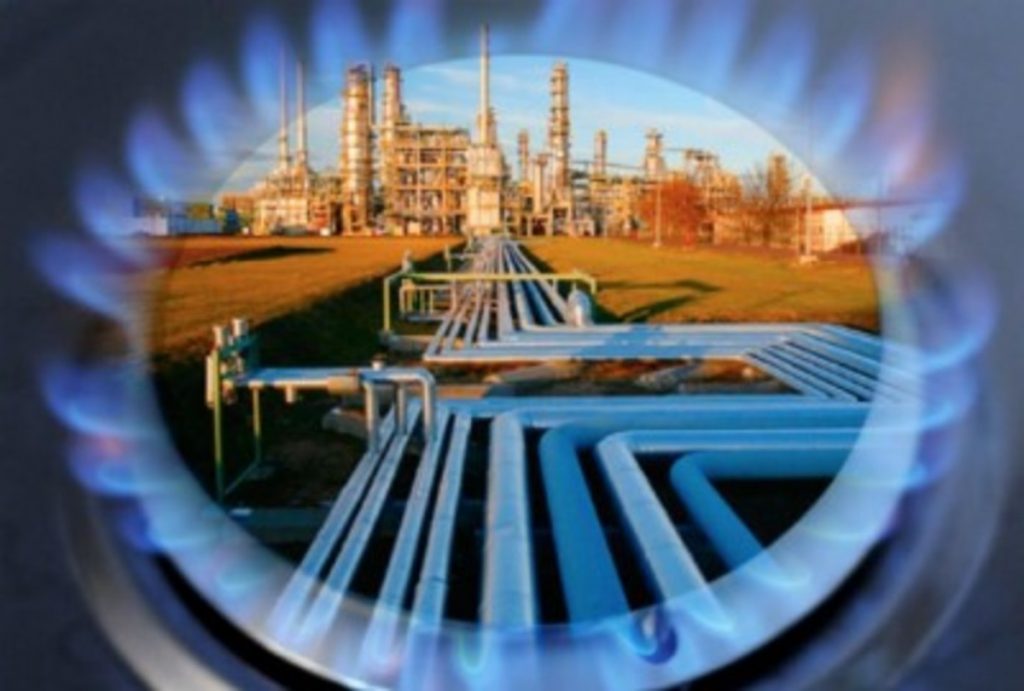
Ontario and Quebec obtain roughly two-thirds of their natural gas from the United States. Rising trade tensions are prompting new questions about whether Canada should rebuild its west-to-east energy infrastructure.
Canada possesses some of the world’s largest natural gas resources, yet millions of Canadians remain heavily dependent on gas imported from the United States.
That apparent contradiction is attracting renewed political attention as tensions between Ottawa and Washington raise concerns about Canada’s energy security.
Ontario and Quebec rely extensively on natural gas produced in the Marcellus and Utica formations of Pennsylvania, Ohio and West Virginia. According to the Canada Energy Regulator, the United States exports close to three billion cubic feet of natural gas per day into Canada, with approximately 90 per cent entering Ontario and Quebec.
Those imports account for about two-thirds of the natural gas consumed in the two provinces, according to Dulles Wang, a Calgary-based director with Wood Mackenzie’s natural gas and LNG research team.
“And it didn’t use to be this way,” Wang said.
For years, this cross-border arrangement made economic sense. Eastern Canada had convenient access to large volumes of inexpensive Appalachian gas located much closer to Ontario and Quebec than Alberta’s major producing fields.
In a stable Canada-U.S. relationship, that was viewed as an efficient use of an integrated continental pipeline system. In an era of tariffs, economic threats and unpredictable trade policy, however, some political and industry leaders see it as a strategic vulnerability.
“With President Trump waging an economic war against Canada, the status quo is no longer acceptable,” Ontario Energy and Mines Minister Stephen Lecce said in a statement to the Financial Post.
Alberta Premier Danielle Smith has also argued that Western Canadian producers could once again supply a much larger share of Eastern Canada’s natural gas requirements.
“[Alberta] used to sell almost one hundred per cent of the natural gas Eastern Canada used back in the early 2000s,” Smith said at a recent news conference.
“And if they were able to get one hundred per cent of their gas from us before, they can do it again. Maybe it’s time for us to talk about how we might restore some of that production from Western Canada to get it out East.”
What Does Energy Security Mean?
Before governments can develop a strategy, they must first decide what Canadian energy security should entail.
Is the objective simply to ensure that Canadian consumers have reliable access to natural gas, even when some of that gas or the infrastructure carrying it crosses the United States? Or should Canada build a system capable of moving domestically produced energy entirely through Canadian territory?
“Are we talking about energy flows coming through the U.S. and back into Canada?” Wang asked. “Or are we talking about transporting the molecules only through Canadian territory?”
That distinction matters because some Canadian natural gas travelling east already passes through portions of the United States before returning to Canada. Increasing Alberta’s sales to Ontario and Quebec would therefore not automatically eliminate the country’s exposure to American infrastructure or trade policy.
Canada must consider both where its natural gas originates and the route it follows before reaching consumers.
The country must also decide whether the current trade confrontation represents a temporary dispute or a more permanent change in Canada-U.S. relations. Building billions of dollars in pipeline infrastructure as protection against a short-term disruption would be difficult to justify. A lasting deterioration in the trading relationship would produce a very different calculation.
Economics Drove Eastern Canada Toward U.S. Gas
Eastern Canada’s growing reliance on American gas was not the result of a lack of Canadian supply. It was primarily a matter of geography and cost.
Natural gas from the Appalachian Basin travels approximately 800 kilometres to southern Ontario, where it can access the major storage and distribution hub near Sarnia.
Alberta gas must travel more than 3,000 kilometres to reach the same market. Consequently, the toll charged to transport U.S. gas over the shorter distance is generally much lower than the cost of moving Western Canadian production across the country.
That advantage helped Appalachian producers capture an increasing share of the Ontario and Quebec markets over the past 15 years.
As American imports expanded, portions of TC Energy’s Canadian Mainline became underused, repurposed or decommissioned. The Mainline was originally developed to transport Western Canadian gas to Central and Eastern Canada, but changing North American production patterns significantly altered how the system was used.



Fully replacing current U.S. imports with Western Canadian gas would not be as simple as redirecting existing production. TC Energy and regional utility companies would likely need to undertake major expansions, reversals or upgrades.
The required investment could total billions of dollars. Higher transportation costs would also ultimately be reflected in the bills paid by Ontario and Quebec households, manufacturers and other industrial consumers.
“The financial burden would therefore fall on Ontario and Quebec homes, businesses and industrial energy consumers,” Wang said.
Pipelines as Economic Insurance
Supporters of expanding Canada’s domestic pipeline network acknowledge those costs but argue that the infrastructure would provide strategic value extending beyond immediate market economics.
“More pipeline infrastructure gives additional flexibility and tactics in trade negotiations,” said Jeremy McCrea, managing director of equity research at BMO Capital Markets.
“It’s a good idea to reduce the risk of energy becoming a bargaining chip. More pipelines in general would provide comfort and protection for Canada.”
From that perspective, additional pipeline capacity would function partly as an insurance policy. It would give Eastern consumers another supply option while providing Western Canadian producers with greater access to their own domestic market.
It could also improve Canada’s negotiating position by reducing the potential effectiveness of energy-related tariffs, export restrictions or other cross-border measures.
The challenge is determining how much Canadians should be prepared to pay for that insurance.
Could Cancelled Projects Return?
The changing political environment could encourage governments and industry to reconsider projects previously abandoned.
In 2013, TC Energy proposed Energy East, a plan to convert portions of its underused natural gas Mainline into an oil pipeline. The project would have transported Western Canadian crude to refineries in Eastern Canada.
Because that conversion would have reduced natural gas transportation capacity, TC Energy also proposed the Eastern Mainline project. That development would have added new gas pipeline infrastructure in Ontario and Quebec to maintain adequate supplies for Eastern consumers.
TC Energy cancelled the projects in 2017 amid low oil prices, changing market conditions, regulatory uncertainty and opposition from some municipal and Indigenous communities.
The original Energy East proposal is unlikely to be revived exactly as designed. Nevertheless, its underlying objective—creating a stronger domestic link between Western Canadian energy production and Eastern Canadian consumers—has returned to the national debate.
New projects could involve expansions of the existing Mainline, additional pipeline capacity in Ontario and Quebec or government-backed arrangements guaranteeing sufficient demand to support private investment.
A Political Choice as Much as an Economic One
Under normal conditions, inexpensive Appalachian gas would likely continue to dominate Ontario and Quebec because it offers the shortest and most economical route to market.
Energy security, however, is not determined solely by the lowest available price. Governments routinely invest in defence, transportation and other strategic infrastructure to reduce exposure to risks that markets may not fully account for.
Gitane De Silva, a Calgary-based public-policy analyst and former chief executive of the Canada Energy Regulator, said the ultimate decision depends on the problem governments intend to solve.
“If we want to prioritize energy security over market economic forces, we can achieve that goal,” she said. “But only if there is enough political will to incentivize that change.”
Canada has more than enough natural gas to supply its own population. What it lacks is sufficient infrastructure to move all that gas economically from Western production fields to the country’s largest Eastern markets without depending on the United States.
Closing that gap would be expensive and would require governments, pipeline companies, utilities, Indigenous communities and consumers to accept difficult trade-offs.
But as Canada’s relationship with its largest trading partner becomes less predictable, the cost of strengthening domestic energy connections must now be weighed against the risk of leaving the country’s most populous provinces dependent on foreign supply.
The question is no longer whether Alberta can provide more natural gas to Ontario and Quebec. It can. The real question is whether Canada considers greater energy independence valuable enough to build—and pay for—the infrastructure required to make it possible.
Share This:






















On The Verge: Energy Sector Primed for New Wave of Growth – ATB Economics