


 CDN NEWS |
  US NEWS







Resource and energy development is the only way B.C. can dig itself out of debt
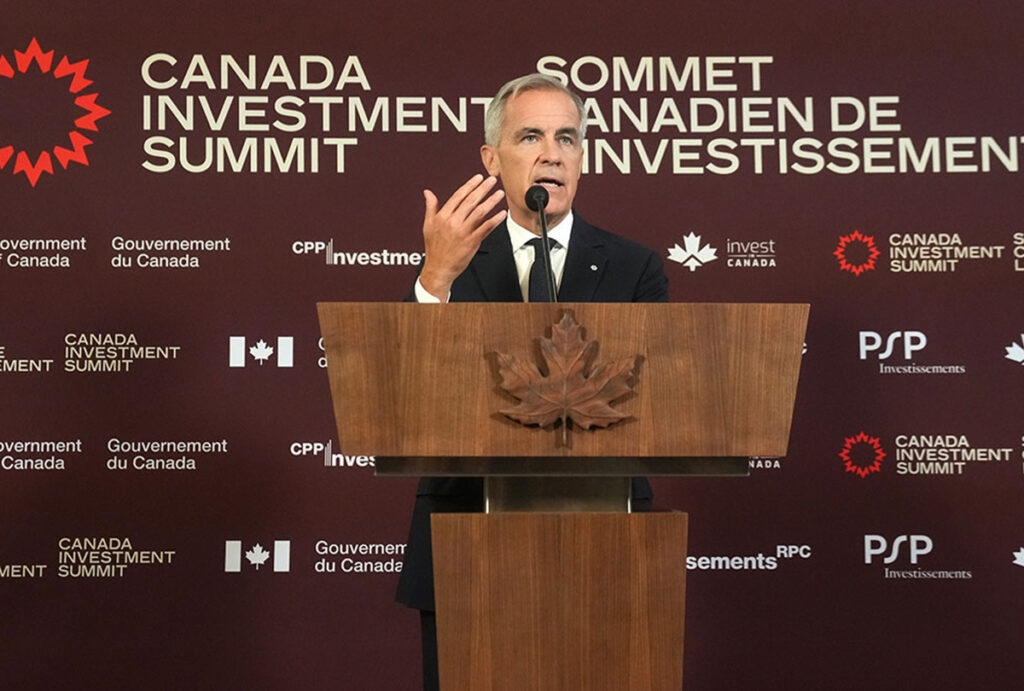
Prime Minister Mark Carney speaks during a news conference at the 2026 Canada Investment Summit in Toronto, on Tuesday, Sept. 15, 2026. THE CANADIAN PRESS/Nathan Denette
By Resource Works
More News and Views From Resource Works Here
David Eby’s NDP government has a serious deficit problem, and the only way out of the debt hole it has dug for itself may be to grow out of it.
The provincial government deficit is $13.8 billion, according to Monday’s first-quarter report, and our total debt is around $180 billion, giving B.C. a debt-to-GDP ratio of 30 per cent.
B.C. needs economic growth to help pay down this debt, and the best way to grow the economy here is to seize on Prime Minister Mark Carney’s plan to make Canada an energy, mineral and industrial superpower.
Carney hung out an ‘Open For Business’ sign in Toronto Monday on the first day of a two-day investment summit sponsored by the federal government, Canada Pension Plan Investment Board and Public Sector Investment Board.
His goal is to attract $1 trillion in foreign investment over five years to build mines, LNG terminals, oil and gas pipelines, railway lines, ports, nuclear power plants, renewable energy, large-scale carbon capture, manufacturing, defence industries, AI data centres—it’s a long and ambitious list.
He told investors the Major Projects Office now has more than two dozen identified nation-building projects designated for fast-tracking.
At least seven of these projects are in B.C.: Ksi Lisims and LNG Canada Phase 2, Red Chris mine, the North Coast Transmission Line, Roberts Bank Terminal 2, and the B.C. portion of the Trans Mountain pipeline expansion.
Some of these projects were the subject of Resource Works’ Get It Done forum Monday.
While the forum was underway, Osisko’s Cariboo Gold announced it was greenlighting an $840 million investment in its gold mine at Barkerville. So, things are happening.
Before the end of this year, $60 billion worth of investments are expected to be sanctioned for the Ksi Lisims LNG project and LNG Canada Phase 2.
In his address to the Canada Investment Summit Tuesday, Carney said Canada’s goal is to double LNG exports to 50 million tonnes annually by the end of this decade, “and then doubling them again right after.”
That should be music to the ears of Western Canadian oil and gas producers.
Meanwhile, BC Hydro recently broke ground on the $6-billion North Coast Transmission Line.
So there is a lot to be hopeful about in B.C. in the energy and resources sector.
Forestry headwinds amidst industrial growth
The one resource sector in B.C. that is less hopeful is forestry.
Forestry was the one downer topic at Monday’s Get It Done forum. Although one forest industry leader expressed optimism the NDP government could staunch the bleeding caused by sawmill and pulp mill closures by addressing the fibre issue, the prognosis for forestry in B.C. looks pretty grim.
In a province that is almost nothing but trees, sawmills are starved of timber because loggers can’t even afford to cut those trees that they are allowed to cut.
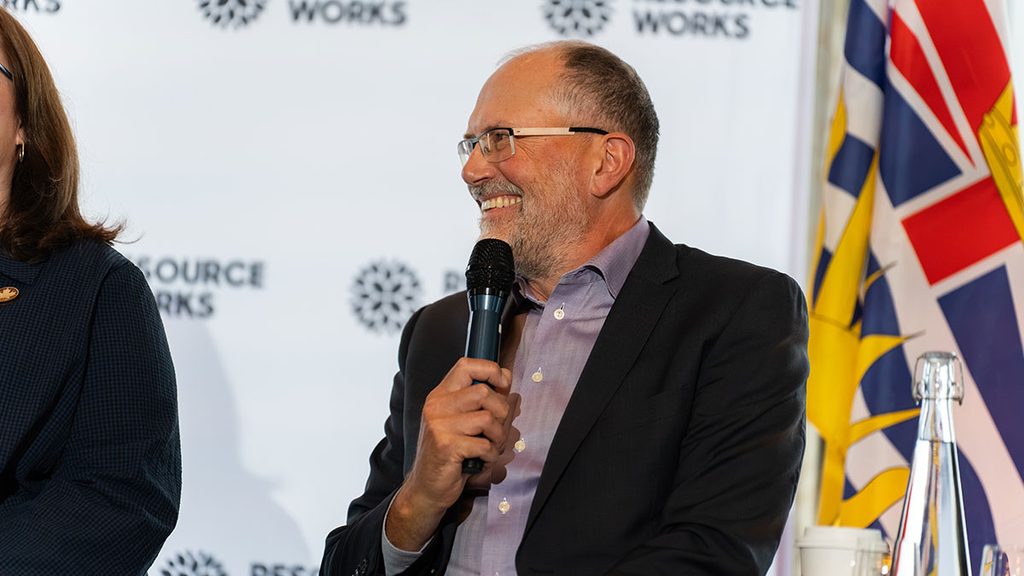
Peter Lister, Executive Director, Truck Loggers Association, Sept. 14 at Get It Done B.C. 2026
“The biggest barrier to harvesting more today is cost,” said Peter Lister, executive director of the BC Truck Loggers Association, who noted the cost of cutting permits in B.C. had increased from $4 per cubic metre to $14, adding $300 million annually to the cost of harvesting.
“It doesn’t matter if you’re mining, forestry, whatever. If you can’t be competitive, if you can’t sell your goods into the world at a competitive price, you will not be in business for long.”
NDP government comes around on natural gas
While the lights are dimming for forestry in B.C., the prospects for other resource industries are much brighter, particularly mining and energy.
The NDP government’s 180-degree turn on natural gas and LNG has not gone unnoticed. The NDP went from a fierce critic of LNG, while in opposition, to a major booster while in government.
It even seems to be coming around to the idea that natural gas is not just a valuable export, but may be an important part of B.C.’s own domestic energy security, including for generating power.
“What is remarkable is how much public thinking has changed in a short period of time,” said Barry Penner, a former Liberal MLA and cabinet minister and current chairman of the Energy Futures Institute.
“Who would have thought, a few years ago, that it was a B.C. Liberal government that shut down Burrard Thermal, the natural gas power plant, and now, this year, just a month ago, Minister Dix, who was here, announced the B.C. government’s buying a natural gas power plant?”



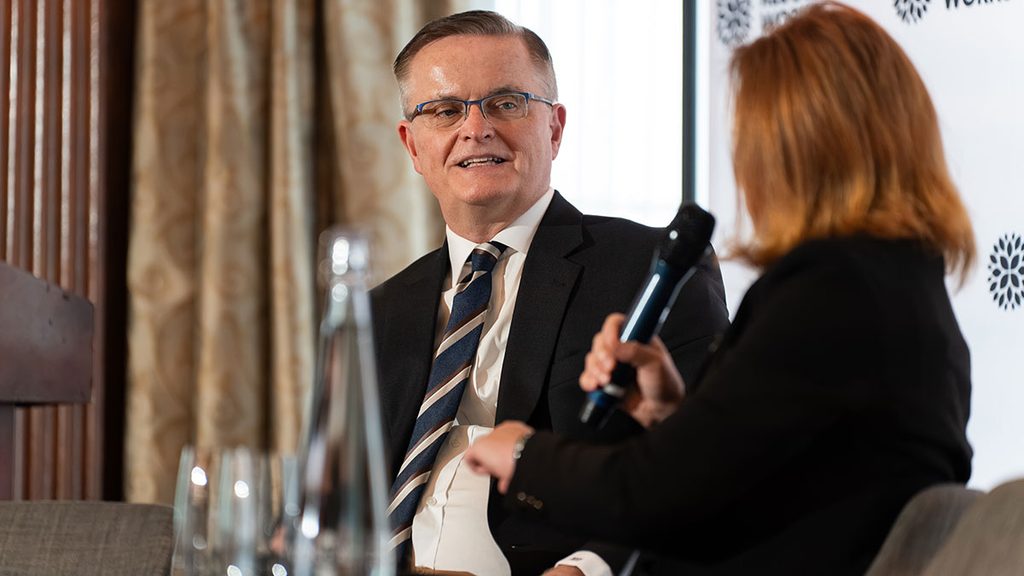
Former MLA and Energy Futures Institute Chair, Barry Penner speaks with former MLA and energy sector advisor Michelle Mungall at Get it Done B.C. 2026
He was referring to BC Hydro’s acquisition of the 275-megawatt Island Generation Station in Campbell River.
I would here note that the single largest private investment announced this week was in Saskatchewan—a new AI data centre that will be powered by natural gas.
Bell Canada plans to invest $52 billion in a new AI data centre near Regina. Under Saskatchewan’s Bring Your Own Power policy, Bell will be providing much of its own power with the construction of a new natural gas-fired power plant.
Consider this: British Columbia’s natural gas reserves are 270 times larger than Saskatchewan’s (2,800 billion cubic metres, compared to Saskatchewan’s 10 billion cubic metres), and it produces 96 times more gas than Saskatchewan – 79 billion cubic metres compared to 0.82 billion cubic metres.
I suspect that some of the gas used to power the new power plant will have to be imported from Alberta, B.C. and the U.S.
Imagine how much power could be generated in B.C. if we used some of our own natural gas.
Meeting rapid demand growth and regulatory reform
The argument against natural gas thermal, right up until about five minutes ago, was that it was unnecessary, especially in a carbon-constraining world – that we had abundant clean hydro power and stagnating demand.
But the energy transition and, more recently, growth in power demand for data centres, means our society is becoming more electricity intensive, driving up the demand for power faster than supply. And it’s happening at a neck-breaking pace.
“I would have never imagined that electric vehicles would have progressed as quickly as they have,” Penner said.
Michelle Mungall, who was John Horgan’s first energy minister when the NDP came to power in 2017, spoke about the rapidity with which electricity demand has changed since she first took on the energy portfolio less than 10 years ago.
Her government eventually made policy moves aimed at phasing out natural gas for heating and excluded it for future power generation.
“What we’re learning about energy is that we had a lot of good intentions, but then reality comes up and hits us,” Mungall said.
“One of the things that really kind of hit me in all the conversations was the one around AI, and how fast this is coming at us, and how much it’s changing, and how much energy that it demands.”
Current Energy Minister Adrian Dix likewise acknowledged the need for more electricity generation during a keynote address.
Whereas Site C dam was expected to produce a surplus of power by the time it came online, B.C. has, in fact, in recent years, periodically been a net importer of power, and BC Hydro now projects it will need at least 50 per cent more electricity generation in the near future.
Dix noted that his government, through BC Hydro, has put out new power calls that he estimated will result in $10 billion in investments in renewable energy—including a large amount of wind power.
But that may not be enough. His government is now considering other options, including another large-scale hydro project – Site E.
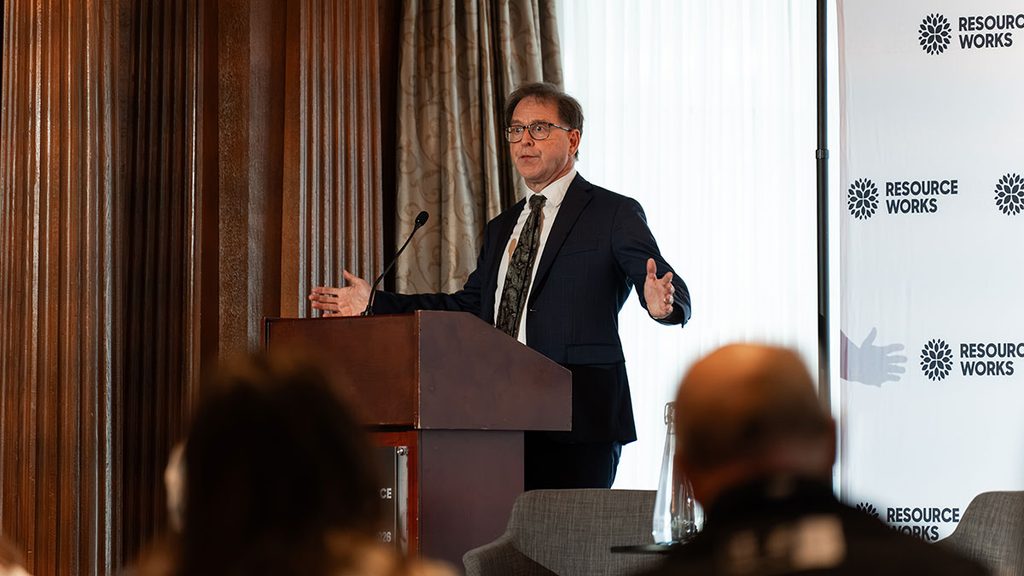
Hon. Adrian Dix, Minister of Energy and Climate Solutions, delivers keynote address at Get it Done B.C. 2026
“We will be changing, this fall, the Clean Energy Act to allow projects that were prohibited before to be considered in British Columbia in our electricity plans because we need clean energy, and we have to consider all the options, not exclude options, such as Site E,” Dix said.
It will be interesting to see if these changes will also include the possibility of natural gas power generation.
It’s not as though we won’t have enough natural gas. As Dix himself noted: “I think reasonably and realistically, we’re going to be the number one producer of natural gas in Canada by 2032.”
The change in tone and attitude towards Canadian energy and resources that we are hearing from both the federal and provincial government is reassuring. It’s the sort of thing investors need to hear before they sink tens of billions of dollars into major projects.
But investors also look at social licence, and in Canada that means Indigenous relations.
First Nations are essential partners in resource development, and unfortunately UNDRIP and DRIPA are creating tensions between Indigenous and non-Indigenous people that cannot be ignored.
If David Eby does nothing else this year, he needs to sort things out with First Nations on DRIPA reform.
More on that next week.
Nelson Bennett’s column appears weekly at Resource Works News. Contact him at [email protected].
Share This:




















SETTING OFF ALARM BELLS: Carney’s EU Deal Threatens Alberta, Energy, & Sovereignty – 170,000 Reasons to Reject Canada’s EU “Associate Membership” – The Nemeth Report