


 CDN NEWS |
  US NEWS







Oil and gas producers made $30 billion worth of deals so far. Analysts say it could surpass the previous peak of $53 billion from 2017
By James Rose
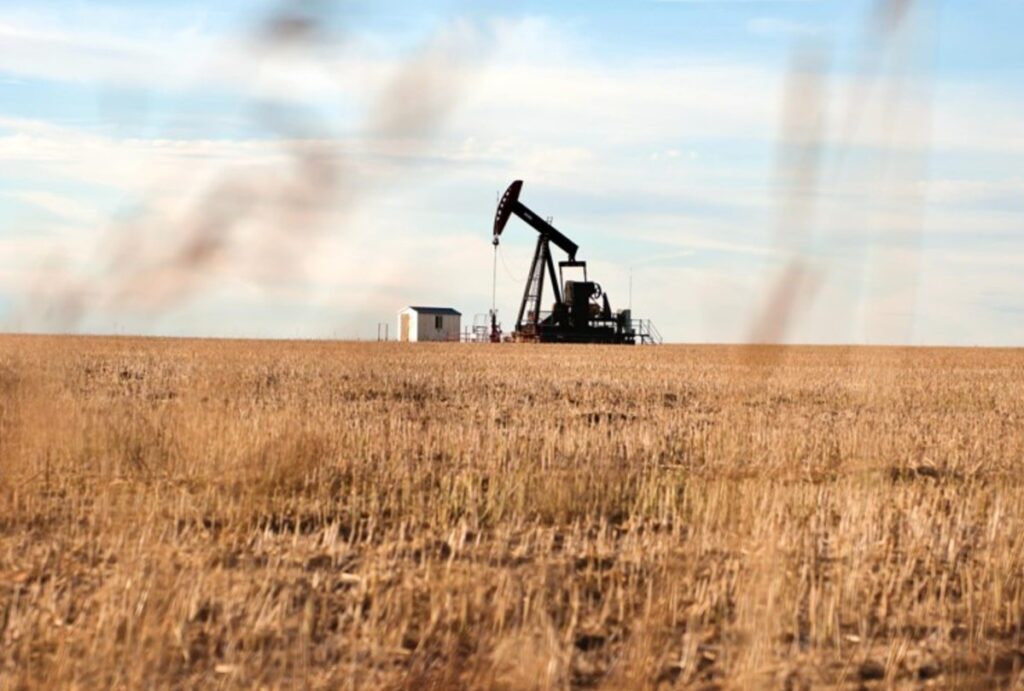
Canada’s oilpatch is barrelling toward its biggest year of dealmaking in a decade, fuelled by war-inflated crude prices and Prime Minister Mark Carney‘s support for building new pipelines.
Nine months in and counting, oil and gas producers have clocked in just over $30 billion worth of mergers and acquisitions, with analysts expecting the dollar figure could surpass the previous high-water mark of $53 billion in deals reached in 2017.
But compared to past consolidation cycles, analysts believe this one is different.
“The last big consolidation waves in energy (in 2017) were about survival, where companies merged because they had to,” said Raj Singh, chief executive officer of Calgary-based Fuelled Inc., North America’s largest marketplace for energy equipment.
In 2017, Canada’s oil and gas industry saw a wave of major asset sales, mostly driven by international majors like Shell PLC selling majority stakes in Canada’s oilpatch. Shell sold nearly all of its oilsands interests to Canadian Natural Resources Ltd. for roughly $11 billion. And ConocoPhillips sold most its Canadian assets to Cenovus Energy Inc. for $17 billion.
“Whereas recently, we’ve seen a lot of clients merging from positions of strength, because it’s the best outcome for shareholders at the time,” Singh said. “That’s a healthier dynamic, and it tends to produce more durable combinations.”
This year’s wave of consolidation is thus far highlighted by Shell’s $16.4-billion takeover of ARC Resources Ltd. in April and a $10-billion Tamarack Valley Ltd.-Headwater Inc. merger at the start of September.
And just last week Carlyle, the massive American institutional private equity firm, increased its stake in Canada’s oilpatch by purchasing Parallax Energy Operating Inc., a privately held producer based in Calgary. Financial terms of the deal weren’t disclosed, but analysts believe the value hovered around $1 billion.
It was Carlyle’s second foray into Alberta energy in 12 months, after it acquired Kiwetinohk Energy Corp. for approximately $1.4 billion.
Analysts say the latest round of consolidation is part of a larger trend owing to elevated global oil prices and a supportive federal government eager to build more oil and gas pipelines.
“Inflation and commodity pricing have simply made producing assets very attractive right now,” said Singh. “When corporate development teams run the numbers today, acquisitions look appealing and can pull forward returns for shareholders.”
Singh said he sees the same dynamic across the equipment market. “In past cycles, the winners were whoever grew production fastest. Teams are now focused on per-share metrics.”
Shares of oil and gas companies tend to rise and fall with oil prices, which have been on a wild ride since the Iran war started in late February.
Article content
Before the conflict, West Texas Intermediate, North America’s benchmark price for crude oil, hovered around US$60 a barrel. Since then, it has surpassed the US$100 mark, though not without considerable volatility.
“If you look at Tamarack’s Headwater deal, they did that as a share exchange,” said Tom Pavic, president of Sayer Energy Advisors. “Tamarack’s share price is up this year which gave them a stronger currency, so to speak, to go out and do a deal.”
Shares as currency aside, Tamarack’s Headwater deal also made strategic sense. You don’t see Tamarack buying shares of Lululemon Athletica Inc.
“Their merger created Canada’s only publicly traded pure-play producer focused on the Clearwater play,” Pavic said. “It just made sense.”



So did the Shell-ARC deal. Shell needs natural gas to supply LNG Canada, its joint venture that could be on the verge of a massive expansion. In ARC they found a top-performing natural gas producer.
Pavic says when companies like Tamarack are looking for investors with especially deep pockets, being bigger is better.
“There are a bunch of big institutional investors who can only invest in companies with a certain market cap size,” he said. “If a company can get past that number, that means they now meet certain institutional investment criteria. And that means more opportunities to raise capital.”
In a recent research note, analysts at BMO Capital Markets said the uptick in mergers and acquisitions reinforces a theme they’ve highlighted for years.
“Scale continues to matter. The improvements with the federal government in terms of regulation, egress and overall tone has seemingly sparked interest from a number of operators, both domestic and international.”
BMO’s analysts believe more consolidation is to come. They suggest companies like Whitecap Resources Inc., Spartan Delta Corp., Kelt Exploration Ltd., Surge Energy Inc. and Obsidian Energy Ltd. are leading candidates.
Take Whitecap Resources, for example. With a market cap of roughly $20 billion, BMO believes it’s just the right size for a super major looking for exposure to Canadian energy.
“For a buyer seeking immediate scale, condensate growth, free cash flow, and 40-plus years of inventory in one of Canada’s premier resource plays, Whitecap checks nearly every box we would expect to see in a future large-cap acquisition candidate.”
Singh said consolidation isn’t about getting bigger for its own sake. “Teams work hard, rather, to get to a size where the cost of capital, counterparty terms and funds flowing into the name all start improving,” he said.
Singh is also careful not to give too much credit to war in the Middle East.
“It’s tempting to credit geopolitics for the deal activity, and it’s certainly not hurting,” he said. But for him, the real driver is an industry-wide desire to grow and boost financial performance, with acquisitions being the method of choice.
Still, a company that shrinks after selling assets may have improved its financial position, said Kyla Lawson, managing director at Calgary-based StackDX, an oil and gas software firm. “Nonetheless, we see consolidation as a major theme in today’s industry,” she said.
So, too, is the emergence of new companies.
“While consolidation gets all of the front page headlines these days, and rightly so, the rebirth phase is already quietly underway,” Lawson said.
“Several industry sources have indicated that anywhere between 25 to 65 new management teams are out there in various stages of securing financing, evaluating opportunities, and acquiring assets. It’s a fascinating and exciting time for the emergence of a new generation of growth-oriented junior oil and gas producers.”
Singh agrees. “People keep asking whether Canadian energy is consolidating or being reborn. We can see that it’s both. Every time a management team sells a company, that team, and often that capital, goes and starts the next one.”
Pavic said the level of dealmaking these days indicates Canada’s oilpatch is in a healthy place.
“When you have big institutional investors like Carlyle doing deals here, that’s a great tell of the strength of the industry’s long-term fundamentals,” he said. “They wouldn’t be doing deals here if they didn’t think they could make money for a long time.”
Pavic adds: “Let’s not forget that in today’s world, hydrocarbons are very much in demand.”
- Email: [email protected]
Share This:



















