


 CDN NEWS |
  US NEWS







In a bearish market, hedging is typically a first line of defence
By Mia Gindis
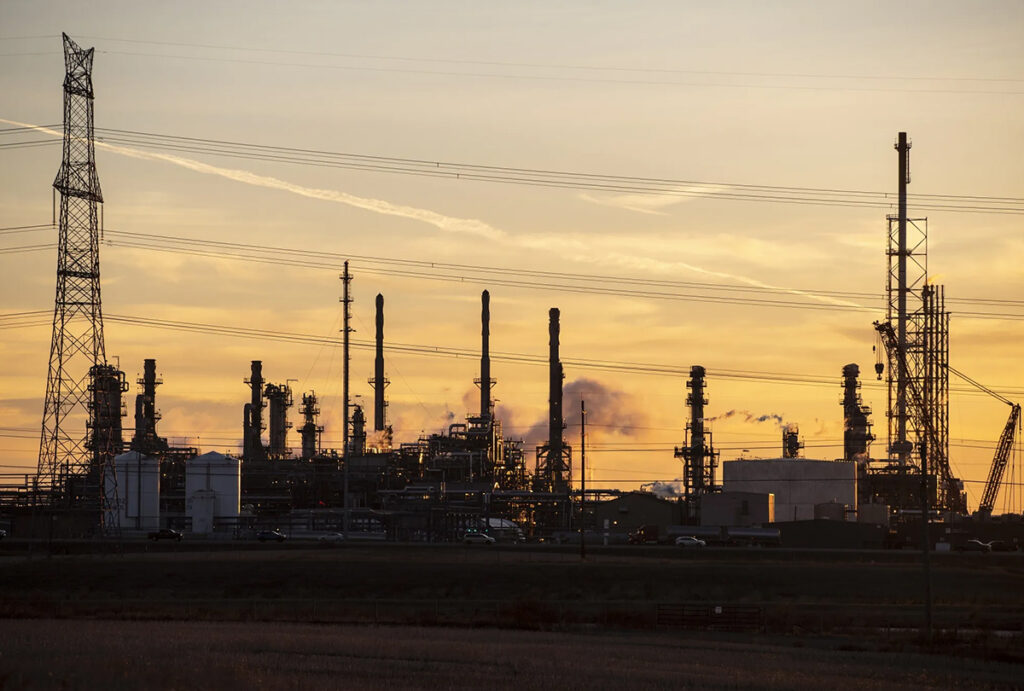
Canadian oil producers, burned by their hedging strategies as prices soared to multiyear highs, are following in the footsteps of United States shale firms and steering clear of the practice.
Second-quarter investor calls show many firms operating in the oil-rich heartland of Alberta are taking advantage of the moment to reduce or abandon hedges for the second half of the year. The potential earnings in doing so could free up more cash for investment or shareholder returns.
Baytex Energy Corp.’s hedges on West Texas Intermediate, the U.S. oil benchmark, ended last quarter, and the company doesn’t anticipate putting new ones in place. Tamarack Valley Energy Ltd. plans to reduce the share of production it hedges from about 50 per cent to closer to 20 per cent. And International Petroleum Corp., which holds assets in Alberta and Saskatchewan, is fully exposed to WTI and Brent prices since the start of July.
In moving away from the pricing strategy, Canadian firms are taking a page from their southern neighbours. U.S. producers have been retreating from the practice for years, as stronger balance sheets allow for less emphasis on limiting risk. The initial price surge at the onset of the U.S.-Iran war triggered a record influx of hedging, but activity has since fizzled.
The companies’ decisions have also renewed a debate about the role of hedging in such an uncertain price environment. The practice is common among small- and mid-sized Canadian producers to protect their revenues from price declines, but can be costly in the event of an upswing. Multiple companies reported realized losses as the Iran war pushed oil prices well above the prices at which their hedges would have paid out.
It’s a stark turnaround from the beginning of the year. At the time, there were warnings about the market being oversupplied, potentially driving down prices. That was coupled with the possible return of Venezuelan barrels, which threatened to erode Canadian market share.
Firms rushed to lock in prices around US$60 a barrel by buying put options. Such contracts give the holder the choice to cash in if prices fall and help offset any losses from selling their crude at lower levels.
Then the Iran war sent oil surging, leaving producers stuck in hedges that lost value and limited their ability to benefit from higher prices. Conversely, companies that have now chosen to shed their hedging positions will be exposed to a price decline if the war’s market disruptions abate.
“Financial oil hedging has become less popular after a painful period of realized losses and improving balance sheets,” said Ayisha Zia, a senior research analyst at Wood Mackenzie. “The Canadian sector is not abandoning risk management, but it is becoming more selective.”
WTI futures have often topped US$90 a barrel since February, nearly twice the level most Canadian firms need to break even on production costs. Forecasters have revived triple-digit price predictions as war-driven disruptions to flows through the Strait of Hormuz show little sign of easing anytime soon.




There are outliers sticking with the strategy. Obsidian Energy Ltd., for one, increased its hedging position into the third quarter of 2026, citing the recent increase in oil prices tied to the Iran war. The company also has debt it needs to pay down, likely increasing the need to hedge its exposure and ensure future sales.
Tamarack, for its part, is tweaking its strategy to preserve greater exposure to oil spikes by using what’s called wider collars, with a broader range between its call and put strike prices.
The cost of hedging is significant for some companies after the recent price run-up. Baytex recorded about $113 million in realized hedging losses so far this year, compared with $12 million in the same period last year. Saturn Oil & Gas Inc. incurred roughly $150 million in hedging losses in the first half, according to a July 30 earnings call. That’s equivalent to nearly a quarter of the company’s revenue over the same period.
While U.S. shale producers usually only hedge commodity prices through major oil benchmarks, Canadian producers also hedge transportation constraints through the spread between local spot and benchmark prices. Known as basis hedging, this approach tends to be costlier and less efficient because of smaller local markets.
“We’d rather focus on hedging and securing good transportation costs for crude to the U.S. Gulf Coast or the absolute WTI-WCS differential,” Christophe Nerguararian, International Petroleum’s chief financial officer, said in an early August earnings call, referring to the price discount Western Canadian Select oil gets compared with the benchmark.
But even this type of hedging has become less popular, analysts say. The Trans Mountain Corp. pipeline system expansion and other projects have improved market access, reducing the risk producers will be wrong-footed by export constraints.
Several companies have also strengthened their finances through asset sales and other transactions, like Tamarack Valley Energy’s sale of its Charlie Lake assets and Saturn’s bond refinancing.
“After your balance sheet is where you want it to be, shareholder returns take precedence over any growth plans,” Wood Mackenzie’s Zia said.
Still, elevated prices typically spur more drilling and supply, ushering in periods of cheaper oil. In a bearish market, hedging is typically a first line of defence.
“Everyone lost their appetite for hedging as soon as prices spiked, even though technically you should have countercyclical interest,” said Rory Johnston, founder of Commodity Context Corp. “When you’re losing money, you should probably be putting on hedges.”
—With assistance from Robert Tuttle.
Bloomberg.com
Share This:






















On The Verge: Energy Sector Primed for New Wave of Growth – ATB Economics