


 CDN NEWS |
  US NEWS







The breakdown of Canada/U.S. trade talks now dominates Energy discussions
By Maureen McCall
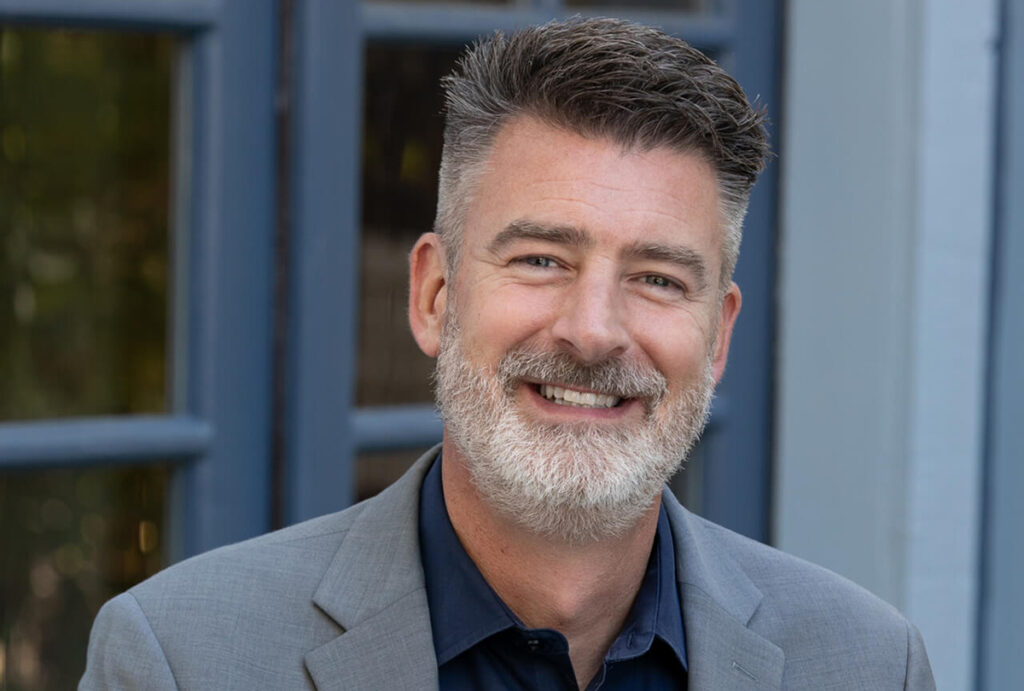
Peter Zeihan
In a stunning setback in Canadian trade negotiations with the United States, late last Friday Canadian Prime Minister Mark Carney announced that he is suspending trade talks with the U.S. and will match the steep new U.S. tariffs that are set to come into effect on some Canadian goods after an extended September 8th deadline.
With that new deadline approximately two weeks away, former NDP leader and political analyst Tom Mulcair speaking to CTV News on Saturday said “There is time for cooler heads to prevail, …but it’s easy to walk away from a trade talk… it’s much harder to get back into the room…” and he restated Monday “The tough part is figuring out how we get back to the bargaining table”.
Just a day before Carney’s announcement, senior executives and leaders from Canada’s Energy sector met in Banff, Alberta for the CEEA 75 Energy Business Forum on August 20th. The event always features analysts and authoritative speakers from industry and governments on both sides of the Canada/U.S. border, and this year the opening keynote was geopolitical analyst Peter Zeihan – founder of the consulting firm Zeihan on Geopolitics and former VP of Strafor, a geopolitical intelligence firm and author of several books including “The Accidental Superpower” and “The Absent Superpower”.
Globalization and Post-Cold War Politics … “We had to bribe everyone else.”
Peter Zeihan began his talk with a quick “How we got here” history of globalization and trade. As he explained, when World War II ended, the United States looked across the world and saw a decimated Europe and Asia. American leaders chose to influence other countries-in Zeihan’s words, to “bribe people to stand between us and the Soviets.”
“So we created this thing called globalization contributors,” Zeihan said. “We would use our Navy (the only one to survive the war), so that anyone could go anywhere at any time and interface with any market, if, in exchange, you joined our security paradigm. For us, globalization and trade were never about the economics. We never invested our economy into that network because if we had, we would have just been another empire, and no one would have accepted the deal. We had to bribe everyone else… And, when the Cold War ended, we didn’t have a plan for the next day. We still don’t.”
He concluded that for the last three decades (30-35 years), the U.S. has been on this slow political degradation, where they have refused to figure out “what’s next.”
“Politics First- Current Political Landscape/ Future Outlook and how did the Democrats lose the Village People?”
In reference to the political backdrop for the current economics and strategies, Zeihan described a U.S. political matrix that has a lot of similarities to Canada’s political matrix- including social liberals who want the government out of their personal life, economic conservatives who want the government out of their wallet, economic liberals who think that the government should have their hand in people’s wallets to get the resources to remain in society, and social conservatives, who believe that the government should play a role in regulating social norms. He noted that American views have changed for the first time in 70 years, with both Republicans and Democrats moving away from supporting globalization, even before Trump. He also stated that the U.S. bipartisan system is offline, with coalitions within each party weakened to the point where neither has enough supporters to win an election. So neither the Republicans nor the Democrats are currently viable, and the U.S. is entering a period of political instability, with no clear solution in sight for the next six years. Donald Trump may currently be the most influential political figure, but Zeihan warned that potential future leaders could be more problematic. Meanwhile, the U.S. is re-evaluating its role as a global power, with a shrinking strategic horizon and a focus on domestic issues.



“After Trump?”…We will be in this moment for 6 years.
“We have, best case, a six-year period where the United States politically is offline,” Zeihan said. “And in that moment, when neither party functions, all it takes is one charismatic leader at the top to basically dictate how things go. At the moment, that’s Donald Trump…who I’m sure everyone has an opinion about. But I will argue that Trump is not the most anti-Canadian president that the United States is capable of putting together because he’s broadly incompetent. What you should be more concerned about is what happens after him, because we’re in this moment for at least six years, and we are in the process of re-evaluating what it means to be a global power, what it means to be the United States of America.”
The U.S. strategic trade focus narrows uncomfortably to Canada.
Zeihan acknowledged that the scale of U.S. military power projection is unmatched in history, but that’s not what is used to patrol global trade routes and make the world safe for commerce. The U.S.is currently woefully under-equipped with the ships required to patrol global trade routes, with about 13% of the fleet that is needed. Why? Because back in the 1990s, the U.S. started a slow-motion retooling of their entire naval force. So, at the moment when global energy demands a more active security guarantee, there isn’t one.
” The United States no longer has the platforms that are necessary to guarantee free trade,” Zeihan said. “The U.S. used to care about the whole world because we could reach the whole world. We could bring force to any part of the world at any time, and now, not only we can’t… we don’t want to. And so America’s strategic horizon has shrunk. Canada has been fortunate these past 80 years, in that the U.S. has always been more concerned about strategic issues versus the Russians or the Chinese or the Iranians or economic negotiations with the Japanese or the Germans or the Koreans. None of that matters now. You’ve gone from being like number 30 in our to-do list to number two, and there is no place in the world to be that is more uncomfortable than under the American microscope.”
The Post-Globalized World
Zeihan described how the decline of globalization has negatively impacted U.S. industries and highlighted the importance of industrial construction spending in preparing for an increasingly post-globalized world. Despite measures like the CHIPS act and the IRA, Zeihan reported that other measures like 8,500 tariff changes in 16 months under Trump have stifled the business environment in the U.S. He advised that the U.S. needs to double its industrial plant size, but that current spending is insufficient and also reported that project planning has been paused, and even though projects that had been started are still being finished- very few new projects are going ahead. He concludes the U.S. now has the worst business environment in his lifetime and is facing significant challenges in meeting its manufacturing needs, with potential product shortages in various categories. Green tech is also not performing well, largely due to the fact that it requires new supply chains that are not necessary for more conventional technologies and highlights the need for more critical materials. Zeihan concluded that there is no version of the Green tech revolution that works in globalization.
Advice for the next generation of CDN Energy – move downstream
Zeihan was quite direct in advising Canada to focus on processing materials rather than primary energy extraction to gain leverage. He sees potential for Canada to move up the value chain and become a significant player in the global market.
“The way that I can see where you get more leverage and more flexibility,” Zeihan said. “…is NOT to focus on primary energy extraction and shipping. Move up the value chain into processed materials, whatever that processed material happens to be. As Canada is a primary producer of a whole lot of things, this is the logical place to put a lot of infrastructure. Whether or not you’re going to have it in Alberta is as much a political decision as it is an economic one. So the closer you can get to a finished or even an intermediate product in your prime areas, that’s going to determine how successful you are in this world and how the United States looks at you. Because if the U.S. just sees you as a crude producer, there’s only one place for it to go. You’ll always have that discount. You’ll always have the spread. But if you start producing a monopoly of refined products and chemicals, then it’s a very different conversation. And I understand you’ve been burned on that before, but you were burned because of globalization. That’s no longer the factor it used to be.”
Many thanks to CEEA 75 Chairs Richard Waller & Jane McCaig for chairing CEEA 75 and all the CEEA events this year.
Maureen McCall is an energy professional who writes on issues affecting the energy industry.
PM statement – https://www.pm.gc.ca/en/news/statements/2026/08/21/statement-prime-minister-carney-canada-us-trade-negotiations
Nat Post reference – https://nationalpost.com/news/politics/canada-us-trade-deal-deadline
Share This:






















REMAKING THE LANDSCAPE FOR INVESTORS – The First-Ever Canada Investment Summit – Maureen McCall