


 CDN NEWS |
  US NEWS







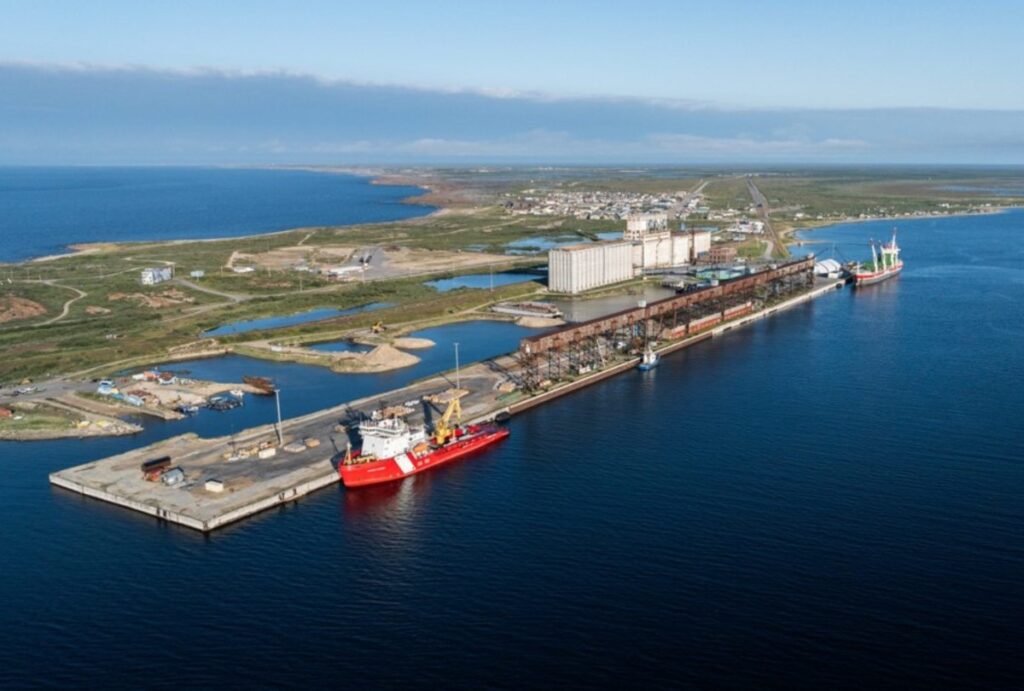
Manitoba possesses many of the ingredients needed to build one of Canada’s most strategically important resource corridors: critical minerals in the north, abundant hydroelectricity, an existing railway to Hudson Bay and the country’s only deepwater Arctic seaport connected to the North American rail network.
The question is whether Manitoba can connect those pieces into an integrated system that mines minerals, processes more of them in Canada and moves products through the Port of Churchill to international markets.
Increasingly, the answer appears to be: yes, but considerable infrastructure investment is still required.
A Critical-Mineral Province
Manitoba contains 31 of the 34 minerals on Canada’s 2024 Critical Minerals List, including lithium, graphite, nickel, cobalt, copper, zinc, rare earth elements and silica. Major mineral regions include the Thompson Nickel Belt, the Flin Flon-Snow Lake district and lithium-bearing areas of southeastern and central Manitoba.
The province already has the foundation of a mineral-processing industry.
Hudbay operates its Lalor gold-copper-zinc mine and processing facilities around Snow Lake, while Thompson has been one of Canada’s most important nickel-producing centres for generations. In February 2026, Canada Growth Fund announced an investment of up to US$85 million as part of a consortium planning to acquire Vale’s Thompson Mine Complex and invest up to US$200 million in its acquisition and turnaround. The operation produces more than 11,000 tonnes of nickel concentrate annually and employs nearly 700 people.
Lithium provides another opportunity. Manitoba has significant lithium-bearing pegmatites, including the internationally significant Tanco deposit, while exploration continues in regions such as Snow Lake. Graphite, copper, cobalt and other critical minerals add to the potential resource base.
The bigger economic opportunity, however, is to avoid becoming simply a supplier of raw material. Mining combined with concentrating, refining and downstream processing could capture substantially more value inside Manitoba.
Churchill Is No Longer Just a Concept
The most interesting development is that critical minerals are already moving north.
In June 2026, Arctic Gateway Group confirmed that zinc concentrate from Hudbay’s Snow Lake operations was again travelling north to Churchill for shipment to European markets — the third consecutive year Hudbay minerals have used the corridor. The Hudson Bay Railway is also carrying mineral concentrate from northern Saskatchewan.
That changes the discussion around Churchill.
Rather than asking whether the port could become a minerals gateway, Manitoba can now point to an operating supply chain and ask how large it could become.
The railway remains a constraint. Arctic Gateway is working toward upgrading the Hudson Bay Railway to modern North American industrial weight standards so it can integrate more efficiently with Canada’s Class 1 railways.
Meanwhile, Churchill’s cargo base is diversifying. The 2026 shipping season includes critical minerals, potash and the return of Prairie grain shipments, along with equipment and supplies moving north to Nunavut.
A March 2026 agreement between Churchill and Belgium’s Port of Antwerp-Bruges could be particularly important. The two ports are exploring expanded trade in critical minerals, energy, fertilizer and other commodities, potentially giving western Canadian producers a more direct northern connection with European markets.
From Railway to Northern Economic Corridor
Manitoba’s ambitions are larger than simply rehabilitating a port.
The proposed Churchill Plus concept includes an upgraded port and railway, an all-weather road, an energy corridor and potentially year-round marine access supported by icebreaking. An icebreaking feasibility study is already underway.
Connecting mineral districts to that infrastructure could change development economics across northern Manitoba and potentially northern Saskatchewan.



Roads, railways and transmission lines are often prohibitively expensive for individual mines. A shared corridor serving several mines, communities and industries spreads those costs across a much larger economic base.
That is where Churchill could become much more than an export terminal.
Connecting Manitoba Hydro to Nunavut
An equally important opportunity points north rather than east.
The proposed Kivalliq Hydro-Fibre Link would connect Manitoba Hydro’s grid to communities and mining operations in Nunavut while simultaneously providing fibre-optic communications.
Manitoba committed 50 megawatts to the project in 2025. By February 2026, the Inuit-owned project proponent had formally submitted a transmission service request to Manitoba Hydro, with work beginning toward a system-impact study.
The project could replace diesel-generated electricity in parts of Nunavut, provide power for existing and future mines and establish high-speed communications infrastructure across the region. Governments also explicitly view the connection as supportive of Arctic sovereignty and security.
That makes it more than an electricity project.
Power, fibre, mines, communities, transportation infrastructure and Churchill could eventually become parts of the same northern economic network.
Manitoba’s Energy Advantage
Manitoba’s abundant hydroelectric system is itself an economic-development tool. Reliable low-carbon electricity can help attract mineral processing and other electricity-intensive industries that increasingly care about both power cost and the carbon intensity of their products.
The province is also planning substantial new generation. Manitoba’s energy strategy includes 600 megawatts of majority Indigenous-owned wind generation, along with refurbishment of existing hydroelectric facilities to add capacity.
Combine that electricity with critical minerals, Indigenous investment, expanded northern transmission and a strengthened Churchill corridor, and Manitoba begins to possess something relatively unusual: the potential to connect resource extraction, low-carbon processing, transportation and international export infrastructure within one province.
Churchill Could Be the Missing Link
None of this is guaranteed. Mines must become economic. Processing facilities require billions of dollars of private investment. Northern rail infrastructure needs continued modernization, and year-round Churchill shipping remains an ambition rather than an established reality.
But Manitoba already has something more valuable than a collection of proposals.
It has proof that parts of the corridor work.
Minerals are moving from Snow Lake through Churchill today. The port and railway are receiving investment. Nickel production at Thompson is attracting new capital. Governments are advancing an electricity and fibre connection toward Nunavut, while Churchill Plus is being considered as a larger nation-building corridor.
The opportunity is to connect them.
If Manitoba succeeds, Churchill may ultimately become much more than a northern port. It could become the northern gateway for a new economic corridor linking critical minerals, clean electricity, Indigenous development, Arctic communities and global markets — while strengthening Canada’s physical and economic presence in the North.
Share This:






















On The Verge: Energy Sector Primed for New Wave of Growth – ATB Economics