


 CDN NEWS |
  US NEWS







As Captain and Tennille famously said, it “looks like muskrat love”
By William Lacey
Recently the Government of British Columbia provided an update on the cost of the Site C dam, now named The John Horgan Dam, saying that expenditures to date have been $14.9 billion, and that it “remains on track” to finish within its $16-billion budget, though “some cost risks remain.”
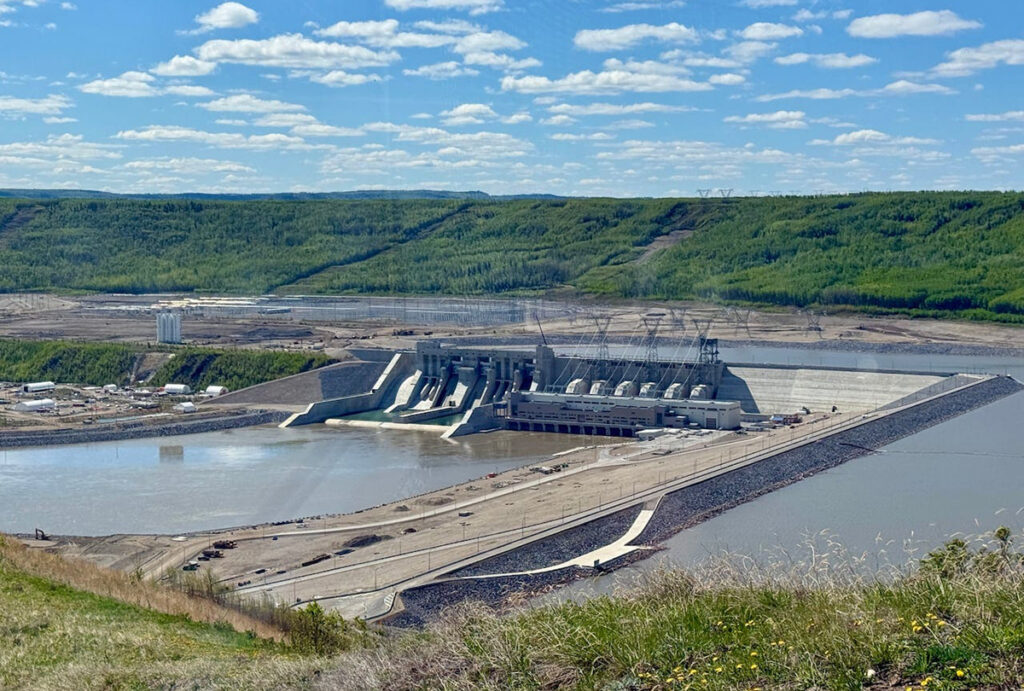
The John Horgan Dam – Matt Preprost/CBC
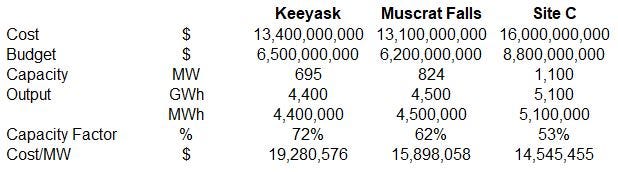
Having covered this space many years back, I thought it would be useful to revisit the economics of this project, especially in light of the recent announcement as it pertains to Churchill Falls. The Horgan dam is expected to cost almost $15mm/MW of generating capacity, in line with other “new” large scale hydro facilities in Canada. Using similar math as these projects, namely $15mm/MW (things are not getting cheaper), for the two projects (up to 2,500 MW increase in capacity additions at Churchill Falls and Gull Island hydro project with plans for an additional ~2,700 MW), would project out to $72 bn which is directionally in line with the figure discussed today at $70bn.



What was more curious to me was the pricing arrangement that Quebec gets. Newfoundland Hydro says Hydro-Quebec will pay 1.8 cents per kilowatt hour next year — up from the current 0.2 cents — and that price will go up 14 per cent per year, reaching 11.5 cents in 2041. Said another way, Hydro-Quebec will start paying $18/MWh and that price will escalate to $115/MWh by 2041.
Three words – SIGN ME UP
To put this into context, assuming that the Horgan Dam is financed 100% with 100 year non amortizing debt at 4% interest, has a cash cost (operating, maintenance etc.) of $10/MWh (typical ranges quoted at $10-$20/MWh), it has a useful life of 100 years and the Class 1 depreciation for hydro dams is 4%, the power price needed to recover the capital cost is almost $135/MWh. Churchill Falls has a much higher capacity factor of 73% (actual output vs. nameplate capacity) than the Horgan Dam of 53%, which would drive that number down. As a result, on a cash basis, the cost recovery point is closer to $100/MWh.
Perhaps there are carbon credits etc. which will skew the math lower, but from a pure math perspective, it sure looks like Quebec is getting one heck of a deal and someone is going to be left paying for some of this. If I am missing something, which I have been known to do, I look forward to being enlightened.
Share This:






















On The Verge: Energy Sector Primed for New Wave of Growth – ATB Economics